Friday, June 12, 2026
14.5 C
Lusaka
Home Blog Page 82

Hichilema reshapes judiciary, elevates Mukanda at ECZ

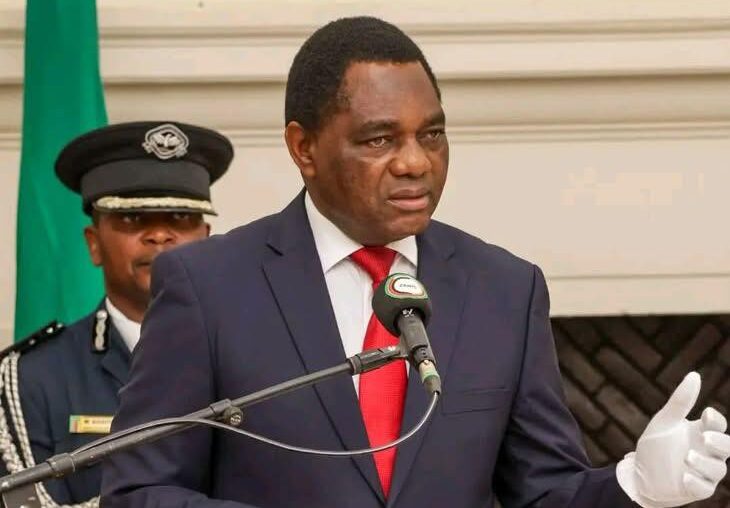
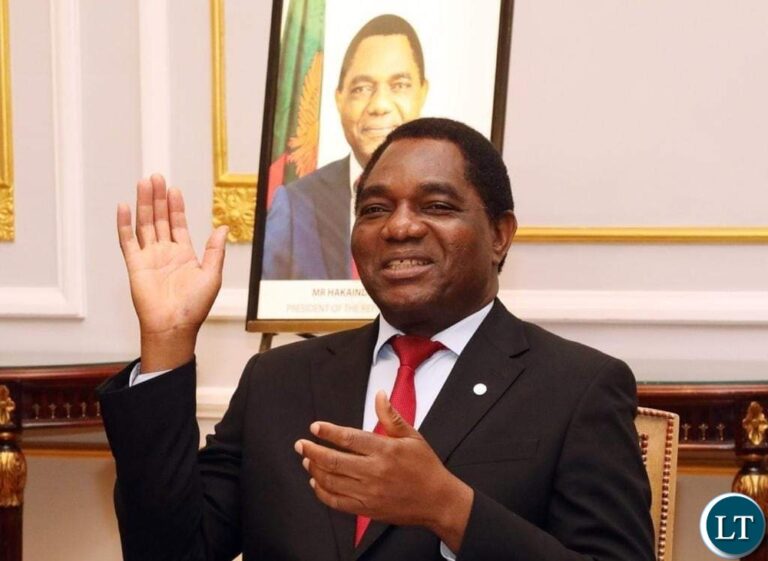
President Hakainde Hichilema has appointed judges across Zambia’s highest courts and elevated an Electoral Commission of Zambia official, reshaping both judicial and electoral institutions at a critical point in the country’s governance cycle.

The appointments include Chalwe Mchenga, Abha Patel, Gertrude Chawatama and Butler Sitali to the Supreme Court, expanding the bench of the country’s highest court tasked with handling final appeals and setting legal precedent.

At the Constitutional Court, the President has named Pixie Yangailo, Vincent Siloka and Gertrude Imbwae, subject to ratification by Parliament. The court holds authority over constitutional interpretation, election disputes and matters involving the exercise of state power, placing the appointments within the core of Zambia’s legal framework.

The changes extend to the Court of Appeal, where Charles Zulu has been appointed Deputy President, alongside additional judicial appointments at that level to strengthen appellate capacity.

In a parallel move, Vincent Mukanda, previously a commissioner at the Electoral Commission of Zambia, has been elevated to the position of Deputy Chairperson, placing him in a central role within the institution responsible for managing elections and overseeing electoral processes.

The appointments were communicated through State House Chief Communications Specialist Clayson Hamasaka, who said the decisions were made on recommendation of the Judicial Service Commission and in accordance with constitutional provisions.

The scale of the appointments points to a coordinated effort to expand judicial capacity across multiple levels of the court system. Increasing the number of judges allows for more panels to sit simultaneously, which can reduce case backlogs and improve the speed at which matters are resolved.

At the Supreme Court level, the additional judges are expected to influence how final appeals are processed and how legal precedent is established. Decisions at this level carry long-term implications for the interpretation of law across the country.

The Constitutional Court appointments carry direct weight in governance matters. The court remains the final authority on constitutional questions, including disputes arising from elections, public office eligibility and the limits of executive and legislative power. Expanding its bench increases its operational capacity while also shaping the composition of those who interpret the Constitution.

The elevation of Vincent Mukanda at the Electoral Commission introduces a second layer of institutional significance. The ECZ oversees voter registration, election logistics and results management, making leadership positions within the commission critical to public confidence in electoral processes.

Placing Mukanda in the deputy chairperson role positions him within the decision-making core of the commission, particularly at a time when electoral systems and processes remain under public scrutiny.

The dual nature of the announcement  judicial appointments and an ECZ leadership shift — reflects the interconnected roles of courts and electoral bodies in managing governance and democratic processes.

Several of the appointments remain subject to parliamentary ratification, introducing an additional layer of oversight. This step allows legislators to review and confirm the appointments, reinforcing the constitutional balance between branches of government.

The appointments also establish named individuals at each level of the judicial system, creating clear lines of responsibility. Their rulings, conduct and interpretation of the law will shape legal outcomes and influence how institutions operate over time.

Across the attached papers, the reporting aligns on the key facts: the names of the appointees, the courts affected, and the elevation of Vincent Mukanda at the ECZ. This consistency reinforces the official account while placing the focus on how the appointments will function in practice.

The immediate impact will be seen in how quickly courts process cases, how constitutional matters are handled, and how electoral processes are administered under the updated leadership structure.

Zimbabwe’s ruling party proposes shift to parliamentary election of president

Zimbabwe is witnessing heightened political debate following proposals by the ruling ZANU-PF party to amend the Constitution and change how the country elects its president.

The proposed changes would allow Parliament, rather than voters, to elect the head of state. The bill also seeks to extend presidential and parliamentary terms from five to seven years and could result in the postponement of the 2028 general elections to 2030.

Opposition figures have strongly criticised the proposals. Veteran politician Tendai Biti described the move as “a coup, a slow coup,” raising concerns about the potential impact on democratic processes.

ZANU-PF officials have defended the proposals, stating that the changes are intended to reduce the cost and tensions associated with frequent elections. Party official Patrick Chinamasa said the proposed system would be “less costly” and “less controversial.”

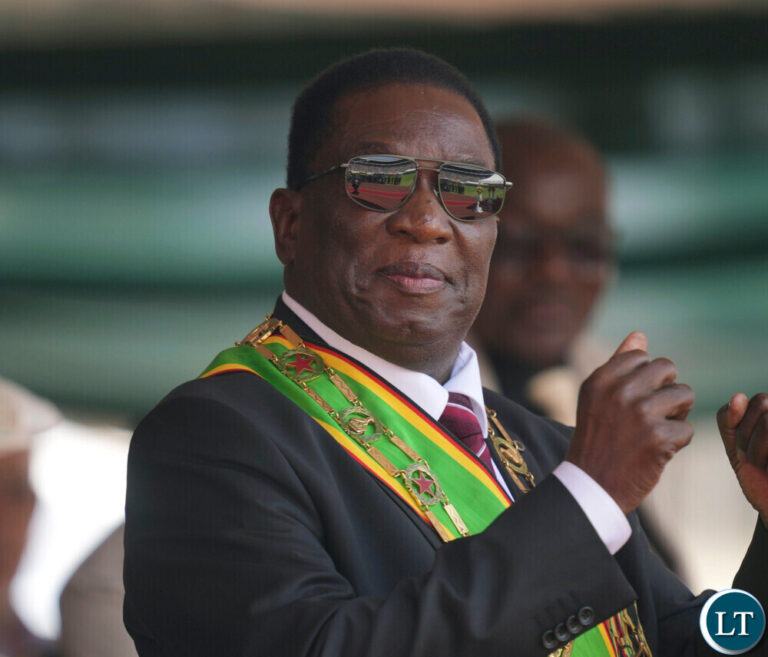
Public hearings held in Harare have drawn large crowds, with some participants expressing support for the proposed amendments, including calls for President Emmerson Mnangagwa to remain in office beyond 2028. Others have supported the idea of Members of Parliament electing the president.

However, the hearings have also been marked by disruptions. Reports indicate incidents of pushing and confrontations, with journalists allegedly asked to delete recorded footage. Opposition lawyer Fadzayi Mahere accused ruling party supporters of contributing to the disturbances, while ZANU-PF representatives denied any involvement in violence.

Opposition leaders have further alleged increased restrictions on political activities, including claims of banned meetings, arrests and assaults on activists. Lovemore Madhuku said he was assaulted during an incident in the presence of police officers, while Tendai Biti is currently out on bail over allegations of holding an unsanctioned gathering.

The bill is expected to be considered in the coming weeks as consultations continue. According to BBC, the developments reflect deep political divisions as Zimbabwe moves toward a potential constitutional change that could alter how leadership is determined.

Kabwe mobile money agent gambles away K60,000 entrusted for deposit

0

A mobile money booth operator in Kabwe has allegedly left a businessman stranded after gambling away K60,000 that had been entrusted to her for deposit.

According to details of the incident, the agent received the money from the businessman, identified as Bornface Suntile, around 09:00 hours with the assurance that she was at the bank and would deposit the funds immediately.

However, hours passed without confirmation of the transaction, raising concern.

“So I gave that money to the lady around 09:00 hours and she told me she was in the bank and that she would send the money immediately, but by 12:36 hours nothing was happening,” Suntile said.

Efforts to reach the agent proved unsuccessful as she stopped answering calls.

“I called her after 12:36 hours, she was not picking, not until 17:40 hours when I received a call from police who requested for my presence,” he added.

The situation later took a turn when the agent reportedly surrendered herself to police and confessed to having squandered the K60,000 on Aviator, an online betting platform.

“She handed herself to the police and confessed that she squandered the money on Aviator,” Suntile said.

The businessman further disclosed that the agent admitted to having a debt of K15,000 and had hoped that gambling would help her recover the money and settle her obligations.

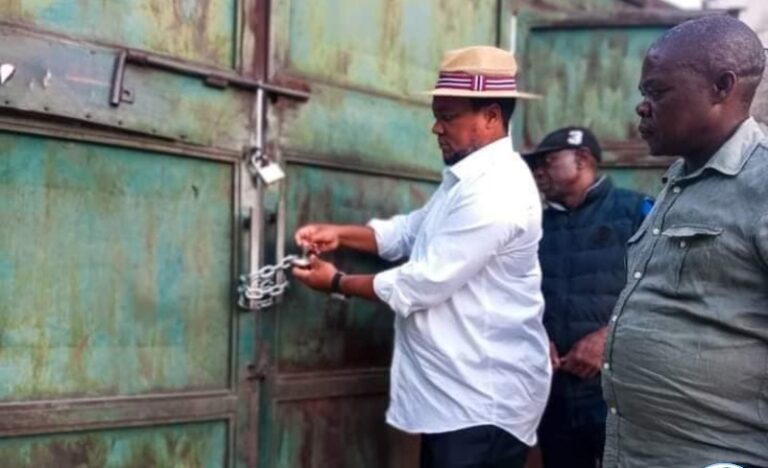
Authorities have since taken up the matter, and investigations are ongoing. The mobile money booth remains closed following the incident.

ERB penalises 29 firms including ZESCO and Uno

0

The Energy Regulation Board (ERB) has taken enforcement action against 29 companies for breaching licence conditions and failing to meet regulatory requirements.

The action follows compliance audits conducted to ensure that companies in the energy sector adhere to standards set under the Energy Regulation Act.

Among the affected companies is ZESCO Limited, which has been fined K100,000 for failing to establish and maintain appropriate safety systems.

Uno Energies Zambia Limited was fined K180,000 for fuel contamination and failure to conduct mandatory quality checks.

Harvest Group of Companies Limited was also penalised, with its Tokyo Way and Buluwe Road sites each fined K60,000 for construction-related violations.

Sany International (Zambia) Industrial Limited was fined K60,000 for constructing an electricity generation facility without the required permit.

In addition, eight companies were issued formal warnings for failing to comply with an ERB directive issued in February 2025, which required the submission of self-audit reports within a specified timeframe.

According to ERB Public Relations Manager Nyere Kasumpa, the companies warned are Chingases Company Limited, Exclusive Brands Africa, Oryx Energies Zambia Limited, Falcon Gas Zambia Limited, Lake Gas Zambia Limited, Gastec Trading and Supply Limited, Rubis Energy Zambia Limited and Minegases Company Zambia Limited.

“Companies that choose to ignore licence conditions risk facing strict penalties as the Board remains committed to protecting consumers and ensuring safety in the energy sector,” Kasumpa stated.

Meanwhile, 15 companies settled outstanding statutory fees amounting to K366,507.25 after enforcement action was taken against them.

The ERB said the enforcement measures are aimed at promoting compliance, protecting consumers and ensuring safety and efficiency in the energy sector.

Hichilema appoints former ERB boss as Supreme Court judge

3

President Hakainde Hichilema has appointed former Energy Regulation Board (ERB) chief executive officer Butler Sitali as a judge of the Supreme Court, subject to ratification by the National Assembly.

According to a statement issued by State House Chief Communication Specialist Clayson Hamasaka, the appointment was made on the recommendation of the Judicial Service Commission in line with Article 140(e) of the Constitution.

Sitali, a lawyer by profession, was dismissed from public service in March 2013 following allegations that he was linked to the then opposition United Party for National Development (UPND) and had allegedly leaked information to opposition Members of Parliament. He later challenged the dismissal, citing political victimisation.

In subsequent legal proceedings, the Court of Appeal upheld his termination but awarded him compensation equivalent to 24 months’ pay in respect of his vehicle and related benefits.

Alongside Sitali, the President has appointed Justice Chalwe Farai Mchenga, Lady Justice Abha Patel and Lady Justice Getrude Chawatama as Judges of the Supreme Court, also subject to parliamentary ratification.

For the Constitutional Court, the President appointed Lady Justice Pixie Yangailo, Justice Vincent Siloka and Getrude Imbwae, pending ratification by the National Assembly.

In the Court of Appeal, Justice Charles Zulu has been appointed Deputy President.

Other judicial appointments include Lady Justice Sharon Kaunda Newa, Lady Justice Irene Zeko Mbewe, Lady Justice Bridget Chilombo Maka, Lady Justice Ruth Chibbabuka, Lady Justice Concepter Chinyama Zulu and Lady Justice Susan Wanjelani, all subject to parliamentary approval.

The President has also appointed several High Court judges, pending ratification, namely Rodgers Kabwe Kaoma, Ikechukwu Iduma, Makalo Sosoo Mwaanza, Davis Chibwili, Sylvia Munyinya Okoh, Katrina Maimbolwa Walubita, Mutafela Chimuka, Ireon Tilisa Wishimanga, Claudia Luswili, Kaumbi Mutinta Ndulo Mundia, Thelma Nkumbiza Mumba and Maureen Samulela Tresha.

Other appointees to the High Court include Angelica Mwanza, Japhet Zulu, Diana Mizinga Majokwe, Comfort Mulenga, Sombo Chinyaama Kachaka, Sekelebaka Muwamba Kundachola, Peter Chileshe, Bubala Chibbonta, Anne Chisanga Nsama, Ruth Lumbongo Mbambi, Kalifano Tiza Munsanje Manyepa, McRobby Chiwale, Kabukabu Sikwibele and James Bako Chipola.

In addition, acting under Section 5(1) of the Electoral Commission of Zambia Act No. 25 of 2016, President Hichilema has appointed Major General Vincent Mukanda (Rtd) as Deputy Chairperson of the Electoral Commission of Zambia and Zevyanji Sinkala as Commissioner.

All appointments are subject to ratification by the National Assembly

POLICE STATEMENT: Sudden death of Kaweche Kaunda

1

The Zambia Police Service in Ndola, Copperbelt Province, has launched investigations into a case of sudden death reported on April 9, 2026, at approximately 09:30 hours.

The incident is believed to have occurred between 18:00 hours on April 8 and 08:00 hours on April 9, 2026, at a residence in the Northrise area of Ndola.

Police received a report from Mr. Mike Kaira, aged 77, who informed them that his family friend, Mr. Kaweche Kaunda, aged 67, son of the First Republican President, the late Dr. Kenneth David Kaunda, had been found unresponsive.

Preliminary investigations indicate that Mr. Kaunda arrived in Ndola on April 6, 2026, and was staying at an apartment in Northrise.

On the morning of April 9, a domestic worker carrying out routine duties knocked on the door to Mr. Kaunda’s room but received no response. She alerted a security guard, who gained entry and found Mr. Kaunda lying unresponsive. Mr. Kaira was subsequently informed and reported the matter to police.

Mr. Kaunda was rushed to Ndola Teaching Hospital by police officers, where he was pronounced dead on arrival.

Initial examinations conducted by Police Scenes of Crime officers revealed no visible injuries.

The body has since been deposited in the Ndola Teaching Hospital Mortuary, where a postmortem examination will be conducted to determine the exact cause of death.

An inquiry file has been opened, and investigations are ongoing. The public will be informed of any further developments.

The Zambia Police Service has extended its sincere condolences to the bereaved family.

AFCON 2027 represents an opportunity for socio-economic transformation for East and Central Africa

0

With the first-ever Africa Cup of Nations to be jointly hosted in East Africa, the 2027 Pamoja AFCON—set to take place in Kenya, Uganda, and Tanzania—the impact of the tournament is expected to extend well beyond the competition itself.

In Nairobi, the Kenyan government has constructed the ultra-modern Talanta City Stadium, which will be renamed Raila Odinga International Stadium. In Uganda, the Mandela National Stadium has been refurbished to meet international standards, while Hoima Stadium has been newly built, contributing to a significant upgrade in sports infrastructure.

Tanzania, however, has made notable investments, particularly in Zanzibar, where a tourism and sports complex is being developed along the Indian Ocean. The country has emerged as a key financial contributor to the Pamoja initiative, mobilising nearly $195 million for sports infrastructure in the 2025–2026 fiscal year, including about $67 million dedicated to stadium construction and renovation.

A major highlight is the $150 million Afcon City project in Fumba on Unguja Island. The development is designed to position Zanzibar as a leading sports tourism destination, with infrastructure aimed at supporting both the tournament and long-term economic activity.

The complex will include modern training pitches, a 5,000-seat indoor arena, a 150-room four-star hotel, a 100-bed specialised sports hospital, and a small passenger port to facilitate the movement of fans and tourists.

According to Zanzibar’s Minister for Information, Culture, Arts and Sports, Riziki Pembe Juma, teams scheduled to play in Zanzibar will utilise training facilities at the New Amaan Complex and the Suluhu Academy.

The government has indicated that the project is intended to serve broader purposes beyond sports, positioning it as a major tourism attraction to strengthen Zanzibar’s global profile.

Minister Juma noted that local residents and entrepreneurs are expected to benefit from business opportunities generated by the development, which is projected to contribute to economic growth, job creation, and increased investment.

Unlike infrastructure projects that remain underutilised after major events, the Zanzibar development is designed for continuous use, hosting concerts, conferences, and various sporting activities throughout the year. The initiative forms part of Tanzania’s Development Vision 2050.

Vision 2050 is a 25-year national strategy aimed at transforming Tanzania into a $1 trillion economy with upper-middle-income status by 2050. Launched by President Samia Suluhu Hassan, the plan prioritises industrialisation, digital transformation, improved living standards, and climate resilience, with implementation scheduled to begin on July 1, 2026.

Legacy beyond 2027

The Afcon City project is expected to support long-term economic growth through job creation, foreign investment, and the expansion of Zanzibar’s tourism sector into sports tourism.

The increased global attention on East and Central Africa is also likely to boost regional tourism, with international visitors travelling across borders. Although Zambia is not a host nation, the tournament’s legacy is expected to benefit the broader CECAFA region through developments in infrastructure, tourism, and football.

The Zanzibar hub is expected to attract fans from countries such as Zambia and Malawi, contributing to tourism revenue within the host region.

Beyond the tournament, AFCON 2027 presents an opportunity for socio-economic transformation in East Africa. Infrastructure development is projected to generate employment, stimulate growth in hospitality, transport, and service industries, and enhance the appeal of cities such as Arusha, Hoima, and Kampala.

With support from international partnerships and continental media exposure, the region aims to strengthen its position within African football. Following Morocco’s example in 2025, Kenya, Tanzania, and Uganda are expected to deliver a well-coordinated and sustainable tournament in 2027.

Odindo Ayieko is a Nairobi-based sports journalist with over 20 years of experience covering African sports, including the 2010 FIFA World Cup, the 2013 Africa Cup of Nations in South Africa, and the 2001 and 2015 All-Africa Games in Abuja and Brazzaville, among other events.


Kaweche Kaunda found Dead

Kaweche Kaunda, son of Zambia’s founding president Kenneth Kaunda, has died in Ndola, with the cause of death yet to be established as authorities await post-mortem results.

His death was confirmed by his elder brother Panji Kaunda, Zambia’s High Commissioner to Malawi, who said Kaweche was found dead in the early hours after travelling to Ndola for business.

Panji Kaunda described the development as distressing, stating that his brother had travelled for routine engagements before the sudden discovery of his death. He said the exact cause would only be known after a post-mortem examination is conducted.

According to details carried in the state press, Kaweche was found dead in his room in the morning, with initial reports indicating no immediate confirmation of the circumstances surrounding his passing. He was 67 years old.

The death adds to a series of losses within the Kaunda family. Kaweche was one of the nine children of the late Kenneth Kaunda and had lived largely outside the political spotlight, maintaining a more private profile compared to some members of the family.

He is survived by his wife Farida Geloo and three children.

Government has formally joined the family in mourning. Ministry of Information and Media Permanent Secretary Thabo Kawana said the State was saddened by the loss and would issue a detailed funeral programme once arrangements are finalised.

Mr Kawana said government had conveyed its condolences to the Kaunda family and was working with relatives on next steps, signalling the national significance attached to the passing given the family’s historic role in Zambia’s independence and political life.

The death also drew coverage across multiple papers, with consistent reporting that Kaweche had travelled to Ndola on business before being found unresponsive. The alignment in reporting reinforces the central facts: location, timing and the absence of a confirmed cause at the time of publication.

While no official medical cause has been released, the pending post-mortem is expected to provide clarity on the circumstances surrounding his death. That process now becomes the key next step in the investigation, with findings likely to determine how the death is formally recorded.

The Kaunda family has endured multiple bereavements over the years, with several of Kenneth Kaunda’s children having passed away before Kaweche. His death adds to that history, deepening the personal loss for a family closely associated with Zambia’s political foundation.

Beyond the family, the development carries national resonance. Kenneth Kaunda remains a central figure in Zambia’s history, and events affecting his immediate family often draw public attention and official response.

At the time of reporting, logistical arrangements were still being finalised, including the movement of the body from Ndola and the structure of funeral proceedings. Officials indicated that further details would be communicated once preparations are complete.

The immediate focus remains on the post-mortem process, which will determine the medical cause of death and provide closure to the family.

KITWE DERBY: Paymaster urges Power to respect limping Nkana

1

Power Dynamos legend Kellies Mwaba “Paymaster” has told his old club to respect struggling Nkana ahead of Saturday’s Kitwe derby at the Levy Mwanawasa Stadium in Ndola.

‎Mwaba predicted a tough derby when Power and Nkana clashes in the round 28 fixture of the Super League.

‎Speaking to Lusaka Times Sports, Mwaba said Power have an edge over Nkana owing to their fantastic form in the season.

Nkana have spent the entire 2025/26 season fighting relegation.

‎”The game will be tough; it will be 50-50. It will be tough even if Nkana are not playing well. But Power have an advantage,” he said.

Power leads the Super League table with 55 points after playing 25 matches.

‎”Nkana may be afraid because they are not playing well. Power are playing well, winning and scoring,” Mwaba said.

‎12th placed Kalampa sits on 31 points after playing 27 matches

‎”We should not underrate Nkana. The game will be ok for us if we don’t underrate Nkana. Power are winning that game,” he said.

‎Mwaba urged fans to watch the derby in peace at the Levy Mwanawasa Stadium.

*Mundubile’s “Government-in-Waiting”; Already Sharing Offices Before Winning Votes

By Dreamers’ Camp

It is rather fascinating that while the nation awaits a coherent vision for governance from the opposition, Mr Brian Mundubile appears to have moved several steps ahead, quietly assembling what can only be described as a shadow government, long before earning a single vote from the Zambian people.

Sources within the Tonse Alliance suggest that discussions have been concluded with familiar figures from the old PF establishment, including Chishimba Kambwili, Samuel Mukupa, Jean Kapata, and Nkandu Luo, individuals reportedly set to be unveiled in the coming weeks. One might be forgiven for thinking that this is less a renewal of leadership and more a reunion tour.

Even more intriguing are the alleged internal arrangements: Mr Kambwili, it is said, is earmarked to contest the Roan seat and ascend to the position of First Deputy Speaker, though his reported ambition for Speaker has, conveniently, been deferred to accommodate another ally Chifumu Banda. It would seem that positions are being allocated with remarkable confidence for a government that does not yet exist.

Meanwhile, the Tonse Alliance, like much of the opposition, remains notably silent on a substantive policy agenda, beyond a well-rehearsed dissatisfaction with President Hakainde Hichilema. One might ask: is opposition now a substitute for policy?

Of course, all this unfolds against the backdrop of Mr Mundubile’s own legal challenges, with charges ranging from corruption to the alleged theft of public funds, matters which, if proven, would raise serious questions about eligibility for public office.

In the end, Zambians are left to ponder: is this a credible alternative government in the making, or merely an exercise in political nostalgia, complete with pre-assigned titles and recycled ambitions?

UPND’s Longwe Calls Sampa Conduct ‘Ungrateful’ Amid PF Divisions

UPND’s Longwe Calls Sampa Conduct ‘Ungrateful’ Amid PF Divisions

LUSAKA, April 9, 2026 — A long-serving United Party for National Development member has criticised Miles Sampa’s conduct, describing it as damaging and unfair, while linking the situation to ongoing divisions within the Patriotic Front.

Charles Longwe, speaking during an interview on Hot FM, said developments within the opposition party reflect disorder and internal strain tied to leadership disputes and factional alignments. He described the situation as “chaos unleashed” and pointed to what he termed a breakdown in loyalty within party structures.

Longwe said Patriotic Front members had exercised restraint in their handling of Sampa but argued that his actions had contributed to tensions now visible across the party. He stated that citizens and political actors alike are expected to demonstrate loyalty and patriotism in their conduct.

“I do have an opinion and I see that as chaos unleashed, disorder and also disloyalty to the party,” Longwe said during the interview.

He added that his remarks were grounded in personal familiarity, noting that he and Sampa share a long-standing relationship, but maintained that this did not prevent him from expressing concern over recent developments.

“But Miles’ conduct is devastating. I don’t understand an individual like that. He’s ungrateful,” Longwe said.

The remarks come against the backdrop of ongoing disputes within the Patriotic Front involving rival factions and questions surrounding party leadership, including matters linked to the Registry of Societies. These disputes have led to competing claims over authority and direction within the party.

Longwe said the Patriotic Front had previously extended opportunities to Sampa despite his political movements between parties. He referred to Sampa’s return to PF and subsequent roles, including serving as Lusaka mayor and later being adopted as a parliamentary candidate.

“Patriotic Front was gracious to Miles… and still allowed him, he served as mayor of this city,” he said.

He stated that such opportunities should be met with a sense of responsibility, adding that repeated disagreements and public confrontations had strained relationships within the party.

Longwe also raised concerns about Members of Parliament whom he said were navigating political alignments in ways that lacked clarity. He argued that elected officials should take clear positions regarding party affiliation, particularly where questions of loyalty arise.

“I can tell you something. And I dare them to resign. They should resign,” he said.

He rejected suggestions that procedural processes alone should determine such matters, stating that individual responsibility remained central to political conduct.

“They are playing games… Those kind of things is what I call lawlessness. They are taking advantage of that process,” Longwe said.

According to Longwe, the remaining parliamentary calendar may limit the ability of formal processes to address such issues before the current session concludes. He said this creates a situation where unresolved questions about party allegiance could persist into the electoral period.

He added that individuals who identify with a political party should do so openly and without ambiguity.

“You can’t be eating with both hands,” he said, referring to lawmakers who maintain links to different political positions.

Longwe also spoke about internal expectations within the UPND, stating that loyalty and long-term commitment remain central to party participation. He cited his own experience, noting that he had spent over two decades in opposition without holding a government position.

“We stayed 23 years in opposition. We’ve paid the price,” he said.

He added that party members are expected to demonstrate commitment, even where immediate benefits are not apparent.

Longwe further indicated that individuals who do not clearly align themselves with party structures may face challenges in future candidate selection processes. He said that under leadership structures he associates with, such conduct would be taken into account when considering adoption for elections.

“These members of parliament who are behaving like this… they will not be adopted on UPND ticket,” he said.

The comments highlight ongoing political realignments as parties prepare for upcoming electoral processes, with internal discipline, party loyalty and leadership disputes remaining central issues across Zambia’s political landscape.

When Courts Let Procedure Trump Justice: A Tale of Two Zambian Rulings

When Courts Let Procedure Trump Justice: A Tale of Two Zambian Rulings
▪ APPELLATE ANALYSIS
A comparison of two recent Court of Appeal decisions reveals a troubling inconsistency in how Zambia’s appellate judiciary balances procedural rules against the demands of substantive justice — with one ruling exposing significant analytical gaps in the other

· Lusaka, April 2026

Two judgments handed down by Zambia’s Court of Appeal — one in June 2024, the other just days ago in April 2026 — ostensibly deal with different parties and different disputes. Yet placed side by side, they tell a single, unsettling story about how insolvency law can be weaponised to stage corporate takeovers, and about how the courts called upon to stop such manoeuvres do not always rise to the occasion.

The earlier case, Youjun Zhuang and Others v Bumu General Trading FZE, decided in June 2024, involved allegations that a group of individuals fabricated a debt, engineered winding-up proceedings against a company, and then used a consent order to appoint Lewis Chisanga Mosho — the very provisional liquidator already installed in the parallel winding-up proceedings by the same petitioning creditors — as business rescue administrator. This amounted to a brazen act of self-appointment by a man with an undisguised conflict of interest, all while deliberately excluding the company’s legitimate shareholder from every step of the process. The more recent ruling, Ng’andu Consulting Limited and Others v David Mwale, decided 1 April 2026, involved a strikingly similar playbook: a winding-up petition filed at a court far from where related proceedings were already pending, a provisional liquidator appointed by emergency ex parte order the very next day, and an aggressive campaign to seize company bank accounts before affected shareholders could be heard.

Both cases involved the same statute — the Corporate Insolvency Act No. 9 of 2017. Both involved the same fundamental complaint: that insolvency machinery was being used not to rescue or wind up a genuinely distressed company, but to dispossess shareholders of their corporate assets through judicial process. And both reached the Court of Appeal seeking urgent intervention.

The outcomes, however, could not have been more different. In Ng’andu, the Full Court intervened decisively, stayed the provisional liquidator’s appointment, ordered the matter reallocated to a different judge, and delivered a ruling bristling with judicial indignation at the procedural abuses it had witnessed. In Youjun Zhuang, the court upheld the appeal but on narrow procedural grounds, leaving the most serious legal questions entirely unresolved and the affected shareholder without any practical remedy.

“You cannot expect a party to apply to join proceedings it was deliberately excluded from and never told about. Yet that is precisely what the Youjun Zhuang court demanded.”
— Analysis — Court of Appeal Watch
The Locus Standi Trap

The most glaring flaw in the Youjun Zhuang judgment lies in how it handled the question of locus standi — the legal standing to bring a challenge. The court held, correctly as a matter of general principle, that a non-party to consent order proceedings must first apply to be joined to those proceedings before bringing a fresh action to set the order aside. Because Bumu General Trading had not done so, the court held that it lacked standing and allowed the appeal.

The problem is that this analysis was applied in a factual vacuum. Bumu General Trading was a shareholder of the company placed under business rescue. It was never served with any process. It was never notified of the business rescue proceedings as required by Section 23 of the Corporate Insolvency Act. It had no knowledge of the consent order until after it was entered. The entire scheme, as the High Court found, was designed to exclude it.

In Ng’andu, the Court of Appeal explicitly recognised that procedural rules must yield where special circumstances make it impossible or impractical to follow the normal route. The Ng’andu court refused to allow procedural formalism to defeat a legitimate grievance where the very reason the affected party could not follow normal procedure was the other side’s deliberate conduct. The Youjun Zhuang court asked none of these questions. It simply noted that the respondent had later joined the proceedings and suggested that cured the problem — without ever asking how a party excluded by design could have been expected to join earlier.

CASE AT A GLANCE · YOUJUN ZHUANG V BUMU GENERAL TRADING (2024)

Court: Court of Appeal, Kabwe (Civil Jurisdiction)
Decided: 19 June 2024
Coram: Makungu, Sichinga and Sharpe-Phiri, JJA
Core Issue: Whether a shareholder excluded from business rescue proceedings had standing to challenge a consent order appointing a business rescue administrator.
Outcome: Appeal upheld. High Court judgment set aside. Respondent found to lack locus standi. Substantive illegality questions left unresolved.

The Defective Appointment Nobody Examined

Perhaps the most significant analytical gap in Youjun Zhuang is what the court did not say. One of the respondent’s central complaints was that the provisional liquidator was appointed, and the consent order engineering business rescue was entered, without any notice to affected persons including itself as a shareholder. Section 23 of the Corporate Insolvency Act makes such notification mandatory. Order 42 Rule 5A of the Rules of the Supreme Court specifies what matters can be settled by consent order, and the respondent argued that appointing a business rescue administrator is not among them.

These are pure questions of law. They do not depend on who has standing. Even if the respondent lacked locus standi to personally challenge the consent order, the court could and should have addressed whether the order was legally competent in the first place. It did not. The legality of appointing a business rescue administrator by consent order under Zambian law therefore remains an open question, despite this case being the perfect vehicle for settling it.

In Ng’andu, the court was meticulous about the legal framework. It identified Rule 8(3) of the Companies Winding-Up Rules 2004 — which mandates that a return date must be set within three days of any ex parte provisional liquidator appointment — as a mandatory statutory requirement whose violation was immediately actionable. It described this provision as existing specifically to protect companies, shareholders and creditors from precisely the kind of rapid, unilateral asset seizure that was unfolding. The Youjun Zhuang court examined no equivalent provision, despite the analogous circumstances.

CASE AT A GLANCE · NG’ANDU CONSULTING V DAVID MWALE (2026)

Court: Court of Appeal, Lusaka (Civil Jurisdiction)
Decided: 1 April 2026
Coram: Banda-Bobo, Patel SC and Chembe, JJA
Core Issue: Whether the Court of Appeal had jurisdiction to stay a defective ex parte provisional liquidator appointment where the lower court was not hearing the applicants’ urgent applications with the required urgency.
Outcome: Single judge’s ruling set aside. Stay of provisional liquidator confirmed. Matter reallocated to a different judge. Strong judicial condemnation of ex parte litigation culture.

Fraud By Another Name

The High Court in Youjun Zhuang made findings of fraud against the appellants’ legal counsel — findings that the Court of Appeal rightly overturned as insufficiently evidenced. No registry staff were called to explain the duplicate cause number. The appellants’ matter was actually filed a day before the competing case with the same number. The specific fraud finding against counsel was unsupported.

But in correcting this error, the Court of Appeal made one of its own. It treated the fraud question as if it were entirely about the registry entry, when the respondent had in fact pleaded a far broader and more serious set of allegations. These included: that the underlying debt of USD 1,700,000 was fictitious and had already been rejected by a court in earlier proceedings; that the debt assignment of USD 50,000 to the first appellant was undocumented and manufactured; that business rescue proceedings were commenced without a formal demand being made; and that Lewis Chisanga Mosho — who had been placed in the winding-up proceedings as provisional liquidator at the instigation of the same petitioning creditors — then appointed himself, in effect, as business rescue administrator of the very company those creditors were targeting, without any independent judicial assessment of his fitness or his manifest conflicts of interest.

These allegations, if established, would represent exactly the kind of manipulation of insolvency frameworks that the Supreme Court — cited approvingly in Ng’andu — condemned in Fred M’membe and Post Newspapers Limited v Mboozi and Others. The Youjun Zhuang court referenced that case but drew no equivalent conclusions. Having set aside the narrow fraud finding, it simply moved on.

What makes the Youjun Zhuang case yet more troubling in retrospect is the identity of the administrator at its centre. Lewis Chisanga Mosho is not a peripheral figure in Zambian insolvency practice. He has been linked to a pattern of corporate takeovers in which the ambiguities and procedural gaps in the Corporate Insolvency Act No. 9 of 2017 are systematically exploited to gain control of companies through accelerated ex parte appointments, before affected shareholders or directors can mount a meaningful defence. In the Kingphar matter, Mosho moved from provisional liquidator to business rescue administrator in a single step, sponsored throughout by the same creditors whose debt claims were themselves disputed and unproven. The court record identifies Keith Mweemba Advocates — alongside PNP Advocates — as one of the law firms used to engineer and sponsor Mosho’s original appointment as provisional liquidator. What the court did not remark upon, and what makes the procedural architecture of this case particularly troubling, is that Keith Mweemba Advocates then appeared as counsel for the first and second appellants before the Court of Appeal — the very proceedings in which the legality of Mosho’s appointment was at issue. The firm that helped install the administrator was therefore also the firm arguing the appeal that ultimately succeeded in shielding that installation from judicial scrutiny. It was, on any fair reading of the facts, a self-appointment dressed in the language of judicial process, defended in court by the architects of that very process.

Most critically, Mosho’s conduct in insolvency proceedings had already attracted the personal attention of the Chief Justice of Zambia in the Post Newspapers judgment — the very authority cited approvingly by the Court of Appeal in Ng’andu. In that landmark decision, the Chief Justice personally reprimanded Mosho, condemning the manipulation of liquidation and rescue frameworks to achieve purposes that bore no resemblance to the legitimate aims those frameworks were designed to serve. The reprimand was direct and on the record. The Youjun Zhuang court cited the Post Newspapers case in its judgment but conspicuously failed to draw the obvious connection between the conduct condemned in that authority and the individual who stood at the very centre of the proceedings it was reviewing. That failure is not merely an analytical oversight — it is a missed opportunity to send an unambiguous signal that the courts will not be used as instruments of corporate capture by those who have already been found wanting. The proximity between Keith Mweemba Advocates and Lewis Mosho compounds this concern considerably. When the same law firm that sponsored an administrator’s appointment later appears as counsel for the parties who benefited from that appointment, in proceedings where the appointment’s validity is the central question, a court exercising its supervisory function over insolvency proceedings ought at minimum to acknowledge that structural conflict — even if it stops short of acting on it. The Youjun Zhuang court did neither. It allowed Keith Mweemba Advocates to argue and win the appeal without any observation about the firm’s prior role in the very transaction under scrutiny.

“The Ng’andu court asked whether it should sit as a mere bystander watching proceedings unravel on account of procedural reasons. The Youjun Zhuang court never asked that question at all.”
— Analysis — Court of Appeal Watch
Forum Shopping and Multiplicity of Actions

Both cases exhibit the same hallmark of tactical litigation: the deliberate scattering of related proceedings across different courts and different judges to prevent any single court from seeing the full picture. In Youjun Zhuang, there were at least three sets of proceedings — cause No. 2018/HPC/437 where a debt document was previously rejected, cause No. 2020/HPC/165 involving winding-up, and cause No. 2020/HB/15 involving business rescue — all between substantially the same parties and all arising from the same alleged debt. The High Court noted the pattern. The Court of Appeal mentioned it briefly but made nothing of it.

In Ng’andu, the court was more alert to the problem. It noted at the outset that the dispute had generated at least three separate causes of action before three different lower courts and described this openly as creating “the very obvious potential of abuse by the multiplicity of actions scattered over the Courts in the Country.” It drew an explicit analogy to the Post Newspapers saga. While it refrained from deciding the multiplicity question on the merits, it flagged it prominently as a live and serious concern.

The contrast is instructive. Multiplicity of actions in insolvency disputes is not merely a procedural nuisance — it is frequently the mechanism by which the scheme operates. Each separate court, seeing only a fragment of the overall picture, is more easily persuaded to grant the immediate relief sought. The Youjun Zhuang court’s failure to engage with this pattern as a legal issue, rather than mere background colour, may have contributed to its incomplete analysis of what was actually alleged.

A Remedy That Left Parties Adrift

Procedural criticism aside, perhaps the most practical failing of the Youjun Zhuang judgment is its conclusion. Having allowed the appeal, the court awarded costs to the appellants and said nothing more. It issued no guidance on the status of the business rescue administrator whose appointment the High Court had declared void. It gave no directions on whether proceedings should continue before Justice Kamwendo, who had endorsed the original consent order. It did not address what rights the respondent shareholder retained or how it might properly pursue its concerns.

In a corporate insolvency context, these omissions are not trivial. A business rescue administrator clothed with statutory powers needs clarity about whether those powers subsist. A shareholder whose company is under administration needs to know its options. The court’s silence on all these points left the parties in a legal limbo that the judgment itself had done nothing to resolve.

Compare this to the precision of the Ng’andu conclusion. The court confirmed the stay in clear terms pending the hearing and determination of the setting-aside application. It directed the Judge in Charge to reallocate the matter to a different court — an important step given the applicants’ well-founded complaint about unequal treatment. It reserved costs to abide the outcome. Each order had a clear practical effect. The parties knew exactly where they stood.

What This Means for Insolvency Practice

Taken together, the two cases illuminate both the strengths and the weaknesses of Zambia’s emerging insolvency jurisprudence. The Corporate Insolvency Act 2017 created a modern legislative framework, but its protections are only as effective as the courts’ willingness to enforce them. Ng’andu demonstrates that Zambia’s appellate judiciary is capable of sophisticated, contextually sensitive analysis that prioritises substance over form when justice demands it. Youjun Zhuang demonstrates that such analysis is not yet consistently applied.

The practical stakes are high. Where insolvency proceedings can be initiated on the basis of unverified debt claims, where administrators can be appointed ex parte without return dates, where affected shareholders can be excluded from proceedings affecting their own companies, and where courts do not consistently interrogate these patterns, the insolvency framework becomes a tool of dispossession rather than a mechanism of legitimate debt recovery.

The Ng’andu court ended its ruling with a sharp rebuke of the growing culture of ex parte litigation. These are welcome signals of judicial discipline. Whether they will be consistently applied — across all courts, in all cases, including those where the aggrieved party is a foreign shareholder challenging a well-connected administrator — remains to be seen.

What is clear from reading these two decisions together is that Zambia’s corporate insolvency law is at a crossroads. The legislature has provided the tools. The question is whether the courts will wield them with the consistency and courage that genuine justice requires.

A Timely Message for the Legal Profession

As these judgments circulate through Zambia’s legal community, they arrive at a particularly apposite moment. The Law Association of Zambia is convening its Annual General Meeting in Livingstone, with the role of lawyers in promoting economic growth listed as a key agenda item. It is a worthy and important topic. But the cases examined in this article offer a sobering illustration of what that conversation must honestly confront: businesses cannot thrive, attract investment, or generate sustainable growth when the very legal frameworks designed to govern their distress are weaponised by parties and their lawyers as instruments of dispossession.

The Companies Act and the Corporate Insolvency Act exist to provide orderly, fair, and transparent mechanisms for resolving corporate difficulties. When those mechanisms are abused — when winding-up petitions are filed on fabricated debts, when provisional liquidators are appointed without return dates, when administrators install themselves through consent orders engineered by their own sponsors, and when law firms play both sides of the same transaction — the damage extends far beyond the individual company under siege. It corrodes investor confidence, deters foreign capital, and signals to the market that corporate assets in Zambia can be captured through judicial process faster than legitimate shareholders can mount a defence. No economy can grow on those terms.

This is precisely why the Ng’andu judgment matters well beyond its immediate facts. In refusing to sit as a bystander while a defective ex parte appointment was used to strip shareholders of their company, and in expressly condemning the culture of ex parte litigation that has taken hold in Zambia’s insolvency courts, the Court of Appeal sent a message that the legal profession’s contribution to economic growth depends not only on technical skill but on professional integrity. The AGM in Livingstone offers the Law Association an opportunity to go further — to examine, candidly and on the record, the standards expected of lawyers who appear in insolvency proceedings, the ethical obligations that attend the sponsorship of court-appointed officeholders, and the consequences that should follow when those obligations are disregarded. The Ng’andu ruling has opened the door. The profession must decide whether to walk through it.

✦ ✦ ✦

SUMMARY OF IDENTIFIED FLAWS — YOUJUN ZHUANG (2024)

Flaw 1 — Locus Standi Applied Without Context. The court required prior joinder without asking whether deliberate exclusion made earlier joinder impossible or impractical.

Flaw 2 — Statutory Illegality Left Unexamined. Section 23 of the Corporate Insolvency Act and Order 42 Rule 5A RSC arguments were never addressed on the merits.

Flaw 3 — Defective Appointment Overlooked. The foundational ex parte appointment was never scrutinised against Rule 8(3) of the Winding-Up Rules 2004.

Flaw 4 — Mosho’s Self-Appointment and Broader Fraud Allegations Abandoned. Overturning the narrow registry fraud finding without engaging the fabricated debt allegations, Mosho’s self-appointment, his pattern of suspicious takeovers, his prior reprimand by the Chief Justice, or the role of Keith Mweemba Advocates in sponsoring that appointment before appearing as appellants’ counsel in the same proceedings, left the core complaint entirely unaddressed.

Flaw 7 — Keith Mweemba Advocates’ Dual Role Unaddressed. The firm identified in the pleadings as having sponsored Mosho’s appointment appeared as appellants’ counsel before the Court of Appeal in the same proceedings. This structural conflict was never acknowledged or scrutinised by the court.

Flaw 5 — Multiplicity of Actions Ignored. A pattern of fragmented, tactical litigation across multiple courts was noted but never legally analysed as potential abuse of process.

Flaw 6 — No Consequential Orders. The parties were left without guidance on the status of the business rescue administrator, the pending proceedings, or the shareholder’s future options.


Source:

Civil Service Commission recruits over 3, 000 health workers

3

The Civil Service Commission has announced the recruitment of 3, 205 health Workers, across the Country.

Speaking at a press briefing in Lusaka, Civil Service Commission Chairperson, Choolwe Beyani, disclosed that the Commission promoted and transferred 2, 149 officers under the process which was done in two phases.

He has added that this resulted in the recruitment of 2, 205 first appointments, with an additional 1,000 arising from natural attrition, including retirements, resignations, and contract expirations.

Dr Beyani further revealed that Cholera volunteers were employed under this category as well as Persons with disabilities who were allocated 10 percent of the vacancies.

The Commission Chairperson has further announced that names of successful candidates will be published in the Zambia Daily Mail and Times of Zambia on April 10, 2026.

Dr Beyani has urged candidates to collect appointment letters from provincial centers between April 20th 2026 and April 30, 2026, and report to their assigned stations no later than June 1, 2026.

He has warned that any applicant who will not report by the stated date without prior notification risks having their appointment revoked and replaced.

He has emphasised that the recruitment process followed the Service Commissions Act Number 10 of 2016, with Human Resource Management Committees at district and provincial levels ensuring transparency, inclusiveness, and accountability.

Dr Beyani has stated that the Civil Service Commission, Public Service Management Division, and Ministry of Health provided technical oversight at national level, in line with the government’s decentralisation agenda.

He has assured that appointments have therefore been drawn from all provinces of the country ensuring fairness and equal opportunities.

Dr Beyani has further described the recruitment as evidence of the government’s commitment to addressing human resource shortages in the health sector.

“I therefore implore all the newly recruited health workers to take this opportunity given by the President as a challenge to improve the provision of health services in your various fields by placing the needs of the people you are serving first.

“I also urge existing officers to whole-heartedly welcome the newly recruited officers and assist them to settle in their respective roles,” Dr Beyani said.

Mwiimbu launches UNESCO heritage protection committee

0

Government has launched the Unesco Memory of the World Committee that is aimed at identifying, safeguarding and promoting Zambia’s documentary heritage in line with international standards.

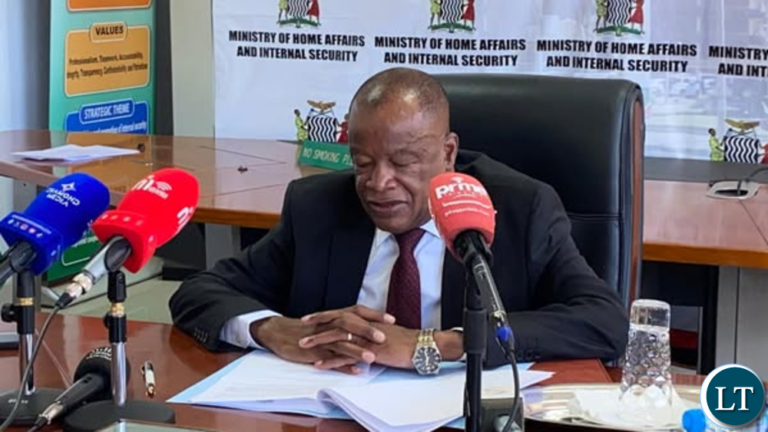
Speaking at the launch, Minister of Home Affairs and Internal Security, Jack Mwiimbu, who was represented by the ministry’s permanent secretary, Dickson Matembo, says that the committee will enable the country to strengthen its participation in regional and global platforms by contributing to a shared heritage of humanity.

“Without memory, there can be no identity and without identity, there can be no future,” said Mr Mwiimbu.

Mr Mwiimbu also reaffirmed government commitment to supporting the National Archives of Zambia as the national focal point for the memory of the world programme.

He said the government is committed to strengthen archival systems and partnerships with stakeholders in safeguarding the country’s heritage against loss and destruction.

And Acting UNESCO representative in Zambia, Alice Saili, who was represented by team leader in Zambia, Remmy Mukonka, described the launch as a decisive step that will position Zambia as a leader in global efforts to protect documentary heritage for future generations.

Ms Saili also expressed her institutional commitment to safeguard documentary heritage through a combination of capacity building, policy engagement and technical support.

Meanwhile, National Archives of Zambia Director, Chileshe Musukuma, added that the Memory of the World Committee will amplify the global significance of Zambian stories and contribute to national building and sustainable development.

Jason Simbeye didn’t escape, ZCS sets record straight

1

The Zambia Correctional Service (ZCS) has clarified that claims of mishandling Jason Simbeye’s release are false, stating that his freedom followed a lawful court acquittal and was not the result of a presidential pardon, administrative error, or escape.

The statement comes after media reports suggested that Simbeye’s release exposed institutional failure within ZCS and questioned its legality.

ZCS Public Relations Officer, Cornelius Mwanza, said that Simbeye was admitted to custody on July 23, 2022, following his conviction for aggravated robbery by the High Court at Chinsali, where he was sentenced to death under Criminal Case No. HE/82/2021. Simbeye was initially arrested after he reportedly participated in a robbery incident in which cash and property were unlawfully taken from victims in Mushindano District.

“At no point did the convict escape or was he released unlawfully,” Mwanza emphasized.

He explained that on August 20, 2025, the Court of Appeal of Zambia, sitting in Ndola, quashed Simbeye’s conviction, set aside the death sentence, and formally acquitted him. Upon receiving the binding court order, ZCS had no legal basis to continue holding him in custody.

Mwanza clarified that the release was not a presidential pardon, administrative amnesty, or sentence remission. “He was acquitted by a court of competent jurisdiction. Any suggestion that ZCS acted improperly in releasing him is factually incorrect and legally uninformed,” he said.

ZCS further noted that any actions by Simbeye following his acquittal fall entirely outside the mandate of the service and extended condolences to families affected by the incidents in Mushindano District.

Mwanza urged media houses, online publications, and content creators to verify information through official channels before publication, warning that unverified claims can damage public trust.

“The Zambia Correctional Service remains fully committed to its constitutional mandate and to transparency in all its dealings,” he added.