Wednesday, June 10, 2026
18.7 C
Lusaka
Home Blog Page 85

Presidential Candidates to Pay Fees from April 15

The Electoral Commission of Zambia (ECZ) has announced that April 15, 2026, will mark the commencement of payment of presidential nomination fees for aspiring candidates seeking to have their supporters pre-processed in provincial centres.

In a statement issued to the media , ECZ Chief Electoral Officer Brown Kasaro said the move is part of administrative measures aimed at improving the efficiency of the nomination process ahead of the August 2026 General Election.

Mr. Kasaro said the Commission has noted with concern misinformation circulating on various media platforms suggesting that the April 15 timeline applies to all candidates. He clarified that the directive is strictly for presidential candidates only.

He explained that those contesting parliamentary, mayoral, chairperson and councillor positions will only pay their nomination fees after the dissolution of Parliament and councils.

Mr. Kasaro also dismissed claims that the Commission has already begun receiving nomination fees prior to the dissolution of Parliament, stating that such reports are false and misleading.

He added that the pre-payment arrangement for presidential candidates is not new, noting that a similar system was successfully implemented during the 2016 and 2021 general elections to streamline the process.

“This administrative measure is intended to reduce the cost for aspiring presidential candidates to transport all the 1,000 supporters to Lusaka,” he said.

Mr. Kasaro further explained that the timelines are clearly outlined in the 2026 General Election Roadmap, which is accessible to all stakeholders.

He urged members of the public and stakeholders to verify information with the Commission to avoid spreading misinformation.

Meanwhile, the ECZ is expected to meet aspiring presidential candidates and their campaign representatives on April 17, 2026, to discuss modalities surrounding the pre-processing of supporters and payment procedures.

Former Education PS Jobbicks Kalumba Joins UPND

2

Former Ministry of Education Permanent Secretary – Technical Services, Jobbicks Kalumba, has officially joined the ruling United Party for National Development (UPND).

Dr. Kalumba said he was drawn to the party by the policies of President Hakainde Hichilema, which he described as sound and impactful across various sectors.

Speaking in Chiengi District, Dr. Kalumba praised the government’s free education policy and the introduction of a new school curriculum, noting that the reforms will benefit future generations.

He added that his experience in the civil service has given him insight into government operations, and commended the recruitment of thousands of teachers under the UPND, saying it demonstrates President Hichilema’s commitment to empowering citizens and improving livelihoods.

Dr. Kalumba further expressed his readiness to contribute to national development through the party, stating that he believes in the vision and direction of the current administration.

Meanwhile, Vice President Mutale Nalumango welcomed Dr. Kalumba to the party, emphasizing that the UPND remains open to all Zambians willing to join in the pursuit of unity and development.

Mrs. Nalumango said the party continues to attract individuals from diverse backgrounds who are committed to national progress, adding that inclusiveness is key to building a stronger and more united Zambia.

Musenge’s APP Joins Tonse Alliance Ahead of Elections

The All People’s Party (APP), led by former Copperbelt Minister Mwenya Musenge, has officially joined the Tonse Alliance ahead of the forthcoming general elections.

The announcement was made during APP’s national congress, where Shiwang’andu Member of Parliament Steven Kampyongo represented Tonse Alliance leader Brian Mundubile. The event attracted senior alliance leaders, party officials and supporters.

Tonse Alliance Copperbelt Information and Publicity Secretary Charles Kabwita described the move as strategic, saying it is expected to strengthen the alliance by expanding its support base and uniting like-minded political parties.

“This strategic alliance is expected to strengthen the Tonse Alliance by expanding its support base and uniting like-minded political forces committed to economic recovery, improved governance and national development,” Kabwita said.

He added that the inclusion of APP brings renewed momentum to the alliance’s campaign, positioning it as a strong and credible contender in the upcoming elections.

Kabwita further noted that the partnership is anchored on shared values, including restoring economic stability, improving service delivery and promoting inclusive, people-centred leadership.

Meanwhile, Mwenya Musenge expressed optimism about the alliance, stating that APP’s decision to join Tonse was driven by the need to work collectively with other opposition parties to address the country’s challenges.

He said unity among opposition political players is key to offering Zambians a viable alternative leadership ahead of the polls.

“We Are Competitors, Not Enemies” – Haimbe Sets Tone for Mature Politics in Lusaka Central

In a strong demonstration of confidence, leadership and political maturity, Lusaka Central Member of Parliament, Hon. Mulambo Haimbe, has reaffirmed his commitment to unity and democratic values, declaring that “we are competitors, not enemies.”

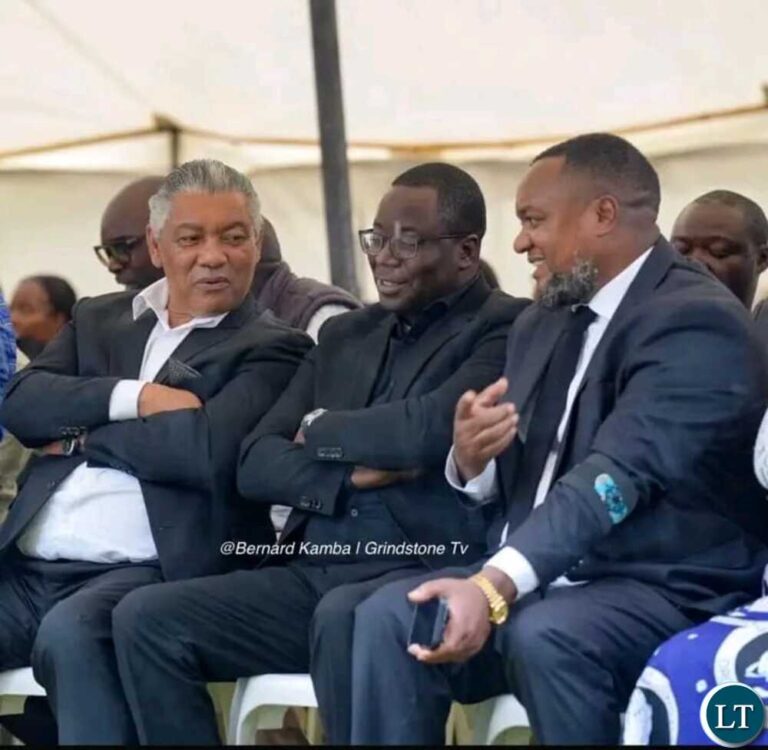
The statement comes as Hon. Haimbe was recently seen standing side by side with two aspiring candidates for the Lusaka Central Constituency—sending a message that leadership is not about intimidation, but about service, respect and vision.

Observers note that at a time when political tensions often rise ahead of elections, Hon. Haimbe’s approach reflects a shift toward more mature politics—one that embraces healthy competition without hostility and promotes coexistence over conflict. His posture signals confidence in his leadership record and a belief in democratic principles where every citizen has the right to contest freely.

Hon. Haimbe emphasized that Lusaka Central remains open to all individuals who wish to offer leadership, stressing that democracy thrives when people are given the space to participate without fear.

“Leadership must unite people around development and shared goals, not divide them through rivalry,” he said.

Residents and political analysts have described the stance as refreshing, noting that it fosters trust among citizens and strengthens democratic values within the constituency.

The move is also seen as a call for political players to conduct campaigns peacefully and focus on issues that directly affect the lives of the people, rather than engaging in confrontational politics.

As the country moves closer to the general elections, Hon. Haimbe’s message highlights the importance of tolerance, respect and unity in the democratic process.

His approach continues to position him as a leader focused on delivering development while maintaining peace and cooperation among all stakeholders.

President Hichilema arrives in Livingstone for ANTUSA Games

1

President Hakainde Hichilema has arrived in Livingstone, Southern Province to grace the 17th session of the Association for Non-Aligned Teacher Unions of Southern Africa (ANTUSA) Games.

 The Presidential Challenger Jet touched down at Harry Mwaanga Nkumbula International Airport at 10:35 hours, where the Head of State was met with a thunderous welcome from party members and the general public.

President Hichilema was received by some Cabinet Ministers among them, Minister of Education Douglas Syakalima, Minister of Tourism Rodney Sikumba, and Minister of Technology and Science Felix Mutati.

Also present were Southern Province Minister Credo Nanjuwa and other senior government and party officials.

The ANTUSA Games, which are being hosted by the Basic Teachers Union of Zambia (BETUZ), are running alongside a teachers’ marathon and an education expo.

The event has attracted over 10,000 teachers from Zambia and seven other Southern African countries, including Botswana, Namibia, Zimbabwe, and South Africa.

Don’t Join UPND Expecting Adoption – Nkandu

UPND Deputy Spokesperson Elvis Nkandu says those joining the ruling party should not do so with expectations of being adopted for positions or given appointments.

Commenting on the growing number of defections to the party on Thursday, Nkandu said people should join UPND because they believe in its values, policies and development agenda, not for personal gain.

He emphasized that the party is focused on service delivery and national development, adding that positions are not handed out as rewards for joining but are based on merit and the party’s internal processes.

Nkandu noted that while the party welcomes new members, it will not compromise its structures or principles to accommodate opportunistic ambitions.

“Joining the UPND should be about contributing to national development and supporting the vision of the party, not about expecting immediate benefits or adoption into positions,” he said.

He further urged those defecting from other political parties to align themselves with the party’s ideology and be ready to work with existing members in advancing government programmes.

Nkandu added that discipline and loyalty remain key values within the party, stressing that leadership positions will only be given to individuals who have demonstrated commitment and service over time.

He reaffirmed that the UPND remains open to all Zambians but cautioned against joining the party with unrealistic expectations.

I’m Still the Legal PF President – Sampa

Miles Sampa says he remains the legitimate president of the Patriotic Front (PF) until 2028.

Sampa also says he will continue to respect senior PF members who were appointed to positions of authority by late former president Edgar Lungu.

Meanwhile, Sampa has called on opposition political parties to unite, stating that no single opposition party can unseat the ruling party on its own.

Speaking in an interview, Sampa insisted that the court ruling which upheld the legitimacy of the PF extraordinary convention confirmed his mandate to lead the party for a full five-year term.

He said there should be no confusion regarding the party’s leadership, adding that his focus is on rebuilding and strengthening PF structures across the country.

Sampa further stressed the importance of unity within the opposition, noting that fragmentation only weakens their chances of forming government.

“No single opposition political party can manage to win elections alone. We need to come together, work together and offer Zambians a credible alternative,” he said.

He also assured party members that his leadership would be inclusive, promising to engage all factions within PF in order to foster reconciliation and stability.

Sampa added that respecting senior members who served under Edgar Lungu is key to maintaining the party’s legacy and ensuring continuity.

He urged PF members to remain calm and focused as efforts to resolve internal disputes continue, expressing confidence that the party will emerge stronger ahead of the 2026 general elections

PF is the Most Crashed Political Organisation – Chisanga

Lukashya PF Member of Parliament George Chisanga says the former ruling party is currently the most “crashed” political organisation in the country.

Meanwhile, Chisanga claims that Brian Mundubile is the most feared presidential candidate among opposition political leaders.

Speaking when he appeared on Diamond Live on Tuesday night, Chisanga said he hoped that the Patriotic Front (PF) would soon resolve its internal wrangles and emerge stronger ahead of the 2026 general elections.

He said the continued leadership disputes in the party were unfortunate and had created an impression of instability, thereby weakening its position as a key opposition force.

Chisanga noted that the PF needs to quickly reorganise and provide clear leadership if it is to regain public confidence and effectively challenge the ruling party.

He, however, maintained that Brian Mundubile remains a strong and credible leader who commands respect across the political divide.

“Mundubile is one of the most feared candidates because of his consistency and ability to articulate national issues. Once the party puts its house in order, he will be a force to reckon with,” Chisanga said.

He further urged PF members to prioritise unity and avoid actions that may deepen divisions, stressing that internal cohesion will be critical for the party’s survival.

Chisanga added that despite its current challenges, the PF still has a solid grassroots base, which can be revitalised if leaders focus on reconciliation and rebuilding structures.

He expressed optimism that with discipline and unity, the party can recover from its current state and remain relevant in Zambia’s political landscape.

Fuel Duty Removal Saved Economy – Musokotwane

3

Finance and National Planning Minister Dr Situmbeko Musokotwane says government’s decision to suspend import duty on fuel prevented a sharp rise in fuel prices that could have negatively impacted the economy.

Dr Musokotwane explained that without the intervention, fuel prices would have escalated significantly, leading to increased costs of transportation, goods and services, and ultimately putting pressure on households and businesses.

He said the move was part of government’s broader strategy to stabilise the economy and cushion citizens from the effects of global fuel price fluctuations.

“And Dr Musokotwane says government will engage the Teaching Service Commission over teachers who have continued to receive rural hardship allowances.”

The minister noted that concerns had been raised regarding the continued payment of rural hardship allowances to some teachers who have since been transferred to urban areas.

He said government is working to ensure that such allowances are only given to deserving beneficiaries in line with policy guidelines, adding that corrective measures will be taken where necessary.

Dr Musokotwane emphasised the need for prudent use of public resources, stating that government remains committed to ensuring fairness and accountability in the management of public funds.

M’membe calls for UPND exit ahead of August vote

LUSAKA — People’s Pact presidential candidate Dr Fred M’membe has declared that the ruling United Party for National Development must leave office in the August general election, fixing the campaign into a direct contest over leadership.

The statement strips the election of gradual framing and replaces it with a clear decision point, reducing the contest to whether the current administration should remain in office or be replaced when voters go to the polls. The message is built around outcome rather than process, giving it immediate clarity and forcing a response across the political field.

The timing places the statement at the front edge of an intensifying campaign cycle, where political parties are moving from preparation into structured execution. Internal processes are opening, campaign machinery is beginning to align, and messaging is becoming more deliberate as each side positions itself ahead of the vote.

By linking “true change” directly to August, the message compresses the election into a fixed national moment, removing ambiguity and narrowing the space for layered interpretation. It sets a tone that is likely to influence how the campaign unfolds, with emphasis shifting from broad positioning to decisive engagement with voters.

The broader political environment, however, remains unsettled, particularly within opposition ranks where internal tensions and leadership disputes continue to surface. These dynamics introduce pressure on cohesion, raising questions about how effectively a unified campaign can be sustained behind a message that requires coordination across structures.

That contrast is central to how the election is now taking shape, with one side advancing urgency around leadership change while parallel narratives emphasise continuity and the preservation of existing programmes. The divide creates a structured contest in which both positions must now be defended with equal clarity.

The presence of competing narratives signals that the campaign is no longer undefined, but is instead consolidating around two clear directions that will shape voter engagement. Each side is moving toward sharper communication, with less reliance on abstract positioning and greater focus on direct statements that define intent.

The August timeline intensifies this shift by compressing political activity into a narrower window, where internal inconsistencies and delays become more visible. As the election approaches, organisational strength becomes as critical as messaging, with parties required to demonstrate both clarity of position and stability of structure.

M’membe’s declaration stands as one of the earliest fully defined positions in the campaign, setting a direct line that compels an equally defined response from the ruling party. It establishes a framework that forces engagement on leadership rather than peripheral issues, shaping the terms on which the election will be contested.

The election is now settling into a structured contest built around continuity and change, with each political move measured against that central divide. Messaging, organisation and cohesion will determine how effectively each side carries its position into the final stages of the campaign.

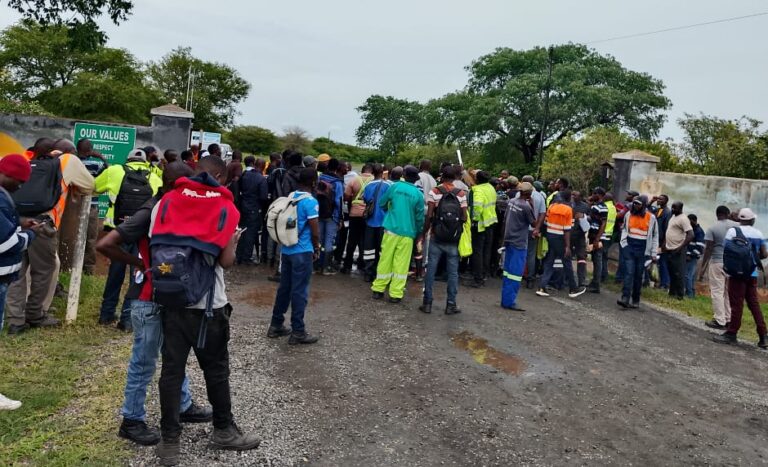
Ex-Munali Nickel Mine staff demand unpaid salaries and pensions

Former employees of Munali Nickel Mine have intensified their appeal for intervention over unpaid salaries, pension contributions and other outstanding obligations, with a named worker detailing how the situation unfolded on the ground.

The workers say the mine, currently under care and maintenance, still owes them several entitlements despite the appointment of a liquidator and repeated attempts to resolve the matter through official channels. They maintain that deductions were made from their earnings but were not remitted to the relevant institutions.

In a formal appeal, the former employees listed outstanding obligations that include three months’ unpaid salaries, pension contributions under Saturnia, unpaid National Health Insurance Management Authority contributions and gratuities. They state that these obligations remain unsettled.

The case is now reinforced by testimony from one of the affected workers, Moses Musonda, who identified himself as a former employee at Munali Nickel Mine in Mazabuka, Kafue. His account provides a sequence of events that aligns with the broader complaint raised by the workers.

“I’m Moses Musonda, I’m one of Mazabuka employees at Munali Nickel Mine in Mazabuka, Kafue. What is happening at the ground, they haven’t paid us our terminal benefits,” he said.

Musonda said the situation dates back to June last year, when workers were informed of financial difficulties at the mine. He stated that the company indicated it did not have the capacity to continue operations under the prevailing conditions.

“It started last year in June. They were saying they don’t have the money to run the company,” he said.

He explained that the company was later placed under liquidation, with assurances that employees would be paid their terminal benefits. According to his account, those assurances have not been fulfilled.

“Then later on, they put the company on liquidation and they choose a liquidator. After choosing the liquidator, they told us that we are going to be paid our terminal benefits. Up to now, they haven’t paid our terminal benefits.”

Musonda said the company attributed its financial position to market conditions linked to commodity pricing and operational costs. He added that workers were informed of plans to secure new investment.

“They were saying the nickel price on London Metal Exchange was down according to the operation cost challenges they are having at the mine. They will find a new partner to pump in the capital to run the mine. Up to now, they haven’t given us a concrete position.”

He further stated that prior to the liquidation process, workers were placed on administrative leave with assurances that salaries would continue to be paid. According to his account, that arrangement did not materialise in practice.

“Before it started, they forced us on administration leave, they told us, go home, we’ll be paying you monthly when you are at home,” he said.

Musonda stated that although payslips continued to be issued, the corresponding payments were not made. He added that statutory deductions were still reflected despite not being remitted.

“We received payslips, but they were not depositing our salaries or remitting them, even our NHIMA, NAPSA and our pension schemes, they were not remitting, but they were deducting us through the payslip.”

He said the situation persisted until November 2025, when termination letters were issued to the workers. That marked the end of employment without settlement of the outstanding obligations.

“Until last November, last year in November 2025, they sent us our termination letters.”

The broader group of former employees states that despite the appointment of a liquidator, there has been limited progress in resolving the matter. They say engagement efforts have not yielded satisfactory outcomes.

Attempts to seek intervention from the Ministry of Labour and Social Security, through the Labour Commissioner’s office, have also not resulted in a resolution. The workers indicate that the matter remains unresolved despite these approaches.

They describe the impact as significant, stating that the situation has placed financial and emotional strain on affected individuals and their families. The outstanding obligations, they maintain, involve earnings already deducted or owed under contractual arrangements.

The workers are now calling for urgent attention to ensure that the obligations are settled. They are also seeking wider visibility for the matter, expressing hope that this will prompt action from relevant authorities and stakeholders.

Appeal Court blocks liquidation of Ng’andu-linked firms

The Court of Appeal has halted the appointment of a provisional liquidator over two companies linked to Lusaka businessman Abel Ng’andu, citing procedural breaches that risk causing irreversible harm. This appeal court ruling emphasizes the importance of following proper legal procedures.

The ruling, delivered by Lady Justices Banda Bobo, A.N. Patel S.C. and Y. Chembe, sets aside an earlier decision and confirms a stay on the appointment of Tresphored M. Kabanga until the matter is fully heard in the lower court, highlighting the role of the appeal court in ensuring justice.

The dispute centres on Ng’andu Consulting Limited and ALD Plant and Fleet Management Limited, companies that have faced sustained legal and financial scrutiny in recent years. Proceedings to wind up the firms were initiated in the Ndola High Court on November 19 last year. A day later, Kabanga was appointed provisional liquidator through an ex-parte application, granting him authority over the companies’ assets, liabilities and operations. The involvement of the appeal court ensures that proper legal protocols are observed.

That appointment has now been suspended after the appellate court found the process defective. Central to the ruling was the failure by the lower court to set a return date for inter partes hearing following the ex-parte order.

“Rule 8 (3) of the Companies Winding Up Rules 2004 is a mandatory statutory requirement, ” the court said.

The judges stated that once a provisional liquidator is appointed without the presence of the opposing party, the law requires the court to fix a hearing date within three days for both sides to be heard.

“This is a mandatory provision of the Rules, ” the court said, adding that its purpose is to “inter alia, safeguard the interests of the company, the shareholders and other creditors.”

The court found that this safeguard was not observed, creating conditions that undermined procedural fairness.

Ng’andu had attempted to challenge the appointment and seek a stay in the lower court. The appellate court noted that his efforts were repeatedly delayed, even when urgent applications had been scheduled for hearing.

The ruling points to a specific instance where the opposing side was permitted to introduce a preliminary issue on the same day it was filed, without service to the other party.

“The fact of being allowed to argue an application to raise a preliminary issue, on the morning of it being filed and on the date on which the Court was meant to hear the application to set aside and fundamentally without service to the other side, is but one clear example of conduct oppressive to the Applicants, ” the court said.

The judges concluded that the result was a situation in which the urgent application was not heard, while the provisional liquidator continued operating under an active court order.

The court further observed that the liquidator acted with unusual speed and, in some instances, treated the company as though it was already in liquidation before the petition had been determined.

“We are of the considered view that the Applicants’ concern about not receiving fair treatment is justified in the circumstances.”

“Should the Court sit by as a mere bystander, watch the proceedings unravel and bemoan its inability to take conduct on account of procedural reasons?” the judges asked.

“From the special circumstances outlined above, there is the real intoxicating possibility of irreversible and irreparable harm being occasioned, ” the court said.

The appellate court rejected the earlier position of a single judge who had ruled that the matter was premature, noting that no substantive determination had yet been made in the lower court.

“We respectfully set aside the Ruling of the single Judge. We also confirm the Order staying the appointment of the provisional liquidator, until the Petition is heard and determined by the lower Court.”

The judges also highlighted administrative concerns, stating that the matter had been filed under different Court of Appeal numbers, leading to confusion and misfiling.

Attention was also drawn to the quality of the court record presented.

“The voluminous Record of the Notice of Motion itself, being in excess of 390 pages, comprises pages that are so illegible and faint that even with the aid of a magnifying glass, the Court has struggled to read certain content, ” the ruling said.

The court further noted that some pages appeared to contain material that could be considered privileged or confidential, raising additional concerns about how the record was compiled.

The case now returns to the lower court, where it is expected to be reassigned and heard afresh.

15 manganese processing factories in Central Province resume operations

3

Mine Contractors, Factories and Allied Workers Union President, Nkweto Kasonka, has disclosed that 15 manganese processing factories in Central Province have resumed operations after they were forced to shut down due to prolonged load shedding.

Speaking during a press briefing in Lusaka today, Mr Kasonka said the shutdown of the 15 factories in 2025, led to significant job losses, with over 2,000 workers affected in areas such as Kabwe, Serenje and surrounding districts.

He confirmed that all the affected factories have since resumed operations, with a substantial number of workers reinstated.

The Union President pointed out that most of the factories are currently operating at only 50 percent capacity due to limited power supply.

Mr Kasonka has since appealed to the government to further engage ZESCO Limited to increase electricity allocation to the affected industries.

“We are happy that the factories have resumed operations and workers are back, but we appeal to the government to ensure full power supply so that companies can operate at 100 percent capacity,” he said.

He emphasised that full power supply would enable the factories to operate at maximum capacity and create more employment opportunities.

Mr Kasonka also raised concern over the high cost of copper for local industries, noting that companies are forced to buy the commodity at international prices despite it being produced locally.

He urged the government to consider policy interventions that would allow local firms to access copper at more competitive rates, stating that such measures would strengthen domestic production and industrial growth.

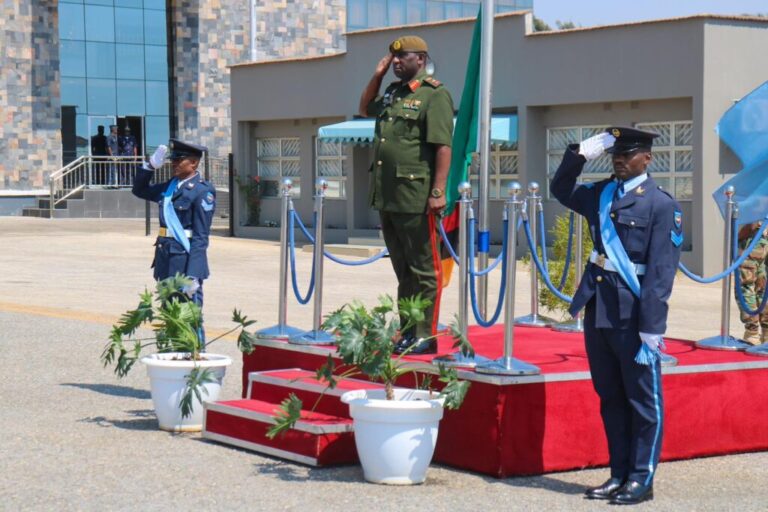
Zambia Army calls for enhanced collaboration with FQM

0

The Zambia Army in North-Western Province has called for enhanced collaboration with First Quantum Minerals (FQM) Trident to strengthen security and disaster preparedness in Kalumbila District.

 North-Western Province Formation Commander Brigadier General Barry Mutale made the call during a tour of FQM Trident operations, stating that the visit was aimed at consolidating the existing partnership and identifying new areas of cooperation, particularly in disaster management.

Brigadier General Mutale said changing global weather patterns have increased the risk of disasters, making preparedness a priority for the province.

He noted that closer collaboration between the Zambia Army and FQM will improve response capacity, especially by leveraging the mining firm’s equipment and expertise.

Brigadier General Mutale added that the Army remains ready to provide security support and consultations, as it is mandated to ensure safety across the Province.

He also commended FQM Trident for its environmental sustainability efforts, expressing optimism that the Army could learn from the company’s initiatives.

And First Quantum Minerals (FQM) Trident General Manager Scott Whitehead, reaffirmed the company’s commitment to continued collaboration with the Zambia Army.

Mr Whitehead said the mining firm values the role played by the Army in maintaining national security and emphasised the importance of partnerships in emergency preparedness, response and security coordination.

He added that FQM remains committed to safe operations, sustainability and contributing to Zambia’s economy through employment creation, infrastructure development and local procurement.

Meanwhile, First Quantum Minerals (FQM) Trident Senior Public Relations Specialist Mirriam Harmon described the company’s US$2.5 billion investment as a national asset with significant economic benefits.

Ms Harmon said collaboration with security institutions is key to safeguarding infrastructure, protecting communities and securing equipment.

She noted that the partnership extends beyond the mine to supporting surrounding communities, particularly in times of emergencies such as displacement.

Ms Harmon further highlighted that rapid population growth in Kalumbila, driven by increased investment, presents both opportunities and security challenges.

She however, expressed confidence in security agencies including the Zambia Police to maintain law and order and sustain a conducive environment for investment.

Ms Harmon emphasised the need for continued collaboration among stakeholders to promote stability and protect investments in the region.

Kabuswe: Government Delivers on Promise to Formalise Miners

1

Mines and Minerals Development Minister Paul Kabuswe says President Hakainde Hichilema has fulfilled his promise to transition illegal miners into formal participants in the mining sector.

Mr. Kabuswe explained that the initiative is aimed at restoring dignity among miners, particularly youths engaged in informal mining, while steering them away from criminal activities. He said government has rolled out programmes such as cooperative skills training and capacity-building for artisanal and small-scale miners.

He was speaking in Choma District during the official closing of an artisanal and small-scale mining cooperative training programme.

Mr. Kabuswe added that formalising the sector will not only improve safety standards but also increase government revenue through proper regulation and taxation, while ensuring miners operate in a structured and sustainable environment.

Meanwhile, Information and Media Minister Cornelius Mweetwa reaffirmed government’s commitment to ensuring that local people not only acquire mining licences but also own and benefit directly from mining operations. He noted that in the past, limited local participation had left the sector largely dominated by foreign and non-local entities.

Mr. Mweetwa said the current administration is focused on empowering Zambians to take a leading role in the country’s mineral wealth, adding that this will contribute to job creation and economic growth.

And speaking on behalf of the participants, Chimuka Kahumbu thanked government for the initiative, saying the training reflects a strong commitment to transforming small-scale mining into a structured and beneficial sector for Zambians.

He expressed optimism that the knowledge gained would help miners operate more professionally and safely, while improving their livelihoods.