Wednesday, June 17, 2026
18.3 C
Lusaka
Home Blog Page 87

UPND’s Longwe Calls Sampa Conduct ‘Ungrateful’ Amid PF Divisions

UPND’s Longwe Calls Sampa Conduct ‘Ungrateful’ Amid PF Divisions

LUSAKA, April 9, 2026 — A long-serving United Party for National Development member has criticised Miles Sampa’s conduct, describing it as damaging and unfair, while linking the situation to ongoing divisions within the Patriotic Front.

Charles Longwe, speaking during an interview on Hot FM, said developments within the opposition party reflect disorder and internal strain tied to leadership disputes and factional alignments. He described the situation as “chaos unleashed” and pointed to what he termed a breakdown in loyalty within party structures.

Longwe said Patriotic Front members had exercised restraint in their handling of Sampa but argued that his actions had contributed to tensions now visible across the party. He stated that citizens and political actors alike are expected to demonstrate loyalty and patriotism in their conduct.

“I do have an opinion and I see that as chaos unleashed, disorder and also disloyalty to the party,” Longwe said during the interview.

He added that his remarks were grounded in personal familiarity, noting that he and Sampa share a long-standing relationship, but maintained that this did not prevent him from expressing concern over recent developments.

“But Miles’ conduct is devastating. I don’t understand an individual like that. He’s ungrateful,” Longwe said.

The remarks come against the backdrop of ongoing disputes within the Patriotic Front involving rival factions and questions surrounding party leadership, including matters linked to the Registry of Societies. These disputes have led to competing claims over authority and direction within the party.

Longwe said the Patriotic Front had previously extended opportunities to Sampa despite his political movements between parties. He referred to Sampa’s return to PF and subsequent roles, including serving as Lusaka mayor and later being adopted as a parliamentary candidate.

“Patriotic Front was gracious to Miles… and still allowed him, he served as mayor of this city,” he said.

He stated that such opportunities should be met with a sense of responsibility, adding that repeated disagreements and public confrontations had strained relationships within the party.

Longwe also raised concerns about Members of Parliament whom he said were navigating political alignments in ways that lacked clarity. He argued that elected officials should take clear positions regarding party affiliation, particularly where questions of loyalty arise.

“I can tell you something. And I dare them to resign. They should resign,” he said.

He rejected suggestions that procedural processes alone should determine such matters, stating that individual responsibility remained central to political conduct.

“They are playing games… Those kind of things is what I call lawlessness. They are taking advantage of that process,” Longwe said.

According to Longwe, the remaining parliamentary calendar may limit the ability of formal processes to address such issues before the current session concludes. He said this creates a situation where unresolved questions about party allegiance could persist into the electoral period.

He added that individuals who identify with a political party should do so openly and without ambiguity.

“You can’t be eating with both hands,” he said, referring to lawmakers who maintain links to different political positions.

Longwe also spoke about internal expectations within the UPND, stating that loyalty and long-term commitment remain central to party participation. He cited his own experience, noting that he had spent over two decades in opposition without holding a government position.

“We stayed 23 years in opposition. We’ve paid the price,” he said.

He added that party members are expected to demonstrate commitment, even where immediate benefits are not apparent.

Longwe further indicated that individuals who do not clearly align themselves with party structures may face challenges in future candidate selection processes. He said that under leadership structures he associates with, such conduct would be taken into account when considering adoption for elections.

“These members of parliament who are behaving like this… they will not be adopted on UPND ticket,” he said.

The comments highlight ongoing political realignments as parties prepare for upcoming electoral processes, with internal discipline, party loyalty and leadership disputes remaining central issues across Zambia’s political landscape.

When Courts Let Procedure Trump Justice: A Tale of Two Zambian Rulings

When Courts Let Procedure Trump Justice: A Tale of Two Zambian Rulings
▪ APPELLATE ANALYSIS
A comparison of two recent Court of Appeal decisions reveals a troubling inconsistency in how Zambia’s appellate judiciary balances procedural rules against the demands of substantive justice — with one ruling exposing significant analytical gaps in the other

· Lusaka, April 2026

Two judgments handed down by Zambia’s Court of Appeal — one in June 2024, the other just days ago in April 2026 — ostensibly deal with different parties and different disputes. Yet placed side by side, they tell a single, unsettling story about how insolvency law can be weaponised to stage corporate takeovers, and about how the courts called upon to stop such manoeuvres do not always rise to the occasion.

The earlier case, Youjun Zhuang and Others v Bumu General Trading FZE, decided in June 2024, involved allegations that a group of individuals fabricated a debt, engineered winding-up proceedings against a company, and then used a consent order to appoint Lewis Chisanga Mosho — the very provisional liquidator already installed in the parallel winding-up proceedings by the same petitioning creditors — as business rescue administrator. This amounted to a brazen act of self-appointment by a man with an undisguised conflict of interest, all while deliberately excluding the company’s legitimate shareholder from every step of the process. The more recent ruling, Ng’andu Consulting Limited and Others v David Mwale, decided 1 April 2026, involved a strikingly similar playbook: a winding-up petition filed at a court far from where related proceedings were already pending, a provisional liquidator appointed by emergency ex parte order the very next day, and an aggressive campaign to seize company bank accounts before affected shareholders could be heard.

Both cases involved the same statute — the Corporate Insolvency Act No. 9 of 2017. Both involved the same fundamental complaint: that insolvency machinery was being used not to rescue or wind up a genuinely distressed company, but to dispossess shareholders of their corporate assets through judicial process. And both reached the Court of Appeal seeking urgent intervention.

The outcomes, however, could not have been more different. In Ng’andu, the Full Court intervened decisively, stayed the provisional liquidator’s appointment, ordered the matter reallocated to a different judge, and delivered a ruling bristling with judicial indignation at the procedural abuses it had witnessed. In Youjun Zhuang, the court upheld the appeal but on narrow procedural grounds, leaving the most serious legal questions entirely unresolved and the affected shareholder without any practical remedy.

“You cannot expect a party to apply to join proceedings it was deliberately excluded from and never told about. Yet that is precisely what the Youjun Zhuang court demanded.”
— Analysis — Court of Appeal Watch
The Locus Standi Trap

The most glaring flaw in the Youjun Zhuang judgment lies in how it handled the question of locus standi — the legal standing to bring a challenge. The court held, correctly as a matter of general principle, that a non-party to consent order proceedings must first apply to be joined to those proceedings before bringing a fresh action to set the order aside. Because Bumu General Trading had not done so, the court held that it lacked standing and allowed the appeal.

The problem is that this analysis was applied in a factual vacuum. Bumu General Trading was a shareholder of the company placed under business rescue. It was never served with any process. It was never notified of the business rescue proceedings as required by Section 23 of the Corporate Insolvency Act. It had no knowledge of the consent order until after it was entered. The entire scheme, as the High Court found, was designed to exclude it.

In Ng’andu, the Court of Appeal explicitly recognised that procedural rules must yield where special circumstances make it impossible or impractical to follow the normal route. The Ng’andu court refused to allow procedural formalism to defeat a legitimate grievance where the very reason the affected party could not follow normal procedure was the other side’s deliberate conduct. The Youjun Zhuang court asked none of these questions. It simply noted that the respondent had later joined the proceedings and suggested that cured the problem — without ever asking how a party excluded by design could have been expected to join earlier.

CASE AT A GLANCE · YOUJUN ZHUANG V BUMU GENERAL TRADING (2024)

Court: Court of Appeal, Kabwe (Civil Jurisdiction)
Decided: 19 June 2024
Coram: Makungu, Sichinga and Sharpe-Phiri, JJA
Core Issue: Whether a shareholder excluded from business rescue proceedings had standing to challenge a consent order appointing a business rescue administrator.
Outcome: Appeal upheld. High Court judgment set aside. Respondent found to lack locus standi. Substantive illegality questions left unresolved.

The Defective Appointment Nobody Examined

Perhaps the most significant analytical gap in Youjun Zhuang is what the court did not say. One of the respondent’s central complaints was that the provisional liquidator was appointed, and the consent order engineering business rescue was entered, without any notice to affected persons including itself as a shareholder. Section 23 of the Corporate Insolvency Act makes such notification mandatory. Order 42 Rule 5A of the Rules of the Supreme Court specifies what matters can be settled by consent order, and the respondent argued that appointing a business rescue administrator is not among them.

These are pure questions of law. They do not depend on who has standing. Even if the respondent lacked locus standi to personally challenge the consent order, the court could and should have addressed whether the order was legally competent in the first place. It did not. The legality of appointing a business rescue administrator by consent order under Zambian law therefore remains an open question, despite this case being the perfect vehicle for settling it.

In Ng’andu, the court was meticulous about the legal framework. It identified Rule 8(3) of the Companies Winding-Up Rules 2004 — which mandates that a return date must be set within three days of any ex parte provisional liquidator appointment — as a mandatory statutory requirement whose violation was immediately actionable. It described this provision as existing specifically to protect companies, shareholders and creditors from precisely the kind of rapid, unilateral asset seizure that was unfolding. The Youjun Zhuang court examined no equivalent provision, despite the analogous circumstances.

CASE AT A GLANCE · NG’ANDU CONSULTING V DAVID MWALE (2026)

Court: Court of Appeal, Lusaka (Civil Jurisdiction)
Decided: 1 April 2026
Coram: Banda-Bobo, Patel SC and Chembe, JJA
Core Issue: Whether the Court of Appeal had jurisdiction to stay a defective ex parte provisional liquidator appointment where the lower court was not hearing the applicants’ urgent applications with the required urgency.
Outcome: Single judge’s ruling set aside. Stay of provisional liquidator confirmed. Matter reallocated to a different judge. Strong judicial condemnation of ex parte litigation culture.

Fraud By Another Name

The High Court in Youjun Zhuang made findings of fraud against the appellants’ legal counsel — findings that the Court of Appeal rightly overturned as insufficiently evidenced. No registry staff were called to explain the duplicate cause number. The appellants’ matter was actually filed a day before the competing case with the same number. The specific fraud finding against counsel was unsupported.

But in correcting this error, the Court of Appeal made one of its own. It treated the fraud question as if it were entirely about the registry entry, when the respondent had in fact pleaded a far broader and more serious set of allegations. These included: that the underlying debt of USD 1,700,000 was fictitious and had already been rejected by a court in earlier proceedings; that the debt assignment of USD 50,000 to the first appellant was undocumented and manufactured; that business rescue proceedings were commenced without a formal demand being made; and that Lewis Chisanga Mosho — who had been placed in the winding-up proceedings as provisional liquidator at the instigation of the same petitioning creditors — then appointed himself, in effect, as business rescue administrator of the very company those creditors were targeting, without any independent judicial assessment of his fitness or his manifest conflicts of interest.

These allegations, if established, would represent exactly the kind of manipulation of insolvency frameworks that the Supreme Court — cited approvingly in Ng’andu — condemned in Fred M’membe and Post Newspapers Limited v Mboozi and Others. The Youjun Zhuang court referenced that case but drew no equivalent conclusions. Having set aside the narrow fraud finding, it simply moved on.

What makes the Youjun Zhuang case yet more troubling in retrospect is the identity of the administrator at its centre. Lewis Chisanga Mosho is not a peripheral figure in Zambian insolvency practice. He has been linked to a pattern of corporate takeovers in which the ambiguities and procedural gaps in the Corporate Insolvency Act No. 9 of 2017 are systematically exploited to gain control of companies through accelerated ex parte appointments, before affected shareholders or directors can mount a meaningful defence. In the Kingphar matter, Mosho moved from provisional liquidator to business rescue administrator in a single step, sponsored throughout by the same creditors whose debt claims were themselves disputed and unproven. The court record identifies Keith Mweemba Advocates — alongside PNP Advocates — as one of the law firms used to engineer and sponsor Mosho’s original appointment as provisional liquidator. What the court did not remark upon, and what makes the procedural architecture of this case particularly troubling, is that Keith Mweemba Advocates then appeared as counsel for the first and second appellants before the Court of Appeal — the very proceedings in which the legality of Mosho’s appointment was at issue. The firm that helped install the administrator was therefore also the firm arguing the appeal that ultimately succeeded in shielding that installation from judicial scrutiny. It was, on any fair reading of the facts, a self-appointment dressed in the language of judicial process, defended in court by the architects of that very process.

Most critically, Mosho’s conduct in insolvency proceedings had already attracted the personal attention of the Chief Justice of Zambia in the Post Newspapers judgment — the very authority cited approvingly by the Court of Appeal in Ng’andu. In that landmark decision, the Chief Justice personally reprimanded Mosho, condemning the manipulation of liquidation and rescue frameworks to achieve purposes that bore no resemblance to the legitimate aims those frameworks were designed to serve. The reprimand was direct and on the record. The Youjun Zhuang court cited the Post Newspapers case in its judgment but conspicuously failed to draw the obvious connection between the conduct condemned in that authority and the individual who stood at the very centre of the proceedings it was reviewing. That failure is not merely an analytical oversight — it is a missed opportunity to send an unambiguous signal that the courts will not be used as instruments of corporate capture by those who have already been found wanting. The proximity between Keith Mweemba Advocates and Lewis Mosho compounds this concern considerably. When the same law firm that sponsored an administrator’s appointment later appears as counsel for the parties who benefited from that appointment, in proceedings where the appointment’s validity is the central question, a court exercising its supervisory function over insolvency proceedings ought at minimum to acknowledge that structural conflict — even if it stops short of acting on it. The Youjun Zhuang court did neither. It allowed Keith Mweemba Advocates to argue and win the appeal without any observation about the firm’s prior role in the very transaction under scrutiny.

“The Ng’andu court asked whether it should sit as a mere bystander watching proceedings unravel on account of procedural reasons. The Youjun Zhuang court never asked that question at all.”
— Analysis — Court of Appeal Watch
Forum Shopping and Multiplicity of Actions

Both cases exhibit the same hallmark of tactical litigation: the deliberate scattering of related proceedings across different courts and different judges to prevent any single court from seeing the full picture. In Youjun Zhuang, there were at least three sets of proceedings — cause No. 2018/HPC/437 where a debt document was previously rejected, cause No. 2020/HPC/165 involving winding-up, and cause No. 2020/HB/15 involving business rescue — all between substantially the same parties and all arising from the same alleged debt. The High Court noted the pattern. The Court of Appeal mentioned it briefly but made nothing of it.

In Ng’andu, the court was more alert to the problem. It noted at the outset that the dispute had generated at least three separate causes of action before three different lower courts and described this openly as creating “the very obvious potential of abuse by the multiplicity of actions scattered over the Courts in the Country.” It drew an explicit analogy to the Post Newspapers saga. While it refrained from deciding the multiplicity question on the merits, it flagged it prominently as a live and serious concern.

The contrast is instructive. Multiplicity of actions in insolvency disputes is not merely a procedural nuisance — it is frequently the mechanism by which the scheme operates. Each separate court, seeing only a fragment of the overall picture, is more easily persuaded to grant the immediate relief sought. The Youjun Zhuang court’s failure to engage with this pattern as a legal issue, rather than mere background colour, may have contributed to its incomplete analysis of what was actually alleged.

A Remedy That Left Parties Adrift

Procedural criticism aside, perhaps the most practical failing of the Youjun Zhuang judgment is its conclusion. Having allowed the appeal, the court awarded costs to the appellants and said nothing more. It issued no guidance on the status of the business rescue administrator whose appointment the High Court had declared void. It gave no directions on whether proceedings should continue before Justice Kamwendo, who had endorsed the original consent order. It did not address what rights the respondent shareholder retained or how it might properly pursue its concerns.

In a corporate insolvency context, these omissions are not trivial. A business rescue administrator clothed with statutory powers needs clarity about whether those powers subsist. A shareholder whose company is under administration needs to know its options. The court’s silence on all these points left the parties in a legal limbo that the judgment itself had done nothing to resolve.

Compare this to the precision of the Ng’andu conclusion. The court confirmed the stay in clear terms pending the hearing and determination of the setting-aside application. It directed the Judge in Charge to reallocate the matter to a different court — an important step given the applicants’ well-founded complaint about unequal treatment. It reserved costs to abide the outcome. Each order had a clear practical effect. The parties knew exactly where they stood.

What This Means for Insolvency Practice

Taken together, the two cases illuminate both the strengths and the weaknesses of Zambia’s emerging insolvency jurisprudence. The Corporate Insolvency Act 2017 created a modern legislative framework, but its protections are only as effective as the courts’ willingness to enforce them. Ng’andu demonstrates that Zambia’s appellate judiciary is capable of sophisticated, contextually sensitive analysis that prioritises substance over form when justice demands it. Youjun Zhuang demonstrates that such analysis is not yet consistently applied.

The practical stakes are high. Where insolvency proceedings can be initiated on the basis of unverified debt claims, where administrators can be appointed ex parte without return dates, where affected shareholders can be excluded from proceedings affecting their own companies, and where courts do not consistently interrogate these patterns, the insolvency framework becomes a tool of dispossession rather than a mechanism of legitimate debt recovery.

The Ng’andu court ended its ruling with a sharp rebuke of the growing culture of ex parte litigation. These are welcome signals of judicial discipline. Whether they will be consistently applied — across all courts, in all cases, including those where the aggrieved party is a foreign shareholder challenging a well-connected administrator — remains to be seen.

What is clear from reading these two decisions together is that Zambia’s corporate insolvency law is at a crossroads. The legislature has provided the tools. The question is whether the courts will wield them with the consistency and courage that genuine justice requires.

A Timely Message for the Legal Profession

As these judgments circulate through Zambia’s legal community, they arrive at a particularly apposite moment. The Law Association of Zambia is convening its Annual General Meeting in Livingstone, with the role of lawyers in promoting economic growth listed as a key agenda item. It is a worthy and important topic. But the cases examined in this article offer a sobering illustration of what that conversation must honestly confront: businesses cannot thrive, attract investment, or generate sustainable growth when the very legal frameworks designed to govern their distress are weaponised by parties and their lawyers as instruments of dispossession.

The Companies Act and the Corporate Insolvency Act exist to provide orderly, fair, and transparent mechanisms for resolving corporate difficulties. When those mechanisms are abused — when winding-up petitions are filed on fabricated debts, when provisional liquidators are appointed without return dates, when administrators install themselves through consent orders engineered by their own sponsors, and when law firms play both sides of the same transaction — the damage extends far beyond the individual company under siege. It corrodes investor confidence, deters foreign capital, and signals to the market that corporate assets in Zambia can be captured through judicial process faster than legitimate shareholders can mount a defence. No economy can grow on those terms.

This is precisely why the Ng’andu judgment matters well beyond its immediate facts. In refusing to sit as a bystander while a defective ex parte appointment was used to strip shareholders of their company, and in expressly condemning the culture of ex parte litigation that has taken hold in Zambia’s insolvency courts, the Court of Appeal sent a message that the legal profession’s contribution to economic growth depends not only on technical skill but on professional integrity. The AGM in Livingstone offers the Law Association an opportunity to go further — to examine, candidly and on the record, the standards expected of lawyers who appear in insolvency proceedings, the ethical obligations that attend the sponsorship of court-appointed officeholders, and the consequences that should follow when those obligations are disregarded. The Ng’andu ruling has opened the door. The profession must decide whether to walk through it.

✦ ✦ ✦

SUMMARY OF IDENTIFIED FLAWS — YOUJUN ZHUANG (2024)

Flaw 1 — Locus Standi Applied Without Context. The court required prior joinder without asking whether deliberate exclusion made earlier joinder impossible or impractical.

Flaw 2 — Statutory Illegality Left Unexamined. Section 23 of the Corporate Insolvency Act and Order 42 Rule 5A RSC arguments were never addressed on the merits.

Flaw 3 — Defective Appointment Overlooked. The foundational ex parte appointment was never scrutinised against Rule 8(3) of the Winding-Up Rules 2004.

Flaw 4 — Mosho’s Self-Appointment and Broader Fraud Allegations Abandoned. Overturning the narrow registry fraud finding without engaging the fabricated debt allegations, Mosho’s self-appointment, his pattern of suspicious takeovers, his prior reprimand by the Chief Justice, or the role of Keith Mweemba Advocates in sponsoring that appointment before appearing as appellants’ counsel in the same proceedings, left the core complaint entirely unaddressed.

Flaw 7 — Keith Mweemba Advocates’ Dual Role Unaddressed. The firm identified in the pleadings as having sponsored Mosho’s appointment appeared as appellants’ counsel before the Court of Appeal in the same proceedings. This structural conflict was never acknowledged or scrutinised by the court.

Flaw 5 — Multiplicity of Actions Ignored. A pattern of fragmented, tactical litigation across multiple courts was noted but never legally analysed as potential abuse of process.

Flaw 6 — No Consequential Orders. The parties were left without guidance on the status of the business rescue administrator, the pending proceedings, or the shareholder’s future options.


Source:

Civil Service Commission recruits over 3, 000 health workers

3

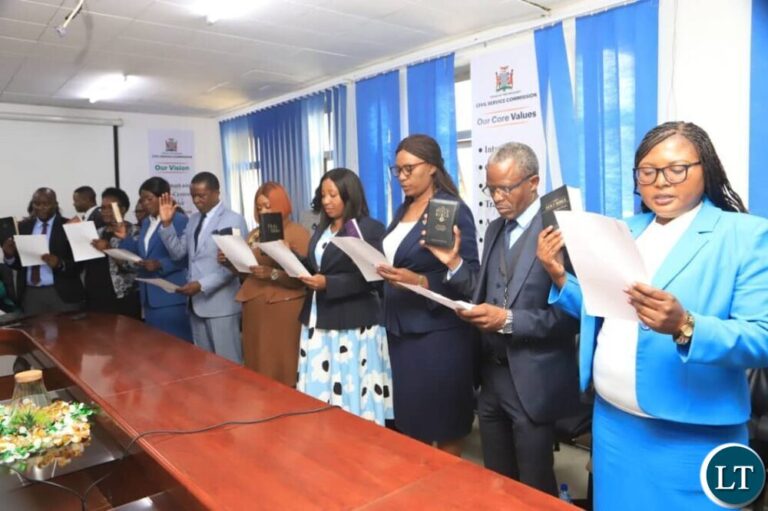
The Civil Service Commission has announced the recruitment of 3, 205 health Workers, across the Country.

Speaking at a press briefing in Lusaka, Civil Service Commission Chairperson, Choolwe Beyani, disclosed that the Commission promoted and transferred 2, 149 officers under the process which was done in two phases.

He has added that this resulted in the recruitment of 2, 205 first appointments, with an additional 1,000 arising from natural attrition, including retirements, resignations, and contract expirations.

Dr Beyani further revealed that Cholera volunteers were employed under this category as well as Persons with disabilities who were allocated 10 percent of the vacancies.

The Commission Chairperson has further announced that names of successful candidates will be published in the Zambia Daily Mail and Times of Zambia on April 10, 2026.

Dr Beyani has urged candidates to collect appointment letters from provincial centers between April 20th 2026 and April 30, 2026, and report to their assigned stations no later than June 1, 2026.

He has warned that any applicant who will not report by the stated date without prior notification risks having their appointment revoked and replaced.

He has emphasised that the recruitment process followed the Service Commissions Act Number 10 of 2016, with Human Resource Management Committees at district and provincial levels ensuring transparency, inclusiveness, and accountability.

Dr Beyani has stated that the Civil Service Commission, Public Service Management Division, and Ministry of Health provided technical oversight at national level, in line with the government’s decentralisation agenda.

He has assured that appointments have therefore been drawn from all provinces of the country ensuring fairness and equal opportunities.

Dr Beyani has further described the recruitment as evidence of the government’s commitment to addressing human resource shortages in the health sector.

“I therefore implore all the newly recruited health workers to take this opportunity given by the President as a challenge to improve the provision of health services in your various fields by placing the needs of the people you are serving first.

“I also urge existing officers to whole-heartedly welcome the newly recruited officers and assist them to settle in their respective roles,” Dr Beyani said.

Mwiimbu launches UNESCO heritage protection committee

0

Government has launched the Unesco Memory of the World Committee that is aimed at identifying, safeguarding and promoting Zambia’s documentary heritage in line with international standards.

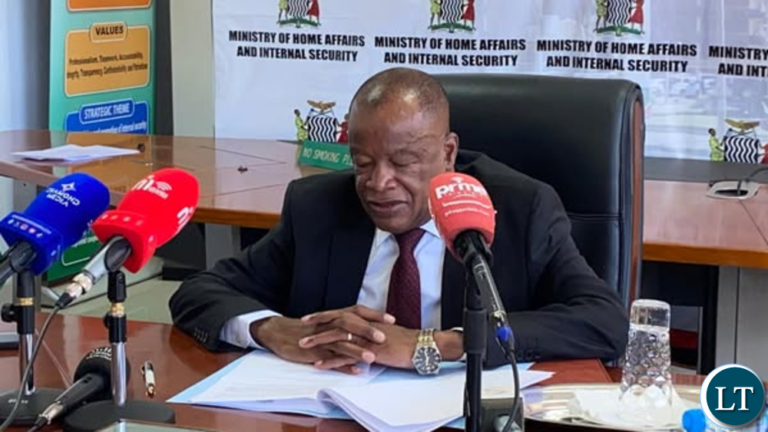
Speaking at the launch, Minister of Home Affairs and Internal Security, Jack Mwiimbu, who was represented by the ministry’s permanent secretary, Dickson Matembo, says that the committee will enable the country to strengthen its participation in regional and global platforms by contributing to a shared heritage of humanity.

“Without memory, there can be no identity and without identity, there can be no future,” said Mr Mwiimbu.

Mr Mwiimbu also reaffirmed government commitment to supporting the National Archives of Zambia as the national focal point for the memory of the world programme.

He said the government is committed to strengthen archival systems and partnerships with stakeholders in safeguarding the country’s heritage against loss and destruction.

And Acting UNESCO representative in Zambia, Alice Saili, who was represented by team leader in Zambia, Remmy Mukonka, described the launch as a decisive step that will position Zambia as a leader in global efforts to protect documentary heritage for future generations.

Ms Saili also expressed her institutional commitment to safeguard documentary heritage through a combination of capacity building, policy engagement and technical support.

Meanwhile, National Archives of Zambia Director, Chileshe Musukuma, added that the Memory of the World Committee will amplify the global significance of Zambian stories and contribute to national building and sustainable development.

Jason Simbeye didn’t escape, ZCS sets record straight

1

The Zambia Correctional Service (ZCS) has clarified that claims of mishandling Jason Simbeye’s release are false, stating that his freedom followed a lawful court acquittal and was not the result of a presidential pardon, administrative error, or escape.

The statement comes after media reports suggested that Simbeye’s release exposed institutional failure within ZCS and questioned its legality.

ZCS Public Relations Officer, Cornelius Mwanza, said that Simbeye was admitted to custody on July 23, 2022, following his conviction for aggravated robbery by the High Court at Chinsali, where he was sentenced to death under Criminal Case No. HE/82/2021. Simbeye was initially arrested after he reportedly participated in a robbery incident in which cash and property were unlawfully taken from victims in Mushindano District.

“At no point did the convict escape or was he released unlawfully,” Mwanza emphasized.

He explained that on August 20, 2025, the Court of Appeal of Zambia, sitting in Ndola, quashed Simbeye’s conviction, set aside the death sentence, and formally acquitted him. Upon receiving the binding court order, ZCS had no legal basis to continue holding him in custody.

Mwanza clarified that the release was not a presidential pardon, administrative amnesty, or sentence remission. “He was acquitted by a court of competent jurisdiction. Any suggestion that ZCS acted improperly in releasing him is factually incorrect and legally uninformed,” he said.

ZCS further noted that any actions by Simbeye following his acquittal fall entirely outside the mandate of the service and extended condolences to families affected by the incidents in Mushindano District.

Mwanza urged media houses, online publications, and content creators to verify information through official channels before publication, warning that unverified claims can damage public trust.

“The Zambia Correctional Service remains fully committed to its constitutional mandate and to transparency in all its dealings,” he added.

Government optimistic about copper output target

2

Government has expressed confidence that Zambia is on course to achieve one million metric tons of copper production following record-breaking output in 2025.


Speaking during the Public Private Dialogue Forum (PPDF) Mining Technical Working Group meeting held at Mulungushi International Conference Centre, Ministry of Mines and Minerals Development Permanent Secretary, Hapenga Kabeta said last year marked a historic milestone for the sector.


“Our production figures for copper reached about 891,000 metric tons by the end of 2025, the highest ever recorded since Zambia’s independence,” Dr Kabeta said.


He noted that the achievement reflects the positive impact of ongoing reforms and strengthened collaboration between government and the private sector.


“We are optimistic that, working together with the private sector, we shall achieve the one million metric tons target, as indications show that we are on course,” he said.


Dr Kabeta further highlighted key legislative reforms undertaken in 2025, including the enactment of the Minerals Regulation Commission Act and the Geological and Minerals Development Act.


“These reforms have strengthened governance in the sector and created a more predictable and transparent operating environment,” he said.


He added that the introduction of local content regulations is expected to increase participation of Zambians in the mining value chain.


“The local content framework ensures that local suppliers and businesses actively benefit from mining activities,” he said.


Meanwhile, Acting Director of Strategic Communication and Partnerships at PPDF, Francesca Phiri said the forum remains committed to facilitating dialogue aimed at addressing challenges in the mining sector.


“The PPDF continues to provide a platform for structured engagement between the government and the private sector to unlock bottlenecks affecting the industry,” Ms Phiri said.


She identified key challenges affecting the sector as regulatory inefficiencies, licensing delays, infrastructure limitations, and limited access to finance.


“These issues are being systematically reviewed and prioritized to ensure timely policy interventions and improved sector performance,” she said.


Ms Phiri added that the forum is working to enhance coordination among stakeholders and support implementation of agreed reforms.


“Our goal is to improve the business environment, enhance transparency, and unlock the full potential of the mining sector as a driver of economic growth and job creation,” she said.


The meeting also emphasised the need for predictable policy reforms and sustained collaboration to maintain the sector’s growth trajectory.

UPND reports ‘president’ Patrick Banda to police for impersonation

The United Party for National Development (UPND) has formally reported Patrick Tembo Banda to the Zambia Police Service Headquarters for allegedly masquerading as the party’s president.

UPND Media Director, Mark Simuuwe, stated that he, along with Charles Longwe and Charles Kakula, reported Banda, believing that the trio has been collaborating to undermine the party’s established leadership structures.

Banda recently declared himself Interim UPND president and claimed that the current intra-party elections are illegal, asserting that the tenure of the party’s National Management Committee expired in February.

Simuuwe said reporting Banda to the police was necessary, as his actions risk misleading party members and the public regarding the party’s legitimate leadership and internal processes.

“Banda had previously left the UPND and only renewed his membership a few months ago, making his current claims to leadership both irregular and inconsistent with the party’s internal rules,” he explained.

He clarified that Banda does not meet the eligibility criteria to contest any party position because he has not been consistently renewing his party membership card, as required by the party constitution, which outlines conditions for aspiring leaders.

Simuuwe emphasized that the UPND has a structured constitution with defined procedures guiding how members can ascend to leadership positions, including the presidency, through democratic and transparent electoral processes.

“President Hakainde Hichilema remains the duly elected president of the UPND and the legitimately elected Republican President of Zambia following the party’s established internal processes and the national electoral mandate,” Simuuwe added.

He further stated that the matter involving Banda and his interim team of alleged impersonators has now been handed over to law enforcement for thorough investigations.

Cops Nab Two Foreigners Over K520,000 Theft in Chingola

1

Police in Chingola have apprehended two foreign nationals in connection with the theft of K520,000 from a businessman’s vehicle, while two other suspects remain on the run.

Copperbelt Province Police Commanding Officer Mwala Yuyi confirmed the development in a statement, noting that the incident occurred yesterday around 11:30 hours.

The suspects have been identified as Edwin Khanye, aged 53, a South African national, and Thembi Dube, aged 40, a Zimbabwean national.

According to police, the duo, together with two accomplices still at large, allegedly stole K520,000 from a motor vehicle belonging to Nicky Zhu of Fallen Mining Company.

Mr Yuyi explained that the incident happened at Megaegg Company premises, where the victim had briefly left the money on the front passenger seat of his vehicle. The suspects are believed to have trailed the victim from FNB Bank, where he had withdrawn the cash, before breaking into the parked vehicle and stealing the money.

The stolen funds were reportedly intended for the payment of workers’ salaries.

A security officer at the premises noticed the theft and attempted to stop the suspects by firing a gunshot at their getaway vehicle. The shot caused the vehicle to lose control, forcing the suspects to abandon it and flee into nearby bushes.

Police later apprehended Khanye near the abandoned vehicle. Dube was also captured after attempting to escape on a bus to Lusaka, where alert members of the public intercepted him and handed him over to authorities.

A search of the abandoned vehicle led to the recovery of a separate pair of number plates bearing registration CAH 6743 ZM, as well as a rivet gun believed to have been used to fix the plates. However, the stolen money has not yet been recovered.

Meanwhile, two other suspects identified as Zonke Nyoka and Richard Dubuzi are still on the run.

Mr Yuyi stated that a manhunt has since been launched, and investigations into the matter are ongoing.

Young Girl Dies After Hyena Attack in Eastern Province

3
A seven-year-old girl has died and another teenager is in critical condition following separate hyena attacks in Lundazi District, Eastern Province.

Eastern Province Police Commanding Officer Robertson Mweemba confirmed that the incidents occurred yesterday in the area of Senior Chief Mwase.

The deceased has been identified as Christina Phiri, aged seven, while the injured victim is Mada Ndhlovu, aged 14. Both are from Kaputwa village.

Mr Mweemba explained that in the first incident, Christina was attacked while walking home from Chidididi Primary School, where she had gone to fetch water.

He said the hyena dragged the child into the bush, and although her mother managed to rescue her, she later succumbed to her injuries.

The second attack occurred when Mada was also returning from the same school. She was rescued and taken to Ntitimila Rural Health Centre, where she is currently receiving treatment.

Police have since urged members of the public in the area to remain vigilant and take precautions, especially for children moving to and from school, as investigations and safety measures continue

Power prepares for Nkana with victory over Mines

0

Ahead of this Saturday’s Kitwe derby against Nkana, leaders Power Dynamos restored a four-point lead at the top of the Super League after thrashing bottom side Mines United 3-0 at home on Wednesday.

Kenyan striker Moses Shumah grabbed a brace in this rescheduled Week 20 fixture at Arthur Davies Stadium after Austin Muwowo had handed Power a 15th minute lead.

The victory pushed Power to 55 points, four ahead of second placed Red Arrows as at Week 27.

Power boasts two more games in hand.

“It was important to get maximum points today as we go to the last phase of the league especially when playing at home,” said Power coach Oswald Mutapa.

Power shifts focus to the Kitwe derby against Nkana scheduled for Saturday, 11th April 2026 at the Levy Mwanawasa Stadium in Ndola.

“We have just prepared for the derby by collecting maximum points today against Mines United. This is enough preparation,” Mutapa said.

In another game played on Wednesday, Kabwe Warriors moved into third position on the table after beating Mighty Mufulira Wanderers 2-0 in Kabwe thanks to goals scored by Saith Sakala and Jackson Kampamba.

Warriors have displaced Nchanga Rangers, who suffered a 2-1 loss at FC Muza in Mazabuka.

Malila Defends Judicial Silence Amid Criticism

2
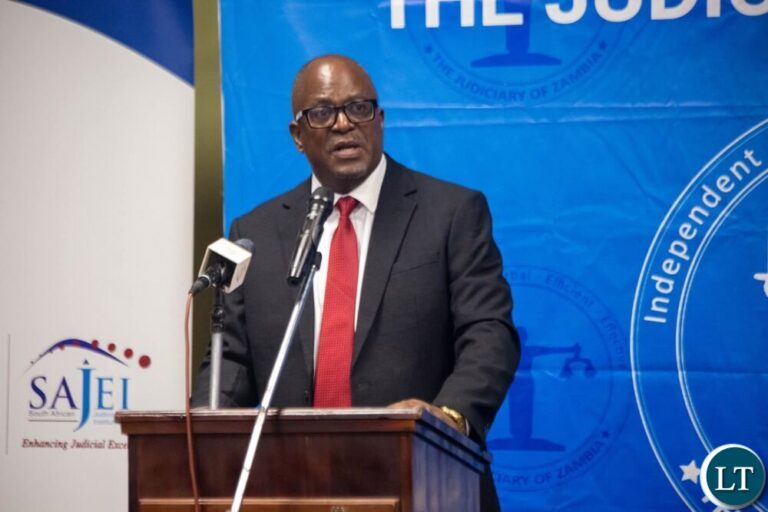
Chief Justice Mumba Malila says judges do not respond to attacks in the media or on political platforms regarding court decisions, stating that their silence is deliberate and not a sign of weakness.

Dr Malila said the judiciary’s approach is guided by principle, noting that engaging in public disputes over judgments would undermine the integrity of the courts.

“And Dr Malila has warned that failure to uphold judicial independence undermines the rule of law, weakens democracy and gives rise to impunity and authoritarianism.”

He further observed that some critics take pleasure in repeatedly ridiculing judges on social media and issuing directives without regard for legal limitations.

The Chief Justice said it is regrettable that judges must remain composed in the face of such criticism, emphasising that the judiciary is bound by ethical standards that restrict public engagement on decided matters.

He reiterated that judicial officers are required to uphold professionalism and impartiality at all times, even when subjected to public scrutiny.

Dr Malila stressed that maintaining respect for the judiciary is essential for preserving public confidence in the legal system and ensuring that justice is administered without fear or favour.

Zambia Records 1,401 Tonnes of Cobalt Production from 2019 to 2024

Mines and Minerals Development Minister Paul Kabuswe says Zambia produced about 1,401 tonnes of cobalt between 2019 and 2024.

Kabuswe added that the country exported approximately 1,876.7 tonnes of cobalt during the same period.

He was responding to a question from Chilubi Member of Parliament Mulenga Fube, who sought to know the annual tonnage of cobalt produced and exported between 2019 and 2024.

The minister attributed the relatively low levels of cobalt production to the poor performance of copper mines in previous years.

“The amount of cobalt produced countrywide from 2019 to 2024, year by year, was as follows: 2019, 367 tonnes; 2020, 221 tonnes; 2021, 240 tonnes; 2022, 251 tonnes; 2023, 226 tonnes; and 2024, 96 tonnes,” Kabuswe said.

He explained that cobalt is largely produced as a by-product of copper mining, and that fluctuations in copper production directly affect cobalt output.

Kabuswe noted that Government is implementing measures aimed at revitalising the mining sector in order to increase both copper and cobalt production.

He said improved performance in the mining industry is expected to enhance output levels and boost export earnings for the country.

The minister added that ongoing investments and reforms in the sector are aimed at strengthening production capacity and ensuring sustainable growth in mineral output.

Government Introduces Seven Bills in Parliament

1

Government yesterday introduced seven bills in the National Assembly, among them the Benefits of Former Presidents and Former Vice Presidents Bill.

The proposed law seeks to provide for the retirement benefits of former presidents and former vice presidents of Zambia and to repeal and replace the Benefits of Former Presidents Act of 1993.

The Bill was presented to the National Assembly by Vice President Mutale Nalumango.

“Madam Speaker, I beg to present a Bill titled the Benefits of Former Presidents and Former Vice Presidents Bill, National Assembly Bill No. 5 of 2026. The objects of this Bill are to provide for the retirement benefits of former presidents and former vice presidents of the Republic; repeal and replace the Benefits of Former Presidents Act of 1993,” she said.

The introduction of the Bill forms part of a broader legislative agenda in which Government tabled seven proposed laws for consideration by Parliament.

The new Bill is expected to outline the entitlements and conditions of service for former holders of the offices of President and Vice President, as well as provide an updated legal framework governing their retirement benefits.

Debate on the proposed legislation is expected to take place in the National Assembly as Members of Parliament scrutinise its provisions.

Lubinda Questions Convention Outcome as PF Wrangles Intensify

Former Justice Minister Given Lubinda has resurfaced after nearly three weeks following his electoral defeat to Makebi Zulu at the disputed “no name convention,” raising concerns over the conduct of the process.

Speaking to the media, Lubinda said the convention was not conducted in the manner he and other candidates had been assured.

“The convention was not convened and managed in a manner that I was assured it would be handled,” he said.

Lubinda alleged that candidates had been promised independent monitors across all districts, but later discovered that the monitors were allegedly selected by an interested party.

“I was shocked to learn that the monitors sent around the country were chosen by the manager of the election, who himself was a preferred candidate,” he said.

He acknowledged that the outcome of the convention did not meet his expectations.

“Evidently, the convention did not produce the result that I anticipated,” Lubinda said.

Lubinda further stated that his disappointment was compounded by what he described as a lack of support from some individuals he had trusted within the party.

“Many of the people in whom I deposited total trust and confidence did not stand by me. Some who dipped in the same soup bowl with me turned against me,” he said.

He revealed that he, together with other unsuccessful candidates including Greyford Monde and Chishimba Kambwili, filed a petition outlining 16 grounds of dissatisfaction over the conduct of the convention.

According to Lubinda, the petition was dismissed without the petitioners being given an opportunity to be heard.

“The petition was heard without the petitioners. Where on earth does that happen?” he questioned.

He also challenged the declaration that the elections were free and fair, arguing that those who managed the process were the same individuals who made the final determination.

Lubinda dismissed allegations that he was holding secret meetings aimed at destabilising the party, stating that he has the right to associate freely.

The developments come amid ongoing internal disputes within the Patriotic Front (PF), with factions contesting the party’s leadership.

PF faction publicity and information chairperson Emmanuel Mwamba has maintained that Makebi Zulu is the legitimate faction president, citing his victory in the convention.

According to Mwamba, Zulu secured 49.2 percent of the vote from 110 districts, ahead of other contenders including Lubinda, Chitalu Chilufya and Chanda Katotobwe.

However, Matero Member of Parliament Miles Sampa has disputed the outcome, declaring himself PF president and citing a Lusaka High Court ruling, in addition to dissolving party structures.

The internal wrangles have intensified as factions continue to exchange accusations while contesting control of the party ahead of the August 13 general elections.

Ndola Taxi Driver Arrested for Assaulting Traffic Officer

3

A taxi driver in Ndola has been arrested after allegedly assaulting a traffic police officer following a road traffic offence.

The suspect, Charles Zulu, aged 23 of Pamodzi Township, is accused of assaulting Sergeant Charles Mandefu on Wednesday afternoon along Kalewa Road.

According to police, the incident occurred when Sergeant Mandefu and other officers were conducting routine patrols and observed that Zulu had parked his vehicle in the middle of the road, obstructing traffic.

The officer approached the driver and charged him with obstruction of the roadway, an impoundable offence under Section 188 of the Roads and Road Traffic Act No. 11 of 2002.

At the time, Zulu was driving a Honda Fit, registration number BBE 3944, and had an elderly female passenger on board. Police say the officer allowed him to first drop off the passenger before proceeding to the police station.

Police spokesperson Godfrey Chilabi said Sergeant Mandefu boarded the vehicle and instructed the driver to head to the police station.

“However, the elderly passenger requested to be dropped off at Kawama Township first, a request the officer granted,” Mr Chilabi said.

After dropping off the passenger, the driver allegedly refused to comply with the instruction to proceed to the police station and instead assaulted the officer.

Following the incident, police launched investigations which led to the apprehension of Zulu. He is currently in police custody and is expected to appear in court soon.