We Normalize and Not Analyze Failure
By Dr. Field Ruwe
The aerial beauty of Lusaka, the capital city of Zambia, evokes a sense of pride. This vibrant capital seamlessly melds modern architecture with distinctive British colonial buildings. It has recently been graced by the Chinese with stylish skyscrapers. Lately, Lusaka has become a place where men and women walk with their heads held high, as if they are the ones who transformed it into what it is today with their ingenuity.
I equate Lusaka with the Trojan Horse myth of the city of Troy. During the ten-year siege of Troy, the Greek soldiers built a massive hollow wooden horse in which they concealed a selected number of their soldiers. They feigned its abandonment and pretended to sail away, leaving the horse as an “offering to the goddess Athena.” The Trojans pulled the horse into their city. At night the concealed soldiers emerged from the horse’s belly, opened the city gates and the rest of the Greek soldiers ran in and took over the city.
Envision for a moment the same happening to us; waking up to find the city of Lusaka is gone, fallen in the debt-trap taking Zambia with it. It came close to happening in 2018 when John Bolton, then National Security Adviser for the United States tasked with Washington’s Africa strategy, disclosed that China intended to seize certain state-owned enterprises if the Zambian government failed to fulfill its debt obligations. At that time, Edgar Lungu had driven Zambia’s external debt to an alarming $26.94 million, a move that almost cost us the country.
Presently, the external debt under Hichilema stands at approximately $16 billion, making the seizure still probable. It is in the wake of Zambia’s 2020 default that the Chinese Trojan Horse stratagem has been applied. The Beijing Boys’ strategy has shifted towards the imposition of the Chinese Yuan as a convertible currency in Zambia.
In October 2025, Zambia became the first African nation to formally recognize the Chinese yuan (RMB) as a valid currency for mining taxes and royalties, aiming to alleviate a debt estimated between $4 billion and $6.6 billion. It was at this critical moment the Beijing Boys got out of the “Trojan Horse” opened the Zambian gates, dazzled our “ingenious” president, colonized us, and left our “well-versed economic gurus” in shame.
The Chinese replicated the actions taken by Britain against them during the Opium Wars (1839-1860). Through the implementation of the ‘unequal treaties,’ Britain compelled the opening of Chinese ports and obtained Hong Kong, which was ceded by the Qing Dynasty and governed as a colony from 1841 to 1997. Once in complete control of Hong Kong, the British enforced their currency to integrate the local population into the imperial cash economy. This manipulation served as a vital instrument in establishing the mercantile system, where Hong Kong existed solely to generate wealth for Britain.
Over the years, China, frequently motivated by geopolitical factors that underscore pertinent economic and social inquiries, has been examining African intellectualism with the intention of imitating the British.
China’s advancement in African studies has evolved from the period of “Sensing Africa” (1900-1949), aimed at comprehending its geography and populace, to the phase termed “Supporting Africa” (1949-1965) during the Cold War, and subsequently to “Studying Africa” (1977-2000), which signified the onset of a more structured academic exploration of Africans, as well as the commencement of the Sino-imperialist era.
Now we are in the “Owning Africa” phase (2000-present) which has resulted in the creation of “debt-traps” through infrastructure development aimed at enhancing political influence and industrial supremacy to fulfill their objective of blatant neo-imperialism. Similar to the British, the Sino-imperialist strategy encompasses the enforcement of their language (Mandarin) upon Africans to increase their “soft power,” that is, the capacity to sway the preferences, behaviors, and outcomes of other nations through attraction and persuasion.
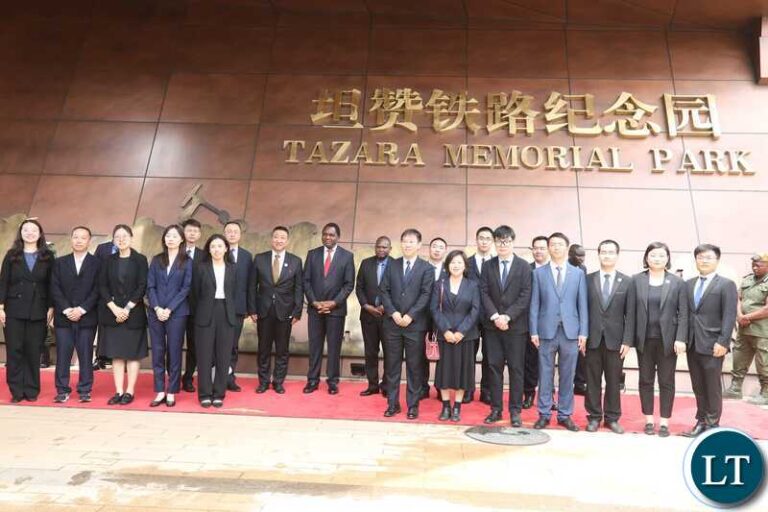
Why did China choose Zambia as a litmus test for Africa? Because it was the first African country where China implemented its most substantial single foreign aid project, the TAZARA Railway, between 1970 and 1975. During their five-year engagement in Zambia, Chinese workers found us lacking an innovative mindset.
Upon their return home, they described us as people who do not cultivate deep curiosity, take calculated risks, perceive challenges as chances for innovation, and employ available resources in a creative and original manner. President Xi Jinping and his “Beijing Boys” at the Ministry of State and Security (MMS) depict us in a similar light—as a society that is more inclined to normalize failure than to analyze it.
The acceptance of the Chinese yuan into our monetary system serves as a testament to the normalization of failure. It reveals our subpar standards that have led to serious repercussions, ultimately culminating in the relinquishment of our sovereignty. Our vulnerability is underscored by a societal acceptance of failures, economic difficulties, and insufficiently funded educational systems that fail to generate enough graduates capable of confronting, challenging, and exposing those who enter our country to exploit us.
According to the latest UNESCO education completion report, by early 2026, around 2.8% of Zambians possessed a bachelor’s degree, while only 0.4% held a master’s degree. UNESCO was unable to ascertain the exact number of individuals with PhDs. The latest data from 2022 revealed that Zambia had 321 professors, a significant contrast to Kenya, which boasted 10,000 PhD holders.
The lack of graduates hinders our ability to embrace a “battlefield mentality” that is, the mental readiness to confront the Beijing Boys, view them as adversaries, analyze their concealed motives, and ultimately outsmart them.
The duty of examining failures is assigned to the nation’s think tanks and intellectuals. Their role includes the collection and clarification of intricate data, along with providing proof concerning, for instance, the challenges that yuan-denominated revenues would pose in the processes of converting, holding, or utilizing funds within the framework of the national budget. Essentially, this requires innovative, rational, evidence-based thinking rather than emotional reactions that are ingrained in the acceptance of failure.
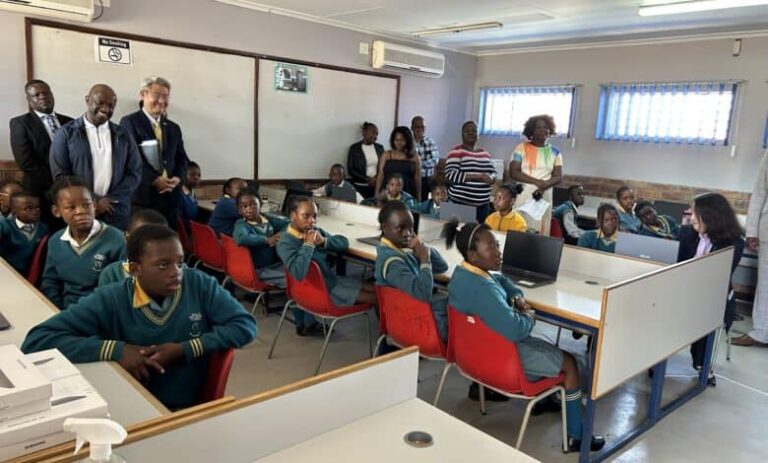
To achieve this goal, it is essential to create a modern education system that shifts from traditional learning practices to one that emphasizes critical thinking, the incorporation of technology, and holistic development. Students in Zambia need to participate actively rather than being mere passive recipients. If we overlook this requirement, we risk confronting a future where Zambia no longer exists.
In conclusion, I strongly encourage the intellectual community both domestically and internationally to come together and shift from being passive observers to proactive participants in the generation of knowledge. The Chinese have successfully fulfilled their responsibilities, exhibiting their creativity through infrastructure development. In less than twenty years, they have achieved what we have been unable to accomplish in sixty-two years—transforming Zambia’s physical landscape.
As a nation, we face a critical choice: to either normalize or critically examine our failures. We must decide between the deterioration of our country and the proof that we possess an equivalent level of creativity as the Chinese.
Author is a scholar and media practitioner affiliated with Northeastern University, Boston, USA. ©Ruwe2026