
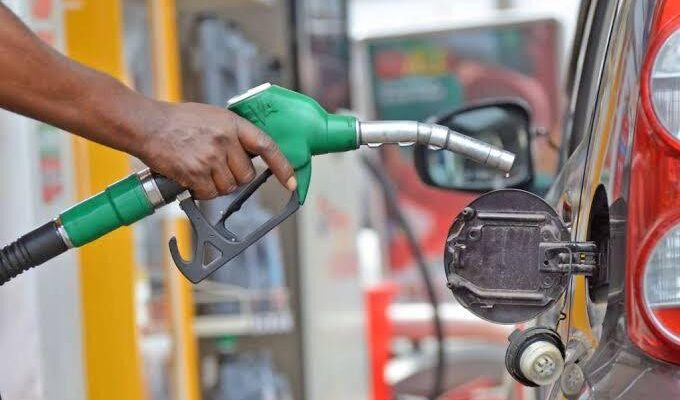
LUSAKA — Zambia’s fuel prices will rise from midnight after the Energy Regulation Board adjusted pump rates for April 2026, citing sharp increases in global oil prices and a weaker kwacha.
The adjustment follows a monthly review by the Energy Regulation Board, which recorded steep movements on the international market alongside exchange rate pressure. Petrol now moves to K27.15 per litre from K26.61, while diesel records the largest jump among major fuels, rising to K29.78 per litre from K23.25.
The Board anchors the change to global price shifts. Petrol on the international market climbed to US$114.51 per barrel from US$70.32, while diesel rose to US$162.61 per barrel from US$84.74. Kerosene and Jet A-1 recorded the steepest increase, reaching US$169.92 per barrel from US$83.95, a surge that feeds directly into domestic pricing.
The exchange rate added pressure during the same review window. The kwacha weakened slightly from K19.18 to K19.30 per US dollar, tightening import costs for fuel procurement. That movement compounds the global price rise, feeding into the final pump adjustments.
Government has moved to cushion the impact through fiscal measures. Authorities have suspended excise duty and applied zero-rated Value Added Tax on petrol and diesel for a three-month window from April to June 2026. The intervention aims to steady supply and reduce the immediate burden on consumers, even as underlying costs continue to rise.
Despite the intervention, the domestic adjustments remain pronounced across key products. Diesel posts an increase of K6.53 per litre, representing a 28.09 percent rise, while kerosene climbs by K11.19 per litre, translating to a 53.13 percent increase. Jet A-1 records the sharpest upward movement at K12.35 per litre, a 55.16 percent rise.
Petrol, while increasing, shows a comparatively smaller shift of K0.54 per litre, equivalent to a 2.03 percent change. The variation reflects differences in international pricing patterns across petroleum products during the review period.
The Board maintains that the price movements reflect external cost drivers rather than domestic policy shifts alone. International oil market volatility remains the dominant factor, with geopolitical tensions in the Middle East pushing prices upward during the review cycle.
Fuel pricing in Zambia remains linked to import parity, meaning global price movements transmit quickly into local pump prices. The structure leaves limited room for shielding consumers when global markets move sharply, placing pressure on fiscal tools such as tax adjustments.
The government’s temporary tax suspension signals an effort to stabilise both supply and affordability in the short term. The measure also aims to avoid supply disruptions that can arise when import costs outpace local pricing structures.
Transport operators, industry players and households are expected to feel the effect of the diesel adjustment most directly. Diesel remains the backbone of Zambia’s logistics and production systems, meaning shifts at the pump tend to cascade into broader cost structures across sectors.
Kerosene and Jet A-1 increases carry implications for aviation and low-income household energy use, where kerosene remains a fallback fuel in some areas. The magnitude of the increases points to sustained pressure across both transport and energy consumption patterns.
The Energy Regulation Board states that the revised prices will remain in force until the next review cycle. The adjustment takes effect at midnight on 31 March 2026, marking the start of the April pricing window.





We should be buying our oil from Angola. Or Gabon. Or Chad or Congo.
We are within arm’s reach of neighborhood producers but we still go all the way to the middle east for more expensive crude. Tulo!
Don’t you know that Gabon is a corrupt thug.
it is very expensive to process the old from Angola.
@ECL And Saudi Arabia isn’t corrupt?
The UPND government should urgently consider Fuel subsidy policy.
Fuel is no doubt connected to votes.
Do something HH.
Kushipafye nomba.
Everything is connected to votes
even the lungu debacle sadly
dont panic as elections draw nearer for a very short period manner from heaven is bound to fall apon us
The highest prices ever. Do you think their masters will allow them to give subsidies?
Do you have an oil well, what currency do you use when buying crude oil. Remember, you’re competing on the world and countries got worse already.
Some seem to think we are the world
GRZ delayed in raising the price which the rest of the world did
Then they castigated them for hoarding ??? who wouldn’t keep back knowing of the increase
one has to go with replacement cost