Government has called for stronger climate preparedness and coordinated action across Africa as the continent faces growing threats from extreme weather events and the possible return of El Niño conditions in 2026/2027.
Ministry of Green Economy and Environment Permanent Secretary Douty Chibamba says Africa continues to experience increasing climate-related disasters, including droughts, floods, heatwaves, tropical cyclones and other extreme weather events that are affecting food security, water resources, energy systems and livelihoods.
Dr Chibamba made the remarks in a speech delivered for him by the Ministry’s Human Resource and Administration Director, Ranford Simumbwe during the official opening of the Twenty-First Africa Continental Climate Outlook Forum (ACCOF-21) in Lusaka,
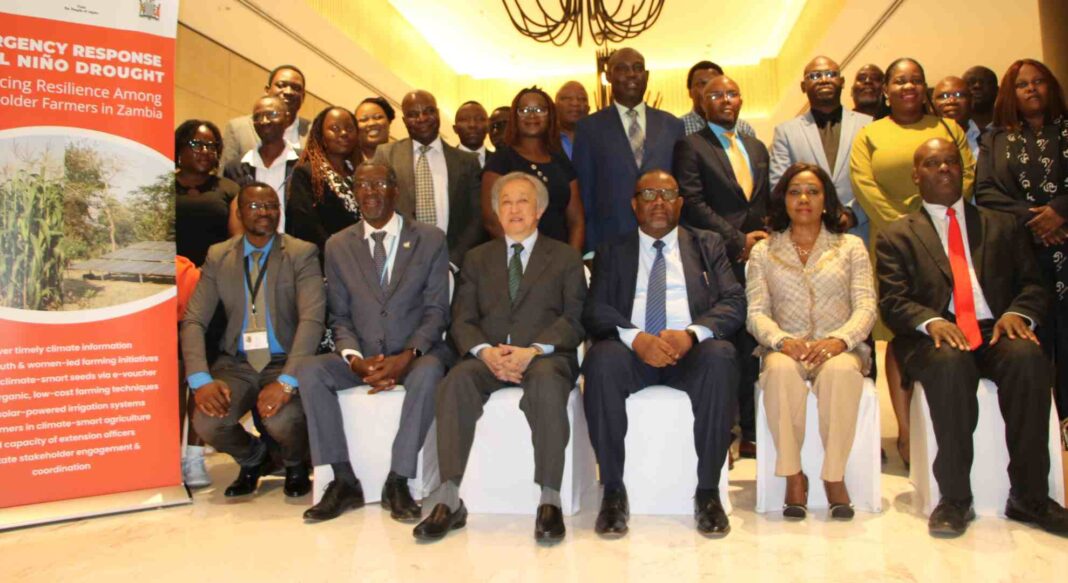
Dr Chibamba said Zambia was honoured to host the continental gathering, which has brought together climate scientists, policymakers, development partners, humanitarian organisations and users of climate information from across Africa and beyond.
The PS noted that the devastating effects of the 2023/2024 El Niño-induced drought in Zambia highlighted the urgent need for improved preparedness and resilience, adding that the drought led to a national disaster declaration after severely affecting crop production, reducing water levels in hydropower reservoirs and triggering an energy deficit that impacted households and industries.
Dr Chibamba warned that current forecasts from global climate centres indicate the possibility of another El Niño event developing in the latter part of 2026, stressing that although uncertainties remain, regarding its intensity and local impacts, countries should begin strengthening preparedness measures now.
He said the forum provides an important platform for harmonising climate outlooks, strengthening collaboration among climate-sector working groups and improving communication between climate information providers and users.
Dr Chibamba emphasised that climate information only becomes valuable when it is translated into action, adding that seasonal forecasts, climate outlooks and early warning systems must support decision-making in agriculture, water management, disaster risk reduction, energy planning, infrastructure development and public health.
He said the government has placed climate resilience and adaptation at the centre of its development agenda and revealed that the Ministry of Green Economy and Environment, through the Zambia Meteorological department, is continuously monitoring global, regional and national climate conditions and providing regular forecasts, advisories and early warning information.
Dr Chibamba further disclosed that the government is investing in the expansion and modernisation of weather and climate observation infrastructure, including automatic weather stations, upper-air observation systems and planned lightning detection capabilities to improve forecasting accuracy and strengthen early warning systems.
He added that the government is promoting climate-resilient agriculture and expanding irrigation infrastructure to reduce vulnerability to rainfall variability and enhance food security.
Dr Chibamba also highlighted the Digital Climate Advisory Services Platform, which aims to provide more than one million farmers with timely and location-specific climate information to support agricultural planning and risk management.
He said Zambia is also accelerating investments in renewable energy to diversify its energy mix and build resilience against climate-induced disruptions in water availability that affect hydropower generation.
The Permanent Secretary reaffirmed Zambia’s commitment to advancing the United Nations Early Warnings for All Initiative and strengthening anticipatory action to ensure that early warnings lead to early action.
He called for enhanced regional cooperation, noting that climate hazards frequently affect multiple countries at the same time and require coordinated responses.
Mr Chibamba challenged delegates attending the five-day forum to deliver three key outcomes: a harmonized and actionable continental climate outlook for the 2026/2027 season, clear operational frameworks for continental climate-sector working groups and stronger user interface platforms that ensure climate information reaches those who need it most.
He commended the African Union Commission, the African Centre of Meteorological Applications for Development (ACMAD), the World Meteorological Organization, regional climate centres, regional economic communities and cooperating partners for organizing the meetings.
Speaking at the same event, African Union Commission, Sustainable Environment and Blue Economy Director Hazen Nyambe called for the enhanced implementation of climate Change frameworks as the continent anticipates the forthcoming EL NINO.