
ANALYSIS | K253.1 Billion 2026 Budget: Zambia Charts a Course for Resilience and Prosperity
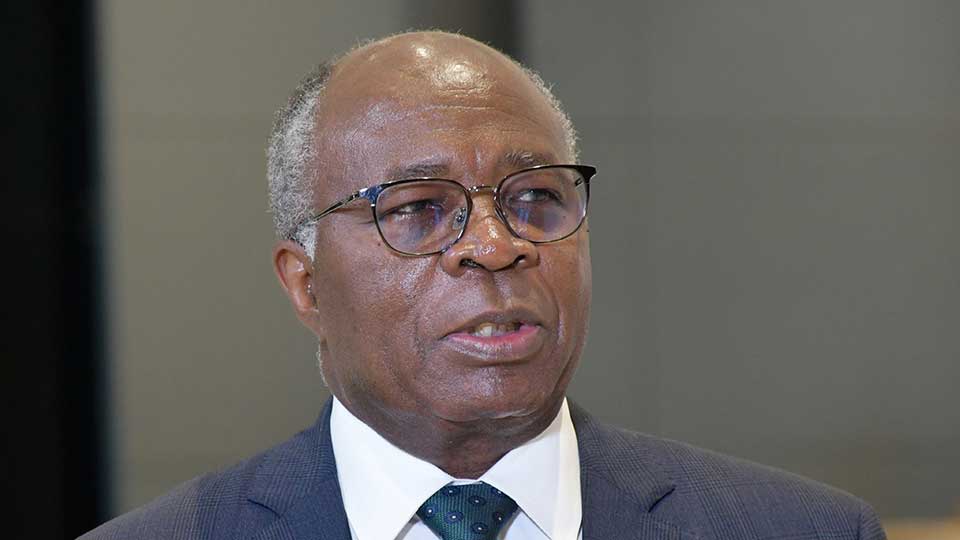
When Finance and National Planning Minister Dr. Situmbeko Musokotwane rose to deliver the 2026 National Budget in the National Assembly on Friday afternoon, he was not merely announcing figures. He was presenting a roadmap that seeks to anchor Zambia’s recent economic gains and propel the country toward a more stable, prosperous future.
Under the theme “Consolidating Economic and Social Gains Towards a Prosperous, Resilient and Equitable Zambia”, the K253.1 billion budget signals a deliberate shift from crisis management to structured economic expansion, underpinned by fiscal restraint and a growing reliance on domestic resources.
Over the past four years, Zambia’s economic story has undergone a quiet but profound transformation. From being the first country to default on its debt in the post-COVID era, Zambia is now held up as a success case for debt restructuring under the G20 Common Framework. Average economic growth has climbed from a modest 1.6 percent in the pre-2021 period to 5.2 percent, even amid shocks such as the pandemic and the devastating 2024 drought.
This turnaround has been accompanied by tangible social reforms. Free education has opened classrooms to millions of children who were once locked out by poverty. The Constituency Development Fund (CDF) has decentralised development in a way unseen since independence, financing schools, health facilities, water projects and local businesses across the country.
Dr. Musokotwane’s 2026 budget aims to consolidate these achievements while addressing lingering vulnerabilities such as youth unemployment, infrastructure gaps, climate risks and persistent poverty.
The macroeconomic targets set for 2026 are both ambitious and disciplined. The government is projecting GDP growth of 6.4 percent, keeping inflation within the 6–8 percent band, and reducing the fiscal deficit to 2.1 percent of GDP. Domestic revenue is expected to rise to 22.3 percent of GDP, signalling an intention to strengthen tax mobilisation rather than rely excessively on external borrowing.
Inflationary pressures have already eased, dropping from 16.7 percent in December 2024 to 12.3 percent, thanks to a bumper maize harvest, Kwacha appreciation and reduced fuel prices. Fiscal deficits have narrowed significantly, while gross international reserves now stand at US $4.9 billion, offering 4.8 months of import cover.
Such macroeconomic stability lays the groundwork for the sectoral investments outlined in the budget, but sustaining it will depend on consistent execution, particularly in revenue collection and debt servicing.
The K253.1 billion budget, equivalent to 27.4 percent of GDP, will be financed with 82 percent drawn from domestic sources. This represents a marked assertion of fiscal sovereignty. A total of K206.5 billion will come from local revenue, K12.1 billion from grants, and K34.5 billion from borrowing.
The lion’s share — 36.6 percent (K92.6 billion) — is directed to General Public Services, primarily for debt repayments: K52 billion for domestic obligations and K21.7 billion for external debt. Economic Affairs accounts for 23.2 percent (K58.6 billion), funding strategic sectors such as agriculture, road infrastructure, mining, energy and tourism. Education receives K33 billion (13 percent), Health gets K26.1 billion (10.3 percent), while Social Protection is allocated K15.7 billion (6.2 percent), including a significant K7.6 billion for the Social Cash Transfer Programme.
The mining sector remains the cornerstone of Zambia’s economic ambitions. Copper production is expected to exceed one million tonnes in 2025, supported by the expansion of large-scale operations like First Quantum’s S3 Project, Barrick Lumwana’s Super Pit, KCM, Mopani and the development of new mines such as Mingomba and Kitumba. Artisanal and small-scale mining is also gaining formal recognition through licensing and the establishment of new marketing centres.
In agriculture, the government has set bold targets: 10 million tonnes of maize, 1 million tonnes of wheat, and 1 million tonnes of soya beans annually by 2031. The nationwide rollout of e-voucher systems, irrigation investments and improved seed production are expected to turn surplus production into export earnings. Expansion of livestock disease-free compartments is intended to position Zambian beef competitively in export markets.
The energy sector is undergoing one of its most significant transitions since independence. To address power shortages caused by drought, the government plans to add 1,500 MW of solar and 300 MW of thermal power in 2026, aiming to increase the share of non-hydro renewables from 3 percent to 33 percent. Rural electrification is being accelerated, and a new interconnector with Tanzania is expected to deepen regional power trade.
Infrastructure development remains central to the growth strategy. The Lusaka–Ndola Dual Carriageway is nearing the halfway mark under a PPP model, while feeder roads, provincial airports and strategic corridors like TAZARA and Lobito are receiving sustained investment.
Road rehabilitation is underway in multiple provinces, while airport infrastructure upgrades in Kasama, Chipata, Mongu and Solwezi, and planned new airports at Choma and Nakonde, are expected to boost connectivity and unlock tourism, agriculture and mining opportunities.
Beyond the economic metrics, the 2026 budget continues to place human capital at the centre. Since the introduction of free education in 2022, an additional 2.3 million learners have enrolled in schools. Over 42,000 teachers have been recruited, and more than 300 secondary schools have been completed or are nearing completion. The Home-Grown School Feeding Programme has been expanded to reach 4.6 million learners.
In the health sector, over 18,000 personnel have been hired, 282 facilities built, and essential drug availability increased to 90 percent. Investments in cancer treatment centres, health posts and digital patient management systems are aimed at improving access and quality of care across the country.
Recognising the growing climate threat, Zambia is integrating sustainability into its fiscal framework. Over US $150 million has been raised through green bonds to finance solar energy projects. Expanded weather monitoring networks and carbon market initiatives are being rolled out to enhance resilience.
Governance reforms — including a revised tax administration bill, state-owned enterprise legislation and strengthened anti-corruption laws — are designed to improve transparency and fiscal discipline.
The 2026 National Budget reflects a clear commitment to fiscal self-reliance, with 82 percent of spending financed domestically, and sets out ambitious growth and social development targets. It demonstrates a disciplined approach to macroeconomic management and continues to invest strongly in education, health, infrastructure and key growth sectors such as mining, agriculture and energy.
However, challenges remain. Heavy domestic debt servicing continues to crowd out other priorities. Infrastructure gaps are still significant, particularly in rural areas. Successful implementation will depend on effective revenue collection, prudent expenditure, and timely project execution. Climate vulnerability also poses a lingering risk to agriculture and energy stability.
Our view is that this budget represents a confident and credible step forward. If execution matches the ambition, Zambia could consolidate its recovery and lay the foundations for sustained, broad-based growth. But if implementation falters, the impressive fiscal framework risks remaining a statement of intent rather than a transformative reality.




Zambia is a beacon of light shining bright in Africa and the world.
This is the 5th budget presented by this government; lives of Zambians have NOT improved an ich from the last 4 budgets from them despite Zambians being very hard-working people. For the avoidance of doubt and clarity once again, the crumbs we get from the mines and the increased CDF allocations will never ever solve our economic challenges nor develop our country, only industrialization will. Free education is a long-term solution and will not offer the immediate relief people are looking for. Cash for work can only cater for a small fraction in comparison the huge unemployed. Which ordinary Zambian is even feeling the impact of debt restructuring.
@James Kang, PLEASE stop writing such nonsence, all it shows is, how bias and ignorant you are.
What is this joker called Man trying to say. These praise singers have not smelled the coffee yet. James Kang is absolutely correct. For 4 years our lives are going down and down, even the psychological warfare to say prices have started going down won’t hold.
Coward calling yourself man – Joker
Actually @Man is 100% right.Show me any country in the world where the economy went straight from poor to rich in only 3yrs guys?
The economic challenges PF left behind were immense and complex actually.
Kikkiliki, hunger is biblical
Nabawishi was being called Man kung’ombe balechema.
Impressive on paper, certainly. But we have had supplementary budges consecutively for two years. Our parliament convenes emergency sessions so they could borrow.
This budget is ambitions and wants to fund itself domestically through taxes. I expect some other taxation after they increased taxes on SMES and introduced new taxes on mobile transactions as well as international transfers. And all this with minimal contributions from mines.
Totally failed project this UPND. No clue, totally lost. Though we kicked out PF they were even better by far
In Dubai, there is no rain but there is no loadshedding
In fuel, I will come and remove the middlemen, and fuel will be K12 per liter
I will be sworn in at 10hrs, and Kwacha will pick against the dollar at 14hrs
And I should trust you with a budget?
Burkina Fasso – only 2 years, lives of people are improving, it is the people themselves saying kwenyu and not a Politician telling them to do so
Prosperity? Does he mean HH, Milupi, Valentine Chitalu, Musokotwane and other well connected UPND prosperity? Zambia will never prosper with UPND in office. We really must accept the mistake we made in having these criminals in office. The worst mistake made in Zambia or the region ever.
Vuvuzela bootlicker