
PF is a “CULT” – Unchain it at Your Own Peril
By Kalunga Bwalya
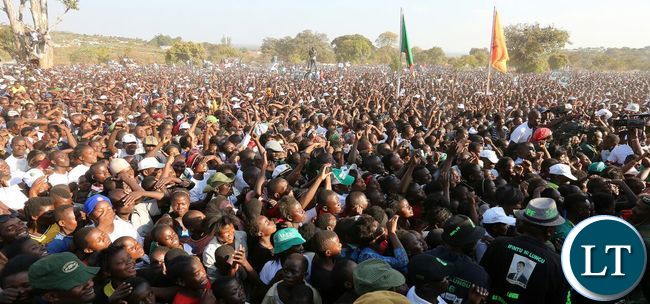
Calling PF a “cult” may sound provocative, but it captures the intensity of loyalty that defines its membership. The party’s supporters, despite arrests, humiliation, and propaganda, have remained unshaken. PF’s identity has outgrown its leaders; it is now a movement defined by shared defiance.
A sober reflection on Zambia’s political landscape
This is not a defence of the Patriotic Front (PF). It is a sober reflection intended for those who wish to see Zambia’s politics beyond party colours. The truth, uncomfortable as it may be, is that the ruling United Party for National Development (UPND) has spent much of its energy trying to contain, silence, and neutralise the opposition rather than proving its superiority through governance. In that process, the PF has been turned into both a scapegoat and a symbol of political suppression.
The tightening of political space
Under the current administration, Zambia’s political space has become increasingly narrow. Opposition figures have faced a cycle of arrests, prolonged court battles, and heavy-handed police restrictions on assembly. Freedom of association and expression principles that once defined Zambia’s democratic character are now shadowed by suspicion and state control.
A clear illustration lies in the disruption of the annual prayer meeting organised by Pastor Sunday Sinyangwe at the OYDC in Lusaka. What was meant to be a moment of spiritual reflection became a test case for civic freedom. Police halted the event on the eve of Independence Day, citing “procedural concerns,” yet the symbolism was unmistakable: even prayer, when not state-endorsed, could be treated as dissent.
This incident joins a long list of examples where opposition or independent gatherings have been blocked or violently dispersed, often without clear justification. It reveals a deep institutional anxiety within the ruling system a fear that public gatherings can quickly turn into political platforms.
The Parliament question and Speaker Nelly Mutti
The erosion of political tolerance is also visible within the National Assembly, where Speaker Nelly Mutti has earned a reputation for her uncompromising control of proceedings. Her decisions—often perceived as partisan have sparked debate about whether Parliament remains a neutral arena for ideas or a controlled theatre of compliance.
From the suspension of opposition MPs to the controversial rulings that limited debate on sensitive matters, Mutti’s tenure has been marked by tension and accusations of bias. Critics argue that her strict approach has undermined dialogue, silencing dissent rather than managing it. For many Zambians, the sight of elected representatives being marched out of Parliament has become symbolic of the country’s broader democratic fatigue.
The judiciary and selective justice
The judiciary has not escaped scrutiny either. Many opposition supporters see a pattern of selective justice, where politically exposed cases move swiftly if they involve government critics but stall indefinitely when the accused are linked to the ruling party.
The Patriotic Front’s ongoing leadership wrangles, still unresolved in court, have highlighted the perception that justice is not blind. The delays in settling the PF’s legal status have effectively paralysed the party, leaving it leaderless and easy to control.
Meanwhile, cases like that of Maria Zaloumis, which opponents cite as evidence of leniency for those aligned with the UPND, deepen the public’s sense that justice depends on political proximity. Whether or not that perception is fair, it exists and perception in politics often matters as much as reality.
The psychological strategy: keep PF chained
To understand Zambia’s current political equation, one must appreciate the strategy of containment. The ruling party appears determined to keep the PF entangled in internal conflict and legal paralysis. By propping up competing factions, encouraging endless litigation, and keeping the courts at the centre of the PF’s leadership dispute, the government maintains effective control over its strongest rival without openly banning it.
The result is a frozen opposition. The PF, though still popular in many areas, cannot operate coherently. Its structures remain functional, its base still loyal, but without a clear leader it is politically immobilised. This state of suspension benefits the ruling establishment it eliminates an organised challenger while preserving the illusion of a multiparty democracy.
Why PF remains the sleeping giant
Despite the internal chaos, PF’s organisational framework remains formidable. The party has deep roots across constituencies, a disciplined ground structure, and a memory of governance that still appeals to many voters nostalgic for its years in power.
While UPND holds the advantage of incumbency, it has not managed to replicate PF’s strong grassroots machinery. Beyond state power, the ruling party often struggles to connect emotionally with ordinary citizens in the townships and rural compounds where PF built its strength through tangible projects, mobilisation, and constant presence.
In the long term, should PF manage to resolve its leadership dispute and rally around a unifying figure, it could quickly reclaim the political ground it has lost. This is the scenario that worries those in government the most.
The moment of unity and the decisive turning point
If all opposition forces were to cohere strategically, and if smaller parties or independent groupings agreed to provide PF with a clear political vehicle and formal space to reorganise, the balance of power could shift swiftly. A unified opposition, one that concedes leadership to PF or permits PF to transfer organisational capacity into another small party while senior PF figures accept defined roles, would transform the current dynamic.
Allowing PF to operate openly and to lead a broad opposition coalition would do two things. First, it would restore coherence to long-standing voter networks that are currently fragmented. Second, it would present voters with a credible alternative to incumbency that combines PF’s mobilisation capability with complementary actors who might broaden its appeal.
Such a realignment would not be merely tactical. It would reconstitute the political battlefield. A reconciled and re-energised PF, operating within a united front, would be able to contest elections with clear leadership, coherent messaging, and a full complement of candidates in constituencies where UPND now relies on divided opposition. That scenario would be a major turning point for Zambian politics and one the current government would find difficult to counter purely through legal or procedural measures.
The cult analogy and its warning
Calling PF a “cult” may sound provocative, but it captures the intensity of loyalty that defines its membership. The party’s supporters, despite arrests, humiliation, and propaganda, have remained unshaken. PF’s identity has outgrown its leaders; it is now a movement defined by shared defiance.
The argument, therefore, is not that PF should be idolised or excused for its past mistakes. It is that continuing to suffocate it will only strengthen its narrative of persecution. Every arrest, every court delay, every disrupted meeting feeds into a growing sense of injustice among citizens who already feel excluded from national decision-making.
History shows that oppressed movements rarely die they reorganise. The more the UPND tries to bury PF, the more it fuels its resurrection.
The danger for UPND
For UPND, the current approach is short-sighted. Governance by suppression creates an illusion of stability but weakens democratic legitimacy. It fosters resentment even among neutral citizens who may not support PF but believe in fair play.
The government’s energy would be better spent on policy delivery jobs, the economy, and social welfare rather than chasing shadows of a former ruling party. When a government spends more time managing political rivals than managing the country, it risks losing both.
The inevitable reckoning
Sooner or later, PF will reorganise. Whether under its old name or through a new political banner, its structures and voters remain too entrenched to disappear. The day it settles its leadership question, the ruling party will face a formidable opponent.
If that day arrives while economic frustration remains high and public discontent deepens, the political tables could turn swiftly. UPND’s greatest miscalculation may be believing that keeping PF chained ensures long-term control. In reality, it merely delays the reckoning.
Final reflection
To unchain PF is not to endorse it, it is to restore Zambia’s democratic equilibrium. A confident ruling party should not fear competition; it should welcome it. For UPND, the message is simple: govern through performance, not persecution.
PF is not finished; it is paused. And every pause ends eventually. When it resumes its march, the same structures that once propelled it to power could again become the engine of change.
Those who continue to underestimate its resilience do so at their own peril.




Yes PF was and still is a cult .All cultish entities are built upon illusions,wrong ideas and following/admiring SHALLOW leader.PF had fraudulently sold itself as a knight in shinning armor only to prove itself as a fake knight made of tin foil.
PF was a disaster for Zambia’s well being .Down went national unity,the economy cratered the went into cardiac arrest and cadre violence became Zambia’s culture. Oh ,and then they legalized street vending to win votes (which brought cholera)
May their disunity and infighting continue .Hehehe , i love their self destruction.