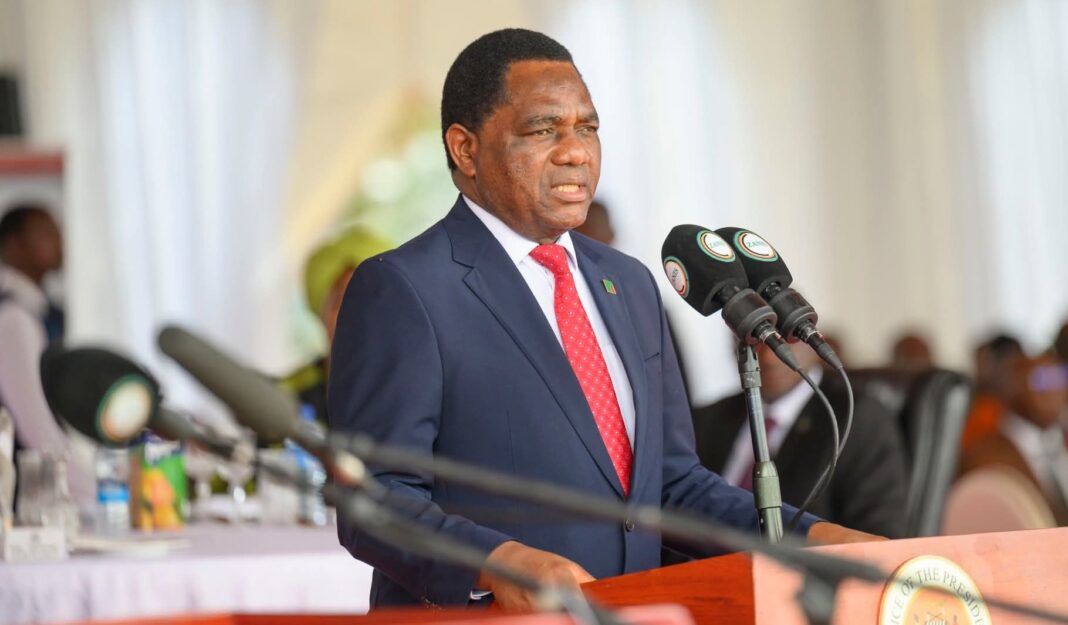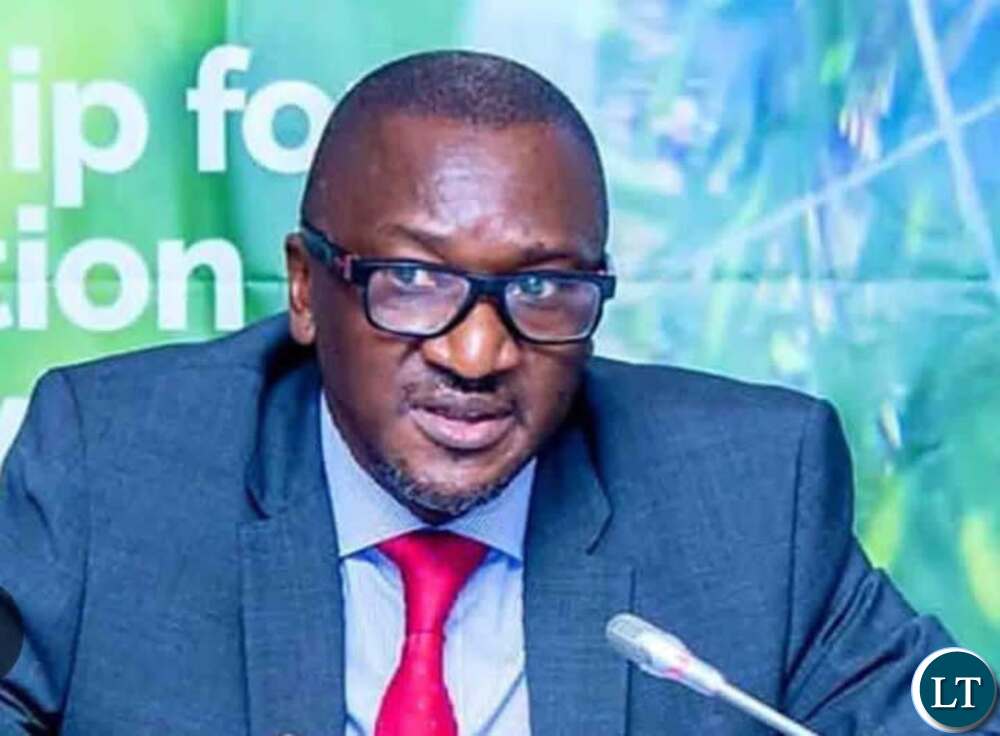
Water Development and Sanitation Minister Collins Nzovu has commended President Hakainde Hichilema for absorbing public pressure and criticism while guiding Zambia through multiple national crises.
The minister’s remarks follow the President’s recognition by The Telegraph as one of the world’s top-performing leaders in 2025. Nzovu stated that President Hichilema’s leadership during a highly challenging period in Zambia’s post-independence history has been marked by urgency and decisive action.
He noted that the President remained deeply engaged throughout successive emergencies, often issuing directives in the early hours to address emerging challenges.
The UPND administration took office in the wake of the COVID-19 pandemic, later facing a cholera outbreak that exposed sanitation vulnerabilities, particularly in high-density trading areas. According to Nzovu, the outbreak prompted immediate interventions, including sanitation works in places such as Chipata’s Saturday Market and Nakonde District. He attributed the reduction in cholera cases this year to these corrective measures.
Nzovu also highlighted the severe drought that disrupted agriculture, water supply, and electricity generation nationwide. As a farmer himself, he disclosed losing over 100 hectares of maize at a critical growth stage—a loss reflected across the farming community.
Facing a potential humanitarian crisis, President Hichilema declared the drought a national disaster, initiating emergency maize distribution and water security interventions. These included drilling high-capacity boreholes in water-stressed districts like Katete, reviving stalled projects such as the Kafulafuta Dam, rehabilitating 960 small dams, and commencing construction on 60 large dams.
When reduced water levels crippled hydropower—leaving some areas with as little as an hour of electricity daily—the President faced public criticism while working to resolve the crisis. His administration settled ZESCO’s legacy debts, secured financing to enable Maamba Collieries to add over 300 megawatts to the grid, and diversified energy sources through solar investments in Chisamba, Luapula, and at constituency level.
Despite the burdens of debt restructuring and inherited financial challenges, Nzovu noted that Zambia has steadily stabilized, with foreign reserves reaching record highs, investor confidence returning, the kwacha strengthening, and mining resuming in Luanshya after dewatering works at Shaft 28.
Nzovu concluded that the progress being recorded is the result of difficult decisions taken amid public dissatisfaction, affirming that “Zambia is emerging because leadership did not retreat when times were hard.”