
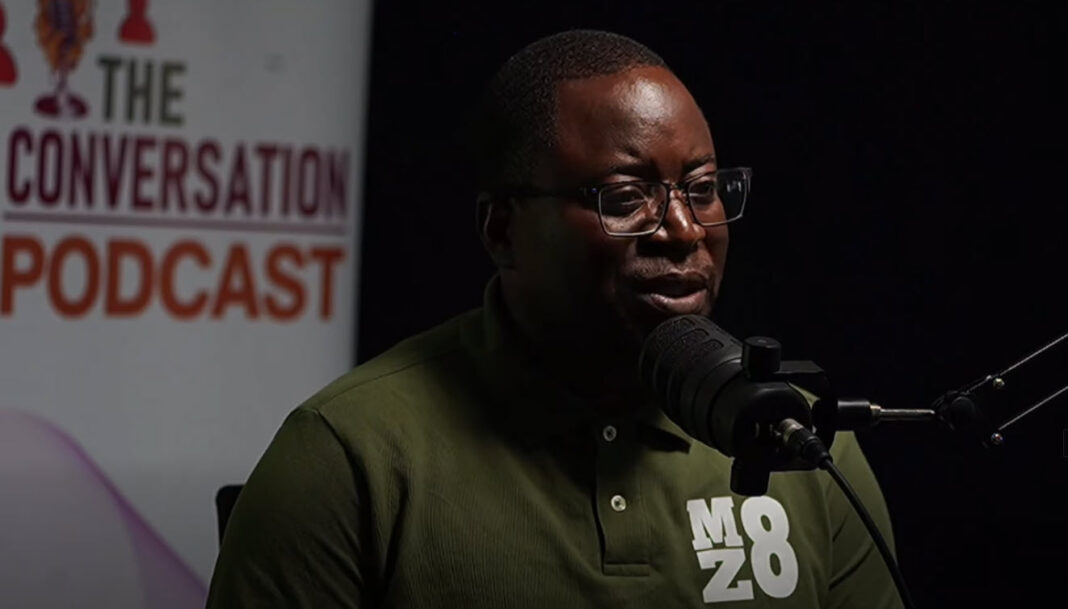
Presidential candidate Makebi Zulu says Zambia must place women at the centre of national policy, arguing that empowering women remains essential for community stability and long-term economic progress. Speaking during an International Women’s Day conversation on the Conversation Podcast hosted by Coach Brian, Zulu outlined a governance approach that prioritises women’s leadership, healthcare and economic participation. He framed women’s empowerment not simply as a social objective but as a development strategy capable of strengthening families and communities.
Zulu described women as a decisive force in the country’s social and political life, noting that they represent the largest share of voters in Zambia. He explained that policies supporting women tend to produce stronger outcomes in households and local economies because women frequently reinvest resources into families and education. That pattern, he noted, helps create stability at community level and strengthens social welfare.
He also pointed to the role women play in grassroots mobilisation and community engagement. According to Zulu, women involved in political outreach often engage directly with residents, listening to concerns and explaining policy messages in practical terms. This form of engagement, he explained, helps political organisations understand the daily challenges facing communities.
The presidential candidate used the discussion to call for stronger institutional support for women’s issues within government. Zambia, he argued, requires a robust governance structure that directly addresses inequalities affecting women. Treating gender matters as minor administrative responsibilities, he noted, weakens accountability and reduces the impact of empowerment programmes.
Zulu supported the strengthening of a dedicated gender ministry capable of driving policy reforms aimed at women’s advancement. Such an institution, he explained, would ensure gender considerations are integrated across government systems while addressing cultural barriers that restrict women’s opportunities. A focused ministry, he added, would allow government to measure progress and hold institutions accountable for results.
He also linked women’s empowerment to broader economic development. Women who receive financial opportunities or access to credit frequently reinvest those resources into households and community activities. That pattern, Zulu noted, often leads to improved family welfare and stronger local economies.
Maternal healthcare formed another major focus of the discussion. Zulu described maternal deaths as a national challenge that requires stronger investment in hospitals, specialised training for medical personnel and modern medical equipment. Societies with functioning health systems, he noted, should not continue losing mothers during childbirth.
Improving maternal health services, he explained, protects both families and communities from the social consequences of losing mothers during childbirth. Children often grow up without their primary caregiver when maternal deaths occur, creating long-term social disruption within households. Strengthening maternal care therefore remains essential for building healthier communities.
The conversation also turned to the role women have played in shaping Zambia’s political history. Zulu cited former Vice President Inonge Wina and former First Lady Vera Chiluba as examples of women whose leadership influenced national development. Their work, he observed, demonstrated the impact women can have through public service and humanitarian initiatives.
Wina’s tenure in the vice-presidential office, he noted, reflected discipline and a commitment to public service. The programmes associated with Vera Chiluba’s Hope Foundation were also highlighted as early national initiatives that focused on women’s empowerment across multiple provinces.
Historical figures such as Alice Lenshina and Mama Chika Moneka were also mentioned as women who shaped the country’s political and social landscape. Recognising their contributions, Zulu argued, helps preserve the nation’s history and encourages younger women to step into leadership roles.
He also stressed the importance of removing cultural barriers that limit the opportunities available to women. Girls and women, he noted, must receive equal access to education, leadership opportunities and economic participation if the country is to benefit from their full potential.
Zulu pointed out that women already hold senior leadership positions in financial institutions and other major organisations. That record, he argued, demonstrates their capacity to manage complex responsibilities at national level.
Expanding opportunities for women in governance, health systems and economic participation remains central to his political outlook. Policies supporting women, he explained, generate social returns because resources invested in women often flow back into families and communities.



Uhm boss which data were you using when you spoke about maternal deaths?
Makebi Zulu. Time waster and vote splitter. Just join EFF