
Zambia’s 13th National Assembly dissolved at midnight on May 15, triggering a 90-day countdown to the August 13 general election, with President Hakainde Hichilema positioning the vote around his administration’s economic recovery agenda.
The dissolution, executed under Article 81(3) of the Constitution, formally shifts the country from governance into a full electoral cycle, with nominations for parliamentary and local government candidates set for May 18–19 and polling fixed for August 13.
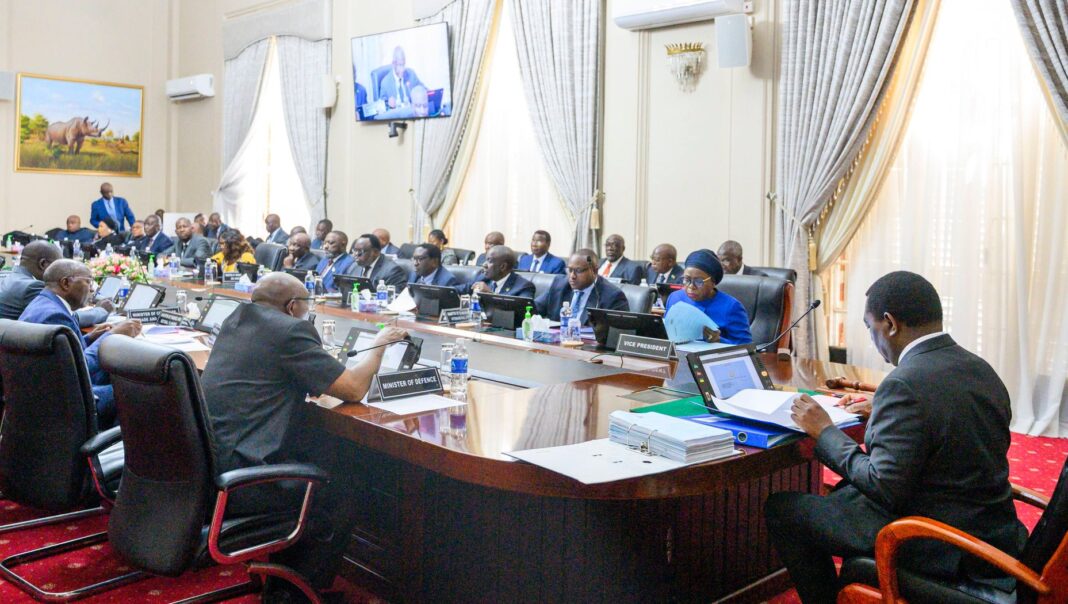
In his final Cabinet meeting before dissolution, Hichilema outlined what amounts to the foundation of the ruling United Party for National Development (UPND) campaign, pointing to expanded free education now reaching over 2.5 million children, an increase in the Constituency Development Fund from K1.6 million in 2021 to K40 million per constituency, and the recruitment of more than 45,000 teachers.
The President also highlighted progress in the mining sector, including the restoration of operations at Mopani and Konkola Copper Mines, presenting these as indicators of economic stabilisation following earlier fiscal pressures. He urged voters to allow ongoing reforms to mature, framing continuity as necessary to sustain current gains.
Hichilema acknowledged persistent challenges, including rising living costs and youth unemployment, but maintained that corrective measures are underway. He stressed that the administration’s work should be evaluated over the full term rather than reversed midway through implementation.
The President linked economic progress directly to political stability, stating that a peaceful environment since 2021 has enabled an estimated US$12 billion in mining investment, progress in debt restructuring, and a reduction in annual debt service from US$2.3 billion to approximately US$900 million.
Addressing newly sworn-in Electoral Commission of Zambia (ECZ) officials, including Vice-Chairperson Vincent Mukanda and Commissioner Zevyanji Sinkala, Hichilema called for a campaign anchored on service delivery and directed the commission to ensure a credible electoral process. The ECZ leadership responded with assurances of transparency and stakeholder engagement throughout the election period.
The economic context ahead of the election has been reinforced by the International Monetary Fund (IMF), which reported improvements following its May 13 mission. Zambia’s gross international reserves reached US$6.4 billion, equivalent to 4.4 months of import cover, while inflation declined to 6.8 percent in April, within the central bank’s target range.
Fiscal indicators also show movement, with a primary surplus of 3.1 percent of GDP recorded in 2025 and debt restructuring agreements covering approximately 94 percent of the targeted obligations. A separate US$460 million restructuring agreement with Israel extends repayment timelines to 2043 and opens new areas of cooperation in agriculture, healthcare and energy.
Despite these gains, the IMF flagged risks tied to pre-election spending pressures, Food Reserve Agency overruns and global oil price volatility linked to Middle East tensions. The Fund indicated that the fiscal surplus could narrow to 1.1 percent of GDP without corrective measures and outlined conditions including fuel sector reforms, procurement transparency and competitive import mechanisms.
With Parliament dissolved, fiscal decision-making is now constrained by the constitutional calendar, which prevents new Cabinet-approved budget processes. Treasury officials confirmed that a K26.3 billion supplementary budget was approved ahead of dissolution to maintain government operations during the electoral period.
In the final days before dissolution, government activity accelerated, including the release of K255 million for telecommunications upgrades, the completion of 156 ambulances funded under the Constituency Development Fund, and the signing of multiple public-private partnership agreements. These developments form part of the administration’s effort to demonstrate tangible service delivery ahead of the campaign phase.
The electoral calendar now moves into a defined sequence, with nominations opening within days, followed by an intensified campaign period through June and July before voters head to the polls in August. The outcome will determine the composition of the 14th National Assembly and shape the next phase of engagement with international financial partners, including ongoing IMF negotiations.
Editors Note: The next decisive milestone is May 18–19 nominations, which will formally establish the candidate field ahead of the August 13 general election.



First Chapter closed. UPND have done their part should the Zambia people give them another 5 years then well and good, should they be voted out then whoever comes should also work on debt, stabilizing the economy and improving the lives of the Zambian People. ONE ZAMBIA ONE NATION. Lets pay attention to the manifestos of politicians not just voting because someone is from our region or relative to us. Leadership is about delivering not just pointing fingers