
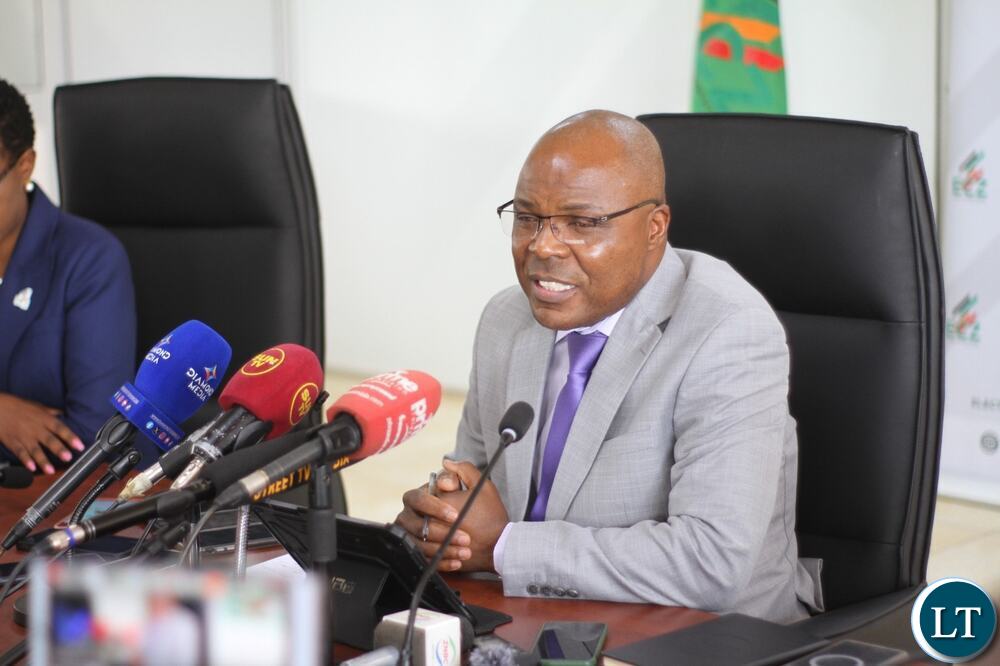
Zambia’s electoral process entered a decisive new phase on Monday after the Electoral Commission of Zambia certified 8,786,300 voters eligible to participate in the August 13 general election, closing one of the most critical administrative stages ahead of what is expected to be a fiercely contested national vote. The certification marks a sharp increase from the 7,023,499 voters cleared for the 2021 election and immediately shifts national attention toward nominations, campaign mobilisation and broader questions around electoral credibility.
Electoral Commission of Zambia chief electoral officer Brown Kasaro described the certification process as a major milestone and said the final register followed months of verification exercises conducted across the country. Electoral officials removed 101,439 duplicate records and deleted 1,173 deceased voters before approving the final roll. The clean-up followed nationwide voter registration conducted between October and November last year, which initially captured 8,888,912 provisional records.
The commission said the updated register now replaces all previous voter rolls and will remain the official register for the August election. Officials also stressed that no further voter registration or transfers would be allowed before polling day, leaving voters to verify their details through digital platforms, the ECZ website and mobile applications.
Women emerged as the largest voting bloc in the newly certified register. The final figures show 4,665,431 female voters, representing 53.1 percent of the electorate, compared to 4,120,869 male voters, representing 46.9 percent. That demographic split is likely to shape campaign messaging as parties target women on household economic pressures, healthcare access and education concerns.
Young voters could prove even more decisive. The commission said 4,066,423 voters aged between 18 and 34 account for 46.3 percent of the electorate, making youth participation one of the biggest variables in the August race. With unemployment and cost-of-living pressures dominating political conversations, younger voters may heavily influence campaign outcomes.
The commission also confirmed that 20,162 registered voters are persons living with disabilities, including citizens with hearing, visual and mobility challenges. Officials said releasing disability data early would help improve accessibility planning ahead of polling day and strengthen participation.
Provincial figures revealed where the biggest electoral battles could emerge. Lusaka Province leads with more than 1.43 million registered voters, followed by Copperbelt Province with more than 1.29 million, while Eastern Province remains another major battleground. Those figures are expected to shape deployment strategies for major political parties.
The final register also reflects Zambia’s expanded 226 constituencies following the delimitation exercise completed in April. That restructuring introduces fresh parliamentary calculations while increasing campaign complexity for candidates trying to navigate newly adjusted political boundaries.
The commission has completed one of its biggest administrative hurdles. The more difficult phase now begins as political parties shift into full campaign mode and scrutiny moves toward media fairness, violence prevention, results management and institutional credibility.
For the ruling UPND, strong turnout in urban areas remains critical. For opposition parties trying to reorganise fragmented support, turnout may determine whether dissatisfaction translates into real electoral pressure.





4.36 Mil againstt will suit most
Landlordie ali munshila 2006
This certification marks a sharp increase from the 7,023,499 voters cleared for the 2021 election
No baba this is not sharp.
By what percentage is the voters register expected to increase every year? And every four years?
Chitani intelligent analysis