Sunday, June 7, 2026
20.7 C
Lusaka
Home Blog Page 122

Seven Jailed 25 Years for Emerald Heist as One Acquitted by Kitwe High Court

3
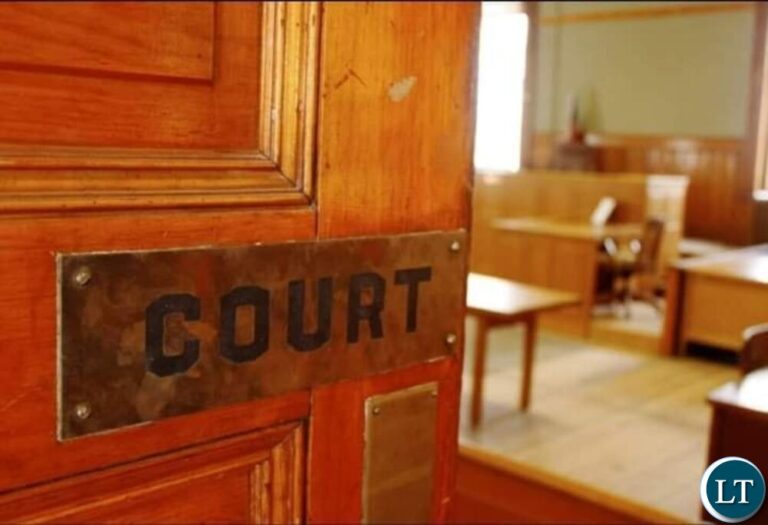
The Kitwe High Court has sentenced seven men to 25 years’ imprisonment with hard labour for aggravated robbery involving the theft of 15 bags of emeralds.

The court also acquitted one of the eight accused persons after finding insufficient evidence to link him to the offence.

Those convicted are Julius Simbeye, Valen Bwalya, Reuben Mwansa, Rae Kasungula, Jairos Sammy, Andrew Chanda and Mutale Katala. The seven were found guilty of aggravated robbery after being accused of acting together while armed with a toy pistol and other offensive weapons, including a hammer, gas cylinder and iron bars.

According to court records, the group stole 15 bags of emeralds weighing 361.2 kilogrammes, property of Continental Mining Africa.

The court heard that during the raid, the convicts disabled the electrical wire fence and damaged a CCTV camera before breaking into the strongroom. They also assaulted a security guard, Alex Malembeka, tying his hands and legs with wire before dumping him in a nearby bush.

In delivering judgment, High Court Judge Everisto Pengele said the State had proved its case against the seven accused persons beyond reasonable doubt.

“I have carefully examined the evidence before the court and I am satisfied that the State had proven the case against the seven,” Judge Pengele said.

The eighth accused, John Kalangwa, was acquitted for lack of evidence directly linking him to the crime.

The court also informed the convicted men of their right to appeal the sentence.

End Malaria Council Targets K2 Million in Bicycle Sweet Race Fundraiser

1
The End Malaria Council has set a target of raising K2 million through the upcoming End Malaria Bicycle Sweet Race scheduled for March 28, 2026, in Lusaka’s Leopard Hill area.

The fundraising event, sponsored by Zambia Sugar, is expected to bring together corporate partners and members of the business community to support efforts aimed at combating malaria in Zambia.

Speaking at a press briefing in Lusaka, Fund and Mobilisation Chairperson Peter Cottan announced the fundraising goal and emphasized the importance of corporate participation in the fight against malaria.

“We support the National Malaria Elimination Programme. We are proud to announce that the upcoming End Malaria Sweet Race, sponsored by Zambia Sugar, will be on Saturday the 28th of March in Lusaka. We’ll host the End Malaria Bicycle Sweet Race, our first fundraising event of the year,” Cottan said.

He noted that the event is designed not only as a sporting activity but also as a platform for companies to demonstrate corporate social responsibility.

“This event is more than a race, it is a strategic platform for corporate partners to demonstrate leadership in corporate social responsibility. Community investment and sustainable development by partnering your organisation will not only contribute to saving lives, but also showcase its commitment to building a healthier, more productive Zambia,” he said.

Communication and Advocacy Chairperson Malcom Chabala urged the business community to view malaria as both a health and economic challenge that requires joint action.

“We therefore invite the business community because it’s not just a health problem, it’s actually a business problem. So we invite the business community to partner with us, contact the End Malaria Council, the Cycling Association of Zambia, and come through and support this noble cause,” Chabala said.

He added that all contributions made through sponsorships and participation fees would go toward malaria prevention and elimination efforts.

“Whatever contributions that you’re going to make, whether through sponsorship or participation fees, the proceeds are going to go to the fight against malaria,” he said.

Chabala reaffirmed the Council’s commitment to supporting government initiatives through collaboration with the National Malaria Elimination Centre and other stakeholders to mobilize resources for malaria eradication.

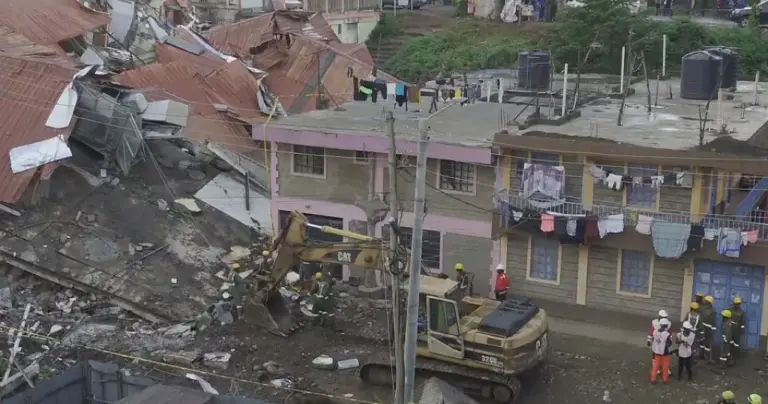
Government Orders AVIC to Complete Kakoso Bridge Detour Within 24 Hours

3

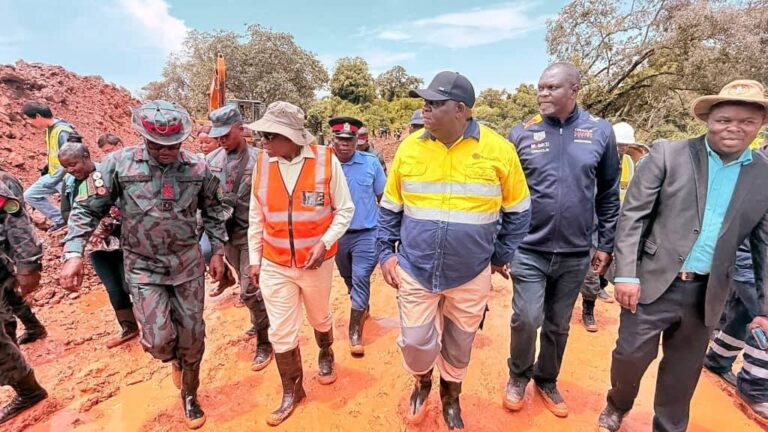
Government has directed AVIC International to complete construction of the temporary detour at Kakoso Bridge in Chililabombwe within 24 hours.

Infrastructure and Urban Development Minister Charles Milupi issued the directive during an inspection of the damaged bridge. He said government is keen to see the works concluded promptly to allow stranded motorists to resume their daily activities.

The minister assessed the damage caused by the collapse and reviewed the ongoing efforts to temporarily restore access. He expressed satisfaction with the progress made so far.

“My instruction is that the bridge be completed as soon as possible; we have no time to waste. Let us cut hours off the ultimatum of 48 hours if we can,” Mr. Milupi said.

The main bridge collapsed on Saturday evening following a heavy downpour, cutting off Chililabombwe from the rest of the Copperbelt Province.

Heavy machinery has since been deployed to restore access along the busy route leading to the Kasumbalesa Border, one of Zambia’s key trade gateways.

Teams from AVIC International, the Zambia National Service, the Zambia Army, Konkola Copper Mines, and the Disaster Management and Mitigation Unit are working together to address the situation.

Meanwhile, Copperbelt Province Minister Elisha Matambo thanked government for its swift response and assured motorists that works to complete the temporary by-pass route would be finalised soon.

President Hichilema Hopes Iran Conflict Ends Quickly to Prevent Fuel Price Spike

3

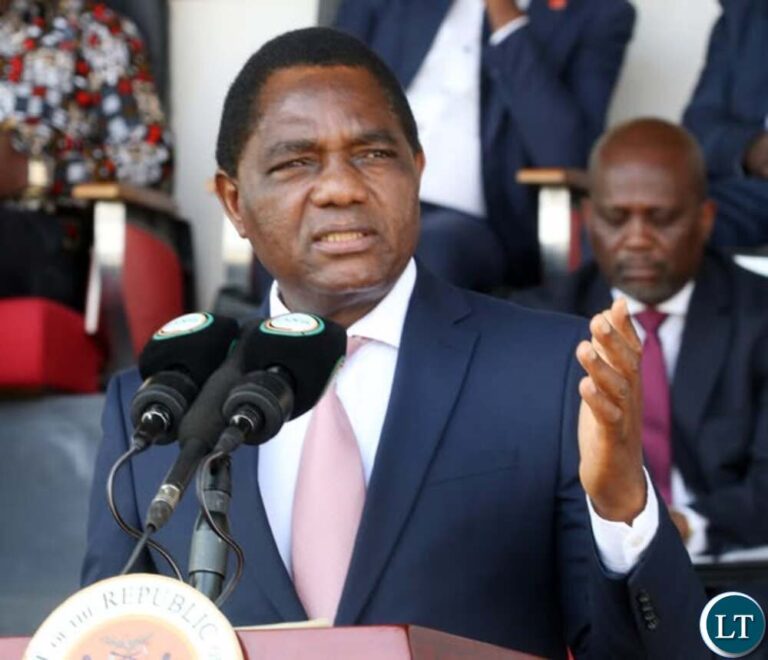
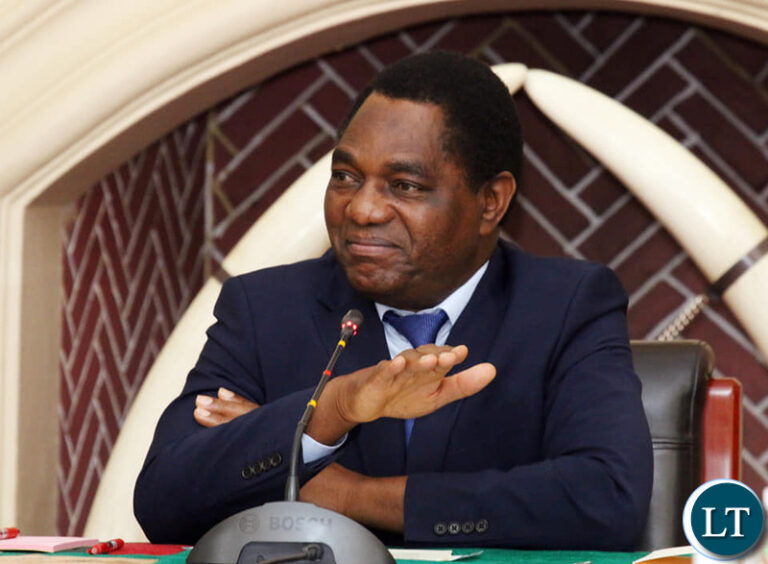
Hakainde Hichilema says Zambia is hoping for a swift end to the ongoing conflict in the Middle East to prevent a surge in global fuel prices that could negatively impact the country’s economy.

Speaking during a meeting with councillors and the Local Government Association of Zambia, President Hichilema said Zambia remains vulnerable to global shocks arising from instability in major oil-producing regions.

He said government is closely monitoring international developments, noting that even distant conflicts directly affect local pump prices and the cost of living.

“We all hope this war will come to an end quickly, so that it doesn’t shoot up the price of fuel and distort our inflation issues and other costs of doing business and living issues,” President Hichilema said.

The President stated that Zambia does not support war and believes dialogue is the only sustainable path to stability. He added that while his administration has implemented economic reforms and diversification measures to reduce vulnerability, global disturbances continue to pose challenges.

President Hichilema explained that Zambia’s fuel pricing is determined by three main factors: the exchange rate, transportation costs and the international price of crude oil. He said government has made progress in stabilising the exchange rate and reducing transport costs by promoting pipeline transportation, which is cheaper than road haulage.

“You have seen what we have been doing to the pump price. We have been pushing the pump price down, and it’s based on three parameters only; one is the exchange rate, which we are doing well. Two is the cost of transporting fuel. That’s why we are pushing more pipeline space, which is cheaper than road transportation,” he said.

“Three is the international price of fuel. We are doing well on one and two. Now on three, the war in Iran is causing an increase in the fuel price. Then that is beyond us,” he added.

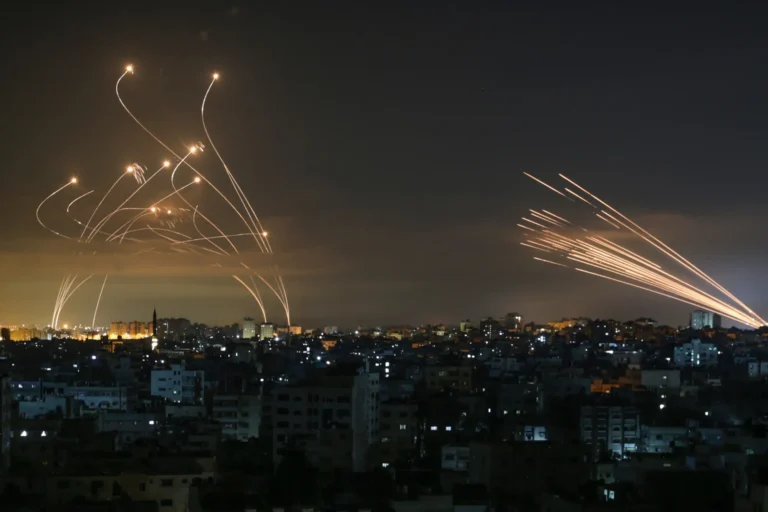
Tensions in the Middle East escalated after reported US-Israeli strikes killed Iran’s Supreme Leader, Ali Khamenei, triggering retaliatory strikes across several countries, including the United Arab Emirates, Qatar, Bahrain and Kuwait.

According to the BBC, oil prices surged by more than 10 percent in early Asian trading, with Brent crude reaching US$78.72 per barrel and US oil trading at around US$72.20 per barrel.

The conflict has also affected maritime security, with reports indicating that vessels were attacked near the Strait of Hormuz, a critical global oil shipping route

President Hichilema Says Living at Community House Gives Him Peace of Mind

4
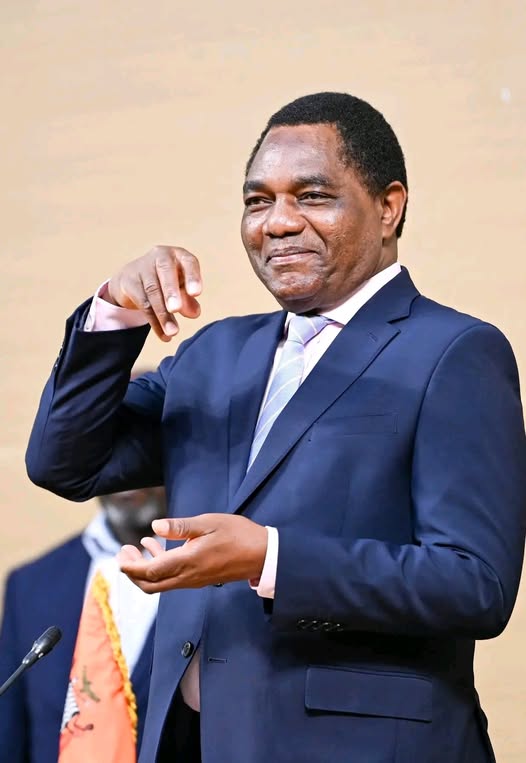
Hakainde Hichilema says he continues to reside at Community House despite working from State House, stating that the arrangement gives him peace of mind and enables him to focus on serving the nation.

Since assuming office in 2021, President Hichilema has not permanently moved into State House, a decision that has drawn criticism from some opposition figures who twice challenged the matter in court. Critics argued that the Head of State should reside at the official presidential residence.

Speaking during a meeting with councillors and local government leaders in Lusaka, President Hichilema said he had no issue with the scrutiny but maintained that remaining in a familiar environment allows him to work without distraction.

“If you come to my yard, where I live, I work in State House, but I live in the Community House. I know a lot of people made noise and they even took me to court twice. Why does he live in the Community House? It’s better I live where I have lived before,” he said.

The President explained that living at Community House allows him to move freely, including at night, without concern about unfamiliar surroundings. He added that this comfort enables him to maintain a calm mind while carrying out his duties at State House.

“Even if I’m dreaming in the night, I know where the toilet is. Then my mind will be freer when I’m working in the people’s office,” he said.

During the same engagement, President Hichilema urged councillors and local leaders to ensure their wards are clean, orderly and safe. He called on residents to maintain their properties and properly manage waste, while directing local authorities to monitor abandoned buildings that could become centres of criminal activity.

“Come to my area there, anytime. Don’t make an appointment. Pass through that road, you’ll find from the beginning of our property up to the end, there’s no paper there. We clean there. And we take responsibility to clean,” he said.

He further stressed that neglected properties pose risks to public safety and that local authorities, councillors, members of Parliament and mayors must ensure such spaces are properly managed.

“Because the people who voted for us want to see a clean Lusaka, a clean Chama, a clean Kabompo, a clean Kawama. That is the issue. That’s why I asked for this meeting. You are the frontliners, councillors. Nothing is difficult. Each one cleans where they operate. The council should know who owns this property. It’s there in the database,” President Hichilema said.

Sunshare Ordered to Pay K160,000 Fine Over Labour Law Violations

4
The Ministry of Labour and Social Security has sanctioned Sunshare Group of Companies following the discovery of serious labour law violations at its old factory.

Labour Commissioner Givens Muntengwa imposed a total fine of K160,000 on the company, divided into two penalties of K80,000 each, for failing to issue employment contracts and payslips to workers.

Speaking during an inspection, Mr. Muntengwa said the fines must be settled by Friday next week, warning that failure to comply would result in further sanctions.

He also directed the company to recalculate wages and pay outstanding arrears after it was established that employees were earning below the statutory minimum wage.

According to workers, they work 356 days a year without leave, sick days or half days, earning K60 per day and forfeiting the same amount for any missed day.

“This situation is unacceptable. Every worker must be paid the difference, mothers are entitled to a day off every month, and overtime on weekends must be compensated. Moving forward, every worker will now be on a proper salary,” Mr. Muntengwa said.

Operations at the factory were suspended after it was found that the company had failed to provide personal protective equipment, exposing employees to unsafe working conditions.

Mr. Muntengwa further instructed management to immediately provide new bedding for employees who sleep at the factory premises.

Workers expressed frustration during the inspection, citing prolonged exploitation and lack of basic labour protections.

“We don’t have leave days. You don’t have to get sick. There is no half day,” one worker said.

The Labour Commissioner stated that the ministry’s intervention should serve as a warning to employers who disregard labour law

“The payroll has to be run properly. Payslips must be issued. The law is clear and we will enforce it,” he said.

Goods Worth K120,000 Stolen During 2026 Ncwala Ceremony in Chipata

Goods valued at approximately K120,000 were stolen in Chipata during the recently held 2026 Ncwala Ceremony of the Ngoni people.

Robertson Mweemba, Eastern Province Police Commanding Officer, said 31 theft cases involving goods worth K119,635 were recorded during the annual traditional event.

Mr. Mweemba told journalists that seven suspects were arrested in connection with the cases and that personal belongings valued at K4,856 were recovered.

“We recorded a total of 43 crimes at the just-ended 2026 Ncwala traditional ceremony since its beginning, compared to 36 cases recorded last year during the same period,” he said.

He added that out of the 43 cases, 31 were thefts, nine were assaults, one involved unlawful wounding, and one was a break-in.

Meanwhile, 29 road traffic accidents were recorded during the same period. Of these, two were fatal, one resulted in serious injury, one caused slight injury, and 18 were classified as damage-only accidents.

Mr. Mweemba noted a slight increase in road traffic accidents compared to last year, when 28 incidents were recorded.

Approximately 600 police officers were deployed to provide security during this year’s ceremony, compared to 300 officers deployed the previous year.

Super League Blackout Deepens as TopStar, ZPL Trade Blame Over Broadcast Feed

2
The MTN Super League has remained off air since November 2025, frustrating supporters and unsettling sponsors despite a five-year, US$1 million-per-season broadcast agreement between the Zambian Premier League (ZPL) and TopStar Communications.

Over the weekend, Football Association of Zambia (FAZ) president Keith Mweemba issued a 72-hour ultimatum demanding a resolution to the blackout. He warned of possible legal action and indicated that alternative broadcasters such as SuperSport and Azam TV could be considered if the impasse persists.

On Monday, TopStar responded publicly, shifting responsibility to ZPL. The company’s public relations manager, Joy Chula, stated that the broadcaster is prepared to air matches but has not received the required live production feed.

“TopStar can only distribute feed which is shared by the production houses. We have not received any feed since November 2025,” Chula said.

She added that TopStar has the infrastructure in place to resume broadcasts immediately once ZPL meets its contractual obligations. “We have the pipes ready, but ZPL has failed to provide the water,” she said.

Earlier, Mweemba described the situation as unacceptable, stressing that contractual obligations must be honoured and warning that failure to comply would attract repercussions.

The dispute centres on the division of responsibilities under the broadcast arrangement. While TopStar is responsible for distribution, ZPL holds the production rights and is required to subcontract companies to film matches and provide the live feed. Without that feed, TopStar maintains it cannot transmit games.

TopStar said it agrees with FAZ that contractual obligations should be respected but argued that threats of legal action are misplaced if ZPL has not delivered the production feed.

Meanwhile, discussions between TopStar and ZPL are ongoing. The broadcaster has indicated that an announcement will be made soon regarding the possible resumption of Super League broadcasts.

ECZ dismisses claims of pre‑allocated constituencies

The Electoral Commission of Zambia has commenced provincial delimitation sittings for the 2026 constituency delimitation process following the successful conclusion of district-level consultations across the country.

The sittings, which began in Choma in Southern Province, mark the next phase of consultations aimed at guiding the creation of 70 additional constituencies.

Speaking during the Southern Province sittings, Commission Chairperson Mwaangala Zaloumis reaffirmed the Commission’s commitment to a transparent, timely and constitutionally grounded process.

Ms. Zaloumis said the Commission had from February 16 to 24, 2026 conducted district consultations in all 116 districts, bringing together key stakeholders and consolidating submissions for consideration.

She explained that the consultations focused on issues such as access to polling stations, identification of remote areas and other logistical concerns affecting effective representation.

“Consultations have been done from the lower levels, the grassroots, and the Commission communicated its roadmap, guiding principles and timelines clearly,” she said.

She explained that the commission had now reached the Provincial sittings stage where  district consolidated reports will be received.

Ms. Zaloumis noted with concern circulating misinformation suggesting that 30 of the proposed 70 additional constituencies had already been allocated to Southern Province.

“No allocations have been made yet as the consultative processes are still ongoing and any suggestions that certain numbers have been allocated are misleading,” she said.

She urged the public to use ECZ official channels of communication to obtain reliable information to avoid being misguided.

 She added that Southern Province was the first to submit consolidated reports from its 15 districts, which will now be formally received and analysed as part of the provincial sittings that are yet to be conducted in the other 9 provinces.

“The allocation of the 70 additional constituencies will only be determined after the provincial sittings across the country are concluded and the process will be fair, logical, transparent and reflective of social and geographical realities,” she said.

The commission will hold its provincial sittings for a day in each of the provincial centres country wide.

Seven houses collapse in Mondengwa ward

0

The Disaster Management and Mitigation Unit (DMMU) says seven houses collapsed in Mondengwa ward due to floods that were experienced in the area.

Chilanga District DMMU Officer Hakham Himaanga says 25 fields were also affected leaving crops vulnerable and prone to armyworm attack.

Mr Himaanga has explained that an assessment of Mondengwa and Mwembeshi wards of Chilanga District was conducted last month by a technical team due to flood incidents reports that were received.

Speaking in an interview with the media, Mr Himaanga said the assessment done in Mondengwa ward established that selected farms situated along Mungwi and Mumbwa roads are being flooded by storm water originating from Lusaka city.

“The absence of a properly engineered drainage system has resulted in uncontrollable runoff discharging into farm lands instead of being directed into a neutral water course’’, he said.

Mr Himaanga explained that in Mwembeshi ward nine houses collapsed and 15 fields were affected after experiencing heavy downpours.

He noted that the technical team which comprised local leadership and various government departments resolved that farmers need sensitisation to stop farming in flood prone areas and also the best time to plant and the type of seed best for the soil type.

“The flooding observed across the assessed areas is largely attributable to a combination of inadequate drainage infrastructure, uncontrollable storm water flows and solid waste management failures,’’ he said.

ZCS backs Govt food security drive

0

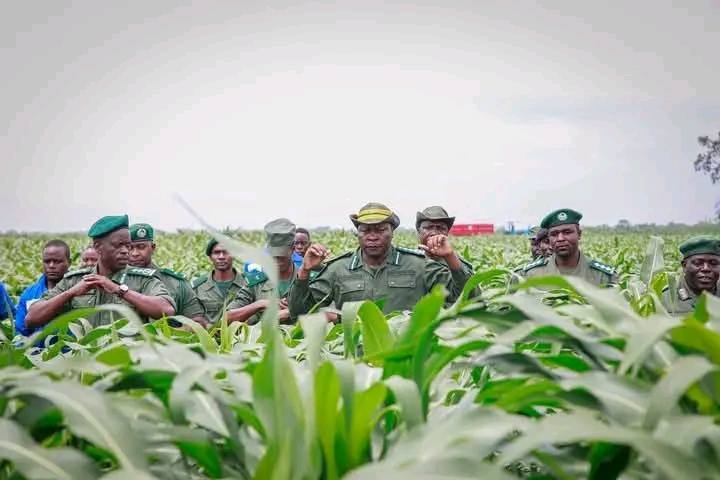
Zambia Correctional Service Commission Chairperson Evaristo Kalonga says the Service remains committed to supporting President Hakainde Hichilema’s vision of strengthening national food security through expanded agricultural production.

Mr Kalonga said the Correctional Service continues to play a key role in food production across the country, noting that Northern Province alone has cultivated 181 hectares of maize for the 2026/2027 farming season.

Mr Kalonga said that all correctional facilities in the province are food self‑sufficient due to consistent annual maize production.

“As you may be aware, all correctional facilities in the province feed themselves; they do not buy mealie meal because of the production that is taking place,” Mr Kalonga said.

He explained that the Service’s productivity is also contributing to stabilising the economy, citing its role in helping reduce inflation from 22 percent in 2021 to 7.5 percent in 2026.

During a courtesy call on Northern Province Permanent Secretary Bernard Mpundu, Mr Kalonga urged officers to remain loyal to the government and ensure humane treatment of inmates, including maintaining clean facilities with running water to prevent disease outbreaks.

“The correctional service is highly productive, and I would like to believe that it has contributed to the lowering of inflation from 22 per cent in 2021 to 7.5 per cent in 2026,” Mr Kalonga explained.

And Northern Province Permanent Secretary Bernard Mpundu acknowledged the Service’s efforts but highlighted challenges such as dilapidated infrastructure and inadequate staff accommodation.

Mr Mpundu noted that many correctional facilities were built for smaller populations and now require expansion.

He also appealed for the construction of a correctional facility in Kaputa District, which currently has none.

Iran oil shock sparks inflation alarm

0

Oil prices surging due to the Iran strikes risks reigniting global inflation, warns the CEO of global financial advisory giant deVere Group.

The stark warning from Nigel Green follows oil’s sharp rally as escalating US military action against Iran has injected fresh volatility into global markets, with Brent crude briefly pushing above $82 a barrel in Asian trading before settling near $78, up roughly 7% on the session.

He says: “Investors are now confronting a renewed inflation threat at a moment when price growth in major economies remains above or only just approaching central bank targets.

“When Brent jumps at this speed, inflation arithmetic changes quickly across developed economies.”

The Bank of England estimates that a 10% increase in the price of Brent crude typically adds around 0.2 to 0.3 percentage points to UK inflation.

The deVere CEO argues the significance of that multiplier is being underestimated.

“A sustained move of this magnitude would materially lift headline CPI in the UK.

“Policymakers who believed inflation was moving steadily back toward target would face renewed pressure.”

UK inflation recently stood above the Bank’s 2% objective, with services inflation proving persistent. An additional energy impulse would risk embedding higher expectations among households and businesses.

He extends the warning to the United States.

“US inflation remains sensitive to fuel costs. Gas prices feed directly into consumer sentiment and inflation expectations. If crude pushes toward $90 or $100, the pass-through into CPI becomes unavoidable.”

The Federal Reserve targets 2% inflation and has spent several years combating post-pandemic price acceleration, but energy shocks complicate that effort.

“Even if core measures exclude food and fuel, sustained oil increases tend to bleed into transportation, logistics, manufacturing input costs and ultimately consumer prices.

“Oil does not operate in isolation. Higher freight costs, higher airline fuel bills, higher distribution expenses. Corporate margins tighten or prices rise. Often both.”

In the euro area, recent moderation in headline inflation has been partly supported by softer energy costs.

A reversal would challenge the European Central Bank’s (ECB) easing assumptions.

“Europe is structurally more exposed to imported energy volatility. Any disruption to Middle Eastern supply routes tightens the supply-demand balance and amplifies price swings. Inflation progress across the bloc could stall.”

Australia faces similar sensitivity. With inflation running above the Reserve Bank of Australia’s 2-3% target band, additional energy pressure risks delaying policy relief.

“Australian households are already managing elevated living costs. Fuel and transport are highly visible expenses. A prolonged crude rally would filter quickly into domestic inflation data,” notes Nigel Green.

Beyond direct CPI mechanics, the deVere chief executive also stresses the behavioral dimension.

“If businesses anticipate persistent input cost increases, pricing decisions adjust pre-emptively. If workers expect higher living costs, wage demands strengthen.”

Geopolitical escalation heightens the probability of supply disruption in the Strait of Hormuz, a corridor that handles roughly a fifth of globally traded crude. Even without physical blockage, risk premiums expand when military tensions intensify.

“History teaches us that markets price risk before barrels disappear.

“Insurance costs rise, shipping routes shift, futures curves steepen. Volatility alone can sustain higher benchmark prices.”

Energy-driven inflation also narrows central bank flexibility.

“Rate-cut expectations would weaken under sustained oil pressure,” says Nigel Green.

“Central banks can’t overlook an externally generated price surge. Policy would remain tighter for longer, weighing on growth.”

Financial markets, in his view, are beginning to incorporate that scenario.

“Equities can absorb temporary spikes,” he says. “Extended conflict changes the calculus. Earnings forecasts assume stable input costs. If crude remains elevated, revisions will follow.”

The deVere CEO concludes: “If oil keeps climbing, inflation will climb with it, and central banks are forced back onto the defensive.”

America in Dark Tunnel

By Mwizenge S. Tembo, Ph. D.

Emeritus Professor of Sociology

When I taught college for 41 years, I heavily depended on the metaphor of the dark tunnel for my graduating seniors. At the beginning of the 16-week Spring semester, I would tell the class they better be ready because we were about to enter a long dark tunnel at the end of which they would emerge to graduate. The tunnel had ten to fifteen course assignments that included tests, ten quizzes, papers, class group discussions, exams, research semester project papers, and numerous oral presentations. Besides my class, the graduating seniors had 4 or 5 other equally demanding classes they had to pass.

During the middle of the semester when all the heavy assignments were keeping them busy, I would ask the class if they could see the light at the end of the dark tunnel. There was a serious slow shaking of heads that conveyed “Are you kidding me?” If you enjoy teaching, there is always banter between students and the professor. In one class of graduating seniors during one Spring, I had a graduating senior, Jane, with whom I had banter back and forth with in class during the semester. All the assignments including the major research project were behind us. All that remained were the final exam and then the graduation ceremony. I asked the class if they could see light at the end of the dark tunnel yet. There were unanimous yesses with smiles. Jane raised her hand.

“Prof. Tembo, I still cannot see the light at the end of the tunnel!” she said with a straight face. The class roared with laughter.

“Jane,” I said, shaking my head slowly and feigning disappointment. “I am really disappointed in you. If you cannot see the light, I will give you my glasses,” I said, taking reading glasses off my nose holding them toward her. There was more laughter.

America is in the middle of a dark tunnel. Durin the 250 years since its birth, the country has lived through numerous dark tunnels which included major wars. President Lincoln would not have known that the union would still hold after the Civil War. Americans could not have known that they would succeed on D- Day in Europe perhaps during one of the darkest moments during World War II during the Allied fight against NAZI Germany and the American fight against Japan. There were the tumultuous Civil Rights era and the Vietnam War.

If you are not aware today that we are living in a dark tunnel, you might be among the 39% Americans polls suggest still support this President and this administration inspite all the terrible things they have instigated the last year. Harris won 74,470,093 votes (48.25%), Trump won 76,957,993 votes which is 49.87% of the voting total of 154,330,46348. Trump won only by 1.62% contrary to his hoopla that he won by a landslide mandate that empowers him and his administration to do anything they want.

Immigration and Customs Enforcement (ICE) is causing violations of the constitution and civil rights abuses, widespread violence, racial profiling, and ICE agents shooting to deaths of 2 innocent American citizens in Minneapolis in Nicole Goode and Alex Pruitt. These are the martyrs of this American resistance to this fascist and authoritarian government. None of us voted for this chaos and cruelty of the mass deportations. What happened to affordability and lowering of the price of eggs?

When I first heard on the news that morning about the decisive 6-3 Supreme Court ruling striking down the Trump Tariffs, millions of Americans and I were overjoyed. We thought we could see a small light at the end of the dark American tunnel we are living in. Two major small distant lights at the end of this dark tunnel may be the November 2026 mid-term elections and the 2028 Presidential elections. Alas, that small light was snuffed out. Trump held a press conference three hours later in which the small light was blown out; he was going to maintain the chaotic tariffs which you and I pay when we buy imported consumer goods.

There was one very vital lesson I learned during those three short hours when I was happy the tariffs would be eliminated; when you live through this American dark tunnel, you have to learn to enjoy, cherish, and celebrate small victories along the way. This is how Americans have survived the dark tunnels during the growing of the American nation. These small moments of victory do not necessarily have to do with politics. They may be small victories in your personal life. It could be a birthday celebration, a newborn, a potluck dinner or lunch at church, talking and laughing with friends, success in school, work, sports, participating in No Kings demonstrations and other protests of resistance. It occurred to me that this is how individuals in particular and America in general have lived through dark tunnels of personal lives as well as the collective life of the nation.

There’s no ‘ICIMWELA’ for the opposition; it’s HH Mpaka 2031!

The other week, Citizens First party leader, Harry Kalaba featured on Lusaka’s Hot FM phone in programme in Long Acres where he was of course rumbling on a number of issues. As we crossed the road to grab some lunch from Longacres matebeto, we expected multitudes to have besieged the double-storied building where the popular radio station is domiciled to hobnob or at least catch a glimpse of the opposition leader.

But what did we see instead? A handful of hangers-on and people minding their own business as if Kalaba wasn’t in town – taxi drivers dangling car keys or restaurant owners waving mouth watering T/bone at you! Kalaba briskly emerged from the building and jumped into his not so impressive black Hammer and sped off as a few vehicles followed suit.

When John Sangwa, who’s notorious for bragging he’d recruit 1 million members before the elections, ‘stormed’ Chisokone market to fetch ‘imilonge and chiyonge’ expecting an electrifying and frenzied response from the marketeers, they went about their chores oblivious of him.

We’ve seen a similar trend obtaining when other opposition leaders such as Fred M’membe, Makebi Zulu, Saboi Imboela, Sakwiba Sikota, Chishala Kateka, Kasonde Mwenda, Sean Tembo, Brian Mundubile, Kelvin Bwafya Fube, Binwell Mpundu and Given Lubinda etc have ventured in public spaces…..no one seems to seems to care much about their presence.

Now contrast this with the “icimwela” of 2021 that brought President Hichilema in power or indeed the wind of change of 2011 that ushered the King Cobra into office. Activities would virtually be brought to a standstill as people abandoned whatever they were doing to catch a glimpse or shake hands with the then opposition leaders.

What do we make of this?

It’s a done deal for President Hichilema! At the rate things are going , no one will manage to extract from the throne even if they came with a front-end loader. It’s definitely HH Mpaka 2031; stop wasting your time and precious resources ba opposition, maybe try 2091!

Mulekutika?

Prince Bill M. Kaping’a
National Coordinator
HH Mpaka 2031 People’s Alliance
Zambezi

The Opposition Void: Fitting Into President Hichilema’s Big Shoes

By Dr. Martin Mushumba
Public Policy Analyst

President Hakainde Hichilema is the current president of the Republic of Zambia. He spent 23 years as an opposition leader. His experience in politics and indeed leading a successful opposition party is unmatched. Over his 23 years as an opposition leader, he did not merely participate in our politics, he defined an era of principled opposition.

President Hichilema stood tall in Zambia’s democratic landscape. His influence was loud, not through noise, not through spectacle, but through quiet strength, strategic clarity, and unwavering conviction. At a time when opposition politics required uncommon courage, he provided direction with steadiness and dignity.

His strategic discipline, ethical posture, and belief in democratic governance profoundly shaped the political culture of the United Party for National Development (UPND).

He taught us that leadership is not measured by the office one occupies, but by the values one refuses to surrender. He kept on to his values, even when his closest confidants succumbed to pressure. He taught the world that modern politics was about the message that resonates with the people and not character assassination.

With calm resolve and intellectual depth, President Hichilema transformed the UPND into a formidable democratic force that eventually wrestled power from the Patriotic Front. He demonstrated that opposition is not obstruction but guardianship of national conscience. In moments of uncertainty, he offered vision. In moments of pressure, he displayed composure. In moments of hostility, he chose principle and restraint.

Surely, President Hichilema has mentored a generation of leaders who will carry his leadership going forward. The victory of democratic ideals we witness today is, in many ways, a continuation of the foundation he laid. His greatness as an opposition leader was not mere loudness: it was anchored in character. His legacy stands not to be personal but national.

In every way, as an opposition leader, President Hichilema bestrode our politics with dignity and foresight. His principles continue to breathe through the leadership he inspired and the democratic path he charted. His ascension to Presidency has today left a serious vacuum whose depth is clear. You can only pretend not to feel this emptiness when you see the disorganisation in today’s the opposition parties.

Today, I urge the opposition leadership to draw lessons from his resilience, organisational focus, and unshakeable belief that Zambia deserved better.

For those, aspiring to succeed President Hichilema, both within and outside the ruling UPND, begin to learn and practice his politics. You might not like him, but he has raised the bar and that is clear. The benefit to Zambia is that it has managed to expose and eliminate political jokers who for a long time received attention from the masses.

The 2026 general election is around the corner, we seek to witness issue based politics. President Hichilema showed the nation in 2021 that you cannot actually win an election without mudslinging your opponents. Let’s debate ideas and bring to light the vision you have for your wards, constituencies, councils and Zambia as a whole. All the best Zambia.