Monday, June 8, 2026
14 C
Lusaka
Home Blog Page 125

Isoka accident claims four lives

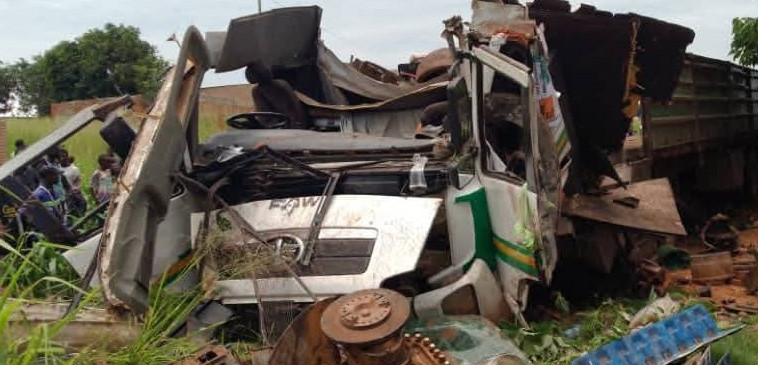
Four people have died in a road traffic accident that occurred yesterday, February 28, 2026 around 16:00 hours at Kalungu Village, about 50 kilometres north of Isoka Town along the Great North Road.

Muchinga Province Police Commanding Officer, Dennis Moola, has revealed in a press statement that the accident involved a Faw truck and trailer registration number T250 EFW/T578 EDG and an unregistered Kinglion motorbike.

Mr Moola indicated that the truck, which was being driven from north to south by Mwanakula Bwiganeasimwisye, 52, of Dar es Salaam, Tanzania, developed a broken right headlamp and damage to the right door, fender and bumper following the collision which left the driver escape unhurt.

He further explained that the motorbike, ridden by Aron Simukoko, 36, of Kalungu Village in Chief Kafwimbi’s area in Isoka District, was travelling in the opposite direction with 3 pillion passengers on board when the accident occurred.

“The accident happened when the rider attempted to overtake improperly and in the process collided with the oncoming motor vehicle,” Mr Moola said.

He named the deceased as Aron Simukoko, Teddy Sinkala, 38, of Kalasa Village in Chinsali District, Osward Sichone, 41, of Kalungu Village in Isoka District, and Joseph Mando, 47, of Lamwambe Village in Nakonde District.

Mr Moola said the four sustained fatal injuries and were certified dead at Isoka District Hospital.

“The bodies have since been deposited in the mortuary awaiting postmortem examination, while both the motor vehicle and the motorbike have been impounded at Isoka Police Station,” he noted.

Mr Moola has since urged road users to adhere to traffic regulations to avoid loss of life.

Veep encourages the church to make use of CDF

1

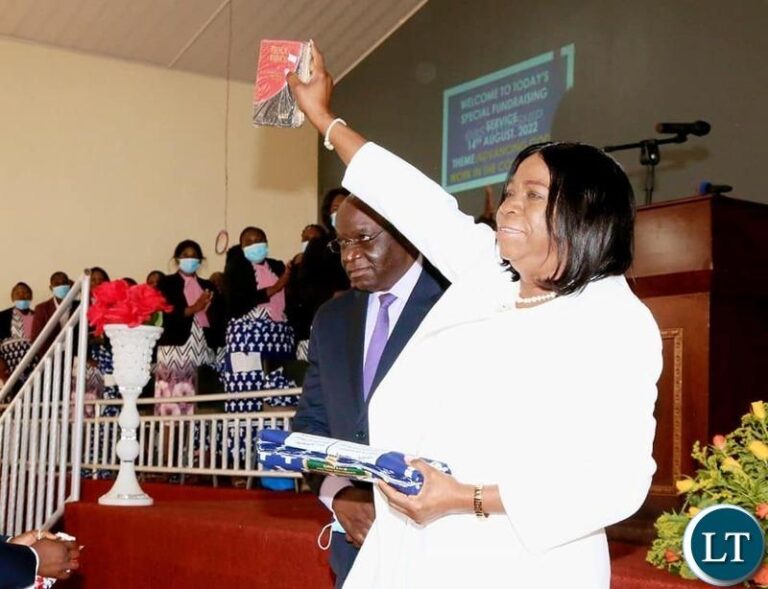
Vice President, Mutale Nalumango, has urged churches in Chongwe District to tap into the Constituency Development Fund (CDF) for expansion of their church infrastructure.

Ms Nalumango adds that churches have the right to access the fund for community development activities.

The Vice President was speaking during a fundraising service at the Pentecostal Assemblies of God (PAOG) Church in Chongwe.

She further urged congregants to contribute generously to church initiatives to transform lives.

“When you give and contribute to the growth of His kingdom, you will never lack,” she said.

Mrs Nalumango also praised the role of the Pentecostal Assemblies of God in advancing Christianity in the country.

Pentecostal Assemblies of God, Deputy Provincial Bishop, Raphael Mpange described the church and the government as development partners, stating that the church aims to uplift communities.

“Chongwe has grown, and we have seen an increase in theft, prostitution, and street children, hence the need to expand church infrastructure to help curb these vices,” he said.

In his homily from Exodus 25:8 -9, Bishop Justine Mulenga, said the church is a spiritual sanctuary and center of hope that transforms souls.

Chongwe Member of Parliament, Sylvia Masebo, urged the church to pray for the district’s social challenges.

“Please pray for Chongwe District which is currently facing social challenges such as prostitution, children living on the streets, and incidents of people throwing children into rivers,” she said.

Ms Masebo further encouraged ongoing contributions to expand church facilities.

Copper Queens Settle for 3rd place

0

The Copper Queens have finished third at the COSAFA Women’s Championship after failing to defend the crown.

‎The Zambian Queens were forced to play the third and fourth match after losing the semifinal match to Namibia on Friday via a 1-0 score-line.

‎On Sunday afternoon, Zambia thumped Zimbabwe 3-1 at the New Peter Mokaba Stadium in South Africa.

‎Agness Phiri scored twice on the day with Mercy Chipasula netting Zambia’s third goal.

‎Rutendo Makore reduced the deficit for the Mighty Warriors of Zimbabwe.

‎Zambia and Zimbabwe had earlier in the group stage settled for a draw at the COSAFA Women’s Championship.

‎Third place finish at the regional championship is consolation for Zambia after failing to reach the final.

‎Meanwhile, Zambia’s Agness Phiri was voted the player of the match in the encounter against Zimbabwe.

‎Zambia is now expected to shift focus to pre-Womens Africa Cup of Nations preparations.

‎Namibia and hosts South Africa were playing the final by news time.

(Image by COSAFA Media)

Opposition leaders allege shrinking political space ahead of August polls

Political tension is rising ahead of the August general elections, with opposition leaders accusing the administration of narrowing democratic space through legal processes and administrative decisions unfolding during campaign season.

Bob Sichinga, Vice President of the Peoples Pact Movement, has alleged that opposition figures face restrictions when attempting to mobilise supporters. He argues that state institutions are being applied unevenly, limiting opposition outreach while the incumbent continues nationwide engagements.

The allegation adds pressure to an already sensitive political climate.

At the centre of the dispute is the Electoral Commission of Zambia’s delimitation exercise. Richwell Siamunene has described the consultation process as predetermined, questioning whether public engagement meaningfully influences boundary decisions.

Delimitation is not a routine bureaucratic adjustment. Constituency boundaries shape representation, influence electoral outcomes and determine the distribution of development resources. Changes introduced in proximity to a national election naturally attract scrutiny.

Critics argue that consultation timelines have been compressed and that stakeholders were not sufficiently engaged before proposals were advanced. They contend that transparency and timing are central to electoral credibility.

The Commission continues with the process under its constitutional mandate.

Parallel to the boundary debate, a separate legal matter has intensified discussion around freedom of expression.

Raphael Nakacinda remains before the courts over remarks made during the 2024 aflatoxin crisis. At the height of public concern over contaminated mealie meal, Nakacinda publicly raised alarm about food safety. Laboratory findings later confirmed the presence of aflatoxins in certain batches, and product recalls followed.

Supporters frame the prosecution as punishment for speech. Authorities maintain that the matter falls within existing legal provisions. The case has revived debate about the scope of political expression and the continued application of older penal statutes in a constitutional framework.

Legal proceedings continue. Strong enforcement rhetoric relating to illegal mining operations has also entered the political conversation. Critics argue that aggressive language during an election season feeds perceptions of institutional imbalance. Security authorities maintain that enforcement actions target criminal activity, not political dissent.

The convergence of these developments has sharpened the national mood.

Boundary consultations, active court cases and intensifying campaign mobilisation now sit on the same timeline. Each process may be legally grounded, yet collectively they shape public perception.

Perception influences legitimacy. Democratic competition requires visible neutrality. Opposition parties must demonstrate they can organise freely. The administration must demonstrate that enforcement and governance mechanisms operate without partisan bias. Electoral authorities must maintain trust in boundary-setting decisions. The judiciary must project independence in politically sensitive cases.

HH secures Eastern backing as Ncwala ceremony shifts political ground

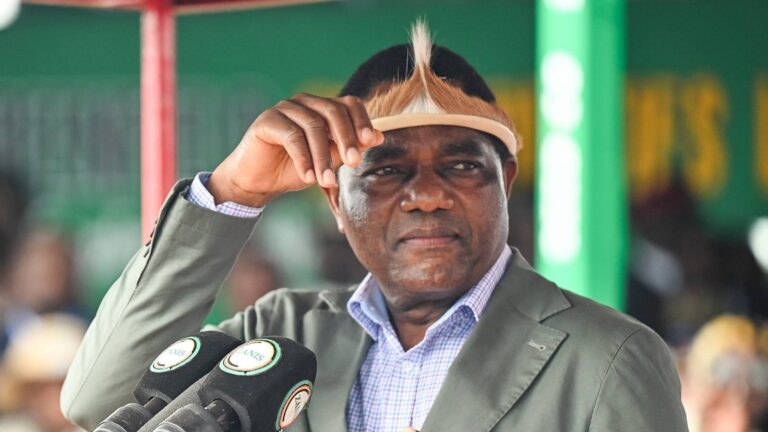
President Hakainde Hichilema left Eastern Province with more than ceremonial applause. He left with public endorsements, a development pledge on record, and visible consolidation in one of Zambia’s politically significant regions.

During the Ncwala Traditional Ceremony, sixteen Members of Parliament publicly endorsed his candidature for the August general elections. The declaration was not incidental. It was clear, direct and timed in a setting that carries cultural authority and regional weight.

Eastern Province has long been treated as a competitive political space. Any visible alignment there changes electoral mathematics.

The President used the platform carefully. He did not turn the ceremony into a rally. He framed his remarks around unity, identity and development. He described traditional ceremonies as pillars of cohesion that strengthen regional and national identity. That framing anchored his political presence in cultural respect rather than campaign theatre.

At the same event, he pledged to work towards establishing a university in Eastern Province.

That commitment introduced a concrete development proposal into the regional conversation. Access to tertiary education remains uneven across provinces. A university changes local economic patterns, employment prospects and long-term human capital growth. Whether delivered before or after the election, the pledge now sits firmly in the public record.

Symbolism also mattered.

The President received traditional regalia including a shield and spear from Paramount Chief Mpezeni. In ceremonial language, such gestures signify honour and acceptance. In political language, they signal legitimacy within the cultural framework of the region.

The President also thanked the traditional leadership for confidence in his administration. The tone was cooperative rather than transactional. The message was that development and cultural leadership can move in alignment.

Sixteen MPs declaring support in that setting amplified the impact. Endorsements delivered inside a traditional ceremony carry deeper resonance than those issued in press conferences. They merge institutional authority with elected power.

For opposition actors, the optics are significant.

Eastern Province is not merely symbolic. It influences national electoral outcomes. Consolidation there narrows alternative pathways. Public alignment from sitting MPs suggests organisational coordination rather than isolated support.

The Ncwala ceremony therefore functioned on two levels. It preserved its cultural identity while also serving as a moment of political consolidation.

There was no overt campaign choreography. No party regalia takeover. No slogan chanting dominating the ceremony. Instead, development pledges and endorsements were layered into the proceedings with measured precision.

That approach matters. It avoids alienating cultural custodians while still building political momentum.

The university promise strengthens the President’s regional narrative. Development commitments tied to specific provinces anchor campaigns in tangible outcomes rather than abstract rhetoric. Education infrastructure carries long-term resonance beyond election cycles.

The sixteen endorsements reinforce stability.

Political campaigns are shaped by perception as much as polling. Visible backing in a region that has historically fluctuated sends a signal to both supporters and opponents. Momentum influences narrative. Narrative influences confidence.

The President leaves Eastern Province with strengthened footing.

The August election will test whether ceremonial alignment converts into votes. What cannot be disputed is that the Ncwala gathering delivered measurable political consolidation.

Eastern Province is no longer neutral terrain.

Lubinda-led PF convention stalls as internal tensions intensify

The Patriotic Front’s long-anticipated elective convention has failed to take off as scheduled, exposing deep internal strain within the former ruling party at a critical pre-election moment.

The convention, associated with the faction led by Given Lubinda, was expected to consolidate leadership and position the party ahead of the August general elections. Instead, procedural setbacks and unresolved legal processes have stalled momentum, leaving the party navigating uncertainty.

The disruption follows a court adjournment in a matter linked to the party’s internal leadership process. The High Court had been expected to deliver a consent judgment, but the case was pushed to a later date. The postponement immediately cast doubt over whether the convention could proceed as planned.

Despite the setback, party officials aligned with the Lubinda camp have maintained that the convention will move forward.

The insistence reflects the urgency within PF ranks. With the general election calendar fixed, the opposition party must finalise its leadership structure and clarify its presidential candidature. Delays weaken organisational cohesion and project instability at a time when strategic clarity is essential.

The stalled gathering has amplified existing factional narratives.

One strand within the party frames the situation as a procedural interruption that can be resolved through internal discipline and legal compliance. Another strand interprets the setbacks as symptomatic of deeper fractures — ideological, generational, and strategic.

Public messaging from PF leadership has attempted to project resilience. Officials have argued that adjournments and internal disputes will not derail their plans. Yet the visible inability to execute the convention as scheduled underscores structural strain.

The former ruling party remains one of the country’s most significant political actors. Its performance in the upcoming election cycle depends heavily on whether it can unify competing camps under a coherent leadership structure. Convention delays complicate that objective.

Beyond procedural concerns, the episode raises broader questions about opposition alignment.

Calls for unity across opposition ranks have grown louder as the election season approaches. Some leaders outside the Lubinda faction have urged consolidation of forces rather than fragmented contests. Those appeals have so far collided with entrenched leadership ambitions and competing strategic visions.

The court’s adjournment has therefore become more than a technical pause. It has turned into a focal point for internal legitimacy battles.

Leadership conventions are not merely administrative events. They serve to confer authority, mobilise structures, and energise supporters. A convention that fails to materialise on schedule sends a signal — whether intended or not — of unresolved contestation.

PF’s challenge is now twofold.

First, it must resolve outstanding legal questions in a manner that withstands scrutiny. Second, it must prevent procedural delays from hardening into permanent factional divides.

The political calendar does not pause for internal reconciliation. Campaign preparations across the spectrum are accelerating. Any prolonged leadership ambiguity narrows the window for message consolidation, candidate positioning, and grassroots mobilisation.

Within PF circles, confidence remains publicly expressed. Officials insist the convention will proceed and that organisational setbacks are temporary. Whether that confidence translates into swift resolution remains uncertain.

The coming weeks will test the party’s institutional discipline.

If the Lubinda-led faction successfully convenes and elects leadership without further disruption, the current episode may be remembered as a transitional hiccup. If delays persist, the narrative of fragmentation could deepen, influencing voter perception.

Opposition politics in Zambia has historically revolved around personality, structure, and timing. All three variables are now in play within the PF.

What began as a scheduling issue has evolved into a measure of internal coherence.

The party’s next moves will determine whether it regains forward momentum or continues navigating turbulence at a pivotal electoral juncture.

Banda tells politicians to keep campaigns out of worship spaces

Archbishop Dr Alick Banda has issued one of the clearest election-year boundaries yet, stating that Catholic churches and gatherings must not be used as platforms for political campaigning ahead of the August general elections.

Speaking during a Catholic Men’s Organisation annual meeting, the Archbishop emphasised that while every citizen has the constitutional right to belong to a political party, houses of worship are not venues for partisan mobilisation. He said churches are sacred spaces meant for prayer, reflection, and unity, not political endorsement or campaign messaging.

His statement arrives as the political season intensifies.

With the August polls approaching, public appearances by political leaders have increased across the country. Traditional ceremonies, community events and church gatherings have drawn growing political presence. The Archbishop’s intervention establishes a clear institutional position: political participation is legitimate, but campaign activity must remain outside religious platforms.

He was deliberate in drawing the distinction.

Membership in a political party is a constitutional right. Using the pulpit as a campaign podium is not.

The Catholic Church occupies a significant moral and social position in Zambia. Its congregations span provinces, demographics and political affiliations. Maintaining neutrality, the Archbishop indicated, is essential to preserving unity among worshippers who may differ sharply in political allegiance.

Religious spaces, he stressed, must not become arenas where partisan competition fractures fellowship.

The warning also reflects a wider concern that as campaign rhetoric intensifies, sacred spaces can become vulnerable to subtle political messaging. Introductions of candidates during church services, speeches that drift into policy advocacy, and the circulation of campaign narratives during religious events all risk blurring institutional lines.

The Church’s position is preventive rather than reactive.

Once worship spaces become identified with political camps, neutrality erodes quickly. Congregants who hold different political views may begin to perceive bias where none was intended. Clergy risk being pressured to align publicly. Spiritual guidance becomes entangled in electoral rivalry.

The Archbishop’s remarks also reinforce the broader principle that democratic competition requires boundaries. Political parties have ample opportunity to market manifestos through rallies, media engagements and community meetings. The Church does not deny that right. It insists only that its sanctuaries remain separate.

That separation serves both democracy and faith.

Democracy benefits when institutions outside formal politics retain independence and moral credibility. Faith communities retain authority when they avoid alignment with transient political battles. In election years, this institutional clarity becomes especially important.

The Archbishop did not direct his remarks at any specific party. His statement applied across the political spectrum. The emphasis was on conduct, not affiliation.

His position aligns with a longstanding approach within sections of Zambia’s faith community that have historically resisted formal political endorsement. At the same time, the Church has not withdrawn from civic life. It continues to speak on governance, justice, and ethical leadership. The distinction lies in avoiding partisan mobilisation from the altar.

That line is now publicly drawn.

The August elections will test institutional discipline across multiple sectors. Political actors, eager to reach wide audiences, will continue seeking visibility in diverse settings. Religious gatherings offer access to large congregations. The Church’s directive signals that such access does not equate to endorsement.

As campaign momentum builds, the responsibility now shifts to political leaders and party structures. Respecting the boundary is not merely procedural. It is foundational to preserving trust within congregations that reflect Zambia’s political diversity.

Archbishop Banda’s intervention adds structure to the election climate. It affirms that while citizens may campaign, contest and debate, they must do so in appropriate spaces.

Churches, he has made clear, are not campaign arenas.

Lusaka–Ndola road hits 65 percent completion as fuel costs ease

Fuel prices have been reduced following the latest Energy Regulation Board review, delivering measurable relief to transport operators and households already adjusting to cost pressures.

Petrol now retails at K26.61 per litre, diesel at K23.25, kerosene at K21.06 and Jet A-1 at K22.39. The adjustment reflects movements in international oil prices and exchange rate positioning during the review cycle.

The reduction arrives at a sensitive moment in the domestic economy.

Fuel pricing directly influences transport costs, food distribution, production input expenses and service delivery. Even modest shifts affect inflationary pressure. The latest review signals relative stability in external pricing variables, allowing regulators to adjust pump rates downward.

While consumers experience the change immediately at filling stations, the broader impact will unfold across supply chains over the coming weeks.

Parallel to the fuel adjustment, government has provided an update on one of its largest infrastructure undertakings. The Lusaka–Ndola Dual Carriageway project has reached 65 percent completion, with 338 kilometres now open to traffic.

The project, structured under a public-private partnership valued at approximately US$649 million, remains one of the most visible infrastructure interventions currently underway. Completion is projected for September 2026.

The 338 kilometres already open represent tangible progress along a route that connects major economic nodes. The Lusaka–Ndola corridor supports freight movement, mining-linked logistics and cross-province passenger transport. Improvements along this stretch carry implications for trade efficiency and travel safety.

Infrastructure delivery and fuel pricing intersect in economic terms. Reduced fuel costs lower operational expenses along improved transport routes. Upgraded roads reduce vehicle wear and transit time. Combined, these elements influence cost structures across industries.

Government has also addressed public concern regarding medicine availability in hospitals. Authorities have stated that there are no shortages of medicines in health facilities, countering circulating claims suggesting supply gaps.

Health sector stability remains central to public confidence. Medicine supply disruptions often trigger immediate anxiety due to their direct effect on patient care. The official assurance seeks to stabilise perception and reinforce administrative control over procurement and distribution systems.

Taken together, the three developments form part of a broader economic narrative.

Fuel reductions provide immediate visible relief. Road progress demonstrates medium-term structural investment. Medicine supply assurances speak to service continuity in the health sector.

Each component touches a different layer of public life. Households monitor fuel costs weekly. Businesses track transport efficiency monthly. Patients rely on medicine availability daily.

The Lusaka–Ndola project in particular remains politically significant because of its scale and visibility. Infrastructure projects of this magnitude serve as markers of administrative capacity. Delays draw criticism. Progress updates reinforce delivery claims.

The 65 percent milestone therefore carries both technical and symbolic weight.

At the same time, fuel pricing remains sensitive to external volatility. Global oil markets and currency fluctuations continue to shape domestic pump adjustments. Stability in one review cycle does not eliminate exposure in future cycles.

Economic management is rarely defined by a single announcement. It is shaped by consistency across sectors.

Fuel adjustment. Road completion progress. Medicine supply reassurance.

These are not isolated developments. They sit within the same governance matrix.

The coming months will determine whether the combined effect translates into sustained economic confidence. For now, the measurable indicators point toward incremental relief and visible infrastructure movement.

Zambia says US$1bn health talks remain active amid rejection claims

Government has moved to shut down claims that Zambia rejected a proposed US$1 billion American health financing package, stating that engagement with Washington remains active and ongoing.

Chief Government Spokesperson Cornelius Mweetwa said Zambia has not turned down support and remains in discussions with the United States. He warned that portraying the situation as a rejection distorts the reality of negotiations and risks misleading citizens and international partners.

The clarification follows heightened public attention surrounding a proposed five-year health co-financing arrangement reportedly valued at over US$1 billion. The proposal has generated debate over its structure, conditions, and broader implications for national policy, particularly in areas linked to health system governance and data management.

Government’s position is that the matter remains under discussion.

The proposed package reportedly includes commitments tied to health sector performance, staffing levels, and domestic contributions over a multi-year period. Public discourse has also focused on clauses related to health data access and reporting frameworks. These elements have drawn scrutiny from domestic stakeholders who argue that any agreement must preserve sovereignty and protect sensitive national information.

Mweetwa’s statement marks the clearest indication yet that the administration views the issue as a negotiation rather than a closed chapter.

Health sector observers note that a funding envelope of this magnitude carries substantial implications for workforce expansion, service delivery, and health infrastructure. Zambia’s annual health allocation runs into significant figures, and an external injection of this scale would influence medium-term planning across multiple sub-sectors.

At the same time, conditionalities tied to international financing agreements have historically generated public debate in Zambia. Concerns often centre on data governance, reporting obligations, and policy alignment requirements. In this case, the discussion has extended to issues of biological data, long-term information sharing frameworks, and linkages between health cooperation and broader economic interests.

The sovereignty dimension has therefore emerged as central to the debate.

Supporters of a cautious approach argue that safeguarding national control over health data is non-negotiable, particularly as digital systems and biological surveillance mechanisms become more advanced. They maintain that external financing must not compromise national decision-making authority.

Critics, however, contend that clarity is needed on the exact status of negotiations. Public communication gaps have allowed competing interpretations to circulate, fuelling uncertainty over whether Zambia had declined the offer outright or was simply reviewing terms.

The administration’s message is that talks remain open.

In diplomatic practice, negotiations of this scale typically move through multiple phases, including draft exchanges, technical reviews, and political consultations. It is common for early reporting to focus on proposed terms before governments finalise their positions. Government now appears intent on reasserting control over the narrative.

The broader context is significant.

Zambia’s health system has relied on both domestic financing and external partnerships over the years. International cooperation remains a key component of service delivery, particularly in areas such as HIV programmes, disease surveillance, and workforce training. Any shift in major bilateral arrangements therefore carries weight not only financially but strategically.

The US remains one of Zambia’s long-standing partners in health programming.

What remains unresolved is the precise trajectory of the proposed arrangement. Whether the package will proceed in its reported form, be renegotiated, or be restructured remains a matter for ongoing discussions. Government has not released detailed terms publicly, and negotiations typically require confidentiality during sensitive stages.

For now, the administration’s line is clear: Zambia has not rejected US support.

The issue has evolved beyond a funding headline. It now sits at the intersection of diplomacy, sovereignty, health governance, and public trust. The coming weeks will determine whether the engagement matures into a formalised agreement or is reshaped through further negotiation.

What is certain is that the matter remains active — not concluded.

Six Armed Robbers Shoot and Rob Chililabombwe Businessman

2

Six armed robbers shot and robbed a Chililabombwe businessman of Kamenza East, making away with US$90,000, a pistol and an iPhone 17 Pro Max valued at K49,000.

The victim, Abram Mukuka, 34, a father of five, was shot in the left leg during the attack, and the bullet remains lodged in his leg. The suspects also fled in his Toyota Hilux registration number AGC 2398, which was later found dumped on Kaoma Street in Chililabombwe.

According to Mr Mukuka, the incident began when his son spotted men hiding in a nearby maize field as he was opening the gate for him to drive into the yard. The armed suspects then emerged and attacked.

Mr Mukuka said he was shot in the leg as he attempted to grab his pistol from his other vehicle which was parked inside the yard. After he was shot and fell to the ground, his daughter tried to fight off one of the robbers during the struggle.

He said the attack appeared to have been planned, as the assailants were masked and wearing reflective jackets. He also observed that one of the suspects had a hand with missing fingers.

Mr Mukuka has since been taken to Nchanga South Hospital in Chingola for treatment to have the bullet removed.

The matter has been reported to police, and investigations are ongoing.

ERB reduces fuel pump prices

The Energy Regulation Board (ERB) has adjusted downward the pump prices of Petrol, diesel and kerosene including Jet A-1.

Petrol has been adjusted to K26.61 per litre from K27.88 per litre, while diesel has been reduced to K23.25 per litre from K24.50 per litre, with Kerosene at K21.06 per litre from K22.24 per litre.

Jet A-1 has also been reduced to K22.39 per litre from K23.80 per litre respectively.

 ERB Board Chairperson, James Banda, says the reduced prices come into effect at midnight tonight and will remain in effect until March month end, this year.

In a statement, Mr Banda has attributed the revised prices of the commodities to the exchange rate of the Kwacha against the United States Dollar.

FAZ gives ZPL, TopStar 72 – hour ultimatum

3

The Football Association of Zambia (FAZ) has given the Zambian Premier League (ZPL) and broadcaster TopStar a 72-hour ultimatum to resolve the ongoing MTN Super League broadcast blackout.

Speaking when he opened the Strategic Plan Working Group Workshop at Golden Peacock Hotel in Lusaka today, FAZ President, Keith Mweemba, warned that legal action may be taken if the situation is not addressed urgently.

He expressed concern that no Super League match has been televised since November 2025 despite a five-year broadcast deal worth $1 Million per season, insisting that the issue must be resolved without delay.

Mweemba stressed that it is crucial that broadcasting partners, such as TopStar are brought to the round table, stating that contractual obligations must be honoured.

He stated that FAZ would not hesitate to enforce the agreements through legal means if necessary.

Mweemba also revealed that the association could explore partnerships with other broadcasters, including SuperSport and Azam Media, following recent amendments to laws removing monopoly and exclusivity clauses.

Soccer Analyst, Yotham Mwanza, described the situation as unfortunate, urging the Zambia Premier League and TopStar to address the issue.

And Zambia Sports Fans Association Patron, Peter Makembo, said the issue must be urgently resolved on round table between FAZ and the parties involved.

Late Abel Mwanza’s remains arrive

0

Remains of Abel Mwanza, who died in a tragic school shooting in Tumbler Ridge, Canada, which claimed eight lives and left 25 others injured on 10th February, 2026 have arrived in the country for burial on Monday in Kitwe.


Minister of Foreign Affairs and International Cooperation, Mulambo Haimbe, says government worked closely with Canadian authorities from the time the incident occurred to ensure that the remains were brought back home with dignity.

ZANIS reports that speaking during the arrival of the body at Kenneth Kaunda International Airport in Lusaka, before it was flown to the Copperbelt, Mr Haimbe said government had provided logistical support, including an aircraft from Lusaka to the Copper belt, to ease the burden on the family.

“On this solemn occasion, we commiserate with the family on this tragic loss. You can imagine the young life that has been lost and the devastation the family is going through. As government, we wish to express our deepest condolences,” he said.

Mr Haimbe further assured citizens that government continues to monitor the safety of Zambians in the diaspora, revealing that authorities are closely following developments in the Middle East.

“We are assessing minute by minute, hour by hour, and we already have an evacuation plan in place, should that become the situation that we must deal with,” he said.

Meanwhile, Canada’s Charge d’ Affairs to Zambia, Corry Van Gaal, expressed sorrow on behalf of the Canadian people, describing the shooting in Tumbler Ridge as a tragedy that has shaken communities in both countries.

“It is with great sadness that I speak on behalf of the Canadian people to send my condolences to the Mwanza family,” she said. “Sadly among those who lost their lives was young Abel Mwanza, a young Zambian boy who I am told was such a joy in his class and a real hero.”

She added that Canada mourns the loss of eight young people and stands in solidarity with Zambia during this period of grief.

Speaking on behalf of the family and the Living Word Ministries, the Church Overseer Bishop, Steven Nkhata, thanked both the Zambian and Canadian governments for their hands-on support throughout the repatriation process.

“The government of Zambia, through the Ministry of Foreign Affairs, has really been so helpful from the time the shooting took place in Canada. They have been communicating with us 24-7,” he said.

He added that the intervention to fly the remains to Ndola had significantly reduced the logistical and emotional strain on the family.

The body is expected to be received at Ndola Airport before being taken to Kitwe, where a church service will be held at Maranatha on Monday, followed by burial.

Businessman Dies in Suspected Self-Inflicted Shooting in Chingola

3
A 44-year-old Chingola businessman, Maposa Nkhuwa, son of former Energy Minister Mathews Nkhuwa, has died after allegedly shooting himself.

Confirming the incident, Copperbelt Province Police Commanding Officer Mwala Yuyi said Nkhuwa allegedly shot himself in the head with a pistol around 06:30 hours.

Yuyi explained that Nkhuwa’s 26-year-old driver, Maurice Mwansa, reported the matter to authorities after hearing a gunshot and discovering his employer lying on the ground with a firearm in his hand.

“Mwansa narrated that he and his boss, who seemed to be sober last evening, talked to each other before the deceased retired to bed. He, however, said that the deceased did not utter any complaint despite him being strangely silent,” Yuyi said.

The Commanding Officer added that Mwansa was awakened by the sound of a gunshot and rushed outside, where he found his employer lying lifeless on the ground with a gun in his right hand.

Mwansa later informed the deceased’s father, Mathews Nkhuwa, a former Member of Parliament for Chingola Central Constituency.

Police officers visited the scene and found the body lying just behind the house with a firearm in the deceased’s right hand. Yuyi said the body was inspected and two suspected gunshot wounds were observed. Further examination indicated that the bullet entered through the right side of the head and exited on the left.

“CCTV footage was examined and it clearly showed the deceased shooting himself in the head with a Glock pistol,” Yuyi said.

Police recovered the firearm, which had eight rounds of ammunition remaining, and one empty cartridge at the scene. The motive for the incident is not yet known.

Nkhuwa, proprietor of Old Spring Mining Company, is lying at Nchanga South General Hospital Mortuary awaiting further examinations and burial arrangements.

Note: If you are struggling with mental illness or having suicidal thoughts, please know that you are not alone, and your life has value. Difficult feelings can feel overwhelming, but they can change, especially when you receive the right support. Reaching out for help is not a sign of weakness — it is a brave and important step.Consider speaking to someone you trust, such as a family member, pastor,friend, teacher, or healthcare professional.

Zambia, Tanzania to further strengthen bilateral ties

2

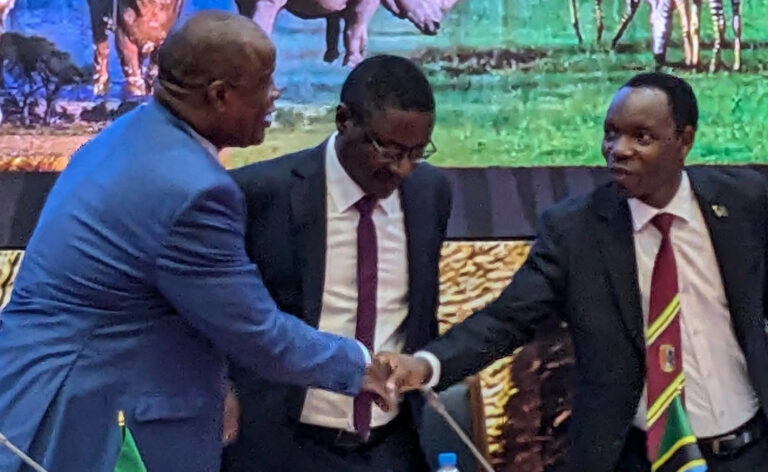
The Fourth Session of the Tanzania – Zambia Joint Permanent Commission on Defence and Security, held from February 23rd to February 27th, 2026, has concluded following a review of security-related issues of mutual interest between the two countries.

The Commission noted that the weaponisation of emerging technologies such as Artificial Intelligence (AI), space assets, and cybersecurity, as well as various organised crimes in the region, remain a significant concern.

This was stated in a joint communique signed by the two Defence Ministers, Zambian Acting Minister of Defence, Jack Mwiimbu, who is Minister of Home Affairs and Internal Security, and Tanzania’s Minister of Defence and National Service, Rhimo Nyansaho.

The communique, which was issued to ZANIS by the Commission, also indicated that the two countries agreed to continue cooperating through new strategies aimed at addressing security threats.

The two nations further committed to ensuring that all outstanding and newly adopted resolutions during the fourth session are implemented promptly.

The Zambian delegation further extended an invitation to Tanzania to participate in the fifth session of the Commission, which Tanzania accepted.

The next session is scheduled to be held in Zambia in February 2027, with exact dates to be announced later.

Both countries expressed satisfaction with the current state of their bilateral relations and emphasised the need to further strengthen their strategic partnership.