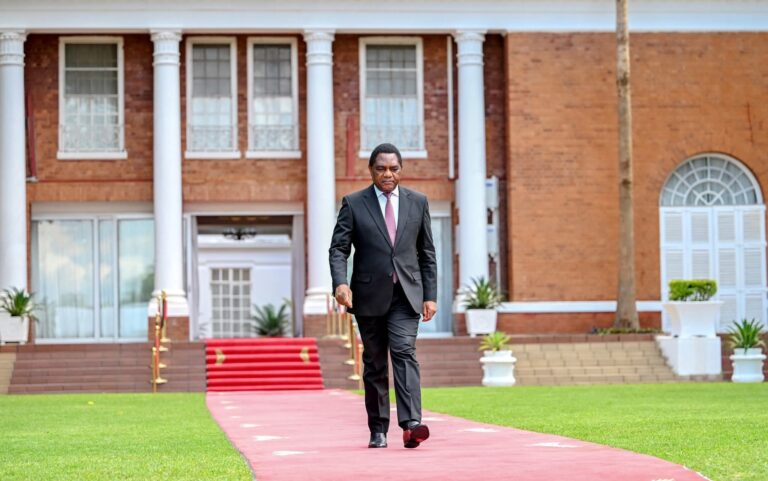
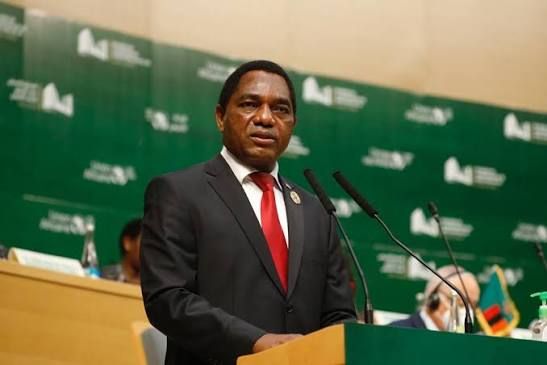
ZICTA warns against misuse of AI targeting Hichilema
ZFDS Doctor Saves Mwansabombwe Girl After Month-Long Medical Ordeal
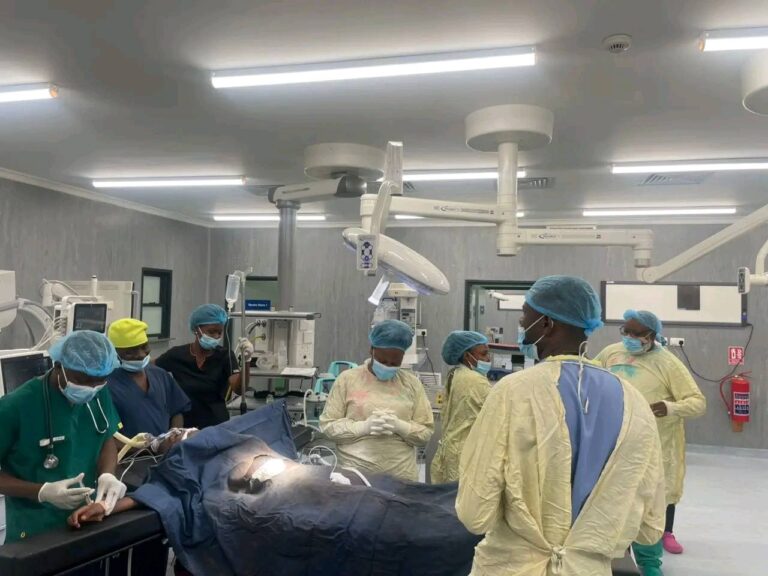
An 11-year-old girl from Mwansabombwe District in Luapula Province is recovering after undergoing a complex life-saving operation to correct a severe intestinal complication that had left her with faecal matter leaking through her stomach for a month.
The girl was initially taken to a local health facility before being referred to Ng’anga Bilonda Hospital, where she arrived in critical condition following a previous botched surgery that left her unable to move or live normally.
According to the Zambia Flying Doctor Service (ZFDS), medical examinations conducted during an ongoing outreach mission revealed that her intestines had adhered together, causing waste to pass through her stomach instead of the normal digestive route.
Consultant general surgeon Seke Kazumu swiftly carried out an emergency intestinal reversal procedure to correct the condition.
“The case was complicated because the intestines were stuck together,” Dr Kazumu said. “However, we managed to separate and reconnect them successfully. She is now on a clear path to a normal life.”
The girl is reported to be in stable condition and recovering well after the delicate surgery.
On the same day, Dr Kazumu performed five additional major operations, including hernia surgeries on three children aged one, three and seven.
The ZFDS surgical outreach camps, conducted under the Ministry of Health, aim to deliver specialised healthcare services to remote communities as part of Zambia’s efforts to achieve Universal Health Coverage.
12-Year-old boy commits suicide after reprimand
A 12 years old boy of Muwozi area in chief Chibwika’s Chiedom in Mwinilunga District of Northwestern Province has allegedly committed suicide after being reprimanded for stealing his mother’s K100 and a pack of biscuits.
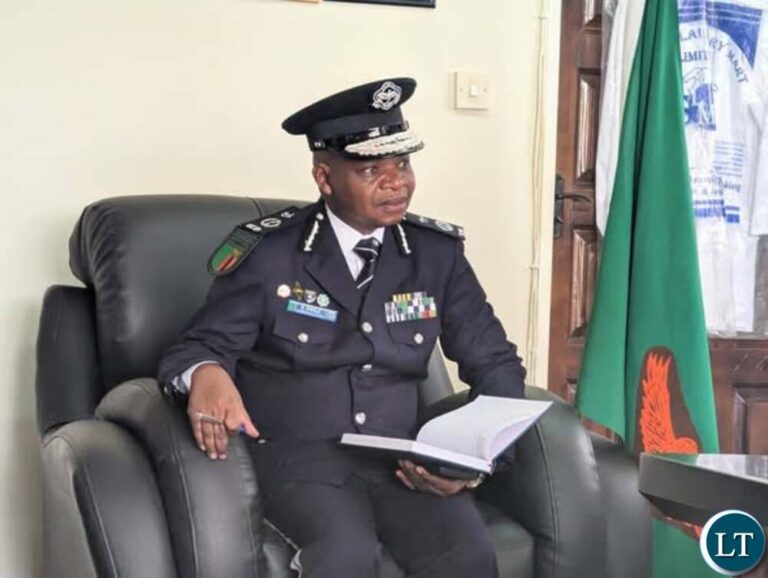
North Western Province Police commanding officer Brightone Siwale has confirmed the matter to the media today and identified the deceased as Justin Samunyawu 12, a grade one drop out at Muwozi primary school.
Mr Siwale said the incident occured on February 15, 2026 between 07:00 hours and 09:00 hours at Makomeli village in Muwozi area after mother to the deceased Loveness Mushidi 51 recovered K100 and a packet of biscuits allegedly stolen by now deceased.
He explained that upon being warned against stealing, the deceased got angry and left the village but was later found hanging to a tree with fibre tied around his neck by other children who were playing in the nearby bushes.
“Eventually around 09:00 hours some children who were playing at a nearby bush discovered the body of the deceased hanging on a tree with a fiber tied around his neck”, he said.
Mr Siwale said the uncle to the deceased Kelvin Kyupa later reported the matter to the police who visited the scene and found the body still hanging to the tree 200 meters away from the village.
He said upon inspection of the body, police observed no physical injuries apart from a protruding tongue gripped between the upper and lower jaws.
Mr Siwale said police have since advised the family to proceed with burial as no foul play was suspected in the matter.
Government recommits to harnessing minerals for development
Government has recommitted to harnessing Zambia’s mineral resources for national development under President Hakainde Hichilema’s leadership.
Muchinga Province Permanent Secretary Reverend Mathews Chilekwa says new mining laws will help to boost exploration and diversify the economy, aligning with the 8th National Development Plan (8NDP).
Speaking at a stakeholder meeting in Chinsali yesterday, Reverend Chilekwa highlighted the Minerals Regulation Commission’s role in curbing illegal mining and enhancing traceability of mineral resources.
Rev. Chilekwa added that the newly enacted Geological and Minerals Development Act will help to promote geological mapping, exploration, and artisanal mining growth.
“Mining is more than an economic activity, it’s a vehicle for poverty reduction, job creation, and national development as these reforms pin point on value addition, local people benefiting, and the integration of Small-Scale Miners into the mainstream economy,” he said.
Meanwhile, Ministry of Mines Planner under the Department of Policy and Planning Steven Mutwale said the reforms aim to regulate the sector efficiently, with the Commission handling regulation and monitoring, while the Ministry focuses on policy related issues.
Mr Mutwale said the Mines and Minerals Development Act No.11 of 2025 was repealed and replaced by the Minerals Regulation Commission Act No. 2 of 2025 and the Geological and Minerals Development Act.
Mr Mutwale added that the Ministry had also developed local content statutory instruments to enhance the participation of Zambians in the mineral value chain in the mining sector.
Earlier, the team from the Ministry of Mines and Minerals Development paid a courtesy call on Muchinga Province Permanent Secretary Reverend Mathews Chilekwa at his office.
UNDP pledges to complete $5.4 million Mayukwayukwa Infrastructure project
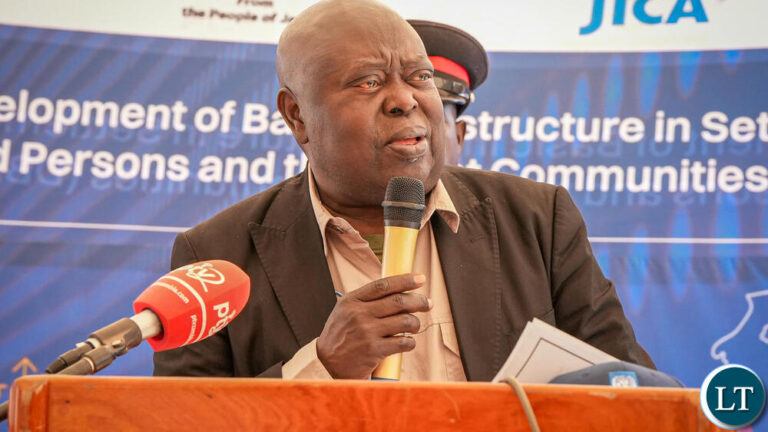
he United Nations Development Programme (UNDP) is committed to completing the Development of Basic Infrastructure (DBI) project for displaced persons and their host communities at Mayukwayukwa Resettlement Scheme in Kaoma District by 2027.
UNDP Project Manager, Mwangana Amukena, expressed confidence that the planned infrastructure will be delivered within the set timeframe.
He noted that the three-year project, launched last year, is funded by the Japanese Government through the Japanese International Cooperation Agency (JICA) and was being implemented jointly by UNDP and the Zambian government.
Speaking during a fact-finding mission at Mayukwayukwa, Mr Amukena praised the Zambia National Service (ZNS), the project contractor, for their dedication and commitment to completing the works on schedule.
“The project has been under implementation for the past year since 2025, it’s running up to 2027. It’s a three years project with a budget of about $5.4 million from the Japanese government through JICA. UNDP is hoping to achieve all the planned infrastructure as you can see that ZNS is committed”, Mr Amukena noted.
Resettlement Division Assistant Director, George Mweenda reaffirmed government’s commitment to infrastructure development in Mayukwayukwa resettlement scheme in order to improve the welfare of the displaced settlers and their host Communities.
Mr Mweenda highlighted that that the project targeted construction of infrastructure in schools which include classrooms, staff houses, ablution blocks and water reticulation systems.
He noted that the irrigation scheme was meant for farming activities in the resettlement in line with government’s Presidential directive to increase maize production and enhance food security in the country.
“We’re here to continue the development of Mayukwayukwa resettlement scheme with ZNS team on the DBI project under UNDP. There is a lot of infrastructure which involves the schools, houses and also irrigation plus ablution blocks in schools”, he said.
“The irrigation aspect is that as we put up the schemes, we also want to make sure that we activate the irrigation aspect. Presidential delivery unit is spearheading the issue of 500, 000 metric tons of maize. To support that, we thought that irrigation maybe also can support maize or any other crop so irrigation must be there”, Mr Mweenda noted.
ZNS Project Manager, Lieutenant Colonel Christopher Simwanza, assured commitment and time delivery of the project.
Chisamba court sets judgment in police house Intrusion case
The Chisamba Magistrate has set January 19, 2026 for judgement in the case in which a 23-year-old man is charged with unlawful entry into a police officer’s house with intent to commit a felony.
Sydney Chama of Old Mine area in Chisamba, pleaded not guilty to one count of entering a dwelling house with intent to commit a felony when he appeared before Magistrate Litungi Litungi, contrary to Section 302 of the Zambian Penal Code.
Chama is accused of having unlawfully entered the Chipembi residence of Police Officer Donard Lungu on November 18, 2025, with intent to commit a felony.
Five prosecution witnesses were called by the state and identified all the recovered items allegedly stolen from the house, submitting them in evidence.
The items recovered and adduced as evidence included a plastic-wrapped block, a tin of peanut butter, 500 grams of sugar, and several slices of bread.
Police found other items in the accused’s possession namely a smartphone, a black laptop bag, a bottle of alcohol, and two bottles of Coca-Cola.
The court heard that students from Chipembi College of Agriculture apprehended the accused and handed him over to police at Chipembi, where he was formally charged.
The state closed its case, and the court ruled that the accused had a case to answer, placing him on his defence after considering the prosecution’s evidence.
Chama, who did not call a defense witness, denied the charge, maintaining that he believed the house he entered was a shop.
Magistrate Litungi, after hearing the defence testimony, adjourned the matter to February 19, 2026, for judgment, while the accused remains remanded in custody.
UN nodes Zambia’s potential in Global Energy Transitions
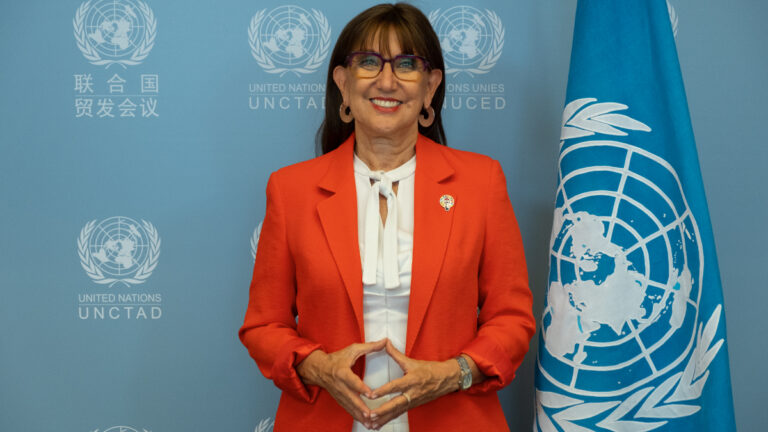
The Secretary-General of the United Nations Conference on Trade and Development, Rebeca Grynspan, has praised Zambia’s economic transformation agenda, describing the country as strategically positioned to drive trade, energy and development growth within Africa.
Ms Grynspan has noted that Zambia has successfully turned its landlocked status into a land-linked advantage, positioning itself as a key trade and energy corridor within the African Continental Free Trade Area.
Speaking during a bilateral meeting at State House today, Ms Grynspan said Africa will play a central role in the two major global transitions, noting that the same critical minerals required for clean energy systems are equally essential for sustainable economic growth.
Ms Grynspan has further commended Zambia’s strong participation of women in the economy, citing a rate of about 75.8 percent, which she said is above the global average and a critical driver for inclusive growth and economic diversification.
She has disclosed that UNCTAD, in collaboration with the Zambian government and the private sector, has conducted a practical study on critical energy transition minerals, resulting in the country specific recommendations aligned with Zambia’s development priorities.
Ms Grynspan has also emphasised that the approach is demand-driven, aimed at responding to Zambia’s real needs, rather than externally imposed solutions.
The UNCTAD Secretary-General also acknowledged Zambia’s leadership in climate change adaptation discussions and its role in the global borrowers platform, noting that Zambia’s experience has become a reference point for other developing countries.
She highlighted progress in data and digital management systems, revealing that experts from other countries are already learning from Zambia’s model.
“We are here to support Zambia in capital mobilisation, revenue enhancement and digital transformation. The technology group working with yours will be a model followed in the years to come,” she said.
Ms Grynspan expressed optimism about Zambia’s future, praising the leadership of President Hakainde Hichilema and the country’s Vision 2030, saying Zambia has the capacity, entrepreneurship and natural resource base to build a sustainable and dynamic economy.
“Africa will be key in the two major transitions that the world is going through. The same minerals needed for the energy transition will be needed for the development transition,” Ms Grynspan said. “Your responsible leadership and long-term vision will be key to making that happen.”
Responding to the Secretary General, President Hakainde Hichilema has reaffirmed Zambia’s commitment to institutional reforms and digital transformation, stating that the country is focused on delivering measurable outcomes that place it firmly on the path to self-sufficiency.
President Hichilema has commended UNCTAD’s support in strengthening Zambia’s policy and regulatory frameworks, particularly in digital strategy, competition law and e-commerce.
“We are grateful to UNCTAD and other UN agencies for their continued partnership and support. Your guidance has helped us strengthen policy, digital strategy, and governance frameworks,” President Hichilema said.
The President has revealed that the digital reforms currently being implemented will enhance efficiency in public service delivery, improve private sector transactions, strengthen revenue collection and promote transparency.
The Head of State has emphasised that Zambia’s reform agenda is focused on harmonisation, coordination and outcome based implementation, adding that policies must translate into tangible results for citizens.
He has stressed that digital platforms will help curb inefficiencies and irregularities while improving governance systems.
And President Hichilema has further underscored the importance of production and value addition, noting that Zambia must move beyond exporting raw materials and instead invest in manufacturing and regional value chains.
He said African countries must work together to create aggregated economic benefits that generate jobs for young people, while reducing irregular migration.
“We must move from exporting raw materials to value addition. Production and regional value chains are key to creating jobs for our young people,” he said.
He has reiterated that Zambia’s economic transformation programme is anchored on partnerships with knowledge institutions and international organisations, adding that the country is determined to accelerate progress and leave a positive legacy through sustainable reforms.
“This collaboration with UNCTAD and the broader international community is critical as we continue to implement reforms that deliver tangible results for our people,” he said.
The President has also underscored progress in digital strategy, competition law and e-commerce, noting that these initiatives will improve service delivery, enhance transparency and strengthen revenue collection systems.
The Head of State also highlighted Zambia’s commitment to economic diversification, climate resilience, and knowledge partnerships, saying the country aims to leverage its natural resources, entrepreneurial capacity and institutional reforms to create sustainable growth.
The bilateral meeting reaffirmed Zambia’s partnership with UNCTAD in advancing structural reforms, economic diversification, and sustainable development while positioning the country as a model for trade, energy and digital transformation in Africa.
1.4 billion USDs potential export value for Zambia-Commerce Minister
The Rapid Assessment Report of Value Addition and Diversification Within and Beyond the Critical Energy Transition Minerals Value Chain has revealed that Zambia has a 1.4 billion United States Dollar potential export value.
This is from over 400 products identified in the assessment, funded by the Japanese government and carried out by the United Nations Conference on Trade and Development (UNCTAD) across 25 sectors where the country can diversify.
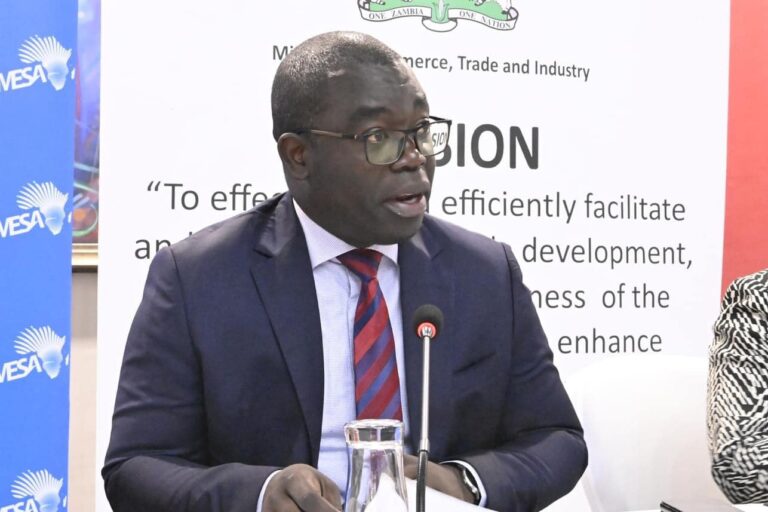
Speaking when he officiated at a report presentation meeting, Minister of Commerce, Trade and Industry, Chipoka Mulenga has disclosed that more than 30 000 jobs have been created in the value – addition sector, in the country within the last four years.
He added this is because the government has invested in five new copper processors within the last four years.
Mr Mulenga explained that this is in line with President Hakainde Hichilema’s vision to shift the country from focusing on mineral extraction to value addition.
“In the fertilizer sector, we have created 10 000 jobs. In the copper processing sector, we have created more than 7000 jobs. In the steel industry we have created more than 1000 jobs, in the starch plant, more than 1000, in the Pharmaceutical industry, more than 2000 jobs” he noted.
The Minister, however, acknowledged that lack of value addition has kept Zambia rated as a developing country, a situation that has affected the country’s ability to access capital globally.
He has since appealed to the international community to support Zambia’s policy shift from extractive to value addition in order for the Country’s grading to change.
Earlier, UNCTAD Secretary General, Rebecca Grynspan, disclosed that Zambia currently spends 229 million United States Dollars on imports that the country can produce locally.
Ms Grynspan explained that out of the 400 products from 25 sectors, identified for diversification, 73 are directly linked to energy transition mineral value chains.
She noted that downstream copper products such as bars, rods, tubes, and electrical conductors were a clear opportunity for diversification, since Zambia already smelted and refined copper.
Ms Grynspan added that industrial chemicals, including fertilisers, copper sulphates, and carbonates, offered another avenue, as they connect mining directly to agriculture.
“And the good news is that Zambia does not start from zero. The Eighth National Development Plan, the economic zones, the technical education system, the Zambia Development Agency, these are real institutional assets. This report connects them to specific products, specific markets, and specific investment opportunities. Think of it as a GPS for industrial policy”, she explained.
Meanwhile, United Nations Resident Coordinator, Beatrice Mutali noted that the opportunities identified in the assessment could generate over 100,000 jobs across the economy if effectively implemented.
” For Zambia, a country richly endowed with critical minerals, this moment presents a strategic opportunity, not only to supply global demand, but to strengthen domestic productive capacity, create jobs, and build a more diversified and resilient economy”, Ms Mutali stressed.
Chilumba headlines new Napsa bench

Napsa are one place above relegation with 20 points in 20 matches.
According to a media statement issued by their media officer Faith Kaira, club technical director Tennant Chilumba has been promoted to the position of club head coach.
Chilumba will be assisted by Zeddy Saileti as deputy coach and Keegan Syabeene will be second assistant trainer.
Ex-goalie Philip Banda has been appointed goalkeeper coach.
Napsa management has told Chilumba and his coaching bench to restore stability at the club.
“We are pleased to welcome Coach Tennant Chilumba and his technical team to Napsa Stars,” said Napsa Chief Executive Officer Charles Chakatazya.
“Their experience, leadership and understanding of the game will be key in restoring stability, strengthening discipline and improving our competitiveness,” Chakatazya said.
Chilumba will officially begin his reign as Napsa head coach with a league match against his old club Power Dynamos at Woodlands Stadium in Lusaka.
Chilumba played for Power and later coached the Arthur Davies club.
ZAMRA intensifies surveillance to ensure compliance
The Zambia Medicines Regulatory Authority (ZAMRA), says it has intensified surveillance activities across the country, in order to ensure compliance with the recent medicine recall directive and prevent continued circulation of the affected medicines.
ZAMRA Public Relations Officer, Ludovic Mwape also notes that it will be conducting follow-up engagements with the suppliers of Deltaprim tablets and Cromohist eye drops, in order to fully establish its pathways and withdraw affected batches from the market.
He disclosed that inspections and monitoring of pharmaceutical outlets are ongoing to verify if distributors, wholesalers and retailers have withdrawn the affected batches from the market.
Mr Mwape stated that the defects identified are largely linked to manufacturing challenges of other factors such as storage and handling conditions that may also contribute to product quality deterioration.
The Authority also cautioned consumers to carefully check batch numbers and use alternative batches, different brands, or other treatment options as recommended by qualified health practitioners, while the recall process is ongoing.
Meanwhile, Pharmaceuticals Society of Zambia President, Keegan Mwape commended ZAMRA and its members for ensuring that quality is put first in its undertakings.
Mr Mwape also disclosed that health professionals are trained to ensure that they look at drugs in their entirety and ensure that all emerging quality issues are reported through relevant systems.
Muchinga Province to have 8 constituencies after delimitation process
The Electoral Commission of Zambia (ECZ) says Muchinga Province is expected to have 8 new constituencies after the Delimitation Process is concluded.
This came to light during the Electoral Commission of Zambia stakeholder engagement meeting in Mafinga Constituency that saw several stakeholders make their submissions to the delimitation process.
Speaking when addressing stakeholders this morning, Mafinga District Election Officer Joseph Nonde said the delimitation process of electoral boundaries is a vital exercise that promotes a credible electoral process.
Mr Nonde said the exercise is marking a major milestone in Zambia’s ongoing electoral reforms ahead of the 2026 general election.
He underscored that stakeholder participation is crucial to promoting transparency, accountability, and public confidence in the electoral process.
” The delimitation exercise is anchored in the Constitution of Zambia (Amendment) Act No. 13 of 2025, which introduced far-reaching electoral reforms. Among these are the delimitation of constituencies and the adoption of the Mixed Member Proportional Representation (MMP) system,” he added.
Mr Nonde charged that delimitation is a long-term national exercise intended to strengthen democracy for future generations.
He said the Commission will receive both oral and written submissions from the stakeholders during the public sittings.
And ECZ Corporate Affairs Officer Raphael Phiri has called on stakeholders to sensitise the members of the public on the Delimitation Process.
Mr Phiri emphasised that ECZ will not cut any traditional boundaries during the delimitation process.
He said this when he made a presentation on the principles of the delimitation process.
Meanwhile, stakeholders in Mafinga District have unanimously submitted that the district be divided into two constituencies.
The stakeholders through the Member of Parliament Robert Chabinga, Mafinga Council Chairperson Duncan Kaonga and other Ward Councilors submitted that one constituency should comprise 5 wards while the new constituency will have 8 wards.
The wards that will be maintained as submitted in the meeting for old constituency include Bemba, Ntonga, Thendere, Senje, Mudipizi, Mafinga, Mululu and Mukutu which will have a total population of 60,023 while the new constituency will encompass Kakoma, Mahobe,Kalanga ,Vumbo and Luhoka with a population of 42,651.
The decision was also agreed upon by all stakeholders who included the three traditional leaders in the district as enshrined in the principles of delimitation.
Private sector urged to mitigate disasters- Vice President
Vice President Mutale Nalumango has called on the private sector to join forces with the government in mitigating disasters and building national resilience, as the country is likely to record a bumper harvest despite recent weather related challenges.
Mrs Nalumango was speaking at the handover of relief items by Seedco Zambia Limited and Zambia State Insurance Corporation (ZSIC) Life Insurance to the Disaster Management and Mitigation Unit (DMMU).
Mrs Nalumango said among the items donated is 1000 by 25kg bags of mealie meal by ZSIC life insurance and 10 metric tonnes of ultra-early maturity maize seed and 1000 by 10kg bag of mealie meal.
She commended the companies for their timely donations, which included seeds, fertilisers, and other essential supplies.
Mrs Nalumango said the country is likely to record a bumper harvest and urged stakeholders not to be complacent as disasters can strike at any time.
“It is imperative that we work together to mitigate their impact, ” she said.
The Vice President also commended Seedco and ZISC Life Insurance for their commitment to Corporate Social Responsibility, noting that their contributions would go a long way in supporting affected families and communities.
“Companies have a social responsibility to the communities in which they operate, particularly when it comes to saving lives and supporting citizens during times of disaster,” she emphasised.
Mrs Nalumango also urged Zambians to support the businesses of Seedco and ZISC Life Insurance, saying their commitment to national development and humanitarian causes deserved public confidence and support.
“The country has recently experienced severe weather conditions, including floods and drought, which have affected several districts and communities’’, she added.
Mrs Nalumango reassured the public that government’s response mechanisms remained active and encouraged citizens to remain vigilant and report any emergencies through the toll-free line
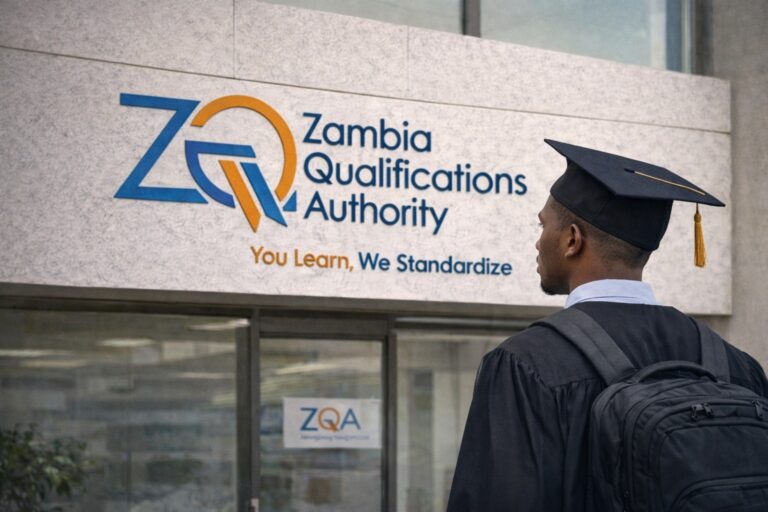
ZAQA clarifies on delays to certify results
The Zambia Qualifications Authority (ZAQA) says delays in certifying results is part of the verification process aimed at protecting the public from fraudulent qualifications.
Speaking during an exclusive interview with the media in Lusaka, ZAQA Corporate Communication Specialist, Inutu Mwanza says many cases of misrepresented qualifications were detected in 2025 after mandatory verification was introduced.
Ms Mwanza explained that local qualifications are usually verified within 14 days, depending on complexity.
She added that most complaints come from people who wait until the last minute, such as the day before a job interview or school enrollment.
“Once a qualification is verified, it is valid for life. Only new certificates need separate verification,” she said.
Ms Mwanza said ZAQA is also educating the public about its mandate and improving systems to ensure verification is done on time.
She clarified that ZAQA does not duplicate other government bodies but focuses on verifying and authenticating qualifications.
Ms Mwanza has since urged the public to verify their qualifications early to avoid missing employment or school opportunities.
NGOCC commends President Hichilema
The Non-Governmental Gender Organisations’ Coordinating Council (NGOCC) has commended President Hakainde Hichilema for urging the African Union Member states to take a decisive continental action against child marriage.
NGOCC Board Chairperson, Beauty Katebe has emphasised that child marriage is a significant human rights concern, with far-reaching human, social, health, and economic costs that the AU and Zambia cannot afford to ignore.
Ms Katebe applauded President Hichilema who is the African Union (AU) Champion on Ending Child Marriage when he made a clarion call on the margins of the 39th Ordinary Session of the AU Assembly, in Addis Ababa, Ethiopia.
She lamented that Zambia, like many of its neighbors, continues to combat the challenge of child marriage, a practice she said robs young girls of their potential and future opportunities, hence President Hichilema’s call must be commended.
Ms Katebe stated that while prevalence rates have dropped from 29% in 2018 to 23.9% in 2024, significant work remains.
She stressed that President Hichilema’s renewed call to action is both timely and vital and that his stance builds on the momentum of the Marriage Act No. 13 of 2023, which legally prohibits child marriage in both traditional and statutory settings.
“The President’s consistent leadership on this issue remains a crucial catalyst for ending this practice across the continent,” Ms Katebe stated.
Ms Katebe stressed that It is crucial, therefore, that the government demonstrates its commitment to addressing child marriage by deliberately increasing resource allocation to tackle the problem.
“In line with this effort, the 2027 Budget should prioritise allocations to areas heavily affected by child marriage to support social behavioral change programmes, improve reporting, fund remedial interventions, and consolidate existing mechanisms nationwide,” she said.
Various stakeholders call for upholding of values and principles
A cross-section of stakeholders has called on citizens to embrace national values and principles, noting that they are essential to Zambia’s social cohesion and long-term development.
Evangelical Fellowship of Zambia (EFZ) Executive Director Allan Kasungami described the President’s address scheduled for Friday as vital.
Reverend Kasungami emphasised that strong moral values underpin national development and urged Zambians to support President Hichilema in advancing morality and patriotism.
He expressed concern over the growing involvement of young people in harmful practices such as gambling, warning that such vices can undermine the country’s future.
The EFZ Executive Director added that, as a Christian nation, Zambia is guided by principles of righteousness and reverence for God.
He also appealed for renewed respect for older citizens to preserve societal values.
Reverend Kasungami further urged Zambians to stand together in unity and patriotism, explaining that true patriotism entails love for the country, its people, and the principles that govern it.
Meanwhile, Insakwa Yabakaonde National Vice Chairman, Osward Painapo, stressed the importance of hard work, noting that national prosperity depends on diligence and productivity.
He cautioned that moral decline hampers economic progress and condemned the rise in Gender-Based Violence, saying traditional leaders have a critical role to play in curbing the vice.
Meanwhile, freedom fighter Betty Chilunga also highlighted the need to uphold national values, particularly among young people whom she described as future leaders.
She praised President Hichilema for promoting peace, love, and unity, ideals championed by Zambia’s founding generation.
President Hichilema is expected to address Parliament on Friday, where he will review progress made in promoting and applying national values and principles.