Wednesday, June 17, 2026
12.2 C
Lusaka
Home Blog Page 151

Lusaka records seven new cholera cases

3

Lusaka District has recorded seven new cholera cases, with all patients currently admitted to various health facilities and no deaths reported.

The latest figure is as of February 16, 2026,

Lusaka Provincial Health Director Simulyamana Choonga disclosed that three of the new cases were recorded in Munali Township, three in Mandevu and one in Chawama.

Dr Choonga provided the update at his office when Water Aid Zambia donated chlorine and other logistics towards the cholera response aimed at combating the outbreak in Lusaka Province.

He said government was doing everything possible to curb the spread of the disease and reduce the number of cases.

Dr Choonga further called on more stakeholders to partner with government in the fight against cholera, noting that collective efforts were key to effectively managing the outbreak.

He thanked WaterAid Zambia for its continued support, describing the organisation as a long-standing cooperating partner in the water, sanitation and hygiene sector.

Meanwhile, WaterAid Zambia Head of Programmes Benard Moseti pledged continued support and strengthened partnership with government in responding to the cholera outbreak.

The donated items include 625 bottles of chlorine, 600 bottles of hand sanitiser, 500 bottles of liquid soap and 134 units of disinfectant.

JCI Zambia, NACOSU signs MoU

0

 Junior Chamber International (JCI) Zambia has signed a Memorandum of Understanding (MOU) with the National Council of Students Unions (NACOSU), aimed at equipping students with entrepreneurial and leadership skills to enable them contribute meaningfully to national development.

JCI Zambia National President, Sydney Ng’andu, says the partnership will focus on supporting students with viable business ideas and strengthening leadership development.

The media reports that speaking at the signing ceremony in Lusaka, Mr Ng’andu said the collaboration offers a valuable opportunity to nurture entrepreneurship and leadership among students.

He added that JCI prioritises individual development and business skills to help young people, especially students to make a positive impact in their communities after school.

Mr Ng’andu noted that while Zambia has immense potential among youths, progress can only be achieved through deliberate collaboration and investment in them.

He further stated that the MoU will also support innovation emerging from universities, guided by transparency, accountability and measurable outcomes.

HMr Ng’andu also emphasised that Zambia’s greatest asset is its human capital, particularly the energy, creativity and resilience of young people which, if well nurtured, can drive national transformation.

Meanwhile, NACOSU Chairman, Michelo Chizombe, described the partnership as a blueprint for meaningful youth inclusion in national affairs.

Mr Chizombe said students nationwide will benefit from the agreement, including participation in JCI’s international programmes such as cultural exchanges.

He added that the collaboration will support entrepreneurship initiatives that have a direct impact on students’ lives.

Mr Chizombe further noted that the partnership marks the beginning of a journey where young people actively participate in national matters and drive positive change, rather than remaining mere spectators.

JCI is a leading global youth organisation with a presence in many countries worldwide.

JICA, UNDP inject K10.8m for Meheba road construction

0

Kalumbila District Commissioner, Brenda Sankisa, has praised the Japan International Cooperation Agency (JICA), in partnership with the United Nations Development Programme (UNDP), for funding the construction of a 10.8-kilometre feeder road in Meheba Refugee Settlement.

Speaking during a monitoring visit to the site, Ms Sankisa said the new road, connecting Blocks G, H, and D, including the refugee settlement, will significantly improve access to markets and essential services for residents.

She praised the Zambia National Service (ZNS) for the quality of work and noted that the road has been completed and is awaiting commissioning.

“We are very happy with the quality of works that have been done on this feeder road. This project will greatly improve accessibility for our people here in Meheba. We are appealing for more support towards rehabilitating other roads that are still in a deplorable state so that development can reach all parts of the district,” she said.

Principal Resettlement Officer Paul Chisanga highlighted that the road will ease transportation challenges and enhance service delivery within the settlement.

He said the original plan covered a 30-kilometre stretch, while financial constraints limited construction to the 10.8-kilometre section.

“This stretch was particularly difficult for people trying to move from one block to another. The ZNS was contracted to complete this 10.8-kilometre section, meaning four settlement blocks, including the refugee area, are now connected,” he said.

Mr Chisanga emphasised that the improved road will facilitate easier movement for farmers, children attending school and patients accessing clinics.

He noted that the work began in October last year and was completed in December taking approximately three months.

North-western Region Road Development Agency (RDA) Engineer Contracts Chikosa Musonda said efforts were underway to source funds to complete the remaining sections of the road.

Meanwhile, The United Nations High Commissioner for Refugees (UNHCR), Meheba Refugee Settlement Field Officer Mofya Kaputa noted that the road will boost economic activity by allowing farmers to transport produce to markets more easily and at a lower cost, enhance food security and economic resilience among families in Meheba.

Ms Kaputa said the newly constructed feeder road marked a significant step in improving infrastructure and promoting development for both host communities and refugees in the settlement.

State House Defends Justice System Over Claims of Political Prisoners

6

State House Chief Communications Specialist Clayson Hamasaka has defended Zambia’s justice system, stating that individuals currently serving prison sentences were convicted through lawful court processes rather than political targeting. His remarks come amid continued debate within the country’s political space over claims that some detainees are victims of political persecution.

Hamasaka emphasised that Zambia’s democratic framework is built on the independence of institutions responsible for investigations, prosecutions and judicial rulings. He said the government does not interfere with court decisions, arguing that legal outcomes are determined by evidence presented before the judiciary. The statement reflects a broader effort by the administration to counter narratives suggesting that detentions are politically motivated.

The issue of alleged political prisoners has become a recurring theme in opposition messaging. Some political figures claim that arrests linked to high-profile cases reflect selective enforcement of laws. Government allies, however, maintain that legal processes must be respected and that court rulings should not be reframed through partisan lenses. The exchange highlights how debates around justice often mirror wider political rivalry.

Public reaction has been divided. Supporters of the administration say the emphasis on rule of law demonstrates institutional strength, arguing that accountability must be pursued regardless of political affiliation. Critics, meanwhile, call for greater transparency in how investigations are conducted, insisting that public confidence depends on consistent application of legal standards.

The conversation has also drawn attention to the broader role of communication in governance. Statements from State House are intended to reassure citizens that legal institutions operate independently, particularly at a time when political discourse remains highly charged. By framing the issue around constitutional principles, officials aim to reinforce trust in established procedures.

Political analysts note that debates around detention and justice are common during election cycles, when rival groups seek to shape narratives about governance. Allegations and counter-allegations often reflect competing interpretations of legal outcomes rather than disputes over specific court judgments. In this context, Hamasaka’s remarks can be seen as part of a wider effort to stabilise public perception of institutional credibility.

Meanwhile, civil society organisations continue to advocate for balanced dialogue. Some groups emphasise the importance of protecting human rights while respecting judicial independence, urging leaders across the political spectrum to avoid language that could undermine confidence in the courts. Calls for responsible political communication highlight the delicate balance between freedom of expression and respect for legal processes.

The debate underscores how governance, law enforcement and political messaging intersect in Zambia’s evolving democratic landscape. While disagreements over interpretation persist, both government supporters and critics acknowledge that public trust in the justice system remains central to political stability.

Hamasaka’s statement therefore represents more than a single response to criticism; it reflects an ongoing contest over how legal outcomes are framed within national discourse. As political competition intensifies, discussions around justice and accountability are likely to remain prominent, shaping the narrative of governance in the lead-up to future elections.

When will Nora Häuptle join Zambia at COSAFA?

5

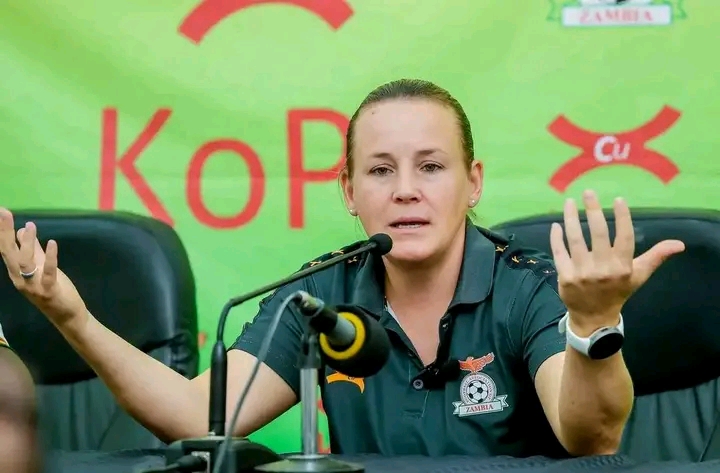
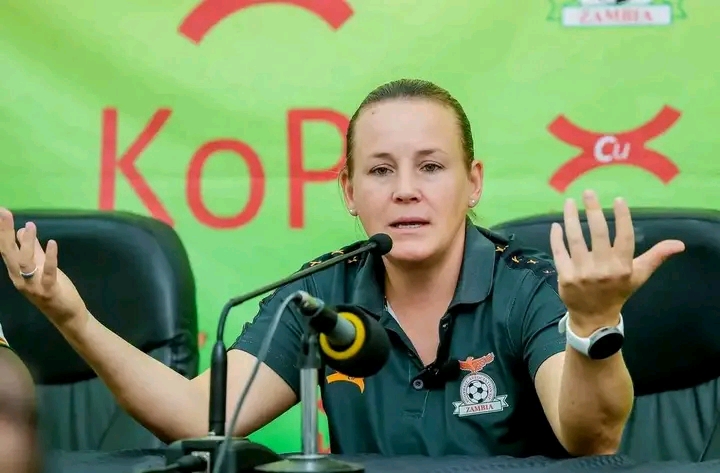
Uncertainty has surrounded the availability of Copper Queens coach Nora Häuptle as Zambia competes at the 2026 COSAFA Senior Women’s Championship in South Africa.

Zambia on Tuesday travelled to South Africa minus Häuptle with FAZ confirming that the coach is in her home country.

First Assistant Coach Charles Haalubono has taken charge of the team in an interim capacity.

“Nora is the head coach and she selected the team for this year’s regional tournament. She travelled back to her home base to attend an assignment and will join the team once she completes it,” FAZ General Secretary Machacha Shepande said.

Shepande said Haalubono will lead the technical bench during the opening phase of the tournament until Häuptle links up with the team in South Africa.

This is not the first time Häuptle is missing Copper Queens assignment.

Häuptle was absent two months ago when Zambia competed at the three nation tournament in Malawi after failing ill, according to FAZ.

Again Haalubono stepped in for her in Malawi.

Meanwhile, the team held its first training session in South Africa at the Old Peter Mokaba Stadium training pitch shortly after arriving in Polokwane.

Zambia is preparing for their Group B opener against Botswana to be played at Seshego Stadium on Thursday, 19th February 2026 at 15h00.

“This is very important for us because it is the tournament which is leading us to WAFCON; so it’s a big preparation stage for us,” said Haalubono.

“All we are doing is telling our players to play our game so that we keep our philosophy, continue with it and improve on it so that we go and use it at WAFCON and produce the desired results.”

“The junior players are coping well, the senior players have received them so well and they are feeling comfortable and I’m sure they have brought in positive energy,” he said.

Zambia head into the tournament as defending champions.

ECZ Chairperson Zaloumis Defends Delimitation Process

3

Electoral Commission of Zambia chairperson Mwangala Zaloumis has defended the ongoing delimitation exercise, assuring stakeholders that the process will be conducted fairly and in accordance with established legal frameworks. Her remarks come amid growing political attention surrounding electoral boundary adjustments, which have become a focal point of debate across Zambia’s political landscape.

Zaloumis emphasised that delimitation is a technical and consultative process designed to improve representation by reflecting demographic changes. She said the commission remains committed to transparency and inclusivity, noting that consultations with stakeholders form a central part of the exercise. The assurance follows concerns raised by various political actors who fear that boundary adjustments could influence electoral outcomes.

The delimitation exercise has generated discussion within both government and opposition circles, highlighting how electoral reforms often become politically sensitive. Supporters of the commission argue that periodic boundary reviews are necessary to maintain fairness as populations grow and shift. Critics, however, say public confidence depends on visible neutrality and consistent communication throughout the process.

Political leaders across the spectrum have expressed differing views on the exercise. Some opposition voices have called for stronger oversight mechanisms to ensure that constituency boundaries are adjusted without bias. Others have urged the commission to expand public engagement efforts, arguing that citizens need clearer explanations of how decisions are made and how changes may affect representation.

Zaloumis reiterated that the commission operates independently and that all decisions are guided by the Constitution and electoral laws. She said the process involves data analysis, consultations and adherence to legal standards, rather than political considerations. Her statement reflects an attempt to maintain institutional credibility during a period when electoral issues attract intense scrutiny.

The delimitation debate also intersects with broader discussions about governance and electoral integrity. Boundary reviews can shape campaign strategies, resource allocation and voter mobilisation, making them a critical component of election preparation. Political actors therefore closely monitor the process, often interpreting changes through the lens of competition rather than technical necessity.

Meanwhile, civil society organisations have encouraged continued dialogue between the commission and political stakeholders. They stress that open communication helps reduce misunderstandings and builds confidence in electoral institutions. Calls for transparency have been accompanied by appeals for responsible political messaging, urging leaders to avoid statements that could erode public trust.

Public reaction to the delimitation exercise has been mixed. Some citizens view the process as a positive step toward ensuring equitable representation, particularly in areas experiencing rapid population growth. Others remain cautious, citing historical debates over electoral boundaries as reasons for heightened vigilance.

Zaloumis’s remarks highlight the delicate balance electoral authorities must maintain. On one hand, they must implement technical reforms required by law. On the other, they must navigate political sensitivities and reassure stakeholders that the process remains impartial. As consultations continue, the commission faces the task of sustaining confidence while advancing reforms that will shape Zambia’s electoral framework in the years ahead.

The evolving discussion around delimitation underscores the importance of institutional communication and stakeholder engagement in maintaining trust during periods of political transition. With elections on the horizon, how the process unfolds will likely remain a central topic in national political discourse.

Silumbe Warns of Future Prosecutions Targeting Ministers and State House Officials

4

Silumbe has escalated political rhetoric by claiming that several ministers and aides to President Hakainde Hichilema could face imprisonment under a future administration, remarks that have triggered strong reactions across Zambia’s political space.

Silumbe’s statement framed the issue around accountability and governance, arguing that alleged misconduct by senior officials would require legal scrutiny if political leadership changes. The comments arrive during a period of heightened political messaging, with opposition actors attempting to sharpen their narratives ahead of elections. By placing legal consequences at the centre of his remarks, Silumbe positioned himself within a broader anti-corruption discourse that continues to shape political debate.

Government supporters have rejected the claims, describing them as speculative and politically motivated. They insist that public officials operate within legal frameworks and that institutions responsible for investigations and prosecutions remain independent. Allies of the administration emphasise that allegations alone do not constitute proof and caution against statements that could undermine confidence in governance structures.

The exchange highlights a recurring feature of Zambia’s political environment, where rival actors frame future governance in sharply contrasting terms. Opposition figures often emphasise accountability drives and institutional reform, while government allies counter with messages focused on stability and adherence to due process. Silumbe’s remarks illustrate how political language can shift toward strong warnings during periods of competitive positioning.

Meanwhile, political observers note that public statements predicting jail terms for opponents carry both risks and rewards. On one hand, they energise supporters who want firm action against alleged wrongdoing. On the other, they can deepen political polarisation and complicate efforts to maintain constructive dialogue across party lines. In a climate where legal processes already attract public scrutiny, such rhetoric often becomes a focal point for wider discussions about the rule of law.

Silumbe’s comments also intersect with ongoing debates about governance transparency and institutional accountability. Calls for stronger oversight resonate with sections of the electorate concerned about corruption, public procurement and management of state resources. However, critics argue that sweeping statements about imprisonment may blur the line between political messaging and judicial processes, raising questions about how future administrations would balance political promises with legal safeguards.

Across the political spectrum, reactions have varied. Some opposition voices have echoed the need for rigorous accountability, while others have urged caution in framing political competition around threats of incarceration. Government-aligned figures have emphasised that Zambia’s democratic framework relies on courts and investigative bodies rather than campaign rhetoric.

The episode reflects a broader trend in pre-election discourse, where competing narratives about governance, justice and leadership shape public perception. Silumbe’s remarks add another layer to the evolving political landscape, reinforcing the intensity of rivalry between opposition figures and the current administration.

Backyard Beehives Claim Woman’s Life as Owner Surrenders to Police in Hellen Kaunda

1

A 60-year-old man has surrendered to police following a tragic incident in which a swarm of bees from his backyard allegedly killed a 77-year-old woman in Hellen Kaunda.

Gratias Matunda Paschal turned himself in around 09:30 hours yesterday, accompanied by his lawyers, after being summoned by police over his suspected role in the fatal attack.

According to Police, Paschal had kept illegal beehives at Plot 217, a standard residential property, without the required permit — an act authorities say exposed neighbours to serious danger.

The fatal incident occurred on February 2, 2026, around 10:00 hours, when the bees swarmed residents in the area. Seventy-seven-year-old Judith Malango was repeatedly stung and later collapsed. Her nephew, 68-year-old Richard Ngoma, told police that she died shortly after the attack.

Three other residents — 28-year-old Mambwe Mwansa, 45-year-old Martin Kalenga and 48-year-old Miyanda Sunga — also sustained multiple stings and were left in severe pain following the incident.

A postmortem conducted on February 3 confirmed that Malango died as a result of multiple bee stings.

Police investigations established that the bees originated from the illegal hives allegedly kept by Paschal within the residential neighbourhood, in violation of the Animal Health Act, which prohibits such activities in built-up areas.

Police spokesperson Godfrey Chilabi confirmed that Paschal has been charged with one count of manslaughter, contrary to Section 199 of the Penal Code, and three counts of unlawful acts causing harm, contrary to Section 238.

“The suspect is currently in custody awaiting court appearance,” Chilabi said.

The incident has raised concerns about the safety risks associated with keeping potentially dangerous livestock in densely populated residential communities.

Hakainde Hichilema Tells United Nations Conference on Trade and Development Africa Won’t Export Raw Materials Indefinitely

4
President Hakainde Hichilema has told the United Nations Conference on Trade and Development (UNCTAD) that Africa is no longer willing to remain a supplier of raw materials, but is now pushing for value addition and responsible resource extraction.

Speaking during a bilateral meeting with UNCTAD Secretary-General Rebeca Grynspan at State House, President Hichilema said the continent has “awakened” and is now speaking with one voice on the need to transform its mineral wealth into tangible benefits for its citizens.

“I’m just from the AU and we are speaking one language now, that we cannot continue exporting raw materials for centuries. We will not and we don’t want those discussions,” he said.

“We want discussions that will lead us into responsible resource extraction, processing and value addition. That will add growth to our economies for jobs, business opportunities and treasury revenues.”

The Head of State said Zambia is ready to engage in trade and investment partnerships that deliver mutual benefits.

“We don’t want to keep attending conferences while the man in the street cannot feel the benefit of the mineral endowment that we have. We want to trade in investments together — we produce, we process, we market and we sell for mutual benefit,” he said.

President Hichilema added that Zambia’s recent economic reforms demonstrate that structured reforms can deliver positive outcomes. He also thanked UNCTAD for supporting Zambia’s debt restructuring process and the implementation of the Automated System for Customs Data (ASYCUDA), a digital customs management platform designed to modernise trade procedures.

Meanwhile, Grynspan described Zambia as a strategic regional hub that has successfully transformed from being landlocked to land-linked.

She noted that Zambia now plays a key role as a transit and energy corridor within regional blocs such as the Common Market for Eastern and Southern Africa (COMESA), the Southern African Development Community (SADC) and the African Continental Free Trade Area.

“To transform a weakness into a strength has to be highlighted, with respect to Zambia,” she said.

Over-Appreciation of Kwacha Would Hurt Economy – Situmbeko Musokotwane

3
Minister of Finance and National Planning Situmbeko Musokotwane has cautioned that while the Kwacha’s recent appreciation is positive, excessive strengthening of the local currency could destabilize the economy.

As of February 17, 2026, the Kwacha was trading between K18.23 and K18.58 against the US dollar, reflecting continued strong performance.

Speaking during the joint FNB Zambia and American Chamber of Commerce in Zambia Economic Review Breakfast in Lusaka, Dr. Musokotwane warned against unrealistic expectations that the Kwacha could reach parity with the US dollar.

He explained that an exchange rate of one Kwacha to one US dollar would distort incomes and purchasing power in a way that does not align with Zambia’s economic fundamentals.

“Imagine for a moment that we got to one Kwacha equal to one dollar, with your salary of, say, K20,000 per month, in one go, your salary is worth US$20,000 per month. That would be a very strange country because there are not many countries in this world where you have a salary of 20,000 dollars per month,” he said.

Dr. Musokotwane noted that such an appreciation would likely trigger excessive demand for foreign currency, as consumers would rush to import expensive goods, rapidly depleting US dollar reserves.

“Knowing us in Zambia, everyone now wants to import a Mercedes Benz. So what happens next? Of course, we go to the banks to say, I want US$100,000, US$20,000 to buy a Mercedes Benz, and very quickly, the dollars run out,” he added.

He further pointed out that exporters would suffer if required to convert foreign earnings at an artificially strong exchange rate, undermining competitiveness.

The minister stressed the importance of balancing the interests of importers and exporters while safeguarding overall economic stability. He also commended the Bank of Zambia for effectively managing the foreign exchange market within a liberalised framework.

Dr. Musokotwane emphasized that Zambia’s long-term economic growth will depend on expanding exports rather than relying heavily on domestic consumption.

Kapata Claims PF Leadership Has Abandoned Nakacinda

9

PF acting national chairperson Jean Kapata has accused senior figures within the former ruling party of abandoning secretary general Raphael Nakacinda, a statement that has intensified debate around internal cohesion and leadership direction.

Kapata’s remarks emerged during a period of heightened political activity, with opposition figures repositioning themselves ahead of national elections. She suggested that internal rivalry and competing ambitions have created fractures that risk weakening the party’s organisational strength. Her comments underline growing tensions within PF structures, where leadership succession and strategic direction remain unresolved issues.

Nakacinda’s situation has become symbolic of wider divisions inside the party. Supporters argue that his role as secretary general has been undermined by individuals seeking prominence, while critics say the disagreements reflect deeper disagreements about policy priorities and campaign strategy. Political observers note that internal disputes often surface more visibly as election timelines approach, when alliances and loyalties are tested.

Meanwhile, Kapata’s comments have sparked reactions from other political voices, some calling for unity and others defending individual positioning within the opposition landscape. Discussions about leadership succession have become a recurring feature of public discourse, illustrating how personal dynamics continue to influence organisational stability.

The broader opposition environment has also shaped reactions to the controversy. Rival parties and independent figures have used the moment to highlight differences in governance style and political messaging, framing PF’s internal tensions as evidence of a shifting political landscape. However, party supporters insist that open debate reflects democratic engagement rather than weakness.

Within PF ranks, some members have emphasised the importance of maintaining discipline and focusing on policy alternatives to challenge the current administration. Others argue that unresolved leadership disputes risk distracting from broader political goals, particularly as electoral campaigns gain momentum.

The debate surrounding Nakacinda has also raised questions about how opposition parties manage internal dissent in a highly competitive political environment. Analysts suggest that public disagreements can both energise supporters and expose vulnerabilities, depending on how leadership responds.

Despite the tensions, Kapata’s remarks indicate that PF remains an active player in national politics, with its internal dynamics continuing to influence broader opposition strategy. As discussions around leadership and loyalty unfold, the party faces the challenge of balancing internal debate with the need to present a unified political message.

The unfolding situation highlights the evolving nature of Zambia’s political environment, where leadership disputes and organisational reforms intersect with preparations for upcoming elections.

Government Commissions 2.1km Perimeter Wall at Chindwin Barracks B Primary School in Kabwe

2

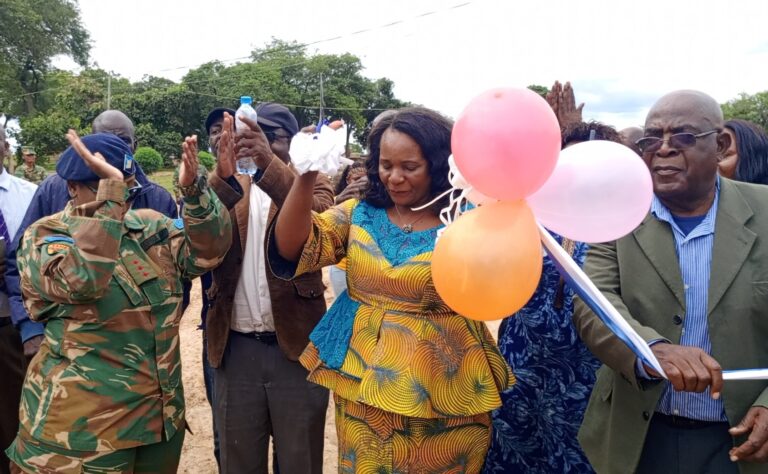
The Government of Zambia has officially commissioned a 2.1-kilometre perimeter wall at Chindwin Barracks B Primary School in Kabwe Central Constituency at a cost of K599,850, funded through the Constituency Development Fund (CDF).

Kabwe Central Member of Parliament Chrizoster Halwindi Phiri presided over the commissioning ceremony and praised the collaboration between the constituency office and the Zambia Army, which provided manpower for the construction works.

Hon. Phiri noted that while CDF resources were used to procure building materials, the Zambia Army’s professionalism and dedication significantly reduced costs by undertaking the construction works.

“We would not have managed to construct a 2.1-kilometre-long wall fence without your help. We only provided materials, and because of the Zambia Army’s commitment to duty, the work of a contractor was effectively carried out by the Army at minimal cost,” she said.

The lawmaker also expressed gratitude to President Hakainde Hichilema for increasing the CDF allocation, which she said is enabling constituencies to respond more effectively to community needs.

She highlighted ongoing challenges in Kabwe Central’s education sector, including the lack of a science laboratory at the school, ageing and damaged roofing in some institutions, and a shortage of desks. Hon. Phiri assured the community that government remains committed to addressing these concerns through continued investment in education infrastructure and learning materials.

She further emphasized inclusive development, stating that defence forces are part of the community and should benefit from empowerment initiatives. She revealed that women in the area are also being supported through empowerment programmes aimed at improving livelihoods.

Meanwhile, Head Teacher Captain T. Tembo welcomed the development, describing the perimeter wall as a major boost to school security.

She explained that before the construction of the fence, learners could leave the school premises during learning hours without being noticed, posing safety and disciplinary challenges.

“With the wall in place, we now have improved security and a more controlled learning environment,” she said.

The commissioning of the perimeter wall marks another step in government’s efforts to strengthen education infrastructure and promote community development through effective use of CDF resources.

Raphael Nakacinda Says Edgar Lungu Family Not Ruling Out Foul Play

1

Patriotic Front (PF) Secretary General Raphael Nakacinda has stated that the family of former President Edgar Lungu is not ruling out the possibility of foul play in his death.

Speaking during an interview on Newsroom Africa in South Africa, Nakacinda said the family has called for an independent specialist procedure to be conducted to establish the exact cause of death and address any suspicions.

He described Mr Lungu’s passing as sudden and shocking, noting that he had spoken to the former head of state three days before his death while discussing the upcoming Lumezi by-election.

According to Nakacinda, the Patriotic Front and the Tonse Alliance will support the former First Family in ensuring that all outstanding questions surrounding Mr Lungu’s death are thoroughly addressed to allow for closure.

Efforts to obtain a comment from Chief Government Spokesperson Cornelius Mweetwa were unsuccessful by broadcast time, as his phone went unanswered.

UPND Luapula Chair Backs Hakainde Hichilema’s Call to Lift Sanctions on Zimbabwe

0

UPND Luapula Provincial Chairperson Alfred Mwape has commended President Hakainde Hichilema for his call to lift sanctions on Zimbabwe during the recently concluded African Union Summit.

In a statement issued to the media, Mwape described the President’s remarks as timely and principled, reflecting Zambia’s commitment to regional solidarity, economic cooperation and sustainable development.

He said sanctions imposed on Zimbabwe have had far-reaching economic and social effects, not only within Zimbabwe but also in neighbouring countries such as Zambia, whose economies are closely linked through trade, transport and shared infrastructure.

According to Mwape, the sanctions have restricted inter-regional trade and limited Zimbabwe’s full participation in regional economic activities, indirectly affecting development efforts in both nations.

He noted that lifting the sanctions would unlock greater trade and investment opportunities between the two countries, which have already agreed to strengthen cooperation in trade, energy, defence and security, as well as border management.

Mwape cited Zimbabwe’s decision to remove transit duties on petroleum products destined for Zambia as a progressive move toward enhanced economic cooperation. He added that further steps to eliminate trade barriers are expected to be included in the 2026 national budget, signalling renewed commitment to economic integration.

Improved transport connectivity between Zambia and Zimbabwe is also expected to boost cross-border trade, facilitate the movement of goods and services, and strengthen regional value chains.

Beyond economic implications, Mwape highlighted the social impact of sanctions, stating that they have limited access to international financial systems, discouraged foreign direct investment and slowed socio-economic progress for ordinary citizens.

He argued that removing the sanctions could improve access to essential goods and services, create employment opportunities and enhance economic stability in Zimbabwe — developments that would positively impact Zambia as well.

Mwape concluded that President Hichilema’s position demonstrates Zambia’s dedication to regional cooperation, unity and shared prosperity, adding that stronger bilateral collaboration would improve livelihoods in both countries.

 Government Committed to Befitting Send-Off for Edgar Lungu – Mark Simuuwe

2

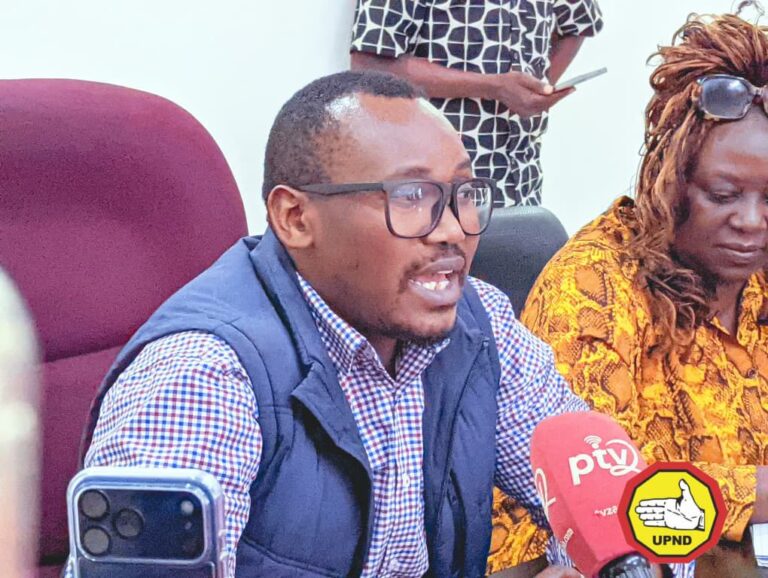
Mark Simuuwe, Media Director for the United Party for National Development (UPND), says government remains committed to ensuring that former President Edgar Lungu is accorded a befitting send-off in accordance with the law and national tradition.

Speaking during a media briefing in Lusaka, Mr Simuuwe said the legal position regarding the burial site of a former Head of State is clear and has already been determined by the courts.

“From the time the court made its pronouncement, the position has been very clear. There is no court that has set aside that decision,” he said.

Mr Simuuwe explained that delays in proceeding with the burial have been caused by the former First Family, noting that several months have passed since the court delivered its ruling.

He stressed the importance of ending ongoing legal disputes and urged the former First Family to support the Attorney General’s position to allow the process to move forward in the national interest.

On allegations that the former president may have been poisoned, Mr Simuuwe said such claims should be handled through established legal channels to ensure due process is followed.

He also called for President Hakainde Hichilema not to be drawn into accusations arising from statements by former minister Katele Kalumba and others, emphasizing that the Head of State should not be subjected to unsubstantiated claims or political rhetoric.

Mr Simuuwe added that government has extended an olive branch for dialogue on matters currently before the courts and remains open to engagement to bring closure to the issue in a dignified and lawful manner.