Friday, June 12, 2026
14.5 C
Lusaka
Home Blog Page 156

Govt, Inq. Digital Zambia Partner to expand free public Wi-Fi

0

The Ministry of Technology and Science has signed a Memorandum of Understanding (MOU) with Inq. Digital Zambia to expand the National Free and Limited Public Wi-Fi Initiative across the country.

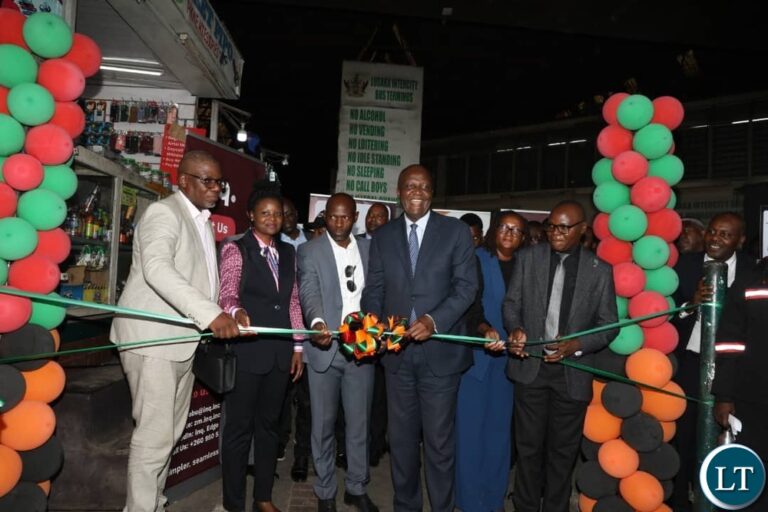
Speaking at the signing ceremony, Permanent Secretary Brilliant Habeenzu, in a speech read on his behalf by Director of Communications Nkula Mwanza, said the agreement builds on the successful pilot phase at Lusaka Intercity Bus Terminal, Kapiri Mposhi Bus Station and Chisokone Market in Kitwe.

During the three-month pilot, over 120,000 users accessed free Wi-Fi, benefiting students, traders and travelers.

Dr. Habeenzu highlighted how digital connectivity is driving economic empowerment, citing traders who have adopted mobile payments and online advertising.

He added that expanding internet access will help young people acquire skills in coding, robotics and entrepreneurship, supporting innovation and job creation.

Inq. Digital Zambia Managing Director Duncan Pie said the partnership demonstrates a shared commitment to expanding meaningful digital access.

He noted that public Wi-Fi in high-traffic areas is already transforming business operations and pledged continued collaboration with government to strengthen Zambia’s digital foundation.

ECZ stakeholders review electoral process bill

0

The Electoral Commission of Zambia(ECZ) says proposed amendments to the Electoral Process Act are crucial in actualizing the country’s newly introduced mixed-member proportional representation system.

ECZ Chief Executive Officer Brown Kasaro reiterated the Commission’s commitment to delivering elections that are transparent, inclusive, and professional and anchored in the Constitution.

Speaking during a Stakeholders meeting to receive Submissions on the Electoral Process Amendment Bill 2026, Mr Kasaro noted that public confidence in elections depends not only on poll-day procedures but also on how foundational processes are undertaken.

He explained that the amended Constitution introduced far-reaching reforms, among them the mixed-member proportional representation system for elections to the National Assembly and local councils.

Mr Kasaro said the new system is designed to broaden democratic participation by enhancing representation of women, youths and persons with disabilities.

He emphasized that the Commission values the cooperation of all stakeholders, stating the process will help shape Zambia’s electoral landscape for many years to come.

Speaking at the same event, the Civil Society Organisation(CSOs) proposed for strict statutory timelines for publishing nomination papers, affidavits and party lists.

CSO Representative Hellen Mwale said delays could undermine Article 52, which sets a limited period for challenging nominations.

Ms. Mwale also proposed for a mandatory 48-hour publication window to ensure transparency and protect the right to challenge.

She also warned that the Bill, in its current form, does not prevent candidates contesting mayoral, ward, or constituency seats from appearing on party lists, potentially allowing losing candidates to enter Parliament through the back door.

And the Bishops Council of Zambia noted that the Electoral process amendment bill will make it easier for all citizens to access voting information and understand voting patterns, regardless of their location.

BOZ reduces monetary policy

0

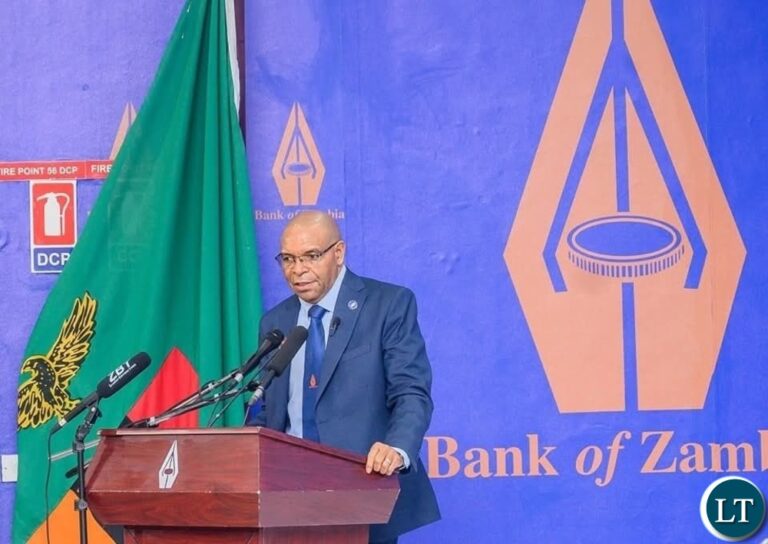
The Bank of Zambia (BOZ) has reduced the Monetary Policy Rate (MPR) by 75 basis points to 13.5 percent for the month of February from 14.25 in last year’s quarter.

Announcing the Monetary policy rate reduction at a press briefing in Lusaka today,  BOZ Governor Denny Kalyalya stated that the reduction is in response to decline in inflation in the fourth quarter of 2025.

He noted that in January 2026, inflation fell sharply  to 9.4 percent and that the decline has largely been driven by the continued impact of the maize bumper harvest from the 2024/25 farming season and appreciation of the kwacha against major currencies.

“The current projection is that inflation will fall into the 6-8 percent target band at a faster pace than was forecast in November 2025,”he said.

Dr. Kalyalya added that inflation is expected to be within the band by the second quarter of 2026 and move to lower bound by the second quarter of 2027.

He said on average, inflation is forecast to be 6.9 percent in 2026 compared to 7.6 percent projected in November 2025.

The Governor stated that inflation is further expected to ease further to 6.3 percent in 2027.

He said the more positive outlook largely reflects the impact of lagged effects of the recent appreciation of the exchange rate and expected favourable agricultural output.

Dr. Kalyalya pointed that the risks to the inflation outlook remain tilted to the downside, which include favourable conditions; supportive external sector conditions, reflected in higher copper prices and continued macroeconomic stability.

He observed that in view of the recent sharp drop in inflation and projected further decline over the forecast horizon, improving market expectations of inflation and the need to maintain an appropriate monetary policy stance, the committee decided to reduce the policy rate by 75 basis points to 13.5 percent.

Dr. Kalyalya has since indicated that decisions on the policy rate will continue to be guided by inflation outcomes, forecasts and identified risks including those associated with financial stability.

Government responds to TIZ report while challenging perception index methods

3

Government has responded to the latest corruption perception findings with a dual message, acknowledging public concerns raised by the report while also questioning aspects of the methodology used to measure governance performance.

Speaking during a press briefing in Lusaka, Information and Media Minister Cornelius Mweetwa said the administration views the rating as a reminder that the fight against corruption remains ongoing, but insisted that several structural reforms introduced since 2021 demonstrate measurable progress. The report reflected a drop in Zambia’s score from 39 to 37, placing the country below the global average.

During the briefing, Mweetwa outlined reforms implemented under President Hakainde Hichilema’s administration, including the establishment of the Financial and Economic Crimes Court, which he described as a key mechanism for accelerating corruption-related cases. He said the specialised court has reduced delays that previously allowed investigations to stretch for years, adding that both convictions and acquittals have taken place as part of strengthening judicial credibility.

Government also highlighted asset forfeitures and prosecutions involving public officials as evidence that enforcement agencies are operating without political shielding. According to the minister, the administration’s anti-corruption strategy is focused on institutional independence rather than targeting individuals, arguing that accountability must apply across all levels of public service.

At the same time, the minister used the briefing to challenge aspects of the perception index itself, questioning whether international surveys accurately capture the realities of reforms underway in Zambia. He noted that different global institutions often produce contrasting ratings and asked what empirical tools were being used to sustain lower scores despite visible legal changes and enforcement actions.

Mweetwa argued that perception indicators sometimes rely heavily on opinion-based surveys, which may not fully reflect structural reforms or ongoing prosecutions. He said government remains open to dialogue with civil society organisations contributing to the index, emphasising that constructive engagement could help clarify how ratings are determined and how Zambia’s progress is measured.

The minister also addressed issues that may have influenced public perception during the reporting period, including revelations from forensic audits into procurement practices within the health sector and concerns surrounding misuse of constituency development funds. He said exposure of such issues demonstrates institutional transparency rather than weakness, arguing that systems willing to confront wrongdoing publicly should not be viewed solely through a negative lens.

During the briefing, authorities rejected suggestions that oversight institutions operate under political pressure. Mweetwa stated that independence must be assessed through the actions of courts and enforcement agencies rather than assumptions tied to appointments or funding levels. He added that financial constraints facing oversight bodies reflect broader economic realities rather than deliberate interference.

Government further urged citizens to support anti-corruption efforts by resisting narratives portraying legal proceedings as persecution. According to the minister, maintaining public confidence requires a collective commitment to lawful processes and national development goals. He reiterated that constitutional provisions remain the only basis for immunity from prosecution, stressing that no individual is shielded from accountability.

Despite pushing back against certain aspects of the perception index, the administration acknowledged the importance of continuous improvement. Mweetwa said government aims to strengthen institutional capacity, expand oversight mechanisms and deepen collaboration with civic organisations to address governance challenges. Officials have set a target of reaching a CPI score of 40 by 2026, presenting the goal as part of a broader commitment to improving transparency.

The press briefing reflected a balancing act between defending progress and engaging with criticism. On one hand, government sought to reassure citizens that reforms and prosecutions demonstrate tangible action against corruption. On the other, it questioned whether international perception tools fully capture developments on the ground.

Hichilema links currency strength to long-term economic reforms

6
Kwacha rebound and value-addition agenda highlight Zambia’s shifting economic strategy

Zambia’s economic narrative has entered a new phase, with the strengthening kwacha and renewed focus on value addition emerging as central pillars of government policy. President Hakainde Hichilema has used recent engagements to underline the importance of disciplined economic reforms, arguing that long-term stability depends on transforming production and strengthening investor confidence.

The local currency’s rebound to around K18 against the dollar has been interpreted by policymakers as evidence that fiscal reforms and international cooperation are beginning to deliver measurable results. Economic planners say the appreciation reflects a combination of debt restructuring progress, improved export performance and cautious public spending. While officials acknowledge that currency movements remain sensitive to global market conditions, they insist that underlying policy changes are laying a more sustainable foundation.

Speaking during economic discussions tied to mining sector development, Hichilema emphasised that Zambia cannot rely solely on exporting raw materials. He argued that value addition must become a central objective if the country hopes to build resilience and create long-term employment opportunities. According to the President, moving beyond raw copper exports toward processed products will allow Zambia to capture greater economic benefit from its natural resources.

The mining transformation agenda has gained momentum through international engagements, including financing discussions connected to industry gatherings abroad. Delegations representing Zambia’s financial and industrial institutions have presented new funding models aimed at supporting expansion and innovation across the sector. Officials believe these initiatives will strengthen partnerships with investors seeking stable policy environments.

Economic messaging from government has also highlighted the role of private sector participation. Investment announcements tied to agricultural and industrial restructuring have been framed as signs that international stakeholders are responding positively to Zambia’s reform trajectory. Policy advisers say clarity around regulation and long-term planning has become a key factor in restoring investor confidence.

Information Minister Cornelius Mweetwa has defended the administration’s economic approach, stating that growth must be measured over years rather than months. He told journalists that currency fluctuations alone do not define economic health, emphasising that structural reforms remain the primary focus. According to Mweetwa, stable fundamentals will ultimately provide stronger protection against external shocks.

The kwacha’s recent performance has drawn attention from business leaders who say exchange rate stability helps reduce uncertainty in procurement and investment planning. Manufacturing firms have indicated that predictable currency trends allow companies to manage costs more effectively, particularly in sectors dependent on imported equipment or raw materials.

Meanwhile, debates around energy supply and infrastructure continue to intersect with economic planning. Authorities argue that reliable electricity remains essential for mining expansion and industrial growth, linking power sector reforms to the broader economic vision. Investments in digital innovation and mechanisation are also being promoted as part of a strategy to increase productivity and diversify the economy.

Critics of the current policy direction have raised concerns about the pace of reform, questioning whether the benefits of currency appreciation are being felt evenly across communities. Some civic voices argue that economic messaging must be accompanied by visible improvements in livelihoods, including job creation and support for small businesses. Government officials respond that structural changes often take time before producing widespread results.

Despite differing perspectives, the overall narrative suggests a shift toward disciplined economic management. Leaders continue to emphasise the importance of maintaining investor trust while strengthening domestic industries. Analysts say the focus on value addition represents a significant departure from earlier reliance on raw exports, signalling a more ambitious approach to economic transformation.

In navigating its next stage of development journey, the relationship between currency stability, mining reform and investment confidence will remain under close scrutiny. The government’s ability to balance growth ambitions with social expectations could determine how the current economic momentum evolves in the months ahead.

Three dead in separate eastern province accidents

0

Three people have died in separate accidents that happened yesterday, in Nyimba and Lundazi Districts of Eastern province.

Two victims died on the spot, while one, a pedestrian, died while receiving treatment at Lumezi Mission Hospital.

Eastern Province Police Commanding Officer Robertson Mweemba has confirmed to the media that the first accident that occured in Lumezi, involved a Toyota Hilux and a pedestrian.

“Be informed that Lumezi Traffic Officers received a report of a fatal road traffic accident which occurred yesterday, February 10, 2026 at around 10:00hours at Kamukwezi area, about 19 kilometres South of Lumezi Stores along Chipata- Lundazi road. Involved was a Toyota Hilux bearing registration number BAC 2826 which had no damages and was being driven by Mike Tembo, 61, of Chimwemwe Compound, Chipata District who escaped unhurt,” he said.

Also involved was a pedestrian, Mary Phiri, 28, of Malidonga farms, Lumezi District who sustained a suspected fractured right hand and swollen right side of the face and died at 12:30 hours at Lumezi Mission Hospital.

Mr Mweemba said the accident happened when the pedestrian was trying to cross the road, and was in the process hit by the vehicle, which was coming from the northern direction.

The body has since been deposited into Lumezi Mission Hospital mortuary awaiting postmortem examination results.

Furthermore, the East Police Chief said the other accident that claimed two lives happened in Nyimba, at around 13:20 hours.

“Be informed that Nyimba Traffic Officers recorded a fatal RTA which occurred at Renamo area along Great East Road, about 58 Kilometers West of Nyimba Town. Involved was a motor vehicle namely Dong Feng Captain registration number BAH 9968 which was being driven by, male, Emmanuel Chileshe, 26, of John Laing Compound, Lusaka who was driving from the direction of East to West whilst carrying 3 passengers on board,” he said.

“The accident happened when the motor vehicle failed to ascend uphill. It   rolled backwards and went off to the right side of the road and flipped on its left side,” he added.

Due to the impact, the driver together with his passenger, Elita Tembo, 37, of Petauke District, sustained fatal head injuries and died on the spot.

Both bodies have been deposited into Nyimba District Hospital Mortuary awaiting postmortem examination results.

“Meanwhile, two other passengers sustained general body pains and were both treated as out patients,” Mr Mweemba indicated.

Changala and Mukandila give sharp warnings as PF tensions deepen

1

Political friction within the Patriotic Front has intensified after activist Breben Changala criticised what he described as tribal-driven narratives in national politics, while party deputy secretary general Celestine Mukandila raised alarm over alleged attempts to influence internal leadership structures. The exchange has highlighted growing divisions that continue to shape opposition dynamics ahead of the country’s next electoral cycle.

Changala delivered his remarks during public engagements addressing the direction of national political discourse. He cautioned that rhetoric rooted in tribal identity risks weakening democratic participation and distracting citizens from policy issues affecting everyday life. According to Changala, Zambia’s political environment has historically thrived on national cohesion, and leaders carry a responsibility to maintain that standard even during intense competition.

His comments surfaced amid ongoing disagreements within the Patriotic Front regarding organisational direction and internal authority. Some senior figures have called for reconciliation among factions, while others argue that structural reforms are necessary to restore credibility and rebuild support following previous electoral setbacks. Changala said unresolved disputes risk creating confusion among supporters who expect clarity from opposition leadership.

Mukandila responded from within party ranks, warning members about individuals he claims are attempting to buy influence or manipulate leadership outcomes. Speaking during a political mobilisation effort, he urged loyalists to defend existing party processes and remain vigilant against activities that could undermine unity. Mukandila emphasised that leadership changes must follow established rules rather than informal arrangements, describing internal discipline as essential to the party’s future.

The contrasting statements reveal deeper ideological differences about strategy and messaging within the opposition. Some leaders advocate a hard-line approach that confronts perceived external pressure, while others promote dialogue and restructuring as pathways toward renewal. The disagreement has also drawn attention to the broader political climate, where debates about delimitation, electoral reforms, and campaign preparation intersect with internal party disputes.

Government spokesperson Cornelius Mweetwa weighed in during separate remarks, dismissing suggestions that state policies are influenced by opposition infighting. He said national priorities remain focused on economic recovery, infrastructure development, and institutional stability rather than partisan disagreements. His response reflects a broader effort by government officials to distance governance narratives from opposition tensions.

Observers following the evolving situation note that the Patriotic Front remains a significant political force despite internal challenges. Supporters continue to rally around competing visions for the party’s future, with grassroots members seeking direction from senior leadership as political rhetoric grows sharper. Calls for unity have surfaced repeatedly, though concrete steps toward reconciliation remain limited.

The debate has also extended beyond leadership structures to include broader questions about political culture. Changala’s criticism of tribal politics has sparked conversations among civic groups who believe national dialogue should focus on policy outcomes rather than identity-based narratives. Some commentators argue that sustained infighting risks overshadowing substantive discussions about governance and economic reform.

Mukandila, however, maintains that strong internal discipline is necessary to preserve organisational strength. He said party members must resist any attempts to weaken structures from within, emphasising that loyalty to established procedures will determine whether the Patriotic Front can present a coherent strategy in the coming months.

Political analysts suggest that the intensity of current exchanges reflects a movement undergoing transformation. Leadership disputes often emerge during periods of transition, particularly when parties attempt to redefine their identity after shifts in national leadership. Whether the Patriotic Front can navigate these tensions without further fragmentation remains uncertain.

For many citizens watching from outside party structures, the unfolding exchanges represent a test of political maturity. Voters expect leaders to articulate clear positions on economic and social issues while maintaining respect for democratic principles. The way opposition figures manage disagreements could influence public perception heading into future elections.

Despite the sharp rhetoric, some voices continue to call for constructive engagement. Advocates of dialogue argue that open debate can strengthen democratic institutions when conducted responsibly. Whether that approach gains traction will depend on how key figures respond to mounting pressure from both supporters and critics.

With election preparations slowly taking shape, the political landscape remains fluid. Changala’s warning about tribal narratives and Mukandila’s claims about leadership interference have added new layers to an already complex environment. The coming months will likely determine whether internal disagreements evolve into a unified strategy or deepen divisions within one of Zambia’s most prominent opposition movements.

NPA Says Dalitso Property Forfeiture Followed Due Process

3

The National Prosecution Authority (NPA) says the forfeiture to the State of properties worth more than K24 million belonging to the late former President Edgar Lungu’s son, Dalitso, was conducted lawfully and was not politically motivated.

On Monday, the Economic and Financial Crimes Court (EFCC) ordered that the properties be forfeited to the State. The assets declared tainted include more than 70 vehicles, a service station and over 20 parcels of land located in different parts of the country.

A three-member panel of the EFCC ruled that evidence presented through investigations showed that Dalitso lacked the financial means to legitimately acquire the properties in question.

The forfeiture order followed an application filed in 2023 by Director of Public Prosecutions Gilbert Phiri seeking the seizure of the assets.

NPA public relations manager Vivian Nsingo said Dalitso had been given an opportunity in court to explain the source of the properties but failed to do so. She made the remarks yesterday during an inspection of some of the forfeited assets, including a complex facility and service station in Lusaka’s Jack Township, a house in Salama Park and several trucks in Lilayi.

Ms Nsingo said the authority is committed to recovering assets suspected to have been acquired through unlawful means, adding that properties can be retained by individuals who are able to demonstrate how they were legitimately obtained.

She said the role of the assets forfeiture department is to ensure that property linked to criminal activity is recovered by the State.

UPND Will Win With or Without Electricity Situation, Government Says

6

Government says the availability of electricity is not a campaign strategy ahead of the August 13 general elections, stating that the UPND’s electoral prospects are based on its performance in office.

 Government spokesperson and Information and Media Minister Cornelius Mweetwa dismissed claims that the current power supply improvements are politically motivated. He said voters would support the UPND regardless of whether load shedding continued.

Mweetwa said the ruling party’s confidence is rooted in fulfilled campaign promises under President Hakainde Hichilema’s leadership, including mass employment initiatives, free education and ongoing energy sector reforms. He added that the President now enjoys greater public trust compared to when he first assumed office.

The minister explained that the recent improvement in electricity availability is the result of multiple government-led initiatives. These include solar plants now generating power, electricity imports by private sector players, favourable rainfall patterns and cooperation between Zambia and Zimbabwe on energy production.

He noted that private companies are importing power using their own resources and selling it mainly to mining companies, which helps free up Zesco-generated electricity for domestic consumers. He also said Zambia and Zimbabwe reached agreements allowing increased water use for power generation at Kariba and expanded electricity imports through the Zimbabwe grid.

“Our target was and remains the importation of 600 megawatts through the Zimbabwe grid line, and that has contributed to the current power supply situation,” Mweetwa said, adding that good rainfall has also supported increased generation.

He further explained that Zambia is transitioning away from sole reliance on hydroelectric power towards a diversified energy mix that includes solar, thermal and privately generated electricity. Government has also introduced incentives such as zero-rated taxes on imported solar equipment and measures to encourage private investment in energy production.

Mweetwa said households and private companies are increasingly generating electricity through net metering, feeding surplus power back into the national grid. He estimated that private producers are collectively generating about 30 megawatts for domestic and commercial use.

He added that these reforms aim to ensure a more reliable energy supply, support industrial development and reduce the impact of weather-related disruptions on hydroelectric power generation.

ZNS Hands Over New Ablution Blocks to Improve Sanitation at UNZA and Evelyn Hone

0

Students at the University of Zambia (UNZA) and Evelyn Hone College have received new sanitation facilities following the handover of four modern ablution blocks constructed by the Zambia National Service (ZNS).

The waterborne sanitation project, built at a cost of K8.5 million, includes three ablution blocks at UNZA and one at Evelyn Hone College. Each block contains 10 ablution units, with male sections also equipped with an additional 10 urinals to meet the needs of large student populations.

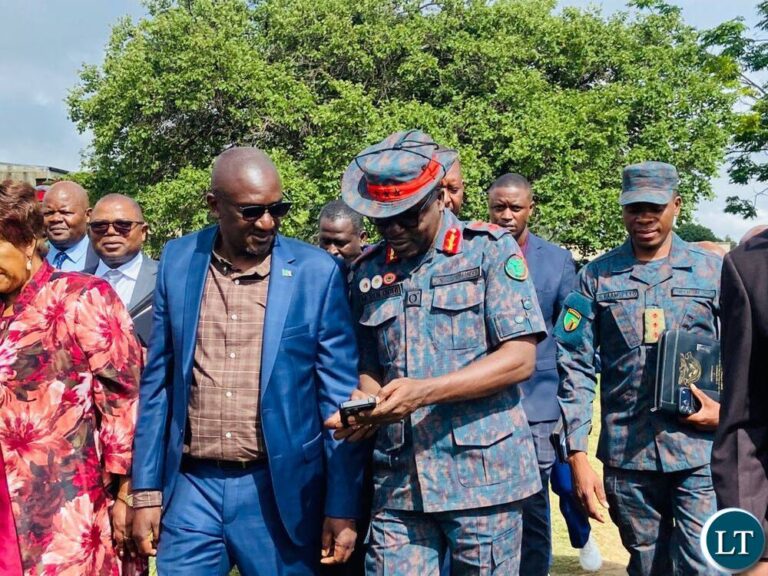
Speaking during the handover ceremony in Lusaka yesterday, ZNS Commander Lieutenant General Maliti Solochi said the facilities were designed with inclusivity in mind, ensuring accessibility for all students, including persons with disabilities, while promoting hygiene, safety and privacy.

Lt. Gen. Solochi said the project reflects ZNS’s commitment to timely delivery, quality workmanship and value for money, adding that improved sanitation contributes to healthier learning environments.

Minister of Water Development and Sanitation Collins Nzovu said the initiative demonstrates government’s efforts to provide practical infrastructure aimed at improving student welfare and learning conditions. He added that further work is ongoing to address accommodation challenges and upgrade inadequate sanitation facilities.

Munali Member of Parliament Mike Mposha urged students and staff to protect the infrastructure from vandalism so that it continues benefiting future generations.

Lusaka Province Minister Sheal Mulyata said the project highlights government’s focus on water and sanitation as key elements of sustainable development.

Meanwhile, UNZA Vice Chancellor Mundia Muya, represented by Deputy Vice Chancellor Boniface Namangala, appealed to cooperating partners to support the modernisation of the university’s ageing sewer system, which currently struggles to serve a student population exceeding 30,000, with upgrades estimated to cost about K178 million.

UNZASU president Mwanto Kabaso and EHCOSU president Clinton Mubita also commended government for responding to student concerns and improving campus facilities.

Teachers Who Abondon Rural Postings Risk Immediate Dismissal, Syakalima Warns

1
 Education Minister Douglas Syakalima has cautioned that teachers who fail to report to their assigned rural stations risk losing their employment.

Syakalima said government has stepped up measures to address absenteeism in underserved areas, with dismissal among the actions being enforced. He stressed that teachers are expected to honour all postings they accept, including those in remote locations.

“If you are posted to a rural area and abandon your position, you have effectively dismissed yourself because when you apply, you indicate that you are willing to work anywhere in the country,” he said.

The minister acknowledged that there may be legitimate reasons, such as serious health conditions, but explained that the ministry is now verifying medical certificates submitted by teachers requesting exemptions to ensure they are genuine.

“A professional teacher works wherever they are assigned. Even when health issues are cited, we confirm the authenticity of medical reports. If you abandon your post, you have dismissed yourself and we will replace you,” he added.

He issued the warning during a question-and-answer session in Parliament yesterday while responding to Chama South Member of Parliament Davies Mung’andu, who raised concerns about increasing cases of teachers leaving rural postings and asked what measures government is taking to prevent disruption to pupils’ education.

Syakalima also addressed concerns about alleged favouritism in recruitment, stating that personal connections would not influence employment decisions in the education sector.

“Colleagues should not come to my office seeking favours. Saying ‘this is my niece’ will not secure anyone a job,” he said.

Truck Driver Accused of Smuggling 89 Ethiopians in Fuel Tanker Seeks Bail

0

A truck driver from Chawama accused of hiding 89 Ethiopian nationals inside a fuel tanker has applied for bail as he awaits trial.

Frank Ng’andwe, 35, appeared before the Kapiri Mposhi Magistrates’ Court facing a charge of aiding and abetting illegal immigrants. He denied the allegation when it was presented in court.

According to the State, on November 23, 2025, Ng’andwe and other unidentified individuals allegedly loaded 89 Ethiopians into a tanker truck owned by Karan Motors. He was later apprehended on January 6, 2026.

Lawyers from the Legal Aid Board representing Ng’andwe requested that he be released on bail, stating that he is a Zambian citizen with a fixed residence in Chawama and is unlikely to abscond. They told the court he has already spent one month and five days in custody and is prepared to comply with any conditions that may be imposed.

The defence further submitted that Ng’andwe would not interfere with witnesses and would attend all court proceedings as required.

However, the prosecution opposed the application, arguing that Ng’andwe poses a flight risk. State prosecutors said he allegedly went into hiding after the incident and only reappeared when he was arrested on January 6, 2026, raising concerns that he may fail to appear in court if granted bail.

In response, the defence challenged the prosecution’s claims, stating that the State should present sworn testimony to support allegations that Ng’andwe had fled, rather than relying on statements made from the bar.

Due to the disagreement between the parties, the State requested additional time to prepare a formal response. Magistrate Ben Akende granted the request and adjourned the matter to February 12, 2026, when the court is expected to rule on the bail application.

Government Considers Extra 10% NAPSA Pre-Retirement Access, Tambatamba Says

6

Labour and Social Security Minister Brenda Tambatamba has indicated that government is considering permitting workers to withdraw an additional 10 percent from their NAPSA savings as part of ongoing pension reforms.

Speaking on a  Radio program yesterday, Tambatamba said the proposal, which is still under consideration, could allow members to access between 30 and 40 percent of their pension savings before retirement.

“Yes, it is that reform that is looking at the possibility of an add-on to the NAPSA fund, a possibility of an additional 10 percent that members may be able to collect. This reform is still in the pipeline,” she said.

Her comments followed praise for the introduction of the 20 percent pre-retirement benefit, which she described as a significant development for Zambian workers and something that had previously been viewed as unlikely but was implemented soon after the UPND took office.

“It was almost unimaginable that you could withdraw part of your pension savings while still employed. It was unthinkable, almost,” she said.

Tambatamba explained that before implementing the 20 percent withdrawal, government consulted actuaries and economic specialists to ensure the long-term sustainability of the fund.

“Some people wanted a higher percentage, but 20 percent aligned with the actuarial report,” she said.

She also addressed concerns that the reform might weaken NAPSA, stating that the fund’s portfolio has increased from approximately K67 billion in 2021 to more than K105 billion.

According to Tambatamba, the 20 percent withdrawal released about K11 billion into the economy, benefiting workers and their communities.

She added that the proposed additional 10 percent withdrawal will be presented to Parliament as part of wider pension reform measures.

Tambatamba further commended President Hakainde Hichilema’s leadership, saying the reforms reflect bold and forward-looking governance.

“We need leaders who think differently and creatively, and we have seen him prove many critics wrong,” she said.

Mweetwa backs power supply stability amid Zesco scrutiny

2

Government has directed an urgent review of fast-depleting electricity units at Zesco, signalling heightened oversight of the country’s power infrastructure while senior officials defend ongoing reforms aimed at stabilising supply.

Information Minister Cornelius Mweetwa said authorities remain confident that power supply improvements will hold, even as investigations begin into ageing infrastructure and operational challenges affecting electricity generation. The review is expected to establish the condition of power units, identify technical gaps, and recommend interventions within set timelines.

Energy developments come at a time when national leaders are emphasising long-term electricity planning. Officials say the investigation is not a sign of crisis but part of wider efforts to strengthen accountability and modernise the energy sector.

Government insiders indicated that engineers and technical experts will assess equipment performance, maintenance schedules, and generation capacity trends. Early concerns emerged after reports that some generation units were losing efficiency faster than projected, raising questions about sustainability if repairs and upgrades are delayed.

Mweetwa told journalists that power stability remains achievable because of ongoing investments and policy direction. He maintained that load management challenges would not define the country’s political landscape, adding that infrastructure planning is anchored in broader economic reforms.

At the same time, authorities are advancing technology upgrades intended to transform the national grid. A six-month smart-grid pilot programme is underway to improve monitoring systems, reduce losses, and enhance response times during outages. Officials involved in the project say digital tools will allow operators to predict faults and maintain balance between demand and supply.

Energy analysts within government structures say the pilot scheme represents a shift from reactive management toward data-driven planning. The programme also seeks to improve billing transparency and efficiency across distribution networks.

President Hakainde Hichilema has repeatedly linked energy reform to wider economic transformation, arguing that reliable electricity is central to mining expansion, industrial growth, and investment confidence. During engagements around the Mining Indaba discussions, he stressed that Zambia must build a resilient power system capable of supporting value addition rather than raw material exports.

Infrastructure challenges remain visible, including the impact of drought conditions on hydroelectric output. Authorities are exploring diversification strategies that include solar expansion and improved transmission efficiency. Technical teams are also reviewing procurement and maintenance procedures to prevent delays that could compromise generation capacity.

Government representatives have described the probe into Zesco units as a preventative measure rather than a reaction to failure. Officials insist that public communication around the investigation should not be interpreted as evidence of widespread breakdowns, but as part of routine governance checks.

Economic planners say stable power supply is crucial for maintaining momentum in currency performance and investment inflows. Recent policy statements have emphasised the need to align electricity reforms with industrial strategy, including mechanisation programmes and mining sector transformation.

Meanwhile, the Ministry of Technology and Science has highlighted digital innovation as a complementary pillar of energy reform. Projects aimed at expanding connectivity and improving service delivery are expected to support efficient monitoring of utilities and public infrastructure.

The broader policy direction suggests that government intends to merge technical upgrades with governance oversight. Officials argue that transparent investigations into infrastructure challenges will help restore public confidence and attract long-term partnerships.

As the probe progresses, authorities are expected to release findings outlining the condition of generation units and recommending next steps. For now, government messaging remains consistent: electricity reforms are ongoing, oversight is tightening, and stability remains the central objective of national energy policy.

Zambia’s anti-corruption efforts questioned after global ranking slide

9

Zambia’s standing on the global corruption perception index has fallen, renewing calls from governance advocates for stronger institutional safeguards and clearer political accountability ahead of the national election period.

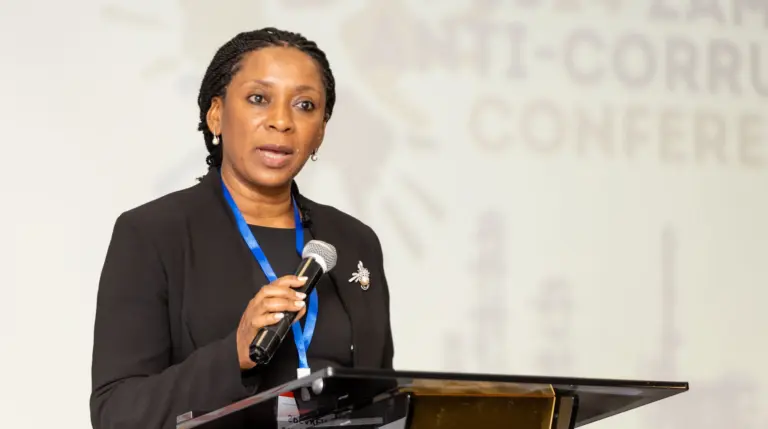
Transparency International Zambia president Priscilla Chansa confirmed that the country’s latest score dropped from 39 to 37, pushing Zambia down several places in the international ranking. Speaking during a public briefing in Lusaka this week, Chansa said the shift reflects growing concerns about the strength of democratic checks and the perception that public office is increasingly influenced by private interests.

Chansa explained that the index measures how corruption is viewed by business leaders, policy experts and governance specialists rather than recording individual criminal cases. She said the drop should not be interpreted as a sudden spike in wrongdoing but as a warning signal about public confidence in accountability systems. According to her, citizens expect procurement processes, political financing and public decision-making to remain transparent, especially as election season approaches.

The briefing highlighted procurement practices as one of the areas drawing the most scrutiny. Chansa pointed to recurring complaints about contract management and oversight, saying reforms must focus on ensuring that institutions responsible for monitoring expenditure have enough independence to operate without interference. She added that strengthening these systems would help restore trust and protect economic stability.

Civil society groups attending the briefing echoed the concern that shrinking civic space can shape how corruption is perceived internationally. Several speakers noted that watchdog organisations play a central role in exposing irregularities, and that an open environment allows institutions to respond quickly to allegations. Calls were made for clearer legal frameworks governing campaign financing, with participants arguing that transparent political funding would reduce suspicion about the influence of wealthy backers.

The latest ranking also arrived during a period of heightened political activity, which has placed governance issues firmly at the centre of national discussion. Public figures from across the political spectrum have referenced corruption narratives to reinforce their positions, while citizens continue to weigh how accountability affects everyday services such as healthcare, infrastructure and education.

Chansa stressed that improving the country’s ranking will require long-term institutional effort rather than short-term reactions. She said progress depends on consistent enforcement of anti-corruption laws, stronger protection for whistle-blowers and a commitment by political leaders to uphold ethical standards. According to her remarks, the perception index serves as a reminder that global confidence in Zambia’s governance is shaped by both policy decisions and public messaging.

Beyond institutional reform, governance advocates highlighted the importance of public engagement in shaping future outcomes. They argued that civic awareness campaigns could help communities understand how corruption affects national development, encouraging citizens to demand accountability at local and national levels. Some speakers also urged authorities to publish clearer information on procurement contracts and budget allocations, saying transparency reduces speculation and improves confidence.

The ranking decline has also prompted renewed discussion about the balance between political competition and institutional integrity. Several participants at the Lusaka briefing said election periods often heighten scrutiny because policy decisions attract more attention from voters and international observers. Maintaining clear communication and consistent enforcement, they said, would be essential in preventing governance debates from turning into partisan confrontation.

Government officials have previously maintained that anti-corruption frameworks remain active and that enforcement agencies continue to pursue cases through lawful processes. Governance activists, meanwhile, insist that perception matters as much as enforcement statistics, arguing that public trust shapes how reforms are received both domestically and abroad.

For many observers, the index drop serves less as a verdict on any single administration and more as an indicator of broader institutional expectations. Zambia’s reputation for democratic stability has long been a point of national pride, and governance advocates say preserving that image requires sustained commitment to openness and accountability.

The coming months will likely see continued debate over procurement rules, political financing and the role of oversight bodies. Chansa’s message during the Lusaka briefing centred on the need for collective action, saying that restoring confidence in governance systems depends on collaboration between policymakers, civil society and citizens. With the election period drawing closer, how leaders respond to the perception challenges may shape both domestic political discourse and the country’s standing on the international stage.