Wednesday, June 10, 2026
13.8 C
Lusaka
Home Blog Page 156

Pressure Builds on ECZ to Explain Creation of 70 New Constituencies

Pressure is mounting on the Electoral Commission of Zambia to publicly explain the criteria it used to identify 70 new constituencies following the launch of the 2026 delimitation exercise, an initiative that has already attracted intense political scrutiny ahead of the August 13 general elections.

Governance activist Brebner Changala has challenged the Commission to disclose, in full, the methodology applied in arriving at the number and placement of the new constituencies, warning that secrecy around such a sensitive national process risks undermining public confidence in the electoral system.

Changala said the creation of additional constituencies, announced as part of the implementation of the Constitution of Zambia (Amendment) Act No. 13 of 2025, required maximum transparency because of its direct impact on voter representation and parliamentary balance.

He argued that delimitation was not a technical exercise that could be insulated from public scrutiny, but a constitutional process whose legitimacy depended on openness, consultation, and clear justification.

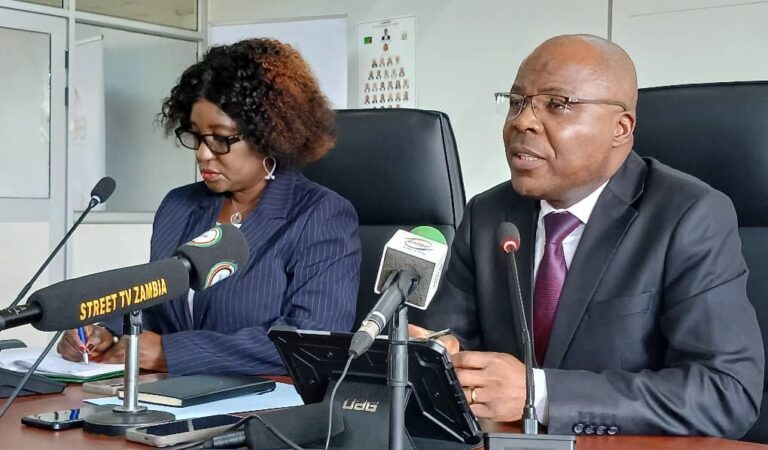
The Commission formally launched the delimitation exercise in Lusaka on Friday, stating that 70 new constituencies would be added to the existing number. ECZ Chairperson Mwangala Zaloumis indicated that the names and boundaries of the new constituencies would be published in the Government Gazette by April 15, 2026, with district-level meetings scheduled between February 16 and February 20.

Despite those assurances, Changala said the Commission had so far failed to explain what demographic, geographic, or administrative benchmarks were used to reach the figure of 70, and why the exercise was being conducted after voter registration rather than before.

He warned that without clear disclosure, the process would be viewed as politically motivated, particularly in an election year.

Changala went further, accusing the Commission of acting in a manner that could advantage the ruling party by reshaping electoral boundaries in its favour. He said the current composition of the Commission had raised serious credibility concerns among opposition parties and sections of civil society.

He called on President Hakainde Hichilema to dissolve the existing ECZ board, arguing that allowing it to continue operating without addressing transparency concerns could push the country toward electoral instability.

Opposition political parties have echoed those concerns, questioning whether the Commission can deliver a credible election while overseeing a delimitation process whose details remain unclear. Some opposition leaders have warned that disputed boundary changes could fuel rejection of election outcomes if grievances are not addressed early.

During the launch of the exercise at the Mulungushi International Conference Centre, the Commission maintained that it remained committed to delivering a free, fair, and credible election. Zaloumis said the institution would engage stakeholders during the district consultations and that public participation was built into the process.

However, critics argue that consultation after key decisions have already been made does not amount to meaningful participation. They insist that the Commission should have published its full delimitation report, including population data, voter distribution figures, and administrative considerations, before announcing the number of constituencies.

Concerns have also been raised about timing. Legal experts and political stakeholders have questioned why delimitation was initiated after voter registration had already taken place, warning that this could result in voter confusion and inaccurate voter records tied to outdated constituency boundaries.

With less than seven months remaining before the general elections, the delimitation exercise has quickly become one of the most contentious governance issues in the country. While the Commission insists it is acting within the law, the absence of detailed public explanations continues to fuel suspicion.

As political temperatures rise, pressure on ECZ to publish its criteria is expected to intensify, with stakeholders demanding clarity before the process moves further forward.
Antonio Mwanza Commends Hichilema for Returning CCTV Bill to Parliament

1

Democratic Progressive Party (DPP) leader Antonio Mwanza has welcomed President Hakainde Hichilema’s decision to refer the proposed CCTV Bill back to Parliament, saying the move helps safeguard citizens’ privacy and provides an opportunity to address major concerns within the legislation.

President Hichilema recently declined to assent to the Bill, stating that in its current form it poses a significant risk of intruding into the private lives of citizens.

Mwanza praised the decision, noting that national security measures should protect the public rather than subject them to unnecessary monitoring.

“Security must protect citizens, not spy on them. By sending the Bill back to Parliament, the President has defended constitutional rights and created space to fix these serious flaws before any such law is imposed on the Zambian people,” he said.

He cautioned that the Bill, as currently drafted, grants broad authority to install and manage CCTV systems without clear limitations, which could expose citizens to widespread surveillance.

“This opens the door to mass and indiscriminate monitoring of ordinary citizens going about their daily lives,” Mwanza said.

He also raised concerns over data protection provisions, arguing that unclear guidelines on the storage, access, and sharing of surveillance footage could put personal information at risk.

“Without strict safeguards, citizens’ personal data can be misused, abused, leaked, or exploited. The proposed oversight structures lack real independence. There are no strong checks to prevent abuse by state agencies or private entities running surveillance systems,” he added.

Mwanza further criticised the absence of strong judicial oversight, emphasising that surveillance measures should require court authorisation to meet constitutional standards of necessity and proportionality.

Additionally, he noted that key stakeholders, including civil society organisations and digital rights experts, were not adequately consulted during the drafting process.

The Enemy Stole Him From Us” as Kenya Hands Over Body of Salvation Army Training Principal

0

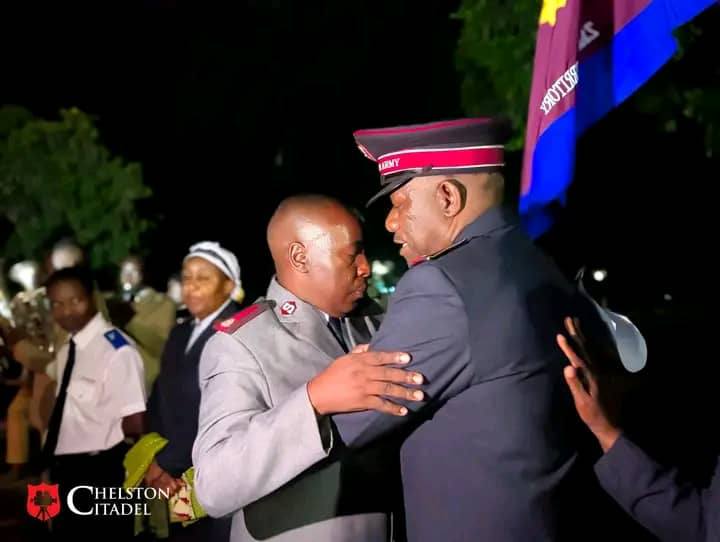
Kenneth Kaunda International Airport (KKIA) was filled with grief as the body of late Salvation Army Training Principal, Lieutenant Colonel Kennedy Mizinga, was officially handed over to Territorial Commander Colonel Alfred Banda.

Lt Col Mizinga died last Monday in 2026 following a short illness. His passing has been described as a significant loss to the Salvation Army, particularly in officer training and mentorship, where he made notable contributions.

Representing the Kenya Territory, a Salvation Army official delivered a brief but emotional message during the handover ceremony, bringing many mourners to tears.

“Territorial Commander, fellow mourners, we tried. But when we went to sleep, the enemy stole him away from us. We are sorry,” the representative said.

The statement reflected the sense of sorrow felt by Salvation Army officers and members in Kenya, where Lt Col Mizinga had been serving as Training Principal at the time of his death.

Colonel Alfred Banda expressed gratitude to the Kenya Territory for the care, support, and respect accorded to the late officer during his final days, adding that his dedication and service would be remembered.

Following the handover, the body was transported from the airport with prayers and military-style honours as family members and fellow officers paid tribute.

A church service is scheduled to take place today at the Salvation Army Libala Temple in Lusaka, with burial planned for tomorrow at the family farm in Chongwe.

Lieutenant Colonel Kennedy Mizinga is survived by his wife and two children.

Love Dispute Ends in Tragedy in Livingstone

0

A relationship dispute has reportedly resulted in the death of a 29-year-old man in Livingstone, only hours after he spoke to family members about emotional challenges involving his girlfriend.

The deceased, identified as Boyd Ngenda of Linda Compound, was said to have been distressed following unresolved disagreements within the relationship.

Police state that the incident happened yesterday around 16:00 hours. Earlier that morning, Ngenda visited his grandmother in Dambwa Site and Service, where he shared thoughts about ending his life connected to the troubled relationship. Despite his grandmother’s attempts to comfort and advise him, he later left her home.

Later in the day, Ngenda was reportedly seen at Dambwa Central Market, where he is alleged to have bought a chemical substance. Southern Province Police Commanding Officer Moono Namalongo said that at about 16:00 hours, a neighbour in Linda Compound encountered Ngenda carrying the substance along with a bottle of beer, during which he again expressed intentions to harm himself.

At approximately 16:40 hours, the same neighbour reportedly found Ngenda lying unresponsive a few metres from his residence and alerted authorities.

“Police officers who arrived at the scene observed no visible physical injuries on the body, which had been drenched by heavy rainfall in the area. Further statements indicated that the deceased had a known history of previous attempts to end his life,” Namalongo said.

He added that the body has been taken to Livingstone University Teaching Hospital Batoka Mortuary for a postmortem examination to determine the exact cause of death. Police have since opened an inquiry into the incident.

CSPR happy with kwacha gain

5

Civil Society for Poverty Reduction (CSPR) in Northwestern Province has commended the government for putting up measures to reduce the price of essential commodities.

Northwestern Province Chairperson David Choongo says the government should ensure that the benefits trickle down to ordinary citizens.

Speaking in an interview with the media, Mr Choongo explained that the appreciation of the kwacha, reduction of inflation and reduction in the prices of fuel should translate into an improved standard of living for all.

“The economy has been performing well lately and we want the benefits to be felt by everyone through reduced prices”, Mr Choongo said.

He commended the government’s call for manufacturing companies to reduce the prices of commodities adding that it was the right thing to do as the production cost had reduced.

“Manufacturing companies should reduce the prices of products because they are also benefiting from the reduction in fuel prices and appreciate the kwacha,” Mr Choongo said.

He appealed to the government to find a mechanism on how to work with manufacturers to ensure a price Reduction each time there is a gain without reminding them.

“People are still living in poverty and each time there is a gain and a reduction in prices, it makes a big difference to them regardless of the amount,” Mr Choongo said.

He disclosed that distant places like Solwezi have not benefited from these gains in the past, due to manufacturers taking a long time to act.

Mr Choongo explained that poverty levels in the country still remain high and unimpressive but was hopeful that with the end of load shedding and reduction in fuel prices, the economy was heading in the right direction.

Minister of Commerce Trade and Industry, Chipoka Mulenga announced that sixty percent of manufacturers had reduced the prices of products between five to twenty percent.

Mwansabombwe records reduced malaria cases

0

The District Health Office in Mwansabombwe district has made strides in reducing the malaria incidence rate in the district

Mwansabombwe Town Council Director for Health Services Abraham Bupe has attributed the reduction to a number of intervention measures that have been put in place to prevent malaria cases in the district

Dr Bupe mentioned the sensitization meetings in the communities, distribution of Insecticide Treated Mosquito Nets (ITNs) and the implementation of the Indoor residual spraying exercise, among other interventions.

The Director of Health Services further mentioned that the one health approach has also contributed positively to the reduction of malaria in the district.

He said the fight against malaria cannot be won by the Department of Health alone, hence the coming on board of other stakeholders, is a positive move.

Malole Health Centre in need of maternity annex expansion

Mungwi Council Chairperson Grace Chisanga says there is need to consider expanding the maternity annex at Malole Rural Health Centre, to cater for the ever increasing population in the area.

Ms Chisanga says 62 villages access primary health care services from the facility, which only has two beds spaces in the maternity room.

She has noted that the available maternity annex is too small to contain the demand, hence the need for the local authority to plan for the construction of an additional maternity annex.

The Chairperson observed that sometimes the facility receives six women in labour, against the two bed spaces available.

Meanwhile, the Mungwi Town Council is scouting for investors and contractors to partner with, in upgrading the 12 kilometer Ng’wena road and arena.

Ms Chisanga has observed that annually, the local authority spends huge amounts of money to grade the road and that the council is now looking for a permanent solution.

She has since appealed to other partners to come on board and work on the road from Chitimukulu junction upto Milando river.

She has disclosed that plans are also under way for the local authority to put up some culverts, and improve the arena at Milando area.

Preps to host Nc’wala heighten

1

Paramount Chief Mpezeni of the Ngoni people of Eastern Province has reiterated the traditional leadership’s commitment to working with the government.

Speaking during the Nc’wala traditional ceremony fundraising dinner hosted by the Petauke Ngoni Group, the traditional leader, who was represented by Chief Mnukwa said the traditional leadership works with the government to ensure development is realised.

“As the traditional leadership we work with the government, as we also believe these people exist to serve the citizens who put them in power,” he said.

The Paramount Chief also urged those surrounding the presidency to objectively update the Head of State on various matters that have real impact on the livelihood of the general citizenry.

Meanwhile, Ngoni Royal Establishment Nc’wala Main Committee Vice Chairperson, Moses Chimukule appreciated the Petauke Ngoni Group for the effort made towards the financing of this year’s Nc’wala traditional ceremony.

“Whatever you have contributed will be put to good use,” he assured.

“This year’s Nc’wala traditional ceremony activities will start in Nakonde on February 18, then proceed to Feira, in Luangwa district for the crossing, then proceed to the main event,” he added.

And gracing the event, Petauke District Commissioner Martha Mulenga indicated that President Hakainde Hichilema values tradition and culture, as it plays a pivotal role in the moral development of the country.

“Traditional ceremonies like Nc’wala also create an enabling environment for peace and unity,” she indicated.

This year, the Nc’wala traditional ceremony will be held on February, 28th, 2026.

VEEP hails Zambia, China interactions

0

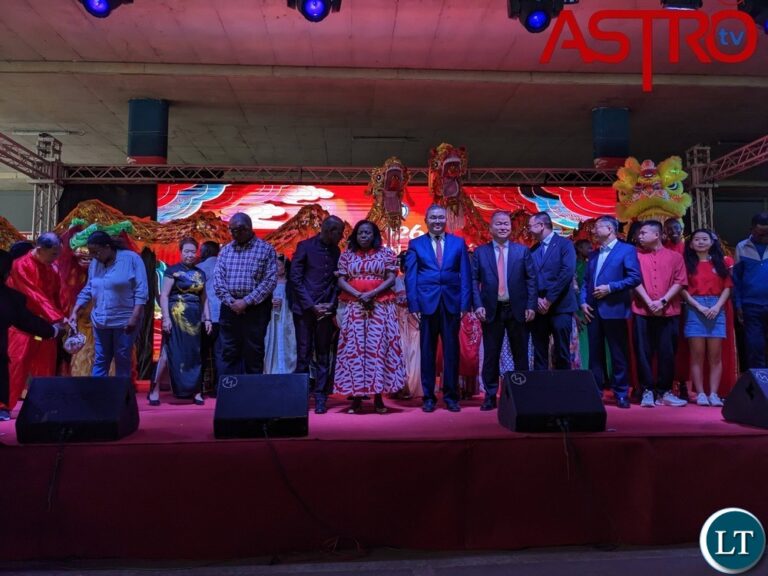
Vice President Mutale Nalumango has expressed confidence that the 2026 Zambia Chinese Spring Festival Temple Fair will spur bilateral relations between the two countries.

Mrs Nalumango pointed out that the hosting of the spring festival will further enhance people to people interactions between Zambia and China.

Speaking when she officiated at this year’s Zambia Chinese Spring Festival Temple Fair, Mrs Nalumango said the event is also aimed at encouraging more collaboration between the people of Zambia and China.

Mrs Nalumango highlighted that the Spring Festival is a platform for promoting trade and investment for entrepreneurs in both countries.

“It may interest you all to note that the people to people cooperation is one of the China Africa 10 point partnership action plan.”

She said the Zambia Chinese Spring Festival Temple Fair has the potential to accelerate bilateral ties between Zambia and China.

The Vice President also indicated that she was confident that the festival will act as a catalyst for enhancing business linkages for the two countries.

“I am confident that the event will also catalyse the enthusiasm of business linkages between Zambia and China”. The Vice President said.

Mrs Nalumango stressed that the festival is in alignment with Zambia’s desire to forge closer economic and business relations with Chinese investors.

“As the event is consistent with Zambia’s desire to forge closer economic and business relationships with Chinese investors,” she said.

She hoped that the 2026 Zambia Chinese Spring Festival Temple Fair will create opportunities for enhancing people to people interaction and business linkages.

Mrs Nalumango said the celebration of the festival is a testament to the cordial relations that exist between Zambia and China.

“This celebration today is therefore an actualisation of this important partnership action here in Zambia.”

Meanwhile, the Vice President said Zambia is proud of the elevated bilateral friendship with China.

Mrs Nalumango noted that the bilateral relations between the two countries have been elevated to a comprehensive strategic cooperation partnership with China.

“On this special occasion, I wish to take this opportunity to reaffirm that Zambia is proud of the elevated bilateral relations to a comprehensive strategic cooperation partnership with China.”

She disclosed that the friendship is based on mutual respect in various key sectors of the economy.

The Vice President described the relations between Zambia and China as an all-weather friendship.

Mrs Nalumango said China has demonstrated an unwavering commitment to supporting Zambia’s industrialisation journey.

And Minister of Tourism Rodney Sikumba says the Zambia Chinese Spring Festival Temple Fair is proof that culture plays an important role in uniting people of different ethnicities.

Mr Sikumba said culture acts like a bridge that connects communities across the globe.

He further explained that culture is key in promoting tourism and highlighting different cultural beliefs.

Mr Sikumba said the Chinese festival provides an opportunity for Zambia to learn from what China has embraced as culture.

Meanwhile, the Minister of Tourism says the friendship between Zambia and China has created job opportunities for Zambians and investment opportunities for Chinese investors.

Mr Sikumba pointed out that the wavering off of visa restrictions by the Zambian government in 2025 has further enhanced the friendship bonds between the two countries.

The Minister of Tourism hoped that China would reciprocate the waiver of the visa requirement.

Meanwhile, Chinese Embassy in Zambia Chargé d’Affaires Wang Sheng said the Spring Festival is a cultural event that brings Chinese people together with people of different nationalities.

Mr Sheng said the hosting of the Spring Festival has energised and rejuvenated bilateral relations between China and Zambia.

“We are confident that the event will help to bring people together and inject new dynamism in the development of bilateral relations.”

Propaganda season is here: a caution to Tonse Alliance supporters and all Zambians.

2

Propaganda season is here: a caution to Tonse Alliance supporters and all Zambians.

By Dr Mwelwa

As Zambia approaches a decisive election, the political temperature is rising—and with it, the volume of deliberate misinformation. Supporters of Brian Mundubile, members of the Tonse Alliance, and indeed all citizens must now exercise heightened judgment. What we are witnessing is not ordinary political debate; it is weaponised storytelling, designed to confuse, divide, and emotionally hijack voters.

The recent circulation of sensational claims—complete with alleged “receipts,” foreign financiers, secret meetings, and precise figures—fits a classic misinformation pattern explained in Foolproof: Why We Fall for Misinformation and How to Build Immunity. The book teaches that false narratives succeed not because they are true, but because they are emotionally sticky. They provoke anger, betrayal, fear, and moral outrage—emotions that shut down careful reasoning.

A key warning from Foolproof is this: specificity does not equal truth. Propaganda often uses exact amounts of money, named locations, and familiar faces to simulate credibility. The more dramatic and detailed the story, the more likely it is engineered for viral impact rather than factual accuracy. When claims appear suddenly, rely on anonymous “sources,” and offer no verifiable evidence beyond repetition, caution is not weakness—it is wisdom.

Another danger sign is selective moral outrage. When narratives loudly accuse some actors while quietly absolving others, the aim is rarely justice. It is factional manipulation. Propaganda thrives by turning supporters against each other, fracturing movements from within, and exhausting citizens with scandal fatigue. Division, not truth, is often the real objective.

Supporters must therefore resist the urge to share content simply because it confirms existing suspicions or flatters one’s political side. As Foolproof reminds us, being politically committed does not make one immune to deception—it often makes one more vulnerable. The real test of political maturity is the ability to pause, verify, and refuse emotional bait.

As election day draws near, misinformation will intensify. This is not accidental; it is strategic. The antidote is not counter-insults or rival conspiracies, but discipline of mind: ask for evidence, check multiple credible sources, distrust anonymous leaks, and beware stories designed to make you instantly angry or morally superior.

Zambia’s democracy will not be defended by gossip or digital mobs. It will be defended by citizens who understand that not everything loud is true, and not everything viral is real. In this season, vigilance is patriotism.

UNZA Student Seriously Injured in Road Accident as Police Dismiss Social Media Claims

0

A 20-year-old University of Zambia (UNZA) Great East Road Campus student is nursing serious injuries after she was struck by a Toyota Mark X while crossing the road within campus.

The victim, identified as Zanele Sichoonga, was rushed to Levy Mwanawasa Teaching Hospital, where she remains admitted and is receiving medical treatment.

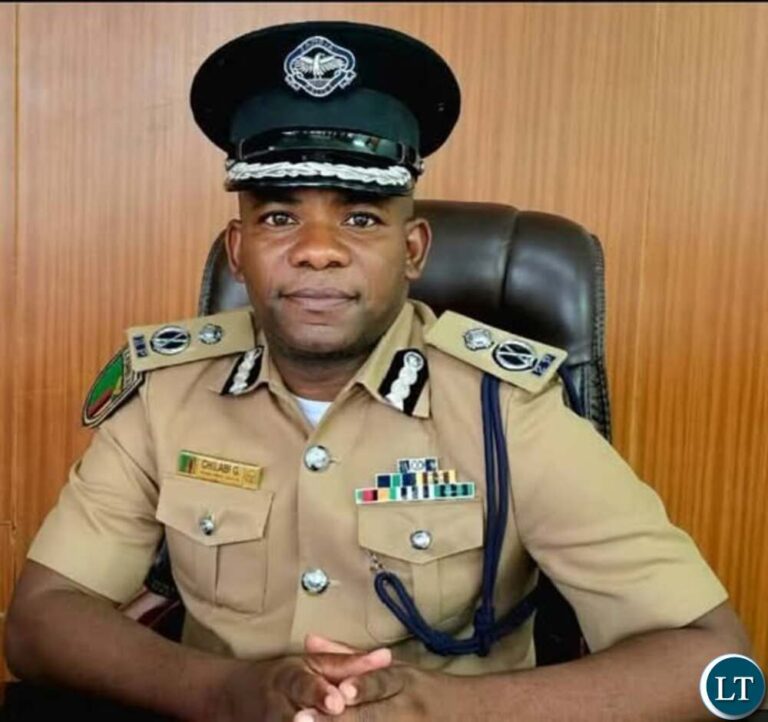
According to Zambia Police Public Relations Officer Godfrey Chilabi, the accident occurred on February 7, 2026, around 03:30 hours within the UNZA Great East Campus.

Mr Chilabi said preliminary investigations indicate that the student was crossing the road when she was hit by an oncoming motor vehicle. The driver of the Toyota Mark X, registration number CAG 1877, has been identified as 29-year-old Stephen Lombe of Chamba Valley.

Following the incident, a group of suspected students allegedly mobbed and assaulted the driver and damaged the vehicle. Police officers later arrived at the scene and rescued him. He sustained injuries and was taken to Levy Mwanawasa Teaching Hospital, where he was treated and later discharged.

Meanwhile, the Zambia Police Service has dismissed as false claims circulating on social media alleging that the driver is the son of Minister of Home Affairs and Internal Security Jack Mwiimbu.

Mr Chilabi described the claims as malicious and misleading, stating that there is no relationship between the driver and the Minister. He urged members of the public to disregard the false information.

Police investigations into the matter are ongoing, and the driver is expected to face formal charges.

President Hichilema Arrives in South Africa for Mining Indaba 2026 to Attract Investment and Jobs

3

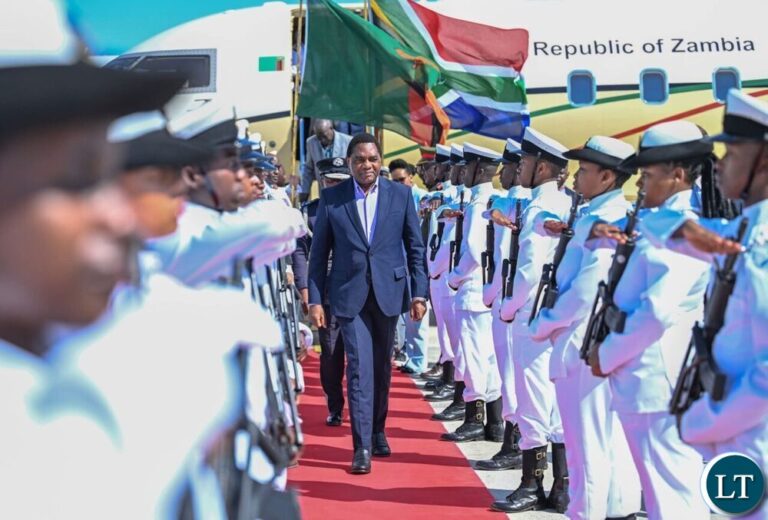
President Hakainde Hichilema says his participation in the 2026 Mining Indaba in Cape Town, South Africa, is part of Government’s ongoing efforts to attract more investment and create employment opportunities for Zambians.

The President has arrived in Cape Town, where he is scheduled to deliver a keynote address at Africa’s largest mining investment conference.

In a message shared on his Facebook page, Mr Hichilema said Government’s mission is clear—to secure increased investment that will generate jobs and drive economic growth. He also thanked citizens for their prayers and continued support.

State House Chief Communications Specialist Clayson Hamasaka said the President’s objective at the Indaba is to position Zambia as a preferred destination for responsible mining investment. He noted that the conference brings together key global investors and industry executives who make critical investment decisions.

Mr Hamasaka said increased mining investment creates employment not only within the mines but also in supporting sectors such as transport, supply chains, and local businesses, while boosting government revenues for essential services like education, healthcare, and infrastructure.

He added that since 2021, Government has implemented reforms aimed at strengthening Zambia’s investment climate. As a result, copper production reached 890,346 metric tonnes in 2025—an eight percent increase from the previous year and the highest output in recent years.

Mr Hamasaka highlighted major developments, including First Quantum Minerals’ US$1.25 billion S3 expansion at Kansanshi Mine, which has extended the mine’s lifespan by 20 years and safeguarded thousands of jobs. He also noted that mines previously facing closure and job losses, such as Mopani and Konkola Copper Mines, are now operational, investing, and employing workers.

He further stated that mining sector growth is driving infrastructure development, including the Western Corridor Project, a 371-kilometre road upgrade from Mutanda in North-Western Province to Kaoma in Western Province under a 25-year public-private partnership.

Government has set a target of reaching three million tonnes of annual copper production, a goal Mr Hamasaka said will create more jobs, increase tax revenue, and expand opportunities for local suppliers and entrepreneurs across the mining value chain.

Zambia’s Bottom of the Group Performance – What Has the Reaction Been Since Going Out

1

Zambia’s Bottom of the Group Performance – What Has the Reaction Been Since Going Out

The conclusion of the 2025 Africa Cup of Nations (AFCON) was a disappointing chapter for Zambian football, with the national team finishing at the bottom of Group A.

Zambia’s campaign saw them end up behind Morocco, Mali, and Comoros, leaving online sports betting enthusiasts and football fans alike to reflect on what went wrong.

As we edge closer to the end of the tournament, the reactions to Zambia’s AFCON performance offer valuable insights into the state of football in the country.

Dissecting Zambia’s AFCON 2025 journey

Zambia entered AFCON 2025 with high hopes and an ambitious squad. However, the team’s aspirations crumbled under the weight of their performances in the group stage, despite losing only one of their three games. The results were as follows:

  • Morocco (3-0 defeat)
  • Mali (1-1 draw)
  • Comoros (0-0 draw)

A lack of scoring opportunities coupled with defensive frailties saw them secure zero wins, which led to a nightmare scenario where they couldn’t climb  any higher than fourth in the group. Their efforts raised questions among pundits about team cohesion and strategic planning.

The Zambian fans, known for their passionate support, expressed their discontent openly through social media platforms and fan forums. Many felt that the coach’s tactics were outdated and that there was a need for a fresh perspective at the helm of the national team.

The emotional investment from the fanbase has always been a cornerstone of Zambian football culture, making this early exit from AFCON particularly hard to digest.

Fans and analysts react: the aftermath

In the wake of Zambia’s disheartening performance, fan reactions have ranged from anger to disappointment. In various online forums and sports betting platforms, discussions have shifted from wagering on potential victories to analyzing the future of Zambian football.

Pundits have expressed concern over the tactical ineptitude on display and the apparent lack of development in the player pool. Legendary Zambian players and football analysts have also taken to television and social media to voice their thoughts, hoping for a more rigorous approach towards youth development.

Many had seen Zambia as underdogs who could surpass expectations. However, the reality of their performance has prompted an outcry for accountability from both the players and the coaching staff.

The road ahead: building for future success

Looking ahead, Zambian football must embrace a shift in strategy if they are to avoid a repeat of this latest AFCON letdown. The call for change has been echoed throughout various channels, from fan discussions to official statements from the Football Association of Zambia.

Many believe that enhancing the domestic league and nurturing talent from an early age is crucial for the nation’s long-term success. The importance of investing in coaching education to ensure that the subsequent generations of players are not only skilled but also tactically aware cannot be overstated.

This AFCON experience should serve as a wake-up call, pushing for better infrastructure and resource allocation aimed at developing a more competitive national squad.

Furthermore, the Zambian fan base remains an invaluable asset. Their unwavering support can help rally the nation behind a renewed vision for football, making attending local matches and fostering enthusiasm at the grassroots level pivotal for revitalizing national pride.

Final thoughts

Zambia’s disappointing exit from AFCON 2025 has ignited a conversation about the future of their national team. As fans digest the harsh realities of this tournament, the collective hope is that it serves as a catalyst for substantial change within Zambian football.

With investments in youth development, coaching, and strategic planning, Zambia has the potential to rise from the ashes of this defeat and make a significant impact in future tournaments. The lessons learned during this AFCON will lay the groundwork for a more successful future, reviving the hopeful dreams of Zambian football fans everywhere.

Mwamba Petitions Africa Bar Association Over Alleged Judicial Collusion

Mwamba Petitions Africa Bar Association Over Alleged Judicial Collusion

Opposition figure Emmanuel Mwamba has formally written to the Africa Bar Association alleging that Zambia’s Judiciary is colluding with the Executive in a manner that undermines judicial independence, democratic governance, and the rule of law.

In the letter addressed to AfBA President High Chief Ibrahim Eddy Mark and dated January 30, 2026, Mwamba names Chief Justice Mumba Malila as the principal focus of his complaint, citing the Chief Justice’s constitutional role as head of the Judiciary. Mwamba contends that Malila has failed to safeguard the separation of powers, arguing that the Judiciary has not remained co-equal and independent from the Executive as required under the Constitution.

The correspondence frames Zambia as historically peaceful and democratic, pointing to past electoral transitions, while asserting that developments since 2021 have placed that record at risk. Mwamba references concerns raised by international and domestic institutions, including human rights bodies, church organisations, and professional associations, which he says have warned of shrinking democratic space and weakened institutional independence.

According to the letter, Mwamba alleges that the Judiciary has failed to protect decisional independence, describing a climate in which judges are purportedly unable to render decisions free from external pressure or fear of reprisal. He further claims that judicial processes involving opposition figures have been characterised by delays, transfers of magistrates, and outcomes that disadvantage political opponents.

A significant portion of the complaint centres on litigation affecting the Patriotic Front (PF), Mwamba’s party. He alleges that actions taken through the Registrar of Societies, Parliament, and the courts altered PF leadership structures and parliamentary positions in ways that favoured the ruling party. He contends that attempts to challenge these developments through the courts were frustrated by procedural delays and judicial conduct that, in his view, impeded effective remedies.

Mwamba also raises concerns over the dismissal of three Constitutional Court judges in 2023, linking those removals to proceedings concerning the eligibility of former president Edgar Chagwa Lungu to contest future elections. He refers to the Constitutional Court case of Michelo Chizombe v. Edgar Chagwa Lungu and Others (2023/CCZ/0021), which resulted in a ruling that barred Lungu from standing in subsequent presidential elections. Mwamba argues that the decision marked a departure from prior court positions and had immediate implications for opposition participation ahead of the 2026 general elections.

In the letter, Mwamba further criticises a range of government actions, including the enactment of cyber security legislation that he says restricts freedom of expression, the continued application of the Public Order Act, and what he describes as selective enforcement against opposition members. He also questions the neutrality of public media coverage and raises concerns about the composition and independence of electoral management bodies.

The letter outlines a series of conditions Mwamba says are necessary to ensure credible elections, including full participation of opposition parties, protection of fundamental freedoms, impartial institutions, equal access to public media, and enhanced voter education. He urges AfBA to take a “keen interest” in Zambia’s situation, warning that unresolved issues could threaten peace, security, and democratic stability.

The Africa Bar Association describes itself as a continental body that represents the legal profession in Africa, with a mandate focused on the rule of law, judicial independence, and human rights. Mwamba’s complaint asks the association to consider his allegations within that mandate.

The letter concludes with Mwamba signing in his capacity as Chairperson of Information and Publicity and Member of the Central Committee of the Patriotic Front, and is presented as a formal appeal for regional legal attention to Zambia’s judicial and constitutional environment.

Click here LETTER TO AFRICA BAR 6

A Vote of Confidence for President Hakainde Hichilema’s Leadership

8
A Vote of Confidence for President Hakainde Hichilema’s Leadership

Zambia’s political history has often been shaped by moments of uncertainty, economic strain, and competing national expectations. Against that backdrop, President Hakainde Hichilema’s tenure has come to represent a decisive shift toward stability, reform, and a renewed sense of direction. For many citizens, his leadership has emerged as a source of reassurance at a time when clarity and discipline in governance matter most.

From the outset, President Hichilema signalled that his administration would be anchored on order, transparency, and institutional respect. That posture has helped restore confidence in the state, both domestically and internationally. Public discourse has become calmer, state institutions more predictable, and political engagement less confrontational. These may appear intangible, but they form the bedrock upon which lasting development is built.

Economic Recovery with Discipline

The administration’s most visible test has been the economy. Inheriting a country burdened by debt distress, weak investor confidence, and constrained fiscal space, the task was never going to be easy. Yet the focus on reform has been deliberate and consistent. Efforts to stabilise public finances, clean up revenue systems, and re-engage international partners have begun to change the narrative around Zambia’s economic prospects.

While challenges remain, early signs of resilience are evident. Inflationary pressures have been managed with greater policy coordination, investor sentiment has improved, and economic management has become more predictable. The emphasis has been less on quick political wins and more on restoring credibility, a choice that reflects long-term thinking rather than short-term populism.

Peace, Stability, and National Cohesion

Equally important has been the administration’s firm commitment to peace and stability. Zambia has long prided itself on being a peaceful nation, and that tradition has been carefully preserved. The tone from the Presidency has been conciliatory, measured, and inclusive, reinforcing national unity rather than deepening divisions.

By prioritising dialogue and reconciliation, the President has helped create an environment where political differences do not translate into social tension. This stability has strengthened Zambia’s standing in the region and provided a reliable platform for investment, growth, and social development.

A Clear Development Vision

President Hichilema’s development agenda is grounded in practical priorities. Agriculture, tourism, and infrastructure have been positioned as engines of growth, not as slogans but as sectors with measurable potential to create jobs and improve livelihoods. Alongside this, social investments in education, healthcare, and water access reflect an understanding that economic progress must translate into everyday improvements for citizens.

These efforts speak to a broader vision of development that balances macroeconomic reform with human development, ensuring that growth is not abstract but felt across communities.

Leadership That Listens

Perhaps one of the most defining features of President Hichilema’s leadership has been his emphasis on accountability and responsiveness. Governance has been framed as a service, not a privilege. The willingness to engage, listen, and adjust has reinforced the idea that leadership exists to serve the people, not the other way around.

This approach has strengthened public trust and reinforced democratic norms that are essential for long-term national progress.

Looking Ahead

Zambia’s journey is far from complete, and no administration is without its challenges. Yet, taken together, the direction of leadership, the tone of governance, and the consistency of reform provide strong grounds for confidence. President Hakainde Hichilema’s stewardship has laid a credible foundation for stability, growth, and institutional renewal.

As the country moves forward, that foundation offers Zambia a genuine opportunity to consolidate gains and pursue a more prosperous, inclusive future.

By Moonga D.