Monday, June 8, 2026
23.4 C
Lusaka
Home Blog Page 164

Hichilema Praises Opposition for Peaceful Kasama Mayoral By-Election

1

President Hakainde Hichilema has described the Kasama mayoral by-election held on Thursday, January 29, 2026, as a positive demonstration of democratic practice and has commended opposition political parties for their peaceful conduct during the electoral process.

In a message shared on social media, President Hichilema congratulated United Party for National Development (UPND) candidate Bywell Simposya on his victory, stating that the election reflected the true spirit of democracy, where citizens freely participate, leaders contest ideas, and candidates accept the outcome of the vote.

“Elections, by their nature, are competitive. Yet once the ballots are counted and the voices of the people are heard, we must emerge more united, more refined and more committed to the collective progress of our nation,” the President wrote on his official Facebook page.

He noted that Zambia is founded on peace, inclusiveness and solidarity, and called on both citizens and leaders to continue upholding these principles as the country advances on its development agenda.

President Hichilema further emphasized that democracy goes beyond the declaration of results and is sustained through unity, love and brotherhood among citizens.

“Ours is a country built on peace, inclusiveness and solidarity. These values must remain the bedrock of our national journey as we focus on loving, caring and delivering development and improving the wellbeing of every citizen,” he stated.

Mr. Simposya won the by-election with 17,647 votes. His closest challenger, Forum for Democracy and Development (FDD) candidate Peter Yuda, polled 14,302 votes.

Citizens First’s Aaron Zimba received 4,405 votes, while United Progressive People’s Party of Zambia (UPPZ) candidate Kapambwe Mukuka obtained 2,988. Socialist Party’s Mubanga Joseph garnered 2,211 votes, and New Focus Party candidate Mary Bukisa recorded 472 votes.

Following the announcement of the final results, Simposya was declared the winner of the Kasama mayoral by-election, succeeding the late Patriotic Front (PF) mayor Theresa Kolala, who died on December 5, 2025.

Bywell Simposya Wins Kasama Mayoral By-Election

5
The United Party for National Development (UPND) has won the Kasama Mayoral by-election held on Thursday, 29 January 2026, following the official declaration of results by the Electoral Commission of Zambia (ECZ).

UPND candidate Mr. Bywell Simposya was declared the winner after polling 17,647 votes, representing 41 percent of the total valid votes cast. He defeated his closest rival, Mr. Peter Yuda Chikweti of the Forum for Democracy and Development (FDD), who garnered 14,302 votes, accounting for 33 percent.

Other candidates in the race included Mr. Aaron Zimba of the Christian Forum (CF), who secured 4,405 votes (10 percent); Mr. Kapambwe Mukuka of the United Progressive People’s Party of Zambia (UPPZ) with 2,988 votes (7 percent); Mr. Joseph Mubanga of the Socialist Party (SP), who polled 2,211 votes (5 percent); and Ms. Mary Bukisa of the National Freedom Party (NFP), who obtained 472 votes (1 percent).

Announcing the consolidated results, Kasama District Electoral Officer Mr. Innocent Mutambo said the election was conducted in accordance with Zambia’s electoral laws. However, he noted that the process faced minor challenges, particularly heavy rains that delayed the arrival of poll staff in some wards.

Mr. Mutambo further revealed that a total of 42,929 votes were cast across Kasama Central and Lukashya constituencies. Of these, 904 ballots were rejected, from a total of 138,286 registered voters in the district.

The Electoral Commission of Zambia has since congratulated Mr. Simposya on his victory and commended all stakeholders for their cooperation in ensuring a peaceful and credible electoral process.

Elephant attack claims life in Chama

0

A 47-year-old man of Chama District has been killed by an elephant while returning home from fishing in the Luangwa River.

Eastern Province Commanding Officer Robertson Mweemba confirmed the incident to the media, identifying the deceased as Charles Zulu of Chilindila Village in Chief Chifunda’s Chiefdom.

Mr Mweemba said the attack occurred around 17:00 hours on Wednesday, January 29, when Mr Zulu and a friend encountered the elephant.

Mr Mweemba disclosed that both attempted to flee, but the animal charged, fatally injuring Mr Zulu while his companion managed to escape unharmed.

He said officers from the Department of National Parks and Wildlife have since been dispatched to the area.

Mr Zulu, who also served as Headman Malama, leaves behind a wife and six children.

Zambia to host Continental Energy and Infrastructure Investment forum

0

Zambia Development Agency (ZDA) Director General, Albert Halwampa has announced that Zambia will from February 2nd to 5th host the Continental Energy and Infrastructure Investment Forum (CIF), marking the first time the forum is being held outside the Republic of South Africa.

Mr Halwampa says the hosting of the forum is a major milestone that reflects Zambia’s growing regional and global investment profile and the country’s readiness for accelerated economic growth.

Speaking during a media briefing, Mr Halwampa has stated that the forum aligns with the investment-driven agenda being championed by President Hakainde Hichilema, aimed at promoting trade, investment and economic transformation.

He has noted that South Africa remains a key trade and investment partner and that CIF will provide an important platform to deepen cooperation in sectors such as energy, infrastructure, mining and agriculture.

The ZDA Director General said the energy sector will take centre stage at the forum, following the recent drought which exposed Zambia’s energy deficit.

“We currently have over 10,000 megawatts of power projects seeking financing and the forum provides a timely opportunity to connect independent power producers with financiers, including the Development Bank of South Africa, to unlock financial closure,” Mr Halwampa said.

He indicated that Zambia is also pursuing a major expansion in renewable energy, particularly solar and wind, to boost generation capacity.

Mr Halwampa further explained that Zambia aims to increase installed power generation from 3,800 megawatts to 10,000 megawatts, leaving a gap of 6,200 megawatts which requires urgent investment.

He emphasised that the forum is focused on delivering tangible deals and transactions, particularly in the energy sector, where several power purchase agreements are already in place and only require financial closure.

Mr Halwampa said Zambia’s improved macroeconomic environment has strengthened investor confidence, citing single-digit inflation, a stable and predictable exchange rate, and appreciating Kwacha following the successful debt restructuring process.

“Zambia offers a stable and predictable policy environment, political stability, strategic regional location, and an investor-friendly regime that allows full repatriation of profits, and we stand ready at ZDA to support investors at every stage,” he said.

And speaking at the same briefing, the South African Electrotechnical Export Council (SAEEC), Chief Executive Officer Chiboni Evans, said the Batoka Gorge Hydro Project is a clear demonstration of Africa’s growing capacity to finance and implement large-scale infrastructure projects.

Ms Evans said the Governments of Zambia and Zimbabwe committed about US$400 million in December last year to restart the Batoka Gorge Hydro Project, which is expected to generate significant power for the region and supply electricity to the Southern African Power Pool.

She noted that South African institutions have also committed US$200 million towards the project, further strengthening African-led financing for continental infrastructure development.

Ms Evans said the project presents an opportunity to ensure that African businesses play a leading role in building, operating and maintaining infrastructure, working closely with small and medium-sized enterprises (SMMEs) on the continent.

She said the approach reflects a shift in how Africa does business, with a strong emphasis on value addition and beneficiation, particularly in sectors such as critical minerals, to ensure benefits accrue to African citizens.

She said one of the key focus areas of the Continental Energy and Infrastructure Investment Forum (CEIF) is the mobilisation of domestic financing, including pension funds and sovereign wealth funds, to support infrastructure development, an agenda that aligns with priorities of the African Union.

Ms Evans noted that Zambia has already made progress in this area through the use of pension funds to finance projects such as the Maamba Energy expansion and the Durban–Lusaka transport corridor, providing valuable lessons for other countries.

On the energy front, Ms Evans said nuclear energy is another important thematic area being discussed, drawing on South Africa’s long-standing experience in nuclear power generation.

She emphasised that nuclear development presents significant opportunities for skills development and employment, particularly for Africa’s youth, noting that large nuclear facilities require thousands of engineers and artisans for construction and maintenance.

Ms Evans said the CEIF is deliberately structured as a small, decision-focused forum aimed at delivering measurable outcomes rather than broad discussions.

She added that future editions of the forum will focus on reporting progress and results, with Africa’s youth identified as the key stakeholders in shaping the continent’s long-term development.

Public service welcome extra 10% pensions withdraw

4

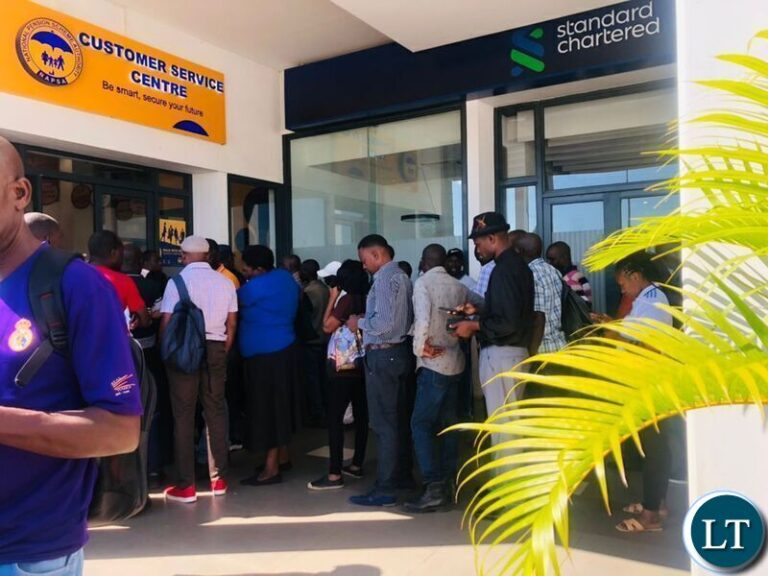
Some trade union movements have welcomed the intended increase by the government to add a 10 percent notch on the current 20 percent partial withdrawal, under the National Pensions Schemes Authority (NAPSA).

Zambia Union of Government and Allied Workers (UG) president, Muyaywa Kabisa indicated that any efforts aimed at ensuring that government employees have an opportunity to engage in investment ventures while in employment are highly welcome.

Speaking in an interview with the media, Dr. Kabisa stated that many employees are in so much debt because of lack of disposable incomes and this has pushed many employees into destitution.

“Where the government comes up with interventions that can ensure that employees have access to their contributions and invest those now, as a trade union movement we would highly appreciate those intentions,” Dr. Kabisa said.

He added that once employees prudently utilise partial benefits by investing and reinvesting the proceeds in ventures of their own choice, one is assured of being in control of their contributions.

He acknowledged that some would argue that this move may reduce future expectations, but that it is an assurance of one’s future financial picture rather than waiting for a pension at the end of employment.

Meanwhile, Dr Kabisa also welcomed the current reforms being implemented stating that they are well intended and all government employees will appreciate them once rolled out.

“We recently had the tripartite consultative labour council where we extensively looked at the proposal from the technical committee tasked with the assignment of ensuring that pension reforms are a success and our view is that it is a welcome move,” he added.

He therefore urged employees to focus on investment rather than consumption, stating that regardless of how little it is, their prospects of growing it in the current conducive environment is high.

And the Federation of Free Trade Unions of Zambia Secretary General, Nelson Mwale said that the idea to empower workers is a step in the right direction.

Mr Mwale stated that the federation takes the additional 10 percent on the already existing 20 percent partial withdrawal as a positive step towards the empowerment of workers.

He however argued that the move would however benefit more, those that have served for many years compared to those that have served few years in service.

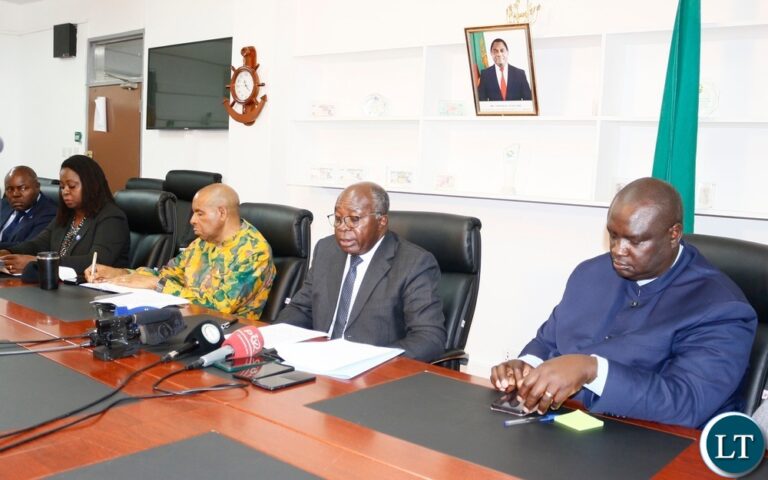
Govt hails economic gains, targets growth in 2026

1

Government says major objectives under the 8th National Development Plan have been achieved over the past four years.

Minister of Finance and National Planning Situmbeko Musokotwane cited debt restructuring as a key milestone, noting that Zambia’s default had previously discouraged investors.

He expressed satisfaction that the restructuring deal has restored confidence and attracted new investment.

Speaking at the official opening of the 2025 fourth-quarter National Development Coordinating Committee (NDCC) meeting, Dr. Musokotwane also highlighted the revival of the mining sector, which had suffered from an unstable policy environment.

Dr. Musokotwane said reversing this instability has allowed mining firms to resume operations, benefiting communities reliant on the industry.

The Minister emphasized that the economy has recorded consistent growth over the last four years.

On the cost of living, he clarified that lower inflation does not automatically translate into reduced household expenses.

Dr. Musokotwane however, stressed that increased production and collective hard work are the only sustainable solutions, while assuring that government will continue creating a conducive environment for productivity.

“But inflation coming down is not the same as the cost of living going down, the issue of the cost of living is not going to be solved by prices of commodities going down,” he noted.

“So the way we are going to solve the issue of the cost of living is by all of us working harder,” he urged.

Looking ahead, Dr. Musokotwane said the government’s 2026 agenda is focused on expanding the economy further, urging public sector workers to adopt a supportive mindset toward private enterprise.

He underscored that no country has developed without strong private sector participation.

Meanwhile, Secretary to the Cabinet Patrick Kangwa called for consolidating the gains made in 2025 and strengthening coordination across all sectors.

Mr Kangwa urged faster delivery in areas where implementation has lagged, as the 8th National Development Plan nears completion.

He emphasized the NDCC’s role in fostering synergies among stakeholders and ensuring realistic, results-driven resolutions to advance national development.

Zambia Completes IMF, ECF Programme, Economists call for sustained Reforms

1

Zambia has successfully concluded its International Monetary Fund (IMF) Extended Credit Facility (ECF) programme, marking a major milestone in the country’s efforts to restore economic stability, manage debt, and strengthen fiscal discipline.

However, economists caution that sustaining the gains achieved under the programme will require continued reforms and prudent economic management.

Financial analyst Trevor Hambayi says the ECF programme has largely met its objectives of debt restructuring and macroeconomic stabilisation.

Mr Hambayi explains that the programme has created fiscal space, enabling the government to mobilize and allocate resources more effectively.

“These resources have supported free education, the Constituency Development Fund (CDF), the Farmer Input Support Programme (FISP), and the Social Cash Transfer programme,” he said.

Meanwhile, economist Kampamba Shula says Zambia has recorded notable progress following the completion of the IMF ECF programme, citing improved fiscal discipline, enhanced debt management, and restored policy credibility.

Mr Shula, however, warned that the economy is not yet fully stable and stressed the need for sustained reforms to consolidate the gains made.

He emphasised the importance of maintaining fiscal discipline, predictable tax policies, and controlled government spending to ensure long-term economic stability.

Mr Shula further noted that Zambia must accelerate efforts to diversify its economy beyond copper and strengthen energy reliability.

“Zambia needs to continue reforms, diversify away from copper, ensure reliable energy supply, and strengthen fiscal management. Strong institutions will be key to achieving this,” he said.

The economist identified falling copper prices, climate-related shocks, and political overspending during election periods as major risks that could undermine investor confidence and economic stability.

“Any of these risks could undermine confidence, trigger currency volatility, and push up inflation. Consistency and transparency will be key,” he said.

Mr Shula also praised reforms under the revised Banking and Financial Services Act, noting that stronger oversight and the introduction of deposit insurance have improved transparency and boosted confidence in Zambia’s banking sector.

“Deposit insurance reassures households and businesses that their money is safe, and this aligns with Zambia’s IMF programme targets,” he said.

He added that Zambia has met most of the IMF’s performance benchmarks, placing the country on a positive reform trajectory as it heads into 2026.

PF Still Alive, Mundubile No Longer One of Us — Kapata

Patriotic Front acting national chairperson Jean Kapata says political change in Zambia in the 2026 general elections is inevitable, insisting that the former ruling party remains intact despite internal leadership disputes and the emergence of rival political formations.

Speaking in an interview with The Mast, Kapata said Zambians should not be intimidated or discouraged by what she described as attempts to weaken the PF through state-backed interference, legal battles, and political manoeuvres.

She said no amount of pressure, intimidation, or schemes would derail the resolve of Zambians to vote out the United Party for National Development (UPND) on August 13, 2026.

Kapata said the PF leadership is fully aware that the party is unlikely to be restored to its previous legal standing ahead of the elections, alleging that government influence has played a role in preventing the party from reclaiming full control of its structures.

She argued that the UPND fears the Patriotic Front and is operating under the belief that retaining power depends on weakening the opposition through control of political and legal processes.

According to Kapata, the situation surrounding the PF is not simply a matter of internal disputes but a broader political struggle involving what she described as state machinery being deployed to dismantle the former ruling party.

She said the PF remains alive in the hearts and minds of many Zambians and should be viewed as a political movement rooted in public support rather than a private organisation controlled by a few individuals.

Kapata said the PF leadership is working to reorganise the party, select a leader, and determine the political vehicle under which it will contest the 2026 general elections.

She appealed to PF members and sympathisers not to lose confidence, urging them to remain committed to the party and its leadership despite ongoing political and legal challenges.

Kapata further addressed the election of Mporokoso Member of Parliament Brian Mundubile as president of the Tonse Alliance, stating that his decision to align himself with the alliance amounts to self-expulsion from the Patriotic Front.

She said Mundubile cannot continue to associate with an entity that has distanced itself from the PF while still claiming PF membership or identity.

Kapata said Mundubile should cease using the name of late former president Edgar Chagwa Lungu in his political activities, arguing that invoking Lungu’s legacy while operating outside PF structures is misleading.

She said the PF leadership wishes Mundubile well in his new political role but maintains that his actions place him outside the Patriotic Front.

Kapata called on PF structures across the country to respect official party communications and remain aligned with acting party president Given Lubinda, whom she described as the legitimate leader of the party.

She warned PF members against being swayed by rival groups or individuals whom she accused of using the party’s name to confuse supporters and advance personal political ambitions.

Kapata said the PF remains operational and politically relevant despite setbacks, expressing confidence that the party will present a serious challenge in the 2026 general elections.

She reiterated that political loyalty within the PF should remain anchored to its recognised leadership and urged members to remain focused on the party’s broader mission and electoral prospects.

Kapata concluded that regardless of whether the party regains full legal control of its structures, the Patriotic Front remains a living political force driven by public support.a

Government Sustains Fiscal Discipline Despite Economic Pressures

The Zambian government has maintained fiscal discipline as part of ongoing efforts to stabilise public finances, manage debt levels, and support broader economic recovery, according to information published in the Times of Zambia.

Authorities say government spending has remained under control despite economic pressures, with fiscal consolidation forming a key pillar of national economic policy. Officials from the Ministry of Finance and National Planning have indicated that budget management remains guided by revenue performance, debt sustainability objectives, and commitments under ongoing economic reform programmes.

According to the report, the government has continued to implement measures aimed at containing expenditure, improving domestic revenue mobilisation, and strengthening public financial management systems. These measures are intended to reduce reliance on borrowing while ensuring priority sectors continue to receive funding.

The Treasury has stated that fiscal discipline remains essential to maintaining macroeconomic stability, supporting investor confidence, and sustaining Zambia’s engagement with international financial institutions. Government officials say disciplined fiscal policy helps create a stable environment for private-sector growth, job creation, and long-term development.

Authorities have also highlighted efforts to improve efficiency in public spending, including tighter controls on non-essential expenditure, improved procurement oversight, and strengthened monitoring of budget implementation across ministries and government agencies.

According to the Times of Zambia, fiscal discipline has been maintained even in the face of economic challenges such as drought impacts, rising global commodity price volatility, and pressures on public service delivery. Officials say the government has sought to balance expenditure control with continued investment in social services, infrastructure, and economic support programmes.

The Ministry of Finance has indicated that fiscal management reforms are being aligned with broader debt restructuring efforts and economic recovery strategies. These reforms include improved tax administration, digitalisation of revenue collection systems, and enhanced compliance measures to broaden the tax base.

Authorities say maintaining fiscal discipline remains critical to safeguarding economic stability and preventing unsustainable accumulation of public debt. The government has also emphasised the need to manage fiscal risks linked to state-owned enterprises, public guarantees, and contingent liabilities.

The report further notes that fiscal discipline plays a central role in Zambia’s engagement with international lenders and development partners. Government officials have reiterated commitments to meeting fiscal targets under existing financial support arrangements while pursuing policies aimed at strengthening domestic econaomic resilience.

According to Treasury officials, fiscal consolidation efforts are designed not only to stabilise public finances but also to create room for targeted spending on development priorities such as health, education, agriculture, and infrastructure.

The government has also reiterated its intention to improve transparency and accountability in public finance management, including timely publication of budget performance reports and enhanced parliamentary oversight of public expenditure.

Authorities have said continued fiscal discipline supports Zambia’s broader goal of sustaining economic recovery, strengthening investor confidence, and improving the country’s creditworthiness over time. Officials have also pointed to the importance of prudent fiscal management in cushioning the economy against external shocks.

As Zambia continues to implement economic reforms, government leaders have maintained that disciplined fiscal policy remains essential to supporting macroeconomic stability, debt sustainability, and inclusive economic growth.

Davies Mwila Claims PF Now Exists in Name Only

3

Opposition political figure Davies Mwila has claimed that Patriotic Front (PF) acting president Given Lubinda has been left in charge of what he described as an empty and weakened political structure, arguing that the party has lost much of its organisational strength, grassroots influence, and political relevance.

Mwila said Lubinda remains the leader of PF in title, but the party no longer commands the authority, cohesion, or national support it once enjoyed when it was in government. He argued that internal divisions, defections, leadership disputes, and prolonged legal battles have hollowed out the party’s operational capacity.

According to Mwila, PF’s current condition reflects years of unresolved internal conflict that have fractured the party’s unity and weakened its credibility among supporters. He said persistent infighting over leadership control, alliance positioning, and strategic direction has left the former ruling party fragmented and struggling to function as a unified political force.

Mwila claimed that many former PF members and grassroots supporters have distanced themselves from the party due to ongoing instability and lack of clear leadership direction. He argued that this erosion of internal cohesion has significantly reduced PF’s ability to mobilise voters, organise nationwide political structures, and present itself as a credible alternative in national politics.

He said Lubinda’s leadership has been overshadowed by internal court disputes, contested authority over party organs, and divisions involving the Tonse Alliance, all of which have contributed to weakening PF’s public image. Mwila argued that these conflicts have diminished the party’s influence and created uncertainty among its traditional support base.

According to Mwila, PF’s organisational framework has been stripped of much of its former strength, leaving Lubinda presiding over what he described as a “shell” of a once-dominant political movement. He argued that leadership struggles and legal wrangles have hollowed out the party’s structures at both national and grassroots levels.

Mwila further suggested that PF’s decline has affected the broader opposition landscape, shifting political dynamics and reducing the party’s ability to shape national discourse. He said political relevance depends on uanity, discipline, strategic clarity, and consistent engagement with citizens, qualities he claimed PF currently lacks.

He criticised what he described as PF’s failure to rebuild internal unity following its electoral defeat, stating that the party missed opportunities to restructure, renew leadership, and restore confidence among supporters. Mwila argued that without meaningful internal reform, PF risks further political marginalisation.

Mwila also commented on the broader political environment, suggesting that PF’s internal turmoil has contributed to voter frustration and confusion among citizens who once aligned themselves with the party. He said ongoing disputes over leadership legitimacy have weakened trust and reduced PF’s capacity to act as a strong opposition force.

He maintained that opposition parties must strengthen internal governance, discipline, and organisational clarity if they are to remain effective and credible in Zambia’s political landscape. According to Mwila, political parties that fail to address internal dysfunction risk losing relevance and public confidence.

Mwila concluded by reiterating that Lubinda remains in charge of a diminished party structure and that PF’s future depends on its willingness to confront internal weaknesses, rebuild unity, and reconnect with grassroots supporters. He said meaningful political recovery would require leadership renewal, structural reform, and a renewed commitment to organisational discipline.

Cohesion Over Conflict: Mundubile and the Politics of Purpose

9

Cohesion Over Conflict: Mundubile and the Politics of Purpose
By Dr Mwelwa

Brian Mundubile’s KBN interview projected a composed leadership style marked by restraint, strategic patience, and emotional intelligence. He avoided political theatrics while acknowledging the national mood, signalling a readiness to lead through calm, dialogue, and confidence in institutions rather than spectacle or provocation.

He framed unity not as a hollow slogan but as a serious responsibility. Mundubile warned that careless public rhetoric can deepen existing fractures, urging leaders to read the national temperature carefully, discipline their language, and resolve disagreements privately instead of escalating them in the public arena.

Rather than denying political tensions, he contextualised them. He described opposition convergence as a deliberate, long-term process in which parties waited for stability before formal cooperation. This framing countered claims of opportunism or desperation, positioning engagement as strategic and principled rather than reactive.

His defence of the early congress reframed suspicion into pragmatism. Mundubile grounded the decision in Zambia’s constrained democratic environment, legal uncertainties, and the need to protect participation from procedural obstruction, presenting it as an organisational safeguard rather than a power grab.

He also stressed that competition does not have to generate hostility. By highlighting reconciliation, respectful conduct, and peaceful supporter behaviour, he projected a model of democratic maturity that challenges Zambia’s often confrontational political culture.

On Tonse and PF relations, Mundubile leaned on institutional clarity and historical intent. He sought to calm anxieties by affirming alliance autonomy, transparent rules, and a unified presidential selection process not dictated by entitlement or factional pressure.

When questioned about his leadership ambitions, he anchored his motivation in national crisis. He identified division and poverty as urgent challenges, proposing constitutional fidelity, inclusive governance, and leadership by example as immediate tools for national healing.

His economic outlook focused on youth empowerment through industrialisation rooted in existing livelihoods. He positioned government as an enabler, investor, and market-maker, shifting away from the traditional posture of distant regulation or empty political promises.

By citing practical cases such as poultry farming, tomato production, and produce aggregation, he exposed policy gaps in storage, value chains, and procurement. He argued that coordinated state intervention could convert waste into wealth and open sustainable pathways for young entrepreneurs.

Overall, the interview presented Mundubile as a steward-leader who prioritises cohesion over conflict, institutions over impulse, and solutions over slogans. It positioned calm competence, disciplined leadership, and purposeful governance as a credible alternative ethic for Zambia’s political future.

Vote Counting Continues in Kasama Mayoral By-Election

2

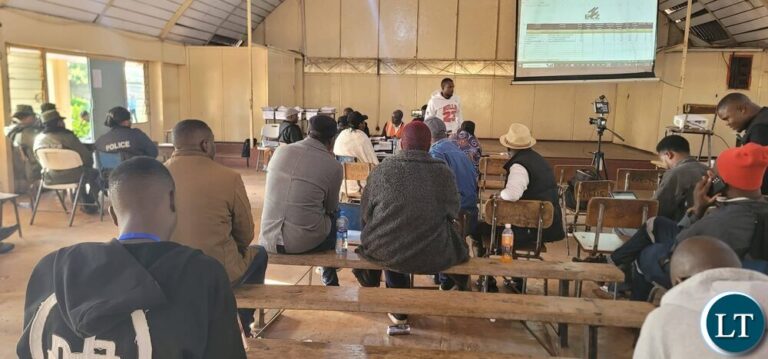
Vote counting is ongoing in the Kasama mayoral by-election, with results continuing to arrive from various polling stations. Counting is currently taking place at Kasama Boys Secondary School and Kasama College of Education.

In Kasama Central Constituency, results from 67 polling stations indicate that Forum for Democracy and Development (FDD) candidate Peter Yuda is in the lead with 5,000 votes. He is followed by UPND’s Bywell Simposya, who has garnered 4,775 votes.

Other candidates in the constituency include Aaron Zimba of the Citizens First Party with 1,274 votes, Joseph Mubanga of the Socialist Party with 580 votes, Mukuka Kapambwe of UPPZ with 538 votes, and Mary Bukisa of the New Focus Party with 114 votes.

Meanwhile, in Lukashya Constituency, also based on results from 67 polling stations, UPND candidate Bywell Simposya is leading with 6,200 votes, followed by FDD’s Peter Yuda with 4,349 votes.

Aaron Zimba of the Citizens First Party has polled 1,349 votes, Mukuka Kapambwe of UPPZ has 863 votes, Joseph Mubanga of the Socialist Party has 829 votes, while Mary Bukisa of the New Focus Party has recorded 149 votes.

The Electoral Commission of Zambia (ECZ) has indicated that the announcement of the final results is expected by noon.

ECZ Commissioner Major General Vincent Mukanda disclosed that some results from hard-to-reach polling stations will be flown in today. He explained that delayed deployment of polling staff led to late opening of voting in those areas, although the lost time was compensated.

Kasama District has a total of 138,286 registered voters, with voter turnout projected to fall below 50 percent, largely due to adverse weather conditions experienced on polling day.

Government Moves to Finalise Burial of Former President Edgar Lungu Before August 2026 Elections

1

Government has disclosed that it is intensifying efforts to ensure that former President Edgar Lungu is laid to rest before the August 13, 2026 general elections.

Attorney General Mulilo Kabesha told Phoenix News in an interview that the matter remains a priority for government, with both legal and negotiated avenues being pursued to achieve closure ahead of the elections.

Mr Kabesha explained that on December 23, 2025, the former first family was granted permission by the Supreme Court of Appeal to lodge an appeal, with a deadline of February 11, 2026, to file a notice and grounds of appeal in the relevant court. He said government is prepared to respond should the family proceed with the appeal.

In addition to court processes, Mr Kabesha said government has continued engaging the Lungu family through negotiations aimed at reaching an out-of-court settlement.

He further disclosed that any agreement reached through the ongoing discussions would be formalised through a consent order to be filed in court. This, he said, would bind all parties, reduce the risk of future disputes, and provide a durable and enforceable resolution that respects the rule of law while offering closure to both the family and the nation.

UNILUS student dies in RTA

1

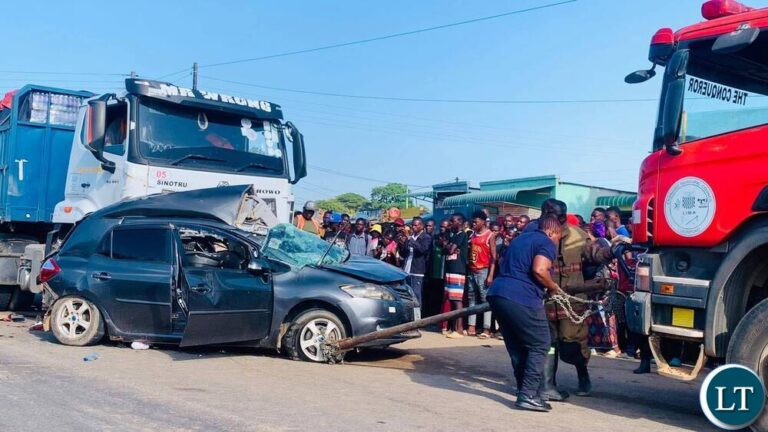
A 24-year-old University of Lusaka (UNILUS)  medical student has died in a road traffic accident which occurred at Shiliya Market along Great East road in Chongwe District.

Confirming the accident to the media, Chongwe District Hospital Administrator Catherine Nswima identified the deceased as Temwani Selemani, a male student at University of Lusaka.

Ms. Nswima disclosed that the deceased was brought to the hospital around 08:30 hours as a Brought In Dead (BID) case.

“I can confirm that we received the body of a 24 year old male student from UNILUS who was brought in at 08:30 hours and certified dead at 08:40 hours. The body has been deposited in the hospital mortuary and both the deceased’s family and school have been informed,” she said.

Ms. Nswina noted that the deceased sustained fatal injuries that may have caused the death.

Chongwe Municipal Council Public Relations Officer Nelly Nkolongo said the fatal road traffic accident involved a Toyota Auris, registration number BLC 6833 driven by Temwani Selemani and a Sino Howo truck, registration numbers CAE 100 ZM / CAD 6881 driven by an unknown driver.

She stated that the incident occurred when the driver of the Toyota Auris lost control due to excessive speed, resulting in a collision with the oncoming truck.

“Chongwe Municipal Council Fire Brigade personnel in conjunction with the Zambia Police Service, swiftly swung into action and removed the damaged vehicle from the road, thereby restoring smooth traffic flow,” she said.

Ms. Nkolongo urged all motorists to observe speed limits and drive responsibly.

Zambians More Alert to Government Lies-Kambwili

3

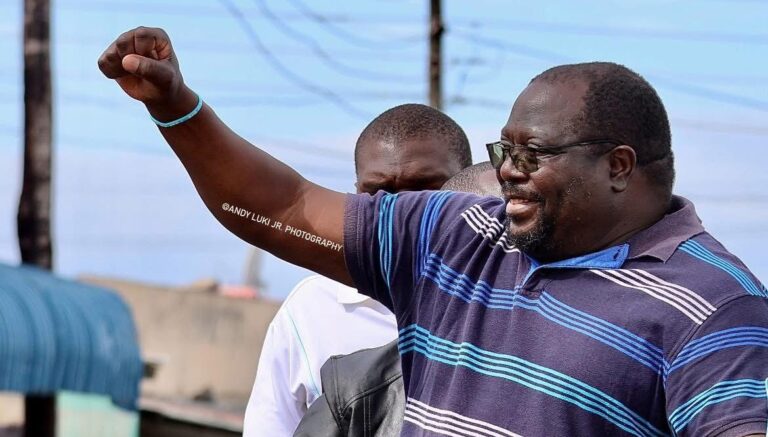
Patriotic Front (PF) central committee member Chishimba Kambwili has claimed that Zambians are increasingly aware of what he described as dishonesty within the current government, arguing that citizens are now more alert to political messaging and campaign conduct.

Kambwili stated that the people of Kasama rejected the United Party for National Development (UPND) during recent political engagements, asserting that voters were dissatisfied with what he characterised as misleading political strategies. He said the outcome reflected growing public awareness and resistance to what he described as manipulation.

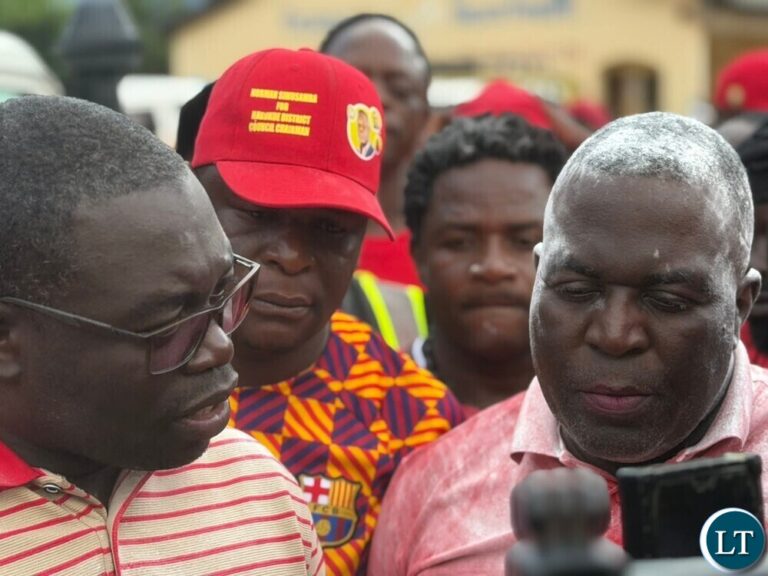
Speaking in response to allegations connected to the Kasama mayoral by-election, Kambwili rejected claims that he or his associates engaged in vote-buying or improper campaign activities. He dismissed suggestions that the distribution of food or relief items constituted inducement, insisting that such claims were part of a broader attempt to discredit him politically.

Kambwili challenged critics to produce evidence supporting accusations against him, stating that he would only accept responsibility if wrongdoing could be proven. He argued that political accusations without substantiation were intended to damage reputations rather than uphold electoral integrity.

He further stated that political actors who accept responsibility for wrongdoing should be judged based on facts rather than speculation, and maintained that he remained confident in his conduct throughout the campaign period.

Kambwili also referenced the broader Tonse Alliance, suggesting that the opposition grouping remains influential in the political landscape. He said the alliance continues to attract public support, while accusing the ruling party of struggling to maintain credibility with voters.

The PF figure argued that political trust should be earned through consistency and accountability, stating that the electorate is becoming more discerning in evaluating political promises and leadership behaviour. He maintained that citizens are no longer easily persuaded by political rhetoric that lacks tangible outcomes.

In remarks addressing the political situation in Kasama, Kambwili suggested that the UPND faced rejection because voters felt the ruling party had failed to meet expectations. He contended that dissatisfaction with governance played a role in shaping voter sentiment during the electoral process.

He also commented on divisions within opposition political circles, noting tensions involving PF and Tonse Alliance leadership. Kambwili suggested that internal political differences should not distract from broader objectives of strengthening opposition influence and presenting credible alternatives to the ruling government.

Responding to questions regarding alleged electoral misconduct, Kambwili reiterated that he had not engaged in illegal activities and challenged those making claims to present formal complaints supported by verifiable evidence. He described ongoing allegations as politically motivated attempts to weaken his standing.

He further stated that he remained committed to political engagement and dismissed suggestions that he feared investigations or scrutiny. According to Kambwili, accountability should be applied equally across political parties and not selectively targeted.

The article also notes that Kambwili declined to comment in detail on certain legal matters, stating that he preferred to review court rulings before issuing further statements. He indicated that he would respond formally after fully understanding judicial findings related to political injunctions involving party officials.

Kambwili concluded by stating that political credibility depends on honesty and respect for voters, adding that he believes the public increasingly recognises inconsistencies in government communication.