Monday, June 8, 2026
14.8 C
Lusaka
Home Blog Page 200

VEEP encourages volunteer nurses at UTH

0

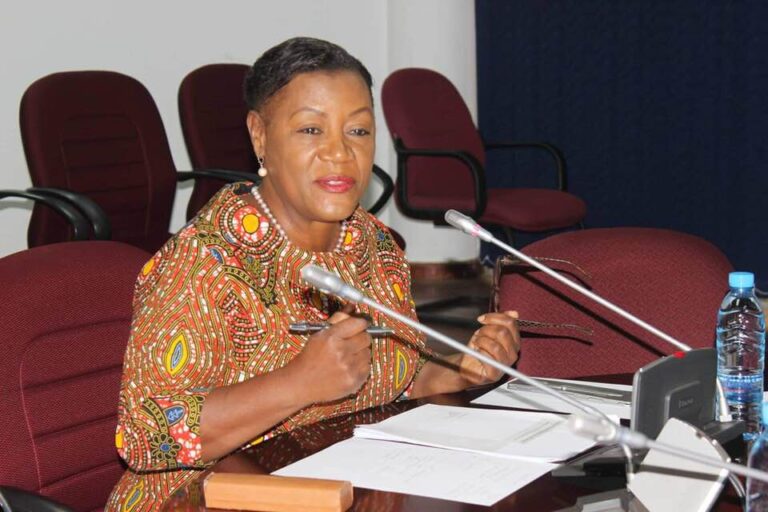
Vice President Mutale Nalumango has encouraged nurses volunteering at the University Teaching Hospital (UTH) to continue serving the community with dedication and commitment.

The media reports that Mrs Nalumango urged the volunteers not to tire but rather to continue offering their services to the people with diligence.

She encouraged the volunteers to remain strong and focused as they discharge their duties.

Mrs Nalumango assured the volunteers that the process of recruiting staff in the Ministry of Health is in progress.

The Vice President said this shortly after presenting Christmas hampers to babies born in the early hours of today.

And speaking on behalf of the volunteers, a nurse, Gladys Munsaka, thanked the Vice President for addressing them and encouraging them to strive in their profession.

Lusaka province records gains in education

0

Lusaka Province Administration Principal Public Relations Officer, Logic Lukwanda, says government has made significant strides in the education sector in line with Sustainable Development Goal number 4, which aims to ensure inclusive and equitable quality education, while promoting lifelong learning opportunities for all, by 2030.

Mr Lukwanda says key interventions such as the school feeding programme and skills development, supported through the Constituency Development Funds (CDF) are contributing to improved access and quality in education, especially for vulnerable groups in Lusaka province.

Mr Lukwanda told the media that the introduction of the Free Education Policy, has also contributed significantly to the increased number of learners in Lusaka province, rising to 600,000 in 2025 from 400,000 in 2022.

He added that to meet the teacher pupil ratio, over 1,150 teachers have been recruited in Lusaka Province between 2022 and 2025, as well as the procurement of more than 60,000 desks, mainly through CDF and the Ministry of Education, in line with the Presidential directive that no learner should sit on the floor while in class.

Mr Lukwanda noted that the province has also recorded massive infrastructure development, including the construction of 218 classrooms, five fully-fledged secondary schools, as well as Early Childhood Education hubs and satellite centres, which are currently under construction.

“These strides reflect key development outcomes such as improved education and skills development, enhanced food, health and nutrition, improved water supply and sanitation, and reduced poverty, vulnerabilities and inequalities,” he said.

Lundazi motorbike rider loses life in RTA

0

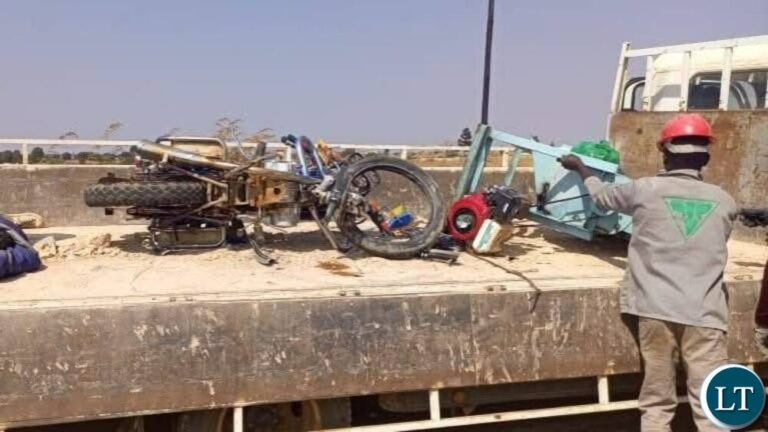
A motorbike rider has died on the spot while his two passengers have sustained internal injuries and are admitted to Lundazi District Hospital, in Eastern Province.

The admitted are male pillion passengers whose identities are unknown.

Eastern Police Chief, Robertson Mweemba has confirmed the accident and the death of Shadreck Mwale, who sustained fatal head injuries and died on the spot.

The deceased also sustained a fractured left leg.

He says the accident happened after the deceased, Shadreck Mwale, 29, of Choloka village in Lundazi district lost control of the motorbike and hit into a tree.

“The motorbike, Sanlg registration number  ARB 4257 is reported to have its front part extensively damaged,” he said.

The deceased rider was riding along Mphamba-Choloka gravel road about 10 kilometers west of Lundazi Town at Kafumenku village, today, December 25, 2025, around 07:00 hours when the accident happened.

“The body of the deceased has since been deposited into the Lundazi District Hospital mortuary awaiting post mortem examination,” Mr Mweemba indicated.

Police encourage safety during festivities

0

Muchinga Province Police Commissioner Dennis Moola has urged residents in the region to observe safety measures on the road during the festive season.

Mr Moola noted that safety measures on the road are important measures that are supposed to be observed by pedestrians, cyclists and motorists especially during the festive season.


Speaking in a phone interview with the media, the Police Commissioner said drinking and driving will not be tolerated.


“Avoid alcohol when driving and as police we are available to check if you are drunk and you will be booked,” he said.


He further said the police officers have put up snap checkpoints to capture vehicles and motorcycles that are over speeding on the roads.


The Police Commissioner however urged the residents not to give motor vehicles to people who do not have drivers license.


And District Administrative Officer Maurice Kabanda who spoke on behalf of Lavushimanda District Commissioner Terries Kunda, appealed to the residents to observe measures during this festive season saying the period often records high cases of road traffic accidents.


“We are appealing to everyone to place road safety at the center of their celebrations because during the festival season road traffic accidents tend to increase due to road users being excited which always lead to over speeding,” he said.


He further urged pedestrians to be alert and observe crossing points to avoid accidents.


Mr Kabanda however appealed to the parents and guardians to closely educate children on safety measures on the roads especially in trading centres and along major roads like the Great North Road.


He also called on residents to cooperate with Zambia Police service and Road Transport and Safety Agency (RTSA) officers who are enforcing traffic regulations during this festive season.

Copperbelt DC’s in vehicle empowerment

0

Copperbelt Province Permanent Secretary, Lawrence Mwanza has handed over six motor vehicles to District Commissioners in the province.

‎Specking during the handover ceremony, Mr Mwanza said that the vehicles will help improve mobility for DCs who constantly move to far-fetched areas.

‎He said most DCs have been facing difficulties in monitoring on-going projects in the districts, saying the vehicles will make their work easier.

‎He added that the investment in transport is part of the government’s broader agenda to decentralise and improve the performance of the public sector.

‎Mr Mwanza urged the DCs to avoid abusing the vehicles, reiterating that they should be used only for official duties.

‎”The vehicles are bought using public resources and are to be used strictly for official duties in line with government regulations.” He said.

‎Mr Mwanza explained that empowering local government officials with necessary resources such as vehicles is key to improving the impact of government services at the grassroots level.

‎Kitwe DC, Oncemore Ngonomo thanked the government for the motor vehicles as they will help them with mobility.

‎Mr Ngonomo said that the effort from the government will go a long way in helping them to do what is expected of them.

FRA Failure Leaves Disabled Farmers Without Inputs

8

FRA Failure Leaves Disabled Farmers Without Inputs

People living with disabilities in Sinda District of Eastern Province have said delays by the Food Reserve Agency (FRA) in paying farmers for maize delivered during the current marketing season have affected them more severely than other groups, leaving many unable to prepare for the next planting cycle and pushing already vulnerable households deeper into hardship.

District chairperson Ayenera Phiri said the failure by FRA to promptly clear payments had left disabled farmers without the means to buy fertiliser and seed, despite having successfully delivered maize and holding official FRA receipts. He said the delays had compounded the structural disadvantages faced by persons with disabilities in rural farming communities.

Phiri said cultivation for farmers with disabilities was already difficult because of limited access to capital, labour, and inputs, and that the non-payment for maize deliveries had worsened their situation. He said many disabled farmers relied on timely FRA payments to meet basic needs and reinvest in farming activities.

“We don’t have fertiliser this year because we took our maize to FRA but to date we have not been paid,” Phiri said, explaining that the delay had left farmers uncertain about whether they would be able to plant within the remaining window of the rainy season.

He said the situation had been made worse by the exclusion of many people with disabilities from agricultural cooperatives. According to Phiri, disabled farmers were often rejected when they attempted to join cooperatives, which limited their access to the e-voucher system used to distribute farming inputs.

Phiri said the exclusion was frequently justified on the basis that persons with disabilities were perceived as high-risk or incapable of meeting cooperative obligations. He said this perception had left disabled farmers dependent on Social Cash Transfer support while being denied access to productive farming programmes.

“In cooperatives we are rejected because of our disability, and now we don’t know how we will survive,” Phiri said.

He said the lack of FRA payments had also closed off borrowing options for disabled farmers. Phiri said lenders were unwilling to extend credit to farmers with disabilities, even when they presented proof of maize delivery and pending payment from FRA.

“Despite having FRA receipts, people are refusing to lend us money because of our physical status,” Phiri said, adding that many potential lenders believed disabled farmers would be unable to repay loans regardless of evidence to the contrary.

He said this perception had intensified the vulnerability of disabled farmers, who lacked alternative income sources or assets that could be used as collateral. According to Phiri, the inability to borrow had left many households without food security and without the means to invest in the next farming season.

Phiri said the uncertainty surrounding payment timelines had created anxiety and distress among affected farmers. He said many did not know when they would receive their money or whether the delay would extend further into the planting season.

“We don’t know when we are going to get our monies. FRA should think about us over our monies,” he said, urging the agency to prioritise payments to vulnerable groups.

He appealed to President Hakainde Hichilema to intervene and establish the cause of the payment delays, saying direct action was needed to prevent further hardship. Phiri said prompt payment would allow disabled farmers to buy fertiliser, secure seed, and make use of the remaining planting period.

“Let it give us our monies fast so that we get helped. The delay of FRA has put us in a fix,” he said.

The concerns raised by disabled farmers in Sinda reflect broader frustrations among maize producers across the country, thousands of whom have yet to be paid for grain delivered to FRA. Farmers have expressed mixed reactions to how the agriculture sector has been managed, with delays affecting preparation for the next farming season.

For farmers with disabilities, however, the consequences have been more severe due to limited coping mechanisms. Unlike able-bodied farmers who may supplement income through casual labour or alternative activities, many disabled farmers depend almost entirely on farming proceeds and social support.

Phiri said the continued delay threatened to reverse gains made through inclusive agriculture and social protection programmes. He warned that if disabled farmers missed the planting season, they risked prolonged food insecurity and deeper dependence on welfare support.

He said the situation called for urgent intervention to ensure that vulnerable groups were not left behind in agricultural policy implementation. According to Phiri, addressing the payment delays would not only restore confidence among disabled farmers but also affirm government commitments to inclusion and equity.

Zambia Ends 2025 Between Progress and Pressure

8

Zambia Ends 2025 Between Progress and Pressure

From the Inbox

Zambia closes 2025 under the weight of sharply competing realities. Official optimism, festive goodwill messages, and endorsements of government performance sit alongside audit red flags, economic strain, governance disputes, and public unease that has not dissipated with the calendar year.

At community level, traditional leadership has openly expressed satisfaction with the direction of government policy, particularly in social welfare, education access, and decentralised development. Expanded social cash transfers, community development projects, and increased local participation in decision-making have been cited as evidence that public policy is no longer confined to Lusaka but is increasingly visible in rural and peri-urban Zambia. These assessments present a picture of a state regaining relevance in everyday life.

However, this optimism is sharply counterbalanced by institutional findings that raise serious questions about financial discipline and administrative capacity. Recent audit reviews show that 17 local authorities executed procurement transactions valued at more than K68 million without obtaining mandatory tax clearance. The transactions involved goods and services procured under public funds, yet bypassed procedures meant to ensure compliance, transparency, and accountability.

The findings have brought renewed scrutiny to the management of decentralised funds, especially at a time when allocations under the Constituency Development Fund have increased significantly. While communities may see visible infrastructure and empowerment projects, the absence of strict compliance mechanisms exposes the system to misuse, inefficiency, and potential abuse. The issue is not the existence of development, but whether it is being delivered within the law.

The contradiction between policy praise and procedural failure underscores a deeper governance challenge. Development delivery and institutional discipline are advancing unevenly, creating a situation where progress in one area is undermined by weakness in another. This tension has become a defining feature of the current governance environment.

Economic indicators add further complexity. Official figures show that the economy recorded moderate growth in the third quarter of the year, while inflation closed at just over 11 percent. These figures have been presented as evidence that stabilisation efforts are beginning to take effect following prolonged economic distress.

Yet the lived experience of households tells a different story. Food prices remain high, electricity supply is unreliable, and alternative energy sources such as charcoal have become increasingly expensive. Salaries for many workers have stagnated, while deductions, loan repayments, and statutory obligations consume a large share of monthly income. For many families, disposable income has effectively disappeared.

The Christmas season has magnified this reality. Traditionally a period of relief and social cohesion, the festive season has instead been marked by restraint. Households have reduced travel, simplified meals, and postponed celebrations altogether. Markets are stocked, but purchasing power is weak. Traders watch goods remain unsold, while consumers calculate survival rather than celebration.

This economic pressure has wider implications. Informal traders and small businesses that rely on festive spending to stabilise cash flow have been hit hard. The slowdown in consumption reinforces income insecurity, creating a feedback loop that limits recovery at community level despite positive macroeconomic signals.

Political and governance debates have also intensified. The enactment of recent constitutional amendments has been framed by authorities as a historic step toward inclusive governance and broader representation. Supporters highlight provisions related to proportional representation and expanded participation as milestones in democratic development.

However, critics argue that the process was rushed, insufficiently consultative, and dismissive of earlier judicial guidance on public participation. The result has been a polarised national conversation focused not only on the content of the amendments, but on the legitimacy of how they were adopted. Rather than closing debate, the amendments have entrenched it.

Electoral integrity concerns have further sharpened the political climate. With by-elections looming and the general elections approaching, warnings have been raised against the misuse of public resources, inducements disguised as development, and blurred boundaries between governance and campaigning. These concerns reflect longstanding anxieties about fairness and neutrality in the electoral process.

Public anxiety has also been fuelled by crime, court cases, and social justice concerns that have dominated recent reporting. Allegations involving abuse of authority, violent crime, and domestic disputes have placed renewed pressure on law enforcement and the justice system to demonstrate impartiality and effectiveness. These cases contribute to a broader sense of institutional strain.

Meanwhile, public commentary sections have revealed a citizenry that is increasingly vocal, divided, and sceptical. Letters and opinion pieces reflect frustration over economic hardship, governance conduct, foreign relations, civil registration processes, and unresolved national disputes. While opinions differ sharply, they share a common thread of demand for accountability, clarity, and dignity in public life.

Taken together, the year-end picture is one of a country balancing aspiration with anxiety. Welfare programmes are expanding, yet compliance failures persist. Economic growth is recorded, yet households remain under strain. Constitutional reform is enacted, yet legitimacy is contested. Festive goodwill exists, yet public confidence remains fragile.

As Zambia approaches 2026, the central challenge is no longer whether policies exist, but whether institutions can enforce rules, translate growth into relief, and align political reform with public trust. The year closes not with resolution, but with a clear test before the state: to ensure that progress is not only announced, but sustained, accountable, and felt where it matters most.

Constitution Treated as Executive Project, Says Kateka

Constitution Treated as Executive Project, Says Kateka

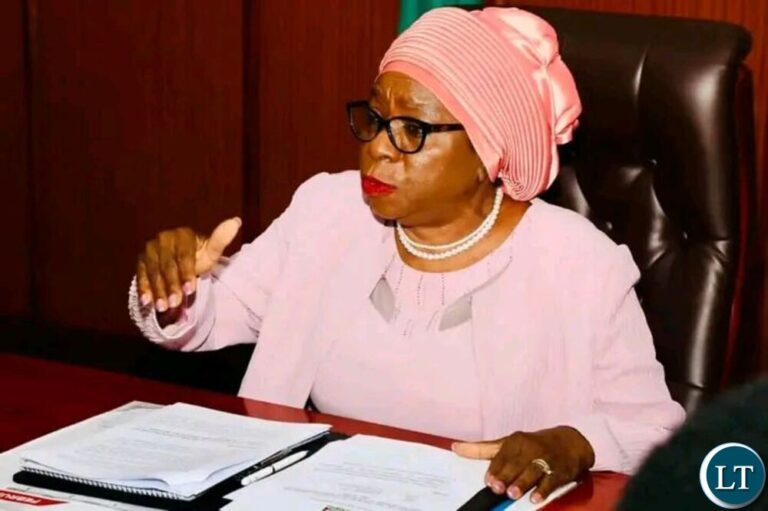
New Heritage Party president Chishala Kateka has accused President Hakainde Hichilema of treating the Constitution as a personal instrument following the enactment of Constitution Amendment Bill No. 7, arguing that the process undermined constitutional safeguards, weakened public participation, and set a troubling precedent for governance.

Kateka said the manner in which the amendment was introduced, debated, and passed reflected executive dominance over a process that should have been inclusive, consultative, and grounded in constitutional procedure. She said constitutional reform required broad national consensus and strict adherence to judicial guidance, rather than reliance on parliamentary numbers and political expediency.

She argued that the amendment process departed from established principles governing constitutional change, particularly the requirement for meaningful public consultation. According to Kateka, citizens were denied adequate opportunity to understand, interrogate, and influence changes that directly affect the country’s governance architecture.

Kateka further criticised the disregard of Constitutional Court guidance, saying the court had previously emphasised the need for extensive public participation in constitutional amendments. She said proceeding without addressing those concerns amounted to institutional defiance and weakened respect for constitutional oversight.

She said constitutional provisions were not ordinary policy instruments that could be altered at will, but foundational rules that governed the relationship between the state and citizens. According to Kateka, altering such provisions without national buy-in eroded democratic legitimacy and public trust.

Kateka accused the Executive of manipulating parliamentary processes to advance changes whose long-term implications had not been adequately examined. She said provisions relating to proportional representation were introduced in a manner that limited scrutiny and debate, depriving the public of clarity on how such changes would affect electoral outcomes and political representation.

She said the process transformed the Constitution from a shared national document into what she described as a personal project driven by executive preference. According to Kateka, this approach risked reducing constitutional governance to the discretion of those in power, rather than anchoring it in collective consent.

Kateka warned that normalising such conduct could open the door to future amendments that further centralised power, weakened checks and balances, and reduced the independence of key institutions. She said constitutional amendments should strengthen democratic safeguards, not dilute them.

She also expressed concern about the broader implications for the rule of law, arguing that when constitutional processes are perceived as politically engineered, public confidence in legal institutions diminishes. According to Kateka, citizens begin to view constitutional rules as flexible tools rather than binding constraints.

Kateka said Zambia’s constitutional history was shaped by struggle and compromise, making it imperative that changes to the document be approached with restraint and humility. She said the Constitution belonged to the people and should reflect national consensus rather than partisan interests.

She said the current approach risked polarising the country by framing constitutional reform as a contest between political camps rather than a collective national exercise. According to Kateka, this polarisation undermined the legitimacy of the amendments and heightened political tension.

Kateka also questioned the timing of the amendment, saying it occurred amid economic hardship and social strain that limited public engagement. She argued that pressing ahead under such conditions further weakened the credibility of the process.

She said the amendment had shifted focus away from pressing economic and social challenges facing citizens, drawing attention instead to political restructuring whose benefits were unclear to ordinary households. According to Kateka, constitutional reform should not distract from governance priorities that directly affect livelihoods.

Kateka said the consequences of the amendment would become clearer over time, particularly as the country moved closer to the next general elections. She warned that disputes over constitutional legitimacy could complicate electoral processes and undermine confidence in outcomes.

She said restoring confidence required recommitting to inclusive governance and respect for institutional boundaries. According to Kateka, future constitutional reforms should be guided by dialogue, transparency, and strict adherence to legal standards.

Kateka maintained that constitutional authority derived from the people, not from political office. She said leaders were custodians rather than owners of the Constitution and should exercise that responsibility with restraint.

The criticism adds to ongoing public debate over the implications of Constitution Amendment Bill No. 7 and the broader direction of governance reforms. As the country adjusts to the changes introduced by the amendment, questions about process, legitimacy, and institutional balance continue to shape political discourse.

PF Presidential Hopeful Says He Will Not Be Silenced

10

PF Presidential Hopeful Says He Will Not Be Silenced

Patriotic Front presidential aspirant Makebi Zulu has said he poses a serious political threat to President Hakainde Hichilema, accusing the government of orchestrating sustained propaganda and intimidation efforts aimed at weakening his political standing ahead of the 2026 general elections.

Zulu said the growing focus on his activities and the narratives surrounding his role in the burial arrangements of former president Edgar Lungu were politically driven and intended to marginalise him from national political engagement. He said the government’s conduct reflected insecurity rather than a genuine concern for legality or order.

According to Zulu, the state has deliberately sought to create circumstances that would remove him from active participation in domestic political affairs by pushing the narrative that he should remain outside the country during the mourning period. He said this approach was designed to sideline him at a time when political mobilisation was intensifying.

Zulu said the government had relied on what he described as coordinated messaging to portray him as a subject of possible arrest, despite the absence of any offence committed on his part. He maintained that such narratives were meant to justify potential state action against him while shaping public perception in advance.

He said his involvement in matters relating to the burial of the late former president was motivated by respect for the grieving family and the need to ensure dignity in the process. Zulu said he had acted within the law at all times and rejected claims that his role warranted police intervention or judicial action.

Zulu said there was no legal basis upon which he could be arrested, arguing that supporting a bereaved family did not constitute a criminal act. He said attempts to associate him with wrongdoing were part of a broader strategy to intimidate opposition figures.

He accused the United Party for National Development (UPND) government of being heavy-handed in its handling of the burial impasse, saying it had become more concerned with asserting political control than with respecting family wishes and established norms. According to Zulu, the administration was treating the burial dispute as a political contest rather than a solemn national matter.

Zulu said the approach mirrored the government’s conduct during the passage of Constitution Amendment Bill No. 7, where he said political victory was prioritised over consensus and public sentiment. He argued that the same determination to “win” was now being applied to the burial issue, with little regard for dignity or reconciliation.

He further accused the government of promoting misinformation, including allegations that the former president may have been poisoned by members of his own family. Zulu said such claims were reckless, unsubstantiated, and had caused unnecessary distress while prolonging the burial process.

According to Zulu, these allegations were used to justify calls for an inquest and demands for further examinations in South Africa. He questioned why such measures were being pursued when there was no credible evidence to support claims of foul play.

Zulu also criticised the decision to issue a subpoena to Tasila Lungu, saying it demonstrated how far misinformation had influenced official actions. He said the move to summon her and demand DNA testing was excessive and contributed to delays in resolving the burial arrangements.

He said the government’s conduct amounted to persecution rather than concern, arguing that the late former president was being disrespected even in death. Zulu said the administration’s actions contradicted its public claims of wanting to resolve the impasse amicably.

Zulu warned that the politicisation of the burial issue risked deepening national divisions and undermining public trust in state institutions. He said the use of state machinery to pursue political objectives weakened democratic norms and eroded confidence in governance.

He said Zambians were closely observing how the government handled the matter and would draw conclusions about its commitment to fairness, dignity, and the rule of law. According to Zulu, the episode had become symbolic of broader governance challenges facing the country.

Zulu said he remained undeterred by the pressure and would continue to participate in national affairs. He said attempts to isolate or intimidate him would not prevent him from engaging with issues he considered just and necessary.

He maintained that any effort to arrest or silence him would only reinforce perceptions of intolerance toward opposition voices. Zulu said the political future of the country would ultimately be shaped by how leaders conducted themselves during moments of national sensitivity.


Economic Woes Have Dampened Christmas Frenzy

1
Economic Woes Have Dampened Christmas Frenzy

By Dr Mwelwa

Christmas has arrived in Zambia under conditions of pronounced economic strain, with many households facing depleted food supplies, limited income, and reduced purchasing power, significantly altering the scale and character of festive celebrations across the country.

In both urban and rural communities, families entered the festive period with empty kitchens, delayed or unpaid salaries, and diminished savings. For some workers, expected December earnings did not materialise at all, while others were affected by company closures and retrenchments linked to a difficult operating environment. The result has been widespread uncertainty over how households would mark a season traditionally associated with relief and togetherness.

Christmas in Zambia has historically not been defined by excess but by modest reassurance. In previous decades, even amid hardship, families relied on small but meaningful traditions that softened economic difficulty. Shared meals, pooled resources, and predictable income allowed households to plan modest celebrations that preserved dignity despite limited means.

During the 1980s, economic challenges were widespread, yet Christmas remained a moment when scarcity was managed collectively. A single chicken could serve several households, and basic refreshments became communal events. While poverty existed, social cohesion helped maintain a sense of humanity and shared endurance.

The 1990s brought structural adjustment and significant social pain, but income predictability allowed families to retain some control over seasonal planning. Salaries, though modest, arrived on time. Travel to family homes remained possible, and staple foods were generally accessible. The festive season continued to function as a brief pause from sustained economic pressure.

This year, however, the festive period has been marked by a different set of conditions. Wages have largely stagnated while prices for essential goods have continued to rise. Payslips for many workers arrive already reduced by statutory deductions and loan repayments, leaving little disposable income. For households servicing multiple obligations, Christmas spending has become a calculation with limited options.

Food prices have emerged as a central constraint. Staple items that form the basis of festive meals have become increasingly unaffordable for low- and middle-income households. In many homes, traditional Christmas dishes have been replaced with simplified meals or postponed altogether. The choice between food, transport, and rent has become a defining feature of household decision-making during the season.

Energy challenges have compounded these pressures. Inconsistent electricity supply has disrupted cooking and food storage, forcing families to rely on alternative energy sources. Charcoal prices, however, have risen sharply, placing additional strain on already stretched budgets. In some households, the inability to secure affordable energy has directly limited the ability to prepare festive meals.

Markets remain stocked, but purchasing power has declined. Traders report reduced movement of goods typically associated with end-of-year celebrations. Fresh produce, meat, and household items are available, yet many customers are unable to buy them. The disconnect between supply and affordability has affected both consumers and small-scale vendors who rely on seasonal demand.

The impact has extended to workers in essential public services. Teachers, nurses, police officers, and other civil servants report difficulty affording even basic Christmas meals. For many, debt obligations now absorb a significant portion of monthly income, reducing flexibility during periods traditionally associated with higher spending.

Household dynamics have also shifted. Parents approach Christmas planning with caution, prioritising essential expenses and deferring non-critical purchases. Children’s expectations, shaped by previous festive experiences, often meet silence or careful explanations as families manage limited resources. Anxiety has replaced anticipation in many homes.

Religious institutions have observed similar trends. Church attendance remains high, but offerings have declined as congregants balance spiritual commitments against immediate household needs. Some community celebrations have been scaled back or cancelled entirely, reflecting broader financial constraints.

The economic narrative presented in official statements has contrasted sharply with lived experience. While macroeconomic indicators point to growth and recovery, households report little change in daily conditions. Statistical improvements have yet to translate into tangible relief at the domestic level, particularly in relation to food security, energy costs, and income stability.

Small businesses that depend on festive spending have also felt the slowdown. Reduced consumer activity has limited turnover for vendors of food, clothing, and household goods, reinforcing income constraints within communities. The seasonal boost that traditionally supports informal traders has been significantly weakened.

Culturally, Christmas holds social and theological significance beyond consumption. It represents a moment of collective pause and reflection. This year, however, observance has been shaped by restraint rather than celebration. Many families have opted for quiet, minimal observances, substituting larger gatherings with private moments.

Across communities, the festive season has become a reflection of cumulative economic pressure rather than temporary relief from it. While Christmas has arrived as scheduled, its character has been reshaped by conditions that limit dignity, choice, and communal expression.

For many Zambians, the 2025 Christmas season has underscored the gap between economic indicators and household reality, highlighting how sustained financial strain can erode not only purchasing power but also the social rhythms that define communal life.

UPND Underestimates Public Discontent, Says Siamunene

1

UPND Underestimates Public Discontent, Says Siamunene
New Focus Party leader Richwell Siamunene has warned that the United Party for National Development (UPND) faces a significant electoral setback in the coming year if it continues to underestimate public dissatisfaction and the depth of political discontent among citizens, insisting that Zambians are ready for a change of government regardless of the state of opposition unity.

In an interview with The Mast, Siamunene said the ruling party was making a strategic miscalculation by assuming that a divided opposition would translate into political safety ahead of the 2026 general elections. He argued that political change in Zambia had historically been driven by the will of the electorate rather than by formal alignments among opposition parties.

Siamunene maintained that the prevailing mood in the country reflected widespread frustration rooted in lived experiences rather than political messaging. He said hunger, unemployment, rising costs of living, and prolonged economic hardship had reshaped public attitudes and eroded confidence in the current administration.

“Change is coming, and anyone who thinks it will be a tall order should be a bad student of history,” Siamunene said, arguing that visible signs of dissatisfaction were evident in daily interactions with citizens across the country.

He described Zambia’s current challenge as a leadership crisis rather than a purely economic one, saying governance failures had compounded economic strain and intensified social pressure on households. According to Siamunene, the absence of decisive and credible leadership had left citizens feeling abandoned and disillusioned.

“The only war the country and its people are facing is a leadership crisis,” he said, adding that many Zambians were prepared to seek change at the ballot box as a result.

Siamunene said the year ending December 31, 2025, had been the most painful period for citizens in recent memory, marked by prolonged electricity outages, uncertainty in livelihoods, and what he described as social stagnation. He said households had endured extended hours without power, disrupting small businesses, domestic routines, and income-generating activities.

He dismissed recent government efforts to increase daily electricity supply hours, saying the measures came too late to reverse public frustration. Siamunene argued that the adjustment to a 10-hour power supply schedule did not address the underlying causes of the energy crisis and failed to provide reassurance that the situation was sustainable.

“The 10-hour electricity supply was too late,” he said, adding that government had not adequately explained the fundamentals behind the improvement or outlined how long the arrangement would last.

According to Siamunene, prolonged load shedding had had consequences beyond inconvenience, affecting productivity, household stability, and the broader economy. He said the cumulative impact of these disruptions had deepened public resentment toward the ruling party.

Siamunene warned that dismissing these grievances or assuming that dissatisfaction would not translate into electoral consequences could prove costly for the UPND. He said political history in Zambia showed that ruling parties often underestimated the electorate’s capacity to effect change, particularly during periods of sustained hardship.

He further argued that opposition strength should not be measured solely by party structures or alliances but by the extent to which citizens felt compelled to seek an alternative. He said the electorate’s determination to change leadership mattered more than the organisational coherence of opposition parties.

“What matters most is the willpower of the people who want change, not individual political organisations,” Siamunene said.

He said even individuals within government circles were aware of the political risks the ruling party faced but continued to act as though public dissatisfaction posed no real threat. According to Siamunene, this complacency ignored historical patterns in which governments lost power despite fragmented opposition movements.

Siamunene likened the current social and economic conditions to displacement, saying citizens were living as though they were refugees despite the absence of war. He attributed this situation to economic pressure, governance challenges, and policy decisions rather than external shocks.

He said rising living costs, job scarcity, and uncertainty had reshaped daily life for many households, leaving families struggling to cope and eroding confidence in political leadership. According to Siamunene, these realities would weigh heavily on voter behaviour as the country moved closer to the next general elections.

Siamunene said communication failures had further widened the gap between government and citizens, arguing that official messaging had failed to resonate with people experiencing hardship. He said the lack of transparency and consistent engagement had contributed to mistrust and scepticism toward government initiatives.

He warned that the coming electoral period would test whether the ruling party had accurately assessed public sentiment or continued to rely on assumptions about opposition weakness. According to Siamunene, credibility, leadership conduct, and responsiveness to public concerns would play a decisive role in shaping the political outcome.

Siamunene said Zambians had endured what he described as unnecessary pain over the past year and would ultimately judge the government based on their experiences rather than promises or political rhetoric.

Govt, Chiefs speak unity, inclusive development

2

Government has reaffirmed its commitment to working closely with traditional leaders, as key partners in national development, governance and national unity.

Minister of Information and Media who is also Chief Government Spokesperson Cornelius Mweetwa says traditional leaders remain critical stakeholders in helping government engage citizens, promote peace and advance inclusive development across the country.

The Minister has emphasised that the government recognises that leading the country is a shared responsibility that requires collaboration with traditional leaders, the church, civil society organisations and other non-state actors who complement government efforts, especially in communities where the state has limited reach.

The media reports that Mr Mweetwa was speaking when Senior Chief Puta of the Bwile people of Chiengi district in Luapula province paid a courtesy call on him.

He described the visit as a symbol of the collective role that traditional leaders have towards supporting national governance and development efforts.

The Minister stressed that chiefs are unifying figures who transcend political cycles and play a vital role in guiding communities, preserving peace and promoting national cohesion.

Mr Mweetwa also appealed to traditional leaders to help the government explain recent constitutional amendments under the recently enacted Act Number 7 of 2025, of the Constitution of Zambia, noting that the reforms are aimed at strengthening inclusivity and representation, not personal or political interests.

And Senior Chief Puta added that development should never be driven by tribalism or political differences but should benefit all Zambians equally.

The traditional leader further called on his fellow chiefs to work closely with the government, stressing that the traditional leadership must remain nonpartisan and focused on development.

Chief Puta also warned against the politicisation of key development programmes such as the free education and the Constituency Development Funds (CDF) empowerment, which he said is visibly improving livelihoods in rural areas

The traditional leader said free education has removed one of the biggest barriers that previously forced many children, especially girls out of school due to lack of financial resources.

Chief Puta further appealed for increased CDF allocations, citing rising population pressure and growing development needs in constituencies.

Govt open to progressive economic development dialogue

0

President Hakainde Hichilema’s Political Advisor, Levy Ngoma, says that the government is open to economic development, peace, plus interaction for serious business that leads to development in line with the national agenda.

Mr Ngoma was speaking at State House today in response to Solwezi-based youth activists who walked over 600 kilometers from Solwezi to Lusaka in a walk for peace and unity campaign.

He says President Hakainde Hichilema is cognizant of the fact that the government will construct a public university and a hospital in Solwezi, in Northwestern Province, as part of the presidential projects, following the government development agenda.

Mr Ngoma who commended the youths for undertaking the walk in solidarity for peace and unity, highlighted that State House as well as government have an open door policy for peace and dialogue for all.

He assured the youth team of the government’s open door policy, noting that their message of peace and unity will be delivered to the President promptly.

He added that work on various road networks is currently underway, emphasising that developmental projects across the country are ongoing, noting that the youths should continue on the path of patriotism.

And speaking at the same meeting, Ministry of Youth, Sports, and Arts, Permanent Secretary Kangwa Chileshe, observed that young people risked everything by participating in a peace and unity campaign just to be heard, citing that they deserve a voice in Parliament as stipulated in bill seven.

Earlier, in his remarks, Youth activist team leader John Kimba commended the government for the various policies initiated, which he believes exemplify economic transformation.

He also denounced any form of tribal remarks from people, emphasising that peace, unity and dialogue are fundamental pillars of a nation, hence their walk to Lusaka.

Another member of the team, Gaharaharashim Mpunuyawa, explained that the self-sponsored journey which started on December 4, 2025, to Friday 19, 2025, was not easy healthwise, as it was draining, saying that they endured the tough journey for the sake of the peace and unity campaign.

Chilanga Council Invests Over K4 Million in Road Rehab

0

Chilanga Town Council has allocated over four million Kwacha for road rehabilitation and maintenance across the district from January to December 2025, funded through the Vehicle Licensing Fund.

During a special presentation at the Provincial Development Coordinating Committee (PDCC) meeting, Building Inspector Tamara Namonje said that K715, 491.56 was used to patch potholes along a 6-kilometre stretch of Kasupe Road in Kasupe Ward, with the work now completed.

Ms Namonje said the local authority employed 15 local youths for the road project whose works included cutting, edging, filling with base, priming and sealing with cut mix bitumen binder.

She explained that the council also allocated K1, 300,000 for the supply and installation of 100 Watts all in one solar light fittings and 58 solar street light fittings along Kafue Road in Chilanga Ward.

She added that in the same ward, K130, 000 was used on the grading and compaction of roadbed material on Old Kafue Road, where approximately 4.8 Kilometres of road bed formation was completed.

 She stated that In New Farms Ward works on the grading of 6.2 Kilometres of selected roads at a total cost of K200, 000 for road formation has been completed.

“Excavation of mitre drains and soak pits along Kacheta Road in Nakachenje Ward have been done at a total cost of K40,000. Grading, gravelling, compaction of roadbed material and imported material in Nyemba Ward Sekelela Community and Hill-Side Road of 2.1 kilometers of the road has been done at a total cost of K330,000’’, The Inspector explained.

She further stated that rehabilitation of 1.5 kilometres  of Kalemoni Road in Namalombwe Ward is targeted to be reworked, as funding has been received adding  that Works will include grading, gravelling, compaction of roadbed material and imported material, and procurement of base course material, at a total estimated cost of K 1,000,000.

She added that approximately 5 Kilometers of road bed formation, compaction and grading road works amounting to K300, 000 have been completed in Mount Makulu Ward.

She further said the efforts total K4, 015,491.56 invested in the district road improvements.

Chilanga Cement Partners with TEVETA for Skills Development

1

 Chilanga Cement Plc is one of 17 companies collaborating with the Technical Education, Vocational and Entrepreneurship Training Authority (TEVETA) to promote skills development through the Employer-Based Training (EBT) and Human Resource Development (HRD) Programs.

Speaking during the contract signing ceremony, TEVETA Director General Cleophas Takaiza highlighted that the EBT and HRD programs are crucial components of the TEVET Fund, aimed at ensuring skills development aligns with labour market demands, emerging technologies, and national development goals.

Mr. Takaiza stated that the supported programs focus on key growth sectors, including manufacturing, construction, energy, ICT, cybersecurity, artificial intelligence, hospitality, and tourism.

He explained that  through the HRD window, more than K4.4 million has been invested to strengthen the capacity of training institutions, benefiting over 110 lecturers through qualifications, ranging from craft certificates to master’s degrees and short courses.

He pointed out that the interventions aim to improve the quality of training delivery and ensure strong alignment between training institutions and industry requirements.

TEVETA Board Chairperson, Ngoza Nkwabilo, highlighted that the partnerships demonstrate a shared commitment to investing in human capital as a strategic driver of productivity, competitiveness and long-term sustainability.

“Workforce development remains central to Zambia’s economic transformation agenda and called on more employers and training institutions to embrace collaborative, industry-driven skills development models’’, she noted.

Chilanga Cement Corporate Affairs and Communications Manager, Gift Danga explained that under the EBT programme, TEVETA was partnering with employers across diverse sectors to support targeted up-skilling and re-skilling initiatives.

He notes that this year alone, the EBT contracts being signed will benefit over 718 employees, with a total investment of approximately K5.9 million shared equally between employers and the TEVET Fund.

Mr Danga said the focus areas include engineering and manufacturing, industrial production, automotive and heavy equipment, ICT and digital engineering, occupational health and safety, and hospitality.

“As Chilanga Cement Plc, we remain committed to supporting initiatives that enhance workforce capability, improve productivity, and contribute to national development. Our participation in the TEVETA Employer-Based Training programme reflects our belief that investing in people is essential to building a resilient, competitive and future-ready industry for Zambia”, he emphasised.