Mundubile Accuses UPND of Democratic Erosion, Economic Deception and Institutional Capture
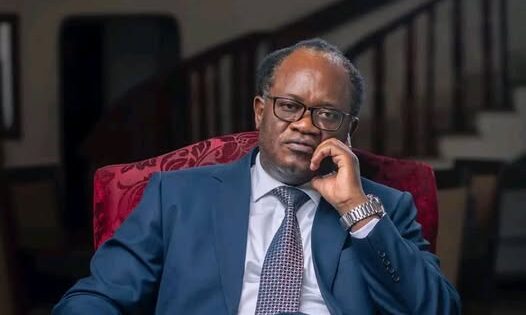
In a raw, unfiltered Christmas-night conversation on KBN TV’s State of the Nation with Kennedy Mambwe, Patriotic Front Member of Parliament and presidential contender Hon. Brian Mundubile delivered a sweeping indictment of the United Party for National Development government, accusing it of presiding over democratic backsliding, economic deception, and institutional intimidation that has left Zambians “suffering in silence” at a moment traditionally associated with hope and renewal.
Mundubile framed his assessment around what he described as a profound national dissonance. While December 25 commemorates the birth of Christ, he said the country’s social and economic mood reflected exhaustion rather than celebration.
“Today doesn’t feel like Christmas,” Mundubile said, describing communities grappling with prolonged power outages, unpaid farmers, rising living costs, and households rationing essentials rather than festive meals. He said the disappearance of the Christmas spirit was not symbolic but rooted in lived hardship, with many families entering the holiday period without electricity, income certainty, or food security.
At the centre of his critique was President Hakainde Hichilema, whom Mundubile accused not only of failing to govern effectively but of actively dismantling democratic safeguards. He identified the December 15 passage of Constitution Amendment Bill No. 7 as a defining moment, calling it “the darkest day in our democratic history.”
Mundubile said the amendment, previously declared illegal by the Constitutional Court, was forced through Parliament by suspending Standing Orders to allow the second and third readings to be concluded in a single sitting. He described the move as a deliberate act of defiance against judicial authority and public participation, arguing that constitutional reform had been reduced to a numerical exercise rather than a national consensus process.
He disclosed that hours before the vote, he convened a meeting of Patriotic Front lawmakers to reaffirm opposition to the bill. Despite this, six of the 29 MPs who had earlier endorsed his presidential bid voted in favour of the amendment.
“They disappointed the entire nation,” Mundubile said, adding that the decision represented a betrayal not only of party positions but of constituents who expected Parliament to act as a constitutional firewall rather than a rubber stamp.
Beyond the constitutional process itself, Mundubile widened his critique to what he described as systematic erosion of institutional independence. He accused the Executive of fostering a climate of fear across the judiciary, legislature, and oversight bodies, saying the separation of powers had been hollowed out through intimidation and selective enforcement.
He cited the removal of three judges as evidence that judicial independence had been compromised, asserting that constitutional restraint had been replaced by executive convenience. Responsibility for this, he said, rested squarely with the Presidency.
“The backstops are the President,” Mundubile said. “It is his government appointing party cadres to the Judicial Complaints Commission, his administration setting the tone of fear. He bears ultimate responsibility.”
Turning to economic governance, Mundubile rejected official claims of recovery, dismissing reported 3.6 percent gross domestic product growth as disconnected from everyday reality. He said growth figures offered little comfort to farmers who had delivered maize months earlier but remained unpaid.
He challenged claims that funds had been secured for farmer payments, questioning why growers were still sleeping in bank corridors waiting for money that authorities insisted had already been released.
“If the funds exist, why the delay?” Mundubile asked. “This isn’t inefficiency. It’s deception.”
He said the impact of delayed payments extended beyond agriculture, feeding into rural poverty, disrupted planting cycles, and rising household debt as farmers borrowed informally to survive.
Mundubile also took aim at the government’s expanded Constituency Development Fund, describing it as a politically marketed illusion rather than a genuine development strategy. He said that over four years, nearly K900 billion had been approved in national budgets, yet only K19 billion, approximately 2.3 percent, had been allocated to CDF.
Even under perfect management, he argued, CDF could not deliver transformative development. He noted that a single rural water project costs more than K100 million, far exceeding what constituency-level allocations could realistically sustain.
“They market CDF to distract from the fact that central government has abandoned development,” he said, arguing that the state had retreated from national-scale planning while projecting decentralisation as progress.
On infrastructure, Mundubile challenged the Ministry of Infrastructure to identify a single nationally funded project completed under the current administration. Beyond the privately financed dual carriageway, he said there were no completed roads, bridges, hospitals, or major public works attributable to government capital investment.
He contrasted this with the Patriotic Front’s former approach of structured backbone infrastructure linking provinces and economic zones, accusing the current administration of pursuing development that was “random, reactive, and empty,” with no coherent national plan.
Mundubile said the consequences of these policies were visible across society. He cited youths on the Copperbelt who were promised mining equipment and licenses under social contracts but remained unemployed. He pointed to Mopani workers opting for voluntary separation despite high unemployment, and civil servants whose salaries had been steadily eroded by inflation, deductions, and rising living costs.
Despite the severity of his critique, Mundubile positioned his presidential ambition around a forward-looking economic agenda anchored in employment creation rather than social transfers. He said poverty could only be ended through jobs that restored dignity.
His proposed strategy centres on industrialisation across agriculture, mining, and tourism. In agriculture, he proposed establishing ten fully serviced farming blocks nationwide, equipped with irrigation, storage, and processing facilities, supported by outgrower schemes to generate large-scale employment and value addition before export.
In mining, Mundubile pledged strict enforcement of the Local Content Act, insisting that Zambian businesses must secure at least 40 percent of the estimated US$5 billion in annual mine supply contracts.
“This is not about press briefings,” he said. “It’s about structure. Employment creates dignity. Dignity ends poverty.”
Mundubile also addressed speculation that he was covertly aligned with the ruling party, dismissing the claims unequivocally. He said he had never met President Hichilema outside Parliament and had no private communication, favours, or arrangements with him.
“I am not a project,” he said. “I stand on my record.”
As the discussion concluded, Mundubile returned to what he described as his central motivation: restoring national hope. He said his pursuit of leadership was driven not by power, but by the need to rebuild trust, dignity, and opportunity in a country he believed had lost its way.
“I seek it to restore hope to the mother walking for water, the farmer waiting for payment, the youth with no future,” he said. “That is the Zambia I believe in.”
For many watching from homes darkened by load-shedding on Christmas night, Mundubile’s message resonated not merely as political critique, but as a reflection of a broader national reckoning over governance, justice, and economic direction.