Monday, June 8, 2026
23.4 C
Lusaka
Home Blog Page 215

ZCTU’s Position on Bill 7 Alarms Workers, Says Msoni

ZCTU’s Position on Bill 7 Alarms Workers, Says Msoni

All People’s Congress president Nason Msoni has criticised the Zambia Congress of Trade Unions for supporting the Constitution of Zambia (Amendment) Bill No. 7 of 2025, accusing the labour movement’s leadership of betraying workers and aligning itself with oppressive political interests.

Msoni made the remarks in a statement issued on Saturday, December 13, 2025, following an appearance by ZCTU president Blake Mulala before the Parliamentary Select Committee on December 12, 2025. During the hearing, Mulala urged members of Parliament to enact Bill 7 into law and warned that workers would “deal with” those who opposed it.

Msoni described ZCTU’s position as shocking and alarming, stating that the union leadership had misrepresented its membership by endorsing what he described as an illegal constitutional amendment. He stated that the Constitutional Court had already ruled the process leading to Bill 7 unconstitutional, rendering continued support for the bill a violation of the rule of law.

He said the stance taken by the trade union leadership reflected alignment with authoritarian tendencies rather than the interests of ordinary workers. According to Msoni, Zambian workers would never willingly support a system of governance that undermines their own rights and economic security.

Msoni questioned the logic of backing Bill 7 at a time when workers continue to face low wages, high taxation, prolonged power outages, and a high cost of living. He noted that civil service unions operating under the ZCTU umbrella remain deadlocked with government over salary negotiations, making the union’s advocacy for constitutional changes that create additional political offices inconsistent with workers’ lived realities.

He further raised concern about the financial implications of the proposed constitutional amendments, arguing that an expanded Parliament would place a heavier tax burden on workers. Msoni also questioned how workers could support constitutional changes that, in his view, would concentrate executive authority and allow greater discretion in hiring and firing public officials.

Drawing on a biblical analogy, Msoni likened the conduct of ZCTU’s leadership to that of Judas Iscariot, who betrayed Jesus for thirty pieces of silver. He stated that the union leadership had betrayed suffering workers by siding with those he described as oppressors instead of defending worker interests.

Msoni warned that political power is temporary and urged unions, student movements, and civic organisations to prioritise the welfare of the people over partisan loyalty. He referred to several organisations and institutions that previously opposed constitutional amendments alongside the current ruling party but are now being labelled adversaries for opposing Bill 7.

He cautioned that history and posterity would judge the ZCTU leadership, particularly its president, for supporting what he described as an illegal constitutional process. Msoni reiterated that Bill 7 had already been declared unconstitutional by the Constitutional Court and should not proceed further.

The APC leader stated that no Zambian worker would support the creation of new political offices while living in poverty, enduring prolonged electricity outages, struggling with unaffordable health care, and facing stagnant wages. He accused the ZCTU leadership of placing self-interest above the welfare of the workers they represent.


FAZ, Govt admit senior football team underperformance

0

Government says the Zambia Senior Men’s National Football Team did not perform well in 2025, despite qualifying for the upcoming Africa Cup of Nations (AFCON) in Morocco.

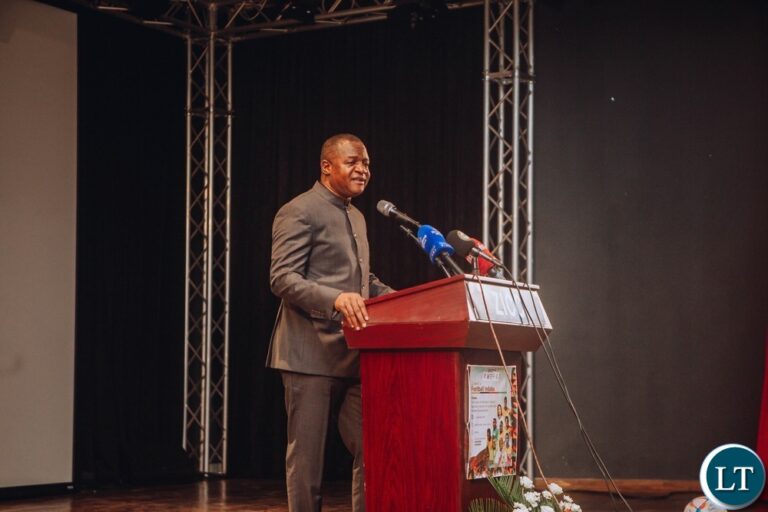
Minister of Youth, Sport and Arts, Elvis Nkandu, said the senior team’s results were below expectation but expressed optimism due to the strong performances recorded by the country’s youth football sides.

In an exclusive interview with the media, Nkandu said the Under-15, Under-17 and Under-20 national teams showed great promise this year.

He noted that both the boys’ and girls’ teams that competed in South Africa and at the Region 5 Games delivered commendable performances, signaling a positive future for Zambian football.

The Minister added that Zambia remains on a progressive path and expressed confidence that more medals will be secured before the year ends and into 2026.

He also thanked fans and the private sector for supporting various sports disciplines and helping Zambia shine on the international stage.

Meanwhile, Football Association of Zambia (FAZ) Head of Media and Communications, Nkweto Tembwe, said the senior team failed to meet expectations this year.

He explained that although results were disappointing, several new players gained valuable experience during the World Cup qualifiers and international friendlies, with some now included in the 28-member AFCON provisional squad.

Tembwe praised the junior teams, highlighting the Under-17 boys’ qualification to the World Cup in Qatar for the second time, where they remained unbeaten in their first three games and conceded very few goals.

He also noted progress recorded by the Under-20 and women’s youth teams.

And football analyst Yotham Mwanza said delayed allowances, inadequate funding, limited investment and discipline-related issues contributed to the poor performances by both the Chipolopolo and the Copper Queens.

He said these challenges affected player morale, adding that discipline is critical for young players transitioning to senior-level football, as many promising careers are often lost due to lack of focus.

Mwanza, however, commended the Copper Queens for qualifying for the World Cup and winning a three-nation tournament in Malawi, after drawing with Malawi and beating Zimbabwe 3-1 in the final.

He further described the Under-17 women’s back-to-back World Cup qualifications as a significant milestone and urged for increased private-sector support to ease the financial burden on Government and FAZ.

Civil servants reminded to refrain from partisan politics

0

Eastern Province Assistant Secretary (AS), Clement Chilembo, has advised civil servants to desist from engaging in partisan politics.

Mr Chilembo told civil servants who want to join partisan politics to first resign from the civil service.

ZANIS reports that Mr Chilembo said this when he held an orientation meeting on the civil service terms and conditions with Heads of Government Departments in Mambwe district.

He said while civil servants were individuals and independent, they were expected to work with the government of the day.

“You are a political being by nature of being a human being, but the politics of you and me should be in the heart,” he said.

Mr Chilembo added that civil servants are there to work with every government that is formed.

“There are people who have worked in all the Republics. I was in the UNIP government myself. I also worked under MMD, PF and now UPND. If I did not know what is expected of me as a civil servant, I wouldn’t be here today,” he said.

Mr Chilembo also urged civil servants to use social media wisely and refrain from passing comments anyhow.

“We have social media today. You colleagues, especially the young ones, have self-restraint in the way you use social media,” he said.

Government reaffirms commitment to address anti-microbial resistance

0

Government says it remains committed to tackling Antimicrobial Resistance (AMR) which is becoming an escalating global health threat that needs urgent action.

Ministry of Health Permanent Secretary for Technical Services, Kennedy Lishimpi, expressed concern over the use of unprescribed antibiotics among the members of the public.

Dr Lishimpi explained that anti-microbial infectious diseases are becoming increasingly difficult to treat or cure because inappropriate use of antibiotics makes them stop working on what they were designed to cure or treat.

He said this in a speech read for him by Disease Control Assistant Director, Henry Phiri, during the Commonwealth Partnership for Antimicrobial Stewardship (CWPAMS) end of project event in Lusaka today.

“Each year, millions face prolonged illness, disability and death because at times, life-saving antibiotics no longer work as they should,” he said.

Dr Lishimpi added that routine procedures such as caesarean sections, cancer treatments, surgeries and management of pneumonia or sepsis become far riskier when antibiotics lose power.

He has however expressed confidence that the collective efforts under the Commonwealth partnerships will yield positive results.

He has since appealed for continued support towards the reduction of antimicrobial resistance.

Meanwhile, Global Health Partnerships Country Director, Muleba Matafwali, said the CWPAMS project has strengthened the health sector since it was implemented 5 years ago.

Ms Matafwali explained that through strong partnership with the Ministry of Health and United Kingdom (UK) partnership, inappropriate prescribing of antibiotics has dropped significantly from 66.9 percent to 36 percent across all health facilities in the country.

“The message is clear, the project has achieved and implemented what was supposed to be implemented. Its gains must be safeguarded and expanded,” she said.

And CWPAMS National Oversight Mechanism Director, Duncan Chanda, said the process of supporting rational antibiotic use and sustainable practices has enhanced patient outcomes.

Dr Chanda explained that ever since the project was implemented, the Ministry of Health has seen a reduction in the use of antibiotics and also health practitioners have applied knowledge gained from training and leadership skills.

He notes that these have resulted in improved clinical practices.

He has since reaffirmed commitment to continued collaboration in safeguarding global health.

Attempts to block Bill 7 won’t succeed-Mweetwa

1

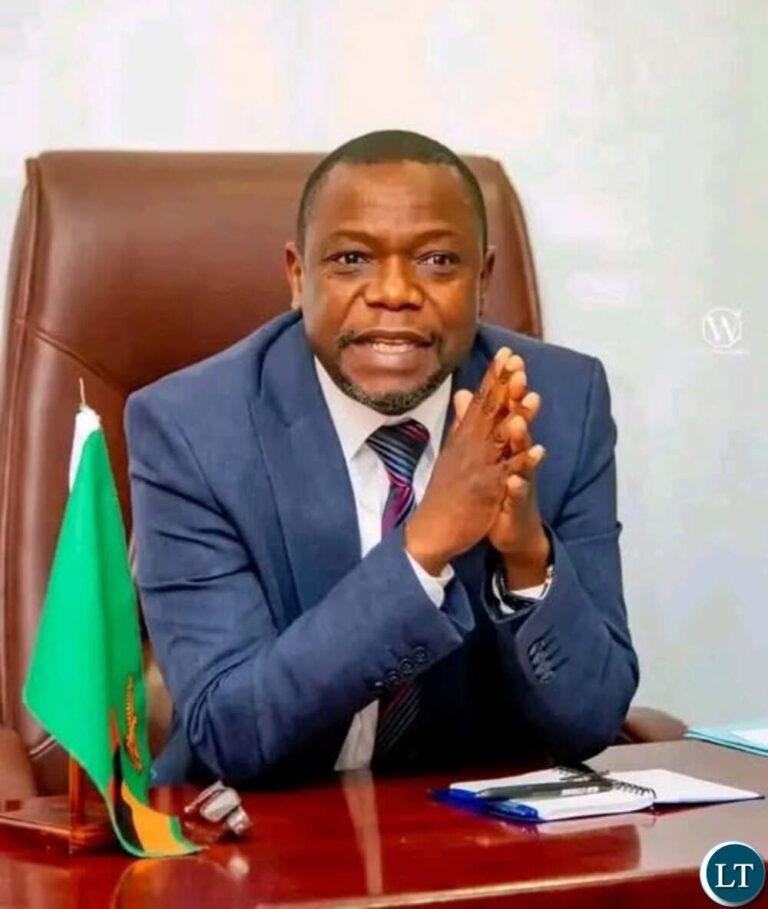
Chief Government Spokesperson, Cornelius Mweetwa, says attempts by some opposition political parties to block constitutional amendment Bill number seven from being passed in parliament will not succeed.

And Mr Mweetwa, who is also Minister of Information and Media, says the government is aware that some opposition Members of Parliament (MPs) have been paid to vote against Bill seven.

He reiterated that Bill seven is legal and has the support of many credible stakeholders.

Speaking at a press briefing held at his Office in Lusaka today, Mr Mweetwa said at a press briefing in Lusaka today that constitution amendment Bill seven was proposed in good faith.

He expressed confidence that the Bill and the 13 clauses contained in it will be voted for and passed because its articles are favoured by the majority people.

“Subject to clause 3, alterations of this constitution shall not be passed unless the Bill is supported on Second and Third readings by the votes of not less than two-thirds MPs,” he stated.

Mr Mweetwa has since appealed to the opposition to re-introspect themselves and support the important piece of legislation.

And Mr Mweetwa has said President Hakainde Hichilema respects the constitution and will continue to govern the country through the rule and law.

On the Select Technical Committee, Mr Mweetwa said proposals are in national interest to come up with a constitution that will stand the test of time.

Meanwhile, the Minister has called for calm and civility in the ongoing constitution making process.

He commended the labour movement, students and other stakeholders for offering constructive support for Bill seven.

Nalumango reiterates need to acquire mining licenses

0

Vice President Mutale Nalumango has urged prospective miners to acquire mining licenses before venturing into any mining activities in the country.

Mrs Nalumango said the licensing procedure must be made available to everyone so that those that need to get mining licenses can have access.

She added that this will help improve the economic landscape of Zambia.

She further acquiring mining licenses will also assist in keeping records of people participating in mining activities around the country.

“Mining should benefit everyone, not going into pockets of individuals who are selfish,” she said.

Mrs Nalumango said this in parliament today where she further highlighted that having mining licenses will also improve mine safety for workers.

The Vice President has meanwhile reaffirmed the government’s commitment in ensuring that the law is enforced in order to prevent illegal mining in Zambia.

She said the government is working with the Ministry of Defence to ensure that there is no illegal mining in this sector which she said is a main player of Zambia’s economy.

President Hichilema reiterated results of fiscal reforms

0

President Hakainde Hichilema has reiterated the government’s structural approach to building a holistic team through the Public-Private Dialogue Forum (PPDF) and other vital platforms to support the country’s economic growth agenda.

President Hichilema emphasised the need for positive reforms to be embraced at all levels of business and investment to foster the country’s economic development.

Speaking during the fourth private sector day organised by the government through the PPDF, the President called on the private sector to take the lead through the platform.

Mr Hichilema underscored that Zambia is safe for investments, particularly those that create jobs as well as those that enhance the country’s treasury.

He noted that the mining sector, among other investments, is one link that is actualising the government’s call to initiatives such as free education.

The President also said due to fiscal and other reforms which the government has implemented, the country has managed to restructure its debt upto 94 percent.

Mr Hichilema Zambia has recorded a milestone in its national reserves, which have gone up to US$5.2 billion.

The President has since called for an attitude change towards production instead of only relying on consumption of goods and services.

He noted that Zambia is excellently positioned in the region to advance its development agenda through various sectors.

And International Finance Corporation (IFC) Country Manager, Madalo Minofu, thanked the government for the PPDF, saying it has accelerated reforms in key sectors while fostering trust and shared vision for economic growth.

Ms Minofu has meanwhile called on development partners to work together for every Zambian to prosper.

Earlier, Secretary to the Cabinet, Patrick Kangwa, assured the private sector and businesses of an enabling environment for their companies to thrive.

Meanwhile, the newly added Technical Working Groups (TWGs), ranging from gender to media said they will advocate for the development of a strategy which will plan for keeping boys in school to mirror the current project of keeping girls in school.

And the Technical Working Group, represented by the Media Owners Association of Zambia (MOAZ) representative, Costa Mwansa, noted that the media is a major economic driver that is supporting job creation among others.

In a vote of thanks, Zambia Association of Manufacturers (ZAM) President, Muhammed Umar, commended the PPDF for creating a platform that has enhanced collaborations and business synergies.

Mr Umar said it is through aligning strategies that Zambia’s economy will grow.

Zambia Air Force Warns Against Obscene Content, Citing Rise in Digital Abuse

0

Lusaka, Zambia — The Zambia Air Force (ZAF) has issued a stern warning to young women and girls against creating and sharing explicit personal content, stating that the trend is fueling new forms of abuse and Gender-Based Violence (GBV).

The caution was delivered during a cybersecurity awareness event in Lusaka yesterday, where ZAF Director Gender, Colonel Martha Chiwama, highlighted the severe risks associated with obscene self-recordings. She emphasized that such material, whether shared privately or publicly, poses a significant threat to personal safety and dignity.

“Stop filming yourself in obscene acts. What may seem private today can easily become public tomorrow,” Col. Chiwama urged. “Once such material is online, it is almost impossible to control who sees it, and it can have serious consequences for your life and reputation.”

Col. Chiwama explained that the circulation of explicit content not only leaves young women vulnerable to harassment and exploitation but also perpetuates a broader culture of abuse, both online and offline. She stressed that the digital space, intended to be empowering, has instead become a dangerous environment for many girls.

She further clarified that GBV offenses committed through digital means—such as phones, messaging apps, or social platforms—carry the same legal weight as physical abuse and should be reported without hesitation.

Echoing concerns for younger victims, ZAF Twin Palm Station Commander Colonel Gigi Handima called for stronger child protection measures. He noted that many children have become unintended victims of digital exposure due to inadequate supervision.

“Children are wandering into harmful online spaces because no one is watching. We need to cut down their screen time, supervise what they consume, and teach them values that keep them grounded both on and offline,” Col. Handima stated.

Memory Sichula, a Consumer Education Officer from the Zambia Information and Communication Technology Authority (ZICTA), outlined prevalent forms of digital violence. These include non-consensual recording, the sharing of private images, and abusive commenting across online platforms.

“Perpetrators of digital violence and cyberbullying do not just include the capturers and sharers but commenters on various posts as well. The law is very clear about the consequences,” Sichula added.

In a related safety message, the Drug Enforcement Commission’s Programs Officer, Emma Tembo, urged parents to be more present and vigilant in their children’s daily lives, noting that some children engage in drug abuse undetected at home.

Concluding with a national security perspective, the Ministry of Defence’s Acting Cyber Defence Officer, Lieutenant Colonel Nchimunya Nyemba, warned that careless online behavior could compromise safety.

“Adversaries study what soldiers post. If you are careless online, you can be manipulated into revealing sensitive information. Discipline in the digital space is as important as discipline on the parade ground,” Lt. Col. Nyemba affirmed.

The event underscored a multi-faceted approach to digital safety, linking personal responsibility, parental guidance, legal accountability, and national security in the fight against cyber-facilitated abuse.

Zambia concludes UNESCO-backed project

0

The Ministry of Tourism and the Zambia National Commission for UNESCO have successfully completed a four-year project to safeguard the traditional Tonga poetry of Southern Province, known as Kuyabila.

According to a statement made available to the media by First Secretary Press at the Zambian Embassy in France, Naomi Mweemba, Kuyabila serves as a medium for transmitting oral history, knowledge and cultural identity through drumming.

The project, supported by UNESCO with US$83,790 from its International Assistance Fund, began in 2021 and focused on raising awareness of the Convention on the Safeguarding of the Intangible Cultural Heritage.

As part of capacity-building efforts, 42 stakeholders were trained in community-based inventorying to enhance understanding and ownership of safeguarding practices.

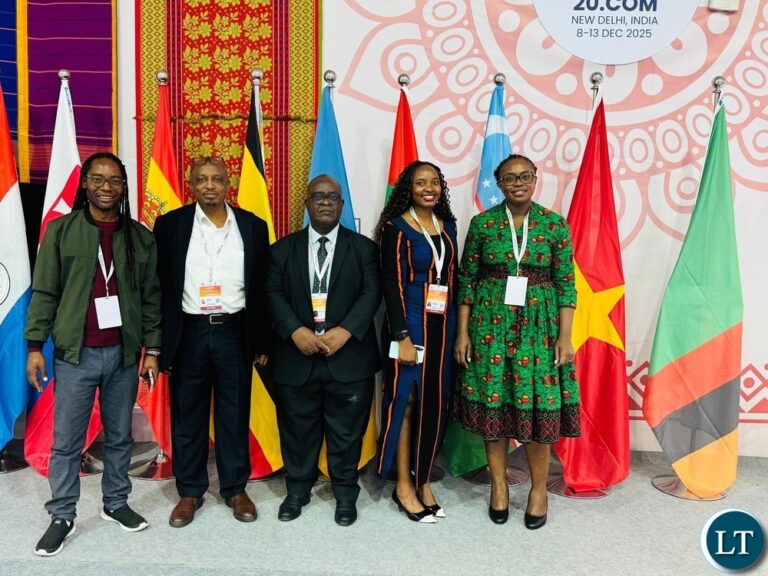
Speaking at the 20th Session of the Intergovernmental Committee for the Safeguarding of the Intangible Cultural Heritage in New Delhi, Ministry of Tourism Chief Cultural and Folklore Officer Thomas Mubita thanked UNESCO for supporting Kuyabila in Monze and Namwala districts.

He highlighted that a key achievement of the project was the documentation of Kuyabila, which included the recording of 40 poems, the publication of a book and the production of a video documentary capturing performances, interviews and safeguarding experiences.

An inventory covering themes such as marriage, initiation, funerals, farming, health, and education was also completed.

Mr Mubita added that the project facilitated the integration of Kuyabila into education and cultural activities, noting that communities reported renewed pride and motivation to practice and transmit the poetry, alongside growing recognition in cultural events and interest from education and media institutions.

Govt Launches women in film and TV Zambia chapter

0

Government has launched the Women in Film and Television (WIFT) Zambia Chapter, a platform designed to connect Zambian women in film and television to global training opportunities, international grants and production funding.

Minister of Youth, Sport and Arts, Elvis Nkandu, said the initiative will open doors for women in the creative industry to access continental and global co-production spaces, mentorship and leadership programmes, as well as networking opportunities with creatives in Hollywood, Nollywood, South Africa and other major film hubs.

Delivering a speech on his behalf during the launch in Lusaka, Ministry Permanent Secretary Kangwa Chileshe described the platform as a major milestone for Zambia’s creative future.

“Government remains fully committed to advancing the empowerment of women across all sectors, especially the creative arts. Women must be fully included in economic participation, leadership visibility, opportunity access and policy development,” he said.

Nkandu noted that the creative economy cannot grow sustainably without the full participation of women, stressing that half of the country’s creative talent remains underutilised.

He reaffirmed Government’s commitment to creating a safe, inclusive and empowering environment for women in the creative sector.

Speaking at the same event, WIFT Zambia President Becky Ngoma said the chapter becomes part of a global network of more than 60 WIFT chapters working to uplift women in film, television and other screen-based media.

She said WIFT Zambia will help women build strong professional networks, enhance their visibility and take up leadership roles in the industry, adding that the organisation will collaborate with WIFT Africa to strengthen mentorship, capacity building and economic empowerment.

And National Arts Council Chairperson Maureen Lilanda urged women in the creative sector to support one another in order to thrive.

Government Calls on Stakeholders to Support Ongoing Consultations on Pension Reforms

0

Government has called on stakeholders to support the ongoing consultations process on pension reforms.

Northern Province Permanent Secretary Bernard Mpundu says consultation is a critical step in the pension reforms, as it provides an opportunity for people to refine the proposed amendments.

The permanent secretary said this when he officiated at the provincial stakeholder consultation meeting on the proposed pension reform bills held in Kasama.

The ongoing pension reforms consultations, which are being spearheaded by the three public pension schemes, are looking at the three drafted bills.

The bills are the National Pension Scheme, the Public Service Pensions Fund, and the Local Authorities Superannuation Fund Bills of 2025.

Mr Mpundu said the bills aim to address low coverage, inadequate benefits, unsustainable funding models and disparities across pension schemes, among others.

“The consultations we are undertaking today mark a critical step in the reform process, providing an opportunity for us to refine the proposed amendments, ensure inclusivity and build a shared vision for a sustainable and equitable pension system for all,” Mr Mpundu said.

And Public Service Pension Fund (PSPF) Chief Executive Officer Francis Nyirenda, who represented other pension schemes, said the three pension schemes seek consensus from the beneficiaries to ensure that their desires are met.

Mr Nyirenda revealed that the pension system has been operating on the old schemes; hence, the need to discard the old act and make it robust enough to stand the test of time.

He explained that the bill is also meant to repeal and replace the old act.

“Our mission is to seek consensus from amongst you, the owners of the schemes, to ensure that your desires are met,” he said.

Meanwhile, the labour movement is happy that the reforms are being undertaken in the sector.

Basic Education Teachers Union of Zambia (BETUZ) Regional Director William Banda, however, called for a much higher lump sum and not the proposed 20 percent.

Mubanga hails media for driving economic development

0

Minister of Small and Medium Enterprises (SMEs) Development, Elias Mubanga, has commended the media for its contribution to national development and media innovation.

Mr Mubanga emphasised the pivotal role the media plays in raising public awareness on economic issues and transforming livelihoods across the country.

He noted that the fourth estate is essential in disseminating information that helps citizens understand the dynamics of doing business, build resilience and make informed decisions.

The Minister was speaking in Lusaka last evening when he officiated at the Second 2025 Citizens Economic Empowerment Commission (CEEC) media awards.

Mr. Mubanga said effective communication remains a key component of Government’s broader efforts to address economic challenges. He also presented awards and certificates to outstanding journalists.

He noted that Government, through the Ministry of Information and Media, has been instrumental in promoting professionalism and innovation in journalism, adding that accurate and accessible information is vital in fostering community-level action.

Mr. Mubanga further urged media houses to highlight success stories on SMEs, saying the media has the power to shape society through what is published and broadcast.

He also revealed that 83,000 SMEs benefitted from Government’s K1.3 billion empowerment packages disbursed through his ministry.

“Government will continue to create an enabling environment in which media practitioners can freely but responsibly carry out their duties in a professional manner,” he said, urging journalists to resist political pressure and uphold media ethics.

And speaking earlier, CEEC Director General Muwe Mungule said the media continues to play a critical role in advancing economic development.

Dr. Mungule pledged that the Commission will continue collaborating with the media to champion development strategies that uplift citizens’ welfare.

He said the awarded stories showcased economic empowerment, innovation, sustainability and community impact, highlighting real-world progress in health, youth empowerment, rural development and good governance.

The 2nd edition of the 2025 media awards celebrated journalistic excellence across public and private media, including ZANIS, ZNBC, Times of Zambia, Zambia Daily Mail, radio, television and digital platforms. The event spotlighted success stories and promoted a culture of positive reporting and empowerment.

ZANIS staffers Victor Mwila won first prize in the television category, while Lackson Makodza received a recognition award. Other journalists from both print and electronic media were also honoured for their dedication.

Acting PF Chair Kapata Orders Firm Action Over Booing Allegations

8

Acting PF Chair Kapata Orders Firm Action Over Booing Allegations

Patriotic Front Acting Chairperson Jean Kapata has issued a stern public warning against what she described as organised efforts within the party to incite cadres to boo and potentially attack senior members, calling on the Acting Party President to suspend those found to be responsible.

Addressing party leaders and members, Kapata said that while some officials were attending the burial of a departed party member in Katama, others were allegedly working behind the scenes to mobilise cadres to boo Honourable Given Lubinda upon his arrival. She described the conduct as disgraceful and incompatible with the values of the party and the responsibilities of leadership.

Kapata questioned the credibility of individuals who aspire to lead the country while engaging in what she described as planned humiliation and disorder. She said Zambia did not need leaders who incite cadres or pay them to commit acts of violence, warning that such behaviour had no place in national politics or within the Patriotic Front.

She stated that tolerance for indiscipline had run out and that firm action was now unavoidable. Kapata called directly on the Acting Party President and party disciplinary structures to take decisive measures, including suspensions, against any members acting contrary to party values.

According to Kapata, enforcing discipline should not be treated as a threat but as a responsibility. She said membership in the party must be anchored in respect for order, peace, and unity, making it clear that those unwilling to uphold these principles should not remain within its ranks.

Kapata described the alleged actions as unacceptable and said they amounted to a serious breach of party discipline rather than an internal misunderstanding. She warned that such conduct risked undermining unity and damaging the party’s standing.

Invoking the legacy of late President Michael Sata, Kapata reminded members that the Patriotic Front was founded as a peaceful movement. She said the behaviour being attributed to some individuals did not reflect the party’s origins or its intended direction.

She further warned against any attempts to organise booing, violence, or physical attacks at party events, stating that such conduct would be resisted firmly. Kapata said intimidation and disorder would not be tolerated, whether directed at her or other party leaders.


LAZ Criticized for Overstepping Mandate, Accused of Misrepresenting Members’ Views

1

A prominent legal practitioner has issued a sharp critique of the Law Association of Zambia (LAZ), arguing that the body has strayed from its core mandate and is failing to represent the diverse views of its membership on matters of national importance.

The author, a former president of the University of Zambia Law Association (UNZALAW), an advocate of the High Court, and a LAZ member, asserts that the association’s primary duty is to represent the views and interests of its members, from whom its governing power is derived.

The critique centers on the claim that LAZ’s recent public positions, particularly regarding the contentious Bill Number 7, do not reflect a consensus within the wider membership. The author contends that the executive committee has assumed its viewpoint is synonymous with that of all lawyers, a position labeled as “wrong.”

“You can only arrive at such a decision after having heard from all interested members of the association,” the author states. “LAZ should be fair enough and desist from making subjective decisions based on the views of a small fraction of lawyers.”

The argument hinges on the principle of internal democracy. The author insists that before taking a public stance on significant national issues, LAZ must actively seek and reach a consensus from its members. The piece suggests that if Bill Number 7 were put to a vote among members, a spectrum of divergent opinions would be revealed.

“Let LAZ not sway citizens into believing that its position is the position of all its members!” the author concludes, framing the current approach as not only internally problematic but also potentially misleading to the public.

The criticism raises fundamental questions about governance, representation, and due process within the country’s premier legal professional body, challenging it to realign its public advocacy with the demonstrable will of its electorate—the lawyers of Zambia.

Finance Minister Calls Constituency Delimitation a “Development Necessity”

0

Lusaka, Zambia — Finance and National Planning Minister, Dr. Situmbeko Musokotwane, has urged citizens to reframe the national conversation on constituency delimitation, describing it as a critical development imperative rather than a political maneuver.

In a message directed at the public, Dr. Musokotwane explained that modernizing electoral boundaries is essential for fair representation and equitable access to public resources. He argued that Zambia is currently governed using a constituency map designed for a much smaller and differently distributed population, leading to inefficient service delivery and overburdened communities.

“We’ve outgrown our current constituency layout,” Dr. Musokotwane stated. “When the population expands but the map stays the same, people end up competing harder for the same limited services. That’s not sustainable.”

The Minister highlighted the practical strain on large constituencies, where a single Member of Parliament must serve a vast population. This, he noted, results in excessive demand for Constituency Development Fund (CDF) projects, overwhelmed bursary applications, and stretched empowerment programs, leaving community needs inadequately met.

Dr. Musokotwane emphasized that the issue is structural, not personal or partisan. He directly addressed concerns that delimitation could be used for political advantage, asserting that the process is constitutionally mandated and will be executed by the independent Electoral Commission of Zambia (ECZ) using transparent, technical criteria.

“This is about strengthening representation,” he clarified. “It’s about giving every community a fair chance to be heard and served.”

He pointed out that young people, in particular, would benefit from “right-sized” constituencies, as they enable leaders to engage more directly with communities, supervise projects more effectively, and ensure opportunities reach more households. “Smaller and more balanced constituencies reduce congestion in bursary systems, improve project supervision, and give local residents more frequent interaction with their elected representatives,” he added.

Linking the exercise to broader governance goals, Dr. Musokotwane stated that delimitation is fundamental to successful decentralization, arguing that the impact of CDF and other resources becomes clearer and more equitable when constituencies reflect current demographic realities.

The Minister concluded by calling on Zambians to approach the boundary review with an open mind, cautioning against misinformation. He framed the process as a long-overdue step toward a more responsive, inclusive, and modern system of representation for the nation.