Friday, June 12, 2026
21.6 C
Lusaka
Home Blog Page 22

Chikankata Residents Bury Aspiring MP Who Died After Filing Nominations

Independent Chikankata parliamentary candidate Anderson Ng’andu, who died in a road accident shortly after filing his nomination papers, has been laid to rest.

Hundreds of residents from across Chikankata Constituency gathered in Malala Ward on Monday to pay their final respects to Ng’andu, popularly known as “Chibulo Chilema.”

The funeral attracted family members, friends, community leaders, church members, youths and supporters, many of whom described the late aspiring lawmaker as a dedicated and people-centred leader committed to improving the lives of residents in the constituency.

Emotional scenes were witnessed as mourners gathered for the burial, with many struggling to contain their grief as the body arrived at the burial site. Residents braved the heat to attend the ceremony and honour the late politician.

Ng’andu died shortly after successfully filing his nomination papers as an independent candidate for the Chikankata parliamentary seat ahead of the forthcoming elections. His death came as a shock to many residents who had supported his candidature.

Speaking during the funeral, the deceased’s uncle, Grey Ng’andu, said Anderson sustained serious injuries after falling from a vehicle while negotiating a sharp corner.

He explained that despite efforts to rush him to hospital, he succumbed to his injuries on the way.

Grey Ng’andu described his nephew as a hardworking and ambitious young man who was passionate about serving the people of Chikankata and improving the welfare of vulnerable members of society.

“He was passionate about helping people regardless of their background. Anderson believed leadership was about service to the people and not personal gain,” he said.

Several residents who spoke during the funeral described the late Ng’andu as humble, courageous and committed to advocating for the interests of ordinary citizens.

Others said he strongly believed in promoting the welfare of the poor and marginalised communities and was dedicated to ensuring equal opportunities for all.

Youths in the constituency described his death as a significant loss, saying he had inspired many young people to take an active role in leadership and community development.

Residents said his passing had left a gap in the constituency, particularly among young people who viewed him as a symbol of hope and change.

Ng’andu’s death comes as political campaigns and activities continue to gain momentum ahead of the elections in Chikankata Constituency.

His burial marked the end of a political journey that many supporters believed held promise for the future of the constituency. Residents said his legacy and contribution to the community would continue to be remembered.

Mundubile Says Freedom of Jailed Opposition Figures Depends on Change of Government

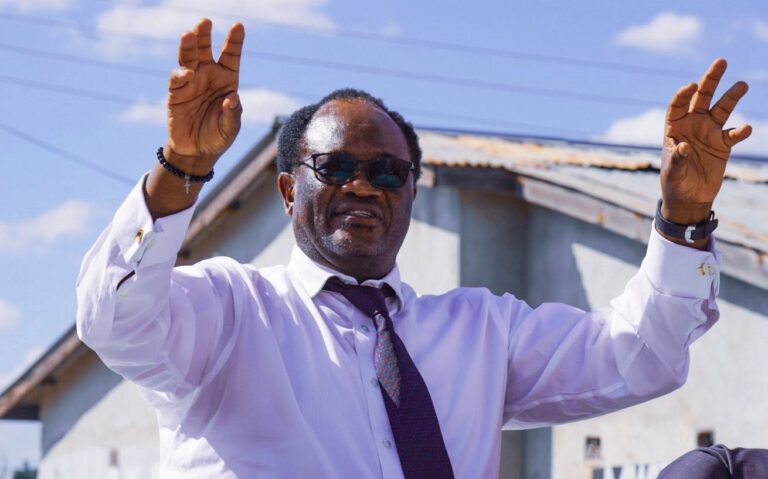
 National Reconciliation Party for Unity and Prosperity (NRPUP) presidential candidate Brian Mundubile has said the freedom of jailed opposition figures, including Bowman Lusambo and Raphael Nakachinda, will only come through a change of government.

Mundubile made the remarks after what he described as an unsuccessful attempt to visit incarcerated Nakachinda at a correctional facility. He alleged that he and his legal team were prevented from seeing their client despite waiting for more than an hour.

The opposition leader, who is also a practising lawyer, said it was concerning that detainees were allegedly being denied access to their legal representatives, which he described as a constitutional right.

“It’s very, very sad indeed. We have been here for the past hour and a half and we have been giving one excuse after another,” Mundubile said.

He stated that he had visited the facility in his capacity as a lawyer and maintained that inmates should be allowed access to legal representation regardless of their political affiliation.

Mundubile further alleged that officers at the facility required clearance from senior authorities before granting lawyers access to their clients, a practice he said was unnecessary.

He also claimed that the continued detention of some opposition figures reflected governance challenges that, in his view, could only be addressed through a change of government.

“The freedom that you are looking for, the freedom for Nakachinda, for Lusambo, for Malanji, for Bowman and everybody else who is behind bars, will only come when government changes,” Mundubile said.

No immediate response from correctional authorities was available regarding the allegations at the time of publication.

13, 686 students benefit from TEVET bursaries

A total of 13, 686 students across the country accessed Technical Education, Vocational and Entrepreneurship Training (TEVET) bursaries in the first quarter of 2026.

This is against a target of 1,500 students under the initiative, designed to support vulnerable but deserving students to pursue skills training in various sectors.

Co-Chairperson of Cluster Advisory Group two under the National Development Coordinating Committee, Brian Mwiinga disclosed this in an interview with the media in Lusaka.

Mr Mwiinga revealed that in an effort to enhance skills development in the country, a total of 40 Science, Technology, and Engineering and Mathematics (STEM) lecturers were recruited past the targeted 12, for the first quarter of 2026.

He added that a total of 496 public and private institutions benefited from the TEVET fund financing against a target of 6, in the same period.

He commended government for the achievement, noting that skills are critical in driving the development agenda complemented by the increased Constituency Development Fund (CDF) allocation.

Mr Mwiinga, who is also Social Policy Lead for the Civil Society for Poverty Reduction, noted that such initiatives will contribute to reducing poverty levels in the country.

“Overall when you look at the benefits of achieving these targets, firstly, they are within the framework of the Eighth National Development Plan and then when you look at it critically, we are talking about education. You cannot have meaningful development without investing in the education sector. So such investments give us comfort that we are going in the right direction,” he emphasized.

And in separate interviews, beneficiaries of the TEVET bursary, expressed gratitude to the government for the support.

Hope Sakala, a youth studying Electrical Technology at Lusaka Vocational and Training College (LVTC), explained that she had stayed home for five years due to lack of funds for her tertiary education.

Ms Sakala stated that the bursary has brought hope for a bright future not only for herself but her family as she intends to set up a business after acquiring the skill and employ her younger siblings as well as other youths.

“I really appreciate government because it was really hard for me. Maybe if they didn’t give me this bursary, I would have been out there, struggling, trying to raise some money,” she said.

Aaron Mushota, who is studying plumbing and pipe fitting at the same institution indicated that the bursary has provided financial relief to him, adding that he is now able to focus on his studies.

“The message I have for government is that I really appreciate this thing you are doing because it is helping many students, not just me but others who are also facing the same challenges that I faced,” he said.

Why are they afraid of Xavier Chungu?

By Amb Emmanuel Mwamba
.
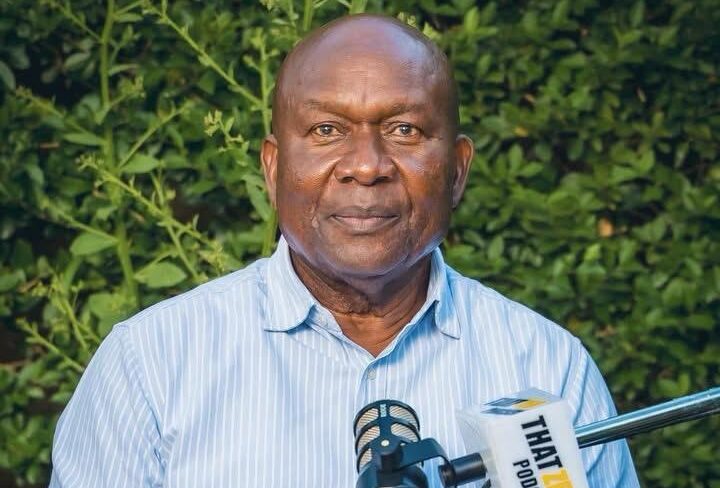
So it appears they have effectively banned and cancelled Liberal Party president and 2026 presidential candidate Xavier Franklin Chungu, with both Millennium TV and ZedPodcast reportedly forced to cancel scheduled interviews with him. I also understand there were threats involving possible charges of espionage, sedition and treason should the interviews be aired or distributed. That is totally unacceptable and difficult to justify in a democratic society.

What makes the situation even stranger is that Xavier Chungu left office as Director General in 2001, which was 25 years ago. One begins to wonder what exactly people are afraid of. Many discussing this issue today seem to have forgotten that Chungu already publicly testified on highly sensitive national matters more than two decades ago during one of Zambia’s most politically charged court cases.

In January 2003, during the landmark presidential election petition of Anderson Mazoka versus Levy Mwanawasa, Chungu appeared as a witness after being subpoenaed by the opposition petitioners. Serving as former Director General of the Zambia State Intelligence Service under former president Frederick Chiluba, his testimony touched on allegations surrounding electoral corruption, misuse of state resources and the conduct of state institutions during the disputed 2001 elections.

That testimony was heard publicly and became part of one of the most important political court proceedings in Zambia’s democratic history. Any fears, suspicions or concerns people may claim to have about Chungu speaking publicly were already tested in open court many years ago. In fact, during that same testimony, Chungu even hinted at ambitions of joining politics and expressed hope that one day he could lead the country himself.

So what exactly is all this fuss about now?

Besides, Chungu is no longer serving as intelligence chief. He is now an active politician discussing the state of the country, governance issues and what he believes are possible solutions. His background in intelligence merely gives him a different perspective and understanding of how state institutions operate. That alone should not be treated as something criminal or dangerous.

History also shows that movement from intelligence leadership into politics is neither new nor unusual.

Some notable examples include:

📸 Vladimir Putin (Russia)
Served as Director of the Federal Security Service (FSB), the successor to the KGB, before becoming President of Russia.

📸 George H.W. Bush (United States)
Served as Director of Central Intelligence, heading the CIA, before later becoming President of the United States.

📸 Yury Andropov (Soviet Union)
Led the KGB before becoming General Secretary of the Communist Party and de facto leader of the Soviet Union.

📸 Michel Aoun (Lebanon)
Held senior military and security responsibilities before later serving as President of Lebanon.

📸 Park Chung-hee (South Korea)
Rose through military and intelligence structures before becoming President of South Korea.

The point is simple. Intelligence or security experience has never automatically disqualified individuals from political participation or leadership ambitions. If anything, the reported blocking of these interviews only creates more public curiosity around Chungu and raises larger concerns about media freedom, democratic space and political tolerance ahead of the 2026 elections.

Below is the notice issued by ZedPodcast:

“That Podcast Can’t Podcast Former Spy Chief.”

“Due to circumstances beyond our control, the podcast episode with the former Director General of the Zambia Security Intelligence Service, Mr Xavier Chungu, will not be broadcast at all as earlier advertised. We sincerely apologise for any inconvenience this may cause and thank you all for making us Zambia’s premier podcast. We will post a replacement episode later this week. Thanks for your support always.”

Mundubile, Makebi denied access to Nakacinda

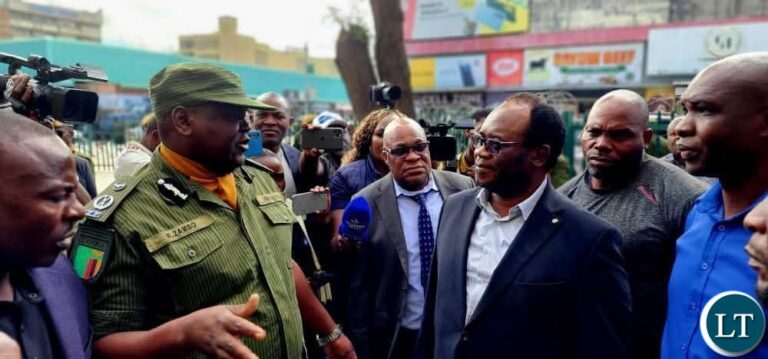
The political calculus surrounding Raphael Nakacinda’s detention shifted sharply on Monday when Brian Mundubile and Makebi Zulu were denied entry to Lusaka Central Correctional Facility, transforming what had largely remained a procedural detention matter into one of the most politically charged flashpoints of the emerging campaign season.

The two senior Tonse Alliance figures travelled to the facility on Africa Freedom Day intending to visit the jailed PF faction secretary general in what opposition representatives described as a solidarity call. Prison authorities refused them access. What followed unfolded quickly and carried immediate political consequences.

Within the hour, opposition mobilisation networks were circulating the incident as evidence of institutional hostility toward opposition figures ahead of the August 13 general election. Mundubile, speaking to journalists outside the facility, accused authorities of deliberately isolating detained opposition leaders and restricting political contact with incarcerated figures.

His remarks appeared carefully directed beyond the immediate confrontation at the prison gates.

The confrontation handed the opposition something it has struggled to produce consistently in recent months: a moment carrying emotional and symbolic weight capable of cutting through the fragmented messaging that has characterised coalition politics on that side of the aisle.

Governance activist Brebner Changala later described Nakacinda as a “prisoner of conscience”, language carrying strong human rights resonance and which opposition structures quickly absorbed into a wider campaign narrative.

By evening, references to Nakacinda were already appearing alongside complaints about nomination violence, political intimidation and concerns over shrinking democratic space, as opposition figures attempted to frame the detention within a broader political context.

The imagery of senior opposition figures standing outside prison gates on Africa Freedom Day carried obvious symbolic significance in an election environment already growing increasingly tense.

Security incidents at nomination centres, clashes between rival supporters and rising intra-party tensions have already prompted repeated appeals for restraint from church bodies, civil society organisations and the Electoral Commission of Zambia. Against that backdrop, politically charged moments carry heightened political reach.

The ruling UPND is expected to contest that framing strongly. Government-aligned figures have consistently attempted to keep public attention focused on economic recovery, infrastructure projects and development programme delivery rather than governance disputes and detention politics.

That political messaging battle is now likely to intensify. But the opposition has secured something strategically useful: a simple and emotionally accessible narrative around which supporters can organise, one requiring little explanation and capable of moving rapidly through already energised mobilisation structures.

The legal circumstances surrounding Nakacinda’s detention have not changed. What has changed is the political narrative forming around it. The prison gate is now where that story lives.
The 2026 campaign has not yet reached full intensity. When it does, Monday’s confrontation may be remembered as one of its earliest defining political moments.

Editor’s Note: “The failed prison visit may prove politically bigger than the detention itself. In election politics, emotionally charged moments often travel faster and further than legal arguments.”

Freedom Day exposes Zambia’s deepening political divide

President Hakainde Hichilema and opposition leaders used Africa Freedom Day to send sharply different messages to the country, laying bare just how divided Zambia is heading into the August 13 general election. This division highlights the importance of achieving true Freedom in all aspects of society.

At State House and the Freedom Statue in Lusaka, Hichilema kept his focus firmly on economics and development. He told the country that political independence alone was not enough and that Zambia’s generation now carried the responsibility of delivering economic Freedom through jobs, investment and infrastructure growth.

The President pointed to free education, Constituency Development Fund projects, local desk manufacturing, mining expansion and improvements in electricity supply as signs that Government reforms were beginning to take hold across the country. He urged citizens to preserve peace and support programmes aimed at expanding opportunities and improving livelihoods, emphasizing the need for everyone to enjoy Freedom.

Outside the official commemorations, the political mood was far more confrontational and emotionally charged.

Tonse Alliance presidential candidate Brian Mundubile and his running mate Makebi Zulu arrived at Lusaka Central Correctional Facility hoping to visit jailed PF faction secretary general Raphael Nakacinda. Prison authorities denied them access, immediately shifting political attention away from the Freedom Day celebrations and onto opposition accusations surrounding democratic freedoms and political arrests.

Standing outside the correctional facility, Mundubile accused authorities of using State institutions to weaken opposition figures ahead of the elections. He warned that Zambia risked drifting into a political environment where citizens could begin fearing open political participation and criticism of those in power.

Governance activist Brebner Changala added further weight to the matter after describing Nakacinda as a “prisoner of conscience,” language that quickly spread through opposition mobilisation structures and support networks. The detention is now increasingly being shaped into a broader campaign symbol capable of energising PF-aligned frustration and wider anti-government feeling.

The ruling UPND, however, continues resisting attempts to shift the campaign onto governance disputes and political detentions. Party figures remain focused on pulling public attention back toward economic recovery, infrastructure expansion and visible development projects taking place across the country.

Former vice-president Enoch Kavindele said opposition political parties had failed to offer anything convincing enough to remove President Hichilema from office. Other ruling party figures repeatedly pointed to free education, healthcare expansion, road construction and mining-sector growth as evidence that the UPND still retained strong public confidence heading into the election period.

Despite those efforts, the campaign atmosphere is visibly tightening across several parts of the country.

Violence and security concerns are increasingly appearing during nominations and political mobilisation activities. Police recently arrested former Chavuma member of Parliament Victor Lumayi after he allegedly entered a nomination centre carrying a firearm. Other incidents involving clashes, disorder and intimidation have already triggered repeated appeals for calm from churches, NGOs, Electoral Commission of Zambia officials and law enforcement agencies.

The ruling party is also dealing with internal pressure following the decision by former minister Garry Nkombo to file nominations as an independent candidate in Mazabuka Central after disagreements over candidate selection. Senior UPND officials attempted to contain the fallout quickly, insisting no individual outranked the party, but Nkombo’s standing within ruling party structures means the matter continues attracting national political attention.

Opposition alliances are simultaneously battling their own internal complications. Court disputes inside the Forum for Democracy and Development have complicated alliance calculations surrounding candidate legitimacy, while smaller political parties continue attempting to build coalition arrangements capable of consolidating anti-UPND support before polling day.

The economy remains the deepest and most politically sensitive fault line running through the campaign.

Opposition leaders continue hammering the rising cost of living and unemployment, insisting macroeconomic gains mean little to households still struggling to feel relief in daily life. Government officials maintain that debt restructuring, investment growth and mining expansion require time before the benefits fully spread through communities and household incomes.

That contest over public perception is now becoming central to the election battle.

The ruling party wants voters focused on direction, stability and economic momentum. The opposition wants voters focused on freedoms, arrests and unmet promises. Both sides are pushing aggressively, and neither appears willing to wait for the formal campaign season to intensify before defining the national political conversation.

Freedom Day simply exposed how early the real contest has already begun.The campaign period is now on, engines are warming up, and the real political heat has not yet been felt.

Editors Note: “The 2026 election is increasingly becoming a struggle over economic confidence, democratic freedoms and public trust in national institutions.”

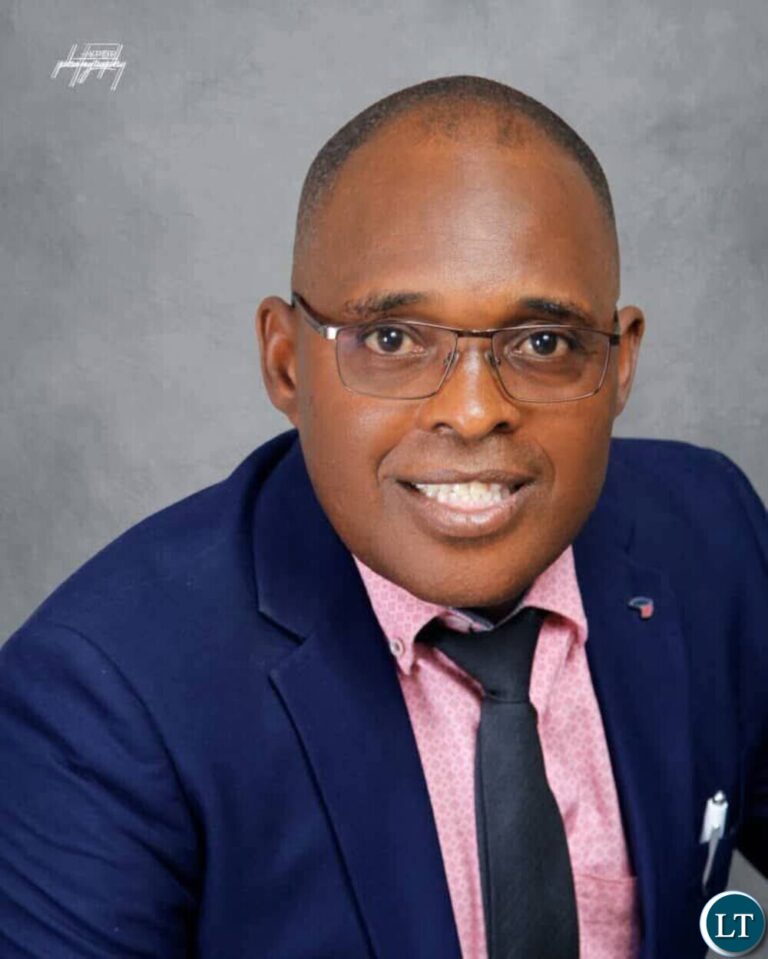
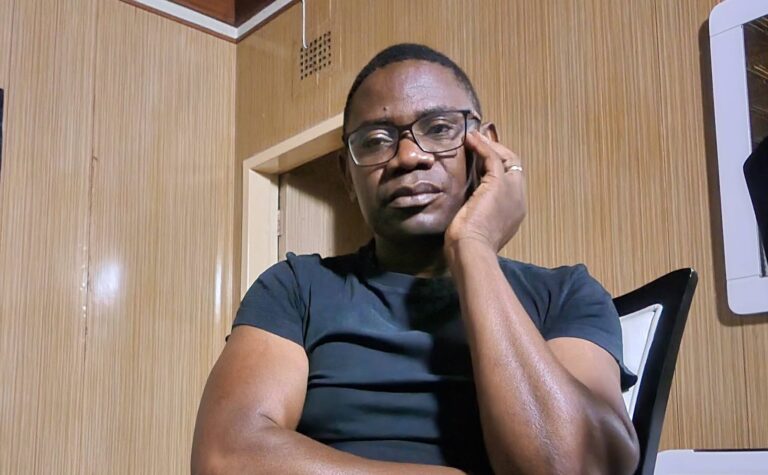
Life Has Humbled Me

By Chilufya Tayali

There was a time in my twenties when I genuinely believed I had life figured out. I thought I understood people, relationships, faith, marriage, politics and sacrifice. If you had met me during those years, I probably would have lectured you confidently on how a man should live, how women should be treated, how children should be raised and how Christians should walk with God. I carried convictions with complete certainty and rarely left room for doubt or contradiction.

At one point, I even believed I was destined to become a priest. Maybe that is why God removed me from the seminary before life humbled me even harder. Back then, I judged people very quickly. Not because I hated them, but because I genuinely believed I was right. Life has since dismantled that certainty piece by piece.

Today, I sometimes look back at things I once said with embarrassment. I remember advice I confidently gave others, only for life to place me in situations where those same answers suddenly stopped sounding simple. Experience has a brutal way of exposing the distance between theory and reality.

I once spoke strongly against abortion and contraceptives. I defended rigid positions confidently because everything looked black and white to me at the time. I relied heavily on Catholic teachings and believed moral clarity alone was enough to understand people’s situations. Life later introduced me to realities that theory alone could never explain. These days, I approach those conversations differently. Not because I abandoned values, but because I finally understand that some burdens become heavier when they move from textbooks into real human lives.

Marriage humbled me too. I used to believe marriages should never end under any circumstances. I encouraged people to endure difficult relationships because I believed perseverance alone could save every union. “Marriage is a covenant,” I would say confidently. But life forced me to confront another reality. Sometimes what outsiders call endurance is actually silent destruction. Some people survive situations that slowly erase them emotionally, mentally and spiritually while society applauds them for “holding the marriage together.”

That changed the way I look at relationships. Society rarely allows men to speak honestly about suffering inside marriages. Men are usually presented as the automatic problem whenever relationships collapse. I once accepted that thinking too without questioning it properly. I condemned men involved in side relationships without first asking why some of them emotionally checked out long before another woman entered the picture. I listened mostly to wounded women and ignored the possibility that some men were also drowning quietly inside their homes.

That does not automatically justify every decision people make, but life taught me something important: human beings are usually fighting private battles invisible to outsiders. To the men I judged carelessly years ago, if any of you ever come across these words, alive or dead, I owe you an apology. I understand more now.

Fatherhood still matters deeply to me. That belief has never changed. A father should remain present. He should fight for his children and carry responsibility even when life becomes uncomfortable. But another difficult question now sits heavily in my mind: what happens when the fight itself starts destroying the man fighting it? At what point does perseverance stop being strength and start becoming self-destruction? I no longer pretend those questions are simple.

Even politics humbled me. The people I once criticised aggressively, including President Hakainde Hichilema, and the political positions I once defended blindly, I now examine differently. Not because I suddenly became confused or because I am trying to return anywhere politically, but because life exposed me to realities I never understood when I was younger and louder. Some experiences permanently change the way you look at leadership, betrayal, survival and public judgment.

These days, I speak less and reflect more. I judge slower. I listen longer. I no longer rush to conclude that people are weak, immoral or foolish simply because their lives unfolded differently from mine. Life softens certain edges whether you want it to or not.

Maybe some people reading this are still in that stage where everything feels clear and absolute. Maybe your convictions still feel untouchable and the world still appears neatly divided between right and wrong. I once lived there too. Then life arrived. The frightening thing is that the beliefs we defend most aggressively are often the exact places where life hits hardest. One day you wake up defending the same people you once condemned because suffering finally introduced itself personally.

And honestly, there are moments these days when I feel close to breaking down completely. Some battles do not leave visible scars, but they quietly exhaust the soul from the inside. Still, I keep fighting because survival itself becomes a responsibility after a certain point.

So these are simply reflections moving through my mind today while preparing for something ordinary like lunch. Maybe this message reaches somebody carrying silent pressure. Maybe somebody reading this is slowly being humbled too. If so, pause for a moment and examine your strongest opinions carefully. Ask yourself whether they were formed through lived experience or protected theory. Life has a brutal habit of challenging human certainty, and when that moment comes, you either harden into bitterness or grow into understanding.

Tayali — the humbled man.

Kangwa thrilled by Israeli accolade

0

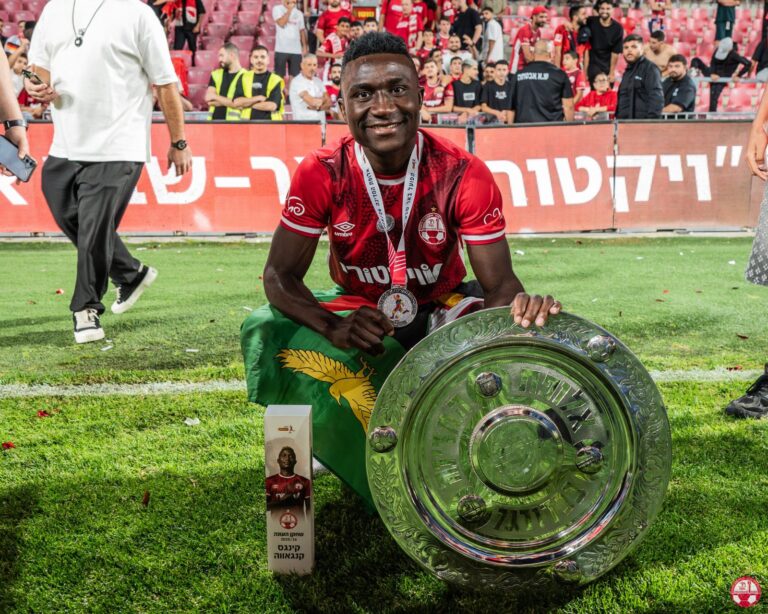
Chipolopolo midfielder Kings Kangwa is thrilled after being named Israeli Premier League Player of the Season.

The accolade follows his outstanding display for his Israeli club Hapoel Be’er Sheva.

Kangwa’s good performance in the 2025/26 season propelled Hapoel Be’er Sheva to league victory.

He shrugged off competition from Yarden Shua and Omer Atzili of Beitar Jerusalem, as well as Dor Peretz of Maccabi Tel Aviv to land award.

‎According to statistics, Kangwa secured 54% of the overall vote, finishing comfortably ahead of Shua on 37%, while Atzili and Peretz received 5% and 4% respectively.

‎Kangwa said he was proud to emerge as Israeli Premier League Player of the Season.

“Honoured to be named Israeli Premier League Player of the Season,” Kangwa reacted in a Facebook post.

‎” I’m Proud to become only the second African player to win this award,” he continued.

‎” Big thank you to everyone who voted me the best player of the season. Wouldn’t be possible without everyone at the club, my friends and my family, ofc the fans,” he said.

Kangwa expressed his gratitude to people that have contributed to his illustrious season.

‎” Thank you to my teammates, coaches, fans, family and everyone who supported me throughout this incredible journey,” he said.

Kangwa joined Be’er Sheva in 2024 from Sebian side Red Star Belgrade.

He is a key member of the Chipolopolo.‎

Teacher Honoured for Assisting Woman to Give Birth by Roadside

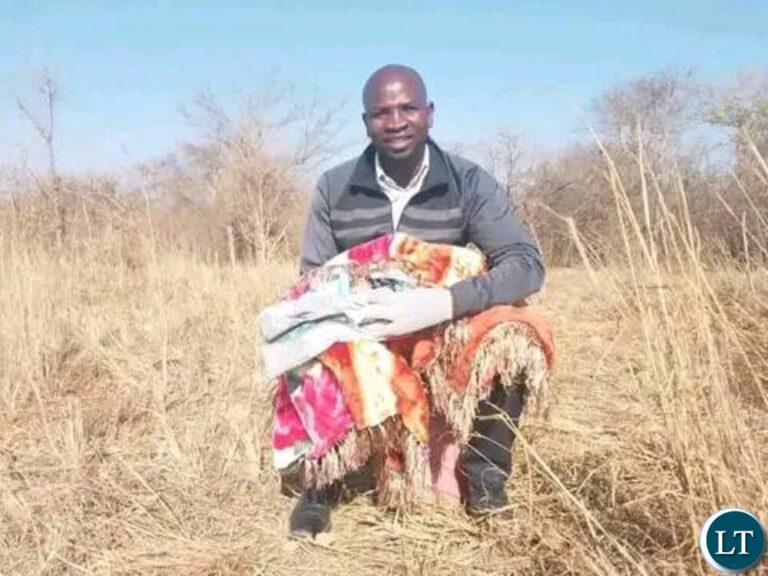
 President Hakainde Hichilema has honoured a 35-year-old teacher from Zimba District, Kenny Sikalongwe, for helping an abandoned pregnant woman safely deliver a baby by the roadside.

Sikalongwe received the President’s Insignia of Mercy during the Africa Freedom Day commemorations held at State House on Sunday.

According to the citation read during the ceremony, the incident occurred on October 17, 2024, when Sikalongwe was travelling in a light truck carrying several passengers. During the journey, a pregnant woman on board went into labour while being transported to a maternity centre.

The citation stated that other passengers requested that the woman be dropped off by the roadside so that the vehicle could continue with its journey. After the vehicle moved a short distance away, Sikalongwe asked the driver to stop and allow him to return to assist the woman.

He reportedly helped the woman to a shaded area under a tree and assisted her in delivering the baby despite having no medical training. Following the delivery, the newborn was wrapped in Sikalongwe’s coat.

Reading the citation, Principal Private Secretary to the President Bradford Machila said Sikalongwe’s actions demonstrated exceptional bravery and compassion.

“Your amazing bravery and compassion in disembarking from the vehicle to help an abandoned lady safely deliver under a tree by the roadside is worthy of special recognition,” the citation stated.

Meanwhile, 15 other Zambians were also honoured by the Head of State for their contributions in various sectors.

Among the recipients was former Cabinet Minister Ackson Sejani, who posthumously received the Order of the Eagle of Zambia, Second Division, in recognition of more than 32 years of public service.

Media personality and cervical cancer advocate Karen Nakawala received the President’s Insignia of Honour for her work through Teal Sisters, while veteran nurse advocate Kapelwa Sikota was recognised for advocating improved working conditions for African nurses during the colonial era.

Other recipients included farmer and youth mentor Elizabeth Sianga, musician Edward Mpundu and freedom fighter Rosemary Ngulube.

This year’s Africa Freedom Day commemorations were held under the theme, “Assuring Sustainable Water Availability and Safe Sanitation Systems to Achieve Goals for Agenda 2063.”

FAZ appoints Chakatazya as Secretary General

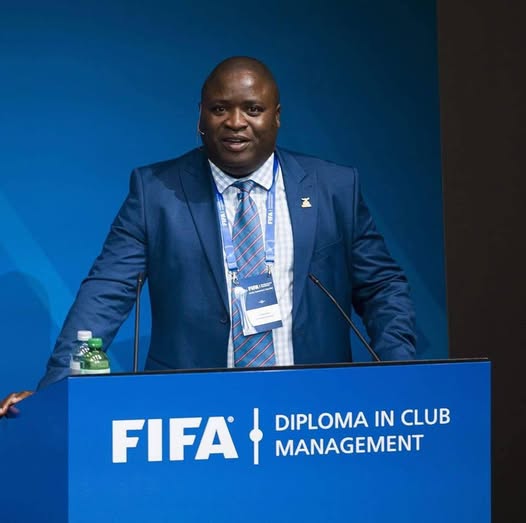
The Football Association of Zambia (FAZ) has appointed seasoned football administrator, Charles Chakatazya as the new General Secretary with immediate effect following the departure of Machacha Shepande, who has left the association on mutual terms after taking up an international assignment.

The media reports that FAZ has also confirmed Iva Lengwe as Deputy General Secretary after acting on the same position for some time.

FAZ President, Keith Mweemba congratulated the two officials and expressed confidence in their ability to contribute positively to the growth of football in the country.

“Today, the Executive Committee of the Football Association of Zambia met to deliberate on the appointment of the new General Secretary and the confirmation of Lengwe as Deputy General Secretary following his acting role.

Mweemba congratulated Chakatazya and Lengwe on their appointments on behalf of the Executive Committee.

He described Chakatazya as an experienced football administrator who has served the game diligently at both local and international levels.

Mweemba noted that Chakatazya previously served as Chief Executive Officer for Nkana Football Club, Kabwe Warriors and NAPSA Stars, adding that his experience from some of the country’s top Super League clubs will greatly benefit the association.

He explained that Chakatazya is a member of the Zambia Institute of Chartered Accountants (ZICA) and holds a Master of Business Administration, a Bachelor of Accounting and Finance from Mulungushi University and a Diploma in Accounting from Evelyn Hone College.

Mweemba added that Chakatazya also holds a FIFA Diploma in Club Management obtained in Zurich, a Certificate in Senior Leadership Development from the University of Cape Town and is currently pursuing the CAF Executive Football Management Programme.

Meanwhile, Mweemba thanked outgoing General Secretary, Shepande for the service he rendered to Zambian football during his tenure at Football House.

“I wish to thank Shepande for the service he rendered to the game and wish him well in his new endeavours, even as he leaves, he remains an important member of the football family,” he said.

Mweemba further encouraged Shepande to remain available to serve football in other capacities in future.

This is according to a statement released to the media by FAZ Head of Media and Communications, Nkweto Tembwe.

Kamutumbe family to receive funds from Kisasa traders

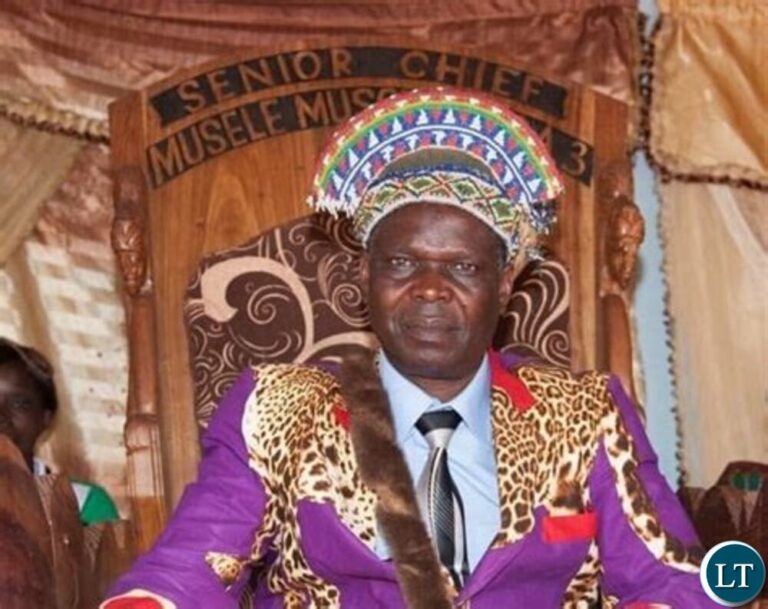
Senior Chief Musele of Kalumbila District has directed that the K75, 000 raised by traders at Kisasa Market be handed over to the children of the late Helen Kamutumbe who was murdered in a mob justice incident in the area two months ago.

The media reports that the money was presented to Kalumbila District Commissioner, Brenda Sankisa after traders contributed the funds as a gesture of apology to Senior Chief Musele following the incident that led to the temporary closure of Kisasa Market.

Senior Chief Musele said he could not personally keep or use the money, but instead directed that it be given to the deceased’s children to help with their welfare and education.

He noted that the late Helen Kamutumbe left behind children who now have no one to support them with school fees and rentals.

And Kalumbila District Commissioner, Brenda Sankisa disclosed that family members have been informed to bring the children from Chingola to Kalumbila for the formal handover process.

Ms Sankisa said the money will only be handed over in the presence of the children and family representatives who will witness the process.

Kisasa Market in Kalumbila reopens

Senior Chief Musele has officially reopened Kisasa Market in Kalumbila District in Northwestern Province after a two-month closure following a mob justice incident in which a businesswoman from Chingola Helen Kamutumbe was murdered.

Speaking during the reopening ceremony, Senior Chief Musele urged residents and traders to reject mob justice and uphold peace, unity and respect for the rule of law.

ZANIS reports that the traditional leader said the market was closed on March 21, 2026 to allow investigations into the incident and to restore order, while strengthening governance and management systems at the trading facility.

Senior Chief Musele thanked the government and other stakeholders for the support rendered during the period the market remained closed.

He said when he decided to close the market, the government worked with traditional leadership to ensure law and order prevailed in the area.

Senior Chief Musele said what happened in Kisasa should never be repeated, warning residents against engaging in mob justice and violence.

The traditional leader further appealed to parents to instill discipline and good behavior in their children.

He also called on residents of Kalumbila district to maintain peace and allow people to freely exercise their democratic rights.

Meanwhile, Senior Chief Musele condemned recent violence at the Kalumbila Town Council during nominations, saying human life should be protected at all times.

He also condemned the attack on former Member of Parliament Garry Nkombo and urged citizens to emulate President Hakainde Hichilema’s stance against caderism and violence.

Senior Chief Musele said Zambia deserves peace and called on citizens to promote love, law and order in their communities.

He stressed that protection of human life is a responsibility of every member of society and not only law enforcement agencies or traditional leaders.

Meanwhile, the traditional leader directed that all traders operating along the roadside should relocate into the market to prevent accidents.

He further declared that the market will operate on a 24-hour basis in line with the government’s 24-hour economy policy and warned criminals against engaging in theft, saying security measures had been strengthened.

Senior Chief Musele also called on the local authority to ensure that market management positions are given to responsible individuals capable of supporting their families.

And Kalumbila District Commissioner, Brenda Sankisa urged traders to conduct business in an orderly manner and continue cooperating with authorities in promoting peace and stability in the district.

Ms Sankisa appealed for continued collaboration between the community and law enforcement agencies in upholding law and order.

Meanwhile, Council Secretary, Liyungu Mungandi said the local authority remains committed to strengthening market governance structures to ensure operations are conducted within the law.

Ms Mungandi also introduced the reconstituted Market Committee, which will oversee operations at Kisasa Market and enhance accountability and discipline among traders.

She said management of markets and bus stations should be guided by the Markets and Bus Stations Act No. 7 of 2007.

Some traders, however, appealed to the traditional leadership to reconsider the decision to remove them from the roadside, saying business has become difficult inside the market.

The traders said they are facing challenges in selling their products because they are located far from the roadside where customers can easily access them.

They said the low sales are affecting their ability to support their families and take their children to School.

The traders appealed to Senior Chief Musele to consider allowing them to trade closer to the roadside to improve their businesses.

Authorities have since assured the public that security has been enhanced as trading activities resume at the market.

Kabemba calls on Zambians to uphold to reject tribalism

Democratic Party (DP), leader Judith Kabemba has called on Zambians to uphold unity, reject tribalism and safeguard the country’s peace as the nation commemorates Africa Freedom Day.

ZANIS reports that Ms Kabemba described Africa Freedom Day as a significant occasion not only in Zambia’s history but across the African continent, stressing the need to honor the sacrifices made by freedom fighters who fought for independence.

Ms Kabemba observes that the day serves as a reminder of the struggles endured by forefathers, including the bloodshed and suffering they experienced in the fight for freedom.

She noted that it is now the responsibility of the current generation to protect the freedom attained and preserve national unity and togetherness.

The opposition leader told ZANIS today in an interview during the commemorations of Africa Freedom Day.

“We do not want to take for granted the work that was done by our forefathers, the blood that was shed and all the wounds that they suffered.

It is our responsibility now to guard this freedom, guard unity and guard oneness,” she said.

Ms Kabemba further appealed to citizens not to allow tribalism and political differences to divide the country, saying love should unite the Zambian people as opposed to hatred and tribalism that allegedly separates them.

She urged political players and their supporters in the country to promote issue-based campaigns and avoid violence.

She said the electoral period should not be characterised by conflict, intimidation and bloodshed but should instead provide an opportunity for political parties to present their manifestos and development agendas to the people.

“This is not a time for violence, bloodshed or conflict. It is time for political players to go out and tell the people what they are able to do, and the people of Zambia will decide because the best team always wins,” she said.

Ms Kabemba also commended aspiring candidates who participated in the adoption process in both the ruling party and opposition political parties, saying the competition demonstrated true democracy and hard work.

She however, urged unsuccessful aspirants that were not adopted in the just ended nominations to continue supporting their party and work alongside adopted candidates, adding that opportunities remain open in future.

“There is always tomorrow. To those candidates that were not adopted by their parties, do not despair, do not give up and do not feel left out because only God knows what tomorrow holds,” she said.

Ms Kabemba encouraged members to remain committed to the party and maintain unity as the country heads towards the 2026 elections.

Recently, the opposition leader, who is also UPND Alliance member endorsed President Hakainde Hichilema for the 2026 general elections.

She pledged the DP’s support FOR President Hichilema’s election bid citing good governance style, anti-corruption efforts, and performance in sectors like mining and education.

She noted that Zambia remains in safe hands under President Hichilema’s leadership.

Muchinga PS calls for peaceful campaigns

Muchinga Province Permanent Secretary, Tuesday Bwalya, has called for peaceful campaigns ahead of the 2026 General elections.

ZANIS reports that Dr Bwalya says there is need to uphold peace and unity in the Province in the run up to the August polls.

He indicated that need for peace so that people can elect leaders of their choice.

The Permanent Secretary said this in an interview with journalists after gracing the 2026 African Freedom Day commemorations held at the cenotaph in Chinsali District.

Dr Bwalya stated that the occasion is a reminder of the significance of the freedom and peace that the country enjoys.

He charged that Muchinga Province does not expect any forms of violence during campaigns because it respects the democratic process of choosing its leaders.

“We need to campaign in a peaceful manner and we don’t need to fight but just to sell developmental ideas responsibly,” he added.

Dr Bwalya further indicated that security wings in the province to remain alert and to maintaining law and order during this period.

Meanwhile, the Permanent Secretary has emphasised the need for the Province to improve water and sanitation issues in line with this year’s African Freedom Day commemorations.

He explained that there will be no real freedom if people continue to struggle with access to water.

“This is why I have been visiting institutions to ensure that we improve water and sanitations to our people,” he said.

Meanwhile, Muchinga Province Chairperson for Freedom Fighters, Greyson Katongo urged youths to promote peace and unity in the country.

Mr Katongo stated that the country depends on youths who are future leaders to have a positive attitude and help promote unity as was demonstrated by freedom fighters.

“I’m calling upon all our young leaders to always uphold peace and unity in Chinsali and Muchinga at large,” he added.

The 2026 Africa Freedom Day commemorations were being held under the theme, Assuring Sustainable Water Availability and Safe Systems to Achieve the Goals of Agenda 2063.”

Africa to strive to achieve economic development

President Hakainde Hichilema says African states need to strive to achieve economic development.

President Hichilema says while previous generations fought for the liberation of Africa, the responsibility is on the current generation to gain economic development for their respective states.

Speaking to journalists shortly after the wreath laying ceremony to commemorate Africa Freedom Day at the Freedom Statue in Lusaka, Mr Hichilema said once economic development is attained, other interventions such as job creation begin to take place.

The Head of State cited the enhanced Constituency Development Fund (CDF) as a programme that pushes the economic agenda of the country.

The President said unity is however key in achieving economic development for citizens.

“For us to do this, we need to make sure that we are responsible and we are united. Unity is very important, to deliver all of these ingredients that are meant for us, because the way was paved by those who came before us. Our job is to pave the way for the future generation, hence the free education, 2.5 million children back in school. That is our responsibility, it is not to make noise, it is not to shout at each other, it is not to abuse each other,” Mr Hichilema said.

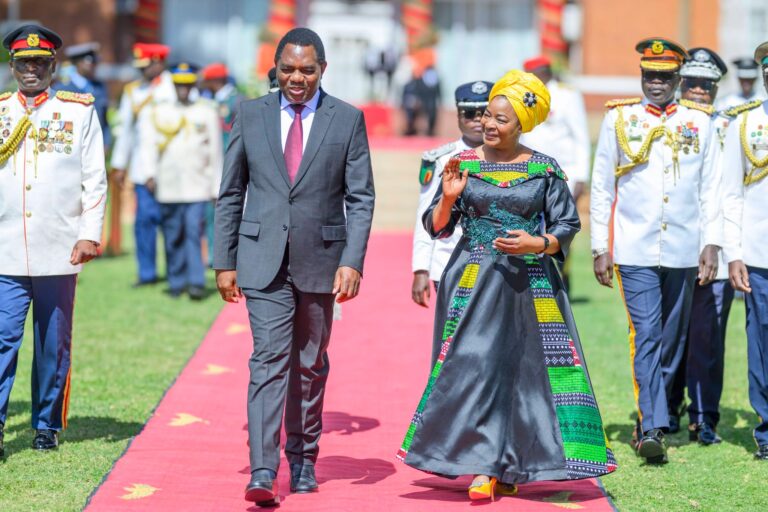
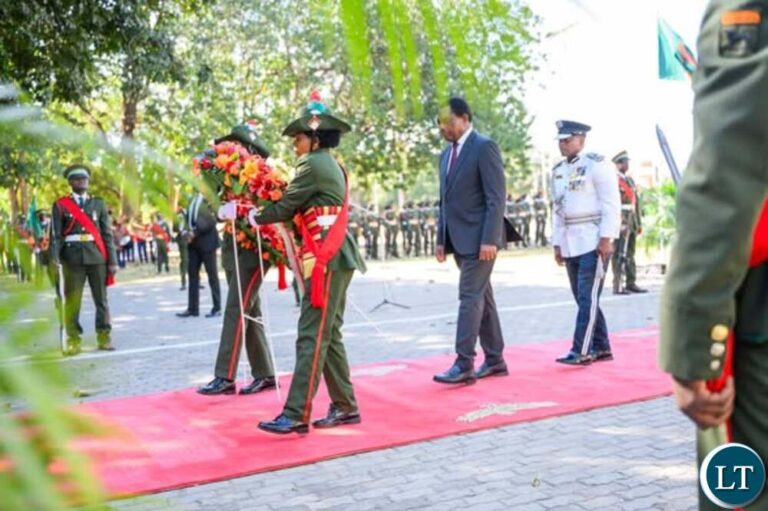
Meanwhile, President Hakainde Hichilema has led Service Chiefs and diplomats during the wreath laying ceremony at the Freedom of Statue to commemorate Africa Freedom Day.

President Hichilema arrived at the Freedom Statue at about 09:18 hours.

The ceremony was characterised by military drills, which were led by the defense wings.

The President also interacted with some freedom fighters and greeted some supporters who cheered him on after the ceremony.

Meanwhile, Zambia Air Force (ZAF) Director General, Chaplain, Judith Mutale, called on unity saying the Sustainable Development Goals (SDGs) cannot be achieved if the country is not united.

Speaking during a homily delivered during the ceremony, Col Mutale said the 72 tribes in Zambia provide a platform for the country to unite.

“Diversity is not a weakness but our greatest asset,” she affirmed.