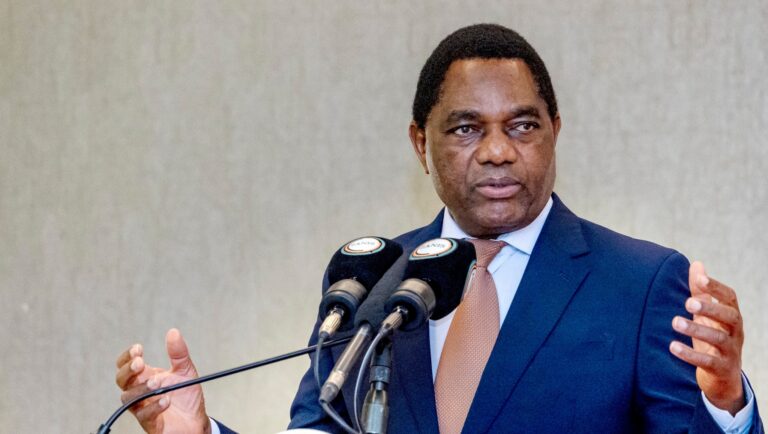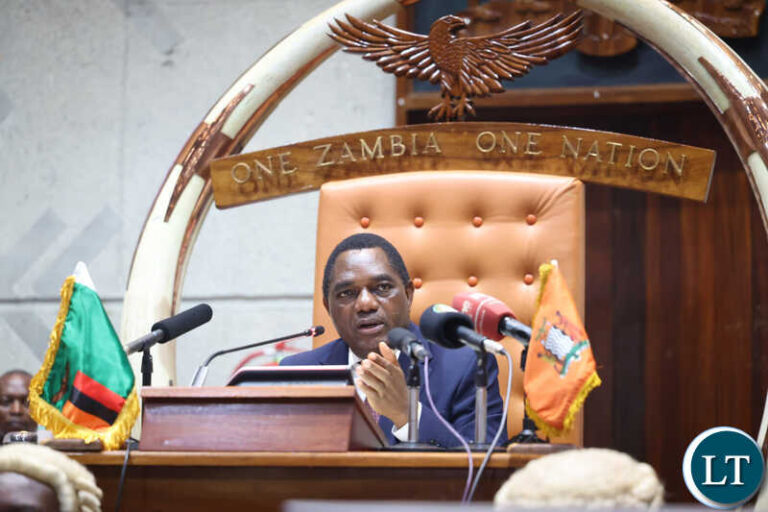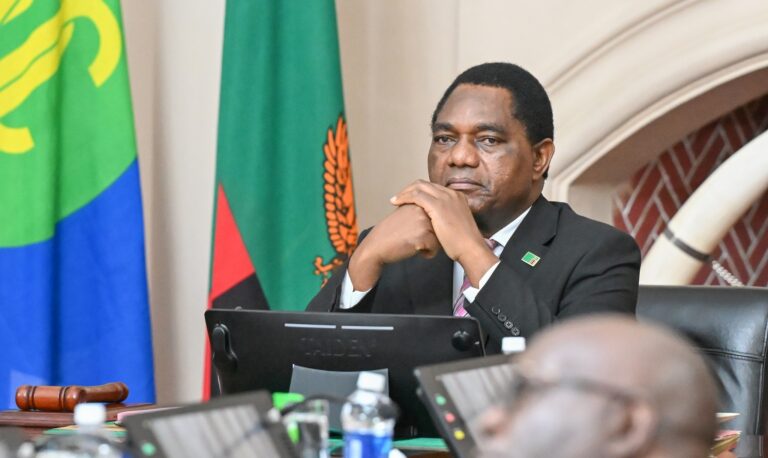
President Hakainde Hichilema is scheduled to sign Constitution Amendment Bill No. 7 into law today, marking the final step in a legislative process that has drawn intense political debate and public scrutiny.
The Bill was passed by the National Assembly on Tuesday after securing overwhelming support from Members of Parliament, with 135 MPs voting in favour and 28 voting against. The approval followed the Third Reading stage in Parliament, where the Bill was adopted after months of deliberations and procedural steps.
Once assented to by the President, Bill 7 will become law, formally amending provisions of the Constitution of Zambia. The amendments are intended to adjust electoral timelines, revise procedures for filling parliamentary vacancies, and harmonise electoral processes with revised administrative arrangements.
According to parliamentary records, the Bill was introduced to address challenges arising from existing constitutional provisions, particularly those related to by-elections and the operational demands placed on the Electoral Commission of Zambia (ECZ). The amendments seek to streamline electoral processes and reduce the frequency and cost of by-elections.
During debate in Parliament, Government representatives maintained that the amendments were necessary to improve governance efficiency and align constitutional procedures with practical realities. Justice Minister Mulambo Haimbe told the House that Bill 7 was designed to close legal gaps that had previously created uncertainty in electoral administration.
The Bill also provides for the introduction of nominated Members of Parliament to represent special interests, including youth, women, and persons with disabilities. Government officials stated that this provision would enhance inclusivity and ensure broader representation in the National Assembly.
Opposition MPs strongly opposed the Bill, arguing that it lacked sufficient public consultation and raised constitutional concerns. They maintained that altering the Constitution without broad consensus undermined democratic principles and could set a precedent for future amendments driven by political convenience.
Civil society organisations and legal bodies have also expressed reservations about the Bill, questioning its timing and the scope of the changes proposed. Some groups petitioned the courts to halt the legislative process, although the Bill proceeded through Parliament following rulings that allowed the legislative process to continue.
Speaker of the National Assembly Nelly Mutti presided over the proceedings that led to the Bill’s passage. The Speaker later confirmed that all parliamentary procedures had been followed, including committee scrutiny and debate at all required stages.
With presidential assent expected today, the focus now shifts to implementation. The ECZ is expected to review its operational frameworks to align with the amended constitutional provisions. Government officials have indicated that subsidiary legislation and administrative guidelines may be issued to support the implementation of the new law.
The passage of Bill 7 has emerged as one of the most consequential legislative developments of the current parliamentary session. Supporters argue that it will strengthen governance systems and improve electoral management, while critics warn that it could have long-term implications for constitutional stability.
President Hichilema has previously stated that constitutional reforms should promote efficiency, inclusiveness, and national development. His assent to the Bill will formally conclude the legislative phase and open a new chapter in Zambia’s constitutional framework.
Security was heightened around Parliament during the final stages of debate, reflecting the level of public interest and political sensitivity surrounding the Bill. Authorities have urged citizens to engage peacefully with constitutional issues and to respect democratic institutions.
The Bill’s enactment comes at a time of heightened political engagement across the country, as parties and civic groups position themselves ahead of future electoral cycles. Analysts note that the practical effects of the amendments will become clearer once implementation begins.
The law is expected to take effect upon publication in the Government Gazette.