Saturday, June 13, 2026
14.1 C
Lusaka
Home Blog Page 231

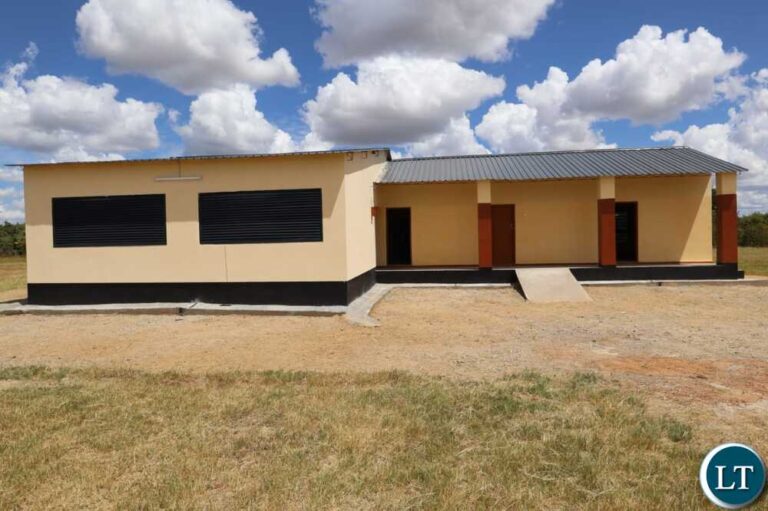
Government builds clinic in Solwezi’s Kandakanda area

0

Sub Chief Kandakanda of Solwezi district in North-Western Province has thanked the government for constructing a health facility in his area.

The traditional leader says through the community’s active participation in decision-making, the government has constructed a health facility in his area using the Constituency Development Fund (CDF).

Speaking in an interview with the media, the sub-chief said the construction of the facility shows the government’s commitment to ensuring that even those in rural communities have access to healthcare services.

“We are happy that through the decision we made as a community through our Ward Development Committee (WDC), the government funded the project,” he noted.

He added that Kandakanda clinic is the first modern health facility in the area which has a staff house, an ablution block and a water reticulation system.

The traditional leader has since called on the community to jealously guard the facility from vandalism, adding that the government has invested huge sums of money in its construction.

Sub-chief Kandakanda has further appealed to the government to operationalise the facility so that the challenges that local people have been facing in accessing healthcare services become a thing of the past.

And Sandangombe Ward Development Committee Vice Chairperson, Hendrix Nanga, has called on community members in Kandakanda to participate in decision-making processes, saying it is their right to actively engage in governance.

“As a community, we can achieve a lot if we all join hands and work in unity for the betterment of our community,” he said.

Meanwhile, Rose Maulo, a resident of Kandakanda, has thanked the government for working towards addressing the challenges which expectant mothers were facing in accessing maternal health services.

And North-Western Province Public Health Specialist, Kizito Sampa, stated that the expansion of health facilities using the Constituency Development Fund (CDF) has helped in establishing health facilities closer to the people.

Dr Sampa said there will now be enhanced service delivery in the area.

He has since reaffirmed the government’s commitment to ensuring that people have access to quality healthcare services.

PF Chairperson Says Mwila’s Remarks Hold No Weight

PF Chairperson Says Mwila’s Remarks Hold No Weight

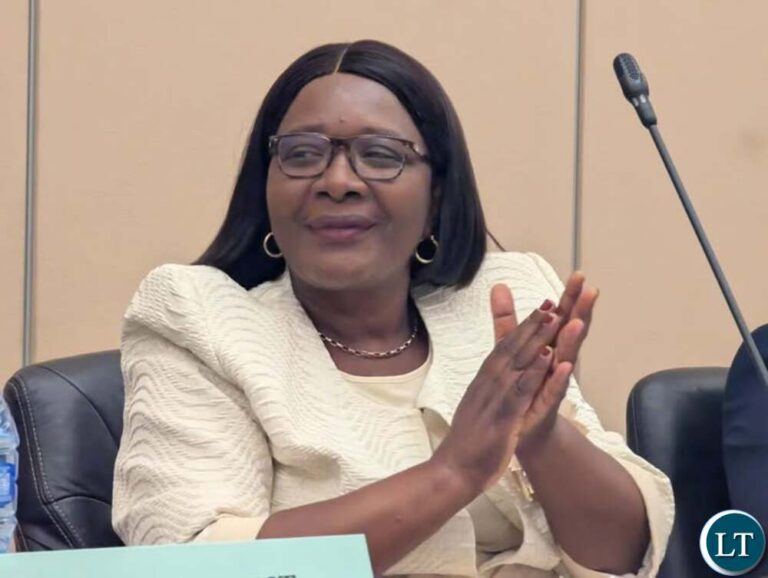
The Patriotic Front’s Acting National Chairperson, Hon. Jean Kapata, has issued a strong response to remarks made by former secretary general Hon. Davis Mwila, stating that his public comments about the state of the party hold no weight and should not alarm members.

Kapata explained that Mwila is the least suited individual to speak about the future, unity, or internal direction of the PF. She argued that his recent statements reflect personal anger and resentment rather than any genuine concern for the party. According to her, members should understand the context of his outbursts, which she linked to his removal from the Central Committee.

She said Mwila carried himself as though the party could not function without him, adding that this attitude was the root of his frustration. Kapata stressed that the PF’s structure is built on discipline and collective responsibility, not individual dominance. She reminded members that no person, regardless of history or seniority, is above the organisation’s principles.

Kapata also pointed to the period in which Mwila served as secretary general, noting that it coincided with the PF’s worst electoral performance. She said the loss of more than one million votes in the 2021 general election remains one of the most significant failures in the party’s history and reflects poorly on his leadership record. She said this should have prompted reflection rather than hostile commentary.

In her statement, Kapata urged PF members across the country to remain calm and avoid being influenced by comments that do not represent the direction of the party. She said those who are committed and loyal should stay focused as the PF continues its preparations for the upcoming General Conference.

She explained that the conference is the only recognised forum for selecting the next party president. Kapata stressed that the process is legitimate, non-negotiable, and will not be shaped by private preferences or side arrangements pushed by any individual.

Kapata stated that Mwila is free to leave the party if he feels dissatisfied. She said the PF will not pressure him to stay, nor will it allow internal competition to be manipulated in favour of any preferred candidate. She added that the leadership is aware of his interests and said the party will not divert from its established procedures.

She called on members to remain united and disciplined as the organisation moves toward an orderly and credible electoral process. Kapata emphasised that loyalty must be demonstrated through respect for party guidelines rather than public attacks or attempts to create confusion.

She reaffirmed that the PF remains intact and committed to stability. She stated that the leadership is focused on guiding the party through the conference period with clarity and without being drawn into internal disputes that do not reflect the collective position of the membership.


State House Demands Specific Objections to Bill 7, Sets Sunday Deadline

0

State House has requested the signatories of a consortium of opposition political parties to submit their detailed, clause-by-clause objections to Constitutional Amendment Bill No. 7 by Sunday, December 7, 2025.

This follows the delivery of an open letter to State House on Tuesday by a group of opposition leaders, calling on President Hakainde Hichilema to withdraw the Bill and warning that the process is fueling political and ethnic tensions.

In a statement, State House Chief Communication Specialist Clayson Hamasaka said State House has now studied the letter. He urged the signatories to move from political grandstanding to genuine engagement, noting a lack of specific criticism in their submission.

“For all its dramatic presentation, the opposition’s letter delivers an astonishing omission: it condemns Bill 7 without pointing to even a single clause that they claim to oppose,” Mr. Hamasaka stated. He contrasted this with President Hichilema’s past opposition to Bill 10, where he openly identified specific democratic threats.

Mr. Hamasaka challenged the consortium to demonstrate similar clarity, posing specific questions about their objections. “Is it the delimitation provisions that strengthen fair representation and equitable resource distribution? Or is it the Mixed-Member Proportional Representation system that finally opens guaranteed spaces for women, youth, and persons with disabilities?”

State House has formally requested the signatories to submit their clause-by-clause objections by the Sunday deadline, stating that anything less would confirm public suspicions about the letter’s intent.

Mr. Hamasaka concluded that if the objections are real, specific, and constructive, the government will give them due consideration. However, he warned, “if, after all the public posture and noise, they remain unable to identify a single clause in dispute, Zambians will be left with an unavoidable conclusion: that the letter was never about Bill 7, but about spectacle.”

Lundazi married man impregnates girl, 13

2

A 13-year-old girl of Kasunta village in chief Mwase’s area in Lundazi district was abducted, defiled and impregnated by a married man.

The juvenile’s 42-year-old father reported the matter to police.

And John Mhone of unknown age but from Goliya village in Lundazi district has been identified as the abductor and suspect in the matter.

Eastern Province Commissioner of Police, Robertson Mweemba, has confirmed the matter to the media in Lundazi.

The victim, who is a grade six pupil at a local school in Lundazi district, was reported to have been abducted from her parents’ house by unknown persons on November 28, 2025 around 21:00 hours.

Mr Mweemba said the defilement occurred on unknown dates but between September 6, 2025 and November 30, 2025 at unknown time at Kasunta village.

He said the case of the missing juvenile was reported to the headman and an investigation was constituted.

“Investigations indicated that a married man (John Mhone) abducted the minor and the matter was escalated to chief Mwase who later summoned both parties to the palace,” Mr Mweemba chief stated.

He explained that the suspect was ordered to release the minor to her parents, who later reported the matter to police for defilement and were issued with a medical report form.

It has been discovered that the defiled minor is also pregnant, while the suspect is on the run and police have since launched a manhunt.

No diesel crisis in Zambia, ERB assures

0

The Energy Regulation Board (ERB) has denied reports of diesel crisis in the country , stating that the country has sufficient diesel stocks.

As of December 2, 2025, the country has 150.2 million liters of diesel, with 47.72 million liters stored at the Ndola Fuel Depot and 102.48 million liters held at the Kigamboni Tank Farm in Tanzania.

This is according to a press statement released to the media by ERB Public Relations Manager, Namukolo Kasumpa.

Mrs Kasumpa said ERB attributes intermittent supply patterns in certain locations to logistical and distributional challenges, including scheduling delays, transportation constraints, and temporary depot-level congestion.

She added such issues are normal in fuel supply systems worldwide and are being addressed promptly.

Mrs Kasumpa further said that ERB has assured the public that intervention measures are always activated to ensure market stability and protect consumers from undue inconvenience.

“The board urges the public to rely on verified and credible sources for fuel related information and to follow official ERB updates,” she added.

PF Has Reached a Dead End, Says Former Secretary General

Davies Mwila has told Patriotic Front members that the party they once supported has collapsed beyond recovery and should no longer be considered a viable political organisation. Addressing supporters, the former secretary general said the PF had lost structure, unity and internal discipline, and was now unable to function as a meaningful political force. He urged members to begin identifying alternative political homes if they wished to remain active in national affairs.

Mwila said the party had reached a point where internal disagreements had become permanent features, leaving no room for genuine reorganisation. He explained that repeated attempts to restore cohesion had failed because senior figures continued to pull in different directions. According to him, the atmosphere inside the PF had shifted from collective planning to survival politics, with each faction trying to outmanoeuvre the other. Mwila noted that this environment no longer supported serious political work.

He argued that both President Hakainde Hichilema and PF vice president Given Lubinda had contributed to divisions through leadership styles he described as unifying in appearance but polarising in practice. Mwila said Lubinda had avoided calling for the long-delayed conference because he was aware the membership would not support his bid for authority. He stated that this reluctance to face internal democracy was further evidence that the party could not move forward with its current leadership arrangements.

Mwila added that the PF had lost its identity and could no longer articulate a clear political message. He said a party that could not explain what it stood for could not inspire confidence from its members or the wider public. He told supporters that many people who had left the PF were simply acknowledging this reality, while those who remained were holding on out of habit rather than conviction. Mwila said political engagement required clarity, direction and consistency, and without these elements, a party could not survive.

He also expressed concern that the organisation’s internal disputes had been taking place in public, often through statements and counter-statements in the media. Mwila said this behaviour had damaged the party’s credibility and made it difficult for potential supporters to take the PF seriously. He noted that when disagreements were not resolved privately, they tended to escalate, leading to a cycle of confusion that weakened the party further.

Mwila said the membership needed to accept that the PF had moved past the stage where reforms could restore its effectiveness. He explained that several attempts to rebuild the organisation had failed because leaders could not agree on a single direction or shared plan. Mwila said a party needed discipline and unity in order to negotiate national politics, and that the PF no longer had either. He urged members to consider their personal political futures and think about where they could contribute meaningfully.

According to Mwila, staying in a structure without a plan or a strategy placed members at a disadvantage, especially heading into a period where political competition was rising. He said individuals needed to position themselves in parties that were capable of offering representation and stability. Mwila stressed that leaving the PF was not an act of betrayal but a recognition of the organisation’s current condition.

He said political parties existed to provide platforms for participation, and when they failed to perform that role, members were free to move on. Mwila encouraged supporters not to wait for the situation inside the PF to improve, saying the challenges had persisted for too long and showed no signs of ending. He said that without unity, direction and seriousness, there was no pathway for the party to regain relevance before future elections.

Mwila told supporters that clinging to a failing structure would leave them without a political voice. He said this was the time for members to look ahead, reorganise their political lives and join structures that could provide a future. He added that the PF had reached its final stage of decline and that it was better for individuals to reposition themselves rather than wait for an unlikely recovery.

HH Considers Opposition Appeal for Broader Consultation

3

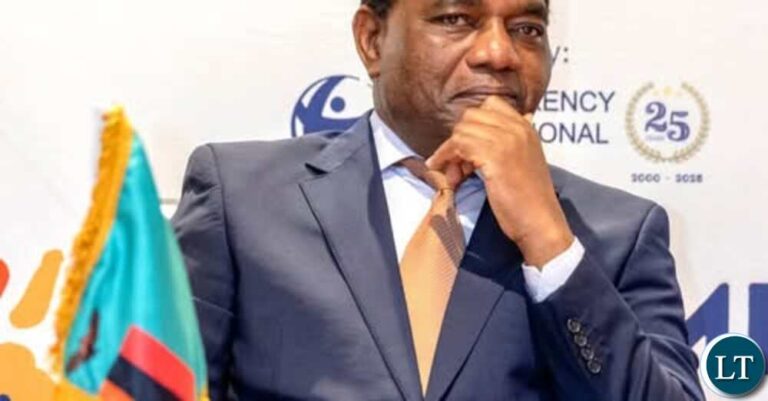
President Hakainde Hichilema has acknowledged receiving a formal letter from a group of opposition political leaders outlining concerns related to the current constitutional reform process under Bill 7. The communication was delivered to State House earlier this week and has since been confirmed by Chief Communications Specialist Clayson Hamasaka, who stated that the President had taken note of the issues raised and would consider them within the broader context of national consultations.

Mr Hamasaka explained that State House had already provided general clarification on aspects of the reform process in recent public statements, but the letter from the opposition would still form part of the documentation being reviewed as government prepares for wider engagement. He said the President valued dialogue that contributes to strengthening national governance, even where views differ on the direction or pace of reforms.

The opposition leaders, whose identities were not listed in the front-page summary, argued in their letter that the reform process required deeper consultation and should reflect broader national consensus rather than be driven by the Executive alone. They expressed concerns about transparency, timing, and the level of public participation available so far. According to the letter, they believed that more inclusive mechanisms were necessary to protect the integrity of constitutional changes.

Mr Hamasaka stated that the President had no objection to receiving the letter and maintained that all voices, including the opposition, would be taken into account. He noted that President Hichilema had consistently encouraged constructive engagement, particularly on matters of national importance such as constitutional reform. He added that the government was committed to ensuring that submissions from different stakeholders were recognised and processed appropriately.

The Chief Communications Specialist stressed that State House viewed the reform process as part of a broader dialogue that should involve not only political groups but also civil society organisations, religious bodies, professional associations, and institutions with an established interest in governance. He said the President had repeatedly emphasised the need for sincerity and civility in national discussions, particularly where constitutional matters are concerned.

The letter reportedly proposed alternative pathways to managing amendments, including a phased approach that would allow for deeper public education, targeted consultations and a summary of consensus points before any bill is taken through Parliament. It also urged State House to ensure that submissions already made by various groups, especially civic organisations, were not overlooked.

Mr Hamasaka reiterated that the President believed engagement must be open and transparent but also realistic in terms of time and legislative procedures. He said the opposition’s concerns would be examined together with other submissions from groups that had met the President in recent weeks. These include clergy representatives, youth organisations, civic associations and professional bodies, many of whom have publicly shared their positions on the pace and substance of the amendment process.

The Chief Communications Specialist stated that although disagreements were expected, there was value in acknowledging the role of the opposition in democratic governance. He added that the President had always encouraged political leaders to participate meaningfully rather than limit themselves to commentary without offering solutions. In his view, structured dialogue could reduce tensions and provide clarity on areas where political actors diverged.

Mr Hamasaka also highlighted that government had continued to emphasise the importance of respecting institutional procedures. He said constitutional amendments required careful handling because they involved the fundamental legal framework that guides the operations of the state. The administration, he noted, intended to ensure that whatever amendments are ultimately presented to Parliament reflect a fair consideration of the positions expressed by stakeholders.

He added that although public debate had intensified around certain provisions, the reform process remained open and would accommodate further submissions. He urged all political actors and interest groups to use recognised channels to make their contributions so that the conversation remains organised and reflective of national priorities.

The President’s response, according to Mr Hamasaka, aligns with his ongoing message of promoting constructive engagement and national cohesion. He said that while disagreements over constitutional matters were normal, the goal should always be to advance Zambia’s governance framework rather than deepen political divisions. State House, he emphasised, remained committed to ensuring that the reform process is conducted with professionalism and sensitivity to the expectations of citizens.

The Chief Communications Specialist underscored that the President viewed the receipt of the letter as part of the ongoing democratic process, not as an adversarial confrontation. He encouraged political leaders to focus on substance rather than rhetoric and to engage in dialogue that produces outcomes beneficial to the country. He concluded by noting that the President would continue to welcome constructive submissions as the amendment process progresses.

Executive Pushes Ahead with Bill 7 amidst Concerns.

EXECUTIVE PUSHES AHEAD WITH BILL 7 AS COURT RULINGS, PROCEDURES AND PUBLIC CONCERNS ARE SIDELINED

By Morgan Choolwe

The constitutional amendment process surrounding Bill 7 has entered a new and contentious phase, with the Executive pressing forward despite a Constitutional Court judgment, Standing Orders, and the Technical Committee’s own report indicating that the Bill cannot lawfully proceed. The developments have raised concerns about the legitimacy of the process, the treatment of stakeholders, and the broader effect on public confidence in constitutional reform.

Bill 7 was halted earlier in the year when the Constitutional Court ruled that the process leading to the amendment was unconstitutional. The ruling effectively rendered the Bill a nullity, as an unlawful process cannot anchor a valid constitutional amendment. The Standing Orders of the National Assembly reinforce this position by blocking any revival of a lapsed Bill during the same parliamentary session and requiring gazetting for any materially altered version. Despite these restrictions, the Executive has positioned Bill 7 back on the parliamentary agenda without rectifying the defects identified by the Court or following the procedural steps required by the Standing Orders.

The return of Bill 7 to Parliament has created concern among those following the process closely, particularly because the core parameters of the amendment remain unchanged. The Technical Committee, established to draft amendments and produce a detailed evaluative report, delivered its work on 1 December 2025. However, its output did not alter the direction or substance of the amendment. The committee’s role has been questioned, with observations that the Executive treated its draft and report as formalities rather than as substantive guidance or corrective mechanisms. The unchanged return of Bill 7 to Parliament has contributed to perceptions that the committee served mainly as a procedural layer rather than an independent phase of reform.

Concerns have also emerged over the contrasting manner in which different civil society organisations were engaged during the consultation period. A meeting held on Friday with organisations that openly supported Bill 7 was carried live on television, with prepared speeches and coordinated presentations. The broadcast created the appearance of broad support, allowing the Executive to frame the constitutional review as inclusive and publicly endorsed.

In contrast, the meeting with the Oasis Forum was held off camera, despite the organisation’s longstanding engagement on constitutional reform and its widely known objections to the process. The Oasis Forum has not opposed constitutional amendments themselves but has consistently raised questions about the legality, timing and pace of the Bill 7 process. The closed meeting limited transparency on their contributions and concerns, and it occurred shortly before the Technical Committee’s submission was delivered. This sequence, together with the rapid return of Bill 7 to Parliament, has fuelled views that the Executive sought to limit the public visibility of dissenting voices while amplifying supportive ones.

The decision to hold a televised session for selected organisations and a closed session for the Oasis Forum formed part of a broader pattern that civil society groups have highlighted. These groups point to the timeline of events, the procedural choices made, and the lack of meaningful incorporation of stakeholder feedback as indicators of a predetermined outcome. The timing has also drawn attention, occurring just days before protest actions planned by organisations opposed to the amendment process. The Executive’s strategy has been interpreted as an effort to dilute or pre-empt public mobilisation by projecting an image of consensus ahead of parliamentary deliberation.

The Technical Committee’s report, which outlined the necessary conditions for a lawful and credible amendment process, has not shifted the Executive’s position. The Bill’s reintroduction in its previous form points to an insistence on maintaining the initial framework, despite judicial findings, procedural barriers and public appeals for broader consultation and transparency. This has intensified debate over the state of constitutional governance and the relationship between the Executive, Judiciary and Legislature.

Across the governance landscape, the central issue remains unchanged: the Bill was nullified by the Constitutional Court due to its unconstitutional foundation. Given that a Bill cannot be resuscitated once lapsed and cannot be reintroduced in the same session without meeting specific procedural requirements, its return to the House has placed Parliament in a difficult position. If advanced without correcting the original defects, the process risks contradicting the very constitutional standards it seeks to amend.

As the debate continues, the focus remains on whether constitutional changes can proceed in a manner that upholds legality, transparency and public trust. With stakeholders divided and key institutional safeguards overlooked, the future of Bill 7 continues to raise questions about the integrity of the amendment process and the balance of power among Zambia’s governing institutions.

Minister Mweetwa Clarifies Intent of Constitutional Amendment Bill

0

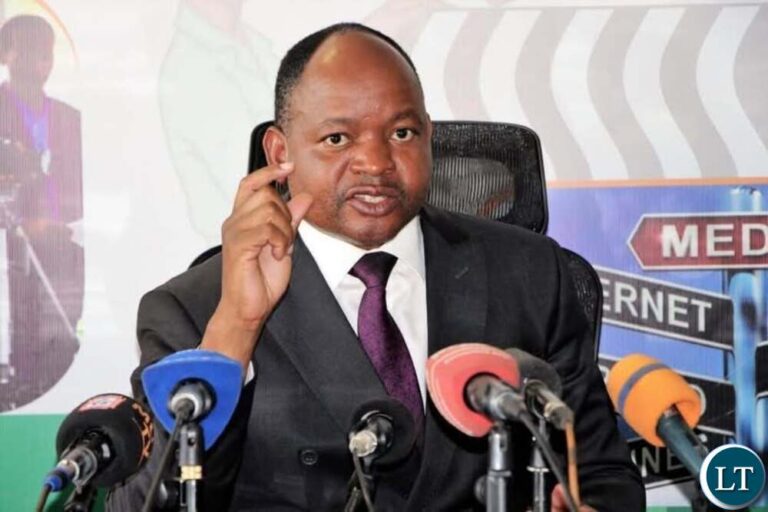
Minister of Information and Media Cornelius Mweetwa has stated that the constitutional amendment process is solely intended to strengthen Zambia’s electoral framework and not to grant any advantage to President Hakainde Hichilema.

Minister Mweetwa asserted that Bill No. 7 aims to address long-standing loopholes that, if unresolved, could disrupt the 2026 elections. He emphasized the bill’s focus is on creating certainty and stability in the electoral process, not on politics or personal gain.

“We cannot afford to have the electoral process thrown into disarray at a critical time. Bill 7 provides the clarity needed to avoid that scenario,” Mweetwa said.

He highlighted unresolved issues regarding election petitions, including ambiguous timelines for hearings and rulings, which have historically led to uncertainty and tension. “Without clear rules, disputes are inevitable. We are taking action to prevent confusion before it escalates,” he added.

Addressing concerns about timing, Mweetwa described the move as preventive rather than reactive. He also clarified that the government did not abandon consultations with groups like the Oasis Forum but merely paused them while Parliament resumes its legislative work.

“The bill being returned is the same one that was previously deferred, as legal frameworks do not allow a completely new bill to be introduced at this stage. Bill 7 is enriched by public input and technical recommendations,” he explained.

Minister Mweetwa encouraged citizens, civil society, and all stakeholders to participate in the upcoming review by the Parliamentary Select Committee, reiterating that the process remains inclusive and transparent.

Zambia Passes Landmark Occupational Health and Safety Bill

0

Parliament has passed the Occupational Health and Safety Institute (OHSI) Bill No. 17 of 2025, paving the way for a major overhaul of workplace safety regulations in Zambia. The bill now awaits presidential assent to become law.

The legislation replaces the outdated 2010 Occupational Health and Safety Act, which primarily focused on the mining sector. The new framework expands coverage to all industries, granting the OHSI stronger enforcement powers and a restructured board.

A central provision of the bill mandates the establishment of health and safety committees in every workplace. These committees are designed to foster collaboration between employees and management to prevent accidents and occupational illnesses.

Minister of Labour and Social Security, Brenda Tambatamba, stressed the significance of the reforms: “This law is about protecting lives and ensuring that every worker can operate in a safe environment. Safety is not just a guideline, it is a responsibility shared by all.”

According to a statement from the ministry, the bill empowers OHSI inspectors to shut down workplaces that pose an immediate danger. It also ensures that safety decision-making involves both workers and employers through inclusive committees.

To support the implementation, the government has revised fees for occupational health examinations via Statutory Instrument No. 70 of 2025—the first adjustment since 2003. The updated fees cover pre-employment, periodic, post-employment, and postmortem checks, aimed at ensuring the institute has the necessary resources to operate effectively.

With these stronger enforcement tools and collaborative structures, the OHSI Bill is expected to enhance safety and accountability in workplaces across the country.

Attorney General Argues President Cannot Be Sued Personally Over Official Duties

1

Attorney General Mulilo Kabesha has submitted to the Constitutional Court that President Hakainde Hichilema cannot be sued in his personal capacity for actions taken in the course of his official duties.

The submission is in response to a petition filed by PF presidential hopeful Brian Mundubile and party member Celestine Mukandila. The petitioners are asking the court to declare President Hichilema ineligible to stand as a candidate in any future election, alleging that his actions in initiating a constitutional amendment process were unconstitutional.

They seek declarations that the President and the Attorney General acted unconstitutionally by initiating Constitutional Amendment Bill No. 7 of 2025 without conducting wide and inclusive consultations, arguing this contravenes several articles of the Constitution. They contend the President breached his oath of office, which should disqualify him from seeking re-election. The petitioners referenced a prior Constitutional Court guidance which stated that a people-driven process led by an independent body of experts should be followed for constitutional amendments.

In his submissions, the Attorney General argued that all matters arising from the President’s executive functions are the legal responsibility of the Attorney General, who is the proper party to be cited in court. He stated, “The 1st Respondent cannot be sued in his individual capacity for official acts within the exclusive Presidential authority… the 2nd Respondent is the legally permissible party to be cited for all official acts and omissions of the Republican President.”

The Attorney General further argued that the court’s prior guidance does not limit the President’s constitutional power to initiate amendments. He stated, “The Judiciary cannot invent and legislate any procedures and processes or bodies such as an independent body of experts to represent the People of Zambia in conducting wide consultations outside of Article 79 of the Constitution.”

He explained that Zambia’s Constitution distinguishes between the constituted power of elected representatives to propose amendments and the reserved constituent power of the people exercised via referendum. He noted the proposed amendments do not create a new constitution nor affect its basic structure.

The Attorney General asked the court to dismiss the petition, declare that Articles 79, 64, 88, and 92 provide the sole procedure for amending the Constitution, and confirm that the Basic Structure Doctrine does not apply in Zambia. He also seeks costs.

The case continues in the Constitutional Court.

Minister Mubanga Eyes Shiwang’andu Parliamentary Seat in 2026

0

Small and Medium Enterprise Development Minister Elias Mubanga has announced his interest in contesting the 2026 parliamentary elections for the Shiwang’andu Constituency under the UPND.

Currently serving as a nominated Member of Parliament, Mr. Mubanga stated his readiness to represent his home area, emphasizing a deep-rooted desire to drive its development.

The minister, who made history as the first-ever holder of his portfolio in September 2021, expressed confidence in securing the constituency’s vote. He cited his longstanding presence on the ground, including a 2016 electoral attempt and personal development initiatives such as funding the construction of a clinic at Mukwikile Chiefdom in 2015.

Mr. Mubanga highlighted his focus on economic empowerment through farming and entrepreneurship, cautioning against a dependency on handouts. He noted that he has provided capacity-building, resources, and farming equipment to encourage sustainable livelihoods.

Praising the UPND administration, he pointed to policies like free education and the Constituency Development Fund (CDF) as transformative. He also stressed the need to equitably distribute national resources, including through constituency delimitation.

If elected, Mr. Mubanga aims to be remembered as an honest MP who provided investment ideas, not just funds. He reiterated his commitment to teaching people “how to fish” rather than simply giving them fish.

He added that should he not win, he would continue supporting development in Shiwang’andu by collaborating with the elected MP, while also focusing on his entrepreneurial ventures and party activities.

President Hichilema to Respond to Opposition on Constitution Bill

0

President Hakainde Hichilema is considering the contents of a letter from a consortium of political parties calling for the immediate withdrawal of the Constitution Amendment Bill No. 7 and will respond in due course.

State House Chief Communication Specialist Clayson Hamasaka confirmed that State House has taken note of the letter, which was delivered at the gates by opposition leaders. He acknowledged the peaceful conduct of the procession, stating such restraint is welcome in a democracy.

Mr. Hamasaka, however, described the decision to leave the communication at the gate as a curious choice, given the President’s known openness to engagement. He noted it offered little in advancing meaningful dialogue, especially as the document was shared on social media before reaching the addressee.

The statement emphasized that President Hichilema views State House as the people’s house, accessible for genuine and constructive engagement. He champions round-table dialogue where differing views are addressed transparently and respectfully, guided by the principle that national matters demand structured, good-faith discussions over symbolic gestures.

Mr. Hamasaka stated that on issues where the opposition has been vocal—such as energy, debt, mining, and agriculture—State House expects practical alternatives. He added that prior communication would have facilitated a direct and more effective conversation.

Nonetheless, in the national interest and with a commitment to unity and democratic maturity, State House remains open to respectful and constructive engagement with all political stakeholders.

Foreign Minister Clarifies German Visa Issue for MPs

2

The Minister of Foreign Affairs and International Co-operation, Mulambo Haimbe, has clarified that the German Embassy did not reject visa applications for 18 Members of Parliament scheduled to travel to Berlin and Turkey for an international conference.

This follows a statement in Parliament last week by Bwana Mkubwa MP Warren Mwambazi, who said he and 17 colleagues were denied visas.

In a ministerial statement delivered in Parliament, Mr. Haimbe explained that the applications could not be processed within the required timeframe. He stated that the request for the necessary Note Verbale was made only five days before the intended travel date. This did not meet the minimum processing timeframe under Schengen visa regulations, particularly as the German Embassy required approval from Berlin due to the size of the delegation.

Mr. Haimbe said the Embassy was willing to process visas for five members of the delegation, but this option was not admissible to the team. He emphasized that the incident is isolated and that the Ministry of Foreign Affairs consistently facilitates visas for MPs, government officials, and the general public.

He further clarified that while MPs hold diplomatic passports, Schengen rules only allow ministers or persons of equivalent rank to qualify for fast-track processing. MPs are required to submit their applications at least 10 to 15 days before travel to allow for administrative procedures.

Serenje Choppies Chain Store employ 45 local people

0

Central Province Minister, Mwabashike Nkulukusa, has hailed Choppies Chain Stores for growing its investment portfolio in the country.

Mr Nkulukusa says the imminent opening of the 41st Choppies outlet in the country in Serenje District entails economic growth and more jobs for the local communities.

The media reports that speaking when he made a stopover at Choppies building that will be opened to the public on Friday this week, the Minister urged Serenje Town Council to encourage Constituency Development Fund (CDF) beneficiaries to engage in vegetable growing and register with the chain store for supply of vegetables.

He observed that reliability is key for sustained supply to meet the chain stores demand.

And Choppies Chain Stores Head of Operations, Naveen Raghunandanan, said the outlet has so far employed 45 local people among them two persons living with disability.

Mr Raghunandanan pledged that the chain store will support the local farmers by buying fresh produce from them.