Monday, June 8, 2026
14.8 C
Lusaka
Home Blog Page 232

Chisamba records over 9,000 new voters

2

The Electoral Commission of Zambia (ECZ) has recorded over 9,000 new registrations, representing 25 percent of the projected total of 39,947, as of the close of Monday, 24 November 2025, in Chisamba District.

ECZ Commissioner, Ndiyoyi Mutiti is impressed with the registration process, which is coming to an end today.

She was speaking to the media when she concluded her monitoring tour of voters registration exercise in Chisamba District of Central Province yesterday.

Commissioner Mutiti acknowledged the slow pace at which the exercise started but noted that it gained momentum in the third to sixth phase, registering more participants during an extension period.

“I’m pleased with the outcome of this whole program. We began on a very slow note particularly in phase one and phase two. As we moved towards phase three right up to phase six, the statistics began to peak. I’m particularly pleased that we had an extension, because with the extension we have been able to see even more people turning to register, which has helped us to build up on the statistics” she said.

Ms Mutiti appealed to those who have not yet registered to do so before the extension comes to an end on 26th November 2026.

“My appeal to our people is that in this remaining time, turnout and register as voters because if you don’t register you will not have an opportunity to elect your leaders which is your democratic rights,” Commissioner Mutiti said.

Meanwhile, District Registration Officer (DRO) Chamuka Muwamba said the district had managed to capture 9,818 new registrations as of the close of business on Monday.

“New registrations alone stand at 9, 818. So, if we take that into percentage against the target of 39, 947 it means we are standing at 25%. It has been testified that the target is based on the ZAMSTAT Data, but we still feel that the target is quite high,” Mr Muwamba said.

Mr Muwamba said it has been a challenge to register people working in the commercial farms that are located in the three wards of the district because the employers were not releasing their employees.

He said two registration kits have now been allocated to the commercial farms to ensure that no one is left out.

Mr Muwamba is, however, optimistic about attaining above 30 percent of the target at the close of the exercise.

“Three wards in Chisamba are under commercial farms. Big farms like ZRC, CRC, Bush Cut, those are occupying about three wards. So, it’s a challenge to get people from these farms to come to registration centers. But we have dedicated two kits to these farms so that we can give the farm workers a chance to register,” he said.

The two weeks extension period is coming to an end at the close of business today.

Chilanga District records increase in voter registration

0

Chilanga District has recorded over 16,000 new voter registrations against a target of over 50,000 since the mass voter registration exercise began on October 13, 2025.

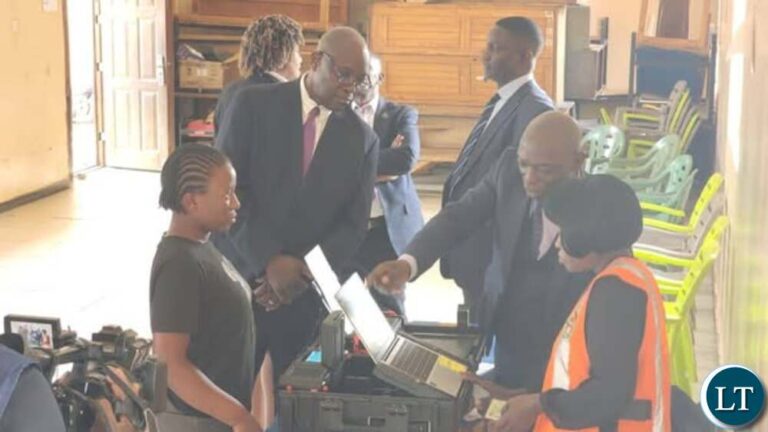
Chilanga District Registration Officer, Francis Ndola, disclosed this when Electoral Commissioner of Zambia (ECZ) Commissioner General, Vincent Mukanda toured selected voter registration centres in the district.

Mr Ndola said the district has also captured over 13,000 updates during the exercise, bringing the cumulative total to over 29,000 individuals registered during the first phase and extension of the exercise.

He however, highlighted challenges faced during the exercise, including dilapidated registration centres, disrupted registration processes at churches on Sundays due to gatherings and overheating of equipment.

“Some centres are in a poor state, making it difficult for officers to operate effectively,” Ndola said.

Meanwhile, ECZ Commissioner General Vincent Mukanda, expressed satisfaction with the exercise’s progress in the five centres he toured.

He acknowledged shortcomings in voter education and equipment, citing technical delays in the commencement of voter education and problematic kits.

Mr Mukanda also expressed excitement over the smooth voter registration process undertaken at Mwembeshi Open Air Correctional Facility.

Kafue attracts 550mw solar investment proposals

0

Kafue District has received five investment proposals from companies seeking to establish solar power plants, in a development expected to boost the district’s contribution to Zambia’s growing renewable energy sector.

The proposed projects have a combined generation potential of 550 megawatts, making them some of the most significant renewable energy investments earmarked for the district.

Kafue District Commissioner Maurice Hikapulwe confirmed that once operational, the power generated from the solar plants will be fed into the national grid through the ZESCO sub-station in Kafue, enabling nationwide distribution and supporting government efforts to enhance energy security.

“Kafue District has received five proposals from companies seeking to establish solar power plants and the combined generation potential is 550 megawatts,” said Mr Hikapulwe.

He disclosed that the proposals range from 250 megawatts at the highest to 10 megawatts at the lowest and are currently undergoing technical, environmental and regulatory assessments.

Mr Hikapulwe explained that investors are attracted to Kafue due to its strategic location, abundant sunlight and proximity to major transmission infrastructure.

“Kafue has a big ZESCO sub-station; that’s why we are seeing increased interest in the district,” he said.

He added that the anticipated investments are expected to spur economic growth through job creation, infrastructure development, and increased private-sector participation in the district’s energy landscape.

ECZ Commissioners happy with strong voter registration turnout

0

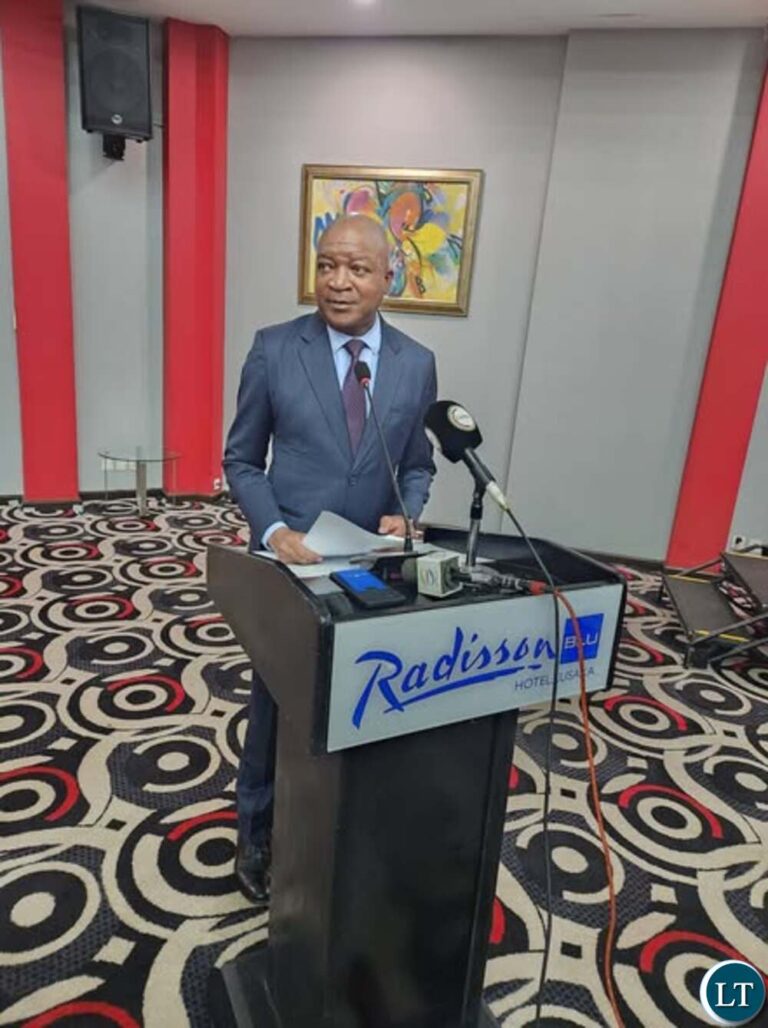
Electoral Commission of Zambia (ECZ) Commissioners Vincent Mukanda and Ndiyoi Mutiti have expressed satisfaction with the ongoing voter registration turnout following separate monitoring tours of registration centres in Lusaka today.

Commissioner Mukanda visited several centres in Matero Constituency, including Matero Shoprite, Justin Kabwe Secondary School, Matero Community Hall, Matero Police Station and Chipata Community Centre.

During the tour, Mr Mukanda inspected operations and interacted with ECZ staff and citizens registering as voters.

Speaking after the visit, Mr Mukanda urged eligible Zambians to participate in the national exercise.

“I want to encourage all citizens to come out and register. Your vote is your voice and participating in this process is key to strengthening our democracy,” he said.

He also commended ECZ staff, noting that the process was running smoothly.

“We are satisfied with the level of organisation and the commitment of our officers on the ground,” he added.

Meanwhile, Commissioner Ndiyoi Mutiti toured registration centres in Munali Constituency, including Kaunda Square and East Park Mall, where she observed a steady flow of registrants.

“I am very pleased with the turnout we have witnessed today. Citizens are coming in large numbers, showing their commitment to participating in the country’s electoral process,” she said.

She further thanked the public for responding positively to the ECZ’s call to register.

“We appreciate the cooperation from the public and the enthusiasm shown. We urge those who have not yet registered to do so while there is still time,” she said.

The media reports that ECZ has continued to encourage all eligible Zambians to register ahead of future electoral processes.

Over 1,500 Milenge households receive FSP Inputs

0

Milenge District has launched the distribution of farming inputs under the 2025/2026 Food Security Pack (FSP), targeting 1,517 vulnerable but viable households.

District Administrative Officer Lawrence Nkolonga detailed the inputs being distributed, which include 3,068 bags each of Compound D and Urea fertilizers, 1,517 bags each of orange maize seed fortified with vitamin A and white maize seed, as well as 759 bags of beans and 758 bags of groundnuts.

Mr Nkolonga noted that the FSP serves as an alternative support system for households that are unable to benefit from the Farmer Input Support Programme (FISP).

He urged community members to ensure fair access by avoiding double or triple dipping, stressing that the limited government-funded inputs must be shared equitably among eligible households.

“I implore you to allow households that have not benefited from FISP to access the FSP, rather than double-dipping and depriving others,” Mr Nkolonga said.

He further advised beneficiaries to use the inputs responsibly to boost food production and reduce malnutrition, cautioning them against selling the inputs for non-essential items such as alcohol and tobacco.

And Milenge District Community Development Officer Jackson Mwale emphasized that the inputs will this year be distributed to beneficiaries free of charge.

“No committee member should go to beneficiaries’ homes to demand repayment and even new beneficiaries who start in 2026 will not be required to pay back in their third year,” Mr Mwale said.

He encouraged beneficiaries to make full use of the inputs to improve food production and strengthen household food security.

Meanwhile, beneficiaries have expressed gratitude to the government for the support.

Speaking on behalf of others, Fridah Kweta said the initiative has significantly improved household food security in the area.

NW province calls for speedy Meheba infrastructure works

0

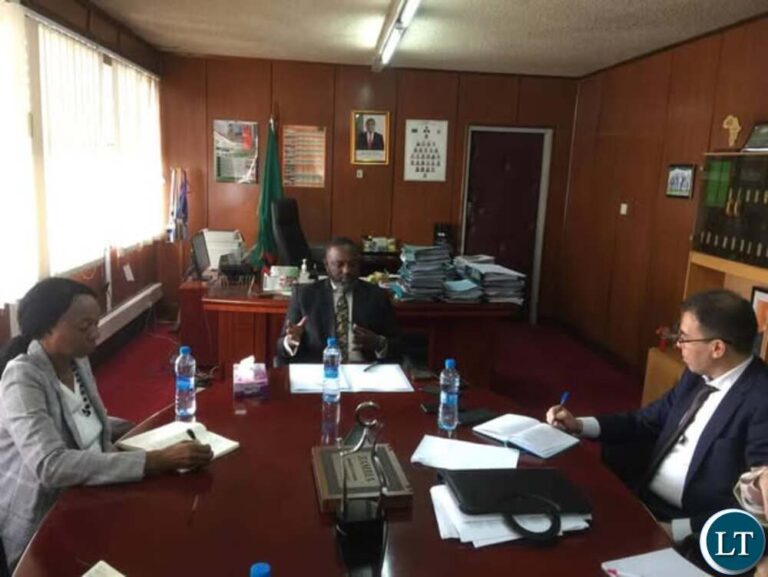
 North-Western Province Deputy Permanent Secretary Luckson Mulumbi has urged the Office of the Commissioner for Refugees to expedite infrastructure development in the Meheba Resettlement Scheme.

Speaking when a team from the Office of the Commissioner for Refugees paid a courtesy call on him today, Mr Mulumbi said the province has been eagerly awaiting the actual implementation of the Zambia Refugee and Host Community Project, which has already been launched.

He expressed gratitude that the team will be conducting infrastructure needs assessments in the resettlement area but called for swift progress once the assessments are completed.

“Our hope is that after you do these rapid needs assessments, the period between the conclusion of the assessments and the start of actual implementation must not be too wide,” Mr Mulumbi said.

He further stressed that the quality and detail of the infrastructure should not be compromised once construction begins.

Meanwhile, Zambia Refugee and Host Community Project Coordinator Hezron Chakanika said the project aims to improve the welfare of both refugees and the host community.

Mr Chakanika explained that infrastructure development is one of the project’s key components.

“We have a team that will be assessing the schools as well as the hospitals that we are going to improve. The original target is six schools, three in Meheba and three in the host communities,” Mr Chakanika said.

First Lady donates to Chipata Hospital, vulnerable groups

1

First Lady Mutinta Hichilema has donated assorted goods to Chipata Central Hospital and vulnerable groups in Chipata District.

The donated items include 200 blankets, 100 mattresses, 100 bags of mealie meal, 64 hospital beds, 50 cases of cooking oil, 50 cases of sugar and 20 wheelchairs.

Mrs Hichilema said the donation is intended to help address some of the challenges facing the hospital.

“This donation is meant to improve quality health care and support the selfless men and women in the health sector,” she said.

Additionally, community members who mainly comprised the elderly also received 110 sewing machines, 200 bags of mealie meal, 200 blankets and cases of sugar and cooking oil, among other items.

“The machines will enable women and girls in this community to start small businesses and generate income for their families,” she noted,

Mrs Hichilema also emphasized that empowering women benefits entire families and communities.

She added that the initiative aligns with government efforts to promote grassroots empowerment.

The First Lady also thanked partner organisations, including the Organisation of African First Ladies, Lusaka Indian Ladies Association, Zambia National Commercial Bank and the Gladys Mwansa Masabo Foundation for supporting vulnerable groups.

“This sixth donation reflects the Office’s ongoing commitment to supporting government efforts to improve healthcare services, enhance community well-being and empower women and youth,” she said.

The media reports the First Lady has made similar donations across the country, starting with Kasama General Hospital in April, followed by Solwezi General Hospital and Lewanika General Hospital in July.

Others include Monze Mission Hospital in August and Kitwe Teaching Hospital in October.

And Chipata Central Hospital Medical Superintendent Mbinga Mbinga thanked the First Lady, assuring her that the items will uplift the lives of many in the community.

Earlier, during her courtesy call on Paramount Chief Mpezeni of the Ngoni people, the traditional leader commended Mrs. Hichilema for her continued support.

“When someone cares about your health, you forget other issues and are thankful, because health is vital to our lives,” he said.

House of Clergy condemns violence by youths

0

House of Clergy Zambia Chief executive officer, Trevor Muziya  has condemned the acts of violence being caused by youths in the country .

‎Speaking during a media briefing, Mr Muziya said the disturbing incident in Chingola where youths resorted to throwing stones during a public gathering with the Republican President is unchristian and unacceptable.

‎“Such acts are unacceptable, unchristian, and a direct threat to the peace and stability that Zambians fought hard to cultivate,” he said.

‎Mr Muziya said that any leader who promotes or normalises the vice, was supposed to reflect on the damage it caused in the past and refrain from disturbing  peace, protecting citizens, and ensuring that political spaces remain civil, lawful, and safe.

‎”We condemn, in the strongest terms, every form of violence, whether physical, verbal, or incited by irresponsible leadership,”he said.

‎He said violence has no place in  communities and no place in politics.

‎”Those who engage in such acts, regardless of their political affiliation, must be held accountable, “he said .

‎Mr Muziya said no political party should ever use youth as instruments of instability, and no leader should ever encourage conduct that undermines national peace.

‎He said the house of Clergy is deeply concerned by a growing trend of subtle calls for caderism being made by
‎some political leaders.

‎He said  such  statements risk taking Zambia backwards into an era of fear, intimidation, and lawlessness, an era this country has decisively walked away from.

“Caderism has been significantly reduced, and this progress must be jealously guarded, not reversed,” Mr Muziya mentioned

‎ And House of Clergy Zambia National Executive Director, Jimmy Ng’ambi said any leader promoting or normalising caderism must reflect on the damage it caused in the past and refrain from resurrecting a practice that brought pain and division to people.

‎Reverend Ng’ambi has urged every Zambian citizen, political party, leader, and  youth to continue maintaining the path of peace.

Concourt dismisses bid to halt constitution review process

0

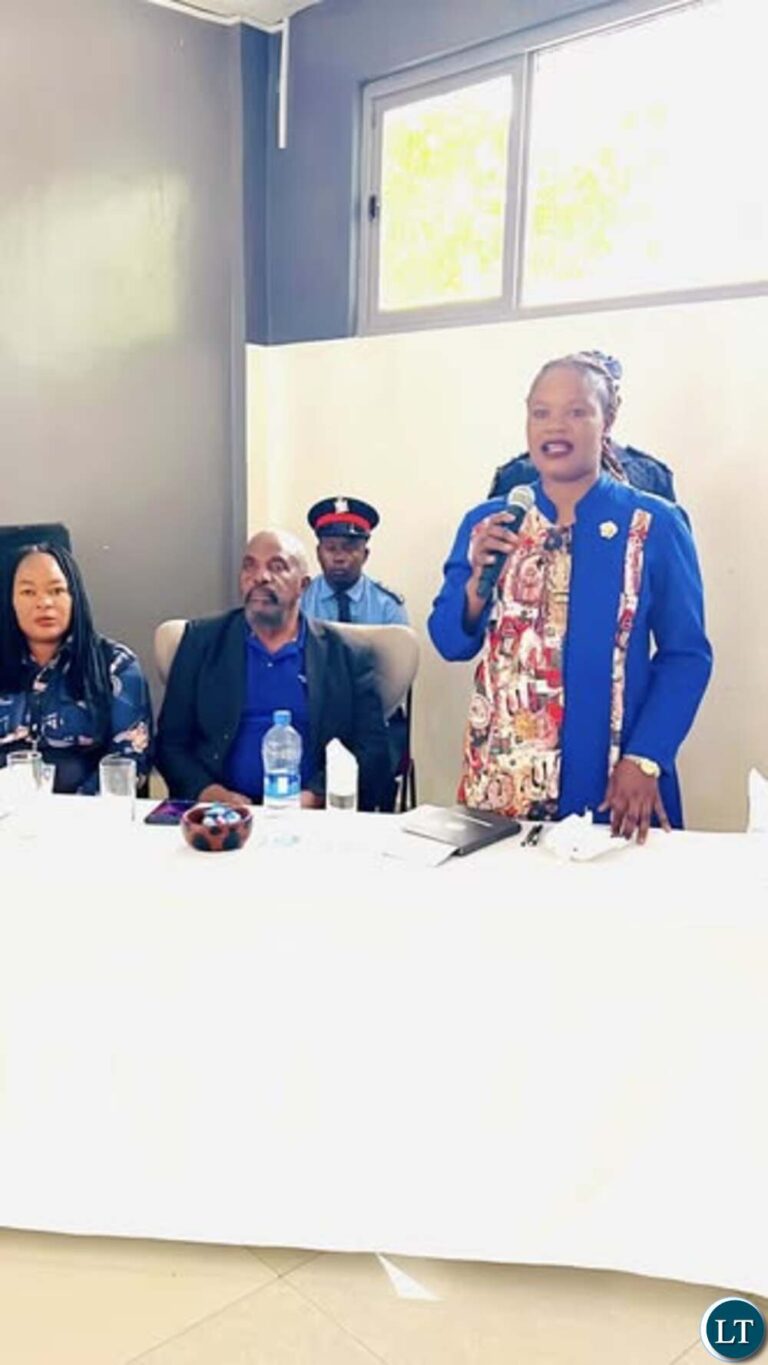
The Constitutional Court has dismissed an application by the Law Association of Zambia (LAZ), three major church mother bodies, the Non-Governmental Organisations’ Coordinating Council (NGOCC) and LCK Freedom Foundation seeking to halt the work of the Presidential Technical Committee on Constitutional Amendments.

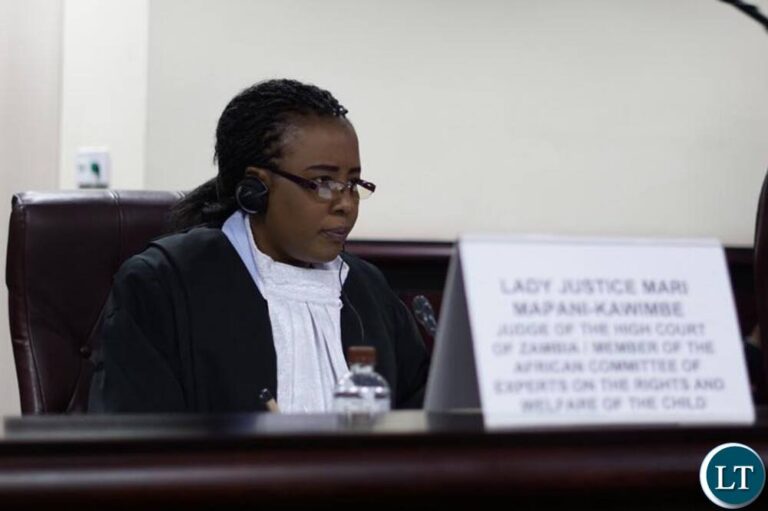
In a ruling delivered in chambers, Constitutional Court Judge Maria Kawimbe held that the petitioners failed to meet the legal threshold for the conservatory orders they sought, which would have stopped all sittings, consultations and drafting activities of the 25-member committee appointed on 2 October 2025.

The petitioners had argued that the committee was unlawfully constituted, lacked independence and was operating in violation of constitutional norms and the court’s June 2025 decision in Munir Zulu & Celestine Mukandila vs the Attorney General.

The petitioners further contended that the President had no authority to establish the body without a gazetted legal framework and that the accelerated 12-day national consultation period risked producing an illegitimate amendment process.

Affidavits and submissions by Counsel Linda Kasonde, the organisations warned that unless the court intervened, the committee would finalise its draft report before their main petition is heard, rendering the case “nugatory” and causing irreparable harm to constitutional legitimacy.

They also cited alleged procedural irregularities, poor publicity of sittings, exclusion of rural communities and what they described as a pre-determined agenda mirroring the previously rejected Bill No. 7 of 2025.

But the State, represented by Solicitor General Marshall Muchende, argued that the committee was properly appointed under Articles 91(2)(f) and (j) of the constitution and was operating lawfully.

An affidavit by committee Vice-Chairperson Landilani Banda stated that more than 11,000 submissions have already been received across the country and that the committee was now finalising its draft report, stating that halting the process at this stage, would defeat public interest and undermine the expectations of citizens who participated.

In her ruling, Justice Kawimbe observed that while the issues raised in the main petition are substantive and require full consideration by the full bench, the interim application could not succeed because the petitioners had not demonstrated imminent irreparable harm, nor that the balance of convenience favoured stopping the process.

She emphasised that a conservatory order must protect the public interest, not create conditions favourable to one party before the matter is fully heard.

“The relief sought,” she noted,  “drafted in very broad strokes and would effectively suspend the entire constitution-making process, an outcome that risked determining the substantive issues prematurely, which a single judge considering interim relief is not empowered to do”.

Justice Kawimbe also found that the petitioners’ fears about the committee’s eventual draft bill were speculative, as no final product exists yet.

The alleged harm, she held, was neither “unmistakably real nor capable of being assessed at this stage” she stated.

She cautioned the petitioners against introducing evidence from the main petition into the interim application, noting that doing so blurred the line between interlocutory and substantive proceedings.

On the balance of convenience, the court held that public interest favoured allowing the committee to continue its work, citing the large number of public submissions and the need to avoid undermining citizen participation already undertaken.

The judge stated that the petitioners had failed to satisfy the three-part test commonly applied in constitutional conservatory applications, establishing a prima facie case, demonstrating imminent irreparable harm and showing that public interest and the balance of convenience favour intervention.

“The petitioners have not successfully met the threshold for the grants of a conservatory order, their application is unsuccessful and accordingly dismissed.” She stated.

Each party was ordered to bear its own costs.

The main petition challenging the legality of the Technical Committee’s establishment and operations remains pending before the Constitutional Court.

Government reaffirms commitment to supporting community schools

0

Minister of Education, Douglas Syakalima, says the government remains committed to ensuring inclusive, equitable and quality education for all, including those in community and faith based schools.

Mr Syakalima reaffirmed the government’s pledge to support all learning institutions to ensure that no child is left behind.

He has since praised Civil Society Organisations and various cooperating partners for complementing the government’s efforts in delivering education to vulnerable learners.

The  media reports that the Minister was speaking when he officially opened the Zambia Open Community Schools (ZOCS) Annual General Meeting in Lusaka today.

Mr Syakalima noted that community schools have continued to champion social justice by creating learning opportunities for children who would otherwise be excluded due to poverty and other barriers.

He said this year’s AGM theme “Hope Through Action and Transforming Lives Through Sustainable Education” aligns with the government’s broader agenda to prioritise education as a driver of poverty reduction and national development.

“Government has strengthened policies that promote access, quality and equity in the education sector, including increased grants, recruitment of qualified teachers, teaching and learning materials, and infrastructure development,

“Education remains a fundamental human right, and the government will continue implementing policies that guarantee every child the opportunity to learn,” he said.

And ZOCS representative, Rhoda Bwalya, said the organisation has remained committed to supporting vulnerable children since its establishment, focusing on equality, access and improved learning outcomes.

“ZOCS’ work is anchored on strengthening community schools, training volunteer teachers, advocating for supportive legislation and promoting early childhood education,” she said.

She noted that although funding challenges persist, the organisation appreciates the government’s continued support, particularly the free education policy, which has increased enrolment in community schools across the country.

Ms Bwalya said thousands of children have been able to access education through community schools.

“ZOCS will continue working with the government and partners to eliminate barriers that prevent vulnerable children from accessing quality education,” she said.

The AGM brought together education partners, government officials, community school representatives and stakeholders to review progress and renew commitments to supporting vulnerable learners.

18th Africa Leather Value Chain Forum opens

0

The 18th Africa Leather Value Chain Forum has today opened in Lusaka, bringing together industry stakeholders, policymakers, and development partners to chart a new course for the continent and beyond.

The media reports that speaking during the official opening of the forum in a speech read on his behalf by Minister of Tourism, Rodney Sikumba, Minister of Commerce, Trade and Industry, Chipoka Mulenga emphasised the country’s commitment to transforming the leather industry and create jobs.

Mr Chipoka said the leather sector presents great opportunities for employment creation, rural development, and export growth.

“We are deeply honoured to host this prestigious event and welcome our brothers and sisters from across the continent and beyond,” Chipoka said.

During the forum, the Africa Leather and Leather Products Institute (ALLPI) and Stanbic Bank Zambia signed a Memorandum of Understanding (MoU) to pilot a dedicated Small Medium Enterprise financing mechanism for the Zambia Leather Value Chain.

Mr Chipoka stressed that the MoU between ALLPI and Stanbic Bank is important for African MSMEs as it will give the leather producers the tools, capital, and confidence to compete on the world stage.

He added that the initiative is expected to be replicated across Africa, with Stanbic Bank committing to roll out the model in all its operating countries if the pilot succeeds in Zambia.

Mr Chipoka also highlighted that the African Continental Free Trade Area (AfCFTA) has potential to boost intra-African trade, which currently stands at 15 percent.

“We hope the AfCFTA will present an opportunity to change this narrative,” Mr Chipoka said, urging member states to minimise non-tariff barriers and harmonise standards.

He expressed expectations that the forum will conclude with a renewed commitment to build a sustainable, inclusive, and competitive African leather industry.

And speaking earlier at the same forum, Common Market for Eastern and Southern Africa (COMESA) Acting Secretary General, Dev Haman commended Zambia’s initiatives, including the establishment of Leather Manufacturing Centres, development of leather curricula, and implementation of hides and skins traceability systems.

“Zambia has shown commendable leadership in industrial diversification, SME development, and value-chain strengthening,” Mr Haman said.

Mr Haman noted that the forum is expected to shape the future of Africa’s leather industry, with discussions focusing on sustainability, standards harmonisation, SME financing, and distribution models.

He further reaffirmed COMESA’s commitment to working with ALLPI and other stakeholders to build a competitive, sustainable, and integrated African leather value chain.

Meanwhile, Africa Leather and Leather Products Institute Executive Director Nicholas Mundungwe called for Africans to consume and support African products adding that it will help create a market for African producers.

Mr Mundungwe emphasised the need for African countries to work together to industrialise the continent by implementing policies that support industries in Africa.

The 18th Africa Leather Value Chain Forum, is being held under the theme, “Unleashing Africa’s Leather Potential: Sustainable, Inclusive and Competitive.”

President Hakainde Hichilema’s Vision Is Patriotic, Clear and Firmly Anchored on Zambia’s Long-Term Recovery

11

President Hakainde Hichilema’s Vision Is Patriotic, Clear and Firmly Anchored on Zambia’s Long-Term Recovery

By Magret Mwanza
President Hakainde Hichilema continues to face a steady stream of misrepresentation, not from policy debate, but from those who benefit from sowing confusion. His words are twisted, his intentions caricatured, and his progress dismissed by voices more interested in noise than nation-building.

Yet the record speaks plainly. What defines his leadership is not rhetoric, but a consistent, long-term strategy to pull Zambia back from the edge of economic and institutional collapse.

This is not leadership built on grievance, tribe, or theatrics. It is leadership rooted in discipline, focused on restoring systems, rebuilding trust, and returning opportunity to ordinary citizens.

Those who distort his message often do so not out of concern, but because real progress threatens their relevance. When stability replaces chaos, their playbook loses power.

And the progress is real. After years of fiscal freefall, Zambia’s economy is on a steadier footing. Mining, once mired in disputes and uncertainty, is functioning again. Major producers are paying their fair share, tax revenues are holding firm, and investor confidence, fragile for so long, is quietly returning.

This is not optimism. It is arithmetic. The numbers reflect deliberate reforms: tighter fiscal controls, transparent negotiations, and a refusal to fund today’s promises with tomorrow’s debt.

That stability has created space to invest where it matters most. For too long, mining licenses were gatekept by a narrow circle of insiders while Zambian entrepreneurs watched from the sidelines. Today, artisanal and small-scale miners are receiving licenses at unprecedented rates, giving citizens direct access to the country’s mineral wealth, not through favour, but through process.

In public services, the shift is equally profound. Tens of thousands of teachers and health workers have been hired in the past few years, reversing decades of neglect that left rural clinics and schools understaffed and under-resourced. These are not abstract figures. They are paychecks supporting families, classrooms with functioning teachers, and clinics where patients no longer wait days for care.

Free education, once dismissed as unaffordable, is now a reality for millions of children. For households that once chose between school fees and meals, that relief is more than policy. It is dignity.

Then there is the Constituency Development Fund. No longer a tool for political patronage, it has become a vehicle for local agency. Communities are deciding their own priorities: repairing bridges, grading feeder roads, equipping youth skills centres, and supporting women-led cooperatives. This is decentralisation not as a slogan, but as practice.

Hichilema’s style, quiet, deliberate, and often understated, can be mistaken for passivity by those who equate leadership with volume. But his critics’ frustration runs deeper. This government is fixing what was broken, cleaning what was hidden, and proving that competence can outlast chaos.

Whenever progress becomes undeniable, the backlash shifts tactics, manufacturing outrage, reinterpreting neutral remarks, or recycling old narratives as if nothing has changed. But Zambia has changed.

The country now demands leadership that thinks beyond election cycles, beyond regional loyalties, beyond score-settling. That is precisely the direction this administration has pursued since day one.

Perfection? No. But purpose? Clear. And results? Increasingly visible.

Zambia’s recovery is not happening by accident. It is the outcome of tough choices, unpopular reforms, and a president who understands that rebuilding a nation requires patience, not just promises.

Zambians should not let manufactured controversies obscure tangible gains. Those who continually misrepresent the President do so because they know that if citizens see the full picture, the growing jobs, the better schools, the open mining sector, they will have little left to offer.

What is at stake is not just one leader’s legacy, but a national project: stable finances, stronger services, empowered citizens, and a resource sector that finally works for Zambians.

President Hichilema’s commitment to that vision is evident, not in speeches, but in policy. Not in slogans, but in outcomes. And for the millions whose lives are improving quietly, day by day, the truth does not need amplification.

It just needs to be lived.

Mundubile Calls on MPs Linked to Alleged Bill 7 Payments to Return the Money

Mundubile Calls on MPs Linked to Alleged Bill 7 Payments to Return the Mone

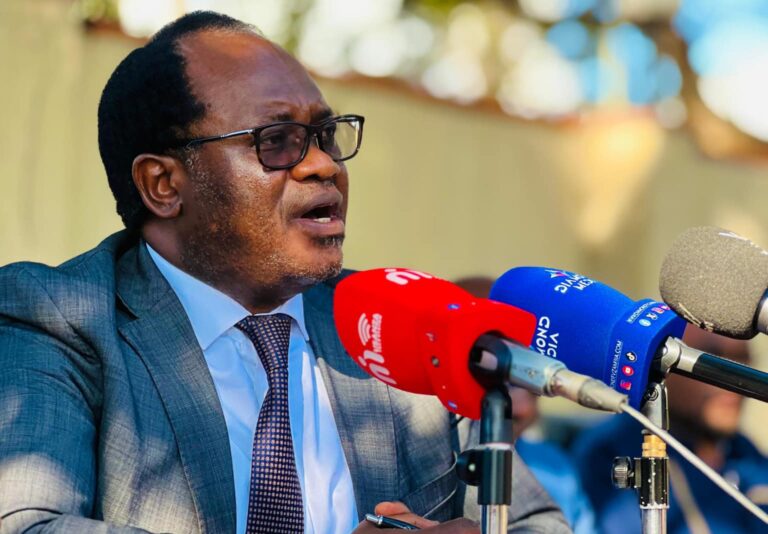
Lusaka, November 26, 2025 — Patriotic Front parliamentary leader Brian Mundubile has called on Members of Parliament accused of accepting payments to support Constitutional Amendment Bill 7 to immediately return the money. His appeal follows recent public remarks by academic Dr. Sishuwa Sishuwa, who alleged that some lawmakers were offered as much as K3 million to back the controversial legislation.

Speaking at a media briefing in Lusaka, Mundubile described the claims as deeply troublingespecially at a time when elderly farmers are forced to sleep outside Food Reserve Agency depots, waiting weeks or months to receive payment for their harvests. He stressed that MPs, who already receive salaries and allowances funded by taxpayers, have a moral obligation to uphold integrity and reject any financial incentives tied to legislative decisions.

“These are public resources,” Mundubile insisted. “If money is being handed out to sway votes on a constitutional matter, it belongs not to politicians but to the very citizens struggling to feed their families.”

He went further, alleging that some individuals were also being dangled government contracts in exchange for political loyalty. Such practices, he warned, severely damage public trust in Parliament and cast doubt on the entire constitutional reform process. In his view, any lawmaker who accepted such inducements forfeits the right to be called a people’s representative.

Mundubile argued that Bill 7 lacks broad public support, pointing to widespread opposition that emerged long before the draft reached Parliament. “No reasonable Zambian is backing this bill,” he stated, adding that efforts to fast-track it risk deepening national divisions rather than fostering unity.

He urged those who took money to return it without delay and suggested those funds be redirected to settle outstanding payments owed to small-scale farmers. The sight of elderly citizens camped outside FRA offices, he said, is a stark reminder that national priorities are dangerously out of alignment.

Calling on MPs to join the ongoing peaceful protests led by the Oasis Forum, Mundubile framed civic participation as a constitutional duty. “Defending the Constitution isn’t just about voting in Parliament it’s about standing with the people,” he said, noting that opposition lawmakers would continue standing shoulder-to-shoulder with citizens throughout the debate.

At the same briefing, PF Chairperson for Legal Affairs George Chisanga distanced the party’s recognized leadership from the allegations. He affirmed that MPs aligned with what he called the “legitimate PF faction” were not involved in any such inducement schemes and have consistently defended constitutional principles in past parliamentary sessions.

Chisanga expressed respect for Dr. Sishuwa’s role as a concerned scholar and citizen, and said the party would seek further engagement to determine whether he could disclose the names of implicated MPs. If identified, Chisanga added, those individuals should face public accountability in their home constituencies.

He recalled past instances where PF lawmakers were suspended for challenging measures they believed violated the Constitution or compromised the national budget proof, he said, of their willingness to pay a personal price for principle.

Today, Chisanga noted, several PF MPs are prepared to sign public social contracts pledging never to support Bill 7 under any circumstances. For them, parliamentary service is a sacred trust, not a transactional arrangement.

The PF, he reaffirmed, stands firmly with the Oasis Forum in opposing the bill. Constitutional reform, he emphasized, must be rooted in transparency, public interest, and fidelity to the oath every MP swears upon taking office.

As public scrutiny intensifies, the pressure is mounting not just for answers, but for action. With farmers waiting in line and citizens watching closely, the question hanging over Parliament is no longer just about a bill but about who it truly serves.

President Warns Against Violence in Political Activities

President Warns Against Violence in Political Activities

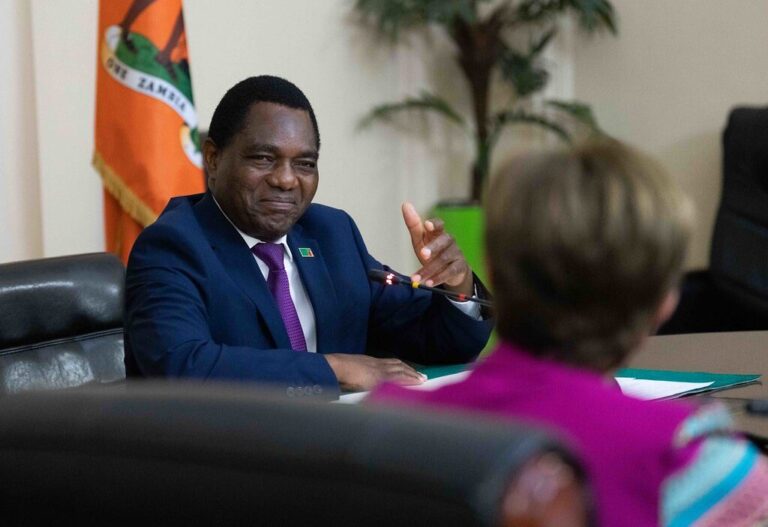
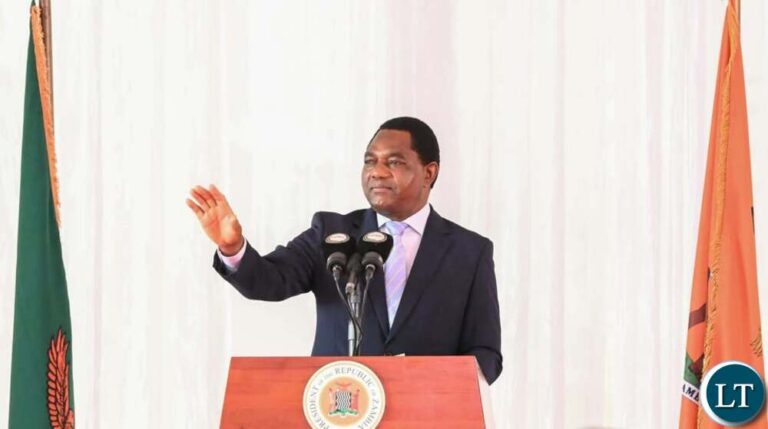
Lusaka, November 26, 2025 — As political tensions simmer amid talk of protests and constitutional debates, President Hakainde Hichilema has issued a firm but measured appeal for calm, stressing that Zambia’s democracy thrives only when grounded in the rule of law and mutual respect. Speaking during a national briefing at State House, he warned that political rivalry must never spill into intimidation, disorder, or actions that endanger ordinary citizens.

While reaffirming the constitutional right to peaceful assembly, the President underscored that all demonstrations must comply with the Public Order Act. Authorities, he noted, are bound to enforce safety protocols, especially when unauthorised gatherings risk drawing participants and bystanders into harm’s way. He pointed to a surge in online misinformation as a key driver of recent unrest, urging Zambians to fact-check before sharing inflammatory claims.

Zambia’s democratic space remains open, he insisted, but he challenged citizens and groups to channel their concerns through existing structures: parliamentary committees, national dialogue forums, and civic platforms designed precisely for constructive engagement. “Street confrontations don’t build nations,” he remarked. “Dialogue does.”

On the sensitive topic of constitutional reform, Hichilema emphasized inclusivity. No single faction, he said, should steer the process. Instead, churches, youth groups, trade unions, political parties, and civil society all have a role to play, provided the conversation remains focused on strengthening governance, not deepening divisions.

He also took a clear stance on the independence of the judiciary and public institutions. His administration, he stressed, has deliberately avoided politically motivated tools like “retirement in the national interest,” a practice he said once bred fear and uncertainty across the civil service. Where injustices occurred under past policies, some officials have since been reinstated, he added, as part of a broader commitment to fairness and institutional integrity.

Turning to recent flare-ups involving youth wings of political parties, the President issued a direct warning: leaders must rein in supporters and reject violence in all its forms. “When young people clash on the streets, it’s innocent lives that pay the price,” he said. He called on parties to champion idea-driven politics over fear-mongering or disruption.

Addressing growing anxiety over alleged threats to civil liberties, Hichilema dismissed claims that the government plans to curtail freedoms. Rights, he clarified, are fully protected so long as they are exercised within the law. He urged citizens to look beyond sensational online rhetoric and rely instead on official communications for accurate information.

Stability, he reminded the nation, isn’t just about peace; it’s the bedrock of progress. From debt restructuring and foreign investment to food security and the ongoing energy recovery, every gain remains vulnerable if unrest takes hold. “We cannot afford to let division undo what we’ve worked so hard to rebuild,” he said.

In closing, the President called for responsible leadership across the political spectrum. Disagreements are inevitable, he acknowledged, but they must be managed through structured, respectful channels. His administration, he affirmed, remains open to policy adjustments provided they’re backed by evidence and serve the national interest.

Recalling Zambia’s proud legacy of peaceful transitions and national consensus, Hichilema urged every institution, community leader, and citizen to help protect that tradition. “Our future depends not on who shouts loudest,” he said, “but on who chooses peace, reason, and the law.”

New Solar, Coal and Hydro Projects Form Energy Roadmap

New Solar, Coal and Hydro Projects Form Energy Roadmap

Lusaka, November 26, 2025 — President Hakainde Hichilema has unveiled a comprehensive strategy to tackle Zambia’s deepening electricity crisis and build a more resilient, diversified energy future. Speaking during a State House briefing, the President pointed to the severe 2023–2024 drought the worst in years as the main culprit behind plummeting water levels at major hydropower stations, which in turn triggered widespread power shortages nationwide.

The impact has rippled through homes, businesses, salons, restaurants, and small industries, fueling public frustration that the President acknowledged as entirely understandable. “People are right to be concerned,” he noted, adding that the crisis laid bare just how vulnerable the country remains due to its heavy reliance on hydropower.

In response, the government has activated a three-pronged plan: short-, medium-, and long-term interventions. Solar energy now sits at the heart of the immediate response, with new plants rising in Chisamba, Mansa, Milo, and beyond. The Chisamba site alone is expected to deliver 200 megawatts, while Mansa will add 50 MW. Additional solar segments are taking shape through private partnerships, reflecting growing investor confidence in Zambia’s renewable sector.

That confidence isn’t just theoretical. At the Milo project, one developer already reported early returns on investment and is preparing to reinvest. “They’re seeing results,” Hichilema observed, signaling that Zambia’s energy transition is attracting serious international interest.

To ensure consistent baseload supply, coal-fired generation will play a complementary role. The Mamba Phase Two project is slated to add 300 MW once online. Meanwhile, a major private investment by United Capital Fertilizer promises 600 MW in total, with the first 150 MW expected to come online as early as April or May next year moves the President says will push the country toward energy surplus.

A particularly ambitious component of the plan? Delivering at least 2 MW of solar power to every constituency. Designed to power schools, clinics, local industries, and communities, this decentralized approach aims to lighten the load on the national grid while boosting reliability where it’s needed most.

Recent regulatory reforms have also opened the door wider for independent power producers. Private citizens, companies, and even Members of Parliament can now invest in energy projects without bureaucratic hurdles. The introduction of net metering further empowers households generating their own solar power to feed surplus electricity back into the grid a step toward a more participatory energy ecosystem.

Beyond solar and coal, wind and other emerging renewables are on the horizon. Several pilot projects are already underway across different regions, and the Ministry of Energy plans to publish a full public dashboard listing all active developments, their capacities, and locations.

But generating more power isn’t enough getting it to consumers matters just as much. That’s why the government is simultaneously upgrading transmission infrastructure. New and reinforced power lines will be essential to move electricity from remote generation sites to urban and rural demand centers without bottlenecks.

Transparency remains key. The President pledged clear, accurate updates on project timelines and generation targets, calling energy security a “national priority.” With droughts likely to recur, diversifying the energy mix isn’t optional it’s existential.

Looking ahead, Hichilema expressed confidence that the combined push solar, coal, hydro, and private capital will not only restore stability but position Zambia for sustained energy-led growth. “These projects are underway,” he said. “We ask for patience as we build a system that won’t fail us again.”