Wednesday, June 17, 2026
25 C
Lusaka
Home Blog Page 259

ABSA launches tree planting school competition

0

Government has commended ABSA Bank Zambia for launching the tree planting school competition, describing it as a momentous initiative that promotes environmental conservation, youth empowerment and climate action through education.

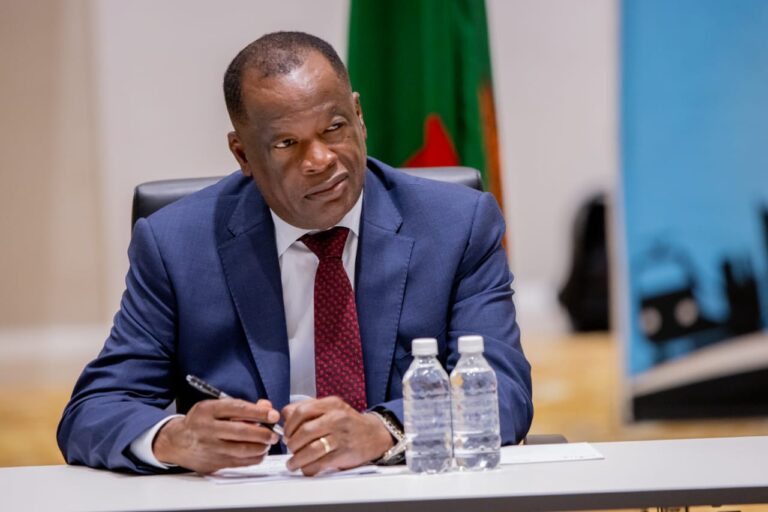
Speaking during the launch in Lusaka, Minister of Education Douglas Syakalima said the initiative reflects a strong partnership between government, the private sector and civil society in advancing sustainable development and environmental stewardship.

“It is a privilege to launch this pioneering competition that combines education, youth empowerment and climate action,” he said.


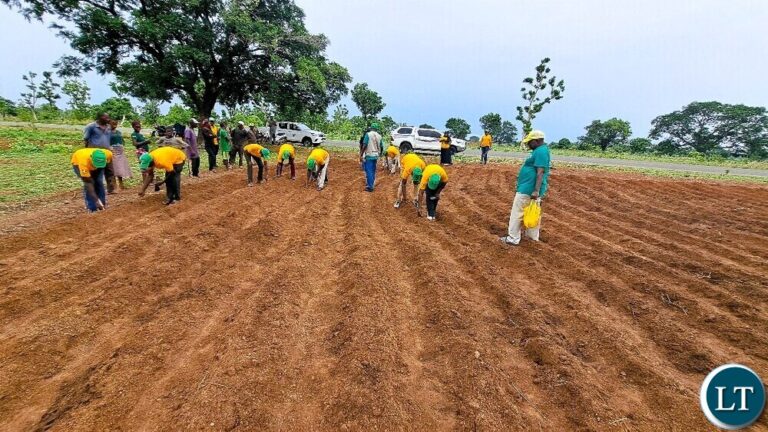
The minister said over 1,000 schools across the country are expected to participate, each planting a minimum of 100 trees.

He added that participating schools will compete for prizes worth K600, 000 including solar solutions, school furniture, sports equipment and educational materials.

The media reports that Mr Syakalima urged schools to take ownership of the initiative by nurturing their trees and tracking their growth, saying education and environmental stewardship are inseparable in building a climate conscious generation.

“Through our education system, we can cultivate citizens who understand the value of biodiversity and responsible living,” Mr Syakalima said.

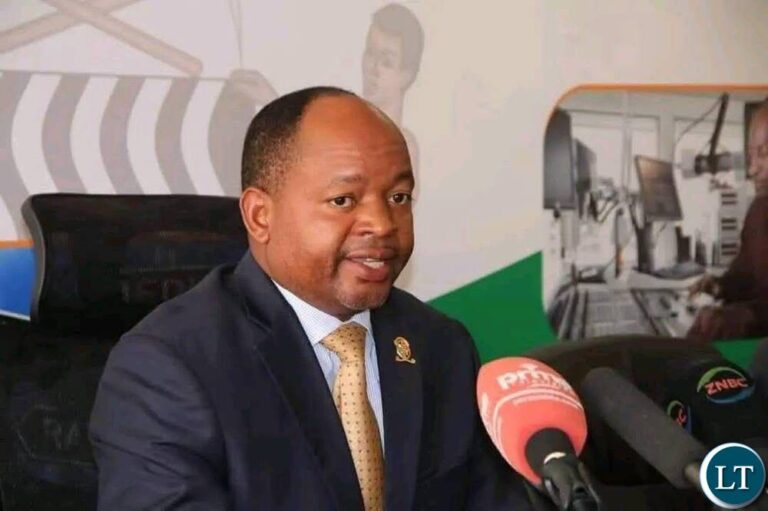
And ABSA Bank Zambia Chief Executive Officer Mizinga Melu said the competition forms part of the bank’s “Plant and grow a million trees” campaign under its citizenship agenda, launched two years ago in partnership with the Ministry of Green Economy and Environment.

“Involving school children, we are ensuring that future generations understand what it means to plant, nurture and care for trees,” she said.

She explained that the competition will run from November to March, coinciding with the rainy season, with the target of planting 100,000 trees in three months.

The ABSA Bank CEO added that the initiative promotes afforestation, reforestation and environmental protection and will particularly benefit rural schools through access to solar power and other learning resources.

Meanwhile, Zambia Forestry and Forest Industries Corporation (ZAFFICO) representative Andrew Kalumbi reaffirmed the corporation’s commitment to the partnership, noting that ZAFFICO will provide technical expertise and seedlings to support the project.

“This initiative is about more than trees; it’s about shaping environmentally conscious citizens and building a greener, more sustainable Zambia,” he said.

He added that ZAFFICO currently manages 53,000 hectares of forest plantations and is ready to provide seedlings at subsidised rates, while offering professional support to participating schools.


The ABSA tree planting school competition aims to foster environmental awareness among learners and strengthen community participation in the fight against climate change.

Chitheba Mini Hospital commissioned, health workers cautioned

0

Eastern Province Director of Health, Matthews Ng’ambi, has urged health personnel in Chama District to maintain the highest standards of professionalism in the discharge of their duties.

Speaking during the commissioning of the Chitheba Mini Hospital in Chief Tembwe’s area of Chama South Constituency, Dr. Ng’ambi emphasized the critical role that health workers play in delivering quality healthcare services to the community.

He stressed the need for diligence, respect and commitment among health personnel, noting that professionalism is key to building trust with patients and achieving positive health outcomes.

Dr. Ng’ambi also reminded staff of the importance of adhering to medical ethics and protocols, as well as being accountable for their actions.

He assured health workers at Chitheba Mini Hospital of the Provincial Health Office’s continued support in addressing challenges faced in rural areas and encouraged them to work together to provide excellent healthcare services to the community.

People with disabilities commend ECZ for voter extension

0

People with disabilities in Kasempa district have commended the Electoral Commission of Zambia (ECZ) for extending the mass voter registration exercise to give opportunity for more people to participate in the electoral process.

Kasempa Persons Living with Disabilities Chairperson, Jackson Kesa said the extension would enable more members, especially those in remote areas to register as voters.

Mr Kesa told the media that the organization has members who live in hard-to-reach areas and that the extension will allow those who have not yet registered to do so.

“We still have some of our members who want to register as voters. For example, those living in far-flung areas such as Kelongwa, Nselauke, and Jifumpa. The extension will allow them to register and take part in the upcoming elections,” he said.

Mr Kesa also expressed gratitude to government and the commission for making deliberate efforts to ensure inclusivity in the voter registration process.

He observed that registration centers had been strategically placed to accommodate persons with disabilities making the process more accessible and convenient.

 “We are thankful to the government for bringing the voter registration exercise closer to our communities. It shows commitment to ensuring that persons with disabilities are not left behind in National affairs,” he said.

He further appealed to ECZ to consider deploying mobile registration teams in remote areas where some persons with disabilities faced challenges with transportation.

“Some of our members cannot travel long distances due to mobility challenges. If mobile registration teams can be sent to rural areas, it will greatly help ensure everyone has the chance to register,” Mr Kesa added.

He urged all eligible people with disabilities in the district to take advantage of the extension period and register as voters, emphasizing that participating in elections is key to having their voices heard in National decision-making.

Reduced malaria cases elates government

1

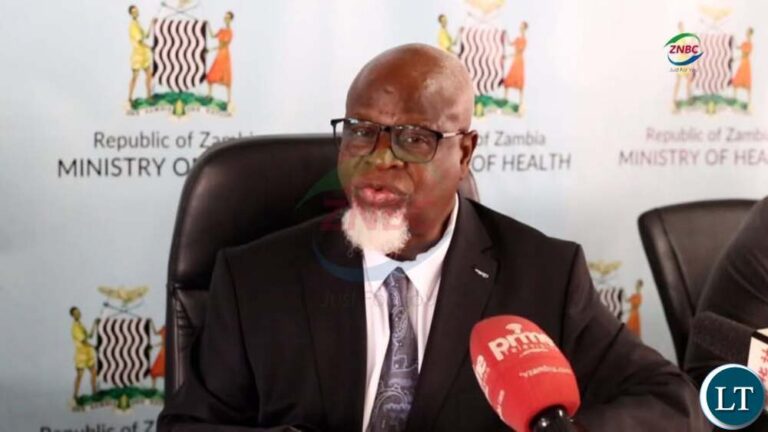
Ministry of Health says the country has recorded significant progress in the control of waterborne diseases such as malaria.

Speaking during a press conference, Minister of Health Elijah Muchima says malaria cases have decreased from 11.5 million in 2023 to 9.5 million in 2024 representing a 24 percent reduction in malaria incidences from 403 cases per 1000 population in 2023 to 305 cases per 1000 cases in 2024.

The media reports that Mr Muchima adds that the mortality rate of malaria has decreased by 40 percent, dropping from 8 deaths per 100,000 population in 2023 to 5.7 deaths per 100,000 population in 2024.

He says that building resilient health systems will enhance the capacity of health systems, improve supply chains for malaria prevention and treatment tools and will help ensure availability of quality services during health emergencies.

Meanwhile Mr Muchima reiterates that engaging and educating communities is vital towards promoting the use of insecticides treated nets, early diagnosis and prompt treatment.

Furthermore, he says the government is firmly committed to providing quality health care services and implementing evidence based malaria interventions as close to families and communities as possible.

Zambia has joined fellow Southern African Development Community (SADC) member states in commemorating the SADC malaria week observed under the global theme “Resilient Health Systems and Communities Key to Malaria Elimination.”

UNICEF commits to cholera advocacy

0

United Nations International Children’s Emergency Fund (UNICEF) has reaffirmed its commitment to supporting the country’s efforts towards increasing financing of the water sector and sustainability of water resources.

UNICEF Country Representative, Saja Abdullah says her institution is also ready to support multi sectoral advocacy, towards cholera response that will ensure that there is reduced new infections.

“We know how important the water sector is, as well as the sanitation situation in preventing the cholera outbreak,” said Dr Abdullah.

She was speaking when she paid a courtesy call on the Minister of Water Development and Sanitation, Collins Nzovu, in Lusaka.

And Minister of Water Development and Sanitation, Collins Nzovu says his ministry is eager to collaborate with UNICEF to secure necessary resources for implementing critical interventions towards pressing challenges such as climate change.

Mr Nzovu added that his ministry will ensure sustainable and innovative solutions that ensure that every Zambian has access to safe, reliable, climate-resilient water and sanitation services.

“We are very busy making amendments to the various laws and regulations we have here, obviously, to address the provision of water to our people, preventing pollution and protecting the water resource,” added Mr Nzovu.

Zambia commits to sustainable healthcare financing

0

Zambia has reaffirmed commitment to regional health cooperation and sustainable healthcare financing as it prepares to host the Regional Advisory Committee Meeting for the Health Emergency Preparedness, Response, and Resilience (HEPRR) Project under the East, Central and Southern Africa Health Community (ECSA-HC).

Minister of Health Elijah Muchima reaffirmed Zambia’s long-standing partnership with the ECSA Health Community, describing it as a relationship deeply rooted in regional solidarity and shared health goals.

“Zambia has been an active member of ECSA since its inception and continues to benefit from its technical support in areas of health workforce development, system strengthening and emergency preparedness.

Through initiatives such as the Global Fund, World Bank-supported HEPRR Project, and the STAT-BHSS programme, our health system has been strengthened to respond to both communicable and non-communicable diseases.’’ The Minister added.

The media reports that Mr Muchima noted Zambia’s progress in health outcomes over the past decade, highlighting improvements in the health workforce density, which has increased from 9.8 percent to 15.5 percent per 10,000 population between 2015 and 2025.

He also underscored ongoing training efforts, with over 1,500 professionals trained in surgery and more than 1,000 in anesthesia, nursing and public health.

Mr Muchima further pointed out Zambia’s advances in oncology services, supported by ECSA through the establishment of the National Cancer Centre and the College of Oncology, which are improving survival rates for cancer patients.

The Minister of Health emphasised that Zambia remains committed to addressing both communicable and non-communicable diseases, noting that nearly 30 percent of deaths in the country are now attributed to non-communicable diseases such as cancer and diabetes.

The Minister further acknowledged ECSA’s role in advancing antimicrobial resistance initiatives and technical support that has helped position the country as a regional learning hub.

The Minister commended the presence of four Zambian nationals serving in key positions within ECSA, including Tina Sangracio, who is the Acting Director of Programmes, as evidence of the strong institutional and human ties between Zambia and ECSA.

Mr  Muchima expressed gratitude for ECSA’s continued support and reaffirmed Zambia’s commitment to meeting its obligations and actively participating in regional health programs.

“Zambia is proud to host this important meeting and to continue working with ECSA-HC in advancing regional health security, innovation, and prosperity,” he said.

ECSA-HC Director General, Ntuli Kapologwe commended Zambia for hosting the regional meeting and reaffirmed ECSA’s continued collaboration with member states to strengthen healthcare financing and resilience across the region.

He revealed that the upcoming Lusaka Agenda will be a major item of discussion during the meeting, aimed at promoting sustainable healthcare financing among African nations in response to changing global funding dynamics.

“The world’s financing landscape is shifting and this is the time for Africa to re-strategise and establish sustainable health financing systems.

We will also revisit the Abuja Declaration, where many African countries still fall short of the 15 percent target for health sector funding.” He stated.

He added that discussions will also focus on pandemic preparedness, implementation of the Pandemic Agreement adopted by the World Health Assembly, and the amended International Health Regulations (2005).

Dr Kapologwe also highlighted upcoming ECSA-HC initiatives involving Zambia, including projects under the Bill & Melinda Gates Foundation, Gavi and the African Union’s AUDA-NEPAD, focusing on immunization, local manufacturing of vaccines, gender mainstreaming, social protection and poverty reduction.

“Zambia has been selected as one of the pilot countries for the AUDA-NEPAD South-South Cooperation Project, which aims to improve access to affordable healthcare. Success here will pave the way for scaling up across the entire ECSA region,” he said.

The Lusaka meeting will be followed by a Ministerial Dialogue on Healthcare Financing and System Resilience, scheduled for November 27th to 28th 2025 in Dar es Salaam, Tanzania, where Ministers of Health will validate data and strategies to ensure the continent’s health systems remain resilient and financially sustainable amid global economic shifts.

The meeting, taking place in Lusaka, has attracted senior health officials, regional representatives and development partners, who all have an objective to strengthen Africa’s health systems and emergency preparedness through collaboration and innovation.

ECZ grants 15-day extension to voter registration drive

0

ECZ grants 15-day extension to voter registration drive

The Electoral Commission of Zambia (ECZ) has extended the ongoing nationwide voter registration exercise by 15 days, citing an encouraging turnout and mounting requests from stakeholders for additional time to accommodate citizens who had not yet registered.

Announcing the extension during a media briefing in Lusaka, ECZ Chairperson Mwangala Zaloumis said the exercise will now run until November 26, 2025. She explained that the commission had taken into account both the progress made so far and logistical challenges faced by eligible voters across various regions.

“The Commission is satisfied that the circumstances warrant this extension,” she said. “This will be the final extension, and we urge all eligible citizens who have not yet registered to take advantage of this opportunity.”

Ms Zaloumis disclosed that as of November 10, over 1.6 million voters had been captured since the beginning of the exercise. She said the figure included 752,251 new registrations and 853,846 updates of voter records, alongside 351,206 male and 1,269,847 female registrants.

ECZ Chief Electoral Officer Brown Kasaro added that the highest number of new registrations was recorded in Southern Province, followed by North-Western and Western Provinces. He attributed the strong participation to increased public awareness and the accessibility of registration centres across districts.

Kasaro explained that the commission had established more mobile registration points and improved logistical support to remote areas. “We have responded to feedback from communities by increasing the number of kits and technicians assigned to under-served localities,” he said.

Ms Zaloumis noted that the ECZ’s decision was also influenced by recommendations from political parties, civil-society organisations, and religious bodies who asked for more time to mobilise eligible citizens. “We have listened to stakeholders, and we recognise the importance of ensuring that every qualified voter has the chance to participate in shaping the country’s democratic future,” she said.

The ECZ chief reaffirmed that the extended period would not compromise the integrity of the voter register, assuring the public that all verification, data-cleaning, and security checks would be completed within the new timeframe.

“The data management and quality-control teams are on schedule,” she said. “We are confident that the register will be ready for certification before the next electoral phase begins.”

Ms Zaloumis emphasised that the ECZ’s target was to reach more than two million registered voters by the close of the exercise. “This process is about ensuring inclusivity,” she said. “Every Zambian eligible to vote must seize this opportunity to have their voice heard at the ballot box.”

She reiterated the Commission’s commitment to transparency and accountability. “We invite observers, political parties, and media representatives to continue monitoring the process to maintain confidence in the electoral system,” she said.

Meanwhile, the ECZ encouraged citizens who had already registered in previous exercises but needed to update their details—such as changes in residence or correction of personal information—to do so before the new deadline.

“We have had cases where individuals assume that old details will automatically carry over,” Ms Zaloumis warned. “We urge all voters to confirm their registration status and ensure their information is current.”

She also reminded the public that registration is open to Zambians aged 18 years and above who possess valid national registration cards.

“Participation in elections is not only a right but a civic responsibility,” she said. “We call upon parents, churches, and communities to mobilise eligible young people who may be registering for the first time.”

The ECZ noted that the extension also aligns with logistical preparations for the 2026 general elections, allowing for data synchronisation across districts and continuous voter education.

“Extending this process is not about favouring any group,” Ms Zaloumis said. “It is about strengthening democracy through inclusion.”

Observers from the Civic and Voter Education Network commended the ECZ for heeding citizen calls. “This is a welcome gesture that enhances participation, particularly in rural areas where delays were reported due to rain and transport difficulties,” said a representative who attended the briefing.

In a separate interview, governance specialist Dr. Henry Kabwe described the ECZ’s decision as pragmatic. “It demonstrates that the Commission is responsive and adaptive to citizen realities,” he said. “More voters mean a stronger democratic mandate for any government elected in 2026.”

With the new 15-day window, all provinces are expected to continue operating registration centres daily, including weekends, until November 26. Mobile teams will remain deployed in remote areas, while provincial offices continue processing verification forms.

Ms Zaloumis concluded by urging political actors to encourage peaceful participation and avoid spreading false information about the process. “This exercise belongs to all of us. Let us protect its credibility,” she said.

Over 2,000 Mpika households receives FSP inputs

0

over 2,000 vulnerable but viable households in Mpika District have begun receiving their farming inputs for the 2025/2026 season under the Food Security Pack (FSP) program, implemented by the Ministry of Community Development.

Speaking at the flag-off ceremony, Mpika District Commissioner David Siame explained that the FSP is a government initiative designed to enhance household food security and support agricultural development in the region.

Mr Siame said the inputs are meant to bring about household food security across the district and nation at large.

Mr Siame said the distribution of the inputs in Mpika has started with Chibansa Zone where 150 beneficiaries have received the farming inputs so far.

He said the distribution of the farming inputs will be completed within the next coming 7 days.

The DC mentioned that each beneficiary is entitled to receive 2 by 50kg bags of D compound fertilizer, 2 by 50kg bags of urea fertilizer and a 10 kg bag of maize and beans seed.

He has since commended the Government for the early distribution of the farming inputs, saying this will significantly help farmers to plant in good time and record a bumper harvest.

He said this is a clear demonstration that the Government is committed to reduce poverty at household level and district at large.

“Mpika has a good rainfall pattern and fertile soil that our farmers must take advantage of,” he said.

Meanwhile, Mpika District Community Development Officer Deborah Chisanga has urged the farmers not to sell their farming inputs but rather plant so that it will be easier for them to pay back during recoveries.

Mrs Chisanga said the 2,150 beneficiaries of Food Security Pack (FSP) in Mpika District have been selected from 19 Community Welfare Assistance Committees (CWACs).

She pointed out the beneficiaries of the food security pack will only receive the farming input for a period of 3 years.

“Farmers that have received the inputs must count it as a privilege and use the inputs prudently,” she said.

And Friday Singoma, a beneficiary from Chibansa area, thanked the Government for the gesture, saying the inputs will greatly help them to improve their livelihoods.

“We have enough time to prepare our fields and plant the crops,” she said.

Govt. reaffirms commitment to youth empowerment with grants

0

The government has reaffirmed its commitment to improving the lives of young people across the country.

Speaking at the handover ceremony of various empowerment items, including grants, loaned motorbikes, and sports kits, Minister of Youth, Sports, and Arts Elvis Nkandu emphasized that these empowerments are part of the government’s broader efforts to transform the livelihoods of youth in both rural and urban areas.

Mr Nkandu urged recipients to use these resources responsibly, as they are intended to support their growth and development, not to be misused.

He said the grants if well utilized can transform young people’s lives and create employment for themselves and others.

He has since called for mindset change among youths saying positive attitude is essential to the improvement of one’s well-being.

The Minister added that the grants being given out are a sign of the Government’s commitment of ways through which the government desires to better the wellness of all the young people.

“These funds are not to be used for lobola (dowry), paying back credit and beer drinking among others. The grants should be invested into business so that it can grow,” he stated.

Mr Nkandu echoed that the government is alive to the many challenges being faced by young people in the nation who were neglected by other past administrations hence the current government prioritising intervening such as the National Youth Policy and decentralized Youth Empowerment Fund,” he said.

Mr Nkandu was speaking yesterday at Chinsali Civic Center during the handover ceremony of the empowerment.

Meanwhile, Acting Chinsali District Commissioner Brenda Silwembe urged the beneficiaries to utilise the empowerments prudently.

Ms Silwembe pointed out that the exercise of empowering youths highlights the importance of empowering youths who have the potential and opportunity to drive positive change in communities.

“Let us value these empowerment and use them for our own good,” she said.

Meanwhile, youths in Chinsali have expressed gratitude to the government for the empowerment and pledged to use them for the intended purpose.

Luwingu woman in court for murdering boyfriend

0

The Kasama High Court has placed a 22-year-old woman of Chief Chipalo’s chiefdom in Luwingu District on her defense, after the State established a prima facie case, in a matter where she stands accused of murdering her 42-year-old boyfriend.

This is in a case in which Taonga Kaonga is charged with one count of murder contrary to Section 200 of the Penal Code, Chapter 87 of the Laws of Zambia.

Facts before the court are that on June 3rd, 2024, Kaonga while at a named lodge in Luwingu, allegedly did murder Chambi Simukonda.

This was after the couple allegedly got into a violent altercation on the day of the incident.

When the matter came up for trial before Judge Mathew Zulu, Chief Inspector Elliot Besa, 47, testified that on June 4, 2024, while on duty, he received a report of murder from Christopher Mulenga, 45, around midnight.

Inspector Besa told the court that upon inspecting Simukonda’s body, he observed two deep cuts on the left hand.

Inspector Besa testified that at the crime scene, police recovered a broken bottle with blood stains believed to have been used in the fight.

He added that subsequent investigations led to the apprehension of Kaonga.

The officer further stated that Kaonga was issued with a warning and caution statement, which she responded to by denying the charge.

Meanwhile, Kaonga through her defense team during cross-examination claimed that Simukonda had attempted to rape her, prompting her to act in self-defense.

Although she complained of body pains and injuries to her private parts, the medical report concluded that her claims were inconsistent with the physical findings, therefore contradicting her claims.

Chief Inspector Besa was the third and final prosecution witness, marking the close of the State’s case.

After reviewing the evidence, Judge Mathew Zulu ruled that the State had established a prima facie case, warranting Kaonga to be placed on her defense.

Kaonga, is being represented by Legal Aid Board counsel and is expected to give sworn testimony and call two witnesses in her defense.

The matter has since been adjourned to Friday, November 14, 2025, for the defense hearing.

Solwezi farmers receives FSP Inputs for 2025/26 season

0

Solwezi District has received farming inputs for the 2025/2026 season under the Rain-fed Food Security Pack (FSP) Programme, aimed at supporting vulnerable yet viable smallholder farmers.

District Community Development Officer Enos   Mutwale confirmed the delivery, which includes 2,576 bags of 50kg Compound D fertilizer, 2,576 bags of 50kg Urea, 1,288 bags of 10kg maize seed, and 640 bags of 10kg Mbereshi beans. He also noted that 644 bags of 10kg groundnuts are still to be delivered.

Mr Mutwale said the district has 1,288 beneficiaries drawn from six Community Welfare Assistance Committees (CWACs) namely Kimasala, Sandang’ombe, Kyafukuma, Tumvwang’anai, Kifubwa and Kapijimpanga.

“We have received almost all the inputs under the rain-fed Food Security Pack for the 2025/2026 cycle. Only the groundnuts are pending delivery,” Mr Mutwale said.

He explained that each beneficiary will receive two 50kg bags of Compound D, two 50kg bags of Urea, one 10kg bag of maize seed and either a 10kg bag of beans or groundnuts.

The media reports that Solwezi is among the districts using the Food Security Pack Management Information System (FSP-MIS) for the digital distribution and redemption of inputs.

The Ministry of Community Development and Social Services is rolling out the system to improve transparency, efficiency and accountability in the selection and distribution process, while reducing audit queries.

“There is only one Patriotic Front,” – Chabinga

12

“There is only one Patriotic Front,” – Chabinga

Patriotic Front (PF) faction Acting President Robert Chabinga has reaffirmed that the former ruling party remains one unified political organisation under a single, legally recognised leadership. Addressing party members and the media in Lusaka, he said claims of rival leadership structures were baseless and intended to destabilise the party ahead of the 2026 general elections.

Chabinga stressed that the PF is duly registered with the Registrar of Societies under one recognised leadership and that any individuals declaring themselves as alternative office-bearers are acting outside both the law and the party’s constitution. He said the PF’s immediate mission is to restore discipline, rebuild grassroots structures, and re-energise its national appeal rather than be consumed by internal quarrels.

“There is only one Patriotic Front,” Chabinga stated. “It is registered with the Registrar of Societies under the current leadership. Those claiming to lead other versions of the PF are misleading the public and violating party rules. Our focus is unity and renewal, not division.”

He explained that the central committee has launched a nationwide reorganisation programme across all ten provinces, aimed at reviving constituency and district structures, re-establishing contact with the grassroots, and recruiting new members who believe in the party’s founding principles.

According to Chabinga, the exercise is already bearing fruit, with coordinators and mobilisation teams deployed in several areas to strengthen internal cohesion. “Our party has gone through difficult seasons since 2021, but we are standing tall again,” he said. “Our strength is in our people, and our people are returning because they know the PF still stands for development, jobs, and service.”

He said the PF’s goal for 2026 is to present itself as a credible and organised opposition ready to govern again. Those spreading confusion, he warned, were only weakening democracy and indirectly helping the ruling UPND. “We cannot afford distractions,” he said. “Our eyes are fixed on 2026, and that requires discipline and a united voice.”

The PF President also warned that the party will not tolerate impersonation or unauthorised communication issued on its behalf. He said all official statements must come through the PF Secretariat and its designated spokespersons.

“We have seen individuals posting fake letters and statements on social media using the PF name,” he said. “Such behaviour is dishonest and punishable under our regulations. Anyone who continues to impersonate PF officials will face disciplinary action and possible prosecution.”

He added that impersonation and misinformation are being used to create a false picture of disorder within the opposition, but genuine members know the truth. “The PF is guided by its constitution,” he said. “Leadership comes through proper structures, not through Facebook posts or self-appointments.”

Chabinga reaffirmed his commitment to reconciliation, saying divisions can only be healed through dialogue and mutual respect. He disclosed that the central committee is already engaging senior figures and former officials to bring them back into the fold.

“This party belongs to all who sacrificed for it,” he said. “We are extending our hand to every genuine member who wants to contribute positively. But reconciliation must come with respect for the constitution and lawful authority.”

He emphasised that the PF’s door remains open to those who may have disagreed with its leadership, provided they acknowledge the legitimate structure. “Unity cannot be forced, but it can be nurtured,” he said. “Our duty is to rebuild, not exclude. The PF will rise again if we remember why it was formed  to serve the people.”

On legality, Chabinga reiterated that the PF remains duly registered with the Registrar of Societies, noting that leadership changes earlier this year were completed in line with national law. “The records are clear,” he said. “The PF is legally recognised and continues to function as one entity. There are no rival registrations or duplicates.”

He urged members to focus on substantive political work instead of arguments about legitimacy. “The court of public opinion will judge us by our actions, not our quarrels,” he said. “We must show maturity, organisation, and discipline as we prepare to return to government.”

Chabinga called on PF members to practice issue-based politics and uphold the party’s image in their communities. “The people are watching,” he said. “Zambians are looking for a credible alternative that understands governance and development. Let us show them that the PF remains that option.”

He reminded members that the opposition’s duty is to provide checks and balances, not public disputes. “We owe it to our members and to the nation to conduct ourselves responsibly. The PF has a legacy of infrastructure development and community empowerment. We must build on that foundation.”

Chabinga ended by urging members to stop “trading insults” on social media and instead focus on mobilisation at the grassroots. “The PF will not rebuild itself on Facebook,” he said. “It will rebuild itself in the townships, the compounds, and the villages where the people live and where our message still matters.”

His remarks drew applause from party supporters who attended the Lusaka event, many of whom welcomed his firm stance on legality and unity. The declaration comes amid ongoing speculation about the party’s internal cohesion after months of rival claims to leadership.

With Chabinga’s assertion of legitimacy, the Patriotic Front appears determined to close ranks, project a unified image, and position itself as a disciplined opposition force ready for the next general election.


Police arrest 27 in Chingola unrest probe

4

Police arrest 27 in Chingola unrest probe

The Government has moved swiftly to identify and apprehend individuals behind the violent disturbances in Chingola that left property damaged and several people injured over the weekend. Home Affairs and Internal Security Minister Jack Mwiimbu confirmed that security wings have intensified investigations and already arrested 27 suspects believed to be the ringleaders.

Mr Mwiimbu, who toured Chingola with senior security officials, described the incident as an organised breach of public order intended to incite lawlessness and undermine the rule of law. He said police recovered offensive materials, including catapults and crude weapons, used by the mob that clashed with officers.

“The Government will not tolerate such lawless conduct,” he said. “Those involved will face the full weight of the law. No one should imagine they can challenge the authority of the State through anarchy.”

He explained that the Ministry’s intelligence units were working around the clock to track down remaining suspects. “Security agencies are closing in on every individual who took part. We have footage and witness statements that will lead to further arrests,” he said.

According to Mr Mwiimbu, preliminary findings show that the rioters were mobilised through social-media groups and unfounded rumours concerning small-scale mining rights on the Copperbelt. “There is a tendency among some groups to spread false information suggesting ownership disputes at certain mining sites. That misinformation is what triggered this unnecessary confrontation,” he said.

Copperbelt Province police commander Peace Wamunza confirmed that officers were maintaining a heavy presence in and around Chingola to prevent a recurrence of violence. “We are continuing patrols and monitoring all identified flashpoints. The situation is under control,” she said.

She urged residents to cooperate with law enforcement by reporting anyone suspected of participating in the riots. “Communities must help us protect peace. The violence that took place endangered lives, including those of innocent bystanders,” Ms Wamunza said.

Mr Mwiimbu added that several suspects would appear in court soon, and warned that habitual trouble-makers who attempt to politicise criminal behaviour would not find sympathy. “Breaking the law cannot be justified by any political or economic grievance,” he said. “The Constitution provides lawful ways of addressing disputes. Violence is not one of them.”

He reminded citizens that the Government has a responsibility to safeguard life and property. “We will act decisively against anyone who threatens public safety. No group or individual is above the law,” he said.

The minister also used the opportunity to commend police officers for professionalism under difficult conditions. “You know your duty. Continue performing it with firmness but without fear or favour,” he told officers stationed in Chingola.

President Hakainde Hichilema, who was briefed on the situation, expressed concern about recurring acts of disorder and instructed the security services to ensure accountability. “Our Government believes in freedom, but freedom must operate within the law. Those who resort to violence will answer for their actions,” he said through his press aide.

Meanwhile, civic and religious leaders have condemned the unrest. In a joint statement, the Chingola District Clergy Fellowship said lawlessness was incompatible with the values of peace and dialogue. “We call on citizens to remain calm and allow justice to take its course,” the group stated.

On the opinion page of the same edition, veteran commentator Jack Kalala wrote that the violence had “no justification whatsoever,” describing the event as a reckless assault on the rule of law. He argued that grievances over employment or resource access could never legitimise anarchy. “Those who planned and executed this disturbance put the entire community at risk. Zambia’s democracy cannot thrive amid mob rule,” he wrote.

Kalala’s column reflected a wider national sentiment that political competition and economic hardship must not be used to excuse disorder. Social commentators have urged that all parties, whether supporters or critics of Government, must reject violence as a means of expression.

At the same time, residents interviewed by the Daily Mail said they welcomed the arrests but appealed for long-term engagement to address unemployment and youth frustration in the mining towns. One resident, Teddy Mutale, said: “People need jobs and dialogue, not stones and tear gas. But whoever organised the chaos should be punished.”

Business owners in Chingola’s central market area are counting their losses after several stalls were vandalised. “We lost goods worth thousands of kwacha,” said a trader who preferred anonymity. “We just want peace so we can work.”

By late Tuesday, calm had returned to the town. Police checkpoints remained in place as investigators traced individuals captured on video looting nearby shops. Authorities have promised compensation procedures once assessments of damage are completed.

The Chingola incident has reignited debate about civic responsibility and the need for stronger community policing. Civil-society groups have echoed Government’s warning that no grievance should ever escalate into confrontation with law enforcement.

As of press time, all 27 arrested suspects were being processed for court appearances on charges ranging from malicious damage to assaulting police officers. Government officials say more arrests are expected as investigations expand.

For now, the message from Lusaka is clear: the State will act firmly to preserve peace while encouraging lawful dialogue to resolve disputes. The rule of law, Mr Mwiimbu said, remains the cornerstone of national stability and economic progress.

Zambia hasn’t terminated Malawi maize deal -Mweetwa

1

Government has dismissed as false and malicious reports circulating on social media claiming that Zambia has terminated its maize export deal with Malawi due to payment issues.

Government Chief Spokesman, Cornelius Mweetwa, said the purported letter and accompanying claims are a product of deliberate misinformation and negative propaganda.

This is according to a statement released to the media in Lusaka today.

Mr Mweetwa, who is also Minister of Information and Media, explained that the maize export arrangement between Zambia and Malawi remains intact.

He said both governments continue to engage in a spirit of mutual cooperation and regional solidarity.

He clarified that issues regarding the buying and selling of maize fall under the jurisdiction of the Ministry of Agriculture, not the Ministry of Foreign Affairs and International Cooperation.

“Government has urged the public to exercise caution and verify the authenticity of information circulating on social media before accepting or sharing it, warning that those found spreading false information will be dealt with in accordance with the law,” he said

He added that the government remains committed to transparency, regional collaboration, and the promotion of food security within the Southern African Development Community (SADC) region.

Makebi vs Mundubile: When Money Meets Moral Conviction in the PF Battlefield

8

𝐌𝐚𝐤𝐞𝐛𝐢 𝐯𝐬 𝐌𝐮𝐧𝐝𝐮𝐛𝐢𝐥𝐞: 𝐖𝐡𝐞𝐧 𝐌𝐨𝐧𝐞𝐲 𝐌𝐞𝐞𝐭𝐬 𝐌𝐨𝐫𝐚𝐥 𝐂𝐨𝐧𝐯𝐢𝐜𝐭𝐢𝐨𝐧 𝐢𝐧 𝐭𝐡𝐞 𝐏𝐅 𝐁𝐚𝐭𝐭𝐥𝐞𝐟𝐢𝐞𝐥𝐝

By Dr. Mwelwa

In the theatre of Zambian politics, money has once again taken center stage loud, restless, and persuasive. The Patriotic Front, now standing at the crossroads of renewal and ruin, faces a question that will define its resurrection or disintegration: will its members choose the glitter of cash, or the grit of character?

Hon. Brian Mundubile stands in the arena calm, steady, unshaken. Around him swirl the torrents of money, influence, and rumour. Names like Hon. Makebi Zulu and Willah Joseph Mudolo are whispered with awe and envy, their campaign machines well-oiled, their generosity flowing like rivers in a dry land. Meanwhile, Mundubile  the man with no bags of cash to throw around  is accused of being a “UPND project.”

But one must ask, with sober curiosity: how can a man be a UPND project, yet have no money to distribute? How can he be funded by the state, yet move without the privileges that others, even in opposition, quietly enjoy? It is public knowledge that Mundubile is owed millions of dollars by the government  arrears that remain unpaid. If indeed he were a project of those in power, would those debts still stand? Would the same system he is accused of serving not have cleared him to lubricate his campaign?

This accusation is not only lazy; it insults the collective intelligence of the PF membership. It assumes that Zambians cannot tell the difference between propaganda and principle. The truth is simpler, and more uncomfortable: Mundubile is not the wealthiest man in this contest but he might just be the most grounded.

The Patriotic Front must now choose its path. Will it sell its rebirth to the highest bidder, or will it return to its founding values  service, loyalty, and sacrifice? Money can buy crowds, but it cannot buy conviction. It can print posters, but it cannot print integrity.

Yes, Makebi Zulu’s campaign shines with youthful energy and resources, and Mudolo’s network stretches wide and deep. But the real question confronting the PF faithful is this: when the money dries up, who will still stand with the people?

Mundubile’s quiet endurance and unbought loyalty might not excite those addicted to instant gratification, but history has always been kinder to men of principle than to men of purse. As the PF prepares to elect its leader, let it remember  movements built on money collapse when the donors walk away, but those built on conviction live long after the applause fades.

So let them spend their millions; let the dollars flow like rivers. But in the end, Zambia will remember that character, not cash, is what sustains leadership. And perhaps then, we shall finally see whether the PF seeks a president for the people  or just another benefactor for the powerful.