Wednesday, June 10, 2026
25.9 C
Lusaka
Home Blog Page 27

ZCCM-IH, Mining Mineral Resources joint venture cardinal

ZCCM-IH Chief Executive Officer, Kakenenwa Muyangwa, has described the joint venture with Mining Mineral Resources to develop mining resources in North Western Province’s Mufumbwe District as a significant step to formalising the gold sector.

Mr Muyangwa says the state-owned firm is taking a controlling position in a project with strong geological potential, alongside an experienced operating partner.

He said the structure formalises artisanal mining at the project site and builds local refining capacity in Zambia.

The Chief Executive Officer assured stakeholders that the move represents the disciplined diversification expected from the institution.

“Kikonge is a meaningful step in broadening ZCCM-IH’s diversified minerals portfolio and represents tangible progress in delivering on our ⁠mandate to formalise and develop Zambia’s gold sector,” Mr Muyangwa said in statement.

On Monday, ZCCM-IH announced the formation of a joint venture with Mining Mineral Resources to explore and mine gold in Kikonge area in Mufumbwe, in a move that will help the country in its quest to diversify the mining sector.

According to a statement obtained by ZANIS, ZCCM-IH Corporate Affairs Manager Loisa Mbatha said Kyalo Goldfields Limited (KGL) was incorporated on May 6 to explore, develop and mine gold resources in the Kikonge Mining Area in Mufumbwe District in North Western ⁠Province.

Ms Mbatha further revealed that KGL will support the formalisation of artisanal and small-scale mining activities in the area to ensure the safe and regulated production of gold.

She said the firm will also develop processing capabilities to enhance value retention within Zambia.

“ZCCM-IH will hold a 51% stake in KGL, with Mining Mineral Resources, which mines and ‌processes ⁠tin, tantalum and tungsten in the Democratic Republic of Congo, holding the remainder,” She said.

Ms Mbatha noted that KGL’s operations will initially be funded through shareholder contributions, ⁠with additional structures considered as it advances adding that it was preparing the detailed project scope and ⁠budget for the proposed project.

Chipolopolo to face Algeria in 2027 AFCON race

0

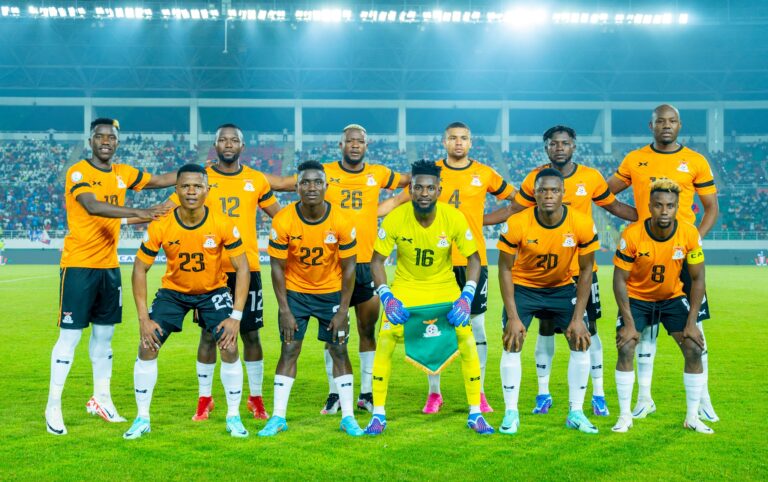
Zambia’s Chipolopolo have been drawn in Group I of the 2027 Africa Cup of Nations qualifying campaign against Algeria, Togo and Burundi.

Kenya-Tanzania-Uganda will jointly host the 2027 Africa Cup of Nations in East Africa.

Top two teams in nine of the 12 groups will qualify for the Total Energies AFCON Pamoja 2027.

Groups D, H, L in which joint hosting nations appear will have to battle for one slot.

During the draws conducted in Cairo, Egypt on Tuesday afternoon, the Chipolopolo were in the second pot and had booked a date with Algeria with whom they competed in the race for the 2019 Africa Cup of Nations.

Togo and Zambia last faced off in the race for the 2006 FIFA World Cup.

The 2012 Africa Cup champions are among 48 Teams, including the three co-hosts, that will participate in the qualifiers.

According to the roadmap the first two qualifying games will be played between 21 September and 6 October 2026.

Matchdays 3 and 4 are scheduled for 9-17 November 2026 and the final matchdays 5 and 6 will be from 22-30 March 2027.

The final tournament will be played from 19 June to 17 July 2027.

The AFCON is returning to the East African region for the first time since Ethiopia hosted the AFCON in 1976.

FULL DRAW

Group A
Morocco
Gabon
Niger
Lesotho

Group B
Egypt
Angola
Malawi
South Sudan

Group C
Côte d’Ivoire
Ghana
Gambia
Somalia

Group D
South Africa
Guinea
Kenya
Eritrea

Group E
Congo DR
Equatorial Guinea
Sierra Leone
Zimbabwe

Group F
Burkina Faso
Benin
Mauritania
Central Africa Republic

Group G
Cameroon
Comoros
Namibia
Congo BR

Group H
Tunisia
Uganda
Libya
Botswana

Group I
Algeria
Zambia
Togo
Burundi

Group J
Senegal
Mozambique
Sudan
Ethiopia

Group K
Mali
Cape Verde
Rwanda
Liberia

Group L
Nigeria
Madagascar
Tanzania
Guinea Bissau

UPND says PPP model protects Zambia from reckless road borrowing

PPP ROADS BEGIN TO SHOW VALUE AS NOEL NKHOMA DEFENDS UPND INFRASTRUCTURE STRATEGY
NRFA board chair says concession model is delivering roads, protecting public finances and creating new opportunities for Zambian firms


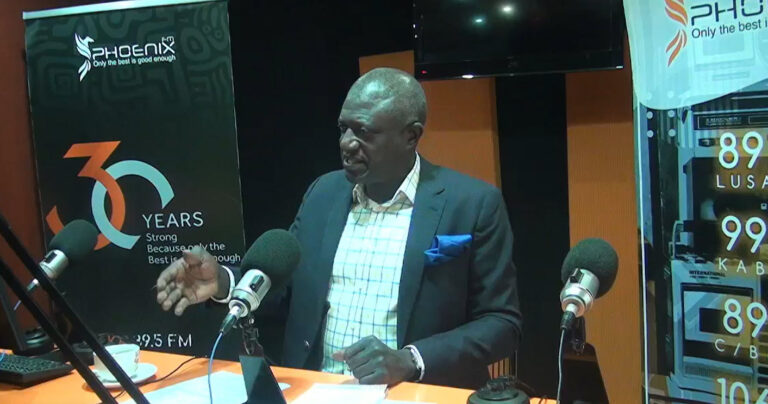
National Road Fund Agency board chairperson and UPND National Management Committee member Noel Nkoma has delivered one of the government’s strongest public explanations yet of Zambia’s Public-Private Partnership infrastructure programme, saying the model is beginning to produce visible results while shielding the country from the borrowing patterns that previously pushed Zambia into debt distress.

During a lengthy appearance on Let The People Talk, Nkoma defended the government’s toll-road and concession strategy, insisting that many of the attacks against PPP projects are being driven by incomplete information and political messaging rather than a full understanding of how the financing system operates.

The interview came amid continued public discussion surrounding the Lusaka-Ndola dual carriageway, border concessions and the growing involvement of pension-backed financing in major infrastructure projects.

Nkoma said the UPND administration inherited an economy constrained by unsustainable debt and shrinking fiscal space, forcing government to pursue alternative infrastructure financing models capable of delivering roads without placing additional pressure on Treasury resources.

He said one of the biggest misconceptions surrounding PPPs is the belief that government is simply handing national assets to foreign investors while ordinary citizens absorb all the risks.

According to Nkoma, the opposite is happening. Using the Lusaka-Ndola dual carriageway as an example, he explained that the project carries an estimated construction value of roughly US$650 million, with private investors allegedly contributing nearly US$300 million from their own financing before institutions such as NAPSA participate.

He said investors are required to demonstrate financial exposure, risk appetite and long-term confidence in the viability of the project before pension-backed institutions can commit funds.

Nkoma maintained that if the project underperforms commercially, the investor absorbs the loss rather than government.

“Should a PPP fail, there’s no risk to government,” Nkoma said, adding that concessionaires bear the commercial consequences if traffic forecasts and revenue projections collapse.

The explanation appeared carefully aimed at calming public fears that Zambia could eventually lose control over strategic infrastructure assets.

Nkoma stressed repeatedly that PPPs are partnerships rather than outright transfers of ownership, with government continuing to benefit through:

  • revenue-sharing arrangements
  • taxes paid by concessionaires
  • infrastructure expansion
  • maintenance obligations
  • township road upgrades
  • emergency response commitments

One of the most politically significant revelations from the interview was Nkoma’s claim that revenues generated under the Lusaka-Ndola concession had already created enough shared value for discussions around upgrading approximately 130 kilometres of township roads in corridor towns such as Kabwe, Kapiri Mposhi and Ndola.

According to Nkoma, the concessionaire itself reportedly approached government proposing to reinvest part of the shared revenue into local urban roads along the corridor.

If implemented fully, the development could become one of the first visible examples government uses to demonstrate how PPP arrangements can generate secondary public infrastructure benefits beyond the main highway itself.

Nkoma also disclosed that concessionaires are operating under strict performance obligations requiring rapid responses to road defects, potholes and emergency situations.

He said service-level agreements tied to the concessions allegedly include:

  • pothole repairs within 24 hours
  • structural emergency interventions within 48 hours
  • continuous road maintenance obligations
  • possible deployment of emergency medical response systems at toll stations

He pointed to the emergency response following a bridge collapse along the Chingola-Solwezi-Kasumbalesa route as evidence that concessionaires are already being forced to maintain operational standards without direct government funding.

The interview also highlighted the government’s broader effort to build Zambian participation inside the PPP ecosystem rather than limiting opportunities to multinational firms alone.

Nkoma cited several projects which he said had already been awarded to local consortiums, including:

  • Kasumbalesa border concession
  • Chirundu border concession
  • Solwezi corridor projects
  • Kalumbila-linked infrastructure works

He said local contractors are gradually building the technical and financial capacity needed to handle larger projects independently in future.

That message appears central to the government’s long-term infrastructure direction: use larger concessions to unlock investment while simultaneously nurturing local firms into major regional players.

The discussion later shifted into economic management, debt and mining policy, where Nkoma mounted a strong defence of the UPND administration’s broader economic direction.

Using figures he attributed to the Ministry of Finance and Bank of Zambia, Nkoma said the previous PF administration increased external debt from roughly US$2 billion in 2011 to more than US$13 billion by 2021, while UPND has added only about US$3 billion in external debt over nearly five years.

He further stated that portions of domestic debt had actually declined under the current administration.

Nkoma repeatedly returned to the position that government’s infrastructure programme is now increasingly relying on internally generated resources, toll systems and structured investment partnerships rather than uncontrolled sovereign borrowing.

The economist also defended mining-sector concessions that have come under criticism from opposition figures such as Tonse Alliance chairperson Brian Mundubile.

Nkoma said incentives offered to mining companies were tied directly to long-term production expansion goals and stated that the strategy was already yielding measurable results.

According to Nkoma:

  • copper production has moved from roughly 500,000–600,000 metric tonnes toward nearly one million metric tonnes
  • foreign reserves have allegedly climbed from about US$1.3 billion to US$6.5 billion
  • increased mining activity is helping strengthen the Kwacha and support broader economic stability

While acknowledging ongoing public frustration over unemployment and living costs, Nkoma said Zambia first had to stabilise an economy emerging from debt default before broad-based growth could fully take hold.

He described unemployment as Zambia’s biggest economic challenge and said government’s next phase would focus heavily on industrialisation and mine-linked manufacturing industries capable of creating long-term jobs, particularly on the Copperbelt.

Nkoma also revealed that government is pushing to move beyond simple mining supplier contracts toward domesticated manufacturing capable of employing larger numbers of Zambians instead of relying heavily on imported industrial components.

Another notable disclosure involved the Mpongwe-Machiya-Ngabwe Road project, which Nkoma said would become Zambia’s first infrastructure project linked to carbon-credit financing mechanisms.

The proposal forms part of the administration’s broader push toward green-economy financing and alternative investment structures.

Despite continued public concern over toll fees and the pace of household economic recovery, the interview painted a government increasingly determined to show that its economic reforms are beginning to move from stabilisation into visible infrastructure expansion, mining growth and long-term industrial planning.

The political test for UPND heading toward the 2026 election season may now depend on how quickly ordinary citizens begin to feel those gains directly through jobs, lower production costs, improved roads and stronger local economic activity.


Editors Note:

The PPP programme has become one of the clearest tests of the UPND administration’s economic philosophy: reduce dependence on uncontrolled borrowing, attract long-term private capital, expand infrastructure and gradually build local industrial participation while attempting to preserve fiscal stability after Zambia’s debt crisis.

Mbala Electoral Officer assures of peaceful nominations

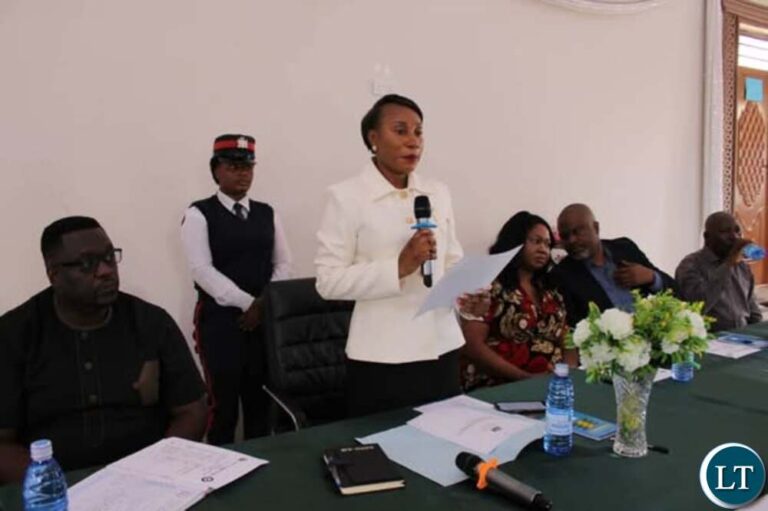
Mbala District Electoral Officer, Laura Munkanta, has expressed confidence that the district will conduct a peaceful and credible nomination process ahead of the forthcoming August General Elections.

Ms Munkanta has since urged police officers to adhere to their duties and responsibilities during the nomination period in order to ensure a smooth electoral process.

Speaking during a briefing for uniformed officers who will be engaged in the nomination process in the district, Ms, Munkanta disclosed that similar briefings have been conducted for all aspiring candidates and political parties regarding their expected roles and conduct during the nomination process.

She said the Electoral Commission of Zambia (ECZ) expects nothing but a peaceful exercise in the district.

Ms Munkanta said the nomination timetable was drawn in consultation with all political parties and independent candidates to ensure there is an orderly and coordinated process.

She explained that nominations for parliamentary candidates in both Mbala Central, and Saise Constituencies will take place on May 20, 2026.

Ms Munkanta added that nominations for mayoral candidates will be conducted on May 21 at the civic center alongside nominations at five centres in five wards, while the remaining ward centres will conduct nominations on May 22, 2026.

Police reinforces manpower in Luapula

Police in Luapula Province have reinforced manpower in five districts that had fewer personnel ahead of the August 13 General Elections.

Luapula Province Commissioner of Police, Stephen Palaata, said in an interview that reinforcements have been deployed to Milenge, Chifunabuli, Lunga, Chembe, and Chipili from the division headquarters.

He said the officers have already reported in their designated areas.

“All officers, including those in districts that did not receive reinforcement, are expected to undergo training by the Electoral Commission of Zambia (ECZ) in their respective districts. We have cautioned our officers to conduct themselves in a professional manner,” Mr Palaata said.

Mr Palaata has since called on political parties in the area to conduct their campaigns peacefully.

He said the police are there to maintain peace and order and will not tolerate lawlessness.

“Let’s conduct peaceful campaigns and maintain peace and order. We are mandated by law to restore order, and we will do just that when the need arises,” he said.

Pre-election activities started yesterday with presidential nominations, while Members of Parliament and local government nominees will begin filing on Wednesday.

Govt. attends church service for late Chief Mwamba Ntule

Northern Province Acting Permanent Secretary Beauty Undi-Phiri has described the death of Chief Mwamba Ntule, the third of the Mambwe People in Mbala District, as a big loss in the province.

Ms Undi-Phiri says the late Chief was a visionary leader who fostered development in his Chiefdom without segregation.

ZANIS reports that speaking when she led government officials at the burial church service for the late traditional leader, Ms Undi-Phiri noted that the late Chief Mwamba was a hard-working traditional leader who offered guidance to government, whenever he was called upon.

She said the late Chief was among the many traditional leaders who supported the vision and policies of the government

“Government worked hand in hand with the late Chief in delivering development to the people of Mbala, he wanted the best for his people,” she said.

She added that the late Chief Mwamba Ntule will be missed by everyone especially those who worked closely with him.

Ms Undi-Phiri said his leadership bridged boundaries in bringing together diverse communities and foster a sense of belonging among the Mambwe people.

Mambwe Royal Establishment Spokesperson, Christopher Mengo thanked the government for the support rendered to the late traditional leader during his sickness, till the time of his death.

Mr Mengo assured that the traditional leadership will continue to collaborate with the government in fostering development to the people.

Mr Mengo further assured the government of the royal establishment’s commitment for smooth succession in Mwamba Chiefdom.

“We are grateful to the government for the support, as a royal family we want to assure that we will have a smooth transition because the family and traditional council will follow the lay down cultural procedures,” he assured.

Chief Mwamba Ntule the third died on May 14, 2026 at the age of 78. He has been on the throne for nine years.

Hichilema security warning draws mixed political reaction

President Hakainde Hichilema’s directive for law enforcement agencies to remain alert before and during campaigns has reopened debate around election security, institutional neutrality and the role of state agencies during the 2026 campaign period.
────────────────────────────────────────────────────────

President Hakainde Hichilema directed law enforcement agencies to remain on high alert before, during and after campaigns ahead of the August 13 general election, warning that individuals threatening public order, national unity or security would face the law regardless of political affiliation.

The remarks quickly spread across political circles, civic platforms and social media after the President stated that democracy allows robust political participation but does not permit actions capable of undermining peace or national stability. He further said the law would apply equally to all citizens, including members of the ruling United Party for National Development (UPND).

The directive arrived during a period already shaped by alliance negotiations, nomination disputes and public disagreement over the conduct of institutions ahead of campaign launches. The withdrawal of the Miles Sampa faction from the presidential race and disputes linked to candidate eligibility have added further pressure to an election season already attracting heavy public attention.

Government figures defending the President’s remarks described the directive as a necessary security message ahead of what is expected to become one of Zambia’s busiest campaign periods in recent years. Supporters of the administration pointed to political misinformation, aggressive online mobilisation and regional examples of election-related unrest as reasons security agencies needed to remain prepared.

────────────────────────────────────────────────────────
KEY POINTS FROM THE PRESIDENT’S MESSAGE
Security directive — Law enforcement agencies were instructed to remain alert throughout campaigns.
Government position — The President said the law would apply equally regardless of political affiliation.
Public concern — Some civic figures warned that strong security messaging during campaigns may create fear among opposition supporters and activists.
────────────────────────────────────────────────────────

Civil rights activist Brebner Changala criticised the President’s remarks and accused the administration of relying heavily on state institutions during politically difficult moments. He argued that language centred heavily on enforcement and security can easily be interpreted differently during election periods where opposition parties are already questioning institutional neutrality.

Other civic voices carried in sections of the press warned that public trust in elections depends heavily on whether citizens believe institutions such as police, ECZ and regulatory bodies are operating fairly across all political camps during campaigns.

────────────────────────────────────────────────────────

“Any individual or group found wanting by the law, from whatever political persuasion, including members of our own party, will be on their own.”

President Hakainde Hichilema

────────────────────────────────────────────────────────

The President’s remarks also came shortly after the Electoral Commission of Zambia (ECZ) rejected the presidential nomination of United Prosperous and Peaceful Zambia (UPPZ) leader Charles Chanda, a decision that placed additional public focus on institutional conduct and procedural consistency ahead of campaigns.

Several figures aligned with the ruling party maintained that strong security messaging should not automatically be interpreted as intimidation, arguing that elections require visible public order safeguards because of the speed at which misinformation and political mobilisation now spread across digital platforms.

Opposition parties, meanwhile, continued pressing institutions to demonstrate fairness and restraint during campaigns, especially in areas involving rallies, police clearances and political gatherings.

CAMPAIGN ENVIRONMENT

Alliance activity — Opposition formations continue discussing coordination ahead of campaign launches.

Institutional scrutiny — ECZ rulings and security messaging are receiving heavier public attention.

Campaign phase — Parties are beginning to expand mobilisation structures, rally planning and provincial operations.

President Hichilema has continued presenting his administration as committed to peaceful campaigns and orderly elections throughout the country. Government figures have also repeatedly stated that security agencies will operate within constitutional limits during the campaign period.

Parties are now moving deeper into campaign preparations as alliance talks, candidate mobilisation and rally planning expand ahead of the August election.

Katakwe remarks deepen scrutiny on public service ethics

Comments attributed to former Health Minister Alex Katakwe have widened into a national governance issue after the Anti-Corruption Commission publicly warned officials against accepting benefits linked to state duties, placing renewed focus on donor confidence, institutional culture and accountability inside the health sector.
────────────────────────────────────────────────────────

The remarks attributed to former Health Minister Alex Katakwe about public officers receiving “something for talk time” after rendering services widened into a broader governance issue on Monday after the Anti-Corruption Commission (ACC) publicly warned that gifts and rewards connected to official duties fall within the scope of corruption laws.

ACC stated that public officers are prohibited from receiving gratification linked to official responsibilities because such conduct compromises integrity, weakens public confidence and interferes with professional independence inside state institutions. The commission’s unusually direct response immediately elevated the matter beyond a simple public relations controversy inside the health sector.

The issue surfaced at a time when Zambia’s health governance systems remain under close examination following earlier concerns involving theft of donor-funded medicines and public criticism previously issued by former United States ambassador Michael Gonzales regarding accountability and procurement oversight inside the health sector.

Within hours of the commission’s statement, civic actors and governance campaigners began linking the remarks to wider concerns about institutional culture inside ministries and state agencies. Commentary carried in sections of the press argued that statements from senior officials shape behavioural standards inside public institutions, especially in sectors dependent on donor cooperation and procurement oversight.

────────────────────────────────────────────────────────

PUBLIC ETHICS QUESTIONS RAISED

Health sector concern — Remarks emerged during continuing scrutiny linked to donor-funded medicines and procurement oversight.

ACC position — The commission warned that gratification connected to official duties may constitute corruption under Zambian law.

Governance angle — Civic actors said statements by senior officials influence institutional culture inside ministries and state agencies.

────────────────────────────────────────────────────────

Mongu-based youth activist Richard Siyenga called on the commission to investigate the matter further, arguing that individuals who previously held senior government office must be held to a higher ethical standard because of the influence their public statements carry across state institutions.

Several governance figures also warned that language appearing to normalise unofficial rewards inside ministries risks weakening anti-corruption messaging at a politically sensitive stage when government institutions are attempting to reassure both citizens and cooperating partners about accountability systems inside the health sector.

The issue also arrived during an election season in which corruption controls, governance credibility and institutional conduct are expected to remain central political themes ahead of the August polls. Opposition parties have repeatedly attempted to frame accountability enforcement and procurement oversight as major campaign issues in the run-up to formal campaign launches.

Government-aligned figures defending anti-corruption institutions pointed to the commission’s response as evidence that enforcement bodies remain willing to intervene publicly when conduct or statements appear inconsistent with public service ethics. Others responding to the matter argued that isolated remarks should not automatically be interpreted as proof of wider institutional misconduct without formal investigations or documented evidence.

───────────────────────────────────────────────────────

“Public service ethics cannot operate on informal rewards attached to official duties because the line between appreciation and inducement disappears quickly.”

────────────────────────────────────────────────

The health sector remains especially sensitive because Zambia continues relying heavily on external cooperation in areas linked to medicine procurement, disease control programmes and broader healthcare support systems. Statements touching on informal rewards or unofficial benefits inside such structures therefore carry wider diplomatic, financial and reputational implications beyond the immediate political reaction.

The commission has not announced formal proceedings directly linked to Katakwe’s remarks.

ECZ bars Chanda from presidential race, putting nomination process under national scrutiny

The Electoral Commission’s rejection of the UPPZ leader’s bid — citing bankruptcy allegations and documentary deficiencies — has become the first major institutional flashpoint of Zambia’s 2026 election season, raising questions about the ECZ process.

The Electoral Commission of Zambia (ECZ) rejected the presidential nomination of United Prosperous and Peaceful Zambia (UPPZ) leader Charles Chanda on Monday, citing alleged bankruptcy and documentary irregularities in papers submitted during the formal ECZ nomination process — a ruling that placed the commission under immediate public and political pressure at the opening of one of the country’s most closely watched election seasons in recent years.

ECZ chairperson Mwangala Zaloumis confirmed that Chanda’s nomination papers failed to satisfy constitutional and procedural requirements on two grounds: questions surrounding his bankruptcy status, and deficiencies in his adoption documentation. The commission stated specifically that the adoption certificate submitted carried no proper endorsement from the party’s secretary general, a procedural requirement it said could not be waived. The rejection represents the first major candidate eligibility ruling of the August 13 election cycle and arrives at a moment when nomination procedures, institutional consistency and the credibility of the electoral framework are receiving unusually close public examination.

Within hours of the ruling, Chanda rejected the decision publicly and defended his eligibility in forceful terms. He declared his financial standing secure, placed his personal wealth at K5 billion and maintained that the bankruptcy matter cited by the commission remained before the courts and therefore could not be treated as settled fact. Remarks attributed to Chanda in sections of the press also alleged that individuals connected to State House attempted to discourage him from challenging President Hakainde Hichilema, claims that had not been independently verified through official government channels at the time of publication.


“Excluding opposition candidates could create instability and damage public confidence in the electoral process.”Dr Chitala, political figure, on the ECZ nomination ruling


The ruling landed inside an opposition field already undergoing rapid restructuring. The withdrawal of the Miles Sampa faction of the Patriotic Front (PF) from the presidential race days earlier redirected attention toward alliance negotiations involving figures such as Brian Mundubile and Makebi Zulu, placing opposition coordination at the centre of campaign calculations before formal launches begin.

Against that backdrop, the Chanda ruling introduced a second institutional pressure point: whether the commission’s application of eligibility thresholds is being carried out with the level of transparency and procedural consistency expected during a competitive national election. Political figure Dr Chitala issued a public warning that blocking presidential aspirants from the ballot carries consequences beyond the individual candidate, arguing that cumulative exclusions risk weakening public confidence in the nomination framework itself.


NOMINATION GROUNDS FOR REJECTION
Bankruptcy status- ECZ cited unresolved bankruptcy proceedings as a constitutional obstacle to eligibility.
Adoption certificate- The document submitted allegedly lacked endorsement from the UPPZ secretary general.
Chanda’s response-Chanda rejected both grounds, declared personal wealth worth K5 billion and maintained that the bankruptcy matter remains before the courts.


Supporters defending the commission’s position held firm. Constitutional standards governing presidential eligibility, they said, exist precisely to be enforced rather than suspended under political pressure or campaign considerations. The adoption certificate requirement in particular was presented as a straightforward procedural standard applicable to all candidates regardless of party affiliation or electoral weight.

Figures aligned with that position warned that introducing exceptions during nominations would weaken the framework governing future elections. Others pushing back against the ruling maintained that decisions involving presidential hopefuls require exceptionally clear public communication because of the wider national implications attached to candidate exclusion during an active campaign season.

President Hichilema separately directed law enforcement agencies to maintain order before and during campaigns while warning that threats to public stability would face the law irrespective of political affiliation. The directive, presented by the administration as institutional reassurance ahead of campaign launches, received sharply different readings across political camps. Government-aligned figures described it as responsible leadership intended to preserve calm during a competitive election period. Critics interpreted the language differently and linked it to wider concerns about institutional conduct during nominations and campaigns.

Election preparations are now unfolding alongside alliance negotiations, leadership wrangles, adoption disputes, ECZ rulings and growing scrutiny of how electoral institutions communicate major procedural decisions. The commission’s handling of presidential nominations is therefore expected to remain under close legal, political and public examination over the coming weeks.

The rejection of Chanda’s nomination now stands as the first major institutional test of Zambia’s election season. With campaigns yet to formally begin and alliance negotiations still evolving across several opposition formations, the commission’s next decisions may shape not only the composition of the ballot  but also the level of public confidence carried into the August polls

Technical Knockout: PF Forced Off August Ballot

LUSAKA — Zambia’s opposition landscape shifted sharply on Monday after the Miles Sampa faction of the Patriotic Front (PF) announced it would withdraw from the presidential race, a decision that intensified alliance negotiations, sharpened pressure for opposition unity and reopened debate over the long internal collapse that fractured Zambia’s former ruling party ahead of the August 13 general election.

The withdrawal came as opposition figures including Brian Mundubile and Makebi Zulu continued positioning themselves within broader alliance discussions designed to consolidate anti-UPND support before the official campaign season fully accelerates. At the same time, ruling party figures projected confidence that fragmented opposition formations would struggle to present a serious national challenge to President Hakainde Hichilema.

The decision by the Sampa faction to step away from the presidential contest marked one of the biggest election field changes since nominations intensified. The faction said it would instead concentrate on parliamentary, mayoral and local government races while reviewing its longer-term political direction following years of internal instability, court battles and leadership disputes that escalated sharply after the death of former president Edgar Lungu.

The withdrawal also arrived at a politically sensitive moment for the wider opposition. Across opposition camps, some leaders and supporters continued alleging that the ruling United Party for National Development (UPND) benefited from the PF leadership confusion through recognition battles linked to Robert Chabinga and disputes surrounding records at the Registrar of Societies, accusations government figures have repeatedly rejected. Even within opposition circles, however, some political actors argued that if one individual carried significant responsibility for PF’s decline, it was Miles Sampa himself because of prolonged internal battles, court disputes and leadership instability that weakened the party’s national structure after leaving office in 2021. Across multiple political camps, conversations around coalition survival, electoral mathematics and vote consolidation have become more urgent as the nomination timetable narrows. Several newspapers carried concerns from opposition figures warning that fragmented candidatures could hand strategic advantage to the ruling United Party for National Development (UPND) during a high-stakes election centred on economic performance, governance credibility and cost-of-living pressures.

Former Nkana member of Parliament Binwell Mpundu warned that opposition parties risked political collapse if they failed to unite around a coordinated strategy. He praised cooperation discussions involving Mundubile and Makebi Zulu, arguing that scattered opposition structures would struggle to defeat a ruling party already benefiting from incumbency, stronger mobilisation systems and access to state visibility.

The alliance discussions also gained additional visibility after political figures raised concerns about the possibility of some candidates being blocked from the presidential race. A figure identified in the newspapers only as Dr Chitala warned that excluding opposition candidates could create instability and damage public confidence in the electoral process. The comments reflected growing sensitivity surrounding candidate eligibility disputes after the Electoral Commission of Zambia (ECZ) rejected the presidential nomination of Charles Chanda of the United Prosperous and Peaceful Zambia (UPPZ) over alleged bankruptcy and irregularities linked to nomination documentation.

The ECZ dispute quickly became part of the wider political narrative surrounding fairness, access and institutional credibility ahead of campaigns. While the commission maintained that the rejection followed constitutional and procedural requirements, opposition voices argued that electoral institutions would face increasing public scrutiny during the nomination period. Chanda himself reacted angrily, insisting he remained financially capable and legally eligible to contest the presidency.

Inside the ruling party, parallel adjustments were also unfolding. UPND confirmed the re-adoption of senior figures including Jack Mwiimbu, Cornelius Mweetwa and Frank Tayali, while several senior figures withdrew from parliamentary races linked to Lusaka and other constituencies. Former minister Mulambo Haimbe said his withdrawal from the Lusaka Central race would allow him to focus more heavily on the presidential campaign and broader party mobilisation.

Opposition figures immediately interpreted some of those withdrawals as signs of internal concern within the ruling party. All People’s Congress president Nason Msoni argued that ministers and incumbents stepping away from constituency races reflected declining confidence about electoral survival in some areas. UPND-aligned voices rejected that interpretation and instead described the changes as part of strategic deployment and campaign restructuring ahead of what is expected to become one of the most competitive elections since 2021.

The ruling party also moved aggressively to project coalition strength. Alliance partners publicly reaffirmed support for President Hichilema, arguing that economic reforms, infrastructure projects and energy sector improvements justified another term for the administration. Alliance spokesperson Leslie Chikuse said coalition partners remained confident that the ruling alliance retained national support despite intensifying criticism from opposition camps.

At the same time, economic frustrations remained central to opposition messaging. Leadership Movement presidential candidate Dr Richard Silumbe accused the government of failing to meet earlier promises relating to fuel prices, fertiliser costs and mealie meal affordability. The economic argument is increasingly becoming one of the dominant battlegrounds heading into the election season, particularly as ordinary households continue struggling with high living costs.

The growing pressure around opposition unity, electoral legitimacy and campaign stability also unfolded against the backdrop of repeated calls for peaceful elections. President Hichilema directed law enforcement agencies to remain alert before, during and after campaigns, warning that anyone threatening national security, public order or unity would face the law regardless of political affiliation.

The statement received sharply different reactions across the political divide. Government-aligned voices presented the message as reassurance intended to preserve national stability during a politically tense period. Critics including civil rights activist Brebner Changala argued that the language risked being interpreted as intimidation toward opposition actors and dissenting voices.

The broader election environment has also become increasingly influenced by disputes surrounding the proposed Public Gatherings Bill, social media misinformation, internal adoption battles and questions around institutional neutrality. Opposition figures continued warning that fragmented political structures and legal confrontations could destabilise confidence in the electoral process if not handled carefully by state institutions.

The opposition restructuring now taking shape is expected to dominate Zambia’s political landscape over the coming weeks as parties finalise campaign strategies and alliance calculations ahead of formal campaign launches.

About 34% of Zambians aged between 30 and 79 living with High BP

0

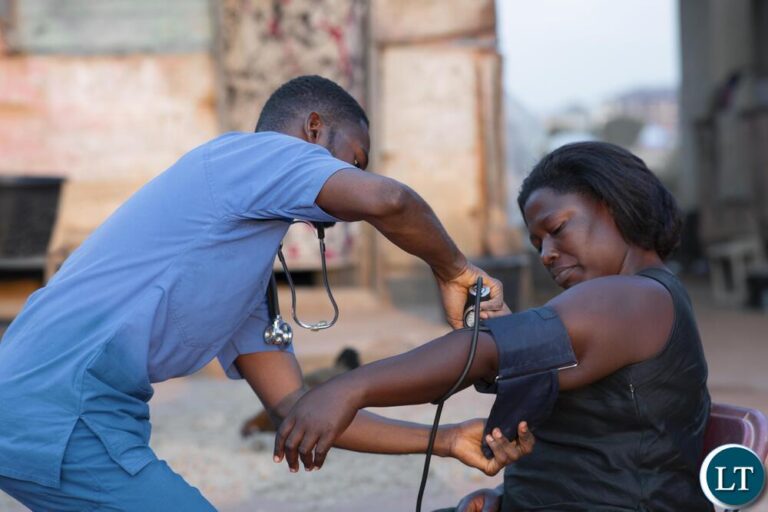
Government has disclosed that about 34 percent of Zambians aged between 30 and 79 years are living with High Blood Pressure, with many remaining undiagnosed, untreated or uncontrolled.

Ministry of Health Permanent Secretary for Technical Services, Kennedy Lishimpi has since called for increased efforts in the prevention and control of hypertension, describing the condition as a major public health concern in Zambia.

Dr Lishimpi made the remarks in a speech delivered on his behalf by Levy Mwanawasa Medical University Senior Medical Superintendent, Dr Charles Mutemba, during the World Hypertension Day commemoration held in Lusaka today.

He further stated that hypertension remains one of the leading causes of illness, disability, and premature deaths globally and locally.

Dr Lishimpi noted that hypertension, also known as high blood pressure, is often referred to as the “silent killer” because many people live with the condition without showing symptoms while severe internal damage continues.

He further said the rise in non-communicable diseases among young people is being driven by unhealthy diets, physical inactivity, alcohol abuse, tobacco use, stress and obesity.

Dr Lishimpi explained that the government, through the Ministry of Health, has continued implementing interventions aimed at improving the screening, diagnosis, and treatment of hypertension and diabetes.

Speaking at the same event, Zambia Medical Association President, Dr Masiku Phiri, called on citizens and healthcare workers to prioritise healthy living in the fight against hypertension.

And Resident Doctors Association of Zambia Vice President, Dr Collins Simbeye, reaffirmed the association’s commitment to initiatives aimed at fighting the disease.

Charles Chanda fumes after ECZ tells him he’s bankrupt

The Electoral Commission of Zambia (ECZ) has rejected the presidential nomination of aspiring candidate of the United Prosperous and Peaceful Zambia (UPPZ) leader, Charles Chanda after determining that he did not meet constitutional and electoral requirements to contest the forthcoming presidential election.

Announcing the decision in Lusaka , ECZ Chairperson, Mwangala Zaloumis stated that Mr Chanda’s nomination papers had been rejected in accordance with Article 100 of the Constitution of Zambia Amendment Act No. 2 of 2016, as well as Regulations 11 and 18 of the Electoral Process General Regulations.

Ms Zaloumis explained that the Commission established that Mr Chanda was discharged from bankruptcy based on information provided by the Commission.

She explained that the office of the official receiver had written to ECZ on April 22, 2026, attaching a judgment in the matter involving Nathan Sinkala and 109 others against Mr Chanda under cause Number 2022/HP/092.

“In addition, the petitioners in the same matter also advised the Commission in writing and attached the judgment indicating that the bankruptcy matter had not been discharged,” Ms Zaloumis said.

She further noted that ECZ had identified another irregularity relating to the candidate’s adoption documents.

Ms Zaloumis, who was flanked by her Vice, Vincent Mukanda, explained that Section 2, read together with Section 30B of the Electoral Process Amendment Act No. 12 of 2016, requires an adoption certificate to be signed by both the president and secretary-general of a political party, who must be recognised office bearers under the Societies Act.

“The adoption certificate presented did not bear the name of the secretary-general,” she said.

She added that under powers vested in her as Returning Officer by Article 52(2) of the Constitution, ECZ had rejected the nomination on grounds that the candidate was ineligible to contest the August 13 general elections.

Shortly after the announcement, Mr Chanda protested the decision by the ECZ and challenged the bankruptcy claims.

Mr Chanda insisted that he was not bankrupt and argued that the matter was still before the courts.

“I have letters from the courts. I am not bankrupt. We have fought the case and the case is in court. You cannot act on a letter without coming back to me. I am not bankrupt,” Mr Chanda stated.

He further claimed that ECZ had acted on correspondence without giving him an opportunity to respond.

The visibly annoyed Mr Chanda also questioned the basis of the decision, stating that the allegations did not reflect his financial standing.

The exchange became tense as Mr Chanda attempted to present documents he said were obtained from the courts, while ECZ officials moved to conclude the proceedings.

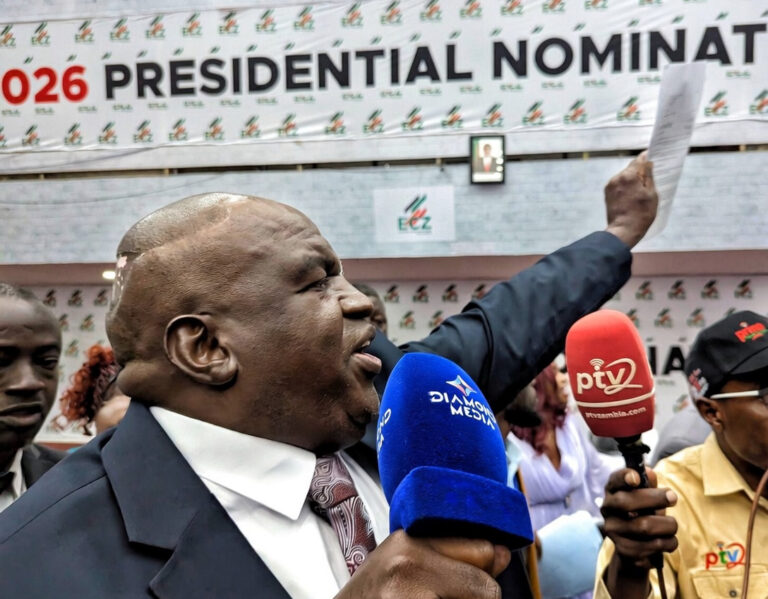
In frustration, Mr Chanda tore the letter of rejection that was presented to him by the Returning Officer to the amazement of Commission personnel, media and security personnel.

The rejection means Mr Chanda will not be included among candidates for the forthcoming presidential election in August this year unless the decision is overturned through available legal processes.

Mr Chanda who was accompanied by his presidential running mate, Charles Tembo and a handful of his supporters, emotionally left Mulungushi International Conference Centre, the place that has been designated as presidential nomination Centre after heavy presence of Police Officers.

The ECZ has lined up a program this week at the Centre which has commenced today up to Friday May 22, 2026 for filing in of presidential nomination papers for political party leaders.

Kalusa explains the importance of copyright

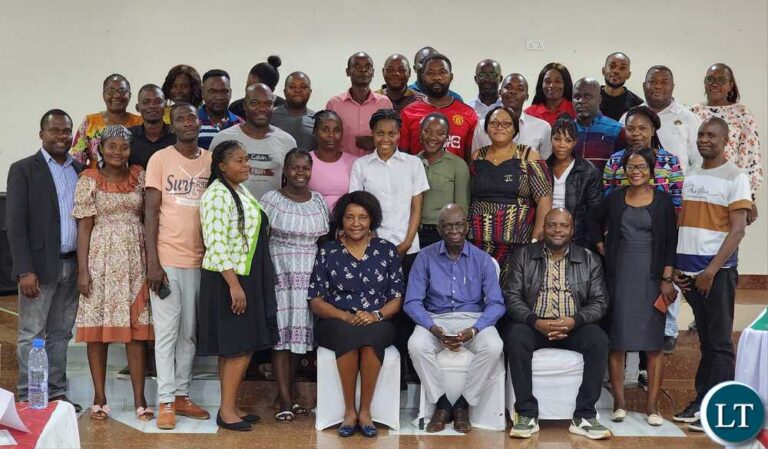
Lusaka Province, Permanent Secretary, Joe Kalusa has called on artists and creatives to understand the importance of legality, intellectual property protection and formal business registration.

Speaking at the capacity building programme, aimed at sensitizing artists on intellectual property, business registration and the legal requirements within the creative sector, Eng. Kalusa said creative must operate professionally and protect the value of their work.

Eng. Kalusa said the arts sector has become a powerful economic driver, creating opportunities for millions of people and contributing substantially to improved welfare.

“For the creative sector to thrive sustainably, artists and creatives must understand the importance of legality, intellectual property protection and formal business registration. Talent alone is not enough. Creatives must operate professionally and protect the value of their work,” he said.

 Eng. Kalusa added that the Lusaka Province Administration has established the first ever provincial arts office aimed at talent building.

He further stressed on the importance of creatives to copyright their work.

“It is therefore important for creatives to copyright their works, register trademarks where necessary, understand contractual agreements before signing them and ensure that their intellectual property is protected from piracy and unauthorised use. By protecting their creative works, artists are empowered to generate sustainable income, build strong brands, attract investment, and establish long-term careers,” Eng. Kalusa added.

And Mr Kalusa revealed that the Lusaka Provincial Administration has partnered with Bantu Network to organise the first-ever provincial arts festival slated for Friday, 22nd May 2026.

Uniformed staff urged to be professional during elections

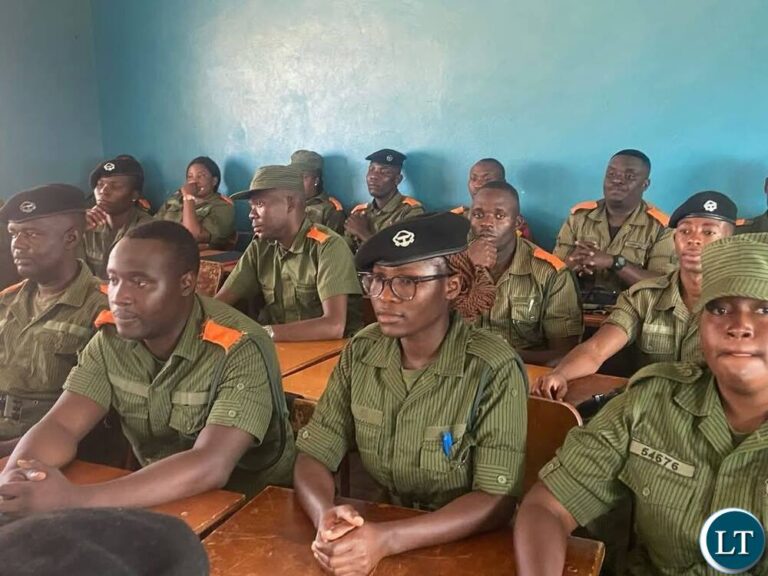
Mpika District Electoral Officer, Samuel Musenga has urged uniformed staff to remain professional and diligent in the execution of their duties before, during, and after the forthcoming general elections.

Mr Musenga said police officers must be on high alert in maintaining law and order, especially as the country heads towards the general elections scheduled for August this year.

Mr Musenga said this during the Electoral Commission of Zambia (ECZ) briefing for uniformed officers that was held in Mpika district ahead of the filing of nominations.

He said uniformed officers play a crucial role in creating a peaceful and secure environment that allows voters to freely and confidently express themselves in the electoral process.

Mr Musenga emphasised that uniformed staff are key in the electoral process as they are both critical and indispensable.

He noted that the presence of security personnel inspires confidence among members of the public and encourages higher voter participation.

He said it is important that every uniformed officer deployed during the electoral period fully understands their responsibilities and conducts themselves in a manner that upholds the dignity of the institutions they represent.

Mr Musenga added that the briefing was both necessary and timely, as it would equip uniformed officers with important information needed for the execution of their duties in the electoral process.

He stated that they need to ensure that they are not caught off guard by any developments in the field.

He further urged the officers to remain impartial at all times and to avoid conduct that could be perceived as partisan, warning that any breach of professional standards during the electoral period could undermine public trust in the entire election process.

Mr Musenga has further appealed to the general public and voters to strictly adhere to the electoral code of conduct and to cooperate with security officers deployed at polling centres and other electoral venues across the district.

He expressed confidence that with the combined efforts of security personnel, electoral officials, civil society, and an informed electorate, Mpika district would conduct a peaceful, credible, and transparent election.

Meanwhile, Foundation for Democratic Process (FODEP) Mpika District Chairperson, Amod Nyimbili commended the ECZ for conducting the briefing.

He described the briefing as a proactive and commendable measure ahead of the nomination period.

Mr Nyimbili said the briefing would significantly help the men and women in uniform to discharge their duties with greater awareness and professionalism.

He added that FODEP remains committed to supporting all efforts aimed at ensuring that Zambia conducts free, fair, and peaceful elections.

“This meeting is important to prepare for free and fair elections,” he said.

Chabinga Says PF Will Not Adopt Candidates Outside UPND Alliance

The leadership wrangle within the Patriotic Front has continued, with rival factions maintaining competing claims over control of the former ruling party ahead of the August 13 general elections.

PF faction leader Robert Chabinga has declared that his camp will not adopt any candidates outside its alliance arrangement with the United Party for National Development.

Speaking during an interview , Chabinga said his faction had made a political decision to align with President Hakainde Hichilema and the ruling party.

He further claimed that several Members of Parliament had remained under his leadership because they preferred stability over what he described as political confusion and shifting alliances.

Chabinga disclosed that his faction had already written to the Electoral Commission of Zambia informing the Commission that the PF would not adopt candidates outside the UPND alliance arrangement.

He also stated that only himself and PF secretary general Morgan Ng’ona were authorized signatories permitted to issue adoption certificates on behalf of the party.

According to Chabinga, any aspirants filing nominations under the PF name without endorsement from his faction were doing so without authority.

Meanwhile, the faction led by Miles Sampa has since withdrawn from the presidential race despite initially adopting former Health minister Chitalu Chilufya as its presidential candidate.