Thursday, June 11, 2026
13.9 C
Lusaka
Home Blog Page 274

Lusaka City Council completes CBD drainage works

0

Lusaka City Council has completed major drainage works in the Central Business District (CBD) at a cost of 20 Million Kwacha.

Council Director of Engineering Victor Chawinga says the completed drains are ready to handle the expected rains.

The media reports that speaking during an inspection of the completed works, Mr Chawingwa said the project, which stretches from the Government Complex to Lumumba Road, has significantly improved the city’s drainage network.

“We started with the Government Complex, near Intercity Bus Terminus, and that section is now completed. Even during the last rainy season, that area remained dry, showing that the system is working effectively’’, he said.

Mr Chawinga added that the council has also completed drainage works along Freedom Way, from the junction of Ben Bella Road to Lumumba Road, with only a small section remaining around Kulima Tower to be connected to the main line.

“On both sides of Freedom Way, we’ve done closed-up drainage. What is remaining is to cut inside Kulima Tower to feed into this drain, which then connects to Lumumba drainage,” he explained.

He disclosed that the initiative is part of a broader effort to rehabilitate and modernise drainage systems in the city.

Mr Chawinga however, expressed concern over the indiscriminate dumping of plastic waste into the drainages, which he said threatens to undermine the council’s efforts.

“The only challenge we have is the dumping of plastics in the drainages. This is what causes blockages and prevents water from flowing properly,” he said.

Council Public Relations Manager, Chola Mwamba, said the local authority is working tirelessly to ensure the city’s drainage infrastructure can withstand all seasons, including the rainy period.

“Lusaka City Council is working expediently to ensure that the drainage system is ready to host all seasons. We appeal to members of the public to dispose of garbage properly because throwing waste in the drainage system is what brings about blockages,” she said.

Ms Mwaba further urged the business community to subscribe to the registered waste collection companies to help maintain cleanliness in the CBD and prevent indiscriminate dumping.

“We are appealing to all residents and business owners to work together with the Lusaka City Council so that we can keep our city clean and live in a conducive environment,” she added.

Meanwhile, Kulima Tower Bus Operator, Leonard Tembo, commended the council for constructing new drainages but called for stricter enforcement of littering laws to stop people from throwing plastics into the drainage systems.

“We are happy that drainages have been created in Lusaka, but our biggest challenge is people throwing plastics. If there was a law where anyone is found throwing plastics should be paying a fine, we would have fewer blockages. Water can’t flow properly because of plastics,” he said.

Mr Tembo added that while the bus operators appreciate the new infrastructure, they are waiting for the rainy season to begin before assessing its effectiveness.

“We are feeling good that they have created drainages for us, but we haven’t yet seen how they will work. We will know once the rains start,” he said.

The Lusaka City Council has recently intensified drainage rehabilitation works as part of its long-term measures to reduce flooding and improve sanitation in the city.

Haabazoka Applauds UPND Fiscal Management, Gives 9.2 Out of 10

2

Haabazoka Applauds UPND Fiscal Management, Gives 9.2 Out of 10

Lusaka, Tuesday — Economist Dr Lubinda Haabazoka has rated the government 9.2 out of 10 for maintaining fiscal discipline and re-establishing budgetary credibility amid global economic pressures. He said Zambia’s recent macroeconomic stability and re-engagement with international creditors demonstrate a clear turnaround from the period of unsustainable debt accumulation that preceded the current administration.

Dr Haabazoka commended the Ministry of Finance and National Planning for maintaining strict spending controls and aligning public expenditure to revenue performance. He said the implementation of the International Monetary Fund (IMF) programme, alongside the domestic debt-restructuring framework, has helped restore investor confidence and strengthen the kwacha.

“Fiscal discipline is the backbone of economic growth,” Dr Haabazoka said. “When you see inflation stabilising, the exchange rate holding within manageable bands, and spending remaining within budget ceilings, you are looking at serious policy commitment.”

He explained that the 9.2 rating was derived from indicators covering public debt management, deficit control, and expenditure efficiency. According to him, government has met most of the targets under the Economic Stabilisation Programme and has demonstrated a stronger grip on fiscal risks than many countries in the region.

Dr Haabazoka, a former president of the Economics Association of Zambia (EAZ), said the credit restructuring agreement secured with both official and private creditors was a turning point that allowed resources to be redirected toward productive investment rather than debt servicing.

He highlighted the expansion of the Constituency Development Fund (CDF) as one example of disciplined fiscal management translating into tangible community impact. “Government has managed to increase CDF allocations without borrowing recklessly. That shows prioritisation and prudence,” he said.

The economist also noted improvements in tax collection and transparency, pointing to the Zambia Revenue Authority’s digital compliance system and public expenditure monitoring tools that have tightened controls over leakages.

Dr Haabazoka said the UPND administration’s continued restraint on unplanned spending and adherence to medium-term budget targets should be sustained to anchor long-term growth. He urged government to guard against electoral-cycle pressures that often lead to budget overruns and inflation spikes in African economies.

He credited President Hakainde Hichilema’s leadership for the improvement in fiscal governance standards, saying the President’s consistent message on prudence and accountability had filtered through all government spending units. “From the top, there is a clear tone of responsibility,” he remarked. “Budget discipline has become a culture rather than an instruction.”

Dr Haabazoka observed that the economy was now on a path to recovery despite challenges such as the drought impact and slow industrial growth. He cautioned that sustained reform implementation and strong export performance would be key to maintaining the momentum.

The Finance Ministry recently announced that the fiscal deficit for 2025 is projected to remain below 5 percent of GDP, consistent with IMF-supported targets. Inflation has been kept within single digits, and the kwacha has stabilised against major currencies.

Business and academic figures have echoed Haabazoka’s assessment, citing a noticeable reduction in extra-budgetary expenditure and a stronger link between policy planning and execution. However, some stakeholders have urged continued attention to domestic debt arrears and liquidity constraints faced by local suppliers.

Dr Haabazoka said the most important achievement was that Zambia had restored its fiscal reputation globally. “The country can now negotiate from a position of credibility. If we stay the course, our sovereign ratings will improve, and investor confidence will continue to rise,” he said.

He called for continued public education on budget literacy so citizens can understand how discipline in public finance directly benefits service delivery and economic stability. “Fiscal discipline is not just about numbers; it is about trust,” he concluded.

Kasanda – Yazanda Nafuti !! “Fresh Gold Deal Probe”

Lusaka, Tuesday — The Zambia Police Service has arrested businessman Shadreck Kasanda in connection with a new investigation into suspected illegal gold trading. The detention forms part of ongoing operations to disrupt unlicensed mineral transactions and strengthen oversight in the extractive sector.

In a statement issued in Lusaka yesterday, the Police said Kasanda, 38, was apprehended after a coordinated operation involving several law-enforcement agencies. “The suspect is in custody as investigations continue. Once the case file is completed, he will appear before the appropriate court,” the statement read.

Initial findings show that investigators acted on intelligence linking Kasanda to the handling and sale of gold believed to have been sourced outside approved channels. Officers conducted searches at several premises in Lusaka associated with his business interests and recovered sealed parcels suspected to contain raw gold as well as documents now under review for possible use in undeclared exports.

A source within the Police told Lusaka Times that laboratory testing is under way to verify the origin and purity of the seized material. “This arrest forms part of a wider operation to uncover illicit mineral movements and trace the proceeds from such activities,” the source said.

The investigation is being jointly undertaken by the Zambia Police Service, the Drug Enforcement Commission, and the Anti-Corruption Commission, with technical support from the Financial Intelligence Centre. The task force is focusing on networks believed to have facilitated illegal transfers of gold between Lusaka, the Copperbelt, and North-Western provinces.

Kasanda, who has faced similar charges before, maintains that his businesses operate within the law. His lawyers insist he is a legitimate entrepreneur involved in mineral logistics and processing. Investigators say records retrieved from his offices show inconsistencies between declared operations and actual transactions.

An official close to the inter-agency mining audit said the operation demonstrates government’s determination to curb revenue losses from smuggling and under-declaration. “We are pursuing individuals and companies that have taken advantage of regulatory gaps. No one is above the law,” the official said.

Kasanda was previously linked to the 2023 private-jet case involving suspected mineral smuggling. Although that matter was later closed, his name has continued to feature in subsequent investigations. Authorities say the current detention stems from fresh evidence gathered during the review of mineral export licences launched this year.

By Tuesday morning, Kasanda remained in custody at Woodlands Police Station as investigations continued. He is expected to be charged under the Mines and Minerals Development Act and the Prohibition and Prevention of Money Laundering Act once investigations are complete.

The Police say the arrest is part of a broader drive to bring discipline and accountability to the gold trade. “The instruction is clear: clean up the sector and protect national resources,” a senior officer stated. “Those who break the law will face prosecution.”

The Ministry of Mines and Minerals Development has confirmed that the ongoing licence audit covers three years of records, including physical verification of declared outputs against export and tax submissions. Officials say the exercise is intended to restore transparency in the mineral value chain and support revenue collection.

Government sources say further arrests may follow as investigators trace financial flows linked to unregulated gold trading. Police intend to submit the final report to the Economic and Financial Crimes Court once the probe is complete.

Technical Committee Gets ToRs, Focus on Bill 7 Provisions

The government has unveiled a detailed roadmap for Zambia’s constitutional reform, outlining the specific areas that will guide the work of the newly appointed Technical Committee on Constitutional Amendments. The Terms of Reference (ToRs), approved by Cabinet and released on Monday, set out the precise scope, composition, and operational limits of the committee’s mandate.

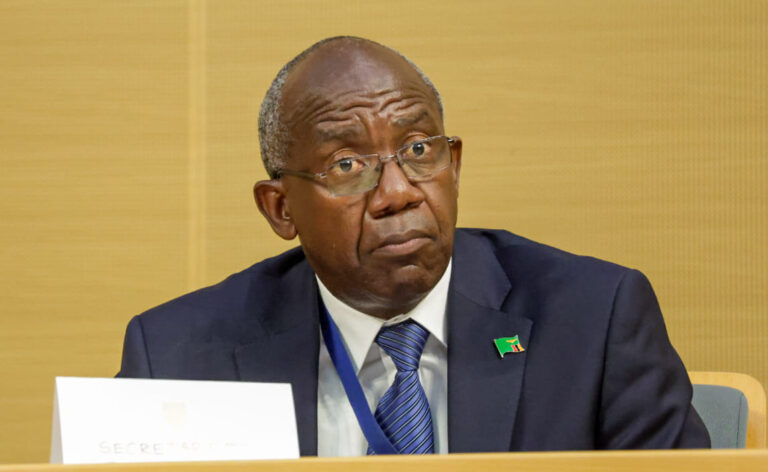
Secretary to the Cabinet, Patrick Kangwa, said the ToRs were designed to bring clarity, consistency, and transparency to the long-debated amendment process. He said the technical team would concentrate on proposals contained in the failed Constitution Amendment Bill No. 7 of 2019, focusing particularly on the electoral process, judicial reforms, and decentralisation.

Kangwa explained that the committee will be required to engage broadly with Zambians through public consultations, written submissions, and expert input to ensure inclusivity and public confidence. “The committee will consult with local and international experts on constitutional law, governance, and electoral systems,” he said, adding that the goal is to produce a well-balanced and implementable set of amendments that address long-standing governance gaps.

The ToRs stipulate that the committee will examine matters such as the conduct of elections, the nomination and resignation of candidates, and the role of state institutions in electoral dispute resolution. Other key focus areas include gender representation, youth participation, and measures to strengthen checks and balances between the three arms of government.

Government has also directed the committee to study the performance of previous constitutional commissions and draw lessons from their successes and failures. “We must learn from our past attempts and deliver a product that stands the test of time,” Kangwa stated.

The process will include written and oral submissions from citizens, civil society, and professional bodies. Draft recommendations will be subjected to review by Cabinet before the final report is tabled in Parliament. Kangwa said the process was intended to “strengthen constitutional democracy and enhance citizen participation.”

The technical body’s establishment marks a major step toward long-awaited constitutional stability following years of political divisions over the amendment process. The government aims to avoid past pitfalls, particularly those that led to the collapse of Bill 10 and other reform efforts.

The explicit ToRs could limit controversies that previously surrounded constitutional reform exercises, which often lacked clear timelines and direction. The current arrangement, they argue, places accountability squarely on the committee and Cabinet, ensuring that no new or extraneous issues are introduced midstream.

The Technical Committee is expected to deliver its report to Cabinet within months, ahead of any legislative action. Once the process is complete, Parliament will debate the proposals and determine which amendments proceed to referendum or direct enactment, depending on their nature.

This new approach aligns with President Hakainde Hichilema’s pledge to modernise Zambia’s governance structures while preserving democratic oversight. The inclusion of legal practitioners, gender experts, and representatives of youth and persons with disabilities in the committee reflects the administration’s stated commitment to a people-driven constitution.

The constitutional review process, first initiated in 2023, has drawn wide attention across political lines. While ruling-party lawmakers see it as a corrective measure to streamline governance, opposition parties remain cautious, calling for guarantees that the process will not be used to entrench political advantage.

For now, the publication of the ToRs provides what officials describe as a “clear and credible roadmap” one that aims to complete Zambia’s protracted journey toward a durable, inclusive, and transparent constitutional framework.

Below is the Full TORs

REPUBLIC OF ZAMBIA
PRESS RELEASE
TERMS OF REFERENCE FOR THE TECHNICAL COMMITTEE ON AMENDMENTS TO THE CONSTITUTION OF ZAMBIA, 2025

The Government of the Republic of Zambia has constituted a Technical Committee on Constitutional Amendments to undertake a consultative and inclusive process of reviewing provisions of the Constitution of Zambia that may require reforms. This process is intended to strengthen constitutional democracy, enhance citizen participation, and ensure that the supreme law of the land reflects the aspirations, diversity, and evolving governance needs of the Zambian people.

The public is hereby informed of the Terms of Reference for the Technical Committee as follows:


1. PURPOSE OF THE COMMITTEE

The primary purpose of the Technical Committee is to consult the people of Zambia and to review, and benchmark best constitutional practices from within and outside Zambia and to propose amendments to the Constitution with a view to consolidate democracy and constitutionalism, enhance equitable and balanced representation and distribution of resources across the Republic and to promote inclusivity, accountability, and effective representation in governance systems and structures.


2. SCOPE OF WORK AND DELIVERABLES OF THE COMMITTEE

The Committee shall:

2.1 Facilitate nationwide consultations with citizens, civil society, political actors, religious and traditional leaders, professional bodies, and all key stakeholders to gather views on proposed constitutional amendments.

2.2 Conduct a technical and legal review of relevant constitutional provisions in light of the submissions received, comparative practices, and constitutional principles.

2.3 Draft proposed constitutional amendments and provide justifications for each proposal.

2.4 Draft a report on the overall findings of the work of the Technical Committee and make recommendations.

2.5 Ensure that all recommendations are guided by the principles of democracy, good governance, inclusivity, and national unity.


3. TERMS OF REFERENCE

In order to amend the Constitutional provisions that have a bearing on the political, economic and social development of the country, the Technical Committee’s specific Terms of Reference are as follows: –

3.1 Receive submissions from the people of Zambia with respect to provisions relating to the electoral process and the electoral system as a whole, and specifically provisions relating to:

3.1.1 The delimitation and delineation of Constituencies and Wards with a view to ensure fair, equitable and balanced representation and distribution of resources across the Republic.

3.1.2 The promotion and enhancement of effective participation of Women, Youths and persons with disabilities in elective positions and governance institutions in accordance with the principles of inclusivity, equality and equity.

3.1.3 By-elections, considering various factors such as the cost of by-elections.

3.1.4 The number of nominated Members of Parliament.

3.1.5 The filing in of fresh nominations after the resignation of a candidate in Presidential, Parliamentary and local government elections.

3.1.6 Transitional and statutory mechanisms with a view to ensure predictability and clarity in the term of office of all elected representatives.

3.2 Receive submissions from the people of Zambia with respect to provisions of the Constitution relating to the term of Member of Parliament and office of Minister.

3.3 Receive submissions from the people of Zambia with respect to provisions of the Constitution relating to the hearing of Presidential, Parliamentary and local government election Petitions with a view to enhance the administration of justice in such election Petitions.

3.4 Receive submissions from the people of Zambia with respect to the composition of local government and the tenure of office of local government officials.

3.5 Receive submissions from the people of Zambia with respect to the definition of Youth, Child and Adult.

3.6 Receive submissions from the people of Zambia with respect to Constitutional Office holders, specifically the tenure of office of Attorney General and Solicitor General, and the qualifications of the Secretary to the Cabinet.

3.7 Receive submissions from the people of Zambia with respect to provisions of the Constitution that are connected or incidental to the above areas.


4. GUIDING PRINCIPLES AND VALUES

In the exercise of its duties, the Technical Committee shall be guided by Article 8 and Article 19 (d) of the Constitution with emphasis on:

a) Morality and ethics;
b) Patriotism and national unity;
c) Democracy and constitutionalism;
d) Human rights, equality, social justice and non-discrimination;
e) Good governance and integrity;
f) Sustainable development; and
g) Prudent and responsible use of public resources.

In the process of receiving submissions at National, Provincial and District levels, and drafting the Constitutional amendments, the Technical Committee shall observe, apply and cause to be observed and applied, the following policy guidance:

a) Efficiency and cost-effectiveness;
b) Accountability and responsibility to the People of Zambia; and
c) Confidence-building, trust and developing national consensus for the Constitutional amendment process.


5. METHODOLOGY

5.1 Conduct literature review in relation to the specific Terms of Reference.

5.2 Consult with local and international experts on Constitutional Law and Practice.

5.3 Consult with local stakeholders and citizens at Provincial And District levels.

5.4 Review the Reports and draft Constitutions of previous Constitutional Review Commissions, Technical Committee, National Constitutional Conference, and Electoral Reforms Committees with regard to the specific terms of reference.

5.5 To review and benchmark the progressive Constitutional provisions of other countries that are suitable comparators to the Republic of Zambia, taking into consideration the context, design and purpose of their Constitutions, the values and principles enshrined therein and, the vision and ideals reflected in those Constitutions as it relates to the specific Terms of Reference.

The Government of the Republic of Zambia wishes to encourage the citizens across the breadth of the country to make submissions to the Technical Committee and participate in the process.


Patrick K. Kangwa
SECRETARY TO THE CABINET

Rare earths ‘arms race’ will define 2026: deVere

1

The global scramble for rare earths and other critical minerals is accelerating, and financial advisory giant deVere Group believes it will be one of the defining investment themes of 2026 as the United States and China intensify their fight for control of the materials powering the modern economy.

Nigel Green, chief executive of deVere Group, says: “Rare earths have moved from the periphery of the commodities market to the centre of global strategy.

“The battle to secure them will shape trade, technology, and investment decisions for years to come.”

The minerals, which are essential for electric vehicles, smartphones, and advanced weapons systems, have long been dominated by China.

It currently controls around 70% of mining and close to 90% of processing capacity, leaving global manufacturers heavily exposed to Chinese policy decisions.

That dominance is now being challenged. The Trump administration has made rare earths a national priority, pouring money into domestic and allied production.

It has taken stakes in North American miners, proposed a government-backed price floor to stabilise supply, and set out plans to build a strategic mineral reserve. Permitting processes are being fast-tracked, and environmental rules have been eased to accelerate mine construction under the so-called “mine, baby, mine” policy.

Nigel Green says: “Washington’s intervention marks the start of a new industrial cycle.

“The US wants to reclaim control of its supply chains and reduce its vulnerability to Beijing. This is not just policy theatre; it’s the largest coordinated push for resource security in a generation.”

At the same time, China has tightened its own grip. Beijing has imposed new export controls requiring companies to obtain approval before shipping magnets that contain even trace amounts of Chinese-sourced rare earths.

It has also added five more elements, namely holmium, erbium, thulium, europium, and ytterbium, to its restricted list.

“China is showing that control of supply means control of markets,” says deVere’s CEO.

“The US and its allies are now being forced to build alternative supply chains, which is driving an unprecedented wave of investment across Australia, North America, and parts of Africa. The financial markets are following the geopolitics.”

He adds: “The investment implications are significant. This is a multi-year transformation, not a short-term story. The infrastructure and refining capacity cannot be built overnight. Investors positioning early will benefit from the sustained capital flow into strategic resources.”

deVere analysts expect continued volatility in the sector as governments intervene and policy announcements move prices.

Nigel Green says: “These markets will not move on earnings alone. They’ll move on policy. Every export restriction, every government stake, every strategic partnership will have a market impact. This volatility can create opportunity for disciplined investors.”

He continues: “Diversification across the supply chain, from mining to refining to recycling technologies, will be key. This is about securing the systems that keep economies running. Investors who recognise that will be the long-term winners.”

Nigel Green concludes: “Rare earths are at the crossroads of industrial policy, clean energy, and national security.

“The competition to control them will define 2026. The scale of investment already underway shows how quickly the world is recalibrating to a new economic reality. It’s a once-in-a-generation shift in where value is being created.”

The ignorance of some elites in civil service is shocking…..very disappointing!

1

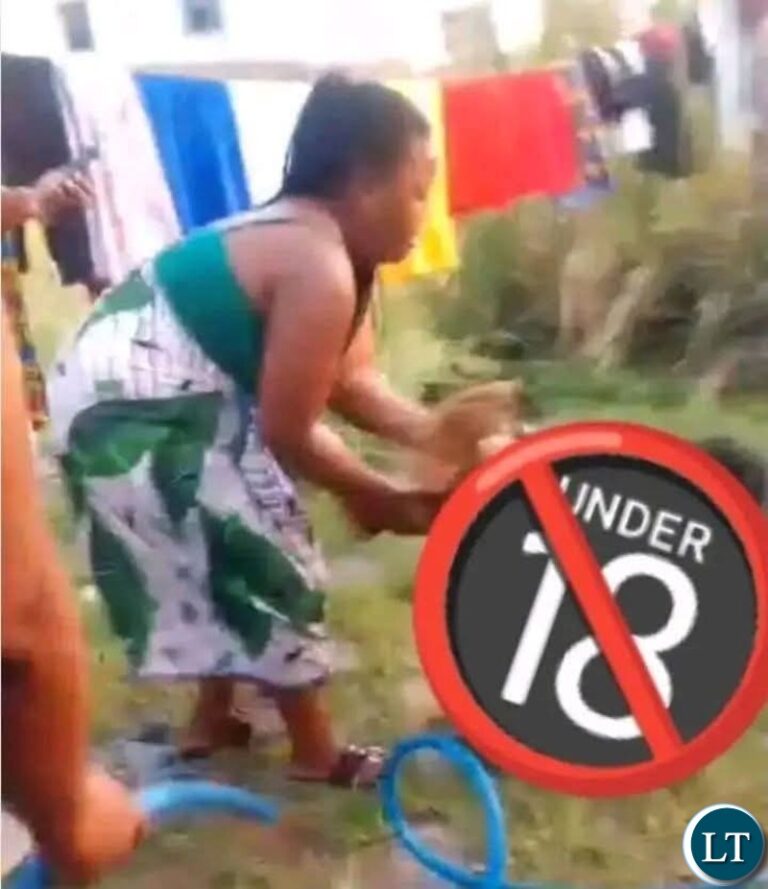
A few days ago, we lamented about the plight of a young lady from Zambezi whose womanhood was defiled and put on display for all the world to see!

In the same offering, we demanded justice for Pezo and prayed for help so she can start life anew away from Zambezi.

Many of you reached out to us offering to render assistance in whichever way possible; including seeing to it justice prevails. We shall remain indebted to our former classmates at Kafue Boys Secondary School, class of 1993, for standing by us and offering to make contributions to ameliorate the plight of poor Pezo.

One of the messages of solidarity that stood out to us came from a friend who offered to engage the Human Rights Commission to pursue the matter to its logical conclusion.

We did the needful, of course, and availed them the video to help with the investigations……It’s quite graphic we must warn!

Alas, a lawyer assigned the case had challenges establishing whether this transgression occurred in Zambia or not!

“I’ve been advised this is not in Zambia,” she wrote upon seeing the video clip. “We’ll interrogate it to investigate…”

Say what! What sort of nonsense is this? If you’re a government official and you can’t fathom such a dastardly crime was perpetrated on our shores, then you don’t deserve to occupy such offices! We’ve a lot of green horns idling in these offices who don’t understand why they are there in the first place. No wonder poor service delivery is rife everywhere!

You can’t claim to be a civil servant when you neither understand the culture or can’t easily identify yourself with the sufferings of the people. You don’t belong to the civil service bwana, but rather the corporate world……so get out!

Prince Bill M. Kaping’a
Political/Social Analyst

Govt enforces new mining rules to boost local procurement

0

The Ministry of Mines and Minerals Development has announced new regulations compelling mining companies to significantly increase their procurement from local Zambian suppliers.

Principal Public Relations Officer, Shamwinda Tembo, said the move is aimed at fostering the growth of local enterprises, creating jobs and building a more resilient mining value chain.

Mr Tembo told the media that the Local Content Statutory Instrument (SI), signed by Minister of Mines and Minerals Development, Paul Kabuswe, under the Geological and Minerals Development Act of 2025, will come into effect on January 1, 2026.

He explained that under the new framework, mining companies will be required to allocate at least 20 percent of their procurement budget to local suppliers for core goods and services within the first six months of the SI’s implementation.

Mr Tembo noted that the threshold will progressively increase to 25 percent after one year, 35 percent within two years and a minimum of 40 percent within five years.

He added that the regulations also include provisions reserving certain categories of goods and services exclusively for Zambian companies, to maximize local participation in the mining sector.

“Large contracts will be subdivided into smaller lots to allow multiple local businesses to participate,” he said.

To ensure compliance, MrTembo said mining firms will be required to develop and submit detailed Local Supplier Development Programmes to the ministry and provide annual updates on the level of local company participation.

He warned that failure to adhere to the new requirements would result in penalties as specified under the Act.

“This initiative is part of the ministry’s commitment to supporting local industry growth and enhancing economic development through sustainable mining practices,” he said.

Lukulu records steady turnout in voter registration

0

The voter registration exercise in Lukulu District is recording a steady turnout as residents respond positively to calls to register ahead of the 2026 General Elections.

District Voter Education Coordinator, Rabecca Mushibi, said the exercise is progressing well, with both Voter Education Facilitators (VEFs) and District Voter Education Committee (DVEC) members actively engaging communities.

Speaking during a monitoring visit to Kashamba Primary School, Ms. Mushibi said voter education activities have been effective, resulting in an encouraging number of people turning up to register.

She commended the VEFs and DVEC members for their dedication and commitment to ensuring the smooth implementation of the programme.

Ms. Mushibi further disclosed that the district has intensified voter education campaigns through Lukulu FM Radio, which is airing sensitization programmes to promote wider community participation in the ongoing exercise.

She also appealed to members of the public to visit their nearest registration centres and take advantage of the opportunity to register as voters.

“Assistant Registration Officers are only stationed at each center for four days before moving to the next location. People should therefore seize the opportunity to register early before officers move away from their areas,” she advised.

Gender Division commences sensitisation on GBV in Muchinga Province

0

The Gender Division has commenced outreach community sensitisation programmes on Gender Based Violence (GBV) in Muchinga Province.

Muchinga Provincial Principal Gender Officer Innocent Simbayi says the outreach programmes are aimed at inculcating knowledge in members of the rural communities on the dangers of GBV.

Speaking during a community engagement on GBV in Chinsali’s Mulilansolo village under Chief Mubanga of the Bemba people, Mr Simbayi stated that through strengthened sensitisation activities, which are being conducted in conjunction with the Zambia Police, the levels of GBV related cases are expected to drastically reduce.

He said that the Gender Division has noted that many GBV cases emanate from rural areas due to lack of sensitisation engagements on the dangers of the increasing vice.

Mr Simbayi further mentioned that among other objectives of Government, is to encourage equal and equitable participation of women in decision making positions at all levels of governance.

“We want women to participate in politics and become mayors and councillors so that they can in turn empower their fellow women in the community,” he said.

Meanwhile, Chief Mubanga, who was represented by his wife Hilda Nankamba during the sensitisation activity, commended the Government for the efforts it has been making towards fighting GBV and supporting gender mainstreaming in his chiefdom.

Chief Mubanga charged that the various programmes being implemented by the Gender Division are contributing positively in the reduction of GBV cases in the area, especially through the recently created GBV community sub-committees.

“The knowledge you have shared with us has opened our eyes and given us the courage to stand against GBV in our homes and society,” he added.

The traditional leader also implored his subjects to replicate the community sensitisations to other villages within his chiefdom.

And Carol Mutale, one of the participants during the sensitisation, said the engagement on GBV has come at the right time when cases in the area have been on the rise.

Ms Mutale stated that the sensitisation will help create more awareness on the dangers of GBV as it is one of the vices that destroys many families in the area, especially when perpetrators, who are mostly breadwinners, are arrested.

She further appreciated the Government for identifying Mulilansolo village as a GBV-prone area to contain the vice.

Albinism challenges call for concerted efforts- Munsanje

0

Government has held a stakeholder engagement meeting that is aimed at strengthening the National Action Plan, for an improved implementation of measures that promote wellbeing of people with albinism.

Speaking during the event, Chairperson of the Parliamentary Caucus on Disability Inclusion and Rights, Joseph Munsanje says persons with albinism continue facing unique challenges that call for a coordinated national response.

“It is a moment for us legislators, policy makers, civil society actors and community leaders to reaffirm our collective responsibility,” added Mr Munsanje.

The media reports that Mr Munsanje added that his Caucus is committed to ensuring that issues affecting persons with disabilities receive the attention they deserve within the legislative process.

Cheshire Homes Executive Director Kamima Ng’uni, commended the government on the policy document that has come amidst rising cases against persons with disabilities, that demand collaboration.

Mr Ng’uni added that his organisation is committed to ensuring that the National Action Plan is in place and adopted.

Meanwhile, a representative of persons with albinism, Moses Luneta shared that the policy document is a promise that gives hope to persons with albinism, who have lived in fear of stigma, discrimination and attacks.

Mr Luneta added that laws alone are not enough, and that there must be action backed by passion and accountability in order to change the lives of persons with disabilities in the country.

Kabwe Court adjourns child stealing case

0

The Kabwe Magistrate Court has adjourned to November 5, 2025, the case in which a 35-year-old witchdoctor is facing charges of child stealing, pending a trial within trial.

This is in the matter of The People vs. Benson Zulu, who stands charged with child stealing contrary to Section 171(a) of the Penal Code, Chapter 87 of the Laws of Zambia.

According to court records, Benson Zulu is alleged to have stolen his two-year-old stepdaughter, sometime in September 2018 in Kabwe District. The child, biological daughter of Gertrude Malambo, was reportedly in Zulu’s custody at the time, as her stepfather.

When the matter came up for continuation of trial before Resident Magistrate Gloria Chipasha, the State called two witnesses to testify.

The first witness, Ackim Katapazi, a 32-year-old security guard of Lusaka, told the court that he once lived with the accused in Kabwe’s Makandanyama area.

He testified that in 2022, he received information that Zulu was on the run after allegedly stealing his stepdaughter.

“On November 20, 2022, I spotted Zulu in Lusaka’s 4 Miles area,” said Katapazi. “I apprehended him and handed him over to Kasanda Police Station.”

The second witness, Detective Inspector Peter Chilembo, a crime scene technician, told the court that the accused allegedly led him to the location where the victim had been dumped.

Inspector Chilembo submitted a photo album containing images of Zulu at various sites, including the home he had lived in and the place where he is believed to have abandoned the child.

However, during cross-examination, Zulu denied voluntarily leading police to the scene.

He claimed that officers forcibly took him there and coerced him to cooperate.

“I never showed the police the scene voluntarily,” Zulu said. “They forced me to point at places for the sake of taking photographs.”

He further alleged that the police directed him to pose at those locations despite his insistence that he was not involved in the crime.

It was revealed that Zulu had previously been convicted by the subordinate court in 2022 and the case was committed to the High Court for sentencing. However, the High Court ordered a re-trial before a different magistrate, leading to the current proceedings.

Magistrate Chipasha has since adjourned the matter to November 5, 2025, for a trial within trial, a legal process intended to determine the admissibility of certain evidence — in this case, the accused’s alleged confession and cooperation with the police.

Four people arrested in Kasama for theft

0

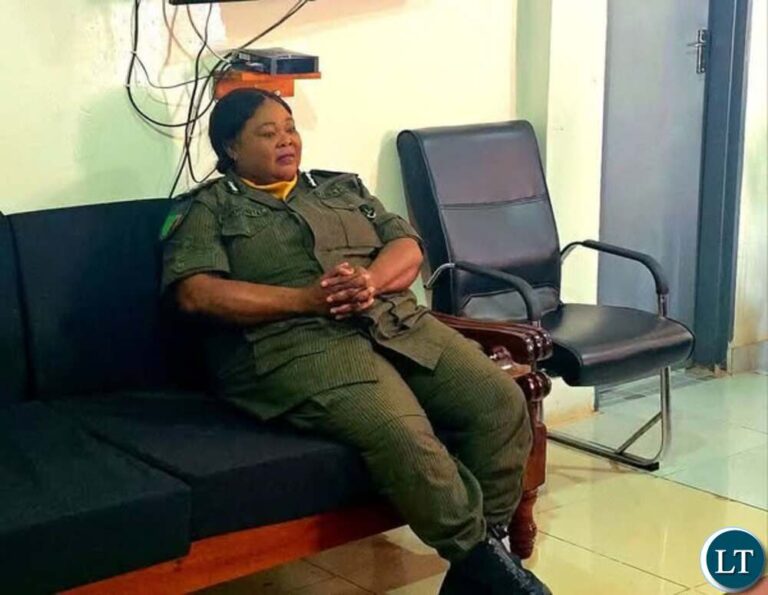
Police in Kasama District in Northern Province have arrested four people for being in possession of a stolen transformer.

The four men have been detained and are currently in police custody.

Northern Province Police Commanding Officer, Lucky Munkhondya, has confirmed the development in an interview with the media in Kasama district.

The media reports that Ms Munkhondya said the suspects were intercepted at Chikumanino Bus Station while trying to transport the transformer to Lusaka.

She said following consultation with ZESCO, the transformer was identified as property of Northern Coffee Corporation, Kateshi Plantation in Kasama district.

She further disclosed that among the suspects, two are employees of the Northern Coffee Corporation while the other two are former workers of the same company.

Ms Munkhondya added that the four suspects will appear in court soon.

ZNS committed to work with Councils in CDF implementation

0

The Zambia National Service has reiterated its commitment to collaborating with local authorities to implement Constituency Development Fund (CDF) in Northern Province.

ZNS Commander, Maliti Solochi who is in the Province to inspect projects the service is implementing in the region and meet his troops, says the service is ready to collaborate with councils to work on road infrastructure under CDF.

The media reports that Lt Gen Solochi also reiterated the service’s unwavering commitment to enhance agriculture production in the region.

He said this when he called on the Northern Province Minister, Leonard Mbao at his office in Kasama district.

Mr Mbao called for continued collaboration with ZNS on the construction of key roads and acrow bridges in the province.

He named one such as the Chambeshi Ring Road.

He noted that the road is vital for the agricultural sector and in promoting socio-economic development for the district and the province.

Mr Mbao also noted that although the local authority has acquired a full set of earth moving equipment, they lack the human resource to operate machinery.

He expressed disappointment with the quality and cost of some projects being undertaken using the CDF.

“Though most of our councils have procured earth moving machinery, there has been scarcity of human resources to operate the equipment. We are requesting for collaboration of human resources to work on the roads, our councils lack manpower,” he said.

The Provincial Minister has also commended ZNS for exhibiting quality works on projects citing the Mukupa- Katandula road in Kaputa district.

Mr Mbao also thanked ZNS for acquiring land in Kalungwishi in Lunte and Chinakila in Mpulungu districts, acknowledging the service’s commitment to enhancing food production.

Independence Day Preparations heighten in Chasefu

1

Residents of Chasefu District in Eastern Province have embarked on a community clean-up exercise in preparation for the 61st Independence Day, which will be celebrated this Friday.

The exercise has drawn participation from people of all backgrounds who have come together to clean public spaces, including markets, church surroundings, schools and health facilities.

Civil servants, from central government and the local authority, are also part of the clean-up exercise, working side by side with residents to promote collaboration between government and the community.

Acting District Administrative Officer, Isaac Phiri commended the residents and civil servants for their dedication, describing the activity as a meaningful way to foster community spirit and noted that taking care of the environment is part of building a resilient and prosperous district.

“As we prepare to mark 61 years of independence, it’s encouraging to see communities and government workers joining hands to shape a cleaner and healthier Chasefu. This initiative is encouraging all of us to be united and share responsibility in developing our district and nation at large,” he stated.

This year’s Independence Day is being commemorated under the theme: ‘61 Years of Peace and Unity – Building a Resilient and Prosperous Zambia.’

The clean-up exercise is scheduled to continue in various parts of the district throughout the week, leading up to the Independence Day celebrations.

“Asking Questions is Not a Crime” – Matomola Likwanya

“Asking Questions is Not a Crime”: Suspended UPND Official Defends Ministry Visit, Alleges Witch-Hunt

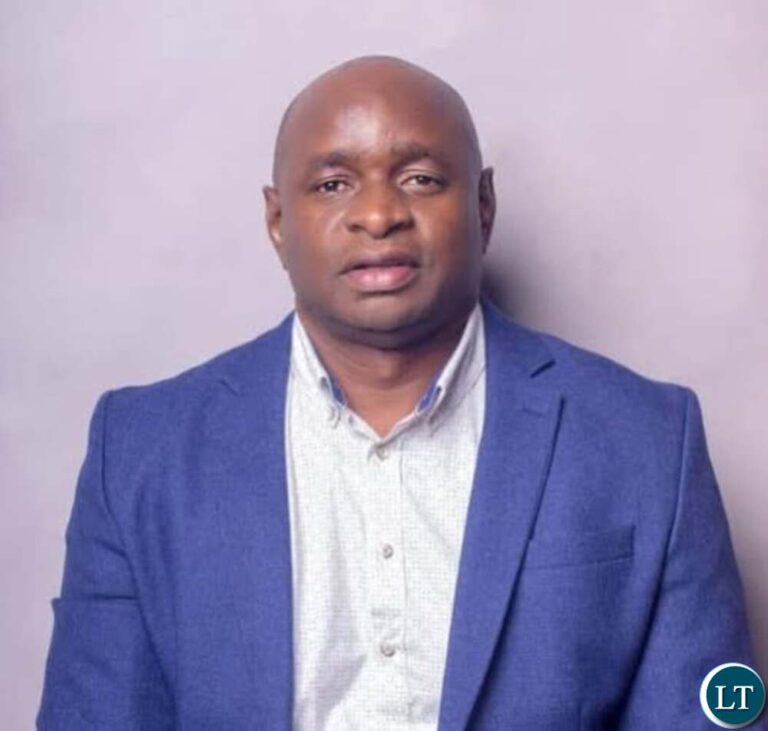
LUSAKA — The ruling United Party for National Development (UPND) is in news yet again  following the suspension of its Lusaka District information and publicity secretary, Matomola Likwanya, for what the party calls “gross misconduct and insubordination.” But the suspended official is fighting back, alleging that his real crime was demanding transparency over suspicious government contracts and that his suspension is a targeted witch-hunt.

The action, issued by Lusaka Province UPND chairperson Obvious Mwaliteta last Friday, accuses Likwanya of leading a group of party cadres to the Ministry of Community Development and Social Services to harass officials and demand contracts. The move has exposed deep fissures within the party, pitting the leadership’s demand for discipline against grassroots cries for accountability.

In a passionate and detailed rebuttal, Likwanya has publicly dismantled the party’s allegations, insisting his mission was one of civic duty, not personal enrichment.

“We never went to the Ministry of Community Development to get contracts,” Likwanya stated unequivocally. “We went to inquire on how they awarded a tender to someone who was the third best bidder and left out the first and second best bidder.”

He pointed to an even more glaring issue, questioning, “Secondly, we wanted to find out how they awarded one person a contract to supply 100,000 phones and to date that person has not supplied.”

Likwanya claimed his concerns were part of a broader pattern of opaque dealings at the ministry. “We wanted to find out why we have the same companies that supply fertilizer at the ministry and so many issues such as why the same names appear to get social cash transfer including others who are not even eligible and are well to do,” he said, adding pointedly, “I have all this data at my finger tips so please let’s not get there.”

Forcefully pushing back against the characterization of the visit as an intimidation tactic, Likwanya challenged the ministry to provide concrete evidence. “I just wanted you to know that because others are buying into this propaganda that we went to ask for contracts and I went to insult. I have never submitted any profile at that ministry; they have the records.”

He directly invoked the ministry’s own security apparatus, stating, “The Ministry of Community Development has CCTV cameras. I challenge them to bring any footage that we went and harassed the PS.”

Beyond the allegations themselves, Likwanya raised serious concerns about the disciplinary process. He argued that the suspension was procedurally flawed, coming from the wrong level of party leadership. “I was supposed to be suspended by the district chairman and not the provincial chairman so that if am dissatisfied with the decision of the district I then appeal to the province,” he explained, suggesting an irregular overreach.

He also highlighted what he perceives as a deeply personal and unfair targeting. Despite being part of a group of four, he was the sole individual suspended. Furthermore, he revealed the personal humiliation of learning his fate through social media. “I have accepted the suspension for the respect I have for the party and the president,” he said, “even when it’s only me who was suspended when we were the four of us and my suspension letter was not sent to me but rather posted on social media.”

He condemned the one-sided nature of the investigation, noting, “We were not even called to explain what happened but they made a decision by hearing from one side of the story.”

Likwanya’s defense escalated into a stark warning about the party’s direction. He accused the UPND of falling into a trap set by its political opponents. “We are buying so much in the propaganda of the opposition and we act based on what the opposition direct us to do,” he lamented.

He voiced the frustration of many long-serving, yet overlooked, party members, saying, “We have so many of our people who fought for UPND and nothing has happened to them in terms of them being supported as citizens.”

Most powerfully, he framed his actions as a direct embodiment of the party’s own principles. “We have been preaching about the Access to Information Bill that every citizen can walk in any office and access information,” he argued. “But today it is a crime to get information, most especially that I was elected as information publicity secretary for Lusaka. We must not be intimidated with arrests for simply visiting a public office to inquire on a public tender.”a

Despite the public fallout, Likwanya ended his statement with a mix of defiance and a plea for recognition. “Sometimes silence is good but not at this point were someone wants to tarnish my reputation and try to make me look violent,” he stated. “Use the same energy you are using to bring us down to uplift us who have been loyal to you for many years.”

Ultimately, he reaffirmed his loyalty to the party itself, distinguishing between the current leadership’s actions and his faith in the President. “I shall still remain UPND as this is not an expulsion from the party,” he concluded, “and I shall continue to write and post about the good works of the President.”

The ruling party has not issued any further comment. As the case awaits a hearing before the party’s provincial disciplinary committee, it has ignited a fierce debate among supporters, forcing a public conversation about transparency, internal democracy, and the price of asking questions within the ruling party.