Wednesday, June 10, 2026
15.4 C
Lusaka
Home Blog Page 277

ZP Forensic Ballistic Expert testifies in Shikapwasha’s murder case

0

A Witness from the Zambia Police Forensic ballistic expert, Isaac Kalimanshila, has witnessed in a matter involving former Home Affairs Minister, Lieutenant General, Ronnie Shikapwasha’s widow, Jane Lusengo 73, has told the Lusaka High Court that the items obtained from the crime scene and submitted for chemistry laboratory forensic analysis had evidential ballistic traces on them.

Mr Kalimanshila, who appeared before Judge Zulu, cited a pair of black shoes, dark blue trousers, Chitenge jacket, white blouse, a white vest and a dark blue skirt, as among the items that had evidential ballistic traces.

A white T-shirt torn in two even pieces with a gun short damage on the abdominal medial part, was also presented as evidence during the continuation of trial.

Mr Kalimanshila identified the white T-shirt in question which was presented to him by the State advocates as being the T-shirt he was presented by the officer handling the case at the crime scene.

He further informed the court that the left side of the white T-shirt had a gun short damage on the abdominal medial part.

“The T-shirt was torn into two even pieces, and one piece of the two had a gun short damage on the abdominal medial part, it was white in colour.

“It was observed that the left side of the T-shirt had a gun short damage on the abdominal media part,” Mr Kalimanshila stated.

Meanwhile, a report containing pictures showing the primary crime scene and how furniture and personal belongings were found, was also presented as evidence.

According to Mr Kalimanshila, the photo in the report was captured in the eastern north of the master self-contained bedroom.

Among the pictures in the report, one shows the alleged laying position of the victim’s body, while the other picture shows the position where suspected blood sustains were observed.

The pictures were captured from the crime scene at Plot 477 of ibex hills.

Earlier, State Advocates made an application before Judge Zulu requesting the court to be moved to the crime scene.

The application was meant to allow the court to appreciate the evidence presented by the witness during cross examination.

Judge Zulu granted the application which was supported by the defence lawyers.

The Court later moved to Ibex Hill for a scene visit in a case Lusengo 73 is accused of shooting Lt. Gen. Ronnie Shikapwasha, who was also former Zambia Air Force Commander.

In the house, Mr Kalimanshila showed the court where the body was found in the master bedroom.

He earlier testified that the deceased was shot at close range and that he had no exit bullet wound.

Mr Kalimanshila also described how the scene was found during investigations into the case.

Ms Lusengo, 73, is charged with murder in connection with the death of retired Lt. Gen Shikapwasha, 76, who died on January 15, 2024.

She is accused of allegedly shooting him using a double barrel at the couple’s Ibex Hill house in Lusaka, a day before he died at the hospital.

However, Ms Lusengo pleaded not guilty to murder before Judge Conceptor Zulu and the state called witnesses to testify against her, with the latest being a police forensic ballistic expert, Isaac Kalimanshila, on stand.

After visiting the crime scene, Judge Zulu said she will give a date after independence for the next hearing.

Zambia reaffirms commitment to strengthening pharmaceutical manufacturing

0

Government has reaffirmed its commitment to fostering innovation and building a resilient pharmaceutical sector that promotes self-reliance and access to essential medicines across Africa.

Minister of Technology and Science, Felix Mutati, said the commitment aligns with the government’s agenda to enhance local production, strengthen supply chains, and promote technology transfer in the health sector.

In a speech read on his behalf by his Ministry’s Permanent Secretary, Brilliant Habeenzu during the official opening of the Pharma-Connect Africa Conference 2025 in Lusaka, Mr Mutati said technology has the power to transform health systems and improve access to affordable healthcare when effectively harnessed.

He said the government is implementing the Eighth National Development Plan (8NDP), which places science, technology, and innovation at the centre of Zambia’s industrialisation and economic transformation agenda.

Zambia is also part of key regional frameworks, including the African Union’s Pharmaceutical Manufacturing Plan for Africa, the SADC Industrialisation Strategy, and the COMESA Regional Pharmaceutical Plan.

Mr Mutati said innovation in the pharmaceutical sector requires policy coherence, human capital development, and market access to attract private investment and boost local value addition.

“With this approach, Zambia’s pharmaceutical sector has the potential to contribute millions of dollars to the national manufacturing GDP and create more than 5,000 skilled jobs by 2030,” he said.

The minister further disclosed that Zambia is finalising processes to ratify the African Medicines Agency (AMA) treaty, which seeks to harmonise regulatory standards and improve access to quality-assured medicines across the continent.

He added that the future of healthcare in Africa lies in investing in people, particularly in equipping young scientists and engineers with skills in biotechnology, regulatory science, and pharmaceutical engineering.

The Government, through the Ministry of Health and higher learning institutions, has introduced the Doctor of Pharmacy programme to meet the growing demand for expertise in biotechnology and pharmaceutical manufacturing.

Mr Mutati also said medicine security has been recognised as part of digital security, with the digital transformation strategy prioritising e-logistics, data interoperability, and smart traceability systems to eliminate counterfeit medicines.

“As we look to the future, our actions must be guided by science, collaboration, and accountability,” he said, reaffirming Zambia’s commitment to promoting innovation and industrial capacity development in line with Africa’s pharmaceutical self-reliance agenda.

And SADC Senior Programmes Officer, Lanboly Kumboneki, says SADC is pleased to be part of an initiative where they can discuss the future of pharmaceutical industry and supply.

Mr Kumboneki noted that it is important to examine the role of innovation and system modernisation in order to address the ongoing challenges to medicines access.

“It is important to identify what is required in order to foster a culture of innovation that explores the causes of intractable medicine access issues,” he said.

Mr Kumboneki has reaffirmed SADC’s continued partnership with the government in order to improve the application of accessing medicines.

Govt. committed to establishing modern tourism centers

0

Government says it is committed to establishing modern tourism centers across the country as part of its strategy to enhance Zambia’s position as a preferred tourist destination in the region.

Minister of Tourism, Rodney Sikumba, says the initiative is aimed at promoting both domestic and international tourism by creating accessible information and cultural hubs that will showcase Zambia’s diverse attractions.

The media reports that Mr Sikumba, who is also Livingstone Central Member of Parliament, was speaking in Livingstone today when he commissioned a Tourism and Education Center, located within Dambwa North Township.

He explained that the proposed centers will serve as one-stop facilities where visitors can access information on tourism sites, accommodation, transport, and local heritage.

Mr Sikumba noted that such infrastructure will also help stimulate economic growth by linking communities to the tourism value chain.

“The government remains steadfast in its commitment to expanding the tourism industry by providing facilities that make it easier for visitors to explore and appreciate what Zambia has to offer.

 “These centers will not only improve visitor experience but also create employment opportunities for local people,” Mr. Sikumba said.

He emphasised that Livingstone, being the country’s premier tourist capital, will serve as a model for the rollout of similar centers in other provinces.

The Minister further explained that the government’s focus is to ensure that every major tourist circuit has a functional information hub to coordinate activities and support private sector participation.

And, Mr Sikumba noted that tourism remains a key driver of Zambia’s economic diversification agenda, adding that the government under President Hakainde Hichilema, is determined to transform the sector into a sustainable contributor to national development.

He further urged local authorities and stakeholders to support the initiative by promoting community-based tourism projects that will complement the national vision of attracting more visitors and increasing the country’s visibility on the global tourism map.

“The creation of these tourism centers will reaffirm our commitment to making Zambia a must-visit destination, not just for its natural beauty but for the quality of experiences we provide,” Mr Sikumba added.

The Ministry of Tourism is currently working with local councils, traditional leaders, and private investors to identify suitable locations for the first phase of the project which is expected to begin in 2026.

Government urges social protection beneficiaries to tap into beef export

0

The Ministry of Community Development and Social Services has welcomed President Hakainde Hichilema’s announcement on the country’s ambitious beef export plans, urging social protection beneficiaries to take advantage of the emerging opportunities in the livestock sector.

Speaking in Livingstone at the South Expo 2025, held under the theme “Unlocking Investment Opportunities for Socio-Economic Transformation Through Strategic Partnerships and Innovation,” President Hichilema disclosed that Zambia aims to export one million tonnes of beef annually through the creation of Special Beef Economic Zones, the initiative that is expected to create jobs and stimulate economic growth through value chain development.

Reacting to the announcement, the MCDSS Permanent Secretary for Technical Services, Beatrice Chilomo, expressed optimism stating that the initiative would open up sustainable income-generating opportunities, especially for small and medium enterprises.

She said beneficiaries under government-supported programmes such as the Alternative Livelihood Initiative (ALI), Food Security Pack (FSP), and Supporting Women Livelihood (SWL) should consider venturing into cattle rearing and related agribusinesses.

Ms Chilomo added that SWL beneficiaries can form cooperatives and establish feedlots to supply cattle to commercial markets, while FSP recipients can pursue agriculture and livestock ventures either individually or in groups.

“We are excited about the potential for our social protection beneficiaries to engage in livestock production, particularly cattle farming, and benefit from the growing demand in the export market,” said Ms Chilomo.

The Permanent Secretary further noted that the Ministry’s Skills Training Colleges are actively involved in empowering Community-Based Volunteers (CBVs), who are providing technical training in livestock management and business skills to communities.

She called on all social protection beneficiaries to be proactive and embrace the government’s support in entering the beef value chain.

Ms Chilomo urged the beneficiaries to seize the opportunity and position themselves to contribute to the country’s beef export target describing it as a viable pathway to improved livelihoods and poverty reduction.

‘’The government has reiterated its commitment to supporting inclusive economic growth through strategic empowerment initiatives and targeted interventions aimed at transforming vulnerable households into productive participants in the national economy, ’she said.

MOE builds 73 classrooms in Chilanga

0

The Ministry of Education has constructed 73 classrooms in Chilanga District this year, as part of efforts to improve learning infrastructure under the free education policy.

According to the District Development Coordinating Committee (DDCC) third-quarter report from the education sector, the district’s target for 2025 is 175 classrooms, comprising 15 for early childhood education (ECE)50 for primary and 110 for secondary education.

The report noted that despite the ongoing construction, classroom shortages remain a major challenge, largely due to the increase in learner enrolment following the implementation of the free education policy.

“There is still a challenge of classroom space in most schools as the number of learners has tremendously increased due to the free education policy and a shortage of infrastructure for early childhood education,” the DDCC report revealed.

It recommended the construction of more classrooms in existing schools, as well as the provision of furniture suitable for ECE learners and the recruitment of additional teachers to meet the rising demand.

The DDCC report also confirmed that all 26 primary and 23 secondary schools managed by the government in Chilanga have fully implemented the free education policy.

In addition, the report stated that 26 primary23 secondary and 28 community schools are benefiting from the School Feeding Programme, jointly supported by the World Food Programme (WFP) and the Disaster Management and Mitigation Unit (DMMU).

Through this initiative, over 66,000 learners across government and community schools in the district are receiving daily meals aimed at improving nutrition and school attendance.

The report further revealed that five primary schools have been upgraded to secondary level to accommodate Form One classes, thereby expanding access to secondary education in the district.

Shangombo residents applaud ECZ for swift voter registration exercise

0

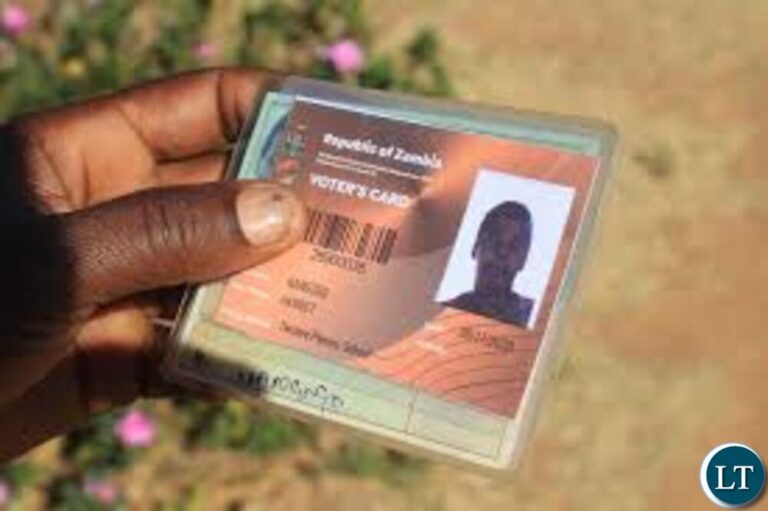
Residents of Shangombo district have commended the Electoral Commission of Zambia for the swift process of issuance of voter registration cards.

‎Speaking to the media in an interview Musonda Chipasha, a resident of Shangombo says he did not expect the registration process to be fast but to his surprise it was done within minutes.

‎”I would like to thank the Electoral Commission of Zambia for the swift issuance of voter’s cards. I came to have my lost voters card replaced; I honestly thought the process would be slow but I am happy to mention that it was done within a good number of minutes.” he added

‎Mr Chipasha added that the decision to replace his lost voter’s card is in order to exercise his democratic right to vote in the 2026 general elections and choose representatives both local and internationally.

‎”I am here at the registration Centre to replace my voter’s card because I want to exercise my democratic rights by participating in the upcoming 2026 general elections through voting. By voting I will choose a leader of my choice to represent us both locally and internationally” he said

‎Mr Chipasha has since called upon all eligible citizens to take advantage of registration centres within their areas and obtain their voter cards because a voter’s card is an important document and one cannot be allowed to vote without it.

‎Meanwhile, another resident of Shangombo Elizabeth Mabenga has also appreciated the commission for the continuous sensitisation of the exercise through electronic media.

‎”I knew about the mass voter registration electronically, the commission has done a good job in terms of sensitising the public through various platforms such as Facebook page, television, radio and our local WhatsApp groups through Shangombo town council,” she said.

‎She added that the voter education facilitators have done a commendable job in the voter education exercise to the public.

Mass voter registration is a national exercise which is currently being conducted in all 156 constituencies of the country.

The voter’s registration exercise commenced on the 13th of October and will run until 11th November 2025.

During this period the commission will be conducting various services such as new registrations, replacement of lost voters’ cards, transfers from one polling station to another, removal of deceased voters and many other services.

‎The doors of the registration centres are open from 08 to 17:00 hours daily.

President Hichilema commissions UCF’s 85mw power plant

0

President Hakainde Hichilema has commissioned the 85 megawatt United Capital Fertiliser (UCF) power plant, located in Chilanga district.

The plant, which is part of the 923 million United States dollar investment by United Capital Fertilizer, is now feeding 40 megawatts into the national power grid while the remaining 45 megawatts will be powering the facility.

President Hichilema has since urged investors in the country to prioritise investment in the energy sector as it is critical for economic development.

He has meanwhile thanked United Capital Fertilizer Company for taking a risk to invest in energy at a time when the country is faced with an electricity crisis.

The President has noted that the plant will also be producing acid which will be used by the mining sector.

He further noted that this will contribute to the country’s achievement of the three million tonnes of copper in 10 years as acid, which was previously imported, will now be locally produced.

“Explosives will also be produced here and these are needed in the mining and construction sectors. The facility will also be producing electrical vehicle batteries,” he stated.

The Head of State has since commended UCF for producing clean energy which is in line with environmental protection guidelines.

Meanwhile, President Hichilema has witnessed the signing of a contract for a 1.4 billion United States dollar urea fertilizer phase two project.

And Wonderful Group of Companies Chief Executive Officer, Huang Yaochi, has disclosed that this will result in power generation scaled up to 300 megawatts.

He has commended the Zambian government for creating an enabling environment for investment to thrive.

“We are grateful to the government for its continued support. The private sector cannot invest millions of dollars in a country if the government policy is not right,” he said.

Speaking earlier, UCF Limited Chairperson, Chance Kabaghe, explained that the development is part of the industrial development comprising an ammonium plant, urea plant as well as the power generation plant among others.

Mr Kabaghe disclosed that the industrial development has so far created a total of 3,400 direct jobs, adding that this will have a positive impact on the country’s economy.

Hamukale hails Zambia’s beef exports to DRC

1

Agriculture Economist Edify Hamukale has commended the government for initiating beef exports to the Democratic Republic of Congo (DRC), describing the move as a major step toward diversifying Zambia’s export portfolio and boosting agricultural revenue.

In an interview with ZANIS, Dr. Hamukale emphasized the need for sustained investment in the beef production sector to maintain and expand the export market.

Dr. Hamukale highlighted the importance of improving veterinary services to enhance cattle health, noting that animal health management remains a key determinant of increased beef production.

“Reliable veterinary services are vital if Zambia is to maintain its export market and grow its beef industry,” Dr. Hamukale said.

He noted that Zambia’s cattle population of about three million head provides a solid foundation for developing a thriving beef industry.

However, he said the country’s vast grazing lands have the capacity to support up to nine million head of cattle, calling for more effective utilization of this potential.

Dr. Hamukale urged the government to prioritize pasture improvement, cattle health and breeding programmes to enhance cattle weight, productivity and overall beef quality.

He added that investing in these areas would not only increase production but also help Zambia compete with regional beef exporters.

He further underscored the need for consistent feeding strategies to ensure a steady supply of cattle throughout the year, enabling the industry to meet both local consumption and export demands.

“To maintain the export market, it is important that the government ensures reliable veterinary services and also implements measures to control cattle theft, which is a significant challenge facing the industry,” he noted.

Dr. Hamukale observed that although Zambia’s beef production potential is strong, the country still lags behind regional leaders such as Botswana and South Africa.

He said Zambia could reach similar production levels with the right combination of policy support, investment and management.

“While Zambia has potential to reach the production of cattle like that of Botswana and South Africa, there is still much work to be done to reach the standards of these countries,” he said.

Kasempa District administration hails world hand washing day

0

Kasempa District Administration has reiterated government’s recognition of the crucial role that hand hygiene plays in achieving good health and National development.

District Administrative Officer Francis Makanga disclosed that the government attached a great importance to hand hygiene as a preventive health measure.

Mr Makanga said this during the commemoration of World Hand-washing Day held in Kasempa.

“The President and his government recognise that hand hygiene is a key part of achieving good health and National development,” he said.

Mr Makanga added that through the Ministries of Health, Water Development, and Education, the government continued to promote access to clean water, proper sanitation, and hygiene education across the country.

He noted that the government has implemented several measures to enhance access to clean hand washing facilities, emphasising that hand hygiene remains key in preventing diseases.

“The President’s leadership continues to emphasise preventive health measures because a healthy population is the foundation of a strong and prosperous Zambia,” Mr Makanga said.

He, however, acknowledged that government efforts alone were not enough to improve hand hygiene in the District.

“Government efforts alone are not enough. We all have a role to play in promoting hand hygiene in our communities. Let us work together,” Mr Makanga urged.

He encouraged residents to practice regular hand washing with soap and clean water and called for increased hygiene education in schools and public places.

Mr Makanga also challenged residents to make hand washing not just a one-day event, but a daily habit and part of their culture.

“When we keep our hands clean, we protect ourselves, our families, and our communities from many diseases,” he added.

Mpulungu youths urged to register as voters

0

A youth in Mpulungu has urged young people in the district to turn out in numbers to register as voters in the ongoing mass voter registration exercise.

Moses Chilufya, says all eligible youths should take interest to register as voters, replace lost voters cards, or transfer from one polling station to another.

He notes that with the 2026 general elections approaching, it is crucial that citizens prepare by securing the tools necessary for the critical exercise.

Speaking to the media in Mpulungu in an interview today, Mr Chilufya urged that people, especially young ones should seize the opportunity to voice out their views through voting.

“Let us turn out in numbers for the mass voter registration exercise which has already started country wide. We need to register as voters to allow us to participate in the general election next year,” he said.

Mr Chilufya noted that citizens can only take part in electing their desired candidates if they have a National Registration Card (NRC) and a voter’s card.

He also called on parents and guardians to help their children acquire their green NRCs to obtain the document as a prerequisite for obtaining a voter’s card.

Mr Chilufya indicated that this exercise will only take one month, hence, there is no time to wait as there may not be an extension.

“As people in Mpulungu we have a tendency of waiting until the last days or waiting for extension of programmes which might not happen, we could lose the opportunity which has been given to us,” noted Mr Chilufya.

He further encouraged Assistant Registration Officers (AROs), to do their best in ensuring that they capture and issue the voters cards to as many people as possible.

“To the Assistant Registration Officers, we have full confidence in your ability to execute this task, and we wish you all the very best and please do not disappoint us, we believe in you,” he commended.

The Electoral Commission of Zambia (ECZ), commenced the Mass Voter Registration exercise on October 13, 2025, which will run until November 11, 2025.

Late Sakuhuka eulogised

0

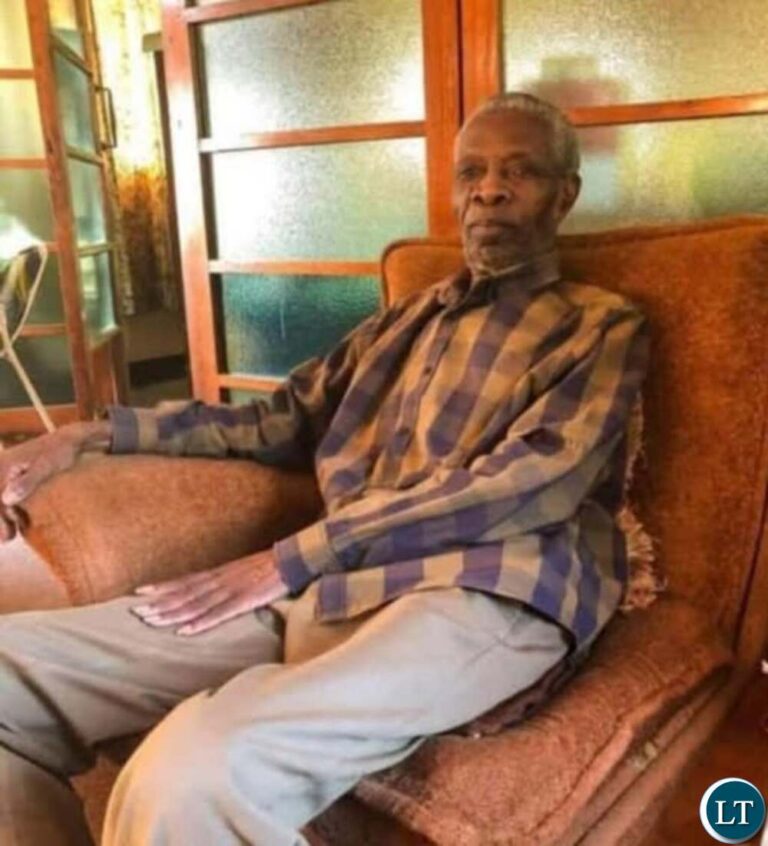
Leaders and Community Members in Zambezi District of North-western Province have bemoaned the passing of veteran politician and freedom fighter, Rogers Sakuhuka.

The Former Cabinet Minister in the United National Independence Party (UNIP) government, has been widely described as a true patriot and a dedicated public servant.

Zambezi District Freedom Fighters Association says it is saddened by the demise of Mr Sakuhuka, describing him as a true patriot and son of the soil.

In an interview with Zambia News and Information Services (ZANIS) today, District Secretary, Welbert Chipopu, said the late Minister was instrumental during the country’s liberation, adding that he believed in justice, cause and sacrifice in his youth by joining the movement.

Mr Sakuhuka once served as Zambia’s Minister of Tourism, Deputy Minister of Health, Deputy Speaker of the National Assembly and High Commissioner to Zimbabwe.

He died at the age of 89, on October 13, 2025, at Chitokoloki Mission Hospital after an illness.

United Capital Fertiliser investments elate President Hichilema

0

President Hakainde Hichilema has witnessed the signing of a US$1.4 billion financing contract for phase two of the urea fertiliser project at United Capital Fertiliser (UCF) in Chilanga district.

The commissioning of phase two of the urea plant that targets to double fertiliser production from 800, 000 metric tonnes to 1.6 million metric per annum.

Speaking when he officiated at the commissioning ceremony of the United Capital Fertiliser urea plant, President Hichilema said the government will support such investments as they contribute to Zambia’s economic growth.

President Hichilema has since commended the company, stating that the investment will not only support the government’s agenda of enhancing maize production to 10 million metric tonnes but also increase export capacity.

The President added that such investment is admirable, saying his Cabinet should learn and have a shared vision of what it takes to develop the economy through such.

“Will produce fertiliser for our consumption in the country and produce more for exporting to our neighbouring countries. This means food security, increased yields on our farm fields,” President Hichilema said.

He added that the state of art chemistry laboratory at the industrial park will be used for testing and analysing samples that will help produce better products.

The Head of State thanked the UCF shareholders for risking their capital in Zambia but has now yielded positive results.

He assured the investors that the government will address impending challenges.

And Chinese Ambassador to Zambia, Han Jing, said the expansion was only possible due to the favourable investment environment which the government has provided.

Mr Jing added that following meetings between the Presidents of Zambia and China, important consensus has been reached on sharing development opportunities and the company expansion is one of them.

He noted that China remains steadfast in its commitment to deepened cooperation with Zambia, assuring more Chinese investment.

“The commissioning of the United Capital Fertiliser Urea Plant is a fruitful achievement of the growing partnership between China and Zambia,” he stated.

Mr Jing also commended President Hichilema’s commitment to improving livelihoods through strengthening the agriculture sector as evidenced in various initiatives.

Meanwhile, United Capital Fertiliser Company Limited Board Chairperson, Chance Kabaghe, said following further expansion works, the company invested about US$282 million dollars to attain the current capacity of 800,000 metric tonnes production.

Mr Kabaghe said the plant has world class technology, high efficiency and environmentally friendly technology which meet equator principles and World Bank standards on environmental and social compliance for such projects.

He described the development as an industrial revolution landmark in agriculture development, while ensuring commitment to social corporate responsibility in the community.

“We are proud to indicate that this has become a regional household name in the manufacturing of customised fertilisers, export to Tanzania, Malawi, Zimbabwe, Botswana and the Democratic Republic of Congo,” he said.

Meanwhile, Chilanga Member of Parliament, Sipho Hlazo, appreciated the massive investment that has lifted the face of the constituency.

Mr Hlazo however said that due to the development in the constituency, there is need to expand the road network to address congestion.

And Lusaka Province Minister, Sheal Mulyata, said there is progress in redeeming farming inputs in the province, stating that 5,641 farmers have since commenced the process out of over 18,000 farmers who deposited the required money to access inputs under the Farmer Input Support Programme (FISP).

Ms Mulyata added that Lusaka has a population of 59,188 farmers under FISP.

Mtolo assures farmers of Govt.’s commitment to buy all the maize

1

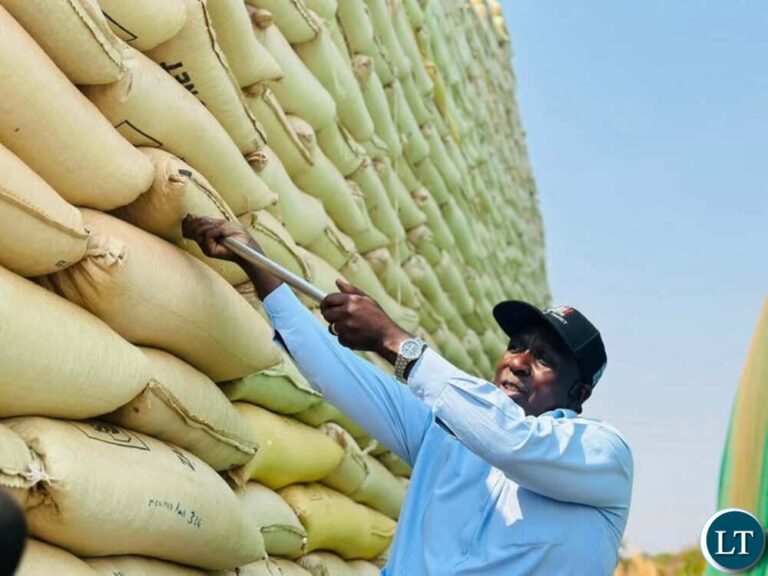
Minister of Agriculture, Reuben Mtolo has assured farmers across the country that the government through the Food Reserve Agency (FRA), will purchase all the maize produced during this year’s farming season.

Speaking in Manyinga District today when he toured Manyinga and Kaula Satellite depots, Mr Mtolo emphasised that no farmer will be left out, adding that the government recognises the hard work and sacrifices made by small-scale and commercial farmers to ensure National food security.

He stated that FRA has already been adequately funded and equipped to facilitate the smooth purchase and storage of maize from all Districts.

 The Minister further noted that the maize buying exercise will continue until every farmer who delivered grain to the designated depots has been attended to.

“We want to assure our hardworking farmers that the government remains committed to ensuring they receive fair prices for their produce. FRA will buy all the maize that farmers have brought forward,” the Minister said.

He added that the measure is part of the government’s broader strategy to stabilise the maize market, guarantee national food security, and protect farmers from exploitation by unscrupulous private buyers offering low prices.

Mr Mtolo also urged farmers to continue working closely with agriculture officers and to deliver their maize to officially designated FRA depots for proper documentation and timely payment.

He concluded by reiterating the government’s commitment to supporting the agriculture sector as a key driver of economic growth and rural development.

The Minister was in the district to check on the safety of FRA maize depots.

Govt. calls for multi-sectoral approach in addressing public health challenges

0

The Ministry of Green Economy and Environment (MGEE) has called for a multi-sectoral approach among stakeholders in addressing public health challenges that affect the environment, animal health, and human beings in Chisamba district.

Acting Principal Environment Research Officer Wisdom Moola says stakeholders must participate in addressing public health challenges through the One Health Approach Technical Working Group (1HATWG).

The Principal Environment Research Officer was speaking in an interview with the media shortly after an orientation meeting with various stakeholders at the council hall in Chisamba today.

Mr Moola said this is in line with the Zambia National Public Health Institute (ZNPHI) Act Number 19 of 2020, which calls for stakeholder collaboration in addressing public health occurrences.

“This one health approach’s main purpose is to ensure that different departments as they are doing their mandate, data is shared within institutions so that there is early warning system that is put in place,” Mr Moola said

He disclosed that the 1HATWG plays an important role in alerting members of the public about emerging and re-emerging diseases such as anthrax.

During a presentation, MGEE Meteorologist Thomas Maunda said some of the objectives of the one health approach were to coordinate multi-sectoral responses to public health emergencies and to monitor and evaluate the implementation of the strategic plans at the district level.

“The objectives of the district one health approach, is to coordinate implementation of activities at the district level, to serve as liaison between districts and provincial secretariat,” Mr Maunda said.

Earlier, Chisamba District Health Director Given Chapa said the ZNPHI in collaboration with her ministry and other line ministries were currently streamlining a one health approach to address public health challenges.

Meanwhile, The Ministry of Local Government and Rural Development and the Ministry of Health have been voted as Chairperson and secretariat respectively to lead the 1HATWG which has just been formed in Chisamba district.

Increase in purchase of maize by FRA puts pressure on storage facility

0

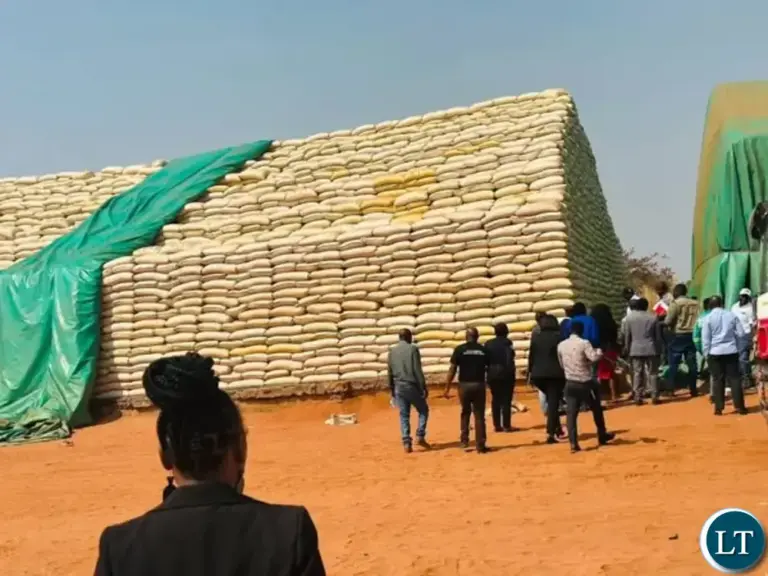
The Food Reserve Agency (FRA) in North-Western Province has purchased over 160,000 metric tonnes of maize more than double its target but the surge has put pressure on the Province’s storage facilities.

Provincial Marketing Coordinator Dickson Musema disclosed that the unprecedented purchases, nearly four times the storage capacity, had forced the agency to improvise ways to safeguard the surplus.

Mr Musema disclosed this when the Minister of Agriculture inspected FRA satellite depots in Kasempa today.

“This season, our target was 80,000 metric tonnes, but we have purchased 162,000 metric tonnes more than double the target, this is four times our storage capacity, which stands at 77,000 metric tonnes and is now 98 percent full,” He said.

Mr Musema added that only about 5,000 metric tonnes of storage space remain which included 3,000 in Zambezi and 2,000 in Solwezi while all other districts had reached full capacity.

“That is why you see us improvising by stacking maize on sandbags and blocks. About 40 percent of the stock has already been moved from satellite depots to holding depots, while 60 percent is still in transit,” He said.

Mr Musema said FRA had secured additional storage space in the Copperbelt, Central, and Lusaka Provinces to manage the surplus, also highlighted efforts to extend marketing services to farmers.

“Last season, we operated 150 satellite depots, but this year we increased to 195 depots to reach every farmer. The maize that is yet to be transported is safely stacked on slabs or wooden platforms and covered with new tarpaulins, with no bag exposed to rain,” He added.

“Starting tomorrow, farmers will begin receiving their payments. We hope the balance will be released soon so they can purchase farming inputs, especially as rains have already started in the province,” Mr Musema said.

 Minister of Agriculture Reuben Mtolo emphasised the importance of securing maize once it was brought to FRA depots.

“There are times we hear reports that maize has gotten spoiled or soaked. Our responsibility ends at the main or satellite depots. It is difficult for us to cover maize that is still in the villages. Farmers must bring it within our perimeter fences, where it can be properly secured,” Mr Mtolo added.

He further added that all maize within FRA depots must be protected, whether it had been purchased or not.

“Once maize is brought inside the FRA perimeter fence whether we have entered it in our books or paid for it or not it must be covered. There should be no maize at the satellite depots that is left exposed. That is the message we want to pass,” Mr Mtolo said.

He stressed that the government will continue to monitor maize storage to safeguard the country’s food reserves and protect the bumper harvest.