Thursday, June 18, 2026
13.8 C
Lusaka
Home Blog Page 5

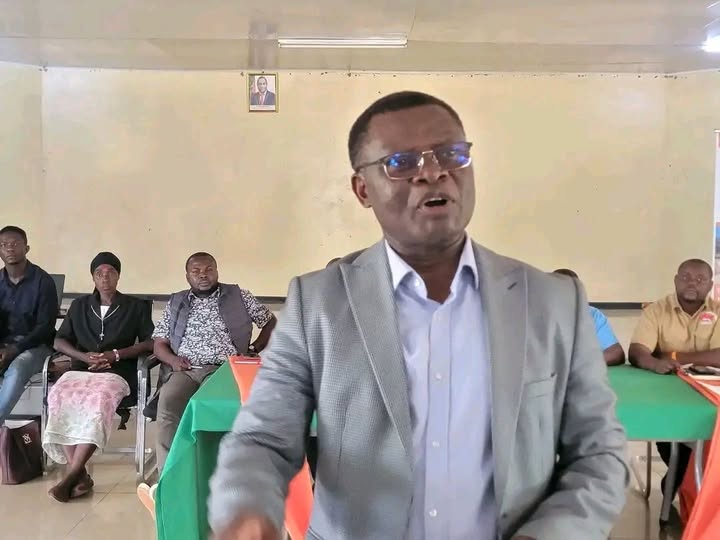
Chisamba DC calls for partnerships in addressing SRHS issues

0

Chisamba District Commissioner, Joel Mboyoma, has called for multi-sectoral efforts in dismantling barriers preventing adolescents and young people from accessing Sexual and Reproductive Health Services (SRHS) in Chisamba District of Central Province.

Mr Mboyoma, says community members and service providers must actively collaborate to change the narrative and enhance access to SRHS for local adolescents and the youths.

He made this call during the Community District Interface meeting, aimed at improving access, availability, affordability, quality, and equity of adolescent-friendly SRHRS in Chisamba.

Mr Mboyoma noted that various national policies and strategic frameworks recognise that adolescents and young people have distinct health needs which require responsive, accessible, acceptable, equitable, and high-quality services.

“Today’s meeting therefore serves a critical purpose. It provides an opportunity to join efforts and identify solutions and share responsibilities to improve health outcomes.

“As we move forward, let us remember that improving adolescent sexual and reproductive health services is a shared responsibility. Government, health workers, community’s parents, traditional leaders, civic leaders, civil society organisations, and young people all have a role to play,” Mr Mboyoma said.

Group Focused Consultations Executive Director, Field Phiri, commended the government for fostering an enabling environment that promotes adolescent-friendly SRHRS.

Dr Phiri cited teen pregnancy, early marriages, school dropouts, birth-related disabilities, and intergenerational poverty as critical challenges facing adolescents and youths that must be addressed through SRHS.

“We want to appreciate what the government has put in place. We are looking at the constitution and all the guidance that government has put in place. In the area of sexual reproductive health, we realizsd we have STIs, alcohol abuse, teen pregnancies and early marriages. To address this, we have engaged adolescents and youths so that they can reach out to their friends,” Dr Phiri said.

And Executive Director of the Alliance for Accountability Advocates Zambia (AAAZ), Luchembe Chilufya, stated that SRHR are a cornerstone of the Sustainable Development Goals (SDGs) related to health, education, and gender equality.

“It is essential for us because it addresses issues to do with gender equality, human dignity and health equality. Lack of sexual and reproductive health rights access can track families in poverty, increase maternal mortality and expose individuals to abuse and disease,” Mr Chilufya said.

Meanwhile, Peer Educator, Eunice Mboyonga, said adolescents identified a lack of trained staff in disability inclusion, negative attitudes from service providers, and peer pressure as the primary challenges they face in accessing SRH services.”

“Adolescents identified 13 Challenges in accessing SRHS. The five most critical ones are lack of friendly space, lack of resources in implementing effective adolescents SRHS, adolescents living long distant places, lack of parental support in sexual and reproductive health services, and low community acceptance of Adolescent in SRHS,” she said.

Stakeholders in Chisamba have since formulated a comprehensive action plan, integrating both short- and long-term measures to enhance adolescents’ access to SRHS.

The Space to Lead Project alongside implementing partners such as Group Focused Consultations and the Alliance for Accountability Advocacy Zambia (AAAZ), convened the meeting in Chisamba, with support from Plan International Zambia.

Senior chief Kasempa celebrates 50-year reign

0

Children of Senior Chief Kasempa of the Kaonde speaking people have described their father who has marked 50 years Golden jubilee reign on the throne since 1976 as a beacon of love, peace and fountain of wisdom not only for his family but the entire chiefdom as a whole.

Speaking on behalf of other children during the celebration of the Juba Ja Nsomo golden Jubilee ceremony in Kasempa today, princess Bertha Kasempa said their father was indeed chosen by God for the reign from the time of enthronement looking at how he has managed to look after his people well embracing everyone.

“As your children we are grateful to note that even when with your busy schedules, even in your ill health you always find time to give us the exclusive attention we desire to get your guidance and tap into your wisdom, “She said.

Princess Bertha said from the time their father was enthroned as senior chief Kasempa he no longer belonged to them alone but also to his subjects and the entire chiefdom in so many ways.

And organising committee chairman Norman Katombela congratulated Senior Chief Kasempa for attaining 50 years on the throne and for his steadfast leadership and dedication to promoting cultural practices, values and norms that bind his people together.

Mr Katombela said the celebration is a testament to the enduring power of customs and the importance of preserving culture.

“It is through ceremonies like this that we reaffirm our connection to our ancestors and to ourselves, “he said.

The children encouraged their father who is now over 80 years old quoting David’s story in the bible when he began to reign at the age of 30 where some said David you are too young to be a king. We need someone younger. By the time David ruled for 40 years he was 70, and others were probably saying David you are too old to be King of Israel. It is time to turn it over to someone younger. In God’s sight age is not really an issue he uses the young and old.

Senior Chief Kasempa of the Kaonde speaking people ascended to the throne on 12th October,1976 marking a Golden jubilee reign this year.

This year’s Juba Ja Nsomo golden Jubilee ceremony was being held under the theme, “commemorating 50 years of dedicated leadership marked by peace, unity and social-economic development of Senior Chief Kasempa the 12th.

Government urges preservation of traditional ceremonies in Zambia

0

North-Western Province Deputy Permanent Secretary Luckson Mulumbi has called for the preservation of traditional ceremonies for the present and future generations as they remain an integral part in Zambia’s rich cultural heritage.

‎Mr Mulumbi said that the preservation and promotion of culture is essential for maintaining Zambia’s identity and pride.

‎He said it is everyone’s responsibility to teach the younger generation on the beauty of traditional customs and their significance.

‎Mr Mulumbi said this in Kasempa today during the celebration of the Juba Ja Nsomo golden Jubilee ceremony of Senior Chief Kasempa of the Kaonde speaking people who ascended to the throne in 1976.

‎He said traditional ceremonies play a key role in promoting unity in diversity adding Zambians should be proud of the country’s diverse and rich cultural heritage and take time to learn different cultures in order to understand each other and consequently live in harmony as one people in line with the one Zambia One Nation motto.

‎”These traditions are the anchor that binds us to our past and provides guidance for the future,” Mr Mulumbi.

‎Mr Mulumbi said people must ensure cultural practices including customs, artisanal skills and songs are passed on to the younger generations adding that it is through such continuous transmission that Zambia’s cultural heritage will not only be safeguarded but also remain vibrant and relevant in the modern World.

‎He commended Senior chief Kasempa for his positive contributions in delivering    meaningful social and economic development in his chiefdom throughout his 50 years of reign on the throne.

‎”It is for this reason that government acknowledges the significance of the Juba Ja Nsomo traditional ceremony which promotes food security through the celebration of a good harvest. A successful harvest not only sustains our families but also strengthens our economy and ensures that resources are available to support one another,” Mr Mulumbi said.

‎He assured the traditional leader and his people that the government remains committed to the implementation of developmental projects and programmes in all sectors of the economy aimed at improving people’s livelihoods by bringing development closer to the people.

‎Mr Mulumbi highlighted some of the developmental projects government has Implemented to improve the welfare of people in Kasempa under the 2022-2025 Constituency Development Fund (CDF) community projects in line with Presidential directives as drilling of 122 boreholes and equipped and 93 boreholes have been rehabilitated,

‎”Others are four pieces of earthmoving equipment (motor grader, water Bowser, roller compactor and tipper truck) procured and constructed two Chiefs palaces for Senior Chief Kasempa and Chief Ingwe,” he said.

‎Mr Mulumbi said government has also constructed and operationalised the Mukema police Post, graded feeder roads, procured 6,000 school desks and 2000 beneficiaries of CDF bursaries for secondary and skills development.

‎Meanwhile, organising committee Chairperson Norman Katombela has congratulated Senior Chief Kasempa for attaining 50 years on the throne and for his steadfast leadership and dedication to promoting cultural practices, values and norms that bind his people together.

‎Mr Katombela said the celebration is a testament to the enduring power of customs and the importance of preserving culture.

‎”It is through ceremonies like this that we reaffirm our connection to our ancestors and to ourselves, “he said.

Chief Mumena urges corporate world to join malaria fight

0

Chief Mumena of Kalumbila District in North-Western Province has called on the corporate World to partner with government in the fight against malaria as Zambia works towards eliminating the disease by 2030.

Speaking when he graced the End Malaria Golf Tournament held at Kansanshi Golf Estate in Solwezi District on yesterday, Chief Mumena emphasized the need for stakeholders to remain committed to sustaining the progress made in combating malaria.

The media reports that Chief Mumena, who is also a Board Member of the End Malaria Council, commended the initiative and urged the private sector to play a more active role in supporting malaria elimination programmes.

“We need more and more investment in the fight against malaria. We want to invest in the distribution of more mosquito nets, mass Malaria drug administration, we want to invest in clearing our surrounds and we want to make sure that everybody has information about ending malaria,” he said.

And End Malaria Council Chairperson Godwin Beene said the golf tournament was organised  to raise funds for malaria awareness activities in North-Western Province.

Beene said the tournament is part of ongoing efforts to mobilise resources and strengthen community engagement in the fight against the disease.

“Malaria is a source of connected diseases particularly kidney failure, for this reason we urge to become malaria champions and we are grateful that you turned out to participate in this event. The funds we will raise from this event will be channel to that particular cause and we shall ensure it is accounted for,” he said.

The Provincial Health Office was represented by Chief Environmental Health Officer Francis Nsofwa, who highlighted the importance of continued collaboration among stakeholders in malaria prevention and control.

 Nsofwa said malaria has remained a challenge in the province, saying that at least 5 out of 10 people are diagnosed with the disease in the province and various interventions have been put in place to control the situation.

“Malaria is a burden in the province and in terms of incidents, it is about 500 per 1000 meaning that in every 10, five people are sick of malaria,” he said.

Meanwhile, one of the event sponsors, Spectra Oil, has called on the business community in the province to invest in malaria eradication initiatives through Corporate Social Responsibility programmes.

North-Western Province Spectra Oil Senior Sales Manager Museveni Phiri said malaria effects everybody, hence the need for more invest to eradicate the disease.

“We understand that malaria affects everyone in one way or the other, this is why we came on board and partner with the End Malaria Council and we are calling on every corporate company out there to contribute in any way possible to eradicate malaria,” he said.

Some of the participants interviewed said they decided to participate in the tournament good cause.

Christelize Kuhn who shared that she has said from malaria several times said she wants to ensure that malaria is eradicated in all ages including children

The tournament attracted more than 70 participants drawn from various sectors and winners received assorted prizes.

Mkushi police arrest man for defiling 15-year –old sister in-law.

0

Police in Mkushi have arrested a 31-year-old truck driver for defiling his 15-year –old sister in-law.

According to Central Province Police Commissioner Lemekani Chirwa, the suspect identified as Felix Kapupula is reported to have taken advantage of the grade 4 minor when her elder sister, who is his wife, was away for work on Friday, June 12.

Mr Chirwa told media in a statement that a juvenile who went to spend some days visiting her elder sister was left home alone, as the suspect left home together with the sister to the victim.

He stated that the suspect returned home at about 13:00hrs, while the sister to the victim was still away from home.

He found the victim washing clothes at the nearby dam.

Mr Chirwa said Kapupula called the victim and told her to go home with a bucket she had carried to the dam, which they also use to weigh maize.

“When the victim followed the perpetrator home, he asked her to enter the bedroom and help him lift a bag of maize so that he could start weighing it. When the victim entered the bedroom, the perpetrator pulled her by the hand, undressed her skirt, tights, and pants, and forcefully had carnal knowledge of her,” explained Mr Chirwa.

The Central Province Police chief said the victim started crying following the ordeal.

“Kapupula gave her his cell phone with a false PIN and told her to withdraw K85.00 from his account to calm her down after which he reportedly returned for work,” he said.

When the perpetrator left and went back to work, the victim inserted her SIM card into the same Calus phone and called her mother, who advised her to go to her place.

When the victim went to her mother’s place, the mother checked her private part and found semen and blood. Thereafter, she told an elder brother to the victim, to follow the perpetrator at his workplace and apprehend him.

“When the brother reached the perpetrator’s workplace, he engaged one of the security guards, who assisted, and managed to apprehend him,” Mr Chirwa said.

After the apprehension of the suspect, the mother of the victim reported the matter to Nkumbi Police Post.

Mr Chirwa said police issued the victim with Medical Report Form ZP32 and a docket of case was opened and arrest made.

“The suspect has been detained in lawful police custody for the offence of defilement,” said Mr. Chirwa.

The accused will appear in court soon.

Why is the Ngoni Bemba Mbuyaship Powdering Exploding?

2

By Mwizenge S. Tembo, Ph. D.

Emeritus Professor of Sociology

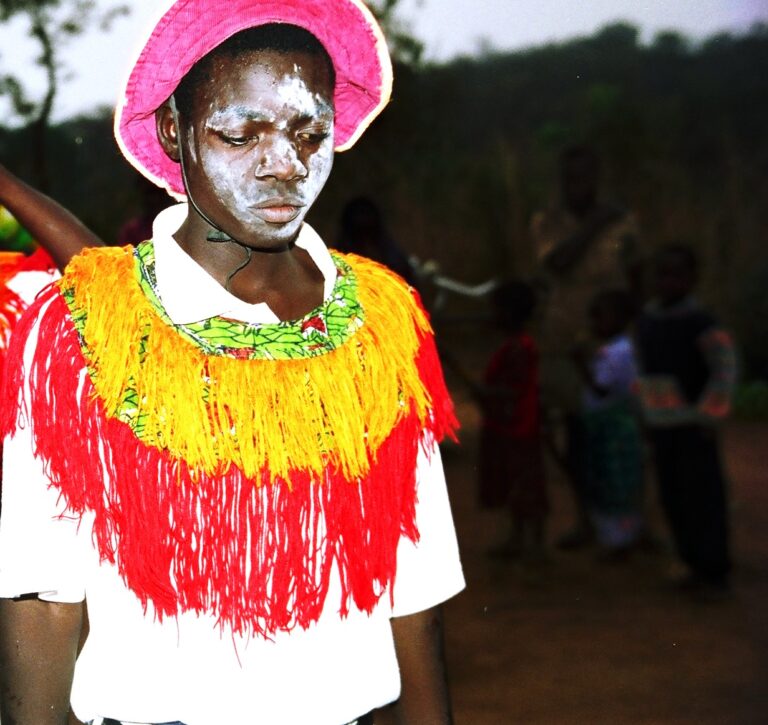
Since the Paramount Chief Mpezeni IV of the Ngoni people of Zambia passed away on May 30, 2026, at the age of 75, the incidents of public powdering are exploding. The powderings are taken as endearing symbols of the strong chiMbuyaship between the Ngoni and Bemba people among the mourners at the funeral. Some of the powderings seem to have gotten out of hand. I have seen images on social media of powderings of a dog, babies, children, powderings that appear to be ambushing incidents in vehicles, and offices. There is a social media video of mourners panicking, scrambling in a mass commotion as there was a huge white thick plume of powdering clouds among the mourners at the Chief Mpezeni funeral. What I found even more shocking was a social media image of a white muzungu woman at the British High Commission in Lusaka powdering a young Zambian woman. This appears to have been not even at the funeral of Chief Mpezeni. This is absolute mayhem. What is happening?

This article will define mbuyaship, mbuyaship between the Ngoni and Bemba, mbuyaship among other Zambia tribes, answer some important questions about mbuyaship, and why mbuyaship powdrings are exploding and spreading both at the Chief Mpezeni funeral and the Zambian society in general. Should something be done about curbing mbuyaship powderings?

The Ngoni and the Bemba were involved in numerous battles and wars in the 1800s. Neither one could defeat the other. So, the two tribes decided to defuse their fighting, frequent conflict and hostility by establishing chimbuya. This is the relationship of joking with and teasing each other which is also very central between cousins or in cousinship among kinship relationships in Zambian traditional society. The powderings are a playful and relatively harmless expression of this mbuyaship.

There are mbuyaships that exist between other tribes, for example between the Lozi and Tonga. I have recently learned that there are mbuyaship relationships among some tribes in the Northwestern province that may include the Luvale, Lunda, Ndembo, Kaonda, Luchazi and Chokwe. Some Zambians are asking questions. Besides the Ngoni there are other tribes in the Eastern Province who are not Ngoni. These include the Nsenga, the Senga, the Tumbuka, the Chewa, and the Kunda. Should these tribes also take part in the Ngoni Bemba mbuyaship? Similarly, beside the Bemba in the Northern Province, other tribes include the Lala, Aushi, Bisa, Shila, Lungu, Mambwe, Namwanga and Tabwa. Should these tribes who are not directly Bemba also participate in the Ngoni Bemba Mbuyaship?

Can anyone who is not your peer, not the same age, gender, or same status powder you? Can an individual who doesn’t know you or with whom you do not socialize powder you? For how long should the powdering take place before the burial at the funeral before it has to stop? Is the aim of chimbuya powdering to raise money to help the grieving family?

My understanding is that powdering is only between people who know each other very well and are close friends. For example, I have a Bemba friend’s sister with whom I am very close. We have known each other for the last 49 years. If she powdered me at a funeral or I powdered her, both of us would probably giggle and laugh even though we would be grieving and mourning the loss of a loved one. This is one of the main purposes of mbuyaship; to express love and solidarity, and at the same time lighten the moment a little even though we might be very sad and grieving.

The members of the Ngoni Bemba mbuyaship have other ways of expressing their mbuyaship which includes teasing through talking during what the Tumbuka call kukhuziska at a funeral. The mbuyaship does not have to focus on powdering although powdering is perhaps the most dramatic, and visible to everyone and garners immediate visual attention.

Every important cultural activity in all societies including in Zambia has rules, takes place at an appropriate place, surrounding, and time. Marriage ceremonies and weddings take place in the church where couples exchange marriage vows. This takes place in decorated hall, room or in front of a beautifully decorated hut, home, or house. School takes place in a classroom during the days of the week and not on weekends. Mbuyaship powdering should strictly happen at the house or location of mourning and before burial at the cemetery or graveyard. The rules of mbuyaship should be followed. Powdering should never happen at any other arbitrary random public places or in offices far away from the place for mourning and funeral, cemetery, or graveyard prior to burial of the deceased person.

Threats of powdering should not be used to raise funds for the grieving family. I have attended many Ngoni Bemba funerals during which a plate is passed around and many mourners including myself have made donations.

There are two major reasons why powdering as an expression of mbuyaship is exploding and spreading to the general Zambian public. First, the rules and strict customs that elders may have enforced in the village in the 1800s among the Ngoni and Bemba are no longer being passed to the younger urbanized Zambians. Most of the tribal elders have died. Many Zambians do not live in Villages anymore. The youth spend many hours on cell phones watching videos including ones of powedring. Short videos do not show the cultural context of powdering. The youth lack clear guidance in how to behave and conduct mbuyaship especially at funerals.

Second, Zambians who are outsiders to the mbuyaship see very humiliating excessive powdering which degrades the person’s dignity. They see both actors often smiling and joking during the powdering. No one is being punished or arrested by the police for what looks to outsiders as physical assault and public humiliation that should be annoying. Men do not exchange blows. This looks like something very exciting that many outside observers are envious of and want to participate in the exciting action.

Last week, I saw a smiling Ngoni member of parliament who had been severely powdered on his head, face and shoulders standing up and addressing parliament in the Parliament of Zambia. The woman speaker of parliament looked nervous and amused. This is why the widespread out of control powdering must be reined in.

The population of Zambia is 22.4 million. An estimated 75% to 80% of Zambia’s population is under the age of 30 which is about 17 to 18 million youths. Zambia has an estimated urban population of 47% or over 10 million people. The most important point is that in terms of the customs and rules of mbuyaship and the spreading of powdering, there are very few or no surviving adult elders to teach the youth the customs. Most of the youth may not live in rural area villages where most of the traditional customs were passed on to the young or youth. Because of the lack of guidance regarding the strict rules, I have seen reports that Bemba young people at the Chief Mpezeni funeral were so disruptive that they wanted to powder the Catholic Clergy who were about to preside over the funeral and burial. The Ngoni or Nyanja speakers would say the Bemba youth were acting with mawala, mphuvya, and with vingazi. All this means is the Bemba young people in question were acting recklessly and were misguided.

The traditional leadership of the Ngoni and the Bemba must publicly spell out and enforce the rules and the customs. All traditional rulers must follow suit in spelling out and enforcing the mbuyaship rules particularly powdering. The government should never be involved in regulating these mbuyaship traditions.

Show me your friends and I’ll show you mine

Curious case of President Hichilema and one Mundubile

The other day, former minister in the PF regime, Dora Siliya posed a rhetorical question, “who among the opposition can manage the $6.7 Billion dollars HH has accumulated in the reserves?”

There’s no doubt about it, this year’s elections is a two-horse race between UPND’s President Hichilema and Brian Mundubile whose political party has a clumsy acronym, NRPUP…..quite a mouthful for our liking! Mundubile is therefore left with little or no choice but tell the nation how he intends to utilize this treasure trove for the benefit of our people in all our 10 provinces unlike what we witnessed during the PF regime.

While President Hichilema has already unveiled his party manifesto that seeks to enhance a buoyed economy, improve social service delivery and resolve the energy crisis among other things, we are yet to see Mundubile scale the mountain top and preach to the world how he intends to run this country, if given a chance, save for breaking the prison walls to liberate his colleagues who’ve committed heinous crimes against the Zambian people.

May we now digress and take a look at his hangers-on…… abena Brian Mutale, Mwenya Musenge, Cosmo Mumba, Enock Tonga, Kasonde Mwenda and Binwell Mpundu. They are either struggling financially or do not posses any meaningful businesses or properties which may easily qualify them to be classified as “apa mwambas” in the Zambian context.

On the other hand, President Hichilema has surrounded himself with highly successful people……financial magnets in their own rights, if you like. While Charles Milupi is one of the country’s richest, Wynter Kabimba, Highvie Hamududu, Felix Mutati and Saviour Chishimba are highly accomplished gentlemen and not mere scroungers!

Fellow citizens, beware of those attempting to come and loot the Treasury.

Prince Bill M. Kaping’a
Political/Social Analyst
Zambezi

Of Regional Political Parties And Tribalism.

It’s very disappointing to see the proliferation of regional political parties…..nay, Bantustans as Fred M’membe’s The Post Newspaper loved to put it, in our beloved country.

This country is made up of 10 provinces; any political party aspiring to assume the reins of power is expected to have representation in every corner of the country. This is the only way we can make every citizen feel part and parcel of the government hence, enhancing national unity!

There must be no room for political parties that prioritize sectarian interests to establish its roots in this country as this is obviously bound to fuel polarisation in an already delicate state. This is probably what forced of our founding President, Dr. Kenneth Kaunda to take the undesirable route of one-party state. One would easily sympathise with KK as there was the mushrooming of regional political parties such as Nalumino Mundia’s United Party (UP) and Simon Mwansa Kapwepwe’s United Progressive Party (UPP) right after independence. They basically commanded support in northern and western regions, respectively.

During the days of UPND in opposition, the party went an extra mile to field candidates everywhere in this country, including regions where the party accumulated recording zeros like Sean Tembo. It’s sad that Fred M’membe’s pet project, the Socialist Party, seems to be struggling in these elections thanks to troubles bessetting his financiers in Cuba and Venezuela. In the last elections for instance, he managed to field candidates countrywide, including those who did not possess any coin to their name! Alas, he failed to secure any parliamentary seat.

Coming to this year’s elections, it’s interesting to see that most opposition political parties that have been ‘making noise’ on social media have zero representation in certain parts of the country, let alone failed to field parliamentary candidates in all the constituencies. How do you expect to run a country like that? You want to take us back to the dark days of PF when certain regions were eclipsed from governance of this nation by sidelining them from government positions?

It’s absolutely sad that notable intellectuals whom we admire and respect such as US based Field Ruwe could be wasting time encouraging the opposition to resort to using tribalism to defeat President Hichilema in the forthcoming elections as opposed to advancing ideas. What sort of thinking is that?

Take Brian Mundubile’s NRPUP for instance, the party has lamentably failed to field candidates in all the 226 constituencies and you expect citizens to have a sense of belonging? For example, Mundubile has failed to float a candidate in a significant constituency such as Solwezi central in a province currently contributing the bulk of the national Treasury due to the presence of massive mineral deposits which the government of President Hichilema has managed to unlock due to sound policies.

How do expect people in that region to react? Can you say such a political party is ripe and ready to govern this country? Aikona man. It’s HH Mpaka 2O31!

Prince Bill M. Kaping’a
National Coordinator
HH Mpaka 2O31!

Demystifying Zambia’s 2053 Eurobonds: Who Pays After 25 Years Mr. President?

0

If you don’t understand the underlying financial mechanisms, it is easy to ignore the systemic risks hidden within the global credit complex. I call it an “extractive industry” for a reason—it exists primarily to exploit the vulnerable. Credit, no matter how elegantly it is packaged, is not a public utility; it is a commercial system designed to monetize the financial liabilities of the uninitiated. In Zambia, widespread unfamiliarity with global credit dynamics leaves the public highly vulnerable to political lies surrounding national debt. Because most of us only interact with credit through commercial bank loans or kaloba, the broader sovereign credit system remains a black box. In order to protect our economic future, it is critical that we demystify the mechanics of this sovereign debt trap.

In the retail banking sector, generally, a refusal to leverage debt is often penalized. In the West, financial institutions encourage consumers to borrow under the guise of “building a credit history.” However, the systemic objective of the lender is rarely the borrower’s ultimate financial freedom; it is the optimization of predictable cash flows for the lender. In this case, commercial credit operates by enticing individuals with capital allocations based on projected—not realized—future income. But when macroeconomic shocks hit, or personal income streams dry up, the structural rigidity of the debt remains absolute. This is how private entities generate billions–by locking borrowers into cycles of permanent refinancing. You remain a slave to the lender!

When scaled to the sovereign level, this dynamic becomes infinitely more dangerous. In simple words, this is the structural trap into which President Hakainde Hichilema’s administration is steering Zambia.

The recently restructured Eurobonds maturing in 2053 are an excellent example. While the New Dawn administration actively engages in liability management—such as the recent operation to buy back portions of the 2053 bond using cheaper African Development Bank (AfDB) credit—the underlying calculus remains unchanged. Exchanging expensive commercial debt for cheaper concessionary loans may offer temporary fiscal breathing room, but it does not erase the underlying principal liability. Furthermore, at a time when the administration is rapidly expanding the civil service, government expenditure is set to balloon. No one can accurately predict the global or domestic economic landscape 25 years from now, yet the nation will be required to pay regardless.

In short, borrowing remains borrowing, regardless of how neatly the financial semantics are packaged. While the current political leadership will be long out of office by 2053, future generations of Zambians will be left to service these legacy obligations. Our history demonstrates that when the bill for sovereign over-leverage finally comes due, the remedies imposed by external creditors are brutally uniform–civil service contractions, aggressive currency devaluations, domestic economic stagnation, collapse of the Kwacha and increased poverty.

If Zambia continues to mistake liability restructuring for genuine economic sovereignty, we risk replicating past political cycles where short-term fiscal illusions are paid for with long-term national independence. The financial mess created today will ultimately have to be mopped up by the Zambian taxpayer in years to come–of course, not by President HH. We have been here before. If the administration wants to develop Zambia, it cannot continue kicking the can down the road. Funding today’s political victories by mortgaging our grandchildren’s future isn’t statecraft—it is fiscal irresponsibility. It is time to learn from the President of Namibia–pay off the debt during your reign!!

Katoka Mweenda

Police Surround FATMOLS Ndola, as Mundubile, Zulu Refuse to Leave Copperbelt

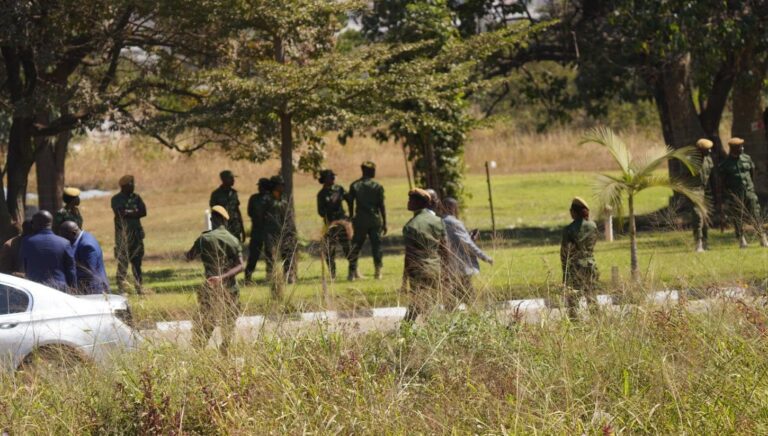
Armed police officers on Sunday surrounded FATMOLS Lodge in Ndola, where opposition leaders Brian Mundubile and Makebi Zulu were staying, in what has developed into a standoff over their presence on the Copperbelt ahead of a presidential visit to the city.

According to a statement attributed to Zulu, officers under the command of Copperbelt Police Commissioner Yuyi Mwala sealed off and barricaded the lodge shortly after the two leaders returned from a church service in Chipulukusu.

The statement alleges that Commissioner Mwala ordered the pair to leave the province immediately, informing them that their presence on the Copperbelt was not permitted as authorities prepared to receive President Hakainde Hichilema in Ndola later in the day.

However, the two opposition figures reportedly refused to comply.

According to Zulu, they maintained that they were Zambian citizens with a constitutional right to move freely and be present in any part of the country. The statement further indicated that they would neither leave the province nor go into hiding.

The development comes amid heightened political activity ahead of the August general election and follows a separate confrontation in Chipata involving the same opposition leaders in recent days.

During that incident, Mundubile and Zulu alleged that police actions prevented them from freely carrying out political activities and ultimately forced them to leave the area. The incident attracted national attention after the opposition leaders publicly complained that they were being hindered from engaging supporters despite conducting what they described as lawful activities.

The latest developments in Ndola are likely to intensify scrutiny of police interactions with political actors during the campaign period, particularly regarding freedom of movement and the ability of candidates and party officials to travel and engage with members of the public.

By press time, Copperbelt Police had not issued a public statement on the matter, and efforts to obtain a response from Commissioner Mwala were ongoing.

The situation remained unresolved at the time of publication and continued to develop.

Nkana confirms Tana as head coach

5

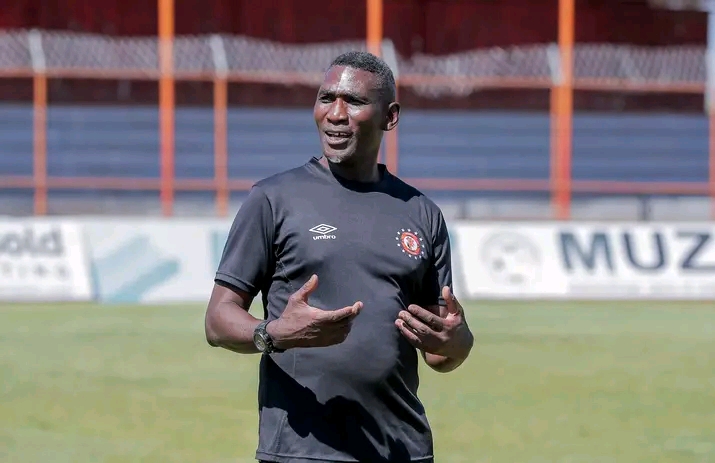
Super League side Nkana FC have confirmed the appointment of Elijah Tana as head coach.

‎Tana had been acting in the role for three months after replacing Mwenya Chipepo, who was sent on forced leave in the first week of March.

‎Nkana FC Chief Executive Officer Mwansa Kapyanga said Tana will be assisted by Josphat Nkhoma as first assistant coach and Donashano Malama as second assistant coach.

Michael Poto will continue as goalkeepers’ coach, while Simon Bwalya remains senior team physical trainer.

‎The appointments were approved by the club’s Executive Committee at its meeting on Friday.

‎Kapyanga said the appointments followed the club’s assessment of its technical and performance requirements.

‎“We are confident in the technical team we have assembled and believe they possess the qualities required to drive the club forward and satisfy the club’s sporting and strategic objectives,” Kapyanga said.

‎“Nkana Football Club wishes the technical bench success as preparations for the forthcoming season continue.

They have our full support as they work towards achieving the club’s objectives,” he added.

‎Nkana recently announced the departure of Chipepo and his assistant Christopher Katongo.

‎The 13-time champions finished 13th in the Super League last season with 39 points from 34 matches after spending most of the campaign flirting with relegation.

Nkana recorded nine wins, 12 draws and 13 defeats, scoring 23 goals and conceding 30.

Mundubile draws thousands to Kitwe in the biggest opposition rally of the 2026 campaign

Mundubile draws thousands to Kitwe in the biggest opposition rally of the 2026 campaign

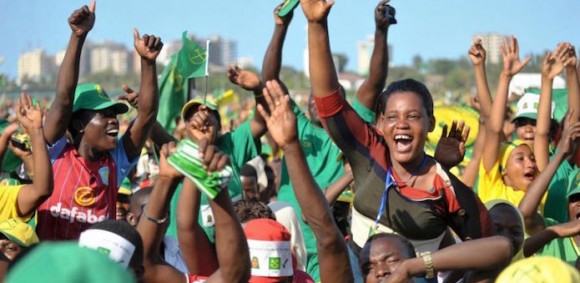
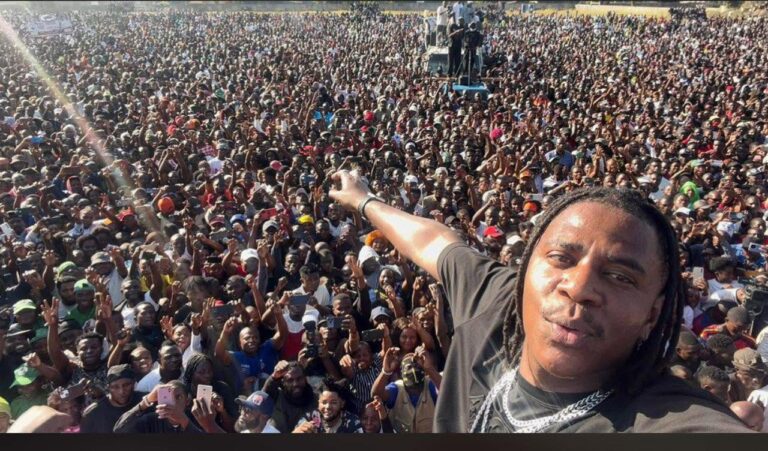
The field at Kitwe Playing Fields filled from end to end on Saturday afternoon.

Thousands of people, miners, contractors, vendors and ordinary Copperbelt residents who had been waiting for someone to say something different,packed into the venue and gave Brian Mundubile the kind of reception that opposition leaders in Zambia rarely receive this early in a campaign season.

Mundubile had come to formally launch his presidential bid, open the Tonse Alliance’s 2026 campaign and make his case to a province where the gap between the wealth that comes out of the ground and the lives being lived above it has never felt wider. He did not disappoint the crowd.

Flanked by his running mate Makebi Zulu and senior Tonse Alliance figures, the National Reconciliation Party for Unity and Prosperity presidential candidate delivered an address that went directly at the concerns of the people standing in front of him. He talked about mining. He talked about contracts. He talked about the young men being squeezed out of economic activity taking place in the very mines their fathers and grandfathers had worked. And he talked about what he intended to do about it.

The headline pledge was a commitment to raise Zambia’s local content requirement in the mining sector from the current statutory minimum of 20 percent to 50 percent. Mundubile argued that the Copperbelt’s mineral wealth had for too long been channelled primarily to large foreign companies and investors, while Zambian-owned businesses, suppliers and contractors competed for whatever was left over.

“To the contractors and suppliers, you need to be among the richest people on the Copperbelt, but you need someone to speak for you in Parliament,” he told the crowd. “We will propose that 50 percent of business in the mines goes to you. I am coming to raise the local content requirement to 50 percent, and if we do that, the Copperbelt will change.”

The promise landed. There was noise when he said it , the kind of noise that comes not from performance but from recognition, from people hearing something they have wanted said for a long time.

Mundubile also addressed the question of mine waste dumps, which have become a contested resource in Copperbelt communities as small-scale miners, known locally as jerabos, find themselves increasingly displaced by larger operations with the capital and connections to acquire what were once regarded as leftover materials. He pledged to reserve all dumpsites for youth and small-scale operators, and to block large investors from acquiring them.

“We love all investors, but we will not allow them to take over waste dumps from the mines. All dumpsites will be for the youths,” he said.

He also signalled a commitment to review Zambia’s cyber laws, picking up a thread that has run through civil society and media industry discussions for months. Critics argue the laws have been used to chill free expression and create a climate of caution around political commentary and online speech. Mundubile said a government he leads would look at those laws and change what needed changing.

Makebi Zulu addressed the youth unemployment question from the same platform, promising that a Mundubile-led government would take Zambia’s Christian national status seriously while tackling the structural causes of joblessness that have left a generation of young Zambians without economic footing.

Copperbelt Tonse Alliance chairperson Armon Chisenga told the crowd that victory on August 13 was not just possible but certain, and called on alliance members to close ranks and campaign with purpose.

The rally’s size and energy mattered beyond the speeches themselves. It demonstrated that the Tonse Alliance has genuine organisational capacity in Zambia’s most industrialised province, that it can put thousands of people in a field on a Saturday, and that Mundubile is not a fringe candidate on the Copperbelt.

The contrast with the ruling party’s parallel activities on the same day was unavoidable. While Mundubile was addressing his Kitwe crowd, Hichilema was in Solwezi publicly naming former allies as party rebels and urging UPND members to hold the line. Both men were working. Both campaigns were in motion. And with August polls  now close enough to feel, neither side can afford a day off.

“It is a lie, I voted for Bill 7,” – Samakayi

Samakayi calls President’s Bill 7 claim a lie and demands parliamentary record be checked

Former Mwinilunga Member of Parliament Newton Samakayi has rejected President Hakainde Hichilema’s claim that he voted against Bill 7, insisting that he supported the constitutional amendment and challenging anyone in doubt to examine the parliamentary record.

Samakayi’s response came hours after the President publicly named him among four former UPND lawmakers accused of defying the party on one of its most important legislative initiatives. Speaking to supporters at Solwezi Airport on Saturday, Mr Hichilema identified Samakayi alongside Gary Nkombo, Elijah Muchima and Elias Mubanga as MPs who had refused to support the bill.

The President told supporters that the four lawmakers had failed to back legislation that sought to introduce proportional representation seats for women, youths and persons with disabilities. He further argued that their actions forced the ruling party to rely on support from opposition MPs in order to secure the bill’s passage.

Samakayi, however, has flatly disputed that account.

“It is a lie, I voted for Bill 7,” he said.

His denial sets up a direct contradiction between the President and a former lawmaker who insists he has been wrongly accused. The dispute centres on a matter that can ultimately be resolved through official parliamentary records, which would show how individual members voted during consideration of the bill.

The issue has quickly moved beyond an internal political disagreement and into a question of public record. Should the parliamentary documents confirm that Samakayi voted against the legislation, the President’s account would be validated. If the records show he voted in favour of the bill, questions are likely to arise regarding how he came to be publicly identified among those accused of opposing it.

For Samakayi, the matter extends beyond a single parliamentary vote. He said the allegation has implications for his political future, reputation and relationship with the people he has represented.

“My plea is that please don’t obliterate my political career. We have different life time zones. I want to serve my people and Zambia in my little way,” he said.

Samakayi also defended his record of speaking on behalf of constituents, arguing that raising concerns about issues affecting communities should not be interpreted as hostility towards those in government.

“It has never been, and it shall never be a crime to remind those governing that you are forgetting us. That should not generate these levels of hatred being perpetuated by the party,” he said.

The former lawmaker appealed to his constituents, family members, friends and church leaders, maintaining that he had not committed the offence alleged against him. He said he was prepared to have his actions judged against the official record.

“May God judge me harshly if there is any iota of truth about voting on Bill 7. I request the church to pray about this so that we are healed,” he said.

The dispute has also drawn attention to the broader question surrounding the names announced during the President’s Solwezi address. The same parliamentary records that could verify Samakayi’s position would also provide clarity regarding the votes attributed to the other lawmakers named by the President.

At the time of writing, neither the Presidency nor the UPND had publicly responded to Samakayi’s denial. No clarification had been issued regarding the basis upon which the four lawmakers were identified, while the relevant parliamentary voting records had not been independently examined.

What remains is a clear disagreement between the Head of State and a former Member of Parliament who insists he supported Bill 7. The resolution of that disagreement now rests on the parliamentary record, which both sides acknowledge exists and can be scrutinised.

Until then, the controversy is likely to remain a prominent talking point as political activity intensifies across the country and attention turns to the events that unfolded in Solwezi over the weekend.

HH goes nuclear on Bill 7 rebels as campaign enters defining phase

President Hakainde Hichilema stood before hundreds of supporters at Solwezi Airport on Saturday and did something no Zambian president had done so openly in recent memory.

He named names. Gary Nkombo. Elijah Muchima. Elias Mubanga. Newton Samakayi.

Four former members of his own party’s parliamentary team, publicly identified by the President as having voted against Bill 7 and, by extension, against what he described as one of the UPND’s most important legislative undertakings since taking office.

The declaration, delivered with visible anger and unmistakable finality, transformed what had long been whispered about in political circles into a matter of public record. It also marked the clearest indication yet that the ruling party is prepared to confront internal dissent openly as the campaign gathers momentum.

What had been billed as a working visit to North-Western Province quickly evolved into a defining political moment.

Addressing supporters at the airport, Mr Hichilema said he wanted MPs who supported the party’s programme in Parliament, voted in line with government priorities and understood that their mandate formed part of a broader collective agenda. He said there was little value in electing individuals on a party ticket only for them to oppose key legislation once in office.

“We have four MPs who refused to vote for Bill 7. And I will name them. Gary Nkombo, Elijah Muchima, Newton Samakayi and Elias Mubanga. We don’t want MPs like that,” Mr Hichilema said.

The remarks drew one of the strongest reactions of the afternoon, not simply because names were mentioned, but because of what Bill 7 represented to the ruling party.

For the UPND, the constitutional amendment was more than another piece of legislation moving through Parliament. It was the vehicle through which the government sought to introduce proportional representation seats reserved for women, youths and persons with disabilities. The proposal also created new constituencies in Solwezi, Kalumbila, Mwinilunga and Zambezi, a move the government argued would bring representation closer to communities experiencing rapid population growth.

Although the bill ultimately passed, it did so after the ruling party was forced to seek support beyond its own benches.

According to Mr Hichilema, the votes lost through internal opposition left the government dependent on lawmakers from outside the UPND to secure passage of the measure.

“Because of Bill 7, and because of those who had to behave properly, and we didn’t have enough MPs, we had to use MPs from other parties in order to win Bill 7 to bring women, to bring youth and those with disabilities in Parliament. That is a mistake we don’t want to make going forward,” he said.

The President’s comments suggested that the Bill 7 episode remains one of the most frustrating moments of his administration’s legislative programme.

While the speech focused on four MPs, the mention of Gary Nkombo carried particular political weight.

For years, Mr Nkombo stood among the most recognisable figures in the UPND and played a central role in the party’s journey from opposition to government. As Minister of Local Government and Rural Development, he occupied one of the most influential positions in Cabinet and was widely viewed as one of the President’s closest political allies.

His public naming in Solwezi therefore represented more than a disagreement over a single vote. It served as the clearest confirmation yet of the deep political rupture that has emerged between the former minister and the party leadership.

Whatever uncertainty remained over the state of that relationship was largely swept away by Saturday’s remarks.

Despite the sharp criticism, Mr Hichilema framed the issue as one of accountability rather than personal differences.

He argued that elected representatives who secure office through a party platform carry a responsibility to advance the programme on which voters elected them. In his view, loyalty to that mandate remains essential if a governing party is to implement its policies effectively.

Those who choose a different path, he suggested, cannot expect to remain central to the party’s future plans.

The President used the occasion to rally supporters behind adopted candidates and urged members to place party unity above local disagreements.

He reminded the gathering that North-Western Province occupies a special place in the history of the UPND and said maintaining cohesion within the party remained critical as campaigning intensifies across the country.

“If you are not happy with one candidate, just think of the President and support them for the sake of the President,” he said.

The appeal reflected a broader message running throughout the address: unity, discipline and collective purpose.

North-Western Province UPND chairperson Adam Sapezo, who also addressed the gathering, assured the President of continued support from party structures in the province. He said the visit had energised members and reinforced the importance of presenting a united front during the campaign period.

From Solwezi, Mr Hichilema proceeded to Muchinga Province, where he met party officials and adopted candidates in Chinsali as part of the day’s programme.

Yet it was the Solwezi speech that dominated political discussion long after the President had departed.

Rarely does a sitting Head of State publicly single out members of his own political movement with such directness. By naming the four MPs himself, Mr Hichilema removed any ambiguity about where he stands on the Bill 7 rebellion and what he expects from those seeking to serve under the UPND banner.

The message was unmistakable.

For a party preparing for another national contest, loyalty to the programme is no longer being treated as an assumption. It is being presented as a requirement.

And after Saturday’s declaration in Solwezi, few within the ruling party can claim not to understand the President’s position on the matter.

BoZ Expresses concern over public workers loan defaults

3

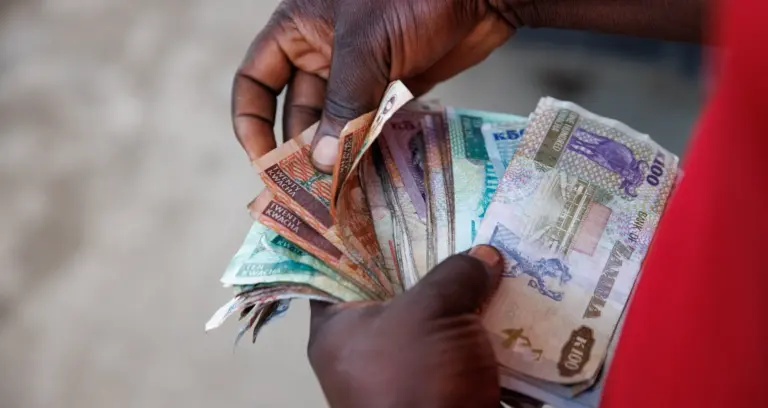
The Bank of Zambia (BoZ) has expressed concern over the rising ratio of non-performing loans among public service workers.

Deputy Governor for Operations Francis Chipimo warned that the trend poses significant risks to lending institutions and the country’s financial sector.

Dr Chipimo said this in a public notice and obtained by the media in Lavushimanda today.

He said the recent financial stability assessments have revealed growing challenges associated with payroll-based lending, particularly in cases where prescribed Debt Service Ratio (DSR) and affordability requirements are deliberately circumvented.

He noted that some public workers are increasingly accessing credit outside the payroll system, commonly referred to as off-payroll credit, often borrowing amounts that exceed permissible limits.

According to Dr Chipimo, some borrowers have been obtaining additional loans through misrepresentation of their financial positions, failure to disclose existing loan obligations and borrowing from multiple institutions simultaneously.

He said these practices have contributed to an increase in loan defaults, putting pressure on lending institutions and heightening risks to the overall financial system.

The Deputy Governor further observed the weaknesses in credit underwriting practices among some lending institutions, noting that certain lenders have not consistently utilized information provided by the Credit Reference Bureau (CRB) when assessing loan applications.

He added that some financial institutions have, in certain instances, disregarded CRB data altogether, thereby undermining responsible lending practices and effective risk management.

Dr Chipimo stressed that compliance with DSR and affordability requirements remains mandatory for all regulated lending institutions, employees and payroll administrators, as these standards serve as important safeguards for consumer protection, prudent credit underwriting, responsible borrowing and financial stability.

In response to the growing concerns, the Bank of Zambia has since directed all regulated lending institutions to strictly adhere to debt service ratio limits and strengthen responsible lending practices.

He also urged payroll administrators to reinforce internal payroll controls, improve recovery mechanisms and take appropriate remedial or disciplinary action where abuse of payroll-based deduction arrangements is identified.

Meanwhile, Dr Chipimo said the Bank of Zambia will continue to monitor compliance with the Banking and Financial Services Act (Provision of Credit Data and Utilisation of Credit Reference Services) Directive of 2020 by all regulated entities.

He added that the central bank will closely monitor both off-payroll and payroll-based lending practices and take all necessary measures to ensure compliance with applicable laws, regulations and prudential standards aimed at safeguarding financial stability and promoting responsible lending in the country.