Sunday, June 14, 2026
24.3 C
Lusaka
Home Blog Page 55

Government to upgrade Kabwe-Ngabwe road to bituminous standard

Vice President Mutale Nalumango has announced that the Government will in the next two months start upgrading the 140 Kilometer Kabwe-Ngabwe road to bituminous level.

Mrs Nalumango observes that the road has been in bad condition for many years, a situation which made traveling on the road a hurdle for many travelers.

Speaking when she addressed scores of Ngabwe residents at Mumbachala, the vice president noted that the government wants easy transportation to and from the agriculture district.

“By 2031, you will have a tarmac road,” she assured the residents of Ngabwe

The Vice President also stated that the government is planning to rehabilitate the pontoon which was recently decommissioned before putting up a permanent bridge on the Kafubu River.

“We intend to put up a permanent bridge to improve access across the Lufubu River,” Mrs Nalumango said.

She also pointed out that the government is aware of some of the developmental needs of the people of Ngabwe.

“I have also been told that telecommunication is a challenge and that you need communication towers, I will engage the relevant Ministry to ensure that we ease communication,” said Mrs Nalumango.

The Vice President also highlighted the developments that the government has undertaken in the district especially through the Constituency Development Fund (CDF).

“We have built school infrastructure, maternity annexes and improved road infrastructure,” she said, “This is because the President is keen to improve the lives of the people in the country.

She explained that the increase in the CDF annual allocation to enhance decentralisation has taken development to many parts of the country including those that were initially underserved.

Mrs Nalumango urged the people of Ngabwe to vote for President Hichilema in the August 13 Presidential election for continuity.

“I’m urging you to vote for President Hichilema to enable him to continue with the developments that have been initiated,” said the Vice President.


Zambia-Angola commit to curb border crimes

Zambia and Angola have committed to curb transnational crimes along their shared border lines.


This was disclosed at the opening of the 34th Session of the Angola-Zambia Joint Permanent Commission on Defence and Security being held in Luanda, Angola from 1st to 6th May 2026.


The Commission officially opened this morning at the Epic Sana Hotel in Luanda where the Zambian Ambassador to Angola, Elias Munshya led the Zambian delegation.


Speaking at the opening ceremony, Dr Munshya highlighted the threat of terrorism in the region as a cause of concern, calling on delegates to the commission to come up with strategies of ending the scourge.


Dr Munshya warned that trafficking, illegal migration, poaching as well as drug trafficking must be fought at all costs.


He reiterated Zambia’s continued cooperation with Angola to promote peace, unity and enhanced relations with Angola.


Dr Munshya urged that through the 34th Session of the Angola-Zambia Joint Permanent Commission on Defence and Security meeting, the two countries must come up with exchange visits, sign agreements and programmes which will enhance more cooperation by the Defence and Security institutions in the two countries.


Earlier in his remarks, Angola’s State Secretary for Defence Policy, Admiral Jose Maria De Lima (Rtd) said the security challenges which the two countries face must be tackled in a well-coordinated manner.


Admiral De Lima stated the need for intensified coordination in fighting transnational crimes on the common border.


He said the 34th Session of the Angola-Zambia Joint Permanent Commission on Defence and Security offers an opportunity for the two countries to assess the status of commitments made during the previous session of the Commission in 2022.


Admiral De Lima said Angola is committed to work together with Zambia on Defence and Security matters at the highest level possible.


The Zambian delegation to the 34th Session of the Angola-Zambia Joint Permanent Commission on Defence and Security includes Zambia Army Commander, Lt Gen Geoffrey Zyeele, Inspector General of Police, Graphel Musamba, Zambia Correctional Service Commissioner General, Mr Frederick Chilukutu.


Others are Drug Enforcement Commission Director General, Nason Banda, Immigration Department Director General, Japhet Lishomwa and other government officials.


This is according to a statement issued to to the media in Lusaka by the Ministry of Defence Principal Public Relations Officer, Paul Shalala.

Power clinches 9th League title

1

Power Dynamos have won their ninth Super League title with four matches left in the 2025/26 campaign.

Power on Saturday afternoon secured their Super League title in Chililabombwe after beating Konkola Blades 2-1 at Konkola Stadium.

The Arthur Davies club took advantage of second placed Red Arrows’ 1-0 away loss at Mutondo Stars to open up a 15-point gap and an unassailable lead at the top.

Power, who have defended the league title, have 70 points after playing 30 matches.

Chifundo Mpasi and Samuel Ayodeiji scored for Power with Kelly Kayembe netting for Konkola in between those goals.

Power are four league titles behind their Kitwe archrivals Nkana, who are the record Super League champions.

Meanwhile, Arrows gave up the title chase when losing 1-0 to relegation threatened Mutondo Stars in Kitwe.

Wasanga Mhango scored the goal after 33 minutes which Mutondo defended to hand Arrows their fifth loss of the season.

Arrows remained on 55 points while Mutondo moved to 31 points as they brightened chances of survival.

Super League action continues on Sunday when Nkana will welcome Nchanga Rangers to Nkana Stadium.

SUPER LEAGUE -WEEK 30 RESULTS

Zanaco 2-0 Mines United

FC Leopards 0-2 FC Muza

Mutondo Stars 1-0 Red Arrows

Kansanshi Dynamos 1-0 Green Buffaloes

Konkola Blades 1-2 Power Dynamos

SUNDAY, 3RD MAY 2026

Green Eagles 15h00 Mufulira Wanderers

Nkwazi 15h00 Zesco United

Kabwe Warriors 15h00 Napsa Stars

Nkana 15h00 Nchanga Rangers

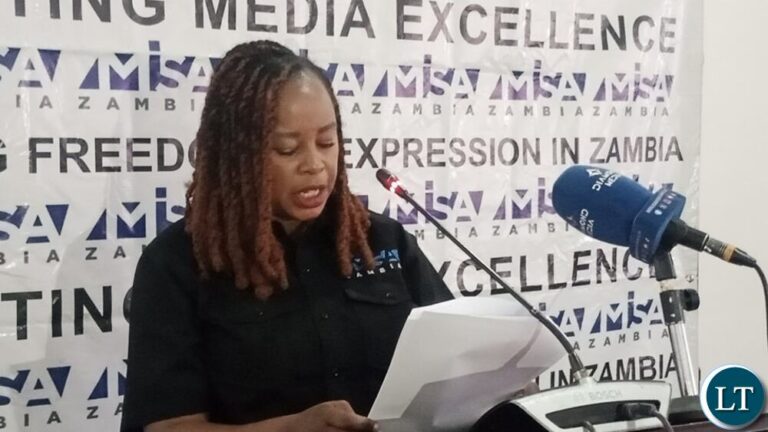
MISA Praises Global Press Conference

MISA Zambia has described Zambia’s hosting of 2026 World Press Freedom Day Global Conference as a significant milestone, positioning the country as a regional hub for media advocacy and dialogue on issues such as digital rights, artificial intelligence and peace building.

MISA Zambia Chairperson Lorraine Chisanga said the global conference which will be preceded by World press Freedom day will provide an opportunity for journalists, policymakers and other stakeholders to engage on the future of journalism

In an exclusive interview with the media, Ms Chisanga said the two events will also be an opportunity to address misinformation and emerging technological challenges.

She also raised concern over certain provisions in cyber-related laws, which she says may limit freedom of expression and lead to self-censorship among journalists.

Ms Chisanga called for continued engagement with authorities to ensure that such laws do not undermine media freedom.

She reaffirmed MISA Zambia’s commitment to supporting journalists through capacity-building programmes, including nationwide training ahead of the elections.

Ms Chisanga said the organisation is equipping media practitioners with skills to report ethically and responsibly during the electoral period.

Government hails Miss Youth Solwezi Pageant

Government says it is committed to advancing the welfare of youths by supporting them through different economic activities.

Speaking during the Miss Youth Solwezi final pageant event, Northern-Western province deputy permanent secretary, Luckson Mulumbi says Government has put in place interventions aimed at empowering young people such as School bursaries, Constituency development Fund CDF loans and grants among others.

The Deputy Permanent Secretary adds that the Government commits to supporting Institutions and organisations that work towards empowering youths.

Mr Mulumbi further called on Government institutions and the private sector to take interest in the Miss Solwezi pageantry and use the models as ambassadors and service promoters, noting that it is one way of nurturing potential and inspiring positive change among young people.

Additionally, the Deputy Permanent Secretary encouraged the contestants of the Miss Solwezi to use Media platforms to spread positive messages and inspire others.

He called upon the winner of the pageant to be active in the community and help mentor young girls into positive behavior, self-belief and influencing communities for a better cause.

He added that the Miss Youth title should be used as a voice for young entrepreneurs and those that dream to contribute to national development.

Six young girls were the finalists with one expected to be crowned Miss Youth Solwezi.

ECZ calls for maximum scrutiny of candidates’ qualifications

The Electoral Commission of Zambia (ECZ) has urged District Election Staff to exercise utmost care in scrutinising candidate qualifications and disqualifications during the nomination process.

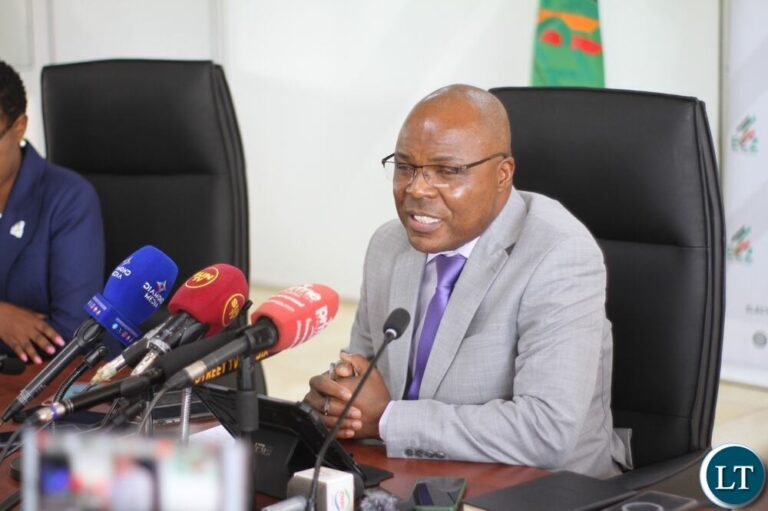
ECZ Chief Electoral Officer, Brown Kasaro has stressed that the nominating stage is the foundation of electoral credibility and must be handled with precision.

He was speaking when he officially opened the fourth cohort of District Election staff training for Luapula and Western Provinces, at Mika Convention Centre in Chongwe.

Mr Kasaro has reminded participants that their professionalism and impartiality will be under close public and political scrutiny, further reiterating the need for fairness and transparency during the process.

He has warned that errors in documentation or misinterpretation of procedures could have far-reaching legal implications and erode public trust in the Commission.

“Pay particular attention to candidate qualifications and disqualifications. These areas are often challenged and can lead to disputes if not handled with utmost care and precision,” he stressed.

Speaking Earlier, ECZ Acting Director for Electoral Operations, Wina Mwanamonga noted that it is the first time district election staff were being trained in Lusaka, on the Nomination process.

He explained that previously, the commission would train provincial staff in Lusaka, who would then go back and pass on the training to the district staff in their provinces.

Mr Mwanamonga disclosed that a review conducted after the last election had revealed inadequate understanding among district staff on how to correctly fill in nomination forms, attributing the issue to possible information distortion, along the training process.

He noted that this shortcoming had resulted in the Commission recalling all district staff, who had initially been trained in their provinces, to rectify the forms, an exercise that proved costly for the Commission.

He expressed confidence that this new approach will ensure all staff receive standardised information.

“If Returning Officers have a challenge, you don’t need to call Lusaka because all of us now in the Districts, we know what is being done”, he stated.

The training programme was launched by ECZ Chairperson Mwangala Zaloumis on April 25, 2026.

So far, the training has already covered Central, Northern, Copperbelt, North-Western, Lusaka, and Eastern Provinces, with others scheduled to follow.

VEEP reiterates importance of youths in national development

Vice President Mutale Nalumango says the Government will continue to look up to the youths because they possess the zeal, innovation and energy to enhance the development of the country.

Mrs Nalumango has advised the youths to take advantage of the various opportunities that the government is implementing to advance their skills and get into entrepreneurship to improve their livelihoods and advance the developmental aspirations of the country.

Speaking when she met students from Kwame Nkrumah University and Kabwe Institute of Technology, in Kabwe this morning, Mrs Nalumango said the government is improving the lives of the youths through empowerment programmes and skills development under the Constituency Development Fund (CDF).

“These interventions are not only preparing you to be employed but to get into entrepreneurship, you can also come up with cooperatives and apply for loans or grants as you get into income generating ventures, and also employ other people,” said Mrs Nalumango.

She said that the government is looking at innovation especially among those in skills development.

“We are not waiting for you to come and look for white collar jobs, this is the time for you to come and create jobs,” said Mrs Nalumango.

And Nkrumah University students’ leader Blessing Mapesho commended the government for the reintroduction of the free education policy and the students’ bursaries which he said has helped many students who could otherwise have dropped out due to financial challenges.

Mr Mapesho noted that students are witness to the many other developmental programmes being undertaken in various parts of the country.

Meanwhile, Kabwe Institute of Technology student union president Davies Ndeya thanked the government for introducing skills development bursaries under the CDF saying many of the students at the higher learning institution were being sponsored under the CDF.

“This has enabled many students from vulnerable households to acquire skills and become employable,” said Mr Ndeya.

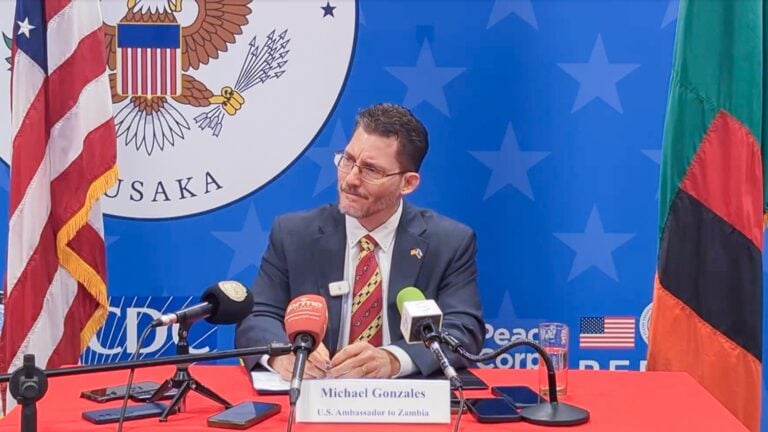
A Failed Agenda, A Bitter Exit, Gonzales Leaves Zambia Empty-Handed

By Abuild Mubanga

The farewell tone adopted by outgoing United States Ambassador Michael Gonzales was not diplomatic. It was bitter, confrontational, and deeply revealing. Diplomacy demands restraint and respect. What Zambia witnessed was the opposite. When a diplomat abandons tact for emotional rhetoric, it signals failure, not principle.

Let us be clear. Gonzales did not sound like a representative of a global power. He sounded like a man frustrated by rejection. Zambia refused to bend, and that refusal appears to have unsettled him. The issues he raised about pollution and public health may be valid in principle, but the exaggerated framing without verifiable evidence weakens his position. Zambia has institutions. If the crisis were as severe as portrayed, it would be visible and documented.

The real issue lies beneath the surface. Influence. For decades, Africa’s resources have been negotiated under pressure, often disguised as cooperation. Zambia’s growing insistence on recalibrating that relationship has disrupted long-standing expectations. When influence fails, pressure emerges. When pressure fails, narratives are weaponized.

It is therefore reasonable to interpret Gonzales’ remarks as frustration over unmet objectives. In a changing global order, African nations are asserting themselves, particularly in strategic sectors like mining. Zambia is no longer a passive participant. It is an active negotiator demanding fairness. That is not defiance. That is sovereignty.

The attempt to frame Zambia as irresponsible exposes a dangerous level of arrogance. Zambia is not a subordinate state. It is a sovereign nation. Any suggestion otherwise reflects outdated thinking that has no place in modern diplomacy. Even the context of his departure cannot be ignored. Under the political influence of Donald Trump, diplomacy is increasingly judged by results. If strategic interests were not secured, then recall becomes inevitable. Gonzales’ tone suggests a man leaving without having achieved his mission.

Zambia must draw a firm line. Partnerships must be based on mutual respect, not pressure. Engagement must be balanced, not patronizing. The era of subtle coercion disguised as diplomacy must come to an end. Zambians understand cooperation. But they also recognize exploitation. The message is simple and firm. Zambia is not for auction.

Govt Nears Completion of K246 Million Hotel in Chinsali

The Government of Zambia is nearing completion of a K246 million budget hotel in Chinsali, a move expected to boost tourism and stimulate economic activity in Muchinga Province.

Labour and Social Security Minister Brenda Tambatamba said the project, being implemented through the Workers’ Compensation Fund Control Board, is in its final stages.

The facility will feature 69 bed spaces and a 300-capacity conference centre, targeting both accommodation needs and business events such as meetings, incentives, conferences and exhibitions (MICE).

Tambatamba described the investment as a strategic intervention aimed at positioning Chinsali as a competitive destination in Zambia’s northern tourism circuit.

She noted that the hotel will help address the shortage of quality accommodation in the province while creating employment opportunities and boosting local businesses through increased demand for goods and services.

Meanwhile, the Minister said Zambia’s labour environment is showing signs of improvement, with a shift from industrial disputes to dialogue between employers and workers.

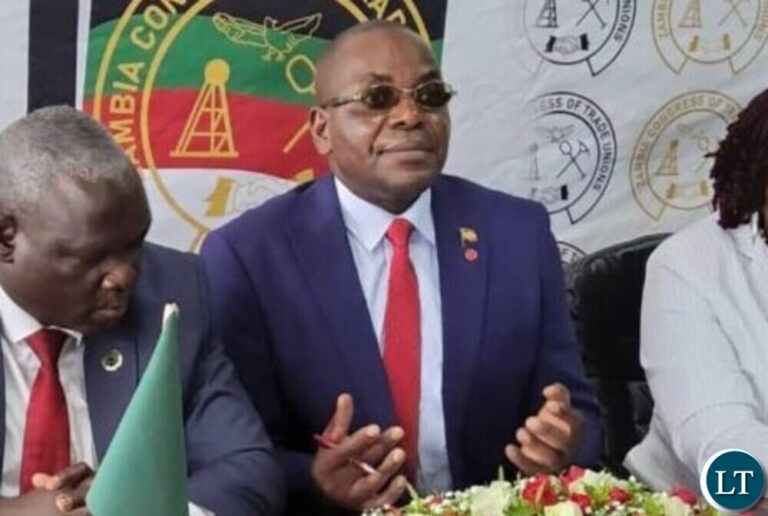
However, Blake Mulala, president of the Zambia Congress of Trade Unions (ZCTU), said concerns remain over job security, pension protection and the growing casualisation of labour.

Mulala stressed that protecting jobs must go beyond employment figures to include stable contracts, fair working conditions and stronger safeguards, particularly for workers in the informal sector.

He urged continued efforts to ensure that economic progress translates into meaningful improvements in workers’ livelihoods.

Hichilema family donates school, health facilities to Lubwa Mission

President Hakainde Hichilema and his family have donated a 1×4 classroom block, a school health centre, and a borehole to Lubwa Mission, a historic site linked to Kenneth Kaunda.

The handover is aimed at improving access to education and health services at the mission, which played a key role in shaping Zambia’s founding leader.

In a statement, President Hichilema said the project—funded from family resources—reflects a strong belief in education as a driver of empowerment and opportunity.

“Education is the most powerful instrument for empowerment. It equips individuals with knowledge, unlocks opportunity and breaks down barriers,” he said.

He added that investing in education helps build a more equitable and prosperous society, describing it as one of the most important commitments any nation can make.

Lubwa Mission holds historical significance as the place where Dr Kaunda both studied and later taught, contributing to his early development as a leader.

ZCTU sees UPND likely to retain power, calls for improved worker welfare

The Zambia Congress of Trade Unions (ZCTU) says the United Party for National Development (UPND) is likely to remain in government beyond the August 13 general elections.

ZCTU Secretary General Joy Beene attributed this outlook to the government’s continued engagement with citizens and responsiveness to workers’ concerns.

Speaking during Labour Day celebrations in Mansa, Beene acknowledged progress in several areas, including reduced inflation, pension reforms, increased dialogue with labour unions, and recruitment in sectors such as health, education and defence.

However, he cautioned that these gains must translate into tangible improvements in workers’ living conditions, noting that the rising cost of living—partly driven by global fuel price pressures—remains a major concern.

Beene also highlighted ongoing challenges, including delayed confirmations and promotions in the public service, casualisation of labour, and limited skills development opportunities.

He called for fair recruitment practices, job security, and stronger investment in decent work, while urging continued engagement between government, employers and unions.

Additionally, Beene advised civil servants to remain non-partisan ahead of the elections, reaffirming that the labour movement will continue to defend workers’ rights across the country.

Tembo cautions against generalising opposition leaders

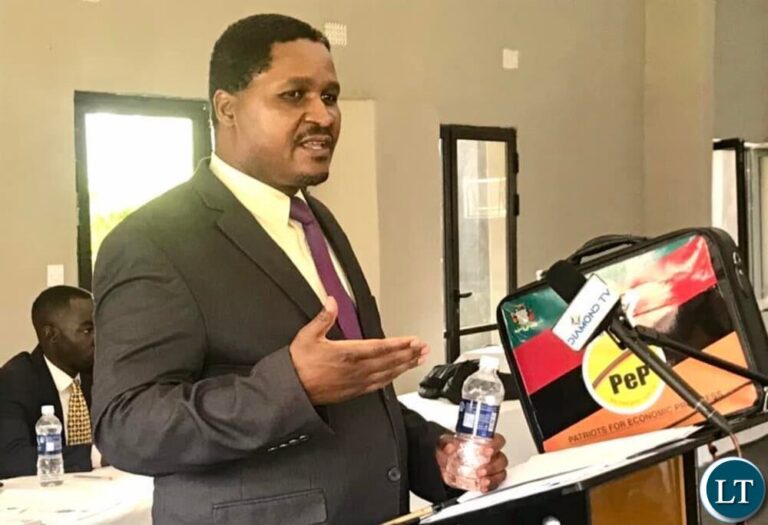
Sean Tembo, a senior figure in the Patriots for Economic Progress (PeP), has urged citizens and the media to avoid treating all opposition leaders as a single group.

Tembo said public discourse is increasingly unfair in how it lumps together different opposition figures despite their varying ideologies and conduct.

He argued that Zambia’s opposition is diverse and that each leader should be judged individually rather than collectively blamed for the actions of a few.

According to Tembo, concerns such as defections to the ruling party or behaviour during engagements with the Electoral Commission of Zambia (ECZ) should be handled on a case-by-case basis.

“There is a tendency to characterise all opposition leaders as the same based on the bad behaviour of a few. That is wrong,” he said.

Tembo added that criticism should be directed at specific individuals when misconduct occurs, warning that broad generalisations distort public understanding and weaken democratic debate.

He also made a personal remark suggesting that some leaders maintain stable personal lives, while others face challenges, underscoring his point that individuals differ and should not be judged as one group.

Kalaba faces backlash online after paying nomination fee

Harry Kalaba has come under heavy criticism from some social media users after announcing that he had paid his K100,000 presidential nomination fee to the Electoral Commission of Zambia (ECZ).

Kalaba shared a receipt on his Facebook page with the caption “We have paid our nomination fees!”, but the post quickly drew mixed reactions, with thousands of comments questioning his chances in the August 13 elections.

Many users mocked the move, describing the fee as a “donation” to ECZ rather than a serious investment in a viable campaign. Some went as far as predicting he would receive no votes, with one commenter writing, “We can’t wait to give you zero.”

Others used humour and sarcasm to criticise the opposition leader, suggesting the focus on the receipt overshadowed his actual electoral prospects.

The K100,000 fee is a requirement set by the ECZ for all presidential candidates seeking to contest in the upcoming general elections.

Kalaba, a former foreign affairs minister and now leader of Citizens First, remains one of several candidates expected to participate in what is shaping up to be a competitive race.

Zambia Faces Criticism After Summit Cancellation

LUSAKA — Government’s decision to cancel RightsCon 2026, an international conference that was scheduled to begin in Lusaka on May 5, has triggered growing backlash from civil society organisations, governance activists and opposition voices who say the move has damaged Zambia’s democratic image at a politically sensitive moment.

The cancellation shocked stakeholders because Zambia had already been preparing to host international delegates, digital rights activists, governance experts, civil society leaders and technology stakeholders from across the world. The conference was expected to bring both economic activity and global visibility to Lusaka through hotel bookings, transport spending, tourism activity and international engagement. Instead, the abrupt cancellation created confusion and raised immediate questions about government’s justification.

Linda Kasonde, speaking on behalf of a consortium of civil society organisations, said the decision sent the wrong signal to the international community and undermined Zambia’s reputation as an open democratic society. She argued that hosting RightsCon would have positioned Zambia as a continental leader in civic engagement, digital rights conversations and democratic participation. She said vague references to protecting national values had failed to provide a convincing explanation for such a major decision.

The controversy quickly moved beyond civil society criticism and entered broader governance territory. Critics argued that cancelling a major international conference without clear public justification risks reinforcing concerns about shrinking civic space and intolerance toward independent engagement platforms. Others warned that the move may discourage future conferences, investment forums and international partnerships if Zambia develops a reputation for unpredictable policy decisions.

The timing has made the controversy even more politically sensitive. Zambia is heading toward a general election in August, and governance issues are increasingly becoming central campaign themes. Questions surrounding public freedoms, civic participation and institutional transparency are now colliding with broader debates around corruption, accountability and democratic credibility that have intensified in recent weeks.

The economic implications are also significant. Conferences of this scale typically generate direct benefits for hotels, restaurants, transport operators, tourism businesses and local service providers. The cancellation has raised concerns among private sector players who view international conferences as opportunities to stimulate local spending while improving Zambia’s visibility as a destination for global events.

Government has yet to provide a more detailed public explanation that fully addresses concerns raised by civil society organisations and private sector stakeholders. Until that happens, questions surrounding transparency and policy consistency are likely to persist as political pressure continues building ahead of the August election.

25 Presidential Aspirants and Counting

LUSAKA — Zambia’s election season has moved into a far more decisive phase as political ambition begins colliding with strict administrative deadlines that will determine who ultimately appears on the ballot in the August 13 general election, with recent developments showing that the country’s electoral machinery is now shifting from rhetoric to execution.

The clearest signal came from the Electoral Commission of Zambia after corporate affairs manager Patricia Luhanga confirmed that 25 presidential aspirants had already paid nomination fees ahead of the national vote. ECZ chief electoral officer Brown Kasaro said the process would now move into supporter pre-processing and verification, a stage that often separates serious contenders from candidates who struggle to meet procedural requirements. While the number reflects growing political ambition, nomination payments represent only the first hurdle in a far more demanding process.

Another major milestone is expected within days as ECZ prepares to certify the national voters register, one of the most critical administrative processes before formal campaigns begin. The final register will determine the verified voter base political parties will rely on for mobilisation efforts across the country. Any controversy surrounding voter certification can quickly escalate into a national political issue, particularly in highly competitive elections where confidence in electoral institutions becomes critical.

Political parties are simultaneously battling internal pressure as adoption contests intensify across parliamentary, mayoral, council chairperson and councillor positions. UPND elections chairperson Likando Mufalali confirmed that the ruling party had already received more than 5,000 applications from aspiring candidates seeking adoption ahead of the August election. The party has since extended application deadlines as competition continues to intensify. That volume reflects how politically valuable elective office has become as candidates scramble for strategic positions.

Internal adoption battles have historically created major instability within political parties. Failed aspirants often defect, run as independents or weaken party mobilisation structures after losing internal races. Those risks remain significant this year as parties attempt to maintain unity while managing growing ambition from candidates who believe the August election presents a major political opportunity.

Delimitation has added another layer of complexity by creating entirely new constituencies that are already reshaping political calculations. In Chongwe West, Brian Hapunda has already declared his intention to contest the newly created parliamentary seat, arguing that the constituency needs leadership focused on roads, schools, health facilities and water access. Similar repositioning is expected in other newly created constituencies as politicians move quickly to secure early advantages.

Beyond nominations and adoption battles, political parties are under pressure to build campaign infrastructure before formal campaigns begin. They need funding, polling agents, legal teams, logistical coordination structures and strong mobilisation networks capable of sustaining national campaigns. Well-organised parties typically navigate this phase with fewer disruptions, while weaker structures often begin collapsing long before campaign rallies dominate national headlines.

For voters, the loudest political rallies are still ahead. But some of the most decisive battles are already unfolding quietly through nomination paperwork, verification systems and internal party boardrooms. By the time campaign convoys flood the streets, many political futures may already have been decided through procedural battles currently unfolding inside ECZ offices and party secretariats across the country.