The Council of Churches in Zambia has reaffirmed its role as a moral voice in national affairs, urging leaders not to interpret its interventions as hostility but as a commitment to justice and accountability.
Speaking during his induction service at the Cathedral of the Holy Cross, CCZ general secretary James Phiri said the Church remains resolute in speaking “truth in and out of season,” particularly on issues affecting the welfare of citizens.
Fr. Phiri emphasised that the Council will continue to denounce wrongdoing and advocate for justice, peace and national wellbeing, especially as Zambia approaches the 2026 general elections.
“We speak on behalf of the voiceless,” he said, adding that the Church’s prophetic role should not be mistaken for enmity.
He noted that while government efforts toward national development are acknowledged, there remain pressing concerns that require honest and timely attention, particularly issues linked to inequality and social injustice.
Fr. Phiri further called for strengthened accountability, urging authorities to ensure that individuals involved in the misuse of public resources are held responsible in accordance with the law.
He also stressed the need for Zambia to pursue self-reliance and sustainable development, anchored on leadership defined by integrity, responsibility and service to the people.
Fr. Phiri recently assumed the role of CCZ general secretary, succeeding Emmanuel Chikoya, who was elevated to Bishop of the Anglican Diocese of Central Zambia.
MweneLubemba Chitimukulu has set up a lands commission to oversee land issues in Bemba land.
The Mwene Lubemba says it is of concern that there is an increase in unregulated sale of customary land in Bemba land the situation he said should be curbed.
The Mwene Lubemba Chitimukulu has since called for stronger oversight by the Land Commission to protect community interests and ensure sustainable development.
Speaking during the Ilamfya a high level meeting held ahead of the Kusefya Pa Ng’wena ceremony, the Mwene Lubemba Chitimukulu warned that no title deed should be issued without passing through the Land Commission, regardless of local agreements.
The Mwenelumbemba Chitimukulu has noted that the increasing demand for land partly driven by shifting water availability in surrounding areas has led to an influx of buyers and a rise in informal transactions.
He cautioned that land is increasingly being treated as a commercial commodity, even among some traditional authorities, without sufficient regard for future consequences.
“We are giving out land without fully understanding the long-term impact, we need to look to the future and ensure land is administered in the interest of our community,” he said.
He stressed the need for strict controls and accountability adding that customary land allocations should adhere to standard plot sizes, typically 30 by 50 meters, unless formally approved through the appropriate channels.
Mwenelubemba Chitimukulu further called for structured interviews and verification processes before land is allocated
“We need to be organised in the manner we allocate land, we should appoint responsible council representatives to safeguard land resources,” he said.
He has also highlighted broader development concerns in Mungwi District, and Northern Province as a whole despite its cultural importance.
He said the Lubemba area continues to face limited industrial growth, while poverty levels remain high in neighboring Muchinga Province, estimated at around 68 percent.
He stressed that each district must identify and develop its economic potential, noting that improved land governance could play a key role in unlocking growth.
He added that Plans are underway to assess all chiefdoms to strengthen land management systems and promote equitable development.
“Our goal is to leave the Lubemba kingdom in a better place, coordinated efforts between traditional leaders, councils, and government institutions are needed,” he said.
During the Ilamfya the MwineLubemba Chitimukulu announced the date for the Ukusefya Pangwena Traditional Ceremony on September 19, 2026.
The traditional leader said the date has been reached to allow for the election period first.
The government has praised the Mwenelubemba Chitimukulu for promoting the cultural heritage of the Bemba land beyond expectations.
Northern Province Acting Permanent Secretary, Beauty Undi-Phiri is however, concerned over growing land disputes and the lack of proper planning in Kasama.
The acting Permanent Secretary has, however, commended the traditional leadership for taking an active role in addressing land issues, describing land as a thorny matter that requires urgent and coordinated intervention.
Ms Undi Phiri warned that the illegal sale of land remains one of the biggest challenges in the province, cautioning that such practices risk leaving future generations landless.
“If we continue selling land illegally, we are disadvantaged our own children, I want to commend you, your royal highness for the efforts you are putting in to ensure land Administration is coordinated, “she said.
She has called on local authorities to play their mandated role in recommending land allocation adding that councils should verify land documentation thoroughly.
She directed councils to check for official date stamps and signatures emphasizing that valid land documents must be signed by chiefs not headpersons.
She noted that clear guidance from the Lands Commission will help the government take firmer action on the matter.
Meanwhile, Ms Undi-Phiri acknowledged that the Northern Province is increasingly becoming a key contributor to national food security, describing it as a region now feeding the nation.
She however, noted that despite the province’s contribution in the agriculture sector poverty remains visible.
She also called for increased investment in critical sectors such as tourism and mining, stating that the province holds significant untapped potential.
“We need the business community to come on board and partner with government and traditional leaders to unlock these opportunities,” she said.
Ms Undi-Phiri highlighted the importance of infrastructure development in the province, citing ongoing engagements involving the Road Development Agency around projects such as Mbesuma Bridge and Nseluka Road as key in the development of the Province.
She further called for unity among traditional leaders, warning that wrangles among chiefs hinder development.
“Disputes among traditional leaders only slow down the growth we want to see chiefs remain key partners in development, and their contribution will be hindered in case of wrangles,” she said.
And Ms Undi-Phiri also called for strengthened support toward the Kusefya Pa Ng’wena traditional ceremony noting that both Northern and Muchinga provincial administrations must work together to ensure its continued success.
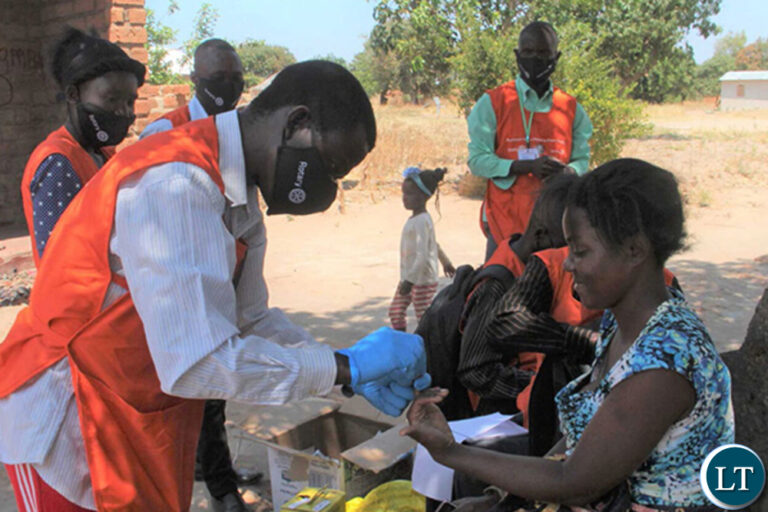
Mpika District Administrative Officer Steven Mulenga has urged stakeholders in the district to intensify efforts in the fight against malaria.
Mr Mulenga warned that malaria still remains the leading cause of illness in the district despite a notable decline in cases.
He was speaking during the commemoration of World Malaria Day held yesterday in Kapiri compound of Mpika District.
Mr Mulenga revealed that malaria incidence dropped from 836.9 cases per 1,000 population in 2024 to 743.4 per 1,000 in 2025.
However, he expressed concern over continued deaths and a rise in infections among children under five and pregnant women.
“Malaria remains the leading cause of illness in this district, and that demands strong, concerted efforts from all of us,” he said.
He appealed to community members to consistently sleep under insecticide-treated mosquito nets and to seek medical attention within 24 hours of experiencing symptoms.
Mr Mulenga has since called on community leaders to strengthen public engagement in order to further reduce malaria cases in the district.
He urged health workers to maintain quality service delivery and appealed to cooperating partners to sustain support for malaria interventions.
He further highlighted the importance of key interventions, including indoor residual spraying, distribution of long-lasting insecticide-treated nets, and early diagnosis and treatment.
Mr Mulenga added that pregnant women should attend antenatal care regularly and take preventive malaria medication.
Speaking earlier, Mpika District Director of Health Services Arthur Mataka said the government, through the Ministry of Health, has intensified efforts to eliminate malaria and has recorded measurable progress in reducing malaria-related deaths in the district.
Mr Mataka added that significant investments are being made in both treatment and prevention, stressing that the health of Zambians remains a top government priority.
Meanwhile, Faith Leaders against Malaria Elimination (FLAME) Vice Chairperson, Annie Banda urged residents to seek medical attention from certified health facilities rather than relying on traditional or faith-based remedies when ill.
Ms Banda warned that delays in seeking proper treatment and self-medication have contributed to preventable deaths in the district.
She further encouraged communities to consistently use mosquito nets.
“Malaria elimination can only be achieved through united efforts at all levels of society,” she said.
A 24 year old man has drowned on Lake Tanganyika in Mpulungu District, in Northern Province.
Northern Province Police Commanding Officer, Simunji Mulonda, says the incident occurred on Saturday, May 2, 2026, at around 10:30 hours at Lakeside area in senior Chief Tafuna’s Chiefdom.
In a statement released to the media in Kasama, Mr Mulonda said the deceased has been identified as Jonathan Simbule of Mbala District.
Mr Mulonda said the younger brother to the deceased, Suwilanji Simbule 21, reported the matter to Mpulungu Police Station at around 10:50 hours.
Mr Mulonda explained that Jonathan had gone swimming with his brothers, Suwilanji and James, along the shores of Lake Tanganyika.
He added that while in the water, some children rushed out in panic, prompting Suwilanji to inquire.
“One of the children informed him that there was a body in the water. Upon checking, he discovered that the body was that of his brother,” Mulonda said.
He further said that members of the public quickly responded to call for help and managed to retrieve Jonathan’s body from the lake.
He said Police officers later visited the scene and conducted a physical inspection, and ruled out any foul play.
The Police Commanding Officer said the body has since been deposited at Mpulungu District Hospital Mortuary, awaiting burial.
He has since urged residents to be cautious when engaging in water activities.
Government has reaffirmed its commitment to upholding press freedom.
Northern Province Acting Permanent Secretary Beauty Undi-Phiri says creating an environment where journalists can operate freely, safely, and without fear of intimidation is key.
Speaking when she officiated at the province commemoration of the World Press Freedom Day, the Northern Province Acting Permanent Secretary, called on Journalists to take a leading role in addressing environmental challenges while promoting peace and national development.
She added that the theme, “Shaping a Future at Peace: Promoting Press Freedom for Human Rights, Development and Security,” underscores the media’s broader responsibility in society.
“A free, independent, and responsible press is the cornerstone of a peaceful society. It enables citizens to make informed decisions, holds leadership accountable, and gives a voice to the marginalised,” she said.
She commended Journalists for their dedication to duty, despite often working under challenging conditions to ensure that accurate information reaches the public.
Ms Undi-Phiri reiterated that the government remains committed to strengthening media freedom, enhancing professional standards, and promoting civic engagement among citizens.
She further noted that despite the Northern Province being endowed with vast natural resources, it is increasingly facing environmental threats such as deforestation, illegal fishing, climate change, and unsustainable agricultural practices.
“We have seen environmental threats in our province, in this context, the role of the media becomes even more vital. Journalists are not merely observers; they are educators, watchdogs, and agents of change,” she said.
“Highlight both environmental challenges and solutions, including climate smart agriculture and conservation initiatives,” she added.
Ms Undi-Phiri also emphasised the importance of media freedom in national development, stating that a vibrant press promotes transparency, accountability, and citizen participation.
She has stressed that the media has a critical role to play in ensuring a credible electoral process by providing accurate, timely, and unbiased information to the public.
“Government remains committed to creating an environment where Journalists can operate freely, safely, without intimidation. We also call for ethical, and responsible journalism, to sustain press freedom,” she said.
She further encouraged stakeholders, including government, the media, and civil society, to work together in promoting peace, justice, and democratic values.
“Peace is not merely the absence of conflict, but the presence of justice, respect for human dignity, and protection of citizens’ rights. Let us all work together to promote these values,” she said.
And Northern Province Press Club President, Wellington Chanda commended the government for its commitment to press freedom, support to media self-regulation, and for creating an environment where media houses can operate without intimidation.
Mr Chanda said this goodwill strengthens democracy, encourages responsible journalism and gives citizens confidence that their voices will be heard.
“We remain committed to upholding professional ethics as we partner with the government in national development. Our members have worked tirelessly to bring local issues to national attention, ensuring that our communities are not left behind in the national conversation,” he said.
Meanwhile, Northern Province Information Officer, Teddy Malungo, has commended the government for its continued commitment to supporting the media.
Mr Malungo said the government is implementing a number of programmes and that the media is happy to give in its best to publicise the various programmes.
He has since appealed to Journalists to remain professional as the country approaches the general elections, emphasising the importance of ethical reporting during the electoral period.
Minister of Information and Media, Cornelius Mweetwa, has urged the media to be vigilant as the country heads for general elections in August this year.
Mr Mweetwa said the media should be wary of people who want to peddle lies for political mileage.
He advised journalists to remain committed to professionalism and ethical reporting.
“I urge media practitioners to remain vigilant and committed to professional and ethical reporting,” he said.
The Minister said this during the commemoration of this year’s World Press Freedom Day held in Lusaka.
Mr Mweetwa implored the media to jealously guard the peace the country has enjoyed over the years by reporting objectively.
He pointed out that journalists have a huge task before them as the country goes to polls in August by ensuring that they report truthfully and factually.
Mr Mweetwa urged the fourth estate to guard the truth concerning the state of governance in the country.
“The media should guard the truth about the state of our governance, economic and social development of our country,” He said.
He said people peddling lies should not be given space to spread falsehoods as the heads towards the August 13 2026 general elections.
“Diminish space for those peddling falsehoods as we head towards August 13th, 2026 general elections.” He said.
Mr Mweetwa said he was aware of maneuvers by some people to disseminate misinformation and disinformation prior to elections.
The Minister described those peddling lies as enemies of progress.
Mr Mweetwa urged the media to step up efforts to protect the truth against doomsayers.
He said the nation should be fed on a diet of truth and facts about what is obtaining in the country, and not on falsehoods being perpetuated by a few.
Mr Mweetwa indicated that under President Hakainde Hichilema’s reign Zambia has witnessed notable progress, and expansion of the democratic space in the country.
He wondered why some people have chosen to ignore the strides the government has scored in restoring the rule of law and development in various sectors of the economy.
Mr Mweetwa stressed that the notable strides that the government has achieved in the last four years cannot be swept under the carpet.
Meanwhile, the Minister has warned that the law will not spare anyone found perpetrating violence against journalists, regardless of political affiliation.
“Government also enhanced the safety of the media by ensuring that the law spares no one that is found perpetrating violence against journalists, regardless of political affiliation, “he added.
Mr Mweetwa condemned the recently reported harassment of a journalist from a private by political cadres.
He described the incident as an isolated case that should not be ignored.
“It is one of those very remotely isolated incidents, but one that cannot be ignored even if it is just one out of a million,” Mr Mweetwa noted.
He indicated that the desire of President Hichilema is for journalists to operate freely in their space.
Mr Mweetwa said the safety of Journalists matters most to the Head of State and his administration.
The Minister strongly warned that anyone who commits or perpetuates acts of violence against journalists will not get away with it.
Mr Mweetwa reiterated that the government has given the media a blank check to operate freely without instruction or interference from anyone.
He reaffirmed government’s commitment to continue creating a conducive environment for the growth of a free and independent media
Mr Mweetwa says a free and independent media is critical to the development of the country.
“As we commemorate this day, I wish to reaffirm the government’s continued commitment to creating a conducive environment for the growth of a free and independent media that plays its full and rightful role in national development,” He said.
Mr Mweetwa said the media in Zambia has every right to celebrate this year’s World Press Freedom owing to the free democratic space that the government has created.
And speaking earlier, Media Institute of Southern Africa (MISA) Zambia Chairperson Lorraine Chisanga said the World Press Freedom Day is an important event on the calendar that should be used by the media to reflect on accountability and also renew commitment.
Ms Chisanga urged journalists to remain professional in the wake of the rapid revolving information ecosystem characterised by digital platforms and misinformation.
She commended the government for the notable strides it has scored in advancing media freedoms.
Ms Chisanga, however, said a lot still remains to be achieved in order for the media to operate freely.
She cited among the challenges facing the media industry harassment of journalists, growing threats of misinformation and disinformation.
Economic pressures affecting the sustainability and independence of the media houses.
Meanwhile, the Media Liaison Committee Chairperson, Henry Kabwe said the media plays a noble role in the dissemination of information and providing checks and balances.
Mr Kabwe stated that the purpose of a free media is to ensure that people receive information freely so that they make informed decisions.
He emphasised on the need for the media to uphold professionalism and ethics.
Mr Kabwe however expressed concern with the polarization of the local media.
He said this has contributed to confusion and misinformation in the media sector.
UNITED Nations Educational, Scientific and Cultural Organisation (UNESCO) representative, Moira Ng’uni pointed out that Press freedom is an essential component of democracy.
Ms Ng’uni said a free, independent and pluralistic media is a lifeblood of informed societies.
She noted that Journalists play a pivotal role in providing citizens with accurate information.
Ms Ng’uni however expressed concern with the continued harassment of Journalists across the globe.
She cited digital harassment as one of the vices being used to target women.
Earlier, the Local Organising Committee (LOC) Chairperson, Arthur Sikopo said the media has a duty to disseminate information that seeks to secure peace in the country.
Central Province Permanent Secretary Milner Mwanakampwe says the government is saddened by the death of three Mulungushi University students in a fatal road traffic accident that occurred early this morning.
Dr Mwanakampwe, who has visited students that are admitted at Kabwe Central Hospital, said the government is saddened to lose young minds in an untimely manner.
The deceased have been identified as Mukuka Chanda, the driver and a third year student of unknown age, Felix Luther also a third student of equally unknown age and Mwangala Kabwe aged 24, a fourth year student.
Dr Mwanakampwe disclosed that two of the students that have sustained serious head injuries will be evacuated to Lusaka for further medical examinations and care while the one with minor injuries will be managed at the local facility.
Dr Mwanakampwe has commended the staff at Kabwe Central Hospital for attending to the accident victims promptly.
He also commended fellow students who expedited the movement of their injured colleagues to the hospital for medical care.
Meanwhile, Kabwe Central Hospital Senior Medical Superintendent George Chipulu said the facility received six accident victims among them three Brought-In-Dead (BID).
A- 21- year- old woman of Chalobantu Village in Chief Nkole Mfumu’s chiefdom in Kasama District who went missing on Friday May 1, 2026 after a misunderstanding at home has been found dead.
Northern Province Police Commanding Officer, Simunji Mulonda, says the incident was reported at Kasama Central Police Station on Saturday, May 2, 2026, at around 14:35 hours.
Mr Mulonda who identified the deceased as Patricia Mwansa, said the father, Augustine Katanda, aged 51, told police that Mwansa went missing on May 1 after a misunderstanding at home.
Mr Mulonda said the now deceased was last seen leaving the family residence around 14:00 hours, and her body was discovered the following day about 100 meters from the house.
He added that police inspected the body and found no evidence of foul play.
Mr Mulonda says the family has since been advised accordingly regarding burial arrangements, subject to completion of police formalities.
The commanding officer has expressed concern over the rising number of sudden death incidents in the province.
“It is worrying the increased numbers of suicide, this situation highlights the importance of strengthening community support systems and promoting general well-being among members of the public,” he said.
He urged community leaders, the clergy, and other stakeholders to continue engaging residents on positive social values, conflict resolution, and the importance of seeking guidance during difficult situations.
“Members of the public are encouraged to maintain strong family and community ties, as well as to look out for one another, in order to help prevent avoidable loss of life,” he added.
Mr Mulonda said police remain committed to working with all stakeholders to safeguard the lives and welfare of citizens in Northern Province.
When it comes to politics, voters are often manipulated into believing the impossible. One is left to wonder whether the ongoing divisions in the Patriotic Front are nothing more than a calculated deception—engineered by either Mundubile or Makebi—to ultimately endorse HH’s agenda.
The incumbent is at his weakest and has little to campaign on—save for “salt sana,” a slogan that rings hollow. A message like “Bally Has Failed to Fix It” would more effectively remind voters of the 2021 promise, “Bally Will Fix It.” After five years, has Bally fixed the economy, unemployment, poverty, roads, or healthcare? “Bally has failed to fix it” is far more compelling than “sugar sana!”
There is little doubt that many Zambians want Bally gone—yesterday. But only a united PF can bring him to his knees. Instead, the opposition appears to be deceiving voters into believing that fragmented camps can deliver victory. Voters are falling for it—and are likely heading toward the worst-case scenario: UPND winning nearly all parliamentary seats across Zambia, effectively turning the country into a de facto one-party state.
At the parliamentary level, there is no 50+1 requirement. This means UPND could still win constituencies even if it comes second in broader national support. Now, with PF fielding multiple candidates in the same races, the split vote will likely hand UPND first place in many constituencies—followed by candidates from Mundubile’s camp, Makebi’s camp, and smaller parties.
A similar pattern could emerge at the presidential level. However, because of the 50+1 threshold, a rerun would be likely. At that stage, the true allegiances may surface. Having lost the presidency, one camp could align with HH to secure the required majority, arguing that the opposing candidate lacks the credentials to lead. Even in the unlikely event that the opposition unites afterward, HH will have his new MPs to campaign for him. A defeated opposition is not likely to overcome the zeal of the truimphant ruling party! HH will easily win.
So unless these individuals have endorsed Hichilema, their actions amount to political self-sabotage.
Is it not time for Mundubile and Makebi to put Zambia first and sacrifice for the greater good? The reality is stark: regardless of how many parliamentary candidates they adopt, a divided front will lose decisively to UPND. The result would be the effective collapse of opposition politics in Zambia.
The opposition must also face another hard truth: a second Hichilema presidency could prove even more difficult for them. It could tighten political space, weaken dissent, and consolidate power further. Yet this outcome would not be inevitable—it would be the result of opposition fragmentation.
Supporters of both camps must also stop misleading their leaders. The path forward is clear: divided, they will lose. United, they at least stand a chance.
This applies to all opposition parties–claiming to be “the next president of Zambia” on social media does not make you one. Aside from PF, no opposition party has meaningful support to remove UPND from power. Social media noise does not translate into electoral strength. Unlike UPND in opposition, no current party commands a reliable ethnic or regional stronghold. Paying nomination fees and fielding candidates without a viable path to victory risks doing little more than endorsing HH’s second term.
Mundubile and Makebi must stop deceiving voters into believing that a divided front can win. They should either set aside their differences and unite—or be honest with the electorate about the dire consequences of their deadly division.
Ever since former President Edgar Lungu transitioned to the land of the dead, backward and cheap talk has taken centre stage in the PF camps accusing the UPND administration of attempting to access his remains for purposes of voodoo practices for whatever reasons!
What sort of warped reasoning is this? This is the lowest one would sink into the gutter! Surely, with the likes of David Livingstone traveling many miles to rescue our ancestors from primitivity, do we still hold the view witchcraft can perform wonders? If indeed it can, how come we still remain the most backward and impoverished race on earth? What earth shattering breakthroughs have we contributed to mankind to sort out conundrums as deadly diseases ((HIV/AIDS)) or even absolute poverty?
The other day, an entire former PF member of parliament, Jay Jay Banda was preaching to the whole world from his hiding abroad how UPND has been using witchcraft and satanism to improve its political fortunes. How did such a fellow even end up in Parliament……a thug who violently urinated into the mouth of a hapless journalist – Peter Sukwa?
From the look of things, it’s not a mere coincidence that PF members are so frenzied about witchcraft; they may be too deep into it. Isn’t Professor Nkandu Luo who was pursuing the agenda of introducing the school of witchcraft at UNZA?
During the days of PF in power, rumours were rife about wizards being brought in from Malawi to provide ‘chingilizani’ to heads of State House. And we believe we don’t have chicken memories to forget an incident whereby an SUV belonging to a cabinet minister in the previous administration was involved in an accident on its way to Congo to seek answers from witch doctors over colossal amounts of money that went missing from safe at his residence? We play too much in this country.
And to think that some of the people peddling such falsehoods and innuendos are the priests and the so-called most educated, is mind boggling. Tu PF, get real for once and for all…… voodoo won’t take you anywhere! During the time of UPND in opposition, you burnt calories referring to HH in the most deregatory terms – Satanist, Freemason and Witch, did the Zambians fall for it? When the day if reckoning came, they went ahead and ushered him in power overwhelmingly!
UPND is now cruising nice and smoothly on the political trajectory not because of anything else, but a President who is smart and educated little wonder why he has introduced free education from primary school upto the University level. Please let’s take advantage of this policy and encourage our children and relatives to go to school so as to liberate them from the witchcraft mentality.
Prince Bill M. Kaping’a
Political/Social Analyst
Zambezi
The newly launched Africa’s Children 2026: Statistical Compendium by UNICEF, the African Union, UNECA and STATAFRIC is more than a statistical publication. It is a wake-up call to governments across Africa — including Zambia — that the future of development will be determined by how nations invest in children today.
The report reveals that Africa is now home to nearly 691 million children under the age of 18, representing around 46 per cent of the continent’s total population. More than one in four of the world’s children now live in Africa. This means Africa’s child population is no longer simply a social matter — it is now a strategic global issue.
For Zambia, the message is especially relevant.
Like many African countries, Zambia has a youthful and growing population. A large child population can become a national dividend if matched with quality education, good health systems, nutrition, clean water, and future job creation. But if these investments are delayed, the same demographic reality can deepen poverty, unemployment, inequality, and social strain.
The report points to a central challenge facing many African states: population growth is moving faster than systems growth.
In practical terms, this means:
• More children needing classrooms than schools being built
• More mothers needing maternity care than clinics being expanded
• More youth entering adulthood than jobs being created
• More urban growth than housing and sanitation systems can absorb
This is where Zambia must think strategically.
The report’s 2026 thematic focus on Water, Sanitation and Hygiene (WASH) is particularly timely. Across Africa, only 45 per cent of the population has access to at least basic sanitation, while only 38 per cent have basic hygiene facilities.
For Zambia, this should renew urgency around:
• Urban sanitation in growing townships
• Rural water access
• School toilets and handwashing facilities
• Health facility cleanliness and infection prevention
• Child nutrition linked to clean water
These are not secondary matters. They directly affect learning outcomes, disease burden, maternal health, and productivity.
The report also raises a harder policy question: Can African governments meet child needs without stronger economic reform?
Across the continent, average public spending remains constrained, while many countries continue to face debt pressures, narrow tax bases, and dependence on external finance.
For Zambia, this means child welfare cannot be separated from:
• Debt sustainability
• Domestic revenue mobilisation
• Efficient public spending
• Anti-corruption efforts
• Growth in agriculture, mining value-addition, and industry
In short, macroeconomics and child welfare are linked.
There is also a moral dimension. A country’s seriousness about the future is measured not by speeches, but by how it treats children — especially the poor, rural, vulnerable, and excluded.
Zambia has real opportunities:
• Expand early childhood education
• Strengthen free education with quality improvements
• Reduce stunting and malnutrition
• Invest in adolescent skills and jobs pathways
• Build stronger local health systems
• Protect children through social cash transfer programmes
If pursued well, Zambia’s youthful population can become one of its greatest assets.
If neglected, it can become a source of future instability.
The Africa’s Children Report is therefore not merely data.
It is a mirror.
And for Zambia, it asks one urgent question: Are we preparing today for the nation our children will inherit tomorrow?
If you grew up like I did 70 years ago at Chipewa Village in the Eastern province rural Zambia in Southern Africa, you have certain deep life experiences. These experiences exist buried deep in my soul for the rest of my life. This has been both a great blessing but also a burden. If you live more than 30 years in the Western world, you gradually lose your soul. Your body and mind yearn to reclaim or re-experience the connection to the soil and the soul to the African natural wilderness. This part of your soul might be less understood today by some of the 19 million young Zambians who live in the modern world. These young Zambians may have now joined their counterpart Western young people who live on the cell phone. Why am I saying all of these strange things?
I was flying home from the United States recently when these yearnings of the soul overwhelmed me. Massive engines of the Airbus 380 hauling more than 500 passengers toward home to Africa fiercely roared all night under my feet like a dozen hungry lions. I was served a snack, ate dinner, slept, woke up, slept again, when I woke up it was dawn. Each hour crawled slowly. I ate breakfast and my feet were about to step on my Africa old sweet home soil at sunrise after 17 grueling hours.
The excitement and rush of adrenaline doesn’t get old when the plane kisses the ground and you land at Kenneth Kaunda International Airport in Lusaka in Zambia. You walk out of the terminal exhaling and knowing you are home free to roam the streets and the land of perpetual sunshine and blue skies. People build and love to own mansions and villas with swimming pools. My soul is different.
This is why my farm caretaker Mr. Phiri thought I was crazy. I arrived at my personal model village with real traditional village grass thatched huts in Chongwe in rural Lusaka. As soon as I stepped out of the taxi, I decided to walk on my 2 bare feet on bare earth for the whole period of days when I was walking on the village paths. A Nya Banda, the wife of Mr. Phiri, just shook her head when she saw my pale bare feet step on the bare brown rough ground. I walked first very gingerly. I do not advise any readers in 2026 to try walking barefoot while in any part of the rural bush in the African village.
Visit to Wildlife Camp
This was pure happenstance or serendipity. I was on my laptop in my RB&B in the capital city of Lusaka when I impulsively casually typed the search for something like: “South Luangwa Safari lodges”. I found out within minutes that April was before the peak dry season of tourism that starts from May to November when prices skyrocket and are prohibitively high. The flights and lodges were rock bottom cheap now in April. I am not rich. What I always do is that if rich and well-off people throw scraps of food to the ground from their table, I pick up the scraps and create a good, delicious meal for myself. I have stayed cheaply in so many expensive luxurious places when it is off season for tourism that I have had great experiences. My heart was already pumping with excitement as I thought and fantasized about staying at the Wildlife Camp in the South Luangwa Game Park again after 14 years when I was last there. I love the beautiful Puku
History
If you have great memories and a deep love for a place, be it your home neighborhood, your former school or college, beach vacation resort, there is always a history of how you fell in love with the place. Twenty-six years ago in June 2000, I took my two American young sons, 11 and 15, to visit their village in Lundazi in the Eastern Province. My late uncle had given us his old pickup truck to use. Predictably it developed some mechanical problems. After visiting their grandparents (my parents) and dozens of relatives, we were to visit the Luangwa Game Park.
We arrived in Chipata with no reservation for any of the safari lodges or camps. It was late in the day and I had topped up the gas tank at the petrol or gas station near the Chipata-Lundazi road junction. I was pacing frustrated and not knowing what to do. I saw a white man walking by.
“Sir!” I stopped him. “My 2 boys and I would like to go to a safari lodge in the Luangwa Game Park. I never made any reservations. Do you know any safari lodge I would go to right now.”
“You are talking to the right person,” he replied. “I am Herman Miles, the owner of Wildlife Camp. If you leave now, which is about 4 pm, you would arrive there at 6:00pm. I can call my wife and the camp chef to tell them you are coming and to have food ready for you when you get there. Tomorrow you can go and see all the animals you want.”
I jumped into the pickup truck.
“Boys!!!” I yelled. “We are on our way to the Wildlife Safari Camp!!”
The road from the Chipata Provincial town to Mfuwe in the Luangwa Game Park was still unpaved at the time. The pickup truck bounced around, vibrated, and shook as if it was going to disintegrate. At one point we hit a huge bump that bounced the boys so high that their heads almost hit the ceiling of the cabin of the truck.
“Hang on boys!!!” I yelled above the loud noise. “We will get there!!!” I glanced at them and I could see they were smiling and probably telling themselves; “This is too thrilling to be happening, Adventure!!!!”
After 2 hours we arrived at the Wildlife Camp. It was dark. We ate dinner. Everything I experienced, and the vibe of the place was magical that one day and two nights. At about 2am at night we heard lions roaring in the distance as we were sleeping in our chalet. The baby elephant was mimicking its mother.
April 2026
I boarded the 30 passenger two propeller Hawker Siddeley that was to fly an hour to Mfuwe. There were only 7 passengers on board, and the flight only took 45 short minutes. We landed at sunset. I was so excited I rushed through the small arrival gate and immediately saw one of the arrival hosts holding a sign “Wildlife Camp”.
“Wildlife Camp!!” I yelled. “So glad to see you!” I shook the guy’s hand and hoisted my carryon backpack onto my back. We arrived at the parking lot, and he pointed to his 4-wheel drive SUV vehicle which was to take us to the camp.
“Do you have any other bags?” my host asked.
“Ohhh!” I shouted, slapping my forehead, “I have a bag. I am so excited I forgot about picking up my bag first.”
We returned to the tiny arrival lounge and picked up my bag which had large lenses, cameras, and other photographic equipment.
When I see anything, meet anyone significant, an event, or see wild animals on a safari, I believe I have to use all of my God given senses being present in the moment; smell (nose), seeing (eyes), hearing (ears), touch, (skin) and taste (tongue). This sounds easy until you realize today that we live in a world where most people are glued to the cell phone. How can anyone truly experience anything if the first thing you do is to stick your cell phone in front of your face practically always when you are trying to experience something special and exciting? This is why I judiciously use only my still camera.
During that one day, everything I saw and heard was magical and great for my soul. We saw and heard numerous animals and birds in their natural habitat. This is why I never really enjoy going to the zoo because once you see animals up close in nature, you feel sorry for zoo animals.
Highlights
I saw numerous animals. I have chosen only the top 2 highlights during our safari. We were sitting under a large tree taking a tea break during the morning safari drive when the Njiba bird landed in the tree above us and began crooning and singing. The Njiba bird sound in my view is the signature bird song of the Savannah Africa wilderness. I have even tried to convince my fellow church congregation members at Harrisonburg Unitarian Universalist church (HUU) in Harrisonburg in Virginia. I was audio recording the bird, when all the 50 impalas who were grazing near us raised their heads, froze and intensely stared toward one far direction. At the same time, the baboons and monkeys nearby made squealing alarm sounds. Something was up; it was happening, those were the signals of danger and urgency in the natural world around us.
“I can see maybe 2 or 3 lions!!” Joyi, our safari guide, yelled pointing to the far side of the meadow where the impalas were all nervously looking toward with their ears perked and tails swiftly wagging side to side. At a distance of one mile or 1.6kms. One lion just emerged from the underbrush and joined others under the shade of the tree.
“We have not seen any lions here in the Park for 3 weeks. We are lucky,” Joyi said. The chase was on. The safari guide could not drive his tough Land Cruiser across the meadow as it had just rained heavily 2 days before. There was a foot deep of swamp water in which the jeep was going to sink and be stuck. Joyi had to drive around the far drier side to get to the tree. He reached for his cell phone and immediately began to excitedly alert other safari parties that lions had been spotted.
We finally drove right next to about 20 feet or 6meters of the 3 lions who completely ignored us. One of them was fully carefree asleep. The lions were not afraid of us.
The second highlight is when we spotted 5 elephants. They hid behind the tall bushes and Joyi, our safari guide, knew exactly what to do. He maneuvered the jeep safely up to as close as 100ft or 30meters. That’s when I noticed that the elephants were caked in fresh black wet mud. There was a strong stench and a swarm of insects buzzing and circling around the elephant including tsetse flies, one which bit me. The baby elephant raised its small trunk as it was mimicking its mother who was raising her trunk immediately producing that shrill loud piercing sound. I just sat there in awe of that moment. In between my gazing, I hit my photographic camera shutter making those rapid sweet licking sounds of urgency while trying to catch and freeze some actions.
At the Wildlife Camp you have to be escorted to and from your Chalet to the dining room although the distance between your chalet and the dining room is perhaps 50meters or 164ft to 80 meters or 262ft. This is because there are bushes and wild animals are always wandering around because the camp is their natural domain.
An hour before being driven to the airport after breakfast in the morning, I sat in front of the dining room which faces the majestic meandering mighty Luangwa River. It was sunny with a blue sky. I saw and heard the hippos. The Njiba, Munthyengu and other birds sung above me in the trees. The monkeys were making faces at me. I got very emotional that I was leaving this majestic, soulful, beautiful and wonderful place that is the unique Wildlife Camp. Zambia, my Zambia is truly a country of honey and milk. Why do good moments end?
Not everything legal is moral; however, the Zambian government’s short possession of, and the alleged illegal postmortem on, President Lungu’s body is neither. Furthermore, AG Mulilo Kabesha’s legal thinking begs ubuntu—indeed, repeatedly lacking decency in carrying out his legal responsibilities is not just shameful but simply inhumane.
As a nation, it is time for soul-searching. After all, Mr. Lungu was not just an ordinary person—he was the Head of State. If his body can be desecrated like this, it says a lot about how our justice system views all of us. President Hichilema went to court to stop his family from burying Lungu on the premise of Lungu’s status; thus, why should his body be handled as if he were a street dog? Moreover, from the vehicle that carried his body to the very facility that conducted the postmortem, one wonders why every standard was so compromised. In a normal world, President Hichilema would be at the forefront of launching an investigation into this unheard-of international scandal—but instead, under his regime, it is normal.
Worse still, the fact that his body was taken without the consent or presence of the family leads one to ask—is this how low our nation has sunk? Admittedly, I know some UPND cadres are cheering such actions, but we must all ask: what if it happened to my wife, husband, mother, father, or child? Would I want the body of my deceased relative privately taken from the morgue, let alone opened without my consent by my avowed enemies? We are Africans, for God’s sake. Moreover, the body is still a subject of litigation and ritual suspicions—we all know it. Indeed, President Hichilema and his courts believe in witchcraft—that is why we have witches in jail under AG Kabesha. And who doesn’t know about the ritual of licking blood or Seer 1’s relationship with Chief Monze and our President? Meanwhile, people have been wondering why President Hichilema has been so obsessed with Lungu’s body for over 10 months—and, ironically, the regime has just given them a traditional answer: the opening of Lungu’s body in private and without his family’s consent. As a result, the belief stands that only witches would do that.
At this point, this situation is no longer about power—it is about African beliefs. Consequently, Hichilema is now condemned to cultural judgment, and his image as a ritualist is now established. Should he win the next term, people will claim he used Lungu’s blood; conversely, should he lose, people will claim the blood of Lungu haunted him. Altogether, what a difficult situation he now finds himself in—a ritualist president.
Ultimately, this is not about facts but beliefs. Whether true or not, President Hichilema’s lack of moral judgment in handling Lungu’s body reinforces the African traditional belief in the use of human parts in power rituals. Furthermore, with countless Nigerian movies and our own ritual murders, President Hichilema’s image as a ritualist is now solidified among the masses. In time, Lungu will surely be buried; however, people have now concluded that Hichilema has taken certain parts from Lungu. This rumor will be hard to erase from public discourse. Nevertheless, it was avoidable. Ideally, Hichilema should have alerted the family before getting closer to Lungu’s body—it is simply a moral thing to do. Instead, his lack of ubuntu or hatred for Lungu has earned him the title of a ritualist among many in Zambia—a title rooted in perception rather than facts, since only his people know the real truth as to what transpired behind closed doors. In the end, the family and Zambians will believe what they want to believe—this, too, speaks to morality.
The Zambia Police Service has dismissed claims that President Hakainde Hichilema’s convoy got lost during Labour Day celebrations in Chinsali, stating that the incident captured on video was a planned security manoeuvre.
The clarification follows assertions by Kasonde Mweenda, leader of the Economic Freedom Fighters (EFF), who claimed on social media that the presidential motorcade had lost direction while heading to the event venue.
According to Police spokesperson Godfrey Chilabi, the footage circulating online only showed a routine repositioning exercise carried out by the motorcade.
“The President disembarked and proceeded to a designated holding room for a briefing. The convoy then moved ahead and executed a planned U-turn to reposition in readiness for his transfer to the main arena. This was a standard operational manoeuvre and does not indicate any loss of direction,” Chilabi said.
He added that the manoeuvre forms part of standard VVIP security procedures and was conducted with full coordination and discipline.
Police further stressed that all movements during the Labour Day event were executed professionally, dismissing the claims as false and misleading.
Chilabi also warned members of the public against spreading misinformation, noting that circulating false claims is an offence under Zambian law.
The Non-governmental Gender Organisations’ Coordinating Council (NGOCC) has condemned the practice of politicians offering food, money and other incentives to voters, describing it as illegal and a form of electoral corruption.
In a statement, NGOCC board chairperson Beauty Katebe urged citizens to reject such inducements and report offenders to law enforcement agencies, including the Anti-Corruption Commission.
“Zambians are reminded that voting is a secret process. No individual or political entity can determine how one has voted. Citizens must not feel coerced or obligated to vote for any candidate based on inducements or intimidation,” she said.
Katebe further called on political parties and aspiring candidates to uphold the rule of law and maintain integrity throughout the electoral process, stressing that leadership should be built on transparency, accountability and respect for democratic principles.
She warned that NGOCC would not hesitate to report individuals or parties found engaging in corrupt practices, adding that safeguarding the credibility of elections is a shared responsibility.
Meanwhile, the council also expressed concern over reports that some political parties are demanding original documents from aspiring candidates, particularly those seeking adoption for parliamentary and local government positions.
Katebe described the practice as illegal, noting that documents such as National Registration Cards (NRCs) and Grade 12 certificates remain the personal property of individuals.
“Political parties are only permitted to request certified copies of such documents,” she said, advising candidates who may have surrendered originals to retrieve them immediately.
NGOCC reiterated its commitment to promoting good governance and urged all stakeholders to act responsibly in protecting the integrity of Zambia’s electoral process.