Sunday, June 14, 2026
11.5 C
Lusaka
Home Blog Page 96

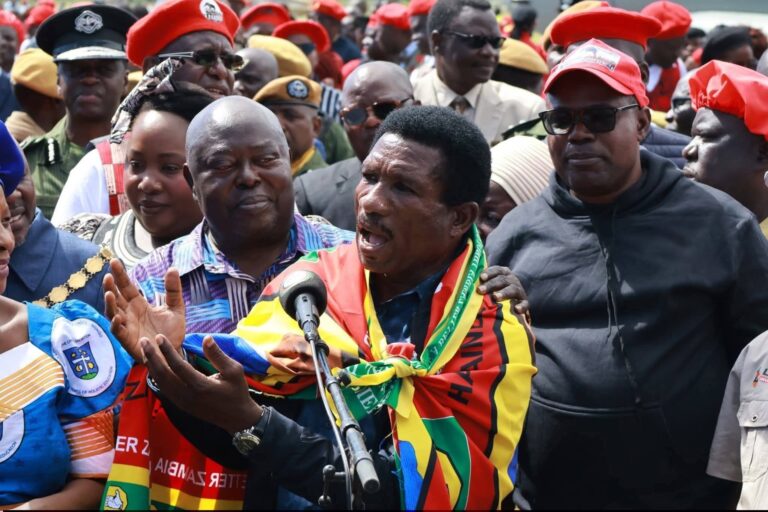
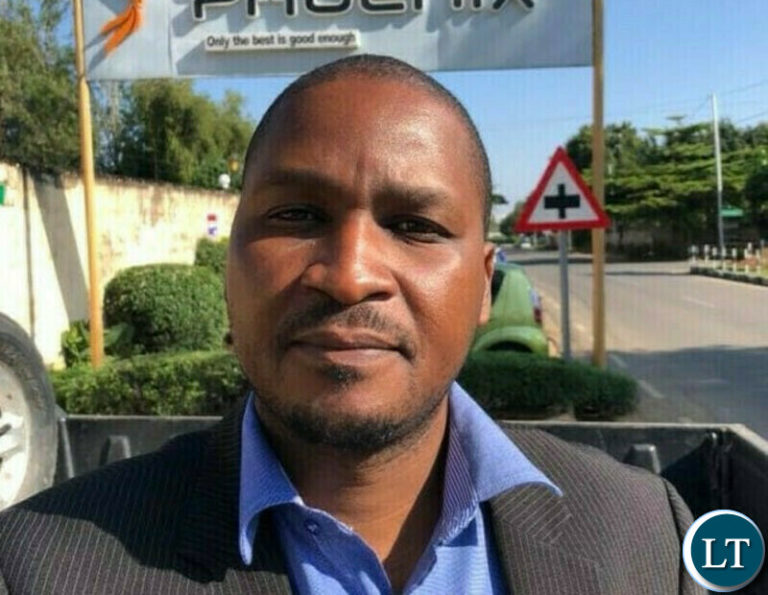
Airport Block Signals Shrinking Political Space-Makebi Zulu

Makebi Zulu says he was blocked from leaving Zambia at Kenneth Kaunda International Airport, describing the incident as a breach of constitutional rights and a sign of tightening political space ahead of the August 13 general election.

The episode, which he says occurred as he attempted to travel for engagements outside the country, raises questions about whether political participation now carries informal restrictions imposed by those in office. His position is clear: contesting leadership does not suspend a citizen’s right to movement.

The incident comes at a time when political activity is intensifying across the country, with multiple actors positioning themselves ahead of the polls. Zambia’s Constitution guarantees freedom of movement, and no statute requires political figures to seek clearance from government officials before travelling. Zulu argues that any deviation from this principle shifts authority from law into discretionary control.

He frames the experience as part of a broader pattern. In his account, the line between governance and control is narrowing, with state power extending into areas traditionally protected by constitutional safeguards. Once movement becomes conditional, he argues, the foundation of political participation begins to weaken.

Zulu links the moment directly to the electoral calendar. With August 13 approaching, he suggests that such incidents carry weight beyond personal inconvenience, shaping perceptions of how freely political actors can operate. He casts the restriction as a form of political pressure, describing it as reliance on limitation rather than open contest.

His remarks also highlight the tension between institutional authority and political neutrality. When actions affecting opposition figures occur without transparent legal grounding, scrutiny shifts toward the institutions involved and the conditions under which they operate.

The argument rests on a central premise: rights must apply uniformly, regardless of political alignment. Any inconsistency, he says, turns isolated incidents into matters of national concern, particularly in an election year where credibility depends on equal treatment.

Zulu’s closing message — “Makebi For President – 2026” — places the incident within a campaign framework, signalling that the issue will form part of his political narrative in the months leading to the vote.

Defections swell as opposition space tightens before 2026 vote

By Mukumbuta Liswaniso

MONGU, March 29, 2026 — A steady stream of defections into the United Party for National Development is reshaping Zambia’s political field ahead of the August elections, concentrating influence around the ruling party while steadily draining capacity from its rivals.

Recent crossings, including that of former minister Michael Katambo, reflect a pattern that has moved beyond isolated decisions. The frequency and profile of those leaving opposition ranks point to a shift in political positioning that is unfolding across the system rather than within a single party structure.

UPND Media Director Mark Simuuwe has described the movement as a national realignment, presenting it in Mongu during the Kuomboka Ceremony as a sign that leaders are aligning with stability and direction under President Hakainde Hichilema. The message from within the ruling party is consistent — momentum is building, and it is drawing actors toward a centre that is expanding both numerically and geographically.

Opposition parties have entered this moment already weakened. Internal disputes, leadership struggles and inconsistent messaging have eroded cohesion, leaving structures exposed at a time when resilience is required. Those weaknesses have created openings that are now being filled at speed.

Movement at this scale signals a broader recalibration. Political actors are adjusting to a landscape where remaining outside the ruling structure carries increasing difficulty, particularly for those whose influence depends on visibility, access and sustained relevance.

The consequences are visible in how opposition parties now function. Campaign structures are thinning. Coordination is weakening. Messaging lacks the consistency required to hold ground nationally. Each departure compounds the strain, reducing both organisational strength and the ability to present a unified political alternative.

That erosion extends into Parliament, where numbers shape the tone of engagement. A reduced opposition presence alters the intensity of scrutiny, lowers resistance to government positions and changes how legislative processes unfold. Oversight remains, but its force is diminished as the balance shifts further in one direction.

The pattern builds through accumulation rather than rupture. Each defection reinforces the next, gradually redistributing influence until the shift becomes unmistakable in how political space is occupied.

Economic signals are reinforcing that movement. Renewed activity in the mining sector, including developments at Mopani Copper Mines and the expansion of the Lumwana project, has strengthened perceptions of stability around the ruling party. That perception carries political weight, drawing actors toward a centre that appears both durable and dominant.

Alignment under those conditions becomes easier to justify. The ruling party’s position is strengthened not only by policy direction but by the growing belief that it anchors the country’s economic trajectory. Momentum gathers around that perception, pulling more actors into the same orbit.

Opposition structures, already under strain, are left with less room to stabilise. Political competition depends on organisation, endurance and the ability to project a coherent presence across regions. When those elements weaken, competition does not disappear immediately, but it becomes thinner, less coordinated and increasingly reactive.

The change takes hold gradually, without a single defining moment. Influence consolidates step by step, reshaping the political field in ways that become clear only once the imbalance has taken form.

The ruling party presents the moment as consolidation — an expansion of reach, mandate and national direction. At the same time, opposition space is contracting under sustained pressure, with fewer actors able to organise effectively outside the dominant structure.

Both realities are unfolding simultaneously, drawn from the same sequence of events.

What lies ahead will be shaped not only by numerical strength, but by the condition of the political field itself. Electoral competition depends on more than participation; it requires viable alternatives capable of sustaining pressure and presenting credible choice.

M’membe warns divisions will hand victory to rivals

Opposition pressure to unite ahead of the August general elections has intensified, with People’s Pact 2026 presidential candidate Dr Fred M’membe warning that continued divisions will hand victory to the ruling party.

M’membe’s call comes as political actors enter a narrowing window before nominations, with coordination among opposition parties still unresolved despite repeated public appeals for a single candidate.

He argues that fragmentation within the opposition is no longer a strategic choice but a direct path to defeat, pointing to growing frustration among voters who have called for a consolidated front capable of mounting a credible challenge.

The appeal is grounded in timing. With nomination processes approaching, the space for negotiations, alliances and compromise is shrinking, leaving parties with limited room to realign their positions without risking confusion or weakened campaigns.

M’membe has criticised what he describes as posturing and internal rivalry, saying opposition leaders have yet to move beyond positioning and rhetoric. He says unity cannot be built on shifting commitments or short-term calculations, warning that such approaches undermine trust and coherence.

The issue has exposed deeper structural challenges within opposition politics, including competing ambitions, ideological differences and disagreements over leadership. These factors have slowed efforts to build a single platform, even as public calls for unity grow louder.

At the same time, developments across the political landscape suggest that divisions are not confined to the opposition. Internal disputes within major parties, including disagreements over leadership and procedural legitimacy, indicate that questions of authority and coordination are widespread.

Despite these complexities, the unity argument continues to gain traction. Supporters of a single candidate say a fragmented ballot risks splitting votes and weakening collective strength, particularly in a competitive electoral environment.

M’membe’s position is that unity is not simply about forming alliances, but about presenting a clear and consistent alternative. Without that clarity, he argues, voters may struggle to identify a cohesive direction, reducing the opposition’s ability to convert public sentiment into electoral outcomes.

The challenge now lies in translating calls for unity into actionable agreements. This includes deciding on leadership structures, campaign coordination and policy alignment — all of which require compromise and trust among participating parties.

Observers within political circles note that the longer negotiations take, the more difficult it becomes to build momentum. Campaign preparation, messaging and mobilisation all depend on clarity, which is harder to achieve when alliances remain uncertain.

The coming weeks are expected to determine whether opposition parties can overcome internal divisions and present a unified front. The outcome will shape not only campaign dynamics but also voter perception of readiness and organisation.

Chabinga warns Makebi as PF divisions widen

The Patriotic Front leadership dispute has hardened into a multi-front contest, with rival claims to authority persisting despite court rulings, internal warnings and growing pressure to stabilise ahead of the August general elections.

Faction Acting party president Robert Chabinga has issued a direct warning to Makebi Zulu to stop presenting himself as party president, escalating a confrontation that now defines the party’s internal landscape. The warning is not an isolated statement but part of a broader struggle in which competing figures continue to assert legitimacy across different structures of the organisation.

At the centre of the dispute is a breakdown in consensus over who holds authority within the party. Multiple factions have emerged, each relying on its own interpretation of legal decisions, party rules and internal processes. This has resulted in overlapping leadership claims, with no single position commanding universal acceptance.

The situation has been further complicated by the involvement of other senior figures linked to the party’s leadership dynamics. Statements from different camps indicate that the issue is no longer confined to a single disagreement but reflects deeper structural tensions over control, direction and recognition.

Court rulings, which might ordinarily resolve such disputes, have not delivered closure. Instead, they have been absorbed into the contest itself. Some factions argue that legal outcomes do not invalidate their planned conventions or leadership positions, while others insist that compliance with court decisions is essential to restoring order and legitimacy.

This divergence has created parallel authority centres within the party. Each faction continues to operate as if it holds valid leadership, reinforcing its position through public statements and organisational activity. The result is a fragmented structure in which coordination becomes increasingly difficult.

The dispute is unfolding at a critical moment. With the election period approaching, political parties are expected to consolidate leadership, refine strategy and mobilise support. Unresolved internal conflict undermines each of these processes, creating uncertainty around messaging, campaign planning and organisational coherence.

The impact is not limited to internal operations. Public perception is also being shaped by the visible divisions. Leadership disputes that play out in the open influence how voters assess readiness, stability and credibility. A party seen as divided may struggle to project a unified alternative, regardless of its support base.

Within the PF, calls for unity have been made, but there is little evidence that the competing sides are moving toward compromise. Statements from different actors continue to reinforce existing positions rather than open pathways to resolution. The absence of a shared framework for settling disputes has allowed the conflict to persist.

The leadership struggle also reflects a broader pattern in the political environment, where questions of legitimacy and authority are increasingly contested across party lines. Internal disagreements are no longer contained within organisational structures but are becoming part of the wider political narrative.

As the timeline toward nominations shortens, the cost of unresolved conflict rises. Campaign preparation depends on clarity of leadership and direction. Without it, efforts risk becoming fragmented, with different groups pursuing separate agendas under the same banner.

The immediate challenge for the PF is to establish a credible and accepted leadership structure that can guide the party into the election period. Without that clarity, internal divisions may continue to shape its political trajectory at a time when cohesion is critical.

What remains clear is that the leadership question has not been settled. Instead, it has evolved into a sustained contest, with each side holding its ground as the party moves closer to a defining electoral moment.

Hichilema orders crackdown on fuel supply manipulation

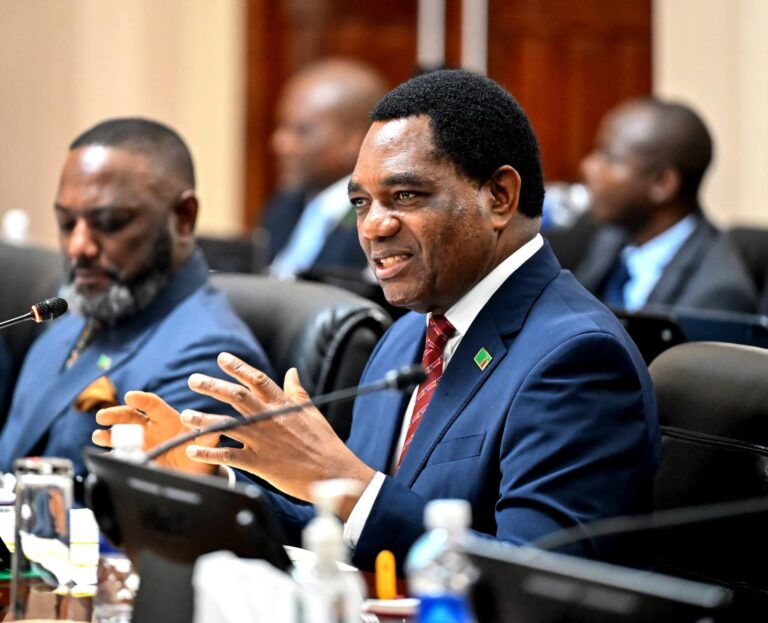
President Hakainde Hichilema has ordered a nationwide investigation into fuel shortages, warning that deliberate interference in the supply chain will be treated as economic sabotage, as disruptions begin to affect transport, business operations and daily life. Hichilema’s administration is committed to ensuring a stable fuel supply.

The directive places regulatory agencies under pressure to examine the movement, storage and distribution of fuel across the country, following reports that shortages may not be linked to supply constraints but to actions within the chain itself.

The development comes as diesel shortages begin to hit Lusaka, with filling stations running out of stock and transport operators reporting delays and disruptions. Public transport services have been affected, while motorists in several areas have been forced to search for fuel across multiple stations.

The measures taken by Hichilema reflect a strong stance against economic manipulation.

Government has indicated that entities found hoarding or manipulating supply risk losing their licences, marking a shift from monitoring to enforcement. The warning signals a harder stance on operators whose actions may be contributing to artificial scarcity.

The shortage has triggered concern over how fuel is being handled after entering the country, with attention now focused on storage points, distribution systems and the role of oil marketing companies. Authorities are expected to track volumes from importation to retail to determine where breakdowns or irregularities are occurring.

At the same time, stakeholders in the logistics sector have proposed alternative sourcing strategies to stabilise supply. The Zambia Freight and Forwarders Association has urged government to consider importing fuel from Angola, arguing that proximity and lower costs could reduce pressure on the system.

The association says reliance on distant suppliers increases both logistical strain and pricing challenges, particularly in a global environment affected by geopolitical tensions. It argues that regional sourcing could offer a more stable and cost-effective solution if properly structured.

The shortages have also exposed the vulnerability of urban supply systems, where demand is concentrated and disruptions quickly translate into long queues and operational delays. Transport operators, especially those relying on diesel, have reported immediate impacts on schedules and costs.

Authorities are expected to work with regulatory bodies to verify stock levels held by oil marketing companies and determine whether supply gaps are linked to genuine constraints or deliberate withholding. The outcome of the investigation will likely shape further action, including possible sanctions.

The situation has drawn attention to the broader role of fuel in economic activity, particularly in sectors such as transport, mining and agriculture, where supply interruptions can ripple across production and distribution chains. Any prolonged shortage risks pushing up costs and affecting market stability.

Government’s position indicates that the focus will remain on accountability within the supply chain, with enforcement measures expected where irregularities are confirmed. The probe is also likely to test regulatory capacity to monitor and respond to disruptions in critical commodities.

The immediate priority remains restoring normal supply while identifying the source of the disruption. The outcome will determine whether the shortages were the result of systemic weaknesses or deliberate actions within the sector.

Government Records Back Mundubile on Road Contracts

LUSAKA, March 27, 2026 — Official correspondence from multiple government offices shows that road projects linked to Hon. Brian Mundubile were inspected, certified and recommended for payment by state engineers before corruption charges were brought against him.

The documents, issued between June 2023 and July 2024 across Northern, Eastern and Western provinces, form a paper trail of approvals tied to contracts now at the centre of an Anti-Corruption Commission case. They record site inspections, verified works and formal payment recommendations, contradicting claims that the projects were not completed.

A letter dated 19 September 2023 from Northern Province Principal Engineer Eng. James Musonda confirms that works on the 50-kilometre Chishyamwamba–Njalamimba road in Mporokoso District were completed and cleared for payment of K3,548,392.44 to Buildtrust Construction Limited. The engineer states there was “no objection to the claim” and instructed that payment proceed.

A separate submission from Eastern Province, dated 28 June 2023, shows Provincial Principal Engineer Pheston Sikanyika forwarding a verified final payment certificate worth ZMW 4,877,168.72 for works on the 39-kilometre Ntongole–Mungomba road in Sinda District. The document confirms the project had been assessed and certified before payment processing.

In Kasama, the Town Clerk Moses Mwelwa wrote on 18 September 2023 that inspections involving the Department of Engineering Services and the Ministry of Local Government found no fault with the contractor’s work on the 43-kilometre Lukashya–Chumba Musowa road. The council recommended payment of ZMW 9,593,299.37, stating there was “no objection” to the contractor’s claim following measurement and certification of works.

Further documentation from Western Province shows Principal Engineer Anderson Mbewe submitting a final account for road maintenance works in Sioma District, covering 26 kilometres from Matebele to Kalenge, valued at K770,213.09. The works were assessed by local authorities and approved for payment to Omni Contractors Limited.

Taken together, the letters indicate that the projects underwent standard verification procedures by government institutions and Governments before funds were recommended for release.

These records have emerged as the Anti-Corruption Commission moves ahead with charges against Mundubile for alleged corrupt acquisition of public property linked to the same road contracts. The charges were filed on 27 March 2026, days after his earlier detention on 19 March, when he spent a night in custody.

State Counsel George Chisanga, representing Mundubile, said the case rests on allegations that the works were not completed despite payments having been made. He pointed to the official documentation as evidence that the projects were inspected and certified by the State itself.

“The Anti-Corruption Commission alleges that he did not complete the road works despite being prepaid through his companies. Yet, government verification was conducted and officially confirmed the works had been done to satisfaction long ago,” Chisanga said.

He described the case as a “fishing expedition” and questioned the basis on which authorities are pursuing charges over projects already signed off by public engineers.

The defence also referenced remarks made by Minister of Local Government Gary Nkombo during a public event in Mongu on 17 January 2025, where he commended Build Trust and Omni for their performance on road projects, including works in Itezhi-Tezhi. The remarks were made during the launch of Integrated Development Plans for Western and Southern provinces.

Chisanga argued that the government’s own acknowledgements of completed works stand in tension with the current allegations, adding that the contractors are owed payments for certified projects.

The case unfolds against a tightening political calendar, with Mundubile positioned as a presidential aspirant under the Tonse Alliance ahead of the 13 August 2026 general elections. His arrest and subsequent charges have drawn attention as campaign activity intensifies.

Mundubile has maintained his position that he will remain in the race, stating he will not withdraw under pressure.

The emergence of internal government records shifts focus to the certification process itself, raising questions about how projects that passed official inspection and payment approval later became the basis of criminal allegations.

Below are the actual Documents

AnyScanner_03_28_2026(1) AnyScanner_03_28_2026(2) AnyScanner_03_28_2026(3) AnyScanner_03_28_2026

Here is the text from the four attached documents, printed here as closely as readable from the scans:


Document 1

KASAMA MUNICIPAL COUNCIL
P.O BOX 410014
KASAMA, ZAMBIA

All correspondence to be addressed to the Town Clerk
Tel. 021422147 / 221053
Fax: 0214221414
Email: [email protected]
Website: www.kasamacouncil.gov.zm

In reply please quote
V/M __________________

KMC/72/9/23

18th September, 2023

The Provincial Principal Engineer
Department of Housing and Infrastructure
Development
KASAMA.

Dear Sir,

RE: PERIODIC MAITENANCE OF 43KM LUKASHYA-CHUMBA MUSOWA ROAD OF KASAMA DISTRICT IN NORTHERN PROVINCE CONTRACT No. MLGH/W/72/26/2020

The above subject matter refers.

I write to inform your office that an inspection of the above-mentioned road project was carried out by the Department of Engineering Services in the presence of the Contractor and a team from the Ministry of Local Government and Rural Development for the purpose of measurement and certification of works for the final account

RECOMMENDATION
We have no objection to the claim made by the contractor for the payment of ZMW 9,593,299.37 (NINE MILLION FIVE HUNDRED AND NINETY-THREE THOUSAND TWO HUNDRED AND NINETY NINE KWACHA THIRTY-SEVEN NGWEE) for the measured works, find the interim payment certificate attached.

Yours faithfully,
KASAMA MUNICIPAL COUNCIL

Moses Mwelwa
TOWN CLERK

C.C FILE


Document 2

REPUBLIC OF ZAMBIA

MINISTRY OF LOCAL GOVERNMENT
DEPARTMENT OF HOUSING AND RURAL DEVELOPMENT
NORTHERN PROVINCE
P.O.BOX 410415
KASAMA

All correspondence should be addressed to
Principle Provincial Engineer
P.O 410415 Kasama
260 977241500
260 960 704410
jmsober/[email protected]

In reply please quote ref
No. __________

19th September, 2023

The Permanent Secretary
Ministry of Local Government and Rural Development
Po Box 50027
LUSAKA

Attention: The Director –Department of Rural Development

RE: CONTRACT FOR THE PERIODIC MAINTENANCE OF SELECTED FEEDER ROADS IN MPOROKOSO DISTRICT OF NORTHERN PROVINCE – CHISHYAMWAMBA NJALAMIMBA ROAD 50KM CONTRACT NO. MLGH/W/06/2017

My office has received a claim for the payment of the final account amounting to K3,548,392.44 (Kwacha Three Million Five Hundred And Forty Eight Thousand Three Hundred Ninety Two Forty Four Ngwee) payable to Buildtrust Construction Limited, being works done on Chishyamwamba Njalamimba Road. There is no objection to the claim. Therefore kindly proceed with the process of payment.

Submitted for your consideration.

Eng. James Musonda
Principle Provincial Engineer
Department Of Housing and Infrastructure Development
NORTHERN PROVINCE

Cc: Permanent Secretary
NORTHERN PROVINCE


Document 3

REPUBLIC OF ZAMBIA
OFFICE OF THE PROVINCIAL ENGINEER
MINISTRY OF LOCAL GOVERNMENT AND RURAL DEVELOPMENT
Department of Housing & Infrastructure Development (DHID)
Box 5811030
CHIPATA

All correspondence addressed to
The Provincial Engineer
Telephone 221231
Fax 221231
P.O 5811030

In reply please quote
No. ______

28 June, 2023.

The Director,
Department of Housing and Infrastructure Development,
P.O. BOX 50027,
1501 Ridgeway,
LUSAKA.

Dear Sir,

RE: CONTRACT FOR THE PERIODIC MAINTENANCE OF SELECTED FEEDER ROADS IN SINDA DISTRICT OF EASTERN PROVINCE OF ZAMBIA – 39KM OF NTONGOLE TO MUNGOMBA ROAD

SUBJECT: SUBMISSION OF FINAL PAYMENT CERTIFICATE

Kindly refer to the subject above.

I would like to submit to your office a verified copy of the Final Payment Certificate (FPC) valued at ZMW 4,877,168.72 (Four Million, Eight Hundred Seventy Seven Thousand, One Hundred Sixty Eight Kwacha and Seventy Two Ngwee) only VAT inclusive for Kabju Construction and General Dealers being the contractor for the periodic maintenance of selected feeder roads in Sinda District of Eastern Province of Zambia – 39km of Ntongole to Mungomba Road.

Please find attached herewith claim and progress report for your consideration.

Yours faithfully,

Pheston Sikanyika
Provincial Principal Engineer- DHID
EASTERN PROVINCE


Document 4

THE REPUBLIC OF ZAMBIA
MINISTRY OF LOCAL GOVERNMENT AND RURAL DEVELOPMENT

DEPARTMENT OF RURAL DEVELOPMENT
WESTERN PROVINCE
P.O. BOX 910016
MONGU

In reply please quote
WP/DRD/77/21/2

19th July, 2024

The Permanent Secretary (Technical)
Ministry of Local Government
P.O. Box 50027
1501 Ridgeway
LUSAKA

RE: CONTRACT No. (MLG/W/59/26/2020), CONTRACT FOR THE PERIODIC MAINTENANCE OF SELECTED FEEDER ROADS IN SIOMA DISTRICT OF WESTERN PROVINCE – 26KM OF MATEBELE TO KALENGE ROAD

Subject: Final Account for OMNI Contractors Limited

The above subject matter refers.

We write to submit the final account for the aforementioned contract amounting to K770,213.09 (Seven Hundred Seventy Thousand Two Hundred and Thirteen Kwacha Nine Ngwee) inclusive of VAT as assessed and evaluated by the Local authority and our Office.

Attached hereto are supporting documentations from the Council and the Contractor (OMNI Contractors Limited)

Thanking you in advance.

Eng. Anderson Mbewe (MEIZ, P.Eng)
Principal Engineer
Department Of Rural Development
WESTERN PROVINCE

Zambia advance at Botswana tourney

5

Chipolopolo assistant coach Oswald Mutapa has hailed the local Zambia squad for advancing to the final of the Mukuru Four Nations Championship in Francistown, Botswana.

‎Zambia on Saturday edged Malawi 9-8 on penalties following a goalless stalemate at Obed Chilume Stadium.

‎Prior to the penalties, Zambia had Eliya Mandanji’s 84th minute goal ruled out for alleged offside.

‎In a post-match comment, Mutapa said his players showed character beyond regulation time.

‎”I think the boys showed a lot of character in the way we played. Yes we didn’t start very well but as the game went by we were able to be composed,” he told FAZ media in Botswana.

‎”Even during penalties the boys showed the mentality, we didn’t train for penalties but you could see that they were strong in their mind,” Mutapa said.

‎The Mukuru Four Nations Championship final is set to be played on Tuesday.

‎”We are happy that we will play the final,” Mutupa added.

‎Malawi coach Kalisto Pasuwa applauded the tournament.

‎“These are the kind of competitions we have been crying for in Southern Africa. Other regions like West and North Africa have such tournaments, and they help in assessing teams,” Pasuwa said.

Nkwazi stuns Konkola

0

Nkwazi remained stuck in relegation despite Saturday’s 1-0 away win against Konkola Blades in the Super League match played at Konkola Stadium in Chililabombwe.

‎This rescheduled week 22 fixture was the only Super League match lined up for this weekend owing to the FIFA international break.

‎Second half substitute Billy Ntumba handed Nkwazi the victory via a 75th minute goal that silenced the home supporters at Konkola Stadium.

‎Ntumba, who replaced Clement Banda, was on the pitch for 13 minutes when he found the back of the net for the Police team.

‎Nkwazi are placed fourth from the bottom of the table with 24 points from 26 matches played.

‎”First of all, we thank God for the result. It has been a long time coming,” said Nkwazi assistant coach Keagan Phiri.

‎”We played a very disciplined game, kudos to Konkola they play very well but today we did our homework and we scored,” he said.

‎With eight matches remaining in the season, Nkwazi are one place and two points away from the survival line.

‎”We knew getting three points would be very important,” Phiri said.

‎Meanwhile, Konkola are placed ninth on the log with 35 points in 26 matches played.

VEEP challenges youths to be responsible

Vice President, Mutale Nalumango has challenged youths to be responsible as they contribute to national development.

Mrs Nalumango says while youths can take advantage of the current unprecedented time where ideas can be transformed into enterprises, it is important that they stay grounded and remain responsible.

She was speaking in a speech read on her behalf by Ministry of Youth, Sport and Arts, Permanent Secretary, Kangwa Chileshe at the inaugural Zambia Youth Excellence Awards organized by Zambia Youth Delivery Forum (ZYDF).

The media reports that Mrs Nalumango has observed that the present times give youths unique moments such as allowing them an opportunity for their innovations to be recognized internationally, but they should remain responsible enough to carry themselves with integrity and purpose.

The Vice President reiterated the government’s resolve to create an enabling environment for youths to thrive.

“As Government, we remain committed to creating an environment where your ambitions can thrive, an environment where innovation is supported, enterprise is rewarded and excellence is recognised.  The Zambia Youth Excellence Awards are therefore not just a celebration — they are a call to action. a call to all of us to support youth-led solutions to amplify success stories and to build systems that enable sustained impact,” Ms. Nalumango said.

Speaking at the same event, Zambia Youth Delivery Forum (ZYDF) Executive Director, Nazia Alloo says the awards are a national platform meant to recognise, amplify and connect youth excellence to the broader development agenda of the country.

Ms Alloo said Zambia’s development trajectory for economic transformation, digital inclusion and inclusive growth cannot be achieved without placing young people at the centre.

She added that youth excellence needs to be celebrated at a national scale.

“Looking ahead, our ambition is clear to ensure that youth excellence is not occasional but systemic. Not isolated but scaled.  Not invisible, but nationally recognised and supported.  because when young people rise, Zambia rises,” Ms Alloo said.

Meanwhile, various youths were awarded in different categories such as Christine Musole, who walked away with the Social Media Influencer for National Development Award while the Youth Led Organisation of the Year Award went to the Youth Connect Luapula.

‎U-17 call-up excites Nalwimba

0

Mpika’s Sporting Doves youngster Salome Nalwimba is cheered by her call-up to the Zambia Under-17 Women’s Team ahead of next month’s Morocco 2026 FIFA Women World Cup qualifier against Rwanda.

‎Left-back Nalwimba is part of the squad regrouping on Sunday in Lusaka to get ready for the first round encounter set for the weekend of April 10-12.

‎She is promising to work hard in order to open opportunities for other players at Sporting and in Muchinga Province.

‎”I’m very happy to be selected for the Under-17 Women’s National Team,” Nalwimba said.

‎”I’m the first girl to be selected from Muchinga Province. I will work extra hard so that they can select more players from my team Sporting Doves and Muchinga Province,” she said.

‎Zambia will be away to Rwanda on the weekend of April 10-12 before hosting the East Africans a week later at the Levy Mwanawasa Stadium in Ndola.

‎The winners between Rwanda and Zambia will face either DR Congo or Djibouti in the second round which will be played in May.

‎The first leg will be played on May 22-24 with the return leg set for May 29-31.

‎If Zambia proceeds to the third round they will be in line to face the winners of the tussles between South Sudan and Ethiopia or Malawi versus Burundi.

‎The Under-17 qualified for the FIFA World Cups in 2024 (Dominican Republic) and 2025 (Morocco).

‎According to CAF, 31 African teams are involved in these qualifiers, played in three knockout rounds, with two-legged ties home and away.

‎At the end of the third round, four teams will qualify for the FIFA U-17 Women’s World Cup Finals in Morocco.

Kalaba, Makebi signals align as opposition repositions

Opposition political actors are expanding alliance discussions ahead of the 2026 general election, but internal divisions and competing interests continue to shape how those efforts are unfolding. The political landscape in Zambia has become increasingly dynamic, as various factions within the opposition seek to forge alliances that could potentially challenge the ruling party. Understanding the motivations behind these alliances, as well as the historical context that has led to current divisions, is crucial for analyzing the effectiveness of these discussions. Notably, figures like Harry Kalaba are key in this evolving narrative.

Recent statements from key figures across different formations point to a growing willingness to engage in cooperation, even as questions remain over leadership, structure, and direction within the emerging blocs. This willingness is notable given the historical reluctance of many political leaders to collaborate, often prioritizing personal ambitions over collective goals. The challenge lies in establishing a framework that allows for meaningful collaboration while respecting the distinct identities of each party involved.

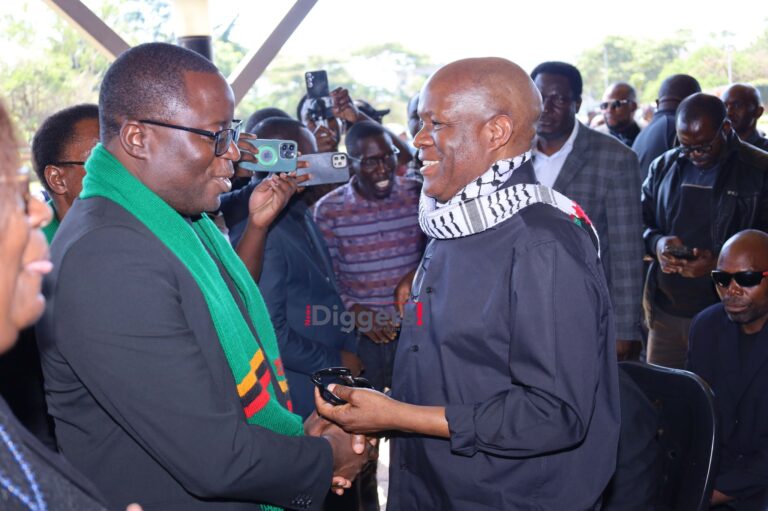
Makebi Zulu has indicated that his position aligns with that of Citizens First leader Harry Kalaba on the question of leadership, stating that the presidency should go to whoever secures the most support. He described ongoing engagements between the two sides as part of efforts to find common ground with Kalaba. This alignment is significant as it illustrates a potential shift in the dynamics of leadership selection, moving away from traditional power structures that have often hindered collaborative efforts in the past, especially with prominent figures like Kalaba involved.

At the same time, Citizens First vice president Kapesa Simbao has defended the integrity of alliance partners, emphasising that the group is built on trust and shared principles. His remarks come in response to criticism directed at the composition of emerging alliances. Simbao’s defense underscores a crucial aspect of political cooperation: the need for transparency and accountability among partners. Trust is not simply given; it must be cultivated through consistent actions and shared values over time.

Kalaba himself has signalled openness to working with other political players, stating that cooperation remains a priority. His position reflects a broader shift in which opposition figures are increasingly exploring collaboration as a strategy for strengthening their position ahead of the election. This shift highlights the increasing recognition among opposition leaders that unity may be the key to countering the advantages held by the ruling party, particularly in terms of resource allocation and voter outreach.

However, these developments are unfolding alongside visible internal tensions. Within the Patriotic Front, divisions linked to leadership disputes continue to influence how different factions approach alliance discussions. That dynamic complicates efforts to present a unified front. Addressing these tensions is vital for any coalition to succeed, as unresolved disputes can lead to fragmentation and weaken the overall effectiveness of opposition strategies.

Commentary in some quarters has gone further, arguing that the proliferation of alliances has introduced confusion rather than clarity. Critics point to the formation and reconfiguration of multiple groupings without clear structures, suggesting that this may weaken rather than strengthen opposition coordination. As political actors navigate these complexities, they must work diligently to create clear narratives and objectives that resonate with their constituents, ensuring that voters understand the purpose and benefits of these alliances.

The interaction between cooperation and competition remains central. While there is recognition of the need to consolidate support, individual actors and factions continue to navigate their own political interests. This duality can lead to both innovative strategies and potential conflicts, as stakeholders must balance collective goals with their aspirations. Effective communication and negotiation will be essential in ensuring that personal ambitions do not derail the broader objectives of the coalition.

Alliance politics often involves negotiation over leadership roles, candidate selection, and policy direction. These elements require agreement across different groups, each with its own priorities and constituencies. The process can be laborious and contentious, as parties must find a way to respect individual identities while also promoting a shared vision. The outcome of these negotiations will significantly impact the landscape of opposition politics as the election approaches.

The current phase reflects an early stage in that process. Statements signalling openness to cooperation are being made publicly, while underlying negotiations continue away from formal platforms. It is crucial for the leaders involved to maintain momentum in these discussions, as delays or indecision can result in lost opportunities for coalition building that could enhance their collective electoral prospects.

The approach to alliances will have a direct impact on how opposition parties position themselves in relation to the ruling party. A coordinated structure could enhance competitiveness, while fragmentation may dilute influence. If opposition groups can successfully present a unified message, they may be able to sway undecided voters who are seeking alternatives to the current administration.

Timing is also a factor. As the election approaches, pressure will increase to translate discussions into concrete arrangements. That may involve formal agreements, joint platforms, or coordinated campaign strategies. Each of these steps is critical, as they will determine the extent to which opposition parties can mobilize resources and support in the lead-up to the election.

For now, the landscape remains fluid. Multiple actors are engaged, positions are evolving, and the balance between unity and division continues to define the trajectory of opposition politics. As political actors work to solidify alliances, they must also remain adaptable to the shifting dynamics of the political environment, ensuring that they can respond effectively to emerging challenges and opportunities. Ultimately, the actions and decisions made by figures like Kalaba will play a pivotal role in shaping the future of opposition politics in Zambia.

Kamanga cautions against downplaying the looming war-linked oil risk

Energy expert Andrew Kamanga says Zambia needs to start employing emergency measures to mitigate the expected effect of the war-linked fuel supply risks rather than downplaying its impact on security of supply.

And Mr. Kamanga has warned if the fuel crisis starts manifesting, accusations that Oil Marketing Companies (OMCs) are hoarding fuel stocks will surface.

Although the government has assured of reliable fuel supply even as the war rages on in the Middle East, some parts of the country have started reporting sporadic shortages of diesel in some service stations.

In a conversation with Frank Mutubila on online BMTV Zambia, Mr. Kamanga said recent gains the country has scored such as stabilizing kwacha, decelerating inflation and reducing fuel prices are at risk of erosion due to the Iran-US war which has triggered a jump in global oil prices.

Mr. Kamanga said while increases in pump prices is almost inevitable, the greatest risk the country faces is possibility of not having fuel on the market as the war continues to rage on with no clear sight of conclusion.

“I listened to a number of statements from both ERB and Ministry of Energy and they have been talking about having enough fuel stocks but that may not be enough for the size of the economy we are running,” Mr. Kamanga said.

“The war definitely is going to be a big issue for us because Iran is the third largest producer of oil among OPEC countries… we should be calling for emergency measures; we should be thinking about… if this is going to last another two or three months or another year, how do we manage our situation as a country to ensure that we insulate ourselves from the effects of war. So, planning is key and I am sure the government must be taking care of those areas but as a people we also have a responsibility to ensure that we are prepared adequately because any distortion that will come out of any fuel pricing impact, it would destabilize the whole economy.”

The last year has seen fuel prices in the country reduce by close to 40 percent while prices of essential goods such as mealie meal has also started trending downwards.

Mr. Kamanga said Zambia remains among the most vulnerable countries as it does not have enough fuel storage capacity as OMCs are not mandated to own depots for storing physical stocks as part of the country’s strategic fuel reserves.

He said the law that allowed OMCs to have depots for longer term storage of fuel needs to be reinstated.

“We need to step in in ensuring that we have enough fuel physical reserves within country – that is a must. And for this war, the impact is yet to be felt here,” he said, adding that, “As a country that is landlocked, the economy has to continue functioning and this is where it becomes very important that we need to have physical strategic fuel reserves.”

According to Mr. Kamanga, if the fuel crisis was to be triggered, accusations that OMCs were hoarding fuel in anticipation of future higher price will start surfacing.

“Every OMCs that has stock, its better to get cash than the fuel – of course, one would argue and say ‘you can hoard and sell it at a higher price’ but I really doubt it one would be keeping fuel and not selling it.”

Hichilema in Mongu for Kuomboka ceremony

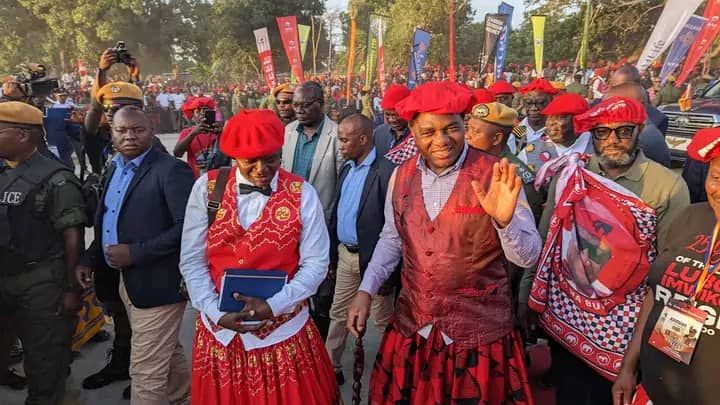
President Hakainde Hichilema is attending the Kuomboka ceremony in Mongu, joining traditional leaders and thousands of participants as the Litunga of the Lozi people begins the ceremonial relocation from Lealui to Limulunga. Hichilema’s presence underscores the importance of this cultural event.

The Head of State, Hakainde Hichilema, will arrive in Mongu in the morning and proceeded to the Lealui Royal Village, where the early stages of the ceremony were set in motion following the sounding of the Maoma drums. The drums signalled the start of the event and the readiness of the Litunga to depart the flood-prone plains.

From Lealui, attention has shifted to the Nalikwanda, the royal barge that carries the Litunga across the Zambezi. The vessel, paddled by a coordinated team of rowers, forms the centrepiece of the ceremony, with President Hakainde Hichilema and other dignitaries observing the procession as it unfolds.

The Kuomboka ceremony marks the Litunga’s annual movement from Lealui, which becomes inundated during the rainy season, to Limulunga on higher ground. The relocation is driven by rising water levels in the Zambezi floodplain, but it has developed into one of the country’s most recognised cultural events.

President Hichilema’s attendance places the national leadership at the centre of the ceremony, reflecting continued engagement between government and traditional authorities. His participation follows a pattern in which the Presidency takes part in key cultural gatherings across different regions.

Large crowds have gathered in Mongu to witness the event, with residents and visitors positioning themselves along the riverbanks and at key viewing points. The ceremony continues to draw attention beyond Western Province, attracting participants from across the country.

The presence of the President alongside traditional leadership underscores the role of Kuomboka as both a cultural and national event. While the ceremony remains rooted in Lozi tradition, it has grown into a gathering that carries broader national significance.

The sequence of activities is being carried out in line with established tradition. The sounding of the Maoma drums marked the beginning, followed by preparations for the Litunga’s departure and the organisation of the Nalikwanda procession.

As the procession moves forward, the focus remains on the Litunga’s journey across the Zambezi and the ceremonial elements that define the event. The structure of the ceremony reflects continuity, with each stage maintaining its place within a long-standing cultural framework.

Economic activity in Mongu has also increased around the ceremony, with accommodation facilities, transport services, and small businesses experiencing higher demand as people converge for the event.

The President’s attendance adds a layer of national visibility, bringing together state leadership and traditional authority in a setting defined by heritage and continuity. His presence has been noted among dignitaries observing the proceedings.

Court confirms Miles Sampa as PF president

The Lusaka High Court has confirmed Matero Member of Parliament Miles Sampa as the legitimate president of the Patriotic Front, dismissing a legal challenge that sought to overturn his election.

The ruling follows a petition filed by Brian Mundubile and seven others who argued that the extraordinary general conference held on October 24, 2023 was unlawful. The court found that the applicants failed to prove illegality in the process, effectively validating the conference outcome.

Judge Conceptor Chinyama held that Sampa was justified in convening the conference at a time when the party did not have a functioning central committee. The court further noted that the Patriotic Front had adopted a laissez-faire posture in its internal operations, creating the conditions that led to the disputed gathering.

The decision settles a prolonged internal contest that had split the former ruling party into competing factions, each claiming legitimacy. Sampa’s camp has consistently maintained that the conference followed party principles under the circumstances, while rival groups argued that the process violated internal procedures.

With the ruling, Sampa gains legal recognition as the party leader at a time when opposition formations are positioning themselves ahead of the August 2026 general election. The judgment removes one of the central legal uncertainties surrounding PF leadership, narrowing the grounds for further court-based challenges.

The dispute had centred on whether the absence of a central committee invalidated decisions taken at the conference. The court’s reasoning places weight on the operational reality within the party at the time, concluding that the lack of structured leadership justified the convening of the meeting.

The outcome also shifts the balance of power within PF, where competing figures had continued to mobilise support across regions despite the ongoing legal proceedings. While the ruling provides clarity on leadership, it does not immediately resolve political divisions within the party.

Attention is now expected to move from the courts to internal political processes, as factions reassess their positions in light of the judgment. The decision may influence alliance negotiations and opposition configurations as parties prepare for the electoral contest.

The court’s position reinforces the principle that internal party disputes can be settled through judicial interpretation when structures fail to provide resolution mechanisms. It also underscores the role of the judiciary in shaping political outcomes where organisational disputes escalate beyond party frameworks.

Editors Note: “The ruling places control of the Patriotic Front firmly under Miles Sampa, closing a legal chapter while leaving political consolidation as the next test.”

Tembo seeks out of court settlement in insulting language case

The Lusaka Magistrates Court has adjourned a matter in which opposition leader, Sean Tembo is facing two counts of using insulting language after the defence indicated intentions to pursue an alternative dispute resolution process.

The matter, originally before Chief Resident Magistrate Davies Chibwili, came up for mention and status update before Acting Chief Resident Magistrate, Ireen Wishimanga.

The accused who is Patriots for Economic Progress (PEP) President was not present in court but was represented by his lawyer.

The Court heard that the defence has formally written to the Director of Public Prosecutions (DPP) seeking a possible settlement through alternative dispute resolution.

Defence counsel further informed the court that a meeting with the National Prosecution Authority was scheduled for later today, after which a detailed report would be presented during the next court session.

Magistrate Wishimanga subsequently adjourned the matter to April 16, 2026 for a status report.

Particulars of the offence are that Tembo aged 46 years faces two counts of use of insulting language contrary to Section 179 of the Penal Code Chapter 87 of the Laws of Zambia.

In the first count, it is alleged that on August 27, 2023 in Lusaka, Tembo uttered remarks referring to President Hakainde Hichilema in a manner alleged to have been likely to provoke a breach of peace.

In the second count, it is alleged that on October 17, 2023, Tembo used insulting language directed at Abel Mashowo, words said to have been likely to provoke him to break the law or commit an offence.

The case is expected to return to court next month pending feedback on the proposed settlement discussions.