
Kapya Kaoma
The courtroom drama in Pretoria should unsettle President Hichilema. On the surface, the case concerns where former Zambian President Edgar Lungu should be buried. At its core, however, it raises questions of sovereignty, constitutional rights, and the limits of foreign state power.
From the outset, legal observers noted weaknesses in the South African ruling that briefly favored Hichilema’s administration. The judgment relied heavily on the Kaunda precedent without citing substantive South African law. In effect, Zambia asked a South African court to enforce an unwritten “Zambian law” on South African soil—a proposition most analysts consider legally untenable. The leaked Robert Chabinga audio may explain the ruling’s initial tilt, but its constitutional foundations remain shaky.
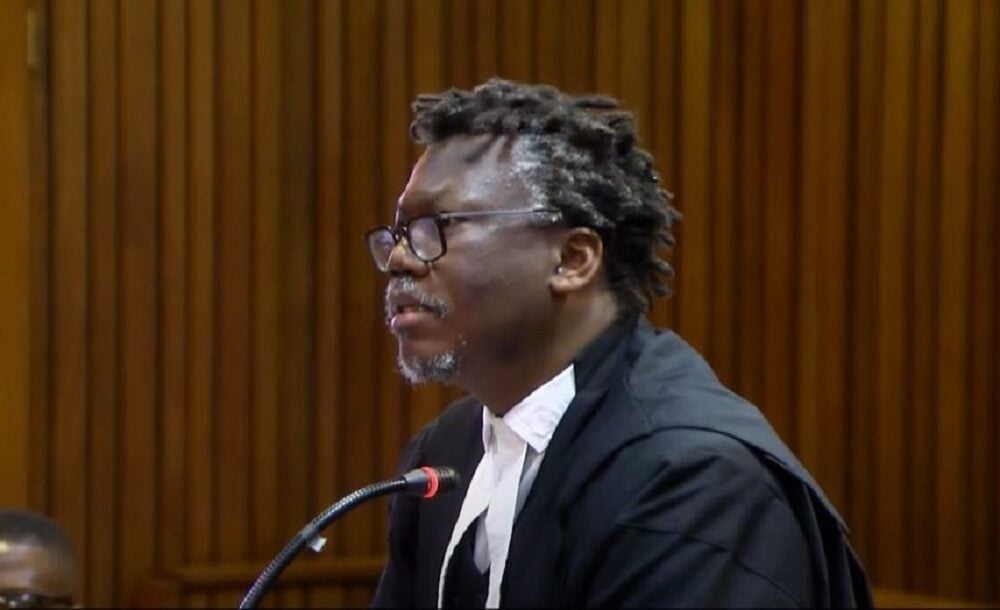
Sensing this fragility, Lungu’s legal team led by renowned Senior Counsel, Tembeka Ngcukaitobi, reframed the dispute. No longer Zambia versus the widow, the case became Zambia versus South Africa, transforming a burial conflict into a constitutional contest. The central question now was whether a foreign government could override South Africa’s domestic statutes on family rights and burial decisions.
This reframing is particularly damaging to Lusaka. South African law is explicit: the rights of the living outweigh the claims of the dead. Spouses and children—not states—determine the fate of a loved one’s remains. A corpse has no legal standing; it cannot inherit, contract, or accept benefits. Only the widow can. Zambia tacitly acknowledged this reality when it offered to restore Madam Lungu’s benefits—implicitly recognizing her legal primacy over the deceased. Yet still, Madam Lungu had to decide whether to accept them.
The implications are many. Accepting Zambia’s argument would undermine inheritance law and weaken family autonomy in South Africa. Unsurprisingly, local media have framed the dispute not as an internal Zambian quarrel but as a test of South African sovereignty. Public opinion, while not binding on the judiciary, has decisively sided with defending domestic law against foreign intrusion. With a respected advocate representing the widow, Pretoria’s legal community is closely watching. No wonder Kabesha is silent—things can go either way.
Even if the High Court ruling holds, the case will inevitably reach the Constitutional Court, where Zambia’s prospects appear bleak. It is improbable that South Africa’s highest justices would permit a foreign state to dictate burial practices or redefine family rights. Arguments that Madam Lungu’s foreign citizenship disqualifies her from South African inheritance protections collapse under scrutiny; such reasoning is akin to claiming foreign nationals cannot be prosecuted under South African criminal law. Lungu died in Lusaka, making South African burial laws applicable. Even if the Zambian government withdrew the case today, South Africans would likely want to ensure the ruling is set aside to safeguard their constitutional rights. Allowing it to remain on the books would undermine their family and inheritance laws.
For Lusaka, the optics are equally unflattering. A government fighting a widow over a corpse does not inspire—it appears petty and inhumane. Unlike in Zambia, where the executive often shapes judicial outcomes, Mrs. Lungu stands under the protection of a constitutionally independent court system. She answers not to political will but to constitutional principle.
Why, then, is the Hichilema administration expending diplomatic and legal capital on a case it is unlikely to win? The answer lies less in jurisprudence than in politics. Control over Edgar Lungu’s legacy carries symbolic significance in Zambia, where the former president retains loyal constituencies. Yet symbolism is not law, and Pretoria is not Lusaka. Hichilema’s persistence diminishes his statesmanship and casts him as insensitive to human grief. No wonder many Zambians have concluded that spiritual rather than political motives drive his insistence—why not give it up? Why, Mr. President?
As legal logic strongly suggests, if Madam Lungu prevails, the Zambian government will confront one uncomfortable truth: it chose to expend political credibility and risk diplomatic embarrassment to fight a widow in a foreign court over the body of a man who can no longer speak for himself. As the Bemba say, umwaiche, akalisha ilyo anya!





As the soul of ECL looks down it must be sad, restless and wondering why its body cannot be interred. I wonder what questions are running through its mind, true in the ‘last days’ ECL recognised he had betrayed the trust of the nation and that his party failed the litmus test. Indeed he wished to make right albeit too late…but please I pray the mediation talks bear fruit it is not right for a body to become a bickering chip…please let sanity descend. Mr. President be the bigger person because you are still living grant the family their wish and lets stop politics let your brother rest do not close the door which he cannot enter provided his body is above surface…seek yea first the kingdom of God and .. the things of the World will grow strangely dim…in His light. Hear my cry!
where are such brilliant minds as Kapya Kaoma when we are buried by flimsical pretenders arguing nonsensically on partisan lines? LT Please introduce a separate column for the likes of Kapya Sishure Ruwe and leave the likes of Bill Kapinga and his followers such as Spaka in the sahara desert of rationale land
Kapya Kaoma a brilliant mind!!? You are probably having a laugh right! Read the article above and see if he has even made mention of the case the government lawyer referred to in RSA whose ruling was clearly aligning with the GRZ position. That may prove decisive. The analysis by the most brilliant Kaoma is sorely non comprehensive and not intended to analyse objectively but rather to disparage HH.
Ati he died in Lusaka? Writers should check back over what they have written at least once… Anyway that one pictured will soon be rich enough for a haircut
Editors, sub editors and proof readers yes. We no longer have them in the news production line. Journalism has been assassinated by Tik Tok. Twitter X or lets say internet media which sets the bar very low for publishing. In other words you can publish any rubbish now and it will be welcomed by both the audience and the publisher .
LOOK at that lawyer Why are South Africans prouder to be Africans than Zambians? Yet we were free from the colonial yoke earlier. our John Sangwas still don white wigs. Our speaker even attempted a skin change! Cant i see Sakwiba Sikota without that colonial tie and jacket? No! thats taboo. What if a muzungu is watching us? We will be embarrassed publicly. I should not bring in state house. Nooone lives there except the ghost of Roy Welensky