The Zambia National Public Health Institute (ZNPHI) has intensified surveillance measures to prevent Ebola from entering the country amid ongoing outbreaks in neighboring countries.
ZNPHI Director General Professor, Roma Chilengi, says the institution is fully aware of the heightened risk posed by Ebola outbreaks in the Democratic Republic of Congo (DRC) and Uganda, prompting enhanced preparedness measures and surveillance at border entry points.
Professor Chilengi said Zambia shares more than 2,000 kilometers of border with the Democratic Republic of Congo, making the country vulnerable to Ebola transmission due to the movement of people across its open and porous borders.
“We know that Zambia is at increased risk of Ebola because the disease has erupted in the Congo and in Uganda,” he said.
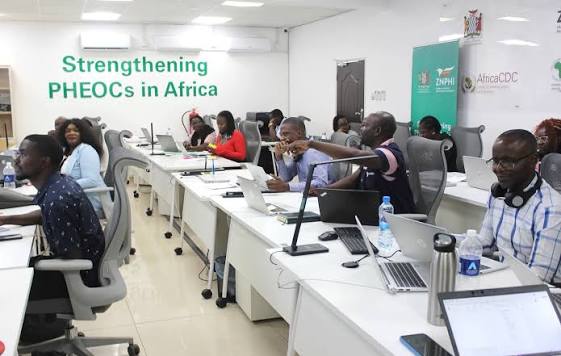
He explained that ZNPHI has activated its Incident Management System, intensified disease surveillance, trained frontline health workers and strengthened laboratory capacity to ensure early detection and response.
Professor Chilengi said that the institution is conducting simulation exercises at ports of entry to test its preparedness and ensure any suspected Ebola case is detected and isolated promptly.
“We are at high risk because we have active cases in our neighboring countries. We don’t want the public to be alarmed as we are doing our best to ensure that should a case occur, we detect it early and intervene quickly,” he said.
Professor Chilengi further called for increased investment in disease prevention through the One Health approach, saying outbreaks such as cholera cannot be eliminated through hospital-based interventions alone.
“The old thinking that health issues are only dealt with within the health sector is part of the problem that has contributed to the continued occurrence of disease outbreaks,” he said.
Professor Chilengi further said that professionals in engineering, housing, infrastructure, water supply and sanitation all have a critical role to play in preventing diseases such as cholera.
“If you have broken sewer systems, no matter how much medicine you have in health facilities, people will always be sick. We need to shift public health towards prevention, including vaccination and building systems that prevent people from becoming sick,” he said.
He further noted that disease prevention has significant economic benefits.
“When people are sick, they cannot work or earn an income, and they are unable to participate fully in the economy so our role is to ensure that a healthy population is essential for growing markets, supporting businesses and promoting trade is clear,” he said.
Professor Chilengi said that Zambia remains on high alert for Ebola because of ongoing outbreaks in neighboring countries but assured the public that the country’s surveillance and response systems have been strengthened to minimise the risk of the disease spreading into Zambia.