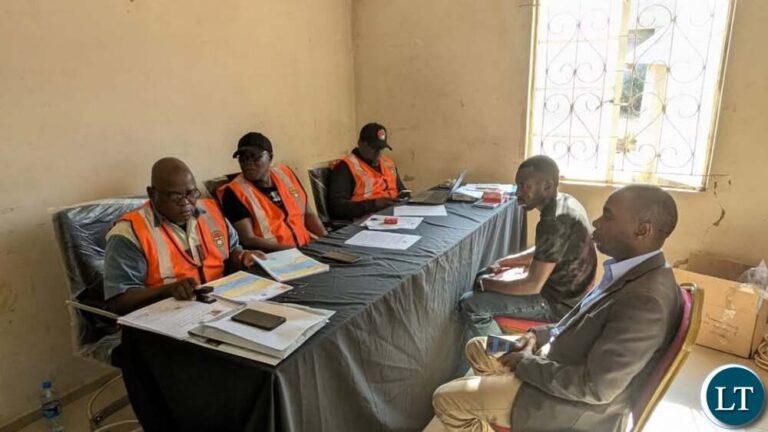
Secretary to the Cabinet, Patrick Kangwa, has announced that the country has projected a 4.9 million metric tonnes harvest of maize for the 2025/2026 farming season.
Mr Kangwa said the projection is an increase from last year’s production of 3.8 million metric tonnes of maize, indicating a 27.8 percent increment from last season.
He made the announcement today when he officiated at the dissemination of the 2025/2026 Crop Forecasting Survey results meeting, in Lusaka.
“I am happy to announce that for the 2025/2026 agriculture season, the Crop Forecasting Survey indicates a total national maize output of five million metric tonnes, from this projection, a total of 4.9 metric tonnes is an allocation of maize grain, while the remaining 182, 311 metric tonnes is an allocation for maize seed.
“This output presents a 29.3 percent increase in maize production compared to previous agriculture seasons. Specifically, maize grain increased by 27.8 percent, rising from 3.9 million metric tonnes in the 2024/2025 agriculture season to 4.9 million metric tonnes this farming season,” said Mr Kangwa.
The media that the Secretary to the Cabinet further explained that the Crop Forecast Survey (CFS) results indicate a positive trajectory, signaling another good season following the positive performance of the 2024/2025 agricultural season.
“I note with deep gratitude that the country has successfully secured two consecutive seasons of recovery and growth following the devastating climate induced drought we experienced during the 2023/2024 agricultural season,” he stated.
Mr Kangwa also shared that the total national maize supply is estimated at a secure level of 6.7 million metric tonnes which includes a substantial amount of carry over stock of 1. 8 million metric tonnes from previous harvests and the newly projected production.
“National maize grain requirements are accounted for at 4.2 million metric tonnes, leaving us with an estimated net surplus at a substantial margin of over two million metric tonnes. Government is fully committed to strengthening storage infrastructure and expanding market linkages which will benefit all players,” he added.
Mr Kangwa noted that the strong performance being experienced in the crop sector, is a positive response attributed to relatively favourable weather conditions coupled with targeted interventions by government and stakeholders.
He added that the performance is also anchored on progressive strategies framed under the Comprehensive Agriculture Transformation Support programme and the Eighth National Development Plan.
“Government continues to implement comprehensive support services and programmes such as financing, mechanisation, irrigation, extension services, commodity market support and climate oriented agriculture research development,” he added.
And, Mr Kangwa commended farmers for responding positively as demonstrated by the increase in land under cultivation and improved crop productivity.
“With these excellent results we are highly confident in successfully achieving our national targets of producing 10 million metric tonnes of maize, three million metric tonnes of soyabeans and one million metric tonnes of wheat annually by 2031,” he said.
He explained that these targets clearly demonstrate government’s commitment to transforming Zambia into a regional food basket and a major agriculture export hub.
Mr Kangwa has also directed the Ministry of Agriculture to prioritise the process of drafting regulations to operationalise the three pieces of legislation namely the Food Reserve Act of 2026, the Agricultural Credits and Warehouse Receipt Act of No. 7 of 2026 and the Agricultural Marketing Act No. 8 of 2026, all aimed at creating a policy environment that supports private sector investments.
And Permanent Secretary for Technical Services in the Ministry of Agriculture, John Mulongoti, explained that the Crop Focus Survey results represent the hard work, resilience and determination of farmers across the country, adding that farmers continue to contribute to national food security.
Mr Mulongoti also indicated that the results will also give the government an opportunity to assess progress made towards the set targets.
Speaking at the same event, Zambia Statistics Agency (ZamStats) Statistician General, Sheila Mudenda, said the results are critical for assessing national food availability, supporting food security interventions and strengthening estimates of agriculture’s contribution to the economy.
Ms Mudenda stated that ZamStats remains fully committed to its mandate of producing quality, timely and relevant official statistics as well as continuing modernising systems and improving data production.
Indaba Agricultural Policy Research Institute (IAPRI) Research Associate, Maimbo Hamboobe, pointed out that there is an expected increased supply in most countries in Southern Africa due to projected strong output and high carry over stock, with many countries expecting consecutive bumper harvests supported by favourable weather.
Ms Haboombe, however, observed that higher fuel costs remain an upside risk to food prices through rising transport and processing costs, adding that there is also a possibility of transitioning into an El Nino season with a 70 percent chance of it happening.
Meanwhile, Millers Association of Zambia (MAZ) President, Andrew Chintala, said with the expected bumper harvest announced today, he is eager to see the market beginning to react according to expectations of players in the food value chain.
Mr Chintala further stated that Zambia now stands a better chance to reposition itself in regional trade.