Thursday, June 18, 2026
18 C
Lusaka
Home Blog Page 103

Kamanga cautions against downplaying the looming war-linked oil risk

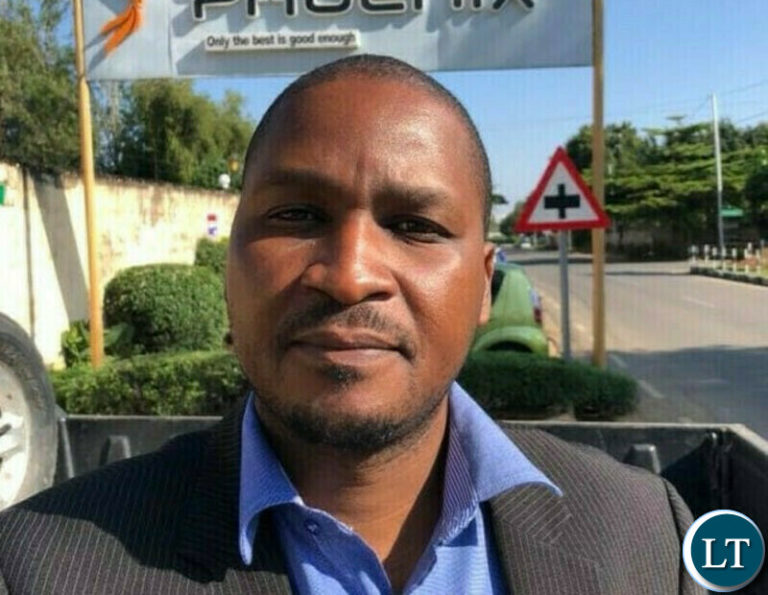
Energy expert Andrew Kamanga says Zambia needs to start employing emergency measures to mitigate the expected effect of the war-linked fuel supply risks rather than downplaying its impact on security of supply.

And Mr. Kamanga has warned if the fuel crisis starts manifesting, accusations that Oil Marketing Companies (OMCs) are hoarding fuel stocks will surface.

Although the government has assured of reliable fuel supply even as the war rages on in the Middle East, some parts of the country have started reporting sporadic shortages of diesel in some service stations.

In a conversation with Frank Mutubila on online BMTV Zambia, Mr. Kamanga said recent gains the country has scored such as stabilizing kwacha, decelerating inflation and reducing fuel prices are at risk of erosion due to the Iran-US war which has triggered a jump in global oil prices.

Mr. Kamanga said while increases in pump prices is almost inevitable, the greatest risk the country faces is possibility of not having fuel on the market as the war continues to rage on with no clear sight of conclusion.

“I listened to a number of statements from both ERB and Ministry of Energy and they have been talking about having enough fuel stocks but that may not be enough for the size of the economy we are running,” Mr. Kamanga said.

“The war definitely is going to be a big issue for us because Iran is the third largest producer of oil among OPEC countries… we should be calling for emergency measures; we should be thinking about… if this is going to last another two or three months or another year, how do we manage our situation as a country to ensure that we insulate ourselves from the effects of war. So, planning is key and I am sure the government must be taking care of those areas but as a people we also have a responsibility to ensure that we are prepared adequately because any distortion that will come out of any fuel pricing impact, it would destabilize the whole economy.”

The last year has seen fuel prices in the country reduce by close to 40 percent while prices of essential goods such as mealie meal has also started trending downwards.

Mr. Kamanga said Zambia remains among the most vulnerable countries as it does not have enough fuel storage capacity as OMCs are not mandated to own depots for storing physical stocks as part of the country’s strategic fuel reserves.

He said the law that allowed OMCs to have depots for longer term storage of fuel needs to be reinstated.

“We need to step in in ensuring that we have enough fuel physical reserves within country – that is a must. And for this war, the impact is yet to be felt here,” he said, adding that, “As a country that is landlocked, the economy has to continue functioning and this is where it becomes very important that we need to have physical strategic fuel reserves.”

According to Mr. Kamanga, if the fuel crisis was to be triggered, accusations that OMCs were hoarding fuel in anticipation of future higher price will start surfacing.

“Every OMCs that has stock, its better to get cash than the fuel – of course, one would argue and say ‘you can hoard and sell it at a higher price’ but I really doubt it one would be keeping fuel and not selling it.”
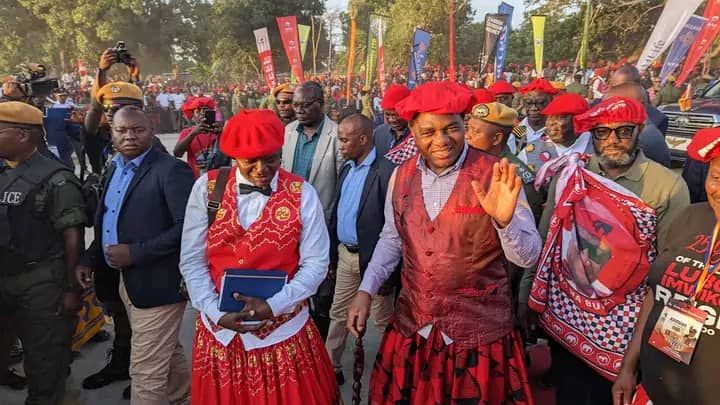
Hichilema in Mongu for Kuomboka ceremony

President Hakainde Hichilema is attending the Kuomboka ceremony in Mongu, joining traditional leaders and thousands of participants as the Litunga of the Lozi people begins the ceremonial relocation from Lealui to Limulunga. Hichilema’s presence underscores the importance of this cultural event.

The Head of State, Hakainde Hichilema, will arrive in Mongu in the morning and proceeded to the Lealui Royal Village, where the early stages of the ceremony were set in motion following the sounding of the Maoma drums. The drums signalled the start of the event and the readiness of the Litunga to depart the flood-prone plains.

From Lealui, attention has shifted to the Nalikwanda, the royal barge that carries the Litunga across the Zambezi. The vessel, paddled by a coordinated team of rowers, forms the centrepiece of the ceremony, with President Hakainde Hichilema and other dignitaries observing the procession as it unfolds.

The Kuomboka ceremony marks the Litunga’s annual movement from Lealui, which becomes inundated during the rainy season, to Limulunga on higher ground. The relocation is driven by rising water levels in the Zambezi floodplain, but it has developed into one of the country’s most recognised cultural events.

President Hichilema’s attendance places the national leadership at the centre of the ceremony, reflecting continued engagement between government and traditional authorities. His participation follows a pattern in which the Presidency takes part in key cultural gatherings across different regions.

Large crowds have gathered in Mongu to witness the event, with residents and visitors positioning themselves along the riverbanks and at key viewing points. The ceremony continues to draw attention beyond Western Province, attracting participants from across the country.

The presence of the President alongside traditional leadership underscores the role of Kuomboka as both a cultural and national event. While the ceremony remains rooted in Lozi tradition, it has grown into a gathering that carries broader national significance.

The sequence of activities is being carried out in line with established tradition. The sounding of the Maoma drums marked the beginning, followed by preparations for the Litunga’s departure and the organisation of the Nalikwanda procession.

As the procession moves forward, the focus remains on the Litunga’s journey across the Zambezi and the ceremonial elements that define the event. The structure of the ceremony reflects continuity, with each stage maintaining its place within a long-standing cultural framework.

Economic activity in Mongu has also increased around the ceremony, with accommodation facilities, transport services, and small businesses experiencing higher demand as people converge for the event.

The President’s attendance adds a layer of national visibility, bringing together state leadership and traditional authority in a setting defined by heritage and continuity. His presence has been noted among dignitaries observing the proceedings.

Court confirms Miles Sampa as PF president

The Lusaka High Court has confirmed Matero Member of Parliament Miles Sampa as the legitimate president of the Patriotic Front, dismissing a legal challenge that sought to overturn his election.

The ruling follows a petition filed by Brian Mundubile and seven others who argued that the extraordinary general conference held on October 24, 2023 was unlawful. The court found that the applicants failed to prove illegality in the process, effectively validating the conference outcome.

Judge Conceptor Chinyama held that Sampa was justified in convening the conference at a time when the party did not have a functioning central committee. The court further noted that the Patriotic Front had adopted a laissez-faire posture in its internal operations, creating the conditions that led to the disputed gathering.

The decision settles a prolonged internal contest that had split the former ruling party into competing factions, each claiming legitimacy. Sampa’s camp has consistently maintained that the conference followed party principles under the circumstances, while rival groups argued that the process violated internal procedures.

With the ruling, Sampa gains legal recognition as the party leader at a time when opposition formations are positioning themselves ahead of the August 2026 general election. The judgment removes one of the central legal uncertainties surrounding PF leadership, narrowing the grounds for further court-based challenges.

The dispute had centred on whether the absence of a central committee invalidated decisions taken at the conference. The court’s reasoning places weight on the operational reality within the party at the time, concluding that the lack of structured leadership justified the convening of the meeting.

The outcome also shifts the balance of power within PF, where competing figures had continued to mobilise support across regions despite the ongoing legal proceedings. While the ruling provides clarity on leadership, it does not immediately resolve political divisions within the party.

Attention is now expected to move from the courts to internal political processes, as factions reassess their positions in light of the judgment. The decision may influence alliance negotiations and opposition configurations as parties prepare for the electoral contest.

The court’s position reinforces the principle that internal party disputes can be settled through judicial interpretation when structures fail to provide resolution mechanisms. It also underscores the role of the judiciary in shaping political outcomes where organisational disputes escalate beyond party frameworks.

Editors Note: “The ruling places control of the Patriotic Front firmly under Miles Sampa, closing a legal chapter while leaving political consolidation as the next test.”

Tembo seeks out of court settlement in insulting language case

The Lusaka Magistrates Court has adjourned a matter in which opposition leader, Sean Tembo is facing two counts of using insulting language after the defence indicated intentions to pursue an alternative dispute resolution process.

The matter, originally before Chief Resident Magistrate Davies Chibwili, came up for mention and status update before Acting Chief Resident Magistrate, Ireen Wishimanga.

The accused who is Patriots for Economic Progress (PEP) President was not present in court but was represented by his lawyer.

The Court heard that the defence has formally written to the Director of Public Prosecutions (DPP) seeking a possible settlement through alternative dispute resolution.

Defence counsel further informed the court that a meeting with the National Prosecution Authority was scheduled for later today, after which a detailed report would be presented during the next court session.

Magistrate Wishimanga subsequently adjourned the matter to April 16, 2026 for a status report.

Particulars of the offence are that Tembo aged 46 years faces two counts of use of insulting language contrary to Section 179 of the Penal Code Chapter 87 of the Laws of Zambia.

In the first count, it is alleged that on August 27, 2023 in Lusaka, Tembo uttered remarks referring to President Hakainde Hichilema in a manner alleged to have been likely to provoke a breach of peace.

In the second count, it is alleged that on October 17, 2023, Tembo used insulting language directed at Abel Mashowo, words said to have been likely to provoke him to break the law or commit an offence.

The case is expected to return to court next month pending feedback on the proposed settlement discussions.

Heavy rains leave Kaputa families homeless

0

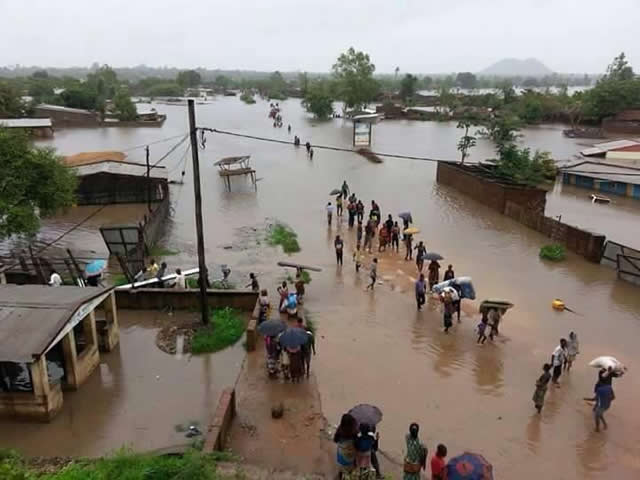
Several families in Chintateba area of Kaputa district have been left homeless after their houses collapsed following heavy rains.

One of the affected residents, Jeff Kalumba, said the situation has left people vulnerable, with many forced to seek shelter at Kapisha Primary School, as well as a local Church.

“We lost everything when the house collapsed; we are taking shelter at the Kapisha Primary School, and water is a huge challenge,” said Mr Kalumba.

Mr Kalumba attributed the damage to building of houses using mud.

He said the continued downpour in the area has weakened the mud structures, adding that the disaster has disrupted livelihoods, with families losing household goods, foodstuff and personal belongings.

Mr Kalumba said this when a combined team of District Disaster Management Committee members visited the affected area.

Maggie Chansa, another resident, who is taking shelter at Kapisha Primary School, said as the rainy season persists, the affected families will remain in distress.

She called on the government to help address the challenges and restore the living conditions.

Ms Chansa said finding clean water is a constant challenge being faced, revealing that the families are currently depending on shallow wells, which she said was posing a health risk to their lives.

“Our toilets have collapsed, and water from the toilets is spilling over into our shallow sources,” said Ms Chansa.

She has further appealed to the Disaster Management and Mitigation Unit (DMMU) to come to their aid and provide emergency shelter and food supplies.

EU Commits to Supporting Zambia’s Energy Sector, Invests 350 million Euros

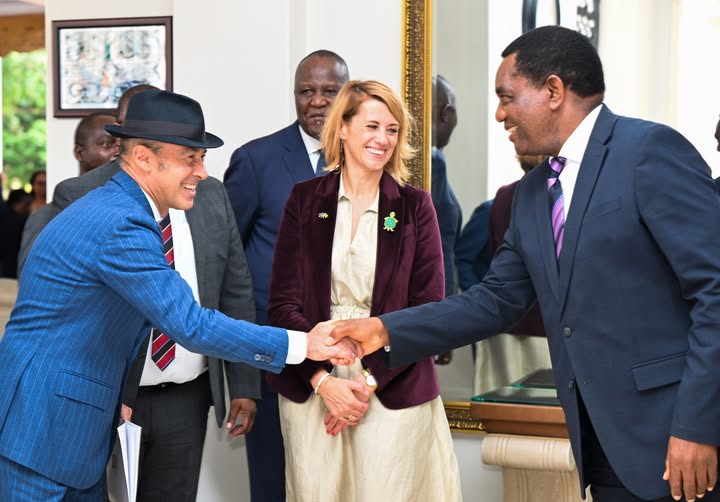
The European Union (EU) has invested 350 million Euros towards boosting the energy sector in Zambia.

EU Ambassador to Zambia and COMESA, Karolina Stasiak says this investment is key to the promotion of human dignity among citizens.

She was speaking when she toured Chipata Central hospital in Eastern Province.

“Over the last 10 years, we have invested around 350 million Euros in the energy sector starting from supporting energy generation and distribution among other interventions,” she said.

Ambassador Stasiak further cited the Zambia Energy Efficiency and Sustainable Transformation (ZEEST) Programme through Zesco Limited as one of the initiatives being supported to promote power efficiency.

Meanwhile, Energy Minister Makozo Chikote who was represented by Director under Energy, Mafayo Ziba called on facilities that have benefited from the ZEEST programme to ensure sustainability.

“I feel sustainability of the intervention that has taken place is a very key component, otherwise we lose value of the gains we have made so far,” he noted.

And Chipata Central Hospital Medical Superintendent, Mbinga Mbinga expressed gratitude that the hospital was one of the facilities that benefited from the initiative.

Dr Mbinga revealed that power availability in health institutions is very critical, and that most of the operations such as X-ray services among others, require daily use of electricity.

“Everything about our work, from x-ray services to laundry, and cooking for patients require electricity, so we are very pleased to be beneficiaries of the project”, he said.

Zesco limited, with support from EU connected LED lights at Chipata Central hospital and Kasenengwa Boarding Secondary School to promote power efficiency.

ERB assures stable fuel supply

2

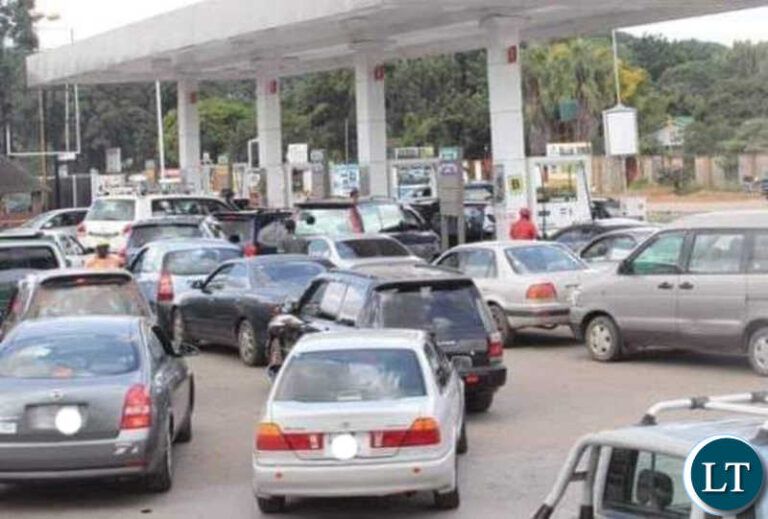
The Energy Regulation Board (ERB) has conducted random inspections of selected fuel filling stations in Lusaka and has assured stability of fuel supply.

The inspections are part of ongoing efforts to monitor compliance levels among fuel service providers and protect consumers from unfair trading practices.

Speaking during the random inspections, ERB Acting Director Petroleum and Gas Chasuzga Mtawale, has assured that five million litres of diesel has been uplifted from Ndola fuel terminals and is in-transit to different destinations across the country.

Mr Mtawale stated that filling stations are now receiving diesel stocks.

He said ERB will monitor and is ready to receive information from the public with regards to hoarding of fuel in anticipation of price increase.

“In case we verify that there is such a situation, necessary action will be taken through the enforcement process that is contained in our procedures against the licence conditions,” he said.

Meanwhile, ERB Public Relations Manager, Namukolo Kasumpa, advised the public against panic buying of fuel as this creates artificial shortages.

Ms Kasumpa said ERB will work with supply chain stakeholders to ensure that the supply remains stable in the country.

She added that ERB will continue to monitor and update the public on the fuel situation in the country.

Hichilema Relieves Nkombo of UPND Elections Chair Role

President Hakainde Hichilema has removed Gary Nkombo from his position as chairperson for elections in the United Party for National Development (UPND).

Mr Nkombo, who had been serving as Minister of Local Government and Rural Development, was also recently relieved of his ministerial duties in a Cabinet reshuffle, marking a significant shift in both government and party leadership structures.

While reasons for his removal from both positions have not been officially detailed, the development comes at a critical time as the ruling party prepares for the forthcoming general elections.

In the wake of his removal, Mr Nkombo took to his Facebook page where he shared a letter addressed to President Hichilema, expressing gratitude for the opportunity to serve in government and within the party.

In the letter, he thanked the President for the trust and confidence placed in him during his tenure, stating that it had been an honour to serve the nation in various capacities. He further pledged his continued loyalty and support to the President and the UPND.

Mr Nkombo remains one of the party’s long-serving members and has played a notable role in its political activities over the years.

Mundubile Supporters Apprehended Outside ACC Offices

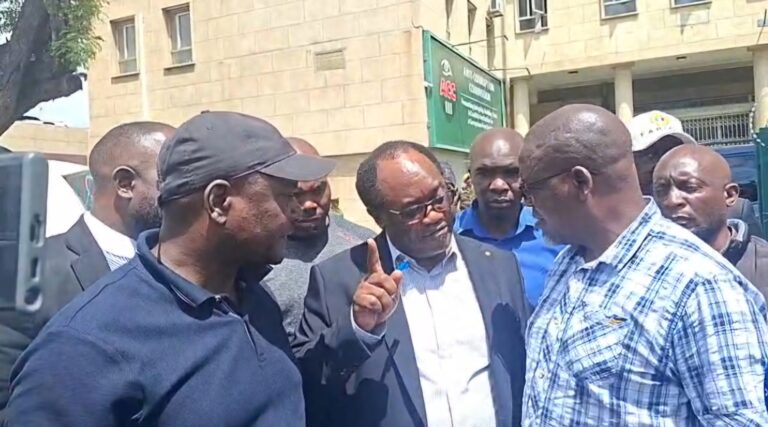
Two sympathisers of Brian Mundubile, president of the Tonse Alliance, have been apprehended by police outside the Anti-Corruption Commission (ACC) headquarters where the lawmaker appeared for questioning.

Among those picked up is former Zambia Medicines and Medical Supplies Agency director general Victor Nyasulu. Mr Nyasulu was seen in a video circulating online being lifted by several police officers and placed into an open police vehicle.

Police also detained another man earlier for alleged misconduct following a brief altercation with officers as Mr Mundubile was arriving at the ACC offices.

Mr Mundubile, who is Patriotic Front member of Parliament for Mporokoso, was subsequently questioned by ACC officers. In a statement issued after the interrogation, the commission said the politician had been warned and cautioned over alleged irregularities in road contracts valued at K1.5 billion.

The development comes a week after Mr Mundubile was arrested and charged with a cyber-related offence.

ACC charges Mundubile in K1.5 billion road contract case

Brian Mundubile has been formally charged with corrupt acquisition of public property in a case tied to road construction contracts linked to companies associated with him in Zambia, placing the Tonse Alliance leader under fresh legal scrutiny ahead of the August elections.

The Anti-Corruption Commission action centres on contracts valued at about K1.5 billion, with investigators alleging that works financed through prepayment were not completed in Zambia. The case introduces a direct conflict between state investigators and claims from Mundubile’s legal team that the projects were inspected and accepted.

State Counsel George Chisanga said the charge stems from allegations that two companies linked to Mundubile, Build Trust and Omni, received payment for road works that were not delivered in Zambia. He said the ACC position contradicts earlier government verification which confirmed that the projects had been completed to satisfaction.

Chisanga described the prosecution as unclear and questioned its basis, arguing that official inspection processes had already validated the works. He pointed to government involvement in certifying infrastructure projects and said the matter would be tested in court through documentary records and prior approvals.

He also referenced remarks made by Minister of Local Government Gary Nkombo during a public event in Mongu on 17 January 2025, where the minister acknowledged the contribution of the same contractors to infrastructure works in Itezhi-Tezhi. The speech formed part of the launch of Integrated Development Plans covering Western and Southern Provinces.

At that event, Build Trust and Omni were cited among contractors contributing to road development, with the projects linked to broader plans to improve connectivity and support economic activity in rural districts. The roads were presented as key to unlocking access to energy infrastructure and tourism areas.

Chisanga said the position taken by investigators raises a contradiction, as the same works cited in the charge had previously received official recognition. He added that the government still owes money to the companies involved, arguing that the financial relationship does not support allegations of unlawful gain.

The charge comes days after Mundubile was detained on 19 March in a separate matter involving cyber-related offences. He spent a night in custody before being released, marking a second legal case within a short period as political activity intensifies ahead of the general election.

Outside the Anti-Corruption Commission offices, two individuals identified as sympathisers of Mundubile were apprehended during his appearance for questioning. One of those detained was former Zambia Medicines and Medical Supplies Agency director general Victor Nyasulu, who was taken into a police vehicle during the incident captured on video.

Police also picked up another individual following an altercation as Mundubile arrived for questioning. The events unfolded as security officers managed crowds gathered around the premises during the investigation process.

The Drug Enforcement Commission later confirmed that Mundubile had been warned and cautioned in connection with road contracts forming part of the inquiry. The statement linked the investigation to contracts valued at approximately K1.5 billion, reinforcing the scale of the case.

Separate claims circulating in the public domain, attributed to Dr. Chishimba Kambwili, allege that large sums were paid for road construction across multiple provinces without corresponding delivery of works. These claims form part of the broader narrative surrounding the investigation, though they remain subject to verification in court proceedings.

The legal developments unfold at a time when Mundubile is positioning himself as a presidential contender within the Tonse Alliance. His emergence as a candidate has drawn attention within opposition politics, with his campaign gaining visibility ahead of the August 13 vote.

International organisations, including the United Nations Human Rights system, Amnesty International, the United States State Department and the Law Association of Zambia, have recently raised concerns about governance conditions in the country. Their statements form part of a wider context in which legal actions involving political figures are being closely watched.

The case now shifts toward judicial determination, where questions over contract execution, payment flows and prior government approvals are expected to be examined through evidence and witness testimony.

Women footballers warned against same sex relationships

9

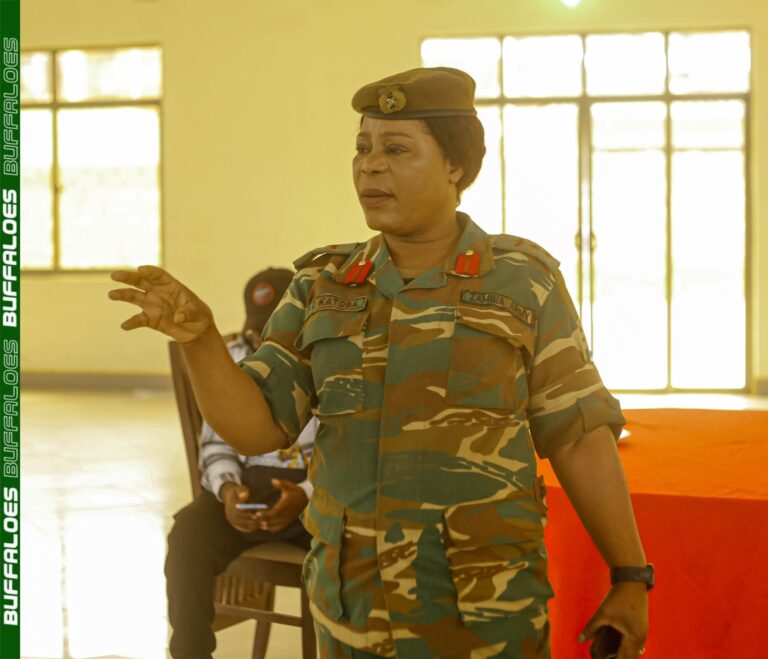
Football administrator Col. Priscilla Katoba has cautioned female footballers against same sex relationships.

Same sex relationships among women footballers in Zambia have become rife at club and national team levels.

People close to women footballers say same sex relationships are at times negatively affecting the performance of players, clubs and national teams.

There are some named senior women footballers accused of initiating youngsters into same sex relationships.

Addressing Green Buffaloes players and coaches in Lusaka, Col. Katoba, the FAZ Women’s Representative, said same sex relationships were illegal in Zambia.

“If you are found practicing same-sex relationships, you are gone. You will be jailed,” she said.

“There are consequences. Zambia, being a Christian Nation, such is not allowed in our Zambian laws, it is a warning that don’t find yourself in such. It is also a sin, even the Bible doesn’t allow such,” Col. Katoba said.

Besides same sex relationships, Col. Katoba engaged players on education, dress code, sexual harassment and discipline.

“There are those of you who could have left school at a particular level not completing the Form Five [grade 12], I have come today to encourage you to say if you are in this category, you have not completed your school, I would imagine that all of you can attain the level of Form Five. It will be good for you, your family, the club, FAZ and the country at large,” she said.

Col. Katoba continued: “I am going round speaking to everyone on dress code which hinges on discipline. Girls, if there are jean trousers, there are jean trousers for men and there are jean trousers for women, there are shorts for men and there are shorts for women. Haircuts, there haircuts we can say are specifically for men. Have decent haircuts which at least brings out your feminine appearance.”

According to Green Buffaloes Women’s Media Team, Col. Katoba concluded the meeting by encouraging the players to work extremely hard and remain disciplined on and off the pitch.

Government, opposition present conflicting economic views

Contrasting narratives over Zambia’s economic performance have sharpened ahead of the August 2026 general elections, with government and opposition figures presenting competing interpretations of current conditions and what they mean for households.

Opposition messaging has centred on the cost of living, with criticism focused on rising prices of essential goods and the pressure placed on consumers. National Democratic Congress president Saboi Imboela said the economic situation has worsened, arguing that the cost of basic commodities has increased beyond the reach of many households. She pointed to challenges in affordability, delayed economic relief, and persistent pressure on daily expenses.

The opposition perspective frames the economy through lived experience, focusing on how price changes are felt in households rather than how they are measured statistically. This approach places emphasis on everyday consumption, where food prices, transport costs, and essential goods remain central to financial pressure.

Government messaging, however, has focused on indicators showing stabilisation. Data released by the Zambia Statistics Agency shows inflation has slowed to 7.1 percent, down from 7.5 percent recorded in February. The figure remains within the six to eight percent target band, indicating that the pace at which prices are rising has moderated.

Food inflation has also eased to 7.8 percent from 8.2 percent, reflecting changes in the prices of staple commodities such as mealie meal, maize grain, rice, vegetables, and cooking oil. Non-food inflation declined to 5.9 percent from 6.5 percent, influenced by price movements in construction materials, fuel, and motor vehicles.

The government position emphasises that these indicators point to improving price stability. Slower inflation reduces the rate at which costs increase, providing a more predictable environment for households and businesses. It also supports economic planning and policy stability.

At the same time, growth figures present a more complex picture. Zambia’s economy grew by 1.6 percent in the fourth quarter of 2025, a sharp drop from 8.3 percent recorded in the same period in 2024. The decline of 6.7 percentage points reflects a slowdown in economic momentum, even as growth remains positive.

Annual GDP growth for 2025 stands at 3.8 percent, based on preliminary estimates. The figure reflects continued expansion across sectors including agriculture, construction, manufacturing, and transportation, which contributed to overall output during the year.

Trade performance has also shifted. Cumulative total trade declined by 5.6 percent, falling from K105.2 billion in February 2025 to K99.3 billion in February 2026. The reduction points to changes in both imports and exports, with implications for economic activity and external balance.

The contrast between slowing inflation and moderating growth highlights a key dynamic in the current economic environment. While price pressures are easing, the pace of expansion is not accelerating at the same rate. This creates a situation where stability in indicators does not immediately translate into relief for households.

Inflation, even when slowing, still represents rising prices. Goods and services continue to cost more than they did a year ago, even if the rate of increase has declined. This distinction remains central to how the economy is understood across different audiences.

The divergence in narratives reflects this difference. Government focuses on stabilisation and measurable indicators, while opposition voices emphasise lived experience and affordability challenges. Both perspectives draw from the same economic environment but highlight different aspects of it.

As the election approaches, economic performance is expected to remain a central issue in political engagement. Cost of living, price stability, and growth trends are likely to shape how voters assess current conditions and future direction.

The interaction between statistical data and public perception will continue to influence how the economy is framed. While indicators provide structured measurement, the interpretation of those indicators varies depending on context and perspective.

ACC summons Mundubile

The Anti-Corruption Commission (ACC) has summoned Brian Mundubile as part of an ongoing inquiry, placing the political figure within the scope of current enforcement activity examining issues of compliance and accountability.

The summons represents a procedural step used by the ACC to obtain information, seek clarification, and assess matters under review. At this stage, no specific details of the inquiry have been outlined, and no charges have been indicated. The process remains at a fact-finding level, where authorities gather information before determining whether further action is necessary.

A summons in this context does not imply wrongdoing. It forms part of standard investigative procedures by the ACC, allowing individuals to respond to questions, provide documentation, and clarify issues that may arise during an inquiry. The distinction between investigation and conclusion remains central, with outcomes dependent on verified findings rather than initial actions.

The Anti-Corruption Commission operates within a mandate that includes investigating suspected cases of corruption, promoting integrity within public institutions, and ensuring adherence to legal frameworks governing conduct. Summons issued by the Commission enable investigators to build a factual basis for any decisions that may follow.

The inclusion of a political figure in such processes highlights the reach of accountability mechanisms across different areas of governance. Investigations can extend beyond administrative structures to include individuals where questions arise, reflecting the role of oversight institutions in maintaining standards across public life.

The current development comes within a broader environment where enforcement agencies have intensified scrutiny on financial transactions and institutional processes. Separate investigations have examined public fund management, including transactions involving significant financial amounts and questions around procedural compliance.

These parallel developments point to a pattern of oversight that spans both institutional systems and individual conduct. While each case is assessed independently, the broader framework reflects a continued focus on ensuring that established procedures are followed.

In the absence of detailed information regarding the specific matter under review, the current stage of the process remains limited to the confirmed action of a summons. Further steps, if any, will depend on the outcome of the inquiry and the findings derived from the information gathered.

The process also underscores the importance of procedural safeguards. Investigations are structured to ensure that conclusions are based on evidence, with mechanisms in place to protect the integrity of the process and the rights of individuals involved. This includes adherence to legal standards governing investigations and the handling of information.

Public communication around such developments typically focuses on confirmed actions rather than speculative conclusions. Reporting at this stage is limited to the existence of the inquiry and the procedural steps taken, without extending to assumptions about outcomes.

The summons therefore marks the beginning or continuation of an investigative pathway, rather than its conclusion. The focus remains on establishing facts, assessing compliance, and determining whether any further action is warranted under the law.

As the inquiry proceeds, attention will remain on official updates and confirmed developments. Any subsequent action will be guided by the findings of the investigative process and the legal provisions governing the Commission’s mandate.


Government clarifies Bill 7 comments amid political claims

Government and political actors have presented sharply contrasting positions over Constitutional Amendment Bill Number 7, placing the issue at the centre of political messaging ahead of Zambia’s August 2026 general elections.

Chief Government Spokesperson Cornelius Mweetwa said interpretations of President Hakainde Hichilema’s remarks on the Bill were inaccurate, explaining that the President was reflecting on past political experiences rather than predicting future election outcomes. He described the interpretation of the remarks as misleading and urged that public communication around constitutional matters remain grounded in factual context.

Mweetwa stated that the President’s reference to constitutional amendments was tied to historical patterns in which sitting governments had introduced legal changes and later lost elections. He said the remarks were not intended to suggest any predetermined outcome for the upcoming polls but were instead contextual observations based on previous political developments.

The clarification comes at a time when Bill 7 has become a central point of political engagement, with competing narratives shaping how the proposal is understood. The Bill, which relates to constitutional reforms, carries implications for governance structures, electoral processes, and representation, making it a focal issue in the broader political landscape.

Parallel commentary has raised questions about political strategy within party structures, including claims around alternative approaches to conventions and internal processes. These assertions have added another layer to the discussion, linking constitutional reform to broader political positioning ahead of elections.

The divergence in narratives reflects how legislative proposals can take on political dimensions, particularly in an election period. While government communication has focused on clarifying intent and reinforcing the procedural basis of the Bill, responses from other actors show that interpretation remains contested.

Statements and counter-statements have shaped the public conversation, with each side framing the issue within its own perspective. This dynamic highlights the role of communication in influencing how policy proposals are perceived, especially when they intersect with electoral timelines.

Bill 7’s prominence in the current environment is tied to its position within the constitutional framework. Amendments to foundational laws often attract heightened attention, as they directly affect how governance systems operate. The timing of such proposals, particularly ahead of elections, adds to their political significance.

The situation underscores the need for clarity in public messaging. In politically sensitive contexts, statements can be interpreted in multiple ways, making precise communication critical in ensuring that the substance of policy proposals is accurately conveyed.

At the same time, the reactions surrounding Bill 7 demonstrate how constitutional issues can become part of broader political narratives. The overlap between legal reform and political positioning is evident in how the issue is being discussed across different platforms.

As the election period approaches, Bill 7 is expected to remain a central reference point in political engagement. The way it is communicated, interpreted, and debated will continue to influence public understanding and shape the wider political environment.

Mayors, councillors switch sides as elections approach

A wave of political defections involving mayors and councillors has shifted local government dynamics ahead of Zambia’s August 2026 general elections, with multiple leaders moving to the United Party for National Development.

Five mayors and about 20 councillors have crossed over to the ruling party, reflecting a widening realignment within local structures as the electoral cycle approaches. Among those who defected are Kitwe Mayor Mpasa Mwaya and Chipata Mayor George Mwanza, alongside councillors from Milenge, Chembe, Lundazi and other districts.

The movement of local government leaders into the ruling party marks a significant development in the political landscape, where influence at council level often shapes grassroots mobilisation and voter engagement. Councillors and mayors serve as key connectors between national policy and local communities, making their alignment politically consequential in the run-up to elections.

President Hakainde Hichilema, addressing the development, directed existing party members to welcome the new entrants, stating that unity within the party remains essential as the country prepares for the polls. He described the party as a platform for inclusive governance and development, emphasising the need for cohesion in strengthening its national presence.

The defections come at a time when political positioning is intensifying across parties, with alliances, endorsements, and internal structures increasingly shaping campaign strategies. Movement of elected officials, particularly at local authority level, often signals shifting confidence and strategic recalibration among political actors.

In parallel reporting, similar developments have been observed involving additional political figures, including a Member of Parliament and mayors from key urban centres. These movements collectively point to an ongoing reconfiguration of political alignments, extending beyond isolated cases to a broader pattern of transition.

The implications extend beyond party membership numbers. Control and influence within local authorities can affect campaign logistics, messaging reach, and the visibility of political programmes at community level. Councils play a central role in implementing development initiatives, including projects funded under the Constituency Development Fund, placing local leaders at the forefront of service delivery narratives.

The consolidation of support within the ruling party also intersects with electoral strategy. By absorbing leaders from different regions, the party strengthens its presence in constituencies where local structures influence voter turnout and mobilisation efforts.

At the same time, defections introduce questions around party stability and internal cohesion within opposition structures. Movement of elected officials may reflect strategic repositioning or dissatisfaction within existing party frameworks, though individual motivations often vary.

Political realignments of this nature are not uncommon in the period leading to elections, where shifting alliances reflect both strategic calculations and evolving political dynamics. The scale and distribution of the current defections, however, indicate a more pronounced restructuring at local government level.

The developments also highlight the central role of local leadership in shaping electoral outcomes. While national campaigns often dominate public attention, councillors and mayors remain key actors in influencing voter perceptions through direct engagement with communities.

As the election date approaches, further shifts cannot be ruled out, with political actors continuing to assess positioning, alliances, and strategic advantage. The current wave of defections provides an early signal of how political ground may be shifting ahead of the polls.