Monday, June 8, 2026
16.8 C
Lusaka
Home Blog Page 173

MZ’s Journey to the East Overshadowed by Undue Police Interference

0

MZ’s Journey to the East Overshadowed by Undue Police Interference

By Brian Matambo | 21 January 2026

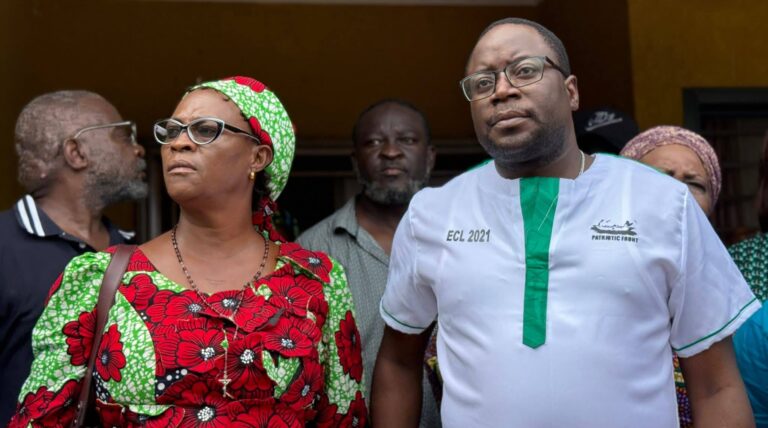
Presidential candidate Makebi Zulu returned to Eastern Province this week for the first time since surviving a serious road traffic accident in December and following his return from South Africa, where he had been mourning his mentor, the late former president Edgar Chagwa Lungu, who died on 5 June 2025.

The visit, intended as a homecoming marked by traditional courtesies and party mobilisation, unfolded under heavy police scrutiny that has since stirred national debate.

On Tuesday, 20 January, Makebi Zulu paid a courtesy call on Chief Mpamba of the Tumbuka people in Lundazi. As the meeting proceeded, police officers and ruling UPND cadres were seen surrounding the palace, a development that drew immediate attention from residents in the area.

The same day, Patriotic Front officials from Lundazi, Chasefu, and Lumezi publicly endorsed Makebi Zulu’s presidential bid. These endorsements followed earlier engagements in Chipata, where he met party officials from Chipata, Chipangali, Kasenengwa, and Vubwi districts. In a message shared after the meetings, Makebi Zulu said discussions focused on mobilisation ahead of the 2026 general elections, describing the engagements as part of a broader effort to prepare the party for a national contest.

Tensions escalated on Wednesday morning, 21 January, when police blocked the Makebi Zulu delegation from proceeding to Ependukeni Palace to pay a courtesy call on Paramount Chief Mpezeni, the senior traditional leader of the Ngoni people. According to eyewitnesses, police officers stopped the convoy and informed the delegation that the chief was not expecting them and was unavailable.

Makebi Zulu confirmed that police officers, led by a deputy commissioner, had positioned themselves at the palace gates to prevent the visit. He described the situation as deeply troubling, arguing that respect for tradition, dialogue, and democratic freedoms was being replaced by intimidation. He said his decision to pursue national leadership was driven by a commitment to safeguard the country and its people, adding that he would not be intimidated.

An unidentified female police officer told members of the convoy that police had received information about the intended visit and had intervened on that basis. The action halted the delegation’s movement and quickly attracted public attention, with questions raised about the legal and customary basis for police involvement in a traditional courtesy call. By media time, Roberson Mweemba, the Eastern Province Commissioner of Police, had not issued a public comment.

Social media reaction was swift and sharply divided. Some commentators said the visible police presence only amplified Makebi Zulu’s profile, portraying him as a serious political force. Others questioned how a presidential aspirant could be blocked from visiting traditional leaders in his home province, warning that such actions signalled a narrowing civic space. Videos circulating online appeared to show cadres in ruling party regalia moving alongside police as access to the palace was restricted, further fuelling controversy.

Makebi Zulu’s Eastern Province tour was meant to be a moment of recovery and reconnection, a symbolic return home after personal loss and physical trauma. Instead, it has become a flashpoint in Zambia’s pre-election climate, raising fresh concerns about the intersection of politics, policing, and traditional authority as the country edges toward the 2026 polls.

Makebi Zulu is widely admired for his loyalty to former president Edgar Lungu, who also hailed from Eastern Province. His firm positions on constitutional matters and national asset protection have drawn attention from Zambians across social, political, and generational lines. Backed strongly by mothers within the Patriotic Front, Makebi Zulu is increasingly viewed as a symbol of the party’s rebranding, representing fresh ideas, youthful leadership, and support that cuts across gender, age, tribe, and religion.

Political Opportunism – Amb. Emmanuel Mwamba

3
POLITICAL OPPORTUNISM

By Amb. Emmanuel Mwamba

I wrote a piece: “How Treachery and Betrayal Ruin Promising Careers” I found it suitable to use the life of a promising career of Pastor Neves Mumba as an example.

In my view, he was a perfect example of how great political opportunity, political fortune and immense public goodwill can be squandered because young people choose shortcuts, engage in betrayal, treachery and display naked ambitions and thereby lose what appeared to be have been automatic rise in career.


NEVERS MUMBA IS A CRIMINAL CONVICT

Pastor Nevers Mumba was convicted of the crime of Abuse of Authority of Office.

On September 11, 2018, Mumba was convicted on two counts of abuse of authority of office related to his tenure as Zambia’s High Commissioner to Canada.

He was found guilty of failing to follow procedures in awarding contracts for carpeting and electrical works at the Zambian residence in Canada.

He was also convicted for irregular disbursement of $500,000 donated by the mining giant, Barrick Gold, to the Zambian High Commission in Canada, meant for a cultural exchange program.

I chose not to bring these matters up. I think I believe in building people than to tear them down.

Therefore my article was about how young politicians miss great opportunities and squander political fortunes because of their naked ambitions, political opportunism, impatience, and poor judgment.

I merely used the test case of Nevers Mumba as a perfect example.


I HAVE A DISTINGUISHED RECORD

In my write-up, I chose to ignore the dirt around Pastor Nevers Mumba, including his criminal conviction by a competent court of law for theft and abuse of office.

In comparison, my tour of duty as a senior diplomat for eight years: as Zambia’s High Commissioner to South Africa, as Ambassador to Ethiopia, as Permanent Representative to the African Union (AU) and as Permanent Representativebto the United Nations Economic Commission for Africa (UNECA) remains distinguished with remarkable trail of success, admirable record and a good legacy.

However Pastor Mumba chose to respond by issuing defamatory remarks, dangerous allegations, and utter insults against me.

So, I reserve the right to seek proper redress for his defamatory statements. It’s a matter for another day.


POLITICAL OPPORTUNISM

But let me demonstrate and buttress my earlier point against political opportunism that ruin careers of young politicians and I will use one of my experiences with him.

Within a mere fourteen months after his contraversial appointment as Republican Vice President, President Levy Mwanawasa fired Mumba.

In October 2004 President Levy Mwanawasa fired Mumba for gross insubordination, specifically for refusing to retract public comments he made accusing the Democratic Republic of Congo (DRC) of harbouring individuals he allegedly were working against the Republic of Zambia.

Despite President Mwanawasa’s earlier apology to President Joseph Kabila, Mumba said he didnt regret his remarks and fefused to apologise.

President Mwanawasa stated that Mumba breached his oath of allegiance and showed a lack of remorse, and proceeded to revoke his appointment as Member of Parliament, and removed him from the position of Vice President with immediate effect.

In fact, in 2003, Mumba’s appointment was deemed unconstitutional as he was not eligible for the as he had contested the 2001 election.

The law forbid contestants that had lost elections from being nominated as MPs. I think the framers of the Constitution were clear, they did not desire that losers of an election should come through the back-door.

Mumba stood in the 2001 presidential elections under his earlier party, the National Citizen Coalition (NCC).

He obtained 38,000 votes of the 1.7million total votes, which was 2.1% of the votes.

The results were;

MWANAWASA Levy P. , MMD-506,695, (28.6%)
MAZOKA Anderson K. , UPND-472,697(26.9%)

TEMBO Christon S. (Lt.Gen.), FDD- 228, 861 (12.29%)
KAUNDA Tilyenji C. , UNIP-175,898 (9.93%)

MIYANDA Godfrey K. (Brig.Gen.), HP-140,688 (7.94%)
MWILA Benjamin Y. , ZRP-85,473 (4.83%)
SATA Michael C., PF 59,172 (3.34%)
MUMBA Nevers S. (Dr), NCC 38,860 (2.19%)
KONIE Gwendoline C. , SDP 10,253 (0.58%)
MBIKUSITA-LEWANIKA Inonge (Dr), AZ 9,882 (0.56%).
SHAMAPANDE Yobert K. (Dr),NLD 9,481 (0.54%)

Mwanawasa argued that the appointments was not unconstitutional as Mumba was appointed as Vice President and not as an MP.

But to be an MP, one needed to be a member of parliament… Anyway that’s a story for another day.


MUMBA IGNORES VALUABLE ADVICE

When he was fired as Vice President, Mumba called our office that he urgently wanted to meet President Frederick Chiluba.

I went to meet Mumba at his temporary or quickly rented home on Independence Avenue in Woodlands near Woodlands Zamtel Office.

“I thought you were an older man.” he said when he ushered me to a sit outside on a grass garden.

“Because the day you were fired, the matter was mentioned in Cabinet (Administrative Assitant at the Office of the Second President) and I wondered; Who this Emmanuel Mwamba? ‘naumbi umuntu wesu batamfya,’ he said refering to my dismissal from public service by Mwanawasa.

Mwanawasa had fired me (through Permanent Secretary at Cabinet Office, Oliver Kalabo).

The contention was that I could not speak as an official spokesperson for the Second President while I held the position of a civil servant.

Anyway, I contested my dismissal at the High Court.

I won!

My fight with Mwanawasa was personal to him. This was because I was a face of his nemesis and arch political rival, Frederick Chiluba who maintained his customary golden silence while I waged a fierce media war for him for all those years.

The Attorney General and Minister of Justice, George Kunda SC, was directed to immediately appeal my high court victory and contest it in the Supreme Court.

At the Supreme Court, I won!

The Supreme Court, like the High Court revoked the dismissal and reinstated me with immediate effect, and ordered that I be paid w full back pay and accumulated allowances.

The case had taken almost five years.


Back to the story.

At their subsequent meeting with the former President, Dr. Nevers Mumba sought help from Dr. Chiluba recognising his great influence in the MMD.

Mumba disclosed that he intended to challenge President Levy Mwanawasa at the forthcoming MMD Convention billed for 2005 and claimed he had wide support and a great chance to beat Mwanawasa.

President Chiluba’s advice was clear.

“Do not announce your intention now. You are no longer Vice President, so friend will become few. Stay low, this will prevent or avoid any disciplinary process or suspension or expulsion. A challenge to the President, not just a Party President, but a sitting Republican President, is a serious matter, and he will quickly expel you. Do not give him a chance to do so, do NOT announce your intention now. It will be extremely premature.”

Mumba thanked President Chiluba and informed him that he was going to meet his elder brother too (Zambia’s founding President Dr. Kenneth Kaunda).

Serval road in Kabulonga was literally a President’s lane. Dr. Kaunda, Michael Chilufya Sata, Hakainde Hichilema and Dr Chiluba all had houses or lived on the same stretch of road.

Suprisingly, a few days later, Mumba announced that he was going to challenge President Mwanawasa during the MMD Convention planned for 2005.

When we discussed the matter, President Chiluba was amused but not surprised.

“Ebwafya bwa mwaice wesu. He takes the advice of the last person he has consulted and not the quality of sound advice”.

“He will be expelled sooner than later and as I warned, he will not set foot at the MMD Convention.”

It didn’t long before a rushed disciplinary process was commenced against Pastor Mumba and the National Executive Committee expelled him.

At the MMD Convention held in Kabwe in July 2005, Dr. Katele Kalumba, who was facing corruption charges alongside Dr. Chiluba, shocked both President Mwanawasa and his new team when he announced at the premises of the Convention that he was standing for the second most powerful position of National Secrrtary, and proceeded to beat the incumbent, Mwanawasa’s strong candidate and key pillar, Vernon Johnson Mwaanga, to scoop the coveted position.

Maybe if Mumba had not rushed and taken the free but valuable advice from Dr. Chiluba, he would probably have stood a chance!


MORE POLITICAL OPPORTUNISM END IN FAILURE

Mumba proceeded to form yet another political party (Reform Party) in 2006, which was involved in similar debacles and his attempt to stand under a new political alliance or to stand as an MP in Chinsali under the PF all backfired.

Many will remember that like the proverbial hyena, seeking two paths, Mumba”s steps ended in failure.

The Reform Party joined hands with the National Democratic Front Alliance where he was thoroughly beaten by Benjamin Mwila.

After his expulsion in 2001 from the MMD Mwila had formed the Zambia Republican Party. In 2006 the Party entered into a political alliance with Mumba’s Rrform Party.

When Mumba was trounced at the Alliance election, Mumba, at the last minute, at the last minute attempted to stand as MP under the Patriotic Front. Mr Sata was gracious enough to give him an adoption certificste amd he travelled overnight to stand in Chinsali as an MP.

However, his own cousin, Christopher Mulenga, who had worked for the seat since 2002 refused to pave way and the Patriotic Front members chased Mumba!

Because of his political opportunism, he didnt stand as President or MP…

“Chimbwi afwile intangalilo” was what political pundits likened his embarrasing display of desperation in 2006.

But that’s a story for another day.

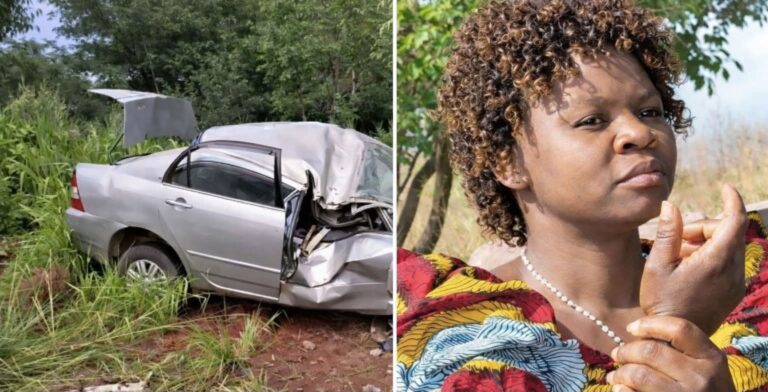
Wife to Paramount Chief Chitimukulu Dies in Road Traffic Accident

7

Government has confirmed the death of Abasano ba Mfumu, the wife to His Royal Highness Mwine Lubemba, Paramount Chief Chitimukulu of the Bemba people, who died in a road traffic accident.

The confirmation was made on Wednesday by Cornelius Mweetwa, Minister of Information and Media, who said Government had learnt with deep sorrow and grief of the untimely passing of the royal spouse.

In a statement, Mr Mweetwa said the loss had deeply affected not only the Royal Family and the Bemba people, but the nation as a whole. He described the death as a profound national loss, emphasising the important role played by spouses in supporting leadership, family structures, and social stability.

Mr Mweetwa stated that Hakainde Hichilema and the entire Government had joined the Royal Family and all Bemba people in mourning the death of Abasano ba Mfumu.

He said the President had extended condolences on behalf of the Government, noting that the passing of the Paramount Chief’s wife was felt beyond traditional leadership circles, as wives contribute meaningfully to national development through their roles in family and community life.

“The passing of Abasano ba Mfumu is a profound loss not only to the Paramount Chief and the Bemba people but also to the nation at large,” Mr Mweetwa said in the statement.

He said wives play an important role in national development by being partners in building strong families, contributing to the economy, and fostering social stability, which allows their husbands and the nation to thrive.

According to the statement, Government conveyed its heartfelt condolences to His Royal Highness Mwine Lubemba, Paramount Chief Chitimukulu, and the entire Royal Family during the period of mourning.

Mr Mweetwa said Government stood with the Royal Family in prayer, seeking God’s strength, comfort, and solace as they come to terms with the loss.

He added that the loss had touched many across the country, given the central role of the Bemba chieftaincy in Zambia’s traditional leadership structure and national heritage.

The Paramount Chief Chitimukulu holds one of the most influential traditional positions in Zambia, presiding over a large population in Northern, Muchinga, Luapula, and parts of the Copperbelt provinces. The role carries cultural, social, and historical significance that extends into national governance and unity.

While details surrounding the road traffic accident were not disclosed in the statement, the Government’s confirmation marked the beginning of a period of national mourning within traditional leadership circles and among the Bemba people.

Mr Mweetwa said Government remained committed to supporting the Royal Family during the mourning period and acknowledged the emotional weight of the loss.

Messages of condolence have continued to emerge from various sectors of society following the announcement, reflecting the respect accorded to the Paramount Chief and his family.

The death of Abasano ba Mfumu has cast a shadow over the Royal Establishment and the broader traditional leadership community, with prayers and messages of support being directed toward the Paramount Chief and his family as they navigate the period of grief.

Thabo Kawana Upstages His Boss while he Stews in Silence

3
Thabo Kawana Upstages His Boss on Diamond TV While Mweetwa Stews in Silence
By Amb. Anthony Mukwita

There are men who use microphones to inform, and others who use them like incendiary devices. Thabo Kawana belongs firmly in the second category.

He is not a minister. He is not a special adviser. He is not the official communications czar at State House.

Yet with a single live moment on Diamond TV, Kawana managed to eclipse them all, turning a routine broadcast into a political spectacle that left even the President looking like a call-in guest on his own administration’s show.

One can only imagine what Cornelius Mweetwa, the actual Minister of Information and Media, must have felt watching a subordinate command the national spotlight with a move he himself has never attempted. Power is rarely stolen; it is often surrendered in silence. On this occasion, silence belonged to the minister.

Then there is Clayson Hamasaka, the officially titled communications specialist at State House. He has never staged such theatrics, preferring the safety of prepared statements and institutional restraint. His approach is dignified, cautious, and mostly invisible.

Kawana is the opposite.

He thrives on familiarity, on collapsing the distance between office and audience. Calling the President live on air as if Hakainde Hichilema were a personal acquaintance from the neighbourhood rather than the Head of State was not accidental. It was deliberate, choreographed, and designed for maximum effect.

That is where the satire sharpens.

In that moment, the President of Zambia was reduced to a supporting prop in his own spokesperson’s performance. The show belonged to Kawana. The President merely appeared in it.

I say this advisedly, having served as a newspaper CEO and Editor-in-Chief. Political communication rarely happens by chance. This was a calculated act.

There are clear advantages. Kawana displays courage, visible loyalty, and a willingness to absorb public heat on behalf of his boss. In that sense, he resembles high-profile loyalists in other systems, figures who made themselves shields for power rather than its distant interpreters.

But loyalty, when over-performed, becomes dangerous.

Africa has seen this before. Under Robert Mugabe, spokesperson George Charamba often projected such dominance that the presidency itself appeared diminished, breeding resentment within Cabinet and confusion about where authority truly resided.

Outside the continent, Sean Spicer attempted similar theatrical defence for President Trump, only to become a caricature, weakening official messaging and eroding credibility.

Kawana risks walking the same path.

His boldness, left unchecked, could leave the impression that the President is sheltering behind his spokesperson rather than leading from the front. Familiarity may win applause in the studio, but it rarely reassures a restless electorate.

The timing makes the risk sharper. Farmers remain unpaid. Food and fuel prices are climbing into double-digit territory. Public frustration is visible, and the country is edging closer to the polls. A hot-mic moment may entertain, but it does not calm markets, pay growers, or steady household budgets.

There were other options.

After the BP oil spill in the United States, Barack Obama did not delegate empathy to a spokesperson. He addressed the nation directly, acknowledged pain, and asserted control. The message mattered because the messenger was unmistakable.

President Hichilema could have done the same, speaking directly to farmers, recognising their hardship, and outlining practical relief. Instead, the spotlight shifted to Kawana’s familiarity, overshadowing the substance of the moment.

I admire Kawana’s courage and understand his instinct to protect his principal. But satire demands the uncomfortable question: is this the right strategy now? Should he repeat it?

Perhaps not.

His loyalty is beyond doubt. His timing, however, is perilous. Even the most skilful archer must know when not to draw the bow.

And one cannot ignore the human theatre behind the scenes. What, one wonders, does brother Cornelius do next? The Minister of Information watching his junior command the stage while he remains a supporting actor is not merely awkward, it is politically corrosive.

In the end, studio applause is fleeting. Votes are not won under hot lights, but in fields, markets, and homes where frustration lives. Familiarity may charm an audience, but it can quietly cost an administration the very authority it seeks to defend.

UPND Youth Chairman Admits Internal Failures After Electoral Loss

6

UPND Youth Chairman Admits Internal Failures After Electoral Loss

The United Party for National Development (UPND) National Youth Chairman Gilber Liswaniso, has publicly criticised some ministers and appointed officials within the ruling party, accusing them of betraying President Hakainde Hichilema and failing to protect the party’s governing mandate.

Speaking in remarks circulated on social media on Tuesday morning, the youth leader expressed disappointment with senior figures in government and within the party, saying their conduct had undermined the party’s objectives and weakened its position on the ground.

Liswaniso stated that some ministers and appointed officials had failed to play an active role during a recent electoral contest, describing their absence as a serious failure of responsibility. According to the youth chairman, the purpose of being in government was not symbolic authority but the active protection and implementation of the party’s vision and policies.

“Why are we in government?” he asked during the address. “It is to protect power so that the vision of the party and the President can be implemented.”

He argued that once political power is lost, a party can no longer implement its agenda, stressing that the responsibility of those in influential positions was to ensure continuity of governance by remaining connected to grassroots structures and electoral realities.

The youth chairman acknowledged that responsibility did not rest solely with ministers and appointees, but also extended to party leaders themselves. He included himself among those who needed to accept blame, stating that internal weaknesses had contributed to the situation facing the party.

He said some individuals within the system had ignored warnings raised earlier, particularly on issues that required consultation with party structures. According to him, decisions were taken without engaging the Patriotic Alliance Committee of the UPND, creating risks that were repeatedly highlighted but dismissed.

“There are certain things which they do which cannot even consult the party,” he said, adding that when concerns were raised, they were brushed aside by officials who believed they knew better.

The youth leader linked these actions to the party’s recent electoral loss, stating that only after defeat did some officials begin sharing information and concerns with him. He questioned why such engagement did not happen earlier, particularly when those officials were not present on the ground during the campaign period.

He described the outcome of the election as a learning moment, saying it had revealed how systems within the party and government were functioning in practice. According to him, the loss exposed gaps that needed to be addressed urgently if the party was to realign itself with its original mission.

He stressed that it was not too late to correct course, calling for renewed discipline and internal order within both the UPND and its alliance structures. He warned against what he described as a betrayal of the President’s leadership and intentions.

The youth chairman praised President Hichilema, describing him as a leader committed to national development and to ensuring that public resources benefit communities at the grassroots level. He said the President’s vision required active support from those appointed to serve in government.

“That President needs help from us,” he said, adding that everyone holding an influential position under the UPND government had a responsibility to contribute to the success of the administration.

He made it clear that his comments were not aimed at self-preservation, stating that he was prepared to face backlash from within the party. He said some officials might call for his removal from office because of his stance, but he was willing to accept that outcome if it meant defending the party’s vision.

“I would rather be fired from this position by doing the right thing,” he said, explaining that his priority was the protection of the party’s mandate and the implementation of its policies.

The youth chairman concluded by stating that he was taking the matter personally in his capacity as national youth leader, signalling that internal accountability would be a focus going forward. His remarks reflect growing internal pressure within the ruling party following electoral setbacks and renewed debate over the role of ministers, appointees, and party structures in maintaining political support.

Why Hichilema Is Camped in Southern Province: Why the Opposition Should Be There Too

6

By Kapya Kaoma

Many opposition figures are fixated on President Hakainde Hichilema’s extended stay in Southern Province. I am not. If anything, his presence there is entirely rational—indeed necessary—if he hopes to secure a second term. Southern Province is not merely his political home base; it is the electoral engine he must command to offset growing national discontent.

By now, most Zambians recognize a troubling pattern in Hichilema’s politics: casual dishonesty deployed as strategy. This is why the arrest of Miles Sampa for allegedly lying about the Chawama elections is ironic. Has Hichilema himself not repeatedly made demonstrably false claims? Among them, the assertion that Tongas are routinely attacked at Lusaka’s Inter-City Bus Station simply for coming from Choma or Dudumwenzi. Or his exaggerated depictions of educational deprivation in Southern Province.

It took a courageous Tonga woman from Livingstone to publicly challenge the President, demanding evidence. She pointed to the existence of long-established great schools, and reminded him that he is hardly the first Tonga to navigate Lusaka’s streets. Her rebuke was blunt and unambiguous: Mr. President, stop lying. Stop demeaning your own people for political gain. That such a challenge came from within his own ethnic community is telling. When leaders distort the lived realities of their base, legitimacy is already eroding.

This brings us to the real question: why Southern Province, and why now?

Hichilema already has his core “farming votes” locked in for August 13. His continued presence there is not about persuasion; it is about control—and, ultimately, rigging. For the opposition, therefore, the strategic task is not to “win” Southern Province, but to police it. Elections are not won by popularity alone; they are won through institutions, oversight, and presence.

Every parliamentary seat must be contested. Every council race entered. Opposition participation is what justifies the deployment of polling agents across the province. Without that infrastructure, polling stations are effectively ceded to the ruling UPND and the Electoral Commission of Zambia. This is the terrain Hichilema is shaping now—deciding the rules of the game before a single vote is cast.

Southern Province is his vote reservoir, and he intends to harvest it aggressively, calculating—correctly—that opposition attention will be dispersed elsewhere. This is textbook African incumbency: rig the strongholds to compensate for losses in competitive, closely monitored regions.

The narrative already works in his favor. Southern Province is treated as an unquestionable UPND bastion. On this basis, inflated claims—such as the assertion that 1.4 million new voters were registered there—circulate with little scrutiny. The implicit message is clear: over two million votes will emerge from Southern Province, and no one should be surprised if 2.5 million appear on voting day. This is not neutral commentary; it is the pre-emptive normalization of a manipulated outcome.

There is, however, a deeper layer to Hichilema’s strategy. His prolonged stay in Southern Province provides ethnic insulation for an ethnic political project. Publicly, the slogan remains “One Zambia, One Nation.” Privately, a different message circulates.

Political science is clear: identity-based mobilization, especially when framed as grievance or threat, is a powerful electoral tool. Scholars describe this as affective polarization—voters mobilized less by policy than by perceived cultural or ethnic antagonism. This is why campaigns deploy specific figures to speak to specific communities, using shared language and cultural cues to frame elections as existential contests: us versus them.

Among his own, Hichilema speaks Tonga. He signals who belongs—and who threatens. Chiefs and influential local figures are mobilized to reinforce this message, because if it were delivered openly from Community House, it would provoke national backlash. In Southern Province, however, the meaning is unmistakable. The election is framed as a question of what “we, as a people,” stand to gain—or lose. Carefully cultivated grievance becomes a mobilizing force.

But the urgency of this strategy simply reflects the President’s vulnerability. His 12 percent victory over Edgar Lungu was not a blanket endorsement but a fragile coalition of hope. Millions voted not out of conviction, but out of a willingness to “give him a chance.” That coalition has since fractured. Youth support has thinned. Disillusionment has set in. Campaign promises have collapsed under the weight of lived reality.

This leaves Hichilema with a narrow path: rig even in Southern Province. For he knows that even there, cracks are visible. When a leader begins lying to his own people—and when those people start calling him out publicly—the situation is already dire. His relocation to Choma may be less a show of strength than an act of political desperation.

Will it work?

Kaya.

But one thing is clear: this election will be decided by vigilance, organization, and a refusal to surrender any province—stronghold or not—to unchecked power and lies. There is work to be done.

PF looted the Treasury; now they’re spending big time!

4

Over the weekend, we found ourselves at a watering hole in Ngwerere settlement, Lusaka to indulge ourselves after obviously a punishing week poring over decades-long documents at the National Archives gathering vital information for our book: Dilemma of One Zambia, One Nation.

Shortly, a man clad in a blue tracksuit hobbled in. In no time, he ordered beers for everyone in the pub. I immediately identified him as a former senior Zambia Revenue Authority (ZRA) official from the previous regime sent to jail for corruption. He had just been recently released from prison on bail.

“Give everyone 6 packs…… including waitresses, and that man in the corner!” he blubbered.

Say what! I wasn’t going to remain sitting idle as this fat cat attempted to portray a picture of me as a beggar, desperate for beer!

“Excuse me…..” I retorted. “Did I ask you to buy me a beer?”

I put it to him if he had any money to waste on strangers, I wasn’t interested in being any part of it. I advised him to catch the next flight to hell if he had any issues!

Honestly, how does one go to town burning collosal sums of money buying alcoholic beverages for strangers especially when money is difficult to come by?

This was obviously ill gotten loot from our Treasury! There’s no doubt it; PF officials defrauded this country…..they stole from us big time! Sometimes we wonder why UPND failed to pursue the PF leaders ruthlessly after winning the elections……is it part of being methodical?

Take for instance the video currently doing the rounds on social media whereby Matero Member of Parliament Miles Sampa is seen handing-out money during the recent Chawama by-election?

Most of us usually think twice before spending the money we’ve worked hard for. But how come Sampa could easily throw money around? Where did he get the money he was dishing out like Santa Claus? Wasn’t it part of the loof that some of us keep complaining about?

Country men and women, let’s keep PF in check otherwise they’ll come back and visit more heinous atrocities on us like never before!

Salute!

Prince Bill M. Kaping’a
Political/Social Analyst
Zambezi

Greenland crisis: Markets believe Trump could escalate

0

Gold’s explosive surge and the sharp fall in global equities send a blunt message from markets: investors now believe US President Donald Trump could act on taking Greenland, warns the CEO of one of the world’s largest independent financial advisory organisations.

The warning from deVere Group’s Nigel Green follows a dramatic weekend of escalation after the US president said he would impose tariffs on eight European countries, including Germany, France and the UK, from next month unless they support his ambition to take control of the Arctic island.

Markets reacted with speed and force. Gold jumped as much as 2.1% to a record $4,690 per troy ounce, while silver surged 4.4% as investors rush into havens.

European equities opened sharply lower, with the Stoxx Europe 600 down 1.5%.

US futures tracking the S&P 500 and Nasdaq 100 fell 0.9% and 1.2% respectively, even with US cash markets closed for Martin Luther King Jr Day.

Nigel Green says: “Markets are delivering a verdict on credibility. It seems by the current positioning that investors believe that the president is prepared to move from threat to action.

“Gold doesn’t, typically, behave like this on headlines alone. It moves like this when markets believe follow-through is coming.”

He says the move into precious metals reflects conviction rather than caution.

“The scale and speed of the rally show investors aren’t waiting for confirmation.

“Capital is already positioning for tariffs, retaliation, and a deterioration in relations between the US and Europe.”

The Greenland dispute marks a different order of risk to previous trade tensions. This blends economics with territory and national security. Markets historically treat that combination as more destabilising and far harder to unwind.

Greenland’s strategic importance to Arctic shipping routes, natural resources, and military positioning raises the stakes.

“Investors see the dispute as one that could extend well beyond trade policy into a broader confrontation with lasting consequences for growth, supply chains, and confidence,” notes the CEO.

“Gold is acting as an insurance premium against escalation. Investors appear to expect retaliation from Europe and a cycle that proves difficult to contain.”

Equity markets feel the pressure first. European stocks absorb the immediate hit, while US futures signal spillover risk despite the holiday closure. Risk-sensitive currencies soften as demand shifts toward havens, reinforcing the global nature of the repricing.

“Tariffs aimed at allies challenge assumptions markets have relied on for decades,” Nigel Green explains.

“Predictability underpins asset prices. When policy becomes a tool of leverage between partners, risk premiums rise very quickly.”

The Greenland crisis lands at a time when investor sentiment already sits on a fragile footing.

Elevated valuations leave little room for complacency, and markets show a growing willingness to respond early to policy risk rather than dismiss it as noise.

The deVere CEO concludes: “It appears that markets now believe Trump means what he says about Greenland, and investment portfolios are adjusting.”

Police Detain Matero MP Miles Sampa Over Polling Station Claims

Police Detain Matero MP Miles Sampa Over Polling Station Claims

Police today Tuesday 20th January 2026 arrested and detained Matero Member of Parliament Miles Sampa, recording a warn and caution statement against him in connection with alleged offences under the Cyber Crimes Act, following complaints linked to his public statements and social media activity during and after the Chawama Constituency parliamentary by-election.

Mr. Sampa was summoned to Police Headquarters earlier in the day before being taken to Lusaka Central Police Station, where officers formally warned and cautioned him. He was later detained as investigations continued.

The arrest came within hours of a telephone interview on Diamond TV in which President Hakainde Hichilema commented broadly on electoral conduct and responsibility in public communication. During the exchange, the President made reference to matters arising from the Chawama by-election, including remarks that touched on the conduct of political actors. Authorities have not drawn any formal connection between the interview and subsequent police action, though the sequence of events has attracted public attention.

Police records indicate that the warn and caution statement relates to an offence of prohibition of harassment, contrary to Section 22(2)(a) and (b) of the Cyber Crimes Act No. 4 of 2025. The complaint was lodged by Ms. Victoria Banda, a member of the Christian Churches Organisation.

Ms. Banda alleged that Mr. Sampa published a post on his Facebook page accusing her of unlawfully holding another person’s national registration card and of usurping the authority of the Zambia Police Service. She further stated that Mr. Sampa shared her photograph together with an Electoral Commission of Zambia election monitor card, actions she said exposed her to public ridicule and embarrassment.

In addition to the harassment complaint, police are also investigating Mr. Sampa in relation to statements he made on polling day during the Chawama parliamentary by-election, when he alleged that the Electoral Commission had opened an illegal polling station along Ring Road in Lusaka.

A day before his arrest, Mr. Sampa publicly acknowledged that the information he had received regarding the alleged polling station was incorrect. He apologised and confirmed that the polling station in question was legitimate and duly authorised by the Electoral Commission. He also stated that, going forward, he would first engage the Commission directly before making public statements based on reports of alleged irregularities.

Despite the apology, the Electoral Commission formally reported the matter to police. Law enforcement authorities have since confirmed that investigations are underway for alleged transmission of deceptive communication under Section 19 of the Cyber Crimes Act No. 4 of 2025.

The Electoral Commission has maintained that false claims relating to polling stations carry serious implications, including the risk of undermining public confidence in elections and disrupting electoral operations. The Commission has argued that legal action is necessary where misinformation is circulated during sensitive electoral periods.

Mr. Sampa served as campaign manager for Forum for Democracy and Development candidate Bright Nundwe, who won the Chawama parliamentary by-election. His role placed him at the centre of polling-day operations and information flows from party officials and local residents.

In explaining his initial statement, Mr. Sampa said he had acted on reports from residents who claimed that voters were being ferried from outside the constituency. He later conceded that the reports were inaccurate and said the matter should have been verified before being made public.

Earlier on the day of his arrest, Patriotic Front president Given Lubinda accompanied Mr. Sampa to Police Headquarters following the summons. The Patriotic Front has since questioned the decision to detain him, citing his prior apology and retraction of the polling station claim.

The developments have revived debate around the handling of election-related disputes. Some commentators have drawn comparisons with past elections, including the 2008 presidential by-election, during which allegations of electoral malpractice were raised publicly by opposition leaders without resulting in criminal proceedings.

Supporters of the current police action argue that the digital environment has changed significantly, with misinformation capable of spreading rapidly and affecting public order. Others contend that the use of criminal processes after a public correction and apology risks discouraging accountability and restraint in political discourse.

Police have not indicated when investigations will be concluded. Mr. Sampa remains subject to ongoing inquiries in relation to both the social media complaint and the Chawama polling station allegations.

Current reduction in load shedding not for campaign – Hichilema

1

President Hakainde Hichilema has said the current improvement in electricity supply being experienced across the country is not politically motivated, but is the result of deliberate planning and structured reforms by his administration

.

Speaking during a live phone-in programme  last night, President Hichilema said the government has been working methodically on several fronts to stabilise Zambia’s power supply.


The Head of State assured that the country is expected to have sufficient electricity within the next two to three years, regardless of rainfall patterns, as long-term measures continue to be implemented.


“The improvements you are seeing are not about electioneering. We said by December 2025 the power situation would improve and it has improved,” President Hichilema said.


He disclosed that Zambia has increased electricity imports through strengthened transmission interconnectors via Zimbabwe, raising supply from about 200 megawatts to approximately 400 megawatts.


“One of the reasons I went to Zimbabwe was to increase the import capacity of the transmission lines and we have achieved that,” he said.


President Hichilema added that the government is also prioritising the completion of solar power projects across the country, which are expected to further contribute to stabilising electricity supply.

Eastern Province records 70 percent Grade 12 pass rate

0

Eastern Province has recorded a 70 percent pass rate in the 2025 Grade 12 examinations, leading national performance for the fourth consecutive year, according to results released by the Ministry of Education.

The announcement follows confirmation that Zambia’s overall Grade 12 national pass rate has surpassed the 70 percent mark for the first time. Out of 197,777 candidates who registered for the 2025 School Certificate examinations, 136,434 obtained school certificates, while 2,941 candidates failed and 3,621 were absent.

The national pass rate represents a 2.08 percentage point increase compared to the previous year. Education Minister Douglas Syakalima said the results demonstrate continued improvement in learning outcomes despite increased enrolment under the free education policy.

Of the candidates who sat for the examinations, 52.22 percent were female and 47.78 percent were male, reflecting strong female participation.

Syakalima noted that the results maintain a five-year upward trend, with national pass rates rising from 63.93 percent in 2020 to 70.27 percent in 2025.

He attributed the improved performance to government interventions, including the recruitment of additional teachers, enhanced school supervision, and the provision of desks and learning materials.

Announcing the 2025 School Certificate and Teacher Education Examination results in Lusaka, the minister also cited consistent disbursement of school grants and an improved school feeding programme as contributing factors to improved learner retention and performance.

“Further, it is worth noting that candidate absenteeism has continued to reduce, despite the consistent increase in candidature. The recorded improvement in performance and all other achievements stated are a result of the sound policies and interventions the government is putting in place,” Syakalima said.

Teachers score big in 2025 exams

0

Hundreds of teacher trainees across Zambia have recorded strong performances in the 2025 teacher education examinations, with high pass rates registered in Early Childhood, Primary and Secondary Teacher Diploma programmes.

In the Early Childhood Education (ECE) Teacher’s Diploma, 682 candidates sat for the examinations. Pass rates stood at 80.9 percent in year one, 90.98 percent in year two and 90.98 percent in year three.

Education Minister Douglas Syakalima announced that 629 candidates sat for the Primary Teacher’s Diploma examinations, recording clear pass rates ranging between 71.13 percent and 89.12 percent. The Secondary Teacher’s Diploma examinations recorded pass rates ranging from 77.5 percent to 86.64 percent across the three years.

Syakalima disclosed that a total of 588 trainees have qualified to receive their diplomas in 2025. Of these, 159 are in early childhood education, 239 in primary education and 190 in secondary education.

“Qualified trainees include 159 in early childhood, 239 in primary and 190 in secondary. The diplomas will be awarded at the graduation ceremonies to be organised by the Ministry of Education, through the Colleges of Education during the year,” he said.

The minister also reported that the 2025 examinations were conducted without any leakage of examination papers. However, he noted that a number of suspected examination malpractice cases have been reported and are under review by the Examinations Council of Zambia (ECZ).

“Despite there being no leakages, there were fifteen individuals and twenty-one whole centre cases of suspected examination malpractice reported during the 2025 School Certificate examination, affecting a total of 1,007 candidates,” Syakalima said.

He further stated that three cases of suspected examination malpractice were reported during the 2025 Teacher Education examinations, involving the use of unauthorised materials in examination rooms.

Syakalima added that results for candidates implicated in the suspected malpractice cases have been temporarily withheld pending investigations, warning that those found culpable will be dealt with in accordance with the law.

Sean Tembo must be respectful, mature if he wants to engage me – Hichilema

6

President Hakainde Hichilema has stated that if Patriots for Economic Progress (PeP) president Sean Tembo wishes to engage him on national matters, such engagement must be conducted in a mature and respectful manner.

A few weeks ago, Tembo said during a live Facebook broadcast that he would call President Hichilema every day at 09:00 hours until the Head of State answered, stating that he wanted clarity on delayed payments to farmers who supplied maize to the Food Reserve Agency (FRA).

Tembo’s calls to the President, which were made live on his Facebook page, went unanswered.

In a telephone interview on Diamond TV last night, President Hichilema said he had no problem answering calls or engaging with citizens, but emphasized that such engagements should not be used for grandstanding or mockery.

“Sean talks to me. Nobody is a problem. I am his fellow citizen. But Sean must not grandstand. These things must be done in a mature and respectful way. You don’t do them to grandstand or mock somebody,” President Hichilema said.

The Head of State added that the country was facing serious national challenges that required focus and seriousness, rather than theatrics.

“This country needs a lot of seriousness. Discussions must not be turned into a menu for theatrics. We must be serious about this country,” he said.

Kasama resident calls for establishment of a mining cadastre

0
 A Kasama resident has appealed to the Ministry of Mines and Minerals Development to consider opening a mining cadastre to be accessed by members of the public from across the country.

James Mutambo, a retired miner, says doing so will allow the public to access mining services, noting that a cadastre has several key responsibilities which can help people and companies with their business.

He told the media in an interview in Kasama that it is important that the government opens up a cadastre, saying once this is achieved, people will be enabled to obtain licenses easily, thus reducing illegal mining activities.

“This unit is very critical for those who want to venture into mining, talk of licensing, once we have a cadastre, it will be easy for mining companies and individuals to acquire licences,” noted Mr Mutambo.

He further observed that the lack of a cadastre has contributed to the mushrooming of illegal mining activities in the country.

Meanwhile, Mr Mutambo has urged illegal miners across the country to adhere to the call by the Zambia Army Commander to vacate mining areas before soldiers move in to forcibly evict them.

“All illegal miners should adhere to the Zambia Army Commander’s call for them to stop their illegal activities and vacate the sites before they are forced to do so,” he appealed.

He added that illegal mining has the potential to breed insecurities in the country, stating that the army is therefore in order to move in and safeguard national security.

Mr Mutambo also stated that mining requires people with mining skills and the right tools to prevent unnecessary deaths, which are being recorded in these illegal mining sites.

He indicated that the country has continued to lose the much needed revenue from mineral resources because of few selfish individuals who are mining illegally.

Govt receives equipments from UNDP to strengthen resettlement services

0

The United Nations Development Programme (UNDP) has handed over Information and Communication Technology (ICT) and office equipment valued at K1.32 million to the Government of the Republic of Zambia.

The equipment has been donated to the Resettlement Division under the Office of the Vice President to strengthen service delivery across the country.

speaking during the handover ceremony in Lusaka, Vice President Mutale Nalumango said the support comes at a crucial time when the Government is strengthening institutional capacity to ensure that public services are efficient, responsive, and citizen-centered.

Mrs Nalumango has described the handover of the equipment by the United Nations Development Programme (UNDP), as a critical investment in institutional efficiency, transparency, and improved service delivery in the country’s resettlement programmes.

“Today’s handover is more than just the transfer of equipment and furniture. It is an investment in institutional efficiency, transparency, and service excellence, and a clear statement of confidence in the Resettlement Division,” Mrs Nalumango said.

The Vice President noted that the equipment, consisting of computers, printers, scanners, projectors, office furniture and related ICT tools, will be distributed to all ten provincial resettlement offices, to significantly enhance coordination between provincial offices and headquarters in Lusaka.

Mrs Nalumango explained that the support is part of the Development of Basic Infrastructure (DBI) Project, being implemented by UNDP with funding from the Government of Japan through the Japan International Cooperation Agency (JICA), and forms the second phase of the Sustainable Resettlement Programme valued at US$5.3 million, running until 2027.

Mrs Nalumango said the DBI project supports refugees and host communities in North Maheba and Mayukwayukwa, which she said has already recorded tangible achievements.

“We have already seen achievements that include the construction and rehabilitation of roads and bridges, support to livelihood diversification, improved agricultural productivity, and strengthened institutional capacity at both national and local levels,” she said.

Mrs Nalumango added that ICT is no longer optional but a key driver of rural transformation, particularly in land administration and resettlement service.

The Vice President further acknowledged additional support from the World Food Programme (WFP), which has provided office furniture to complement UNDP intervention.

Meanwhile, UNDP Resident Coordinator James Wakiaga reaffirmed the organisation’s commitment to supporting Zambia’s development agenda, particularly in strengthening digital public infrastructure, saying the handover was a practical step towards enhancing the operational capacity of the Resettlement Division.

“Through this project, UNDP has provided full Starlink internet kits with a one-year subscription to headquarters and offices in Western and North-Western Provinces. This will significantly improve digital filing, document management, reporting turnaround times, and accountability,” Dr Wakiaga said.

The UNDP Resident Coordinator praised the Government’s leadership in promoting local transformation and evidence-based decision-making, particularly through programmes that require coordinated action across districts and communities.

Dr Wakiaga also revealed that UNDP stands ready to support the development of an integrated digital information management system for resettlement programmes, covering land allocation records, infrastructure assets, household profiles, and beneficiary tracking.