Monday, June 8, 2026
17 C
Lusaka
Home Blog Page 192

When the Drums Rolled Toward the Altar

1
When the Drums Rolled Toward the Altar

By Lusungo Mukape

The battle did not open with sirens or boots on the ground. It began with language.

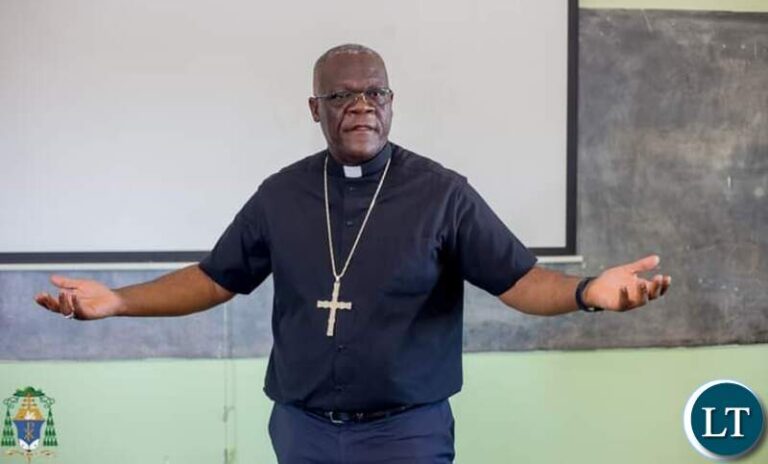
From a studio in Lusaka, UPND Media Director Mark Simuuwe advanced the first volley, urging “respect for due process” while carefully drawing a line between the Catholic Church and one of its most senior shepherds. It sounded procedural, measured, almost conciliatory. But in wars of conscience, language is never neutral. It is artillery.

Simuuwe insisted that relations between the State and the Catholic Church remain cordial, even as he framed Archbishop Alick Banda as an individual subject to investigation like any other citizen. The Drug Enforcement Commission, he said, was merely doing its constitutional duty. Due process must run its course. The Church, he argued, should not be dragged into “individual clergy matters.”

That framing was the strike.Because Archbishop Alick Banda is not just another man. He is  an institution.

To reduce him to an isolated actor is to flatten history, vocation, and moral authority into a police docket. It is to pretend that the mitre carries no weight, that the altar is just another podium, that the voice formed by centuries of pastoral witness can be neatly separated from the institution that ordained it.

Simuuwe quoted the Archbishop’s own words, “a wrong is a wrong no matter who is involved,” and turned them back on him like captured weapons. He argued that alleged personal omissions by clergy must not implicate the Church. Courts will decide. Evidence will speak. Convictions will follow where appropriate. No innocent person, he said, sits in prison without judicial determination.

This was not dialogue. It was containment. The Church understood immediately. That is why the Zambia Conference of Catholic Bishops did not respond with platitudes or pastoral vagueness. Their Statement of Solidarity was a counter-offensive, calm but unmistakable. It named what was unfolding: the targeting of a prophetic voice, the weaponisation of state machinery, the shrinking of civic and moral space.

These were not casual accusations. The Church chooses words the way generals choose terrain. Someone, urgently, needs to sit Mark Simuuwe and the UPND down and explain a basic truth of Zambian history. The Church is not an NGO. It is not an opposition party. It is not a pressure group auditioning for relevance. It is a foundational pillar of this nation. Long before party slogans and campaign jingles, the Church educated the poor, healed the sick, buried the dead, reconciled the broken, and spoke when silence was fashionable. To argue otherwise is to declare war on memory. And memory always wins.

And this is where the battle lines widened. This did not remain a Catholic affair. Pentecostals stepped forward. Others followed. This was no denominational skirmish. It was a civic mobilisation. When one church is pressured for speaking about the cost of living, governance, justice, and human dignity, every pulpit feels the tremor. Seventh-day Adventists included. Silence would have meant surrender.

Clergy are not called to comfort. They are called to burden. They absorb blows so society does not fracture. Yes, they are citizens. But they are also sentinels. When sentinels are targeted, the gate is already under attack.

Simuuwe’s remarks introduced a dangerous confusion into the field. Moral critique was recast as misbehaviour. Preaching about economic hardship was treated as political agitation. The implied demand was clear: a church that baptises silence and sanctifies suffering. That is not Christianity. That is convenience theology.

Worse still was the rhetorical escalation. Metaphors of Lucifer, fallen glory, and satanic imagery were hurled at a serving archbishop. That was not analysis. It was provocation. Awe bane. Tulekwatako umuchinshi. Words wound before actions do.

The bishops were right to condemn name-calling, intimidation, and persecution as injuries not just to the Body of Christ, but to national unity itself. Their message was unambiguous: the Church’s voice must remain free to speak truth to power, to comfort the afflicted, and to guide Zambia toward peace, unity, and justice. Dialogue and mutual respect are the lawful currency of a democracy. Anything else is a march into darkness, however bright the microphones.

Archbishop Alick Banda does not need political defence. Institutions do not beg for relevance. They endure.

And that is why this moment matters. Not because of one man, but because of what happens to a nation that forgets the difference between noise and conscience.

The line has been drawn. Many more are standing on it than some imagine. This is not theatre. It is a defining moment.
Mumbi says washing PF dirty linen in public is childish

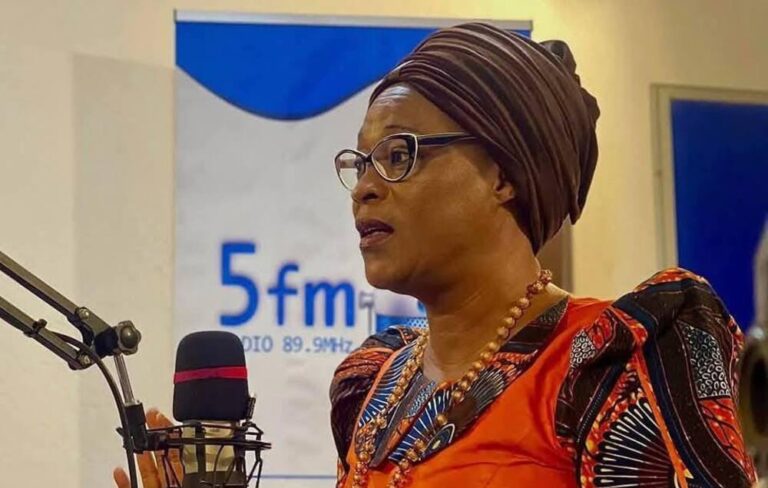
Mumbi says washing PF dirty linen in public is childish

Patriotic Front (PF) member Mumbi Phiri has criticised the growing trend of public exchanges among party members, describing the practice of airing internal disputes in public as childish and damaging to the opposition party’s credibility.

Mumbi said the PF is weakening itself by allowing internal disagreements to spill into the public domain, arguing that such conduct undermines party cohesion and erodes public confidence in its leadership.

She said internal differences are inevitable in any political organisation but insisted that mature leadership requires disputes to be handled through established party structures rather than through the media or social platforms.

According to Mumbi, the continued public airing of disagreements has created the impression of a divided party unable to manage its internal affairs. She said this perception weakens the PF’s ability to present itself as a credible alternative to the ruling party.

Mumbi warned that public quarrels among party members provide ammunition to political opponents and distract from substantive engagement on national issues. She argued that PF leaders should focus on rebuilding unity and discipline rather than engaging in public confrontations.

She said party members must remember that political disagreements should strengthen debate internally, not fracture the organisation publicly. According to Mumbi, discipline and respect for party processes are essential if the PF is to regain public trust.

Mumbi also urged party leaders to exercise restraint in their public statements, warning that careless remarks often escalate tensions unnecessarily. She said responsible leadership requires measured communication and adherence to internal mechanisms for resolving disputes.

She added that the PF’s supporters expect maturity and leadership from those entrusted with representing the party, not public quarrels that diminish its standing.

Mumbi said unity does not mean the absence of differing views but the ability to manage differences constructively and privately. She argued that a party that cannot resolve its internal disputes risks losing relevance in the political landscape.

She urged PF members to reflect on the long-term impact of public infighting, saying rebuilding credibility requires discipline, cohesion, and respect for internal structures.

Simuuwe defends due process, says case involves individual, not Church

Simuuwe defends due process, says case involves individual, not Church

United Party for National Development (UPND) Media Director Mark Simuuwe has defended the government’s position regarding investigations involving Archbishop Alick Banda, arguing that the matter concerns an individual and not the Catholic Church as an institution, and should be allowed to proceed strictly within the confines of the law.

Simuuwe said public debate surrounding the matter has blurred an important legal distinction between institutional responsibility and personal accountability, stressing that law enforcement agencies are constitutionally obligated to investigate matters brought before them, regardless of the individual involved.

He explained that the investigation relates to a vehicle whose ownership, according to official government records and the White Book, is registered in the name of Alick Banda as an individual, not in the name of the Catholic Church or any of its institutional structures. Simuuwe argued that this distinction is central to understanding why the matter is being treated as a personal legal issue rather than an institutional confrontation.

According to Simuuwe, allowing the law to take its course should not be interpreted as hostility toward the Church or its leadership. He maintained that Zambia remains a Christian nation with deep respect for religious institutions and that the current administration harbours no animosity toward the Catholic Church or the broader Christian community.

Simuuwe said due process exists precisely to protect individuals, including clergy, from arbitrary judgment. He argued that if Archbishop Banda has committed no wrongdoing, the legal process will exonerate him, after which the matter should naturally come to a close.

He cautioned against framing routine investigative procedures as persecution, warning that such interpretations risk undermining public confidence in state institutions and the rule of law.

Simuuwe also stressed that the UPND government does not equate criticism or investigation of an individual clergy member with an attack on Christianity. He said Zambia’s Christian identity is anchored in values of truth, justice, and fairness, which are reinforced, not weakened, when lawful processes are respected.

He further noted that the law makes no exemption for public figures, regardless of their moral standing or social influence, and that equality before the law remains a cornerstone of democratic governance.

Simuuwe said government has consistently upheld freedom of religion and freedom of expression, adding that churches remain free to speak on social, economic, and governance matters without interference.

He argued that portraying the investigation as an assault on Christianity risks internationalising a domestic legal matter unnecessarily, when the facts point to a straightforward question of ownership and legal responsibility.

Simuuwe said once the courts or relevant investigative bodies conclude the matter, the country should move forward without lingering suspicion or division.

He urged citizens to exercise patience, restraint, and confidence in legal institutions, stressing that national unity is best preserved when disputes are resolved through established legal channels rather than public confrontation.

UPND says Archbishop Banda does not represent Catholic Church

UPND says Archbishop Banda does not represent Catholic Church

The ruling United Party for National Development (UPND) has stated that Archbishop Alick Banda does not speak on behalf of the Catholic Church as an institution, arguing that his recent remarks and the controversy surrounding his summons to the Drug Enforcement Commission (DEC) should not be interpreted as an attack on the church.

In a statement responding to public debate, UPND officials said the Archbishop was expressing personal views and should not be conflated with the official position of the Catholic Church. The party stressed that Zambia remains a country that respects freedom of religion and the autonomy of religious institutions.

UPND representatives said concerns raised following the Archbishop’s summons had been mischaracterised, warning against what they described as attempts to portray the situation as a confrontation between the state and the Catholic Church.

According to the party, Archbishop Banda was invited by the DEC in his individual capacity, and the process should not be politicised or framed as institutional persecution. UPND said law enforcement agencies have a mandate to summon individuals when necessary and that such processes should be allowed to proceed without political escalation.

The party further stated that religious institutions should not be dragged into political disputes, arguing that doing so risks polarising society and undermining social cohesion. UPND officials said Zambia’s democracy depends on maintaining clear boundaries between personal opinions, political discourse, and institutional representation.

UPND also emphasised that the Catholic Church is made up of many leaders and structures, and that no single cleric speaks for the entire institution unless formally mandated. The party urged the public to distinguish between individual commentary and official church positions.

Addressing concerns about intimidation, UPND said the presence of law enforcement officers should not automatically be interpreted as harassment or suppression of free speech. The party reiterated its commitment to constitutional freedoms, including freedom of expression and freedom of religion.

UPND officials also cautioned opposition political parties and activists against using the situation to mobilise political support, arguing that doing so risks inflaming tensions unnecessarily.

They said the government has no interest in undermining the church or restricting civic space, adding that Zambia has a long tradition of cooperation between the state and religious institutions.

The party urged citizens to remain calm and allow legal processes to unfold, stressing that respect for institutions is essential for national stability.

UPND concluded by calling for responsible public discourse, warning that sensational framing of the issue could damage trust between institutions and the public.

Many young people idle and vulnerable to social vices-Chief Mapanza of Choma

1

Chief Mapanza of Choma District has called on the Government to establish a skills training centre in Mapanza Chiefdom to improve opportunities for out of school youths.

The Chief said the absence of training institutions has left many young people idle and vulnerable to social vices.

“Some of our children are indulging in alcohol and drug abuse because they have no skills to keep them productive,” he said.

He explained that the chiefdom has identified Dundwa Agricultural Camp as a suitable site for the proposed centre.

The facility previously operated as an agricultural training centre but has remained neglected for over 26 years.

“This place once empowered many people with agricultural skills, but it has been abandoned for a long time, we want it revived to serve our youths again.” He said.

Chief Mapanza further appealed for increased development in the chiefdom, which he said has a population of about 140,000 people.
He noted that the area has no mini hospital and continues to face poor road infrastructure.

“Our people walk long distances to access health services, and bad roads are affecting development,” he said.

The Chief, however, expressed optimism that the enactment of Act Number 13 of 2025 will accelerate development in the area.

“This law gives us hope that more resources will be brought closer to the people,” he said.

And Southern Province Permanent Secretary, Namani Monze, said the government is committed to revamping Dundwa Agricultural Camp into a sustainable chiefdom enterprise.

“The facility will promote skills training while integrating agricultural and livestock activities,” Dr Monze said.

Dr Monze said the initiative forms part of the government’s broader agenda to develop all chiefdoms across the country.

“No chiefdom will be left behind in development,” he said.

He added that Act Number 13 of 2025 will enable the government to channel more resources directly to communities.

“The law will help us send resources to areas that need them most,” Dr Monze said.

Meanwhile, Choma Mayor, Japan Simoloka said the local authority will support the development initiatives of the chiefdom.

“We are currently working on five bridges to enhance connectivity and open up the area for development,” Mr Simoloka said.

Veep assures Lumezi flood victims of government support

0

Vice President Mutale Nalumango has visited flood victims in Lumezi who were displaced days ago, and currently being sheltered at Kazembe Primary School.

In her address to the over 70 families, the Vice President assured them of the Government’s continued support, while long-term solutions are being sought.

“You are already receiving support through the Disaster Management and Mitigation Unit (DMMU) in terms of food supply. More support will be rendered in this regard,” the Vice President said.

She also said tents will be supplied to the victims.

Ms Nalumango further called on citizens in flood-prone areas to relocate to higher grounds.

“For areas that are prone to disasters, our call is that you move. You might maintain those areas for other activities, but not for settlement, as it is risky,” she noted.

Furthermore, the Vice President expressed the government’s sadness over the loss of a life in the course of the disaster.

“I have been sent by President Hakainde Hichilema to see what is obtained on the ground. The President is also sorry for the life that was lost during this time,” she said.

And Chief Kazembe has appreciated the government for the timely assistance rendered to the flood victims.

The traditional leader said a total of 25 villages have been affected.

He further called on the government to help the affected families with inputs, as they had also lost their crop in the disaster.

“My appeal is that you provide these people with seed and fertiliser, so that they can cultivate and recover their loss,” he said.

He noted that there was still time to plant again.

The sentiments were also shared by the victims, as they recounted their predicament.

In an interview, Misozi Thole, one of the victims, shared that she lost everything in the house.

She explained that her house was submerged in the night, losing foodstuff and household goods, among other valuables.

Another victim thanked the Vice President for visiting and interacting with the affected people.

“We are comforted by this visit, knowing that our leaders care about us,” Webster Phiri said.

Power Dynamos FC joins Africa’s elite Association

1

Power Dynamos Football Club has become the first Zambian Club to be admitted into the African Club Association (ACA), an association that brings together some of Africa’s most prestigious and successful football clubs.

Power Dynamos Football Club President Bennie Simukoko says the inclusion of the Zambian Premier League defending Champions club in ACA places the Zambian giants among an elite group of clubs that have committed to shaping the future of the game on the continent.

In a statement, Simukoko believes that the association will promote unity and prove that African clubs are stronger when they work together by sharing experiences and advocating for the growth and professionalisation of the sport.

Simukoko added that the club’s membership in the ACA is expected to enhance its continental profile and provide opportunities for greater engagement with leading clubs across Africa.

The clubs that have so far joined the ACA include African Stars of Namibia; Al Hilal Sports Club of Sudan, AS Maniema Union and Saint Éloi Lupopo of the Democratic Republic of Congo, Atlético Petróleos de Luanda of Angola, Azam Sport Club and Young Africans of Tanzania.

Others include Gaborone United of Botswana, South African powerhouses Kaizer Chiefs and Mamelodi Sundowns and Wydad Athletic Club of Morocco among others.

Meanwhile, Women Super League and the Men’s National League will resume action on Saturday, 10th, January, 2026 after the leagues went on recess.

The Zambia Premier League (ZPL) says Women’s National League and the MTN Super League are set to kick off a week later, on Saturday, 17th of January, 2026.

ZPL however, says ZESCO United and Power Dynamos will return to competitive action earlier than other MTN Super League teams due to their CAF commitments.

The two clubs will play their Week 15 fixtures on Saturday, the 10th of January, followed by Week 16 matches on Saturday, the 17th of January, 2026.

The Zambian Premier League has since urged all clubs to ensure they complete their preparations ahead of their respective resumption dates as the league gears up for an exciting continuation of the season.

Archbishop Alick Banda is not just another man; he is an institution.

10

ARCHBISHOP ALICK BANDA IS NOT JUST ANOTHER MAN. HE IS AN INSTITUTION.

 by Brian Matambo | 3rd January 2026

There are moments in a nation’s life when clarity is demanded, not diplomacy. This moment that Zambia finds herself in is one of them.

To suggest that Archbishop Alick Banda is an “ordinary man” is not merely an error of judgment. It is a failure to understand history, vocation, and the moral architecture of Zambia’s democracy. The archbishop is not a freelance commentator. He is a custodian of conscience. He does not speak for himself. He speaks from an altar built by sacrifice, prayer, and centuries of moral witness.

That is precisely what the Zambia Conference of Catholic Bishops made unequivocally clear in its Statement of Solidarity. The statement is not emotional theatre or spiritual poetry. It is institutional doctrine meeting democratic responsibility head-on. It affirms that Archbishop Banda’s summons is viewed as an attempt to suppress a prophetic voice and weaponise state machinery against pastoral oversight. Those are not casual words. They are carefully chosen because the Church understands power. It has buried empires that thought themselves eternal.

Could someone please sit Mark Simuwe, and the UPND, down and educate them on the following. The Church in Zambia is not an NGO. It is not an opposition party. It is not a pressure group auditioning for relevance. It is a foundational pillar of this Christian nation and this unitary republic. Long before slogans, long before party colours, the Church educated, healed, buried, reconciled, and spoke when silence was fashionable. To pretend otherwise is to argue with the past, AND THE PAST ALWAYS WINS.

Let it also be said, plainly and without apology: while faithful Catholics have vowed to stand with their Shepherd, they do not stand alone. We Pentecostals stand with Archbishop Alick Banda too. This is not a denominational quarrel. It is a matter of civic duty. When one Church is threatened for speaking about the cost of living, governance, justice, and human dignity, every pulpit should feel the tremor, that of the seventh day Adventist church included.

Pastors, bishops, and archbishops are called to a life of self-sacrifice. Their calling is not comfort. It is burden. They are expected to absorb blows so that society does not fracture. To reduce such a calling to “just another citizen who can be arrested like any other” is to deliberately miss the point. Yes, they are citizens. But they are also sentinels. And when sentinels are targeted, the gate is already under attack.

The comments attributed to Mark Simuwe spread dangerous confusion. To label moral critique as “misbehaviour”, to suggest that preaching about economic hardship turns clergy into politicians, is to demand a Church that baptises silence and sanctifies suffering. That is not Christianity. That would be a theology convenience.

Now, what I personally find disturbing is how they justify verbal assaults under the guise of metaphor. Invoking Lucifer, fallen glory, and satanic imagery to describe a serving archbishop is not intellectual debate. Awe bane! Tulekwatako umuchinshi! That is sheer provocation masquerading as analysis. No wonder in the ZCCB press statement the Church is right to condemn name-calling, intimidation, and persecution as wounds to the Body of Christ and as threats to national unity.

The ZCCB statement is clear and I quote, “the Church’s voice must remain free TO SPEAK TRUTH TO POWER, to comfort the afflicted, and to guide Zambia toward peace, unity, and justice”. Dialogue and MUTUAL RESPECT, not intimidation, are the lawful currency of a democracy. Anything else is a drift towards darkness, however well-lit the podium may appear.

Archbishop Alick Banda does not need political defence. Institutions do not beg for relevance. They endure. And that is why this moment matters. Not because of one man, but because of what happens to a nation that forgets the difference between noise and conscience.

On this matter, the line has been drawn. And many more are standing on it than some imagine. To be honest, this is a defining moment, for every Zambian. I hope you the reader knows this. I submit.

Fear no police, no guns, Changala tells citizens backing Archbishop Banda

Fear no police, no guns, Changala tells citizens backing Archbishop Banda

Governance activist Brebner Changala has urged Zambians not to be intimidated by police presence or firearms and to demonstrate peaceful public solidarity with Archbishop Alick Banda ahead of his appearance at the Drug Enforcement Commission (DEC), describing the moment as a defining test of constitutional freedoms and civic participation.

Changala said the summoning of the Archbishop had generated widespread concern among citizens, churches, civil society organisations, and opposition political parties, arguing that the situation goes beyond an individual matter and touches on the broader state of civic space in the country.

He called on church mother bodies, civil society organisations, opposition parties, and their supporters to escort Archbishop Banda to the DEC offices, stressing that such an act would be lawful, peaceful, and constitutionally protected. Changala emphasised that public solidarity should not be misinterpreted as confrontation or disorder.

According to Changala, the presence of armed officers or police vehicles should not discourage citizens from exercising their rights. He argued that constitutional freedoms lose practical meaning when fear prevents lawful civic action.

Changala said the church has historically played a central role in Zambia’s democratic development, often acting as a moral voice during periods of political tension and national debate. He warned that actions perceived as intimidating religious leaders risk undermining public confidence and narrowing civic space.

He stressed that his appeal was not a call for chaos, provocation, or resistance to law enforcement. Instead, he urged citizens to remain calm, disciplined, and respectful of the law while showing solidarity.

Changala noted that peaceful escorting of public figures has precedent in democratic societies and serves as a visible expression of public concern rather than interference with legal processes. He also warned against silence, arguing that failure to respond to perceived intimidation can gradually normalise the misuse of state institutions.

He urged all participants to avoid inflammatory language or actions, emphasising that solidarity must reinforce, not undermine, public order. Changala further appealed to political leaders and security agencies to act with restraint, transparency, and professionalism, warning that public trust is fragile and easily eroded when actions are perceived as heavy-handed.

Changala said the outcome of the moment would shape public confidence in democratic institutions and civic freedoms, maintaining that peaceful engagement reassures citizens that constitutional rights remain intact.

Meanwhile, several opposition political parties have announced plans to conduct a peaceful solidarity walk in support of Archbishop Banda ahead of his DEC appearance, framing the action as a lawful expression of constitutional rights and public concern.

Opposition leaders said the planned walk is intended to demonstrate unity with the Archbishop and to reaffirm the right of citizens and organisations to express solidarity without fear or intimidation. They stressed that the action would be peaceful, orderly, and respectful of public institutions.

According to opposition figures, the decision to organise the walk followed public debate surrounding the DEC summons, which they said raised concerns among citizens, church groups, and civil society organisations about the treatment of religious leaders and the broader state of civic space.

Opposition representatives emphasised that the walk is not aimed at interfering with the work of law enforcement agencies or obstructing legal processes. Instead, they described it as a symbolic act of support for a religious leader who has spoken publicly on national issues.

They noted that Archbishop Banda is appearing before the DEC in his personal capacity and said the solidarity walk is meant to affirm his right, and the right of others, to engage in public discourse without intimidation.

Opposition leaders pointed to constitutional guarantees of freedom of expression, assembly, and association, arguing that peaceful demonstrations remain a legitimate form of civic participation. They said visible solidarity helps protect these freedoms by demonstrating public engagement.

They urged supporters to remain disciplined and calm during the walk, warning against any conduct that could lead to disorder or confrontation. Organisers said marshals would be deployed to ensure order and cooperation with law enforcement officers.

Opposition figures also cited the church’s historical role in Zambia’s public life, noting its contribution to dialogue on governance, social justice, and national values. They argued that engagement between religious leaders and the state should occur without actions that could be perceived as intimidation.

They added that the solidarity walk should not be interpreted as hostility toward government institutions but as an exercise of democratic rights, stating that public trust in institutions is strengthened when citizens feel free to express support and concern openly.

The announcement has drawn national attention, with calls from various quarters for restraint, dialogue, and respect for constitutional principles. Opposition leaders said they remain committed to ensuring the action proceeds peacefully and lawfully, urging citizens to uphold calm and respect for the law, and stressing that the objective is solidarity, not confrontation.

Govt accused of sabotaging petroleum sector through fuel import controls

0
Govt accused of sabotaging petroleum sector through fuel import controls

Former Oil Marketing Companies Association of Zambia (OMCAZ) president Dr Kafula Mubanga has accused the government of deliberately weakening Zambia’s petroleum sector by restricting fuel importation to a small number of companies, despite issuing hundreds of import licences to market participants.

Dr Mubanga said the current fuel import arrangement has undermined competition, distorted the market, and exposed the country to supply risks. He alleged that although more than 500 fuel import licences have been issued by authorities, only three companies are actively importing fuel into the country.

According to Dr Mubanga, this situation is not accidental but the result of structural and administrative barriers that prevent most licensed oil marketing companies from participating meaningfully in fuel importation.

He identified access to the TAZAMA Pipeline as the central constraint in the fuel supply chain. The pipeline, which transports petroleum products from Dar es Salaam into Zambia, offers significantly lower transportation costs compared to road haulage. Dr Mubanga said companies that are excluded from accessing TAZAMA are effectively locked out of the fuel import market due to the high cost of alternative logistics.

Dr Mubanga alleged that access to TAZAMA has been monopolised through selective fuel supply contracts, which he said favour a small group of companies. He argued that this has turned what should be a competitive, open-access infrastructure into a gatekeeping mechanism that determines who can import fuel.

He said the petroleum sector previously operated under a more competitive framework, where licensed oil marketing companies independently sourced fuel, arranged transportation, and supplied the domestic market. Under that system, he said, competition helped stabilise supply and pricing while reducing dependence on a few dominant players.

Dr Mubanga warned that the concentration of fuel importation in the hands of a small number of firms exposes Zambia to significant supply vulnerabilities. He said any logistical disruption, financial difficulty, or operational failure affecting one of the dominant importers could have immediate nationwide consequences.

He also questioned the credibility of the fuel licensing system, arguing that issuing hundreds of licences while structurally preventing licensees from importing fuel creates a false impression of market openness. According to Dr Mubanga, many companies have invested in compliance and licensing requirements only to find that they cannot access fuel import infrastructure.

Dr Mubanga further criticised what he described as politically influenced fuel procurement arrangements, arguing that the petroleum sector should be governed by transparent, predictable rules rather than discretionary allocation of opportunities.

He said investor confidence in the energy sector depends on fair access to infrastructure, consistency in policy implementation, and the absence of preferential treatment.

Dr Mubanga called for urgent reforms to restore competition in fuel importation, including transparent access to the TAZAMA Pipeline, equal treatment of licensed oil marketing companies, and a review of fuel supply contracting practices.

He said without such reforms, the petroleum sector risks continued market distortion, weakened competition, and long-term supply instability.

Mudolo accuses Hichilema of delivering poverty instead of promised prosperity

Mudolo accuses Hichilema of delivering poverty instead of promised prosperity

Opposition political figure Elias Mudolo has accused President Hakainde Hichilema of failing to deliver the prosperity he promised Zambians during the 2021 election campaign, arguing that economic conditions have worsened for ordinary citizens.

Mudolo said the administration’s economic messaging does not reflect the lived reality of many households, citing rising costs of basic goods and persistent financial pressure on families. He argued that the promise of improved living standards has not materialised for the majority of citizens.

He stated that while government officials frequently highlight macroeconomic indicators and reform efforts, these have not translated into tangible relief at household level. Mudolo said Zambians continue to struggle with the cost of food, fuel, and essential services.

Mudolo criticised what he described as selective presentation of economic progress, saying the focus on long-term projections has overshadowed immediate hardship faced by citizens. He said the electorate was promised prosperity that would be felt directly and promptly.

He further argued that employment opportunities have not expanded at the pace required to absorb job seekers, particularly young people entering the labour market. According to Mudolo, economic recovery claims must be measured against job creation and purchasing power.

Mudolo also questioned government communication on economic reforms, saying explanations have failed to convince citizens who feel their financial situation has deteriorated.

He said accountability is necessary when campaign commitments are not met, stressing that political leaders must be measured against the promises made to voters.

Mudolo urged government leaders to acknowledge public frustration and engage honestly with concerns over living standards.

Hichilema Elevates Zambia Army Officers to Higher Ranks

1
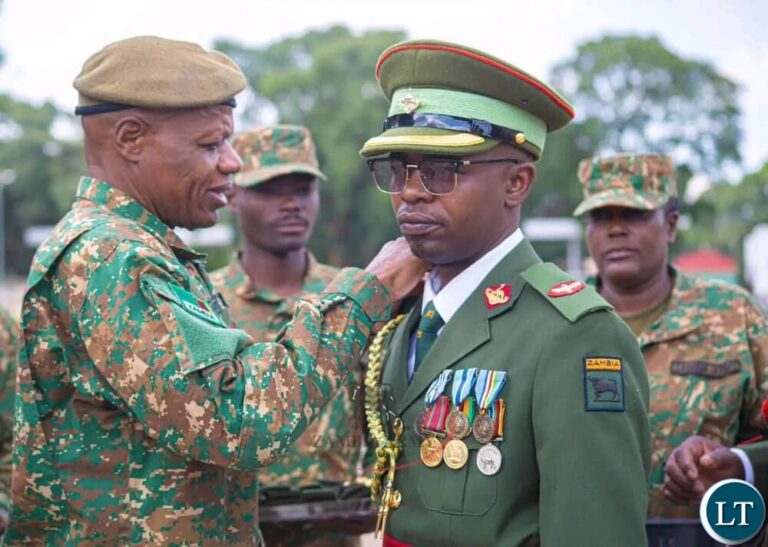
President Hakainde Hichilema, in his capacity as Commander-in-Chief of the Armed Forces, has promoted a number of Zambia Army Officers and Warrant Officers Class Two (WOII) to higher ranks.

The promotions were officially announced during a rank insignia pinning-on ceremony held at Army Headquarters. Zambia Army Commander Lieutenant General Geoffrey Zyeele conveyed the President’s congratulatory message to the newly promoted general grade officers.


Addressing the officers, Lt Gen Zyeele urged them to remain steadfast in their loyalty to the system and the government, while upholding the highest standards of military professionalism. He also challenged both male and female officers to demonstrate competence and discipline in line with their elevated responsibilities.


According to a Zambia Army report, the newly promoted general grade officers marched before Lt Gen Zyeele and Deputy Army Commander and Chief of Staff, Major General Luswepo Sinyinza, who formally pinned the rank insignia upon their shoulders.


Notable among the promoted are four female officers, with one elevated to the rank of brigadier general and three others promoted to colonel.


Adjutant General Brigadier General Ben Banda described the promotions as well deserved, attributing them to the officers’ hard work, dedication, and consistent service. He reminded the newly promoted officers to continue upholding the values of professionalism and discipline that define the Zambia Army.


In a related development, a parade was conducted at Arakan Barracks parade square, where officers from the rank of lieutenant to lieutenant colonel, along with warrant officers class one, were formally decorated with their new ranks.


Brigadier General (Dr) Golden Ng’andwe, who attended the parade, congratulated the officers and encouraged them to discharge their duties with diligence and renewed commitment to service. He stated that promotion comes with responsibility and that it is expected of them to live up to the expectation of the appointing authority.

Chisamba man jailed 1 year for assaulting campmate

3

The Chisamba Magistrate Court has sentenced a 35-year-old man to twelve months imprisonment with hard labour for assaulting his campmate at Kapungula Gold Mine.

Magistrate Litungi Litungi convicted and sentenced Jeff Londe of Kapalamoto village in chief Chamuka’s area after the accused pleaded guilty to one count of assault, contrary to Section 248 of the Penal Code Chapter 87 of the laws of Zambia.

The particulars of the offence are that on December 19, 2025, Londe unlawfully assaulted Charles Manda of the Luano area in Chisamba, thereby occasioning actual bodily harm.

On the material day at approximately 22:00 hours, Manda was allegedly hit in the face with a piece of wood by his campmate at Kapungula Gold Mine in Chisamba district during a dispute over the scattering of the victim’s personal belongings.

“On the 19th of December 2025 at about 22: 00 hours, the complainant came home and found Jeff Londe, now the accused, a known person. After he noticed his belongings were thrown all over the place, he inquired from the accused who did not give a satisfying reply,” facts read in part.

Earlier, following an inquiry, Londe allegedly attempted to hit the complainant with punches and a wooden handle but missed, causing the complainant to flee but he allegedly pursued him and assaulted him in the process.

The accused fled after realising he had injured the complainant but was apprehended by the Community Crime Prevention Unit (CCPU).

The court heard that the complainant, who sustained bruises on the nose and on the left forehead, reported the matter at the Chipembi Police Post and was issued with a medical report.

When a warn and caution statement was administered to the accused in Tonga, a language he better understood, he admitted the charge.

Magistrate Litungi found Londe guilty as charged and convicted him accordingly, based on his guilty plea and admission of facts.

During his plea for leniency, Londe expressed remorse for his offense and pledged not to commit the offence of assault again.

“The punishment for assault is imprisonment for five years. However, I have taken into account that the now convict is a first offender who has readily admitted the charge,” Magistrate Litungi said as he sentenced Londe to one-year imprisonment with hard labour, effective December 30, 2025.

DMMU Evacuates 54 flood Victims in Lumezi District

0

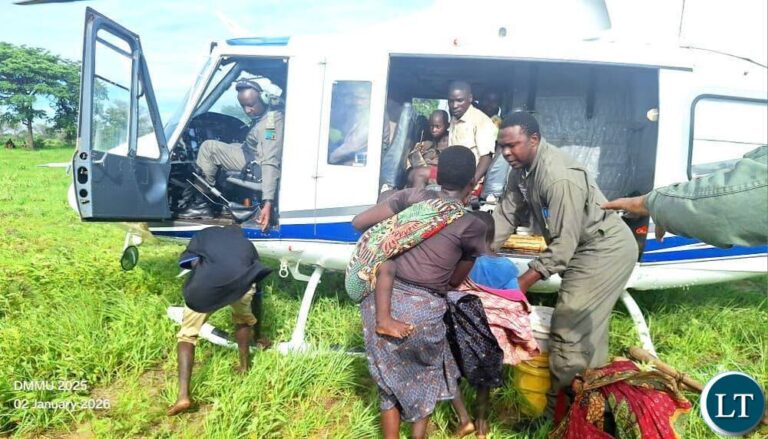
The Disaster Management and Mitigation Unit (DMMU) has evacuated 54 flood victims from Kamwala area in Lumezi District, Eastern Province, following flooding of the Lundazi River which occurred five days ago.

The affected individuals had been stranded across the river where they were conducting agricultural activities and could not cross back to their permanent homes due to high water levels.

The evacuation exercise was conducted with the support of the Zambia Air Force, whose aircraft made four sorties to ferry the victims and their personal belongings to Chiweza area in Kazembe Ward.

Confirming the development, DMMU Senior Communications Officer Mathews Musukwa said the operation was undertaken to protect lives.

“The affected people were marooned by rising water levels of the Lundazi River, making it unsafe for them to cross back to their homes,” Mr Musukwa said.

Meanwhile, floods have left 127 households homeless after their houses collapsed due to continuous heavy rainfall experienced in the area.

The displaced households are currently camped at Kazembe Primary School where DMMU, in collaboration with cooperating partners, is providing food and non-food relief items. Other affected families in villages such as Chimalilo, Saili and Bodola are being accommodated in temporary shelters within their respective communities.

Mr Musukwa said DMMU has commenced the distribution of relief supplies to the affected families.

“We have started distributing food and essential non-food items as part of the government’s immediate response, while further assessments are ongoing,” he said.

He further disclosed that a local businessman from Lundazi District, Mr Aliboo, has donated 100 by 25-kilogramme bags of mealie meal towards relief efforts for flood victims in Lumezi District.

Preliminary assessments indicate that the flooding originated upstream in Lundazi District where some critical infrastructure has been damaged.

Downstream, the floods have resulted in the collapse of houses, destruction of crop fields and heavy siltation, with some farmlands buried under sand.

DMMU says it continues to monitor the situation and is working closely with line ministries, the Zambia Air Force and cooperating partners to ensure the safety and welfare of affected communities.

Kashimoto Digests Chipolopolo AFCON Outing

5

Frederick Kashimoto with his son Frederick Junior at Shinde Stadium
Zambia and Mighty Mufulira Wanderers legend Frederick Kashimoto has branded Chipolopolo’sperformance at the 2025 Africa Cup of Nations
Frederick Kashimoto with is son Frederick Junior at Shinde Stadium
in Morocco as very bad.

Zambia suffered an early Africa Cup exit after recording two draws and a 3-0 loss to hosts Morocco, to amass two points from the possible nine points.

Speakingto Radio Icengelo Sports from Mufulira, Kashimoto said Zambia played uncoordinated football in Morocco.

“Their performance was very bad.”

“In goal we were ok, the defence was not ok, and the midfield tried but in front no goal on target. How did we expect to win without shooting on target?” Kashimoto said.

“We tried against Mali but against Morocco we had a lot of breakdowns. Morocco pressed us too much,” said the former Mighty, City of Lusaka and Prison Leopards coach.

Kashimoto said Zambia needs a huge pool of national team players that will give the coaches more options when picking players.“Let’s go back to the grassroots. We need to have a stream of three national teams.  We need to expose more players at national level in order to improve our football. We need a strong necessary,” he said.

Kashimoto played football for Wanderers between 1973 and 1993while featuring for the National Team famously known as KK 11 from 1980 to 1988.