Monday, June 8, 2026
25.4 C
Lusaka
Home Blog Page 193

ZAAA intensifies preps for 2026 international tournaments

2

The Zambia Amateur Athletics Association (ZAAA) has disclosed that Zambian athletes have intensified preparations for major international competitions scheduled for 2026.

In an exclusive interview with The media, ZAAA General Secretary, Teddy Shimishi confirmed that athletes, including star sprinter Muzala Samukonga, have already resumed training ahead of the Diamond League in Doha, Qatar in April.

Shimishi cited the historic World Athletics Relay Championships, set to take place in Gaborone, Botswana, from May 2 to 3, and the 24th African Senior Athletics Championships in Accra, Ghana, scheduled for May 12 to 18, 2026.

He described the 2026 athletics calendar as busy, noting that it covers local, regional, continental and global competitions.

However, Shimishi said limited infrastructure and funding remain major challenges, adding that Zambia currently lacks a World Athletics certified facility required for athlete qualification.

As a result, he explained that athletes are forced to travel outside the country to qualify, significantly increasing costs.

The media reports that Shimishi appealed to the government, sponsors and key stakeholders, including the Ministry of Youth, Sport and Arts and the National Sports Council of Zambia, to support resource mobilisation.

He stressed that adequate funding is critical for athlete preparation and international representation, adding that with proper logistical and financial support, Zambia has the potential to compete strongly and raise its profile on the global athletics stage.

Shimishi also said that ZAAA has placed strong emphasis on its talent identification programme, with more than 60 young athletes selected through competitions held at Kafubule Ranch and the Olympic Youth Development Centre (OYDC).

He explained that most of the identified athletes are school-based and form the core of Zambia’s future athletics pipeline.

Protected: Sponsored : Mundubile address to Nation

This content is password-protected. To view it, please enter the password below.

Ministry of Education set for reopening of Schools

1

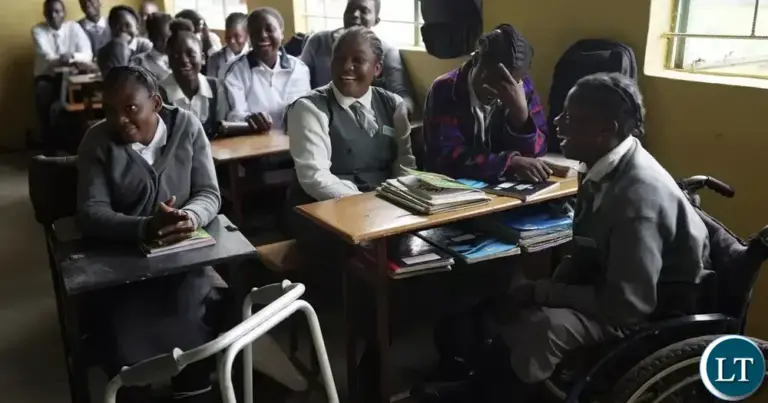
The Ministry of Education has assured the nation that it is fully prepared for the reopening of schools on January 12, as learners return for the 2026 academic year under an expanding new curriculum framework.

Speaking in an interview , Assistant Director, Head of communication at the Ministry of Education, Kunda Mando, said the ministry is excited to welcome learners back to school and has put comprehensive measures in place to ensure a smooth and productive start of the term.

ZANIS reports that Ms Mando revealed that schools will observe a “zero week” from January 5 to January 9, a critical preparation period during which teachers will develop lesson plans and schemes of work, while head teachers will hold planning meetings with management teams and heads of departments.

Ms Mando stated that schools across the country have already been cleaned and prepared ahead of learners’ return, a practice made possible through school grants that allow head teachers to employ gardeners and cleaners.

She explained that the ministry has continued its phased implementation of the new curriculum, which began in 2025 with Early Childhood Education (ECE), Grade One, and Form One, these learners will now progress to ECE Level Two, Grade Two, and Form Two, while new entrants at ECE Level One, Grade One, and Form One will also join under the revised curriculum.

“This gradual phase-in and phase-out of the curriculum is an internationally accepted approach, it allows learners to transition smoothly while ensuring consistency and quality in education delivery.” she said

Ms Mando emphasised that the new curriculum places strong focus on practical learning, critical thinking, and creativity, enabling learners to go beyond memorization and actively engage with knowledge.

“We want learners who can think outside the box, innovate, and become self-reliant citizens capable of creating jobs, not just seeking employment,” she said.

Ms Mando reiterated that by 2028, Zambia will witness the final Grade Seven and Grade Twelve examinations under the old curriculum, alongside the first Grade Six and Form Four examinations under the new system.

She encouraged the public to remain informed and supportive as the education sector continues to evolve.

Kaputa man faces fish ban charge

2

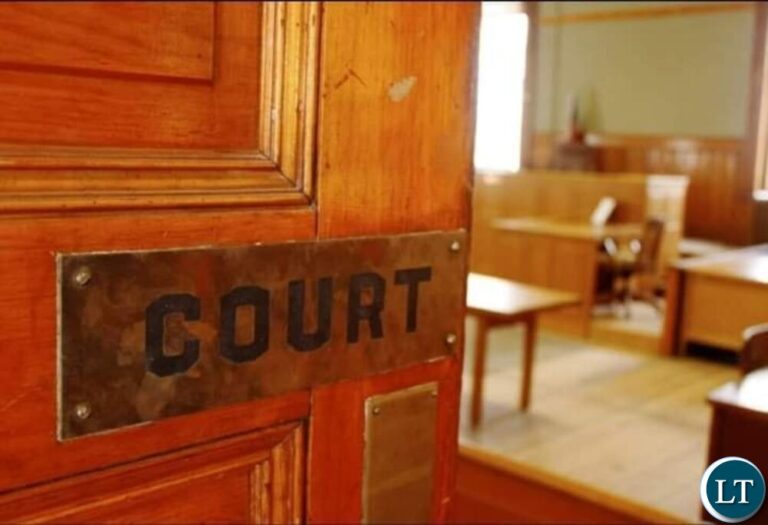
A 32-year-old man of Katai village in Chief Kaputa’s Chiefdom in Kaputa District has appeared in court for being in possession of fish during the annual fish ban.

Moses Kalembwe was found with 172 kilograms of salted fish during the fish ban.

Kalembwe, who appeared before Kaputa Magistrate Emmanuel Mukoma, is facing one count of unlawful possession of fish during the fishing ban.

The offence is contrary to sections 14(1)(a) and 3 as read with sections 57(a), (b), and (c) of the Fisheries Act number 22 of 2021, SI number 24 of 2012 of the laws of Zambia.

He has since pleaded guilty to the offence.

The particulars are that Kalembwe was arrested on December 15, 2025, in Katai village by officers from the Fisheries Department.

When Magistrate Mukoma asked if the accused had any lawful justification to be in possession of fish in a prohibited period, he said no.

The court adjourned the matter, and it will come up for presentations of fact.

The accused is remanded in custody at Kaputa police station

DEC Boss Crosses the Line

5
DEC Boss Crosses the Line

By Thandiwe Ketiš Ngoma

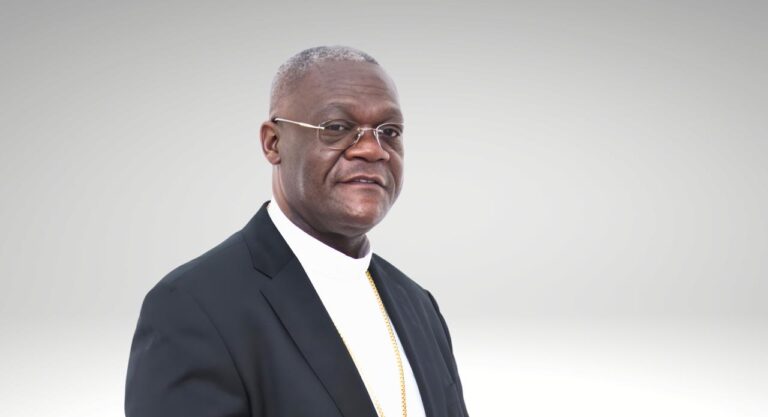
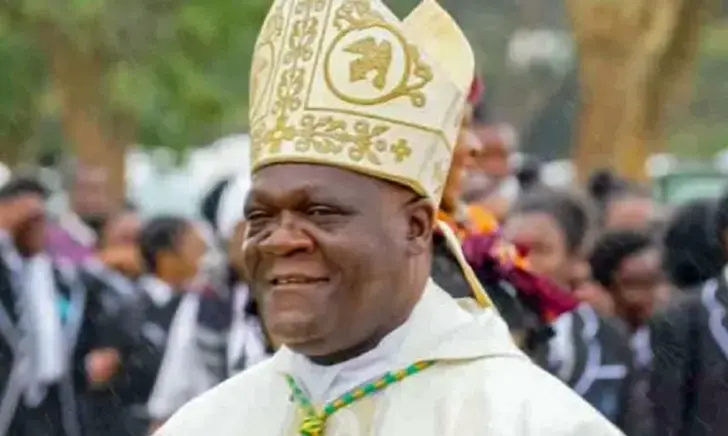
The statement issued by Drug Enforcement Commission Director General Nason Banda regarding the summoning of Archbishop Alick Banda is troubling not because of what it claims, but because of what it reveals.

Mr. Banda insists the matter is “nothing political.” Yet his conduct points in the opposite direction. He chose to speak publicly about a summons that, by his own admission, is a private legal instrument. He issued warnings instead of limiting himself to procedural clarity. He went further by prescribing how an Archbishop should present himself at DEC offices. Neutral law enforcement does not behave this way.

If the matter were routine, it would have remained routine. There would have been no press engagement, no public cautioning, and no attempt to manage public optics. The decision to step into the media space transformed a legal process into a political spectacle. That choice rests squarely with the DEC Director General.

The most revealing moment came when Mr. Banda warned the Archbishop not to come “with cadres.” This was not a careless word. It was a political label, loaded with Zambia’s partisan history and routinely used to delegitimise public support by casting it as disorderly or threatening.

Archbishop Alick Banda is not a politician. He does not command cadres. He leads a church. His followers are congregants, clergy, and citizens exercising conscience, not party militants mobilised for confrontation. By invoking the language of cadres, Mr. Banda projected a political mindset onto a religious figure who does not operate in that space.

Equally inappropriate was the Director General’s effort to reference his personal Catholic faith as a shield against criticism. Personal belief is not an institutional defence. Public confidence in law enforcement is not earned through declarations of faith, but through restraint, professionalism, and adherence to due process.

More concerning is the tone adopted throughout the statement. Warnings replaced invitations. Commentary replaced procedure. The language suggested suspicion rather than inquiry. In any justice system worthy of trust, the presumption of innocence is non-negotiable. Public officials do not speak as though conclusions have already been reached.

If the Archbishop’s name arose in court proceedings, the correct response was simple and lawful: a summons issued quietly, followed by questioning conducted without theatre. Anything beyond that creates the impression of intimidation, particularly when directed at a church leader who has previously spoken on matters of governance and public morality.

The Catholic Church has long occupied the role of national conscience. Attempts, perceived or real, to pressure or frame its leadership through state institutions inevitably provoke public resistance. History has taught Zambians to be alert when power appears eager to discipline moral voices.

Mr. Banda may insist that nothing political is at play. His language, posture, and public warnings suggest otherwise.

Law enforcement exists to investigate, not to sermonise. It is meant to apply the law, not to manage narratives. It must treat every citizen, bishops included, with procedural dignity and without insinuation.

Power exercised without restraint erodes trust. Justice applied without neutrality ceases to be justice.

Why is President Hakainde Hichilema going after Archbishop Alick Banda?

6

Why is President Hakainde Hichilema going after Archbishop Alick Banda?

By Brian Matambo | Lusaka, Zambia

In a nation that proclaims itself Christian, there are moments when law, power, and conscience collide so loudly that silence becomes impossible. Zambia is standing in such a moment.

The summoning of Lusaka Archbishop Dr. Alick Banda by the Drug Enforcement Commission has triggered questions that no procedural statement can dismiss. The issue is no longer whether the State has the legal authority to summon a citizen. It is whether the State understands the moral, historical, and political weight of the citizen it has chosen to summon, and the moment it has chosen to do so.

The question Zambians are now asking is simple, unsettling, and unavoidable. Why Archbishop Alick Banda?

Is it because he officiated at the funeral service of late former President Edgar Chagwa Lungu, offering dignity where the State had offered hostility? Is it because the Lungu family, in their moment of deepest grief, chose Archbishop Banda as their representative in mediation talks, while government appointed Bishop Joshua Banda to sit on the opposite side? Is it because Archbishop Banda has emerged, quietly but firmly, as a voice of reason in a season where reason itself has become inconvenient?

Or is it because this regime finds moral clarity acutely discomforting?

The State insists the matter is purely legal. That a motor vehicle once belonging to the Zambia Revenue Authority found its way to the Archbishop, and that questions must therefore be asked. Yet even within the factual record now circulating publicly, the narrative is far less sensational than the accusations suggest. Investigations into the disposal of ZRA vehicles were conducted by a Joint Investigations Team comprising multiple agencies. That process resulted in the arrest and prosecution of two former ZRA officials, Kingsley Chanda and Callistus Kaoma, for failure to follow procedure in the disposal of 22 vehicles.

What is conspicuously absent from the court record is any finding that Archbishop Alick Banda stole, solicited, or unlawfully acquired a motor vehicle. Evidence presented in court shows that when the Archbishop learned that the Toyota Hilux associated with him was under investigation, he surrendered it voluntarily to the Joint Investigations Team. The vehicle was not recovered from him. It was handed over by him. It was later produced in court as an exhibit in the case against the ZRA officials. No charge was laid against the Archbishop. No offence was attributed to him. If there had been evidence of criminality, the prosecution would have had every opportunity to add his name to the charge sheet. It did not.

This is why the current summons feels less like due process and more like insistence. As if the State is determined to extract something that has already been examined, testified to, and judicially concluded. As if explanation itself is now the offence.

Context matters. History matters. Memory matters.

Not long ago, a senior official of the ruling party publicly labelled Archbishop Banda “the Lucifer of Zambia”. It was a statement so incendiary, so reckless, that it should have attracted immediate condemnation and discipline from the highest office in the land. Instead, the response was silence. Worse still, the silence felt like approval. When private citizens attempted to pursue legal redress for hate speech and criminal defamation, the process was swiftly halted. The insult stood. The wound festered.

Zambians did not forget.

They also did not forget that when civil society and the Oasis Forum sought to oppose the controversial Bill 7, the Catholic Church was deliberately isolated and vilified, its clergy paraded as political villains, its bishops reduced to unnamed enemies of the State. Ministers were deployed to disparage the Church. It felt, to many observers, like a forced ultimatum. Choose the President, or choose your faith.

Now add to this a record that troubles the conscience of the nation. A government that sued a widow on the very day she was meant to bury her husband, because the President insisted that he alone should preside over the burial of his political nemesis. A government whose leader once dismissed the National Day of Prayer and Reconciliation as irrelevant, while his own ministers derided it as a gathering of wilful sinners. A government that has held the former first family in mourning for seven months, not out of necessity, but out of ego and control.

These are not the actions of humility. They are the habits of power unrestrained by reverence.

It is therefore deeply ironic that those who defend this posture dare to accuse a Catholic Archbishop of Luciferian tendencies. If the term has any meaning at all, it describes pride that exalts itself above all else. It describes power that refuses accountability. It describes authority that weaponises institutions to silence moral resistance.

In Christian theology, those who suffer for speaking truth do not wear the mark of evil. They carry the cost of the Gospel.

Archbishop Alick Banda has not called for insurrection. He has not mobilised violence. He has not abused office. He has spoken, presided, mediated, and prayed. If that makes him a threat, then the problem is not the Bishop. It is the State.

Zambia’s democracy was never meant to be a courtroom without conscience. It was meant to be a covenant between law, reason, and faith. When any one of these is crushed under the weight of ego, the nation begins to fracture.

This moment demands restraint. It demands wisdom. It demands that power remember it is temporary, while faith endures.

A Christian nation is not measured by how loudly leaders invoke God at commemorations, but by how carefully they treat His servants when those servants become inconvenient.

Zambia must choose reason over vendetta, democracy over intimidation, and faith over fear.

Zambia Opens Mining Tax Payments to the Yuan in Africa First

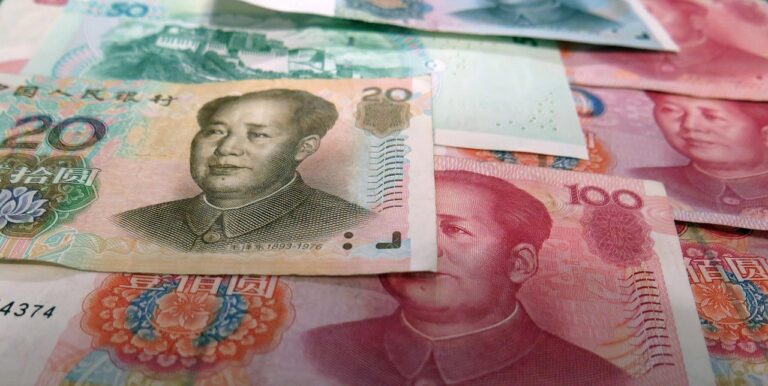
Zambia has introduced a new mining tax payment option that allows taxes to be settled in China’s yuan, also known as the renminbi, making it the first African country to accept the currency for this core state revenue stream. The policy links tax administration more directly to the payment realities of the mining sector, where copper sales into the Chinese market have become central to both export earnings and the flow of foreign currency into the economy.

The decision arrives at a moment when Zambia’s trade and debt relationships with China are already deeply embedded in the country’s economic structure. By late 2024, bilateral trade between Zambia and China stood at about US$6.08 billion, with Zambia’s exports, largely copper, contributing roughly US$4.82 billion of that total. The copper trade has placed China at the centre of Zambia’s external earnings, while financing arrangements have simultaneously made Beijing the dominant bilateral lender within Zambia’s debt portfolio.

As of late 2025, Zambia’s outstanding obligations to China were estimated at approximately US$5.7 billion. That exposure, combined with persistent foreign exchange constraints and the demands of debt restructuring, has kept currency management at the heart of fiscal planning. Within that environment, the move to accept yuan for mining taxes is presented as a practical adjustment that reduces friction between how mining revenue is earned and how mining taxes are paid.

Under the new approach, mining companies that receive yuan from Chinese buyers can remit their tax obligations in the same currency, removing the need to route settlements through the US dollar. That step is intended to bypass conversion costs that can accumulate through intermediary transactions and to reduce pressure on dollar liquidity, which has often been tight during periods of balance-of-payments stress. The framework also reflects an effort to match tax collection to real-world settlement patterns in a sector where buyers, contracts, and payment flows are increasingly linked to Chinese markets.

Beyond the operational impact on firms, the policy has implications for how the Zambian state manages reserves and external payments. The Bank of Zambia is expected to hold a larger share of yuan within the country’s foreign reserve composition as yuan-based revenue flows increase. The central bank’s ability to retain yuan can provide a direct pool of currency for transactions tied to China, including trade-related outflows and debt service where repayment obligations are connected to Chinese creditors or yuan-linked financing structures.

Supporters of the move frame it as a cost-saving mechanism that improves efficiency for both government and taxpayers. The argument is straightforward: if part of Zambia’s export revenue and external liabilities are already connected to China, allowing tax settlement in yuan reduces unnecessary currency churn and helps preserve scarce foreign exchange that would otherwise be used in conversion chains. In practice, that can mean lower transaction losses for mining firms and more predictable currency inflows for public finance planning, particularly where tax payments are material in scale.

Hon. Sunday Chanda, Member of Parliament for Kanchibiya, described the decision as a “positive and forward-looking step” in a signed statement, linking it to improved revenue efficiency, reduced debt-servicing costs, and closer alignment between fiscal policy and existing economic partnerships. He also signalled caution, warning that deeper entrenchment within a single-currency corridor could narrow Zambia’s longer-term autonomy if not managed with balance and clear safeguards.

That caution reflects a wider policy tension built into the move. Accepting yuan for mining taxes offers immediate transactional benefits, yet it also deepens the functional role of China’s currency in Zambia’s fiscal machinery. As trade settlement, debt service considerations, and now tax payments increasingly connect to a single financial ecosystem, the state’s exposure to currency concentration risks becomes more pronounced. The practical question becomes how Zambia maintains flexibility in external policy while integrating yuan into a growing share of public finance flows.

A further issue raised by analysts is institutional readiness. Handling larger yuan inflows and managing yuan liquidity within reserves requires capacity building, including risk controls for currency mismatches and systems for monitoring concentration. Where revenues are collected in one currency and certain obligations fall in another, reserve strategy has to anticipate volatility, settlement timing, and policy trade-offs. The yuan option can reduce dollar demand in some channels, but it also adds a second reserve-management track that must be actively governed to prevent overdependence.

The policy also carries wider symbolic weight within African commodity markets. For decades, dollar settlement has dominated across the continent’s mineral exports, even where buyers are concentrated in non-dollar jurisdictions. Zambia’s decision goes beyond small reserve diversification moves by placing the yuan directly into a central government revenue stream linked to the mining sector, one of the most fiscally consequential industries in the country. It is a functional change, not a ceremonial one, and it formalises a role for the yuan inside routine state collection systems.

Within global finance, the move can be read as part of a broader shift in payment practices where the yuan is expanding its presence in commodity trade, infrastructure finance, and bilateral settlement channels. Zambia’s case is particularly notable because it ties the currency to tax payments, which sit at the centre of sovereignty and fiscal authority. The government is effectively recognising that, for at least part of the economy, the currency of transaction is changing, and revenue rules must keep pace with how value circulates.

Whether other countries follow will depend on their own trade concentration, debt composition, and institutional capacity. For Zambia, the move signals a tighter alignment of fiscal operations with the realities of its largest export market and biggest bilateral creditor, while also placing greater responsibility on institutions to maintain diversification, manage reserve exposure, and protect flexibility as currency options expand within the tax system.

Vandalism of ZESCO installations has been branded economic sabotage.

The National Energy Sector and Allied Workers Union has warned that continued vandalism of electricity infrastructure amounts to economic sabotage that is undermining Zambia’s development efforts and weakening the country’s push for a stable power supply.

The union says the destruction and theft of critical installations owned by ZESCO, including transformers and power cables, is draining the utility’s financial resources and disrupting electricity supply in several communities. According to the union, these acts frequently result in prolonged blackouts that are often mischaracterised as load shedding, when in reality they are the direct consequence of criminal activity.

Union representative Mr Siankulu said vandalism of public energy infrastructure directly compromises national productivity and economic growth. He noted that reliable electricity supply is a foundation for industrial activity, service delivery, and job creation, and any deliberate interference with that supply weakens the broader economy.

He explained that when transformers and cables are stolen, entire neighbourhoods are left without power for extended periods, affecting households, businesses, and public institutions. In many cases, residents blame the outages on power rationing, despite the fact that the disruptions are caused by theft and destruction of infrastructure.

Mr Siankulu said the financial burden of replacing stolen equipment has become a major constraint for the power utility. Funds that could be invested in network expansion, system upgrades, and new generation projects are instead channelled toward repairing vandalised installations and restoring supply to affected areas.

The union has therefore called on government to adopt tougher legal measures against vandalism of public infrastructure. It has proposed that vandalism of electricity installations be classified as a non-bailable offence, with a minimum custodial sentence of 25 years upon conviction. Union leaders believe stricter penalties would deter offenders and protect strategic national assets.

In addition to legal reforms, the union urged members of the public to actively participate in protecting electricity infrastructure by reporting suspicious activities and refusing to engage in the purchase or resale of stolen electrical equipment.

The call comes as the energy sector continues to navigate challenges linked to climate variability. In recent years, erratic rainfall patterns have contributed to reduced hydropower generation and unstable electricity supply. However, prospects for improvement have emerged following above-normal rainfall during the 2025/2026 rainy season.

Although the heavy rains have resulted in flash floods in some areas, they have also replenished water levels in major reservoirs, creating conditions for increased power generation. Mr Siankulu said this development offers an opportunity for improved electricity supply if infrastructure is adequately protected.

He further noted that government investment in energy diversification is beginning to deliver tangible results. The integration of hydropower with solar energy projects is strengthening Zambia’s generation mix and reducing over-reliance on a single source of power. According to the union, this approach positions Zambia to achieve a more predictable and resilient electricity supply.

The union added that improved stability in power generation enhances Zambia’s competitiveness as an electricity producer and supplier within the Southern African Development Community, where demand for reliable power continues to grow.

Mr Siankulu commended Hakainde Hichilema for prioritising reforms and investment in the energy sector, and encouraged the administration to sustain efforts aimed at achieving full stability in electricity generation and distribution.

He stressed that protecting electricity infrastructure must be treated as a national priority, noting that vandalism does not only affect the power utility but undermines economic growth, investor confidence, and the country’s long-term development agenda.

Patient Numbers Double, Surgeries Rise at Maina Soko Medical Centre

0
Maina Soko Medical Center has recorded a significant increase in patient numbers and advancements in  specialized medical care, according to Commandant Brigadier General Dr. Levy Muchemwa.

Speaking during a presentation of hampers to newborns and patients by Zambia Army Commander Lieutenant General Geoffrey Zyeele, Brig Gen Dr. Muchemwa stated that the military hospital has maintained normal operations, with patient figures rising steadily over the past three years.

He reported that from 47,000 patients in 2022, the hospital has attended to 93,000 patients as of November 2025, with final year-end figures expected to surpass 100,000. “On average, we see about 8,000 patients every month and about five percent of those we attend to are admitted,” he said.

As of New Year’s Day, the medical center had 64 admitted patients, a group that included three retired senior officers, 10 soldiers, 31 civilians, and dependents. Brig Gen Dr. Muchemwa noted the hospital continues to serve a dual role, with military personnel and civilians utilizing its services on an almost equal basis.

He further revealed that the facility performed 1,708 surgeries in 2025, including complex procedures that were previously referred abroad. “On average, we conduct two brain surgeries every week, which translates to about eight brain surgeries per month,” he disclosed.

During the New Year period, the center welcomed one New Year baby, while two other babies, delivered via surgical procedures two days earlier, remained under care.

Brig Gen Dr. Muchemwa acknowledged that manpower remains a challenge, citing a shortage of senior doctors and consultants despite recent postings of additional medical personnel.

Regarding infrastructure, he addressed a reported leak in one section of the hospital, stating the Army’s infrastructure department is expected to inspect the area following directives from the Defence Minister.

He assured that the hospital is fully operational, with 99 percent of its medical equipment functional. Brig Gen Dr. Muchemwa concluded by thanking Lt Gen Zyeele for his support and guidance throughout 2025, expressing hope for sustained backing in 2026 as Maina Soko continues to expand its capacity and services.

Copperbelt records drop in violent crimes in 2025

1

Copperbelt Province Police Commanding Officer Mwala Yuyi has disclosed that the province recorded a 10 percent reduction in violent crimes in 2025 compared to 2024.

Mr Yuyi said that 2,603 cases were recorded in 2025, leading to 1,650 arrests, compared to 2,899 cases and 1,508 arrests in 2024.

Speaking during an interview on the Conversation programme  in Ndola, Mr Yuyi explained that police also place emphasis on the recovery of stolen property once suspects are apprehended adding that over 813 stolen items valued at K4.5 million were recovered in 2025.

He attributed the reduction in crime to enhanced community engagement and intensified police patrols in various areas across the province.

Mr Yuyi added that the police also conducted public sensitisation campaigns through various media platforms in 2025, encouraging residents to safeguard their property.

However, he noted that cybercrime is on the rise, with many people falling victim to offences committed through online interactions.

“In 2024, we recorded 11 cybercrime cases and all suspects were arrested. In 2025, 15 cases were recorded, but only nine arrests were made, indicating an increase in cybercrime,” he said.

The Commanding Officer further revealed that financial crimes are largely committed by individuals in white-collar professions, stressing that police are actively addressing such offences.

“In 2024, we recorded 305 financial crime cases with 104 arrests, and the value of stolen property amounted to K62 million. In 2025, 332 cases were recorded, leading to 154 arrests, with recovered property valued at K1.4 million,” he said.

Mr Yuyi stated that the figures demonstrate the police’s commitment and hard work in bringing criminals to book and recovering stolen property.

He added that in 2026, the police will further strengthen efforts to ensure law, order and security in the Copperbelt Province.

Lusaka Province Health office records positive strides

0

Government says it has recorded several accomplishments in the health sector across districts in Lusaka Province in 2025.

 Lusaka Province Health Director Simulyamana Choonga, disclosed that among the achievements, is the completion of 26 Maternity annexes, 25 rural health posts, and 16 Mini hospitals under phase two, spread across all districts in the province.

 Dr Choonga added that the province also procured digital high technology equipment and recorded over 85 percent of drug availability in all health facilities in the province.

He disclosed this to media in an interview during a review of the 2025 Provincial Health Sector Performance in Lusaka Province.

 He explained that the province witnessed the construction of Luangwa District Hospital, a classroom and administration block at Kafue Nursing School, a Surgical Ward at the University Teaching Hospital, and King Salman Hospital in Chalala which is earmarked for completion by the first quarter of 2026.

 He stressed that the achievements were due to consistent funding and support that the sector has continued to receive from the Government.

 ”We have done very well as a Province, talking about child immunization, curative health , maternal health and public health, but why we have reached this level of success, is on account of the support and consistent funding that we have received from Government,” he said.

 Dr Choonga further disclosed that the province also purchased a number of ambulances which have improved the referral system, especially in the rural areas.

 He further revealed that the province received a total of 422 health personnel from the 2025 recruitment process, and further employed 2,044 out of the targeted 2285 Community based volunteers under the support of global partners who have been deployed across the districts.

 And Lusaka Province Deputy Permanent Secretary, Alex Mapushi said the Government will continue to prioritise the sector to continue recording positive achievements in the province.

 Mr Mapushi stated that the consistency in funding had facilitated the delivery of proper service delivery and strengthened health care systems in the province.

 He noted that the construction of the maternity annexes across the districts was a major contributor in attaining the reduced maternal and neonatal mortality rate that has been recorded in the province in 2025.

 “This is what government wants, to see these milestones, and us being the most populated province, we want to continue seeing these achievements, for instance, drug supply, this one I cannot overemphasise, you can go to any hospital in Lusaka Province you will not find a shortage of drugs,” he said.

 And Chilenje Level One Hospital, Medical Superintendent, Richard Mwila disclosed that the facility had recorded several developments, among them the procurement of high technology Anesthetic and Ultrasound machines as well as 24 modern hospital beds.

 Dr Mwila said this has improved operations in the departments, and enabled the hospital which conducts several operations on patients to function effectively and optimally.

 He reiterated that the hospital’s agenda is in line with the Government’s desire to see increased infrastructure development and strengthened healthcare systems.

 Meanwhile, Kalingalinga acting facility In Charge, Patrick Zulu expressed gratitude to the government through the Ministry of Local Government, for ensuring the installation of backup solar systems in all departments at the facility.

 Mr Zulu explained that the development has enabled the facility to function efficiently and attend to its 67,000 catchment population without any disruptions.

 Mr Zulu further explained that the facility is currently constructing a Pharmacy bulk store under the Constituency Development Fund as part of its 2025 projects earmarked for completion in the first quarter of 2025.

 Mubiana Silishebo, who was found seeking services at Chilenje Hospital said it is gratifying that government facilities are able to effectively respond to the needs of the patients.

 “The services have really improved, I think our money is working now. I was here last week for treatment and I was given medication, and today also I have received medication,” he said.

Petronella Mulonga said it is satisfying that she could access proper ultrasound services at a public facility without worrying about going to a private hospital.

Ex-Lawmaker Says US$3.5bn Illicit Flows Deserve Urgent DEC Attention

Ex-Lawmaker Says US$3.5bn Illicit Flows Deserve Urgent DEC Attention

A former Member of Parliament has challenged the Drug Enforcement Commission to prioritise investigations into large-scale illicit financial flows instead of focusing on the alleged irregular acquisition of a vehicle involving Lusaka Archbishop Alick Banda.

In a strongly worded public statement, Sensio Banda, who previously represented Kasenengwa Constituency in Eastern Province, criticised the commission’s decision to summon the Archbishop over a Toyota Hilux allegedly obtained during the previous administration. Banda said that while no citizen should be exempt from the law, the emphasis placed on the case was disproportionate when viewed against Zambia’s wider economic challenges.

Banda said Zambia was facing what he described as systemic economic hemorrhage driven by grand corruption and illicit financial flows rather than isolated cases involving individual assets. He cited figures from the 2024 Financial Intelligence Centre Trends Report, which estimated that about US$3.5 billion was lost in a single year through tax evasion, illegal mining activities, trade mis-invoicing, and complex corporate schemes.

According to Banda, the scale of the reported losses far outweighs the alleged value of the vehicle under investigation. He said the estimated US$3.5 billion, roughly K81 billion, represented nearly 42 per cent of the 2025 national budget and could have been used to support health services, infrastructure development, and economic stabilisation.

He questioned why law-enforcement attention appeared to be directed at what he described as symbolic cases rather than investigations into multinational companies and networks flagged in financial intelligence reports. Banda said the absence of visible action against those implicated in large-scale capital flight raised concerns about enforcement priorities.

The former MP also referred to recent governance controversies, including the Zambia Medicines and Medical Supplies Agency case involving 61 containers of medical supplies. The scandal led to the withdrawal of about US$50 million in United States health assistance. Banda said while some officials were arrested, public accountability had not matched the scale of the consequences, particularly for clinics affected by shortages.

He further pointed to developments at the Anti-Corruption Commission, where the board was dissolved in 2024 following allegations by former commissioner O’Brien Kaaba that the institution had been compromised to protect senior officials. Banda said such events had weakened public confidence in the integrity of anti-corruption institutions.

Within this context, Banda said the summoning of a senior Catholic cleric, who has been vocal on governance and moral issues, was being received with scepticism by sections of the public. He said the timing of the investigation, as Zambia moves toward the 2026 general elections, risked being interpreted as selective accountability.

Banda noted that opposition political parties were financially weakened, while the Catholic Church remained one of the few institutions with nationwide reach and moral authority. He argued that shifting public focus from large-scale financial losses to a clerical asset dispute risked reshaping national debate away from deeper economic issues.

The former MP acknowledged the DEC’s position that its mandate was preventive rather than punitive, but said prevention should be proportional to the harm being addressed. He argued that focusing on alleged irregularities involving a small number of vehicles would not address the broader economic challenges caused by illicit financial flows.

He said the key test for law-enforcement agencies was whether they could demonstrate equal urgency in pursuing individuals and networks implicated in large-scale corruption. Banda warned that uneven enforcement could undermine public trust and blur the line between justice and intimidation.

The DEC has previously stated that no individual is above the law and that summonses form part of routine investigative procedures. The commission has maintained that investigations are conducted based on information arising from case records rather than political or religious considerations.

Banda concluded that meaningful progress in the fight against corruption would be measured by the recovery of public resources and accountability for large-scale economic losses rather than symbolic actions. He said public confidence would depend on whether enforcement efforts were seen to address systemic corruption rather than isolated cases.

How the State Turned an Archbishop into a Flashpoint

8
How the State Turned an Archbishop into a Flashpoint

“Sometimes the law answers the question of what can be done. Politics answers the harder question of whether it should be done that way, at that moment, to that person.”

By Cleophas Mangani

The summoning of Lusaka Archbishop Dr. Alick Banda by the Drug Enforcement Commission has now crossed a critical threshold. It is no longer merely a legal matter or a political controversy. It has become a national moment, charged with memory, faith, fear, and unresolved mistrust between the State and one of Zambia’s most influential institutions.

On the surface, the State insists there is nothing extraordinary about the matter. The DEC has maintained that the summons is a routine investigative step linked to a long-running case involving the disposal of Zambia Revenue Authority vehicles. Its Director General, Nason Banda, has stressed that no citizen is above the law, that a call-out is not a declaration of guilt, and that due process demands every person whose name arises in an investigation be given a chance to respond.

Legally, the argument is sound.

However, Zambia is not responding to this matter as if it were a courtroom file. It is responding to it as a story layered with history.

For many Zambians, the name Alick Banda does not surface in isolation. It resurfaces alongside memories that were never resolved. They recall the moment when the Archbishop was publicly denounced as “the Lucifer of Zambia” by a senior ruling-party official. They recall accusations that he was partisan, aligned with opposition politics, stripped of clerical neutrality in political rhetoric. They recall scenes of police presence at Catholic spaces, and years of hostility that were never formally acknowledged or corrected.

That history matters.

So when the State now says, “This is just procedure,” a significant portion of the public does not hear procedure. It hears pattern.

The timing has only deepened the unease. The summons was issued on New Year’s Eve, a day traditionally reserved for prayer, reflection, and national thanksgiving. For church leaders and congregations, it was a moment heavy with symbolism. The question that immediately followed was simple yet powerful: what was so urgent that it could not wait a day or two? Why summon a sitting Archbishop at the threshold of a new year, when discretion could have achieved the same legal purpose?

That question has not gone away.

The underlying ZRA case itself is more complex than public narratives suggest. Former ZRA Commissioner General Kingsley Chanda and former Director of Administration Callistus Kaoma were convicted for failure to follow procedure in the disposal of 22 vehicles. Yet records indicate that the vehicle associated with Archbishop Banda was not among those forming the basis of the convictions. ZRA documentation shows that obsolete vehicles were sold to employees, some of whom later transferred them to third parties. A gate pass dated November 2020 has circulated publicly as evidence that at least one such vehicle exited ZRA premises through administrative channels.

None of this renders the Archbishop immune to questioning. That point bears repeating. No citizen, cleric or otherwise, is above the law.

But the law does not operate in a vacuum.

As the saga unfolded, partisan platforms amplified suspicion, social media hardened into accusation, and commentary blurred the line between an individual inquiry and an institutional confrontation with the Catholic Church. The Church, which commands deep grassroots reach and is estimated to influence millions of voters, found itself drawn into a narrative it did not initiate.

Then came the public defence from the DEC. Measured. Procedural. Correct. And, for many, too late.

By the time assurances were given that the investigation was not political, that the DEC Director General himself is Catholic, that Archbishop Banda is his own Archbishop, the matter had already escaped the confines of law enforcement. It had entered identity, belief, and collective memory.

The intervention by Rev. Chilekwa Mulenga captured that shift vividly. Drawing from scripture, he framed the moment not merely as a legal dispute but as part of what he described as a sustained pressure on church leaders. He questioned the urgency, the manner, and the symbolism of the summons, arguing that even lawful authority must be exercised with wisdom, especially in a fractured environment.

His words resonated because they echoed a wider sentiment: that this episode feels less like an isolated investigation and more like the culmination of a long, unresolved tension between the State and the Church.

That perception has been reinforced by academic and civic commentary in recent years warning of attempts to contain the influence of the Catholic Church, to neutralise critical voices, and to weaken institutions that have historically acted as moral counterweights to political power. Whether those claims are accepted oar rejected, their persistence underscores a deeper problem, a trust deficit.

With elections less than a year away, the political implications are impossible to ignore. The Catholic Church is not merely a religious body; it is a social force. Actions that appear heavy-handed or poorly timed risk being read not as enforcement of law, but as provocation.

This is the heart of the Banda saga.

The State may well be legally correct. But legality alone does not guarantee legitimacy. Power exercised without sensitivity to history, timing, and perception can harden opposition rather than secure compliance.

In trying to assert that no one is untouchable, the State may have reminded millions why they feel targeted. In insisting on procedure, it may have underestimated memory. In pressing forward, it may have stepped on a political landmine of its own making.

Sometimes the law answers the question of what can be done.
Politics answers the harder question of whether it should be done that way, at that moment, to that person.


Kalumbinga–Mwamba Exchange Exposes Deeper National Tensions

A public exchange between former diplomat Emmanuel Mwamba and Lusaka-based church leader Bilon Kalumbinga has escalated into a sharp war of words over political rhetoric, religious institutions, and the state of governance in Zambia.

The exchange follows Kalumbinga’s public criticism of Mwamba’s recent commentary on the Drug Enforcement Commission’s summoning of Lusaka Archbishop Alick Banda. Kalumbinga had accused Mwamba of using alarmist language, particularly references to “civil conflict,” which he said risked misleading the public and stirring unnecessary fear.

In response, Mwamba has issued a pointed rebuttal, rejecting the accusation of incitement and challenging Kalumbinga’s consistency in defending Archbishop Banda. Mwamba questioned the church leader’s silence during earlier episodes in which Archbishop Banda was subjected to public attacks, hostile rhetoric, and police action.

Mwamba asked where Kalumbinga’s voice was when Archbishop Banda was publicly labelled “the Lucifer of Zambia,” when criminal charges against Batuke Imenda were withdrawn after remarks targeting the Archbishop, and when police officers reportedly kept Archbishop Banda outside the Cathedral of the Child Jesus for several hours. He also questioned Kalumbinga’s silence regarding content circulated by Koswe, a media platform Mwamba described as being run by State House staff, which he accused of promoting defamatory and hateful material against the Archbishop.

Responding directly to criticism over his use of strong language, Mwamba defended his references to potential unrest by citing international assessments. He said the International Monetary Fund’s 2023 country report warned that Zambia was facing economic, social, and political pressures severe enough to risk civil unrest. He added that a 2024 report by Human Rights Watch International expressed similar concern, warning that tensions could culminate in popular uprising.

Mwamba said his commentary was intended as a caution, not incitement. He argued that Zambia is at a fragile moment and accused President Hakainde Hichilema of failing to recognise the depth of public frustration. He alleged that the administration has enacted repressive and archaic laws, promoted what he described as authoritarian governance, and prolonged public suffering through the handling of load shedding, power cuts, and the rising cost of living.

He rejected suggestions that his commentary lacked legitimacy because he is outside the country, saying his past arrests, harassment, and torture were precisely because he spoke openly about governance and state conduct while living in Zambia.

Mwamba framed his writing as an extension of long-standing criticism of what he described as tyranny, injustice, and reckless governance, insisting that distance from the country does not invalidate his perspective or warnings.

The exchange has drawn public attention not only because of the individuals involved, but because it reflects broader national tensions around governance, law enforcement, religious institutions, and political expression. While Kalumbinga has urged restraint and responsible communication, Mwamba maintains that strong language is justified by what he views as the gravity of Zambia’s current challenges.

The confrontation highlights a widening divide over how national concerns should be articulated, where the line lies between caution and alarm, and who bears responsibility for the consequences of political speech in a polarised environment.

Hichilema Calls for Public Clarity on New Constitutional Law

Hichilema Calls for Public Clarity on New Constitutional Law
President Hakainde Hichilema has called for nationwide public education on the newly enacted Constitutional Amendment Act, urging civic and community leaders to ensure citizens fully understand its provisions and intended benefits.

The President made the remarks upon arrival in Choma, where he is spending a working holiday at his Harmony farm, weeks after assenting to the Constitutional Amendment Act, commonly referred to as Bill No.7 of 2025.

Hichilema said widespread understanding of the law was essential to counter misinformation and misinterpretation, particularly given the scale of the changes introduced by the amendment. He stressed that the reforms were enacted in the national interest and were not designed to benefit a select group.

The Constitutional Amendment Bill No.7 was passed by the National Assembly on December 15, 2025, after securing a two-thirds majority vote. The legislation introduces a mixed-member proportional representation electoral system, increases the number of constituency seats, and refines several legal definitions within the Constitution.

Hichilema said the amendment should be viewed as a foundation for broader governance reforms, adding that its success would depend on how well citizens understood both its structure and purpose. He tasked community leaders, civic educators, and political actors with explaining the law’s interpretation, meaning, and value at grassroots level.

The President linked the constitutional changes to his administration’s development agenda, placing emphasis on service delivery across key sectors. He reiterated the government’s commitment to the free education policy, saying transparency and efficiency were critical in the procurement and distribution of school supplies.

He said public confidence in government reforms depended not only on policy design but also on execution, particularly in areas that directly affect households. Education, he said, remained a cornerstone of national development and social mobility.

Hichilema also highlighted women empowerment programmes, noting that the constitutional amendment provided an opportunity to strengthen gender inclusion in national development processes. He said inclusive participation was necessary for sustained economic and social progress.

Turning to the management of the Constituency Development Fund, the President warned against substandard project implementation, saying public resources must deliver tangible value. He outlined what he described as a three-point benchmark for all CDF projects: the right quality, the right price, and timely delivery.

He said failure to meet these standards undermined public trust and weakened the developmental impact of decentralised funding. He urged local authorities and implementing agencies to enforce accountability at all stages of project execution.

On the political front, Hichilema described the August 2026 general elections as competitive and cautioned against complacency. He said electoral success would require clear strategy, strong mobilisation, and effective grassroots party structures.

The President said political parties and civic actors had a responsibility to engage citizens constructively and ensure that constitutional reforms were not distorted for partisan advantage. He stressed that informed participation was central to democratic stability.

He also commended youths for their continued contribution to national development, encouraging them to play an active role in civic education efforts around the new law. He said understanding constitutional changes was a collective responsibility and that no citizen should be left behind.

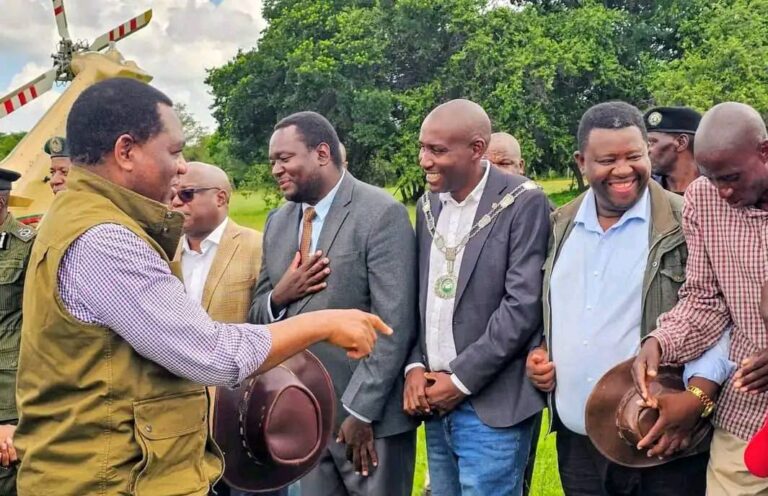
Upon arrival in Choma, Hichilema was received by Namani Monze, Chief Government Spokesperson Cornelius Mweetwa, Choma Mayor Javen Simoloka, and Members of Parliament Edgar Sing’ombe and Joseph Munsanje, alongside other senior government and party officials.

The President said continued engagement between leaders and communities would be critical as the country implements the new constitutional framework.