Monday, June 8, 2026
26.4 C
Lusaka
Home Blog Page 194

Copperbelt records drop in violent crimes in 2025

1

Copperbelt Province Police Commanding Officer Mwala Yuyi has disclosed that the province recorded a 10 percent reduction in violent crimes in 2025 compared to 2024.

Mr Yuyi said that 2,603 cases were recorded in 2025, leading to 1,650 arrests, compared to 2,899 cases and 1,508 arrests in 2024.

Speaking during an interview on the Conversation programme  in Ndola, Mr Yuyi explained that police also place emphasis on the recovery of stolen property once suspects are apprehended adding that over 813 stolen items valued at K4.5 million were recovered in 2025.

He attributed the reduction in crime to enhanced community engagement and intensified police patrols in various areas across the province.

Mr Yuyi added that the police also conducted public sensitisation campaigns through various media platforms in 2025, encouraging residents to safeguard their property.

However, he noted that cybercrime is on the rise, with many people falling victim to offences committed through online interactions.

“In 2024, we recorded 11 cybercrime cases and all suspects were arrested. In 2025, 15 cases were recorded, but only nine arrests were made, indicating an increase in cybercrime,” he said.

The Commanding Officer further revealed that financial crimes are largely committed by individuals in white-collar professions, stressing that police are actively addressing such offences.

“In 2024, we recorded 305 financial crime cases with 104 arrests, and the value of stolen property amounted to K62 million. In 2025, 332 cases were recorded, leading to 154 arrests, with recovered property valued at K1.4 million,” he said.

Mr Yuyi stated that the figures demonstrate the police’s commitment and hard work in bringing criminals to book and recovering stolen property.

He added that in 2026, the police will further strengthen efforts to ensure law, order and security in the Copperbelt Province.

Lusaka Province Health office records positive strides

0

Government says it has recorded several accomplishments in the health sector across districts in Lusaka Province in 2025.

 Lusaka Province Health Director Simulyamana Choonga, disclosed that among the achievements, is the completion of 26 Maternity annexes, 25 rural health posts, and 16 Mini hospitals under phase two, spread across all districts in the province.

 Dr Choonga added that the province also procured digital high technology equipment and recorded over 85 percent of drug availability in all health facilities in the province.

He disclosed this to media in an interview during a review of the 2025 Provincial Health Sector Performance in Lusaka Province.

 He explained that the province witnessed the construction of Luangwa District Hospital, a classroom and administration block at Kafue Nursing School, a Surgical Ward at the University Teaching Hospital, and King Salman Hospital in Chalala which is earmarked for completion by the first quarter of 2026.

 He stressed that the achievements were due to consistent funding and support that the sector has continued to receive from the Government.

 ”We have done very well as a Province, talking about child immunization, curative health , maternal health and public health, but why we have reached this level of success, is on account of the support and consistent funding that we have received from Government,” he said.

 Dr Choonga further disclosed that the province also purchased a number of ambulances which have improved the referral system, especially in the rural areas.

 He further revealed that the province received a total of 422 health personnel from the 2025 recruitment process, and further employed 2,044 out of the targeted 2285 Community based volunteers under the support of global partners who have been deployed across the districts.

 And Lusaka Province Deputy Permanent Secretary, Alex Mapushi said the Government will continue to prioritise the sector to continue recording positive achievements in the province.

 Mr Mapushi stated that the consistency in funding had facilitated the delivery of proper service delivery and strengthened health care systems in the province.

 He noted that the construction of the maternity annexes across the districts was a major contributor in attaining the reduced maternal and neonatal mortality rate that has been recorded in the province in 2025.

 “This is what government wants, to see these milestones, and us being the most populated province, we want to continue seeing these achievements, for instance, drug supply, this one I cannot overemphasise, you can go to any hospital in Lusaka Province you will not find a shortage of drugs,” he said.

 And Chilenje Level One Hospital, Medical Superintendent, Richard Mwila disclosed that the facility had recorded several developments, among them the procurement of high technology Anesthetic and Ultrasound machines as well as 24 modern hospital beds.

 Dr Mwila said this has improved operations in the departments, and enabled the hospital which conducts several operations on patients to function effectively and optimally.

 He reiterated that the hospital’s agenda is in line with the Government’s desire to see increased infrastructure development and strengthened healthcare systems.

 Meanwhile, Kalingalinga acting facility In Charge, Patrick Zulu expressed gratitude to the government through the Ministry of Local Government, for ensuring the installation of backup solar systems in all departments at the facility.

 Mr Zulu explained that the development has enabled the facility to function efficiently and attend to its 67,000 catchment population without any disruptions.

 Mr Zulu further explained that the facility is currently constructing a Pharmacy bulk store under the Constituency Development Fund as part of its 2025 projects earmarked for completion in the first quarter of 2025.

 Mubiana Silishebo, who was found seeking services at Chilenje Hospital said it is gratifying that government facilities are able to effectively respond to the needs of the patients.

 “The services have really improved, I think our money is working now. I was here last week for treatment and I was given medication, and today also I have received medication,” he said.

Petronella Mulonga said it is satisfying that she could access proper ultrasound services at a public facility without worrying about going to a private hospital.

Ex-Lawmaker Says US$3.5bn Illicit Flows Deserve Urgent DEC Attention

Ex-Lawmaker Says US$3.5bn Illicit Flows Deserve Urgent DEC Attention

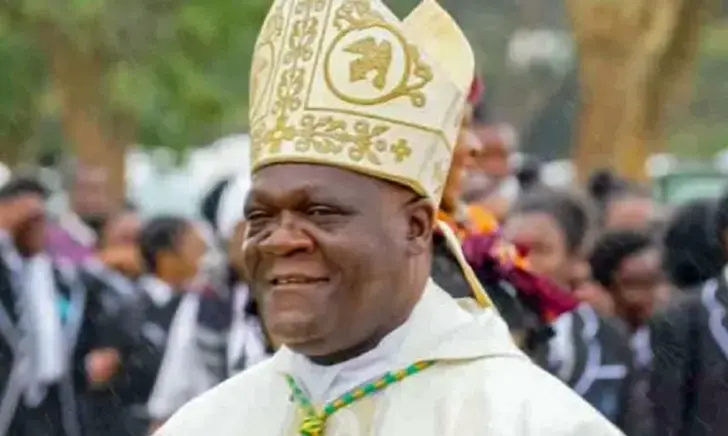
A former Member of Parliament has challenged the Drug Enforcement Commission to prioritise investigations into large-scale illicit financial flows instead of focusing on the alleged irregular acquisition of a vehicle involving Lusaka Archbishop Alick Banda.

In a strongly worded public statement, Sensio Banda, who previously represented Kasenengwa Constituency in Eastern Province, criticised the commission’s decision to summon the Archbishop over a Toyota Hilux allegedly obtained during the previous administration. Banda said that while no citizen should be exempt from the law, the emphasis placed on the case was disproportionate when viewed against Zambia’s wider economic challenges.

Banda said Zambia was facing what he described as systemic economic hemorrhage driven by grand corruption and illicit financial flows rather than isolated cases involving individual assets. He cited figures from the 2024 Financial Intelligence Centre Trends Report, which estimated that about US$3.5 billion was lost in a single year through tax evasion, illegal mining activities, trade mis-invoicing, and complex corporate schemes.

According to Banda, the scale of the reported losses far outweighs the alleged value of the vehicle under investigation. He said the estimated US$3.5 billion, roughly K81 billion, represented nearly 42 per cent of the 2025 national budget and could have been used to support health services, infrastructure development, and economic stabilisation.

He questioned why law-enforcement attention appeared to be directed at what he described as symbolic cases rather than investigations into multinational companies and networks flagged in financial intelligence reports. Banda said the absence of visible action against those implicated in large-scale capital flight raised concerns about enforcement priorities.

The former MP also referred to recent governance controversies, including the Zambia Medicines and Medical Supplies Agency case involving 61 containers of medical supplies. The scandal led to the withdrawal of about US$50 million in United States health assistance. Banda said while some officials were arrested, public accountability had not matched the scale of the consequences, particularly for clinics affected by shortages.

He further pointed to developments at the Anti-Corruption Commission, where the board was dissolved in 2024 following allegations by former commissioner O’Brien Kaaba that the institution had been compromised to protect senior officials. Banda said such events had weakened public confidence in the integrity of anti-corruption institutions.

Within this context, Banda said the summoning of a senior Catholic cleric, who has been vocal on governance and moral issues, was being received with scepticism by sections of the public. He said the timing of the investigation, as Zambia moves toward the 2026 general elections, risked being interpreted as selective accountability.

Banda noted that opposition political parties were financially weakened, while the Catholic Church remained one of the few institutions with nationwide reach and moral authority. He argued that shifting public focus from large-scale financial losses to a clerical asset dispute risked reshaping national debate away from deeper economic issues.

The former MP acknowledged the DEC’s position that its mandate was preventive rather than punitive, but said prevention should be proportional to the harm being addressed. He argued that focusing on alleged irregularities involving a small number of vehicles would not address the broader economic challenges caused by illicit financial flows.

He said the key test for law-enforcement agencies was whether they could demonstrate equal urgency in pursuing individuals and networks implicated in large-scale corruption. Banda warned that uneven enforcement could undermine public trust and blur the line between justice and intimidation.

The DEC has previously stated that no individual is above the law and that summonses form part of routine investigative procedures. The commission has maintained that investigations are conducted based on information arising from case records rather than political or religious considerations.

Banda concluded that meaningful progress in the fight against corruption would be measured by the recovery of public resources and accountability for large-scale economic losses rather than symbolic actions. He said public confidence would depend on whether enforcement efforts were seen to address systemic corruption rather than isolated cases.

How the State Turned an Archbishop into a Flashpoint

8
How the State Turned an Archbishop into a Flashpoint

“Sometimes the law answers the question of what can be done. Politics answers the harder question of whether it should be done that way, at that moment, to that person.”

By Cleophas Mangani

The summoning of Lusaka Archbishop Dr. Alick Banda by the Drug Enforcement Commission has now crossed a critical threshold. It is no longer merely a legal matter or a political controversy. It has become a national moment, charged with memory, faith, fear, and unresolved mistrust between the State and one of Zambia’s most influential institutions.

On the surface, the State insists there is nothing extraordinary about the matter. The DEC has maintained that the summons is a routine investigative step linked to a long-running case involving the disposal of Zambia Revenue Authority vehicles. Its Director General, Nason Banda, has stressed that no citizen is above the law, that a call-out is not a declaration of guilt, and that due process demands every person whose name arises in an investigation be given a chance to respond.

Legally, the argument is sound.

However, Zambia is not responding to this matter as if it were a courtroom file. It is responding to it as a story layered with history.

For many Zambians, the name Alick Banda does not surface in isolation. It resurfaces alongside memories that were never resolved. They recall the moment when the Archbishop was publicly denounced as “the Lucifer of Zambia” by a senior ruling-party official. They recall accusations that he was partisan, aligned with opposition politics, stripped of clerical neutrality in political rhetoric. They recall scenes of police presence at Catholic spaces, and years of hostility that were never formally acknowledged or corrected.

That history matters.

So when the State now says, “This is just procedure,” a significant portion of the public does not hear procedure. It hears pattern.

The timing has only deepened the unease. The summons was issued on New Year’s Eve, a day traditionally reserved for prayer, reflection, and national thanksgiving. For church leaders and congregations, it was a moment heavy with symbolism. The question that immediately followed was simple yet powerful: what was so urgent that it could not wait a day or two? Why summon a sitting Archbishop at the threshold of a new year, when discretion could have achieved the same legal purpose?

That question has not gone away.

The underlying ZRA case itself is more complex than public narratives suggest. Former ZRA Commissioner General Kingsley Chanda and former Director of Administration Callistus Kaoma were convicted for failure to follow procedure in the disposal of 22 vehicles. Yet records indicate that the vehicle associated with Archbishop Banda was not among those forming the basis of the convictions. ZRA documentation shows that obsolete vehicles were sold to employees, some of whom later transferred them to third parties. A gate pass dated November 2020 has circulated publicly as evidence that at least one such vehicle exited ZRA premises through administrative channels.

None of this renders the Archbishop immune to questioning. That point bears repeating. No citizen, cleric or otherwise, is above the law.

But the law does not operate in a vacuum.

As the saga unfolded, partisan platforms amplified suspicion, social media hardened into accusation, and commentary blurred the line between an individual inquiry and an institutional confrontation with the Catholic Church. The Church, which commands deep grassroots reach and is estimated to influence millions of voters, found itself drawn into a narrative it did not initiate.

Then came the public defence from the DEC. Measured. Procedural. Correct. And, for many, too late.

By the time assurances were given that the investigation was not political, that the DEC Director General himself is Catholic, that Archbishop Banda is his own Archbishop, the matter had already escaped the confines of law enforcement. It had entered identity, belief, and collective memory.

The intervention by Rev. Chilekwa Mulenga captured that shift vividly. Drawing from scripture, he framed the moment not merely as a legal dispute but as part of what he described as a sustained pressure on church leaders. He questioned the urgency, the manner, and the symbolism of the summons, arguing that even lawful authority must be exercised with wisdom, especially in a fractured environment.

His words resonated because they echoed a wider sentiment: that this episode feels less like an isolated investigation and more like the culmination of a long, unresolved tension between the State and the Church.

That perception has been reinforced by academic and civic commentary in recent years warning of attempts to contain the influence of the Catholic Church, to neutralise critical voices, and to weaken institutions that have historically acted as moral counterweights to political power. Whether those claims are accepted oar rejected, their persistence underscores a deeper problem, a trust deficit.

With elections less than a year away, the political implications are impossible to ignore. The Catholic Church is not merely a religious body; it is a social force. Actions that appear heavy-handed or poorly timed risk being read not as enforcement of law, but as provocation.

This is the heart of the Banda saga.

The State may well be legally correct. But legality alone does not guarantee legitimacy. Power exercised without sensitivity to history, timing, and perception can harden opposition rather than secure compliance.

In trying to assert that no one is untouchable, the State may have reminded millions why they feel targeted. In insisting on procedure, it may have underestimated memory. In pressing forward, it may have stepped on a political landmine of its own making.

Sometimes the law answers the question of what can be done.
Politics answers the harder question of whether it should be done that way, at that moment, to that person.


Kalumbinga–Mwamba Exchange Exposes Deeper National Tensions

A public exchange between former diplomat Emmanuel Mwamba and Lusaka-based church leader Bilon Kalumbinga has escalated into a sharp war of words over political rhetoric, religious institutions, and the state of governance in Zambia.

The exchange follows Kalumbinga’s public criticism of Mwamba’s recent commentary on the Drug Enforcement Commission’s summoning of Lusaka Archbishop Alick Banda. Kalumbinga had accused Mwamba of using alarmist language, particularly references to “civil conflict,” which he said risked misleading the public and stirring unnecessary fear.

In response, Mwamba has issued a pointed rebuttal, rejecting the accusation of incitement and challenging Kalumbinga’s consistency in defending Archbishop Banda. Mwamba questioned the church leader’s silence during earlier episodes in which Archbishop Banda was subjected to public attacks, hostile rhetoric, and police action.

Mwamba asked where Kalumbinga’s voice was when Archbishop Banda was publicly labelled “the Lucifer of Zambia,” when criminal charges against Batuke Imenda were withdrawn after remarks targeting the Archbishop, and when police officers reportedly kept Archbishop Banda outside the Cathedral of the Child Jesus for several hours. He also questioned Kalumbinga’s silence regarding content circulated by Koswe, a media platform Mwamba described as being run by State House staff, which he accused of promoting defamatory and hateful material against the Archbishop.

Responding directly to criticism over his use of strong language, Mwamba defended his references to potential unrest by citing international assessments. He said the International Monetary Fund’s 2023 country report warned that Zambia was facing economic, social, and political pressures severe enough to risk civil unrest. He added that a 2024 report by Human Rights Watch International expressed similar concern, warning that tensions could culminate in popular uprising.

Mwamba said his commentary was intended as a caution, not incitement. He argued that Zambia is at a fragile moment and accused President Hakainde Hichilema of failing to recognise the depth of public frustration. He alleged that the administration has enacted repressive and archaic laws, promoted what he described as authoritarian governance, and prolonged public suffering through the handling of load shedding, power cuts, and the rising cost of living.

He rejected suggestions that his commentary lacked legitimacy because he is outside the country, saying his past arrests, harassment, and torture were precisely because he spoke openly about governance and state conduct while living in Zambia.

Mwamba framed his writing as an extension of long-standing criticism of what he described as tyranny, injustice, and reckless governance, insisting that distance from the country does not invalidate his perspective or warnings.

The exchange has drawn public attention not only because of the individuals involved, but because it reflects broader national tensions around governance, law enforcement, religious institutions, and political expression. While Kalumbinga has urged restraint and responsible communication, Mwamba maintains that strong language is justified by what he views as the gravity of Zambia’s current challenges.

The confrontation highlights a widening divide over how national concerns should be articulated, where the line lies between caution and alarm, and who bears responsibility for the consequences of political speech in a polarised environment.

Hichilema Calls for Public Clarity on New Constitutional Law

Hichilema Calls for Public Clarity on New Constitutional Law
President Hakainde Hichilema has called for nationwide public education on the newly enacted Constitutional Amendment Act, urging civic and community leaders to ensure citizens fully understand its provisions and intended benefits.

The President made the remarks upon arrival in Choma, where he is spending a working holiday at his Harmony farm, weeks after assenting to the Constitutional Amendment Act, commonly referred to as Bill No.7 of 2025.

Hichilema said widespread understanding of the law was essential to counter misinformation and misinterpretation, particularly given the scale of the changes introduced by the amendment. He stressed that the reforms were enacted in the national interest and were not designed to benefit a select group.

The Constitutional Amendment Bill No.7 was passed by the National Assembly on December 15, 2025, after securing a two-thirds majority vote. The legislation introduces a mixed-member proportional representation electoral system, increases the number of constituency seats, and refines several legal definitions within the Constitution.

Hichilema said the amendment should be viewed as a foundation for broader governance reforms, adding that its success would depend on how well citizens understood both its structure and purpose. He tasked community leaders, civic educators, and political actors with explaining the law’s interpretation, meaning, and value at grassroots level.

The President linked the constitutional changes to his administration’s development agenda, placing emphasis on service delivery across key sectors. He reiterated the government’s commitment to the free education policy, saying transparency and efficiency were critical in the procurement and distribution of school supplies.

He said public confidence in government reforms depended not only on policy design but also on execution, particularly in areas that directly affect households. Education, he said, remained a cornerstone of national development and social mobility.

Hichilema also highlighted women empowerment programmes, noting that the constitutional amendment provided an opportunity to strengthen gender inclusion in national development processes. He said inclusive participation was necessary for sustained economic and social progress.

Turning to the management of the Constituency Development Fund, the President warned against substandard project implementation, saying public resources must deliver tangible value. He outlined what he described as a three-point benchmark for all CDF projects: the right quality, the right price, and timely delivery.

He said failure to meet these standards undermined public trust and weakened the developmental impact of decentralised funding. He urged local authorities and implementing agencies to enforce accountability at all stages of project execution.

On the political front, Hichilema described the August 2026 general elections as competitive and cautioned against complacency. He said electoral success would require clear strategy, strong mobilisation, and effective grassroots party structures.

The President said political parties and civic actors had a responsibility to engage citizens constructively and ensure that constitutional reforms were not distorted for partisan advantage. He stressed that informed participation was central to democratic stability.

He also commended youths for their continued contribution to national development, encouraging them to play an active role in civic education efforts around the new law. He said understanding constitutional changes was a collective responsibility and that no citizen should be left behind.

Upon arrival in Choma, Hichilema was received by Namani Monze, Chief Government Spokesperson Cornelius Mweetwa, Choma Mayor Javen Simoloka, and Members of Parliament Edgar Sing’ombe and Joseph Munsanje, alongside other senior government and party officials.

The President said continued engagement between leaders and communities would be critical as the country implements the new constitutional framework.

DEC Says Call-Out Is Standard Procedure, Not Punishment

The Drug Enforcement Commission has defended its decision to summon Lusaka Archbishop Alick Banda, rejecting claims that the move was politically motivated or targeted at the Catholic Church and insisting the action is part of a long-running investigation involving alleged misuse of government property.

DEC Director General Nason Banda said the summons should be understood as a routine investigative step and not an indication of guilt. He stressed that the law applies equally to all citizens, regardless of social standing, religious office, or public profile.

The matter has attracted significant public attention after reports emerged that Archbishop Banda had been called to appear before the commission, triggering debate about the rule of law, religious freedom, and the conduct of state institutions.

Addressing the issue, Banda said the case in question predates the current controversy and involves motor vehicles allegedly obtained illegally from the former Zambia Revenue Authority, now the Zambia Revenue Authority. He said some individuals connected to the matter had already been convicted, while others were still under investigation.

He said law-enforcement officers were obligated to follow up any person whose name arises in the course of an investigation, explaining that a “call-out” is the first procedural step used to allow a person to give their side of the story. According to the commission, such notices are private documents intended only for the recipient.

Banda criticised the public circulation of call-out letters on social media, saying the practice distorted the investigative process and unnecessarily exposed individuals to public judgment. He said the commission does not label people criminals before matters are determined by the courts and views the call-out process as a safeguard rather than a sanction.

The DEC chief also rejected suggestions that the investigation was linked to politics or religious targeting. He said he was himself a practising Catholic and described Archbishop Banda as his own archbishop, adding that the investigation was focused on a name appearing in case records rather than a religious title.

He explained that in previous cases, the commission had released seized vehicles and properties after investigations cleared individuals of wrongdoing, including returning rental income collected during seizure periods. He said such outcomes demonstrated that the commission was prepared to close cases where evidence did not support prosecution.

Banda said the purpose of the summons was to clarify facts and conclude the investigation, noting that cases should not remain open indefinitely. He said the commission was under obligation to complete matters brought before it and move on to other investigations once facts were established.

The DEC has maintained that due process requires giving individuals an opportunity to be heard before any determination is made, describing the summons as part of what he called “natural justice.” He said the commission’s role was investigative, not political.

The clarification comes amid heightened public sensitivity over law-enforcement actions involving prominent figures, particularly religious leaders, whose historical role in Zambia’s civic life has often placed them at the centre of national debate.

Kelvin Bwalya Fube Questions Use of State Power in Archbishop Matter

Kelvin Bwalya Fube Questions Use of State Power in Archbishop Matter

Concerns over the rule of law and the conduct of state institutions have been raised following reports that Lusaka Archbishop Alick Banda was summoned by the Drug Enforcement Commission, prompting renewed debate about governance, religious freedom, and the limits of investigative authority.

In a public statement issued on Tuesday, lawyer and political commentator Kelvin Fube Bwalya described Zambia as a constitutional democracy that must be governed by law rather than fear or suspicion. He called on law-enforcement institutions to act professionally, impartially, and without intimidation, particularly when engaging citizens who express views different from those of the government.

The reported summons of Archbishop Banda, a senior figure in the Catholic Church, has attracted public attention given the historical role of faith leaders in national discourse. While the precise details surrounding the summons have not been formally outlined by the commission, the matter has generated widespread concern among sections of the public and civic actors.

Bwalya acknowledged that no citizen is above the law, but stressed that the same principle applies to those in authority. He said government institutions must remain subject to constitutional limits and must not use investigative processes in ways that appear punitive or politically motivated.

He argued that when law enforcement actions are perceived to be triggered by criticism or moral dissent, the distinction between justice and punishment becomes blurred. Such perceptions, he said, risk eroding public trust and turning state institutions into instruments of intimidation rather than guardians of the law.

The statement also pointed to what Bwalya described as a growing tendency by the United Party for National Development administration to govern through suspicion, particularly when dealing with individuals who publicly question or challenge those in power. He warned that this approach could undermine democratic confidence and deepen national divisions.

Faith leaders, he noted, have historically occupied a protected and respected space in Zambia’s civic life, often contributing to peace-building efforts and offering moral guidance during periods of political tension. Subjecting such voices to investigative scrutiny without clear justification, he said, risks weakening social cohesion and diminishing the role of conscience in public affairs.

Bwalya referenced biblical scripture to underscore his call for fairness, citing Deuteronomy’s instruction that justice must be pursued without compromise. He said justice must not only be carried out, but must also be seen to be done, free from political influence, fear, or retaliation.

The statement outlined several demands, including an end to what he termed governing through suspicion, greater professionalism and restraint by state institutions, respect for freedoms of conscience, religion, and expression, and the equal application of the law to all citizens regardless of status or viewpoint.

While the Drug Enforcement Commission has yet to issue a detailed public response on the reported summons, the episode has amplified broader questions about how investigative powers are exercised in politically sensitive contexts. Legal analysts note that even lawful investigations can attract controversy when they involve prominent figures or intersect with matters of public criticism.

The debate also comes at a time when relations between the government and sections of civil society, including religious institutions, have drawn heightened scrutiny. Zambia’s constitutional framework guarantees freedom of religion and expression, placing an obligation on state institutions to balance enforcement duties with civil liberties.

Bwalya concluded by urging a return to confidence-based governance rooted in democratic values rather than intimidation. He said Zambia’s progress depended on institutions that unite citizens and command trust, rather than those perceived to divide or silence dissent.

As public discussion around the matter continues, attention is likely to focus on whether authorities provide clarity on the basis of the reported summons and how state institutions engage with religious and civic leaders going forward.a

The Ballot Is the Answer to Assented Bill 7 – Sangwa

The Ballot Is the Answer to Assented Bill 7 – Sangwa

With Constitution Amendment Bill No. 7 now signed into law, constitutional lawyer John Sangwa says the terrain of opposition has shifted decisively. The legal battle, he argues, has given way to a political one, and the remaining arena is the ballot box.

For months, Bill 7 dominated public debate, drawing sharp reactions from sections of civil society, churches, legal practitioners, and opposition figures who questioned both its substance and the manner of its passage. That debate has not ended. But with presidential assent secured, Sangwa says the nature of resistance must change.

Once a constitutional amendment becomes law, the pathways for reversal narrow. Courts may still interpret its provisions, but repeal or alteration now rests with future legislatures. That reality, in Sangwa’s view, places renewed emphasis on electoral participation rather than public outrage.

The signing of Bill 7 has intensified frustration among its critics, many of whom see assent as confirmation that their concerns were ignored. Sangwa does not dispute the depth of that disappointment. What he challenges is the response it provokes.

Withdrawal, he warns, is the most counterproductive reaction available. Disengagement does not weaken a law already in force; it insulates it. The only mechanism capable of revisiting Bill 7, he argues, is a Parliament elected with a mandate to amend or repeal it.

That requires a shift in strategy. Opposition to Bill 7 can no longer be framed as an attempt to stop its passage. It must now be articulated as a political programme aimed at changing the composition of the National Assembly.

The argument is procedural rather than emotional. Constitutional amendments are enacted by legislatures. Legislatures are chosen by voters. That chain, Sangwa notes, is unbroken even when outcomes are unpopular.

In that sense, Bill 7’s enactment clarifies rather than complicates the task ahead. It removes ambiguity about what must be done next. Those who oppose the amendment must organise around elections, not simply protest its existence.

Sangwa places responsibility squarely on voters to demand explicit commitments from candidates. Silence or ambiguity on Bill 7 should no longer be acceptable, he argues, given that the law is now in force and its consequences will unfold over time.

Campaigns, in this context, are not abstract contests between personalities. They become referendums on legislative choices. Bill 7, once an item of parliamentary procedure, now becomes a test of political accountability.

He also cautions against treating assent as the end of constitutional debate. Zambia’s constitutional history is marked by repeated revisions, many of them driven by electoral turnover rather than judicial intervention. Laws endure not because they are uncontested, but because they survive political cycles.

That endurance can be challenged, Sangwa argues, only through sustained civic engagement. Voter registration, issue-based mobilisation, and turnout are no longer supplementary activities; they are the primary tools available to opponents of Bill 7.

Civil society institutions, he suggests, must recalibrate their messaging accordingly. The task is no longer to stop a bill, but to educate citizens on how laws are undone within democratic systems. That distinction matters, particularly for younger voters encountering constitutional politics for the first time.

There is also a warning embedded in his assessment. Constitutional fatigue, when met with resignation, creates space for permanence. Laws become entrenched not solely through power, but through indifference.

The enactment of Bill 7 therefore sharpens the choice before its critics. They can treat assent as defeat, or as the starting point of a longer political contest. One path leads to quiet acquiescence. The other demands organisation.

Sangwa’s conclusion is unsentimental. Constitutional change is rarely reversed quickly. It is reversed deliberately, through elections that reshape legislatures and, over time, the laws they produce.

Bill 7 is now the law. Whether it remains so, he argues, will be decided not in protest alone, but in polling stations.

ZESCO Declares December Power Supply Target Achieved

State power utility ZESCO Limited says it met its internal target to improve electricity supply by December, pointing to increased generation, better load management, and improved system coordination as contributing factors.

The announcement follows months of constrained power availability driven by reduced water levels at major hydropower stations, heightened demand, and reliance on emergency generation. ZESCO says measures implemented during the year were designed to stabilise the grid ahead of the peak demand period.

According to the utility, the December benchmark was set as part of a broader operational plan aimed at reducing load shedding and restoring predictability to electricity supply. ZESCO says progress was recorded through a combination of increased generation inputs, system optimisation, and coordination with regional power markets.

Hydropower remains the backbone of Zambia’s electricity system, making supply highly sensitive to hydrological conditions. Prolonged dry spells earlier in the year reduced available capacity at key stations, forcing the utility to implement load management schedules and procure supplementary power.

ZESCO says part of its response involved power imports and short-term generation support to bridge supply gaps while longer-term stabilisation measures were put in place. These interventions, the utility says, were costly but necessary to prevent deeper disruptions to households, industry, and essential services.

The utility also points to system efficiency improvements, including better dispatch planning and maintenance coordination, as contributors to improved availability. By December, ZESCO says the cumulative effect of these measures resulted in a more balanced supply position.

Industry stakeholders have long argued that electricity reliability is central to economic activity, particularly for mining, manufacturing, and services that depend on continuous power. While ZESCO’s declaration signals progress, businesses remain cautious, noting that sustained improvement will depend on consistency rather than isolated milestones.

Energy analysts note that meeting an internal target does not automatically translate into uninterrupted supply for all consumers. Localised outages, infrastructure constraints, and demand fluctuations can still affect distribution even when overall generation improves.

ZESCO acknowledges these limitations, saying grid stability remains a work in progress. The utility says ongoing investments in generation diversification, transmission upgrades, and system resilience are intended to reduce future vulnerability to climate variability.

The December milestone, ZESCO says, should be viewed within a broader transition rather than as an endpoint. Power planning cycles extend over years, and sustained reliability will require continued capital investment and policy support.

The utility also points to demand-side management efforts, including efficiency campaigns and coordination with large users, as part of its strategy to balance supply and consumption during periods of stress.

As the new year begins, ZESCO says its focus will shift to maintaining stability while advancing medium- and long-term projects aimed at strengthening the power system. The utility says lessons from the past year are informing operational decisions as it navigates ongoing energy challenges.

Nevers Mumba’s Voice No Longer Central to Politics, but Belly – Mukandila

Patriotic Front member Celestine Mukandila has criticised former vice president Nevers Mumba, saying he should focus on rebuilding political relevance rather than issuing commentary on Zambia’s political affairs. He  actually exists in politics for the sake of his belly.

Mukandila said Mumba’s recent remarks on governance and opposition politics reflected a figure no longer anchored in active political structures. He said influence in contemporary politics was determined by organisational presence, grassroots mobilisation, and electoral participation rather than public statements made from outside party systems.

He said Zambia’s political environment had changed significantly, with relevance increasingly tied to measurable engagement with voters and participation in competitive politics. Mukandila said figures who were not actively leading political organisations or contesting elections should be cautious about positioning themselves as national voices.

According to Mukandila, Mumba’s previous roles in public office did not automatically translate into present-day influence. He said political relevance had to be renewed continuously through direct engagement with citizens and party structures.

Mukandila said opposition politics ahead of the 2026 general election was centred on rebuilding organisations, clarifying leadership, and mobilising supporters. He said commentary detached from these processes did little to influence outcomes or shape political direction.

He said the Patriotic Front, like other political parties, was focused on internal renewal and preparing for electoral competition. Mukandila said such work required discipline, clarity, and sustained engagement at community level rather than public debates driven by individuals without organisational backing.

Mukandila questioned the practical impact of Mumba’s interventions, saying there was little evidence that his statements translated into mobilisation, policy influence, or electoral momentum. He said political authority flowed from demonstrated support rather than media visibility.

He said Zambia’s electorate had become more discerning, increasingly assessing political actors based on their ability to organise, campaign, and present credible alternatives. Mukandila said voters were less influenced by historical status and more by current performance and presence.

Mukandila said opposition figures seeking relevance needed to commit to active participation, including contesting elections, building party structures, and engaging voters consistently. He said national influence could not be sustained through commentary alone.

He said Zambia’s democratic system allowed all citizens to express opinions, but distinguished between freedom of expression and political authority. Mukandila said leadership credibility was earned through accountability to a constituency.

Mukandila said Mumba remained free to contribute to public discourse, but said presenting personal views as representative of mainstream political sentiment risked mischaracterising the opposition landscape. He said political legitimacy came from structured participation in competitive politics.

He said opposition politics required coherence, particularly as parties navigated alliances, leadership contests, and mobilisation strategies. Mukandila said interventions that did not align with organised political effort risked adding noise rather than direction.

Mukandila also pointed to generational shifts within the electorate, saying younger voters were focused on delivery, organisation, and credibility rather than past titles. He said political actors needed to demonstrate relevance in present terms.

He said as the country moved closer to the 2026 elections, political influence would increasingly be tested through mobilisation and performance rather than commentary. Mukandila said relevance would be determined by voter engagement and electoral outcomes.

He said individuals seeking to shape national politics should do so by re-entering active competition and submitting themselves to public scrutiny through established democratic processes.

PF Says Convention to Follow January Court Rulings

The Patriotic Front has said it will proceed with its elective convention shortly after January 12, 2026, once pending court proceedings relating to the party’s leadership are concluded.

PF acting president Given Lubinda said the party had deliberately tied the convention timeline to the outcome of legal matters scheduled for hearing between January 9 and January 12, describing the move as necessary to protect the legitimacy of the process.

Lubinda said the PF had no intention of prolonging internal uncertainty beyond that period, adding that party structures were prepared to move forward regardless of the outcome of the court process. He said the convention would be held to elect substantive leadership and stabilise the party ahead of the 2026 general election.

According to Lubinda, the PF had opted to respect the judicial process while simultaneously setting a clear political deadline. He said the party would exhaust legal avenues available to it but would not allow litigation to paralyse organisational renewal.

He said preparations for the convention were already under way, with consultations taking place among party organs, including the central committee and the council of elders. Lubinda said the objective was to ensure that the convention strengthened unity rather than deepened divisions within the party.

Lubinda acknowledged that the PF had experienced internal strain following the death of former president Edgar Chagwalungu Lungu, saying the party was navigating a transition period while also responding to external political pressure.

He said the convention would provide an opportunity for members to choose leaders through established party procedures, adding that discipline and restraint were required from all aspiring candidates and their supporters.

Lubinda warned against the use of social media to inflame tensions, saying such conduct risked damaging the party’s credibility. He said party members were closely observing the behaviour of aspirants and would judge leadership suitability based on conduct as much as ambition.

He said the PF remained committed to participating fully in the 2026 electoral process and was determined to present itself as a credible opposition force. Lubinda said clarity on leadership was essential for effective mobilisation and policy positioning.

The PF has faced prolonged internal disputes following its loss of power in 2021, with competing claims over leadership structures and legal challenges contributing to delays in holding an elective convention.

Lubinda said the party’s decision to set a post-January 12 timeline signalled a turning point, adding that the PF would proceed to elect leadership under whatever political framework was available once the court process concluded.

Government Set to Deliver More Results in 2026 – Hichilema

President Hakainde Hichilema says his administration is prepared to deliver more in 2026, arguing that the initial years of his presidency were spent stabilising public finances and restoring confidence in the economy, creating conditions for wider implementation of government programmes.

Speaking as political activity begins to intensify ahead of the general election, Hichilema said the government had moved beyond what he described as an emergency phase inherited in 2021 and was now positioned to focus on execution across key sectors.

He said fiscal discipline and debt restructuring were prioritised early in the administration to arrest economic decline and rebuild credibility with investors and cooperating partners. According to the president, those measures were necessary before expanding development spending and scaling up public programmes.

Hichilema said the next phase would concentrate on translating policy decisions into measurable outcomes, with energy, infrastructure, agriculture and social services identified as priority areas. He said government institutions had been directed to shift from policy announcements to implementation within existing frameworks.

On energy, Hichilema said investments made in power generation and supply were intended to stabilise electricity availability and support economic activity. He said energy reliability remained central to industrial productivity and job creation, particularly for mining, manufacturing and small enterprises.

He also pointed to agriculture as a key pillar of the government’s delivery agenda, saying productivity, value chains and market access would remain areas of focus. Hichilema said improved coordination among ministries was intended to ensure that programmes reached intended beneficiaries without duplication or delay.

In social sectors, the president said education, health and social protection programmes would continue to receive attention, with emphasis placed on sustaining existing interventions rather than introducing new commitments. He said implementation efficiency would determine the pace of progress.

Hichilema acknowledged that households continued to face economic pressure, including the cost of living, but said reforms undertaken were aimed at stabilising conditions over time. He said the administration was conscious of public expectations and had instructed ministries to account for delivery against set targets.

The president said government performance would be monitored internally, with results guiding adjustments to programmes already under way. He said accountability mechanisms were being applied to ensure that public resources translated into tangible outcomes.

Hichilema said the administration’s approach going into 2026 would remain centred on execution, adding that delivery would be assessed through recorded outputs within ongoing programmes rather than through future pledges.

Opposition Alliance Endorses M’Membe, Names Five Vice Presidents

Opposition Alliance Endorses M’Membe, Names Five Vice Presidents

The People’s Pact has selected Fred M’membe as its presidential candidate for the 2026 general election, marking the most formal attempt yet by opposition parties to present a single challenger to the ruling United Party for National Development.

The decision was announced in Lusaka following consultations among member parties of the alliance, with the pact confirming that it would use the Socialist Party as its electoral vehicle for the August poll. Five vice presidents were also named to support the ticket, a structure the alliance said was intended to reflect collective leadership and shared responsibility.

Officials said the endorsement of M’Membe was driven by the need to avoid fragmentation that has characterised previous opposition efforts. They stated that the pact had resolved to field one presidential candidate in response to public calls for unity and coordination ahead of the election.

Addressing supporters after the announcement, M’Membe said the alliance had made a conscious decision to put aside internal competition in favour of what he described as a common national objective. He said the People’s Pact would campaign on a platform centred on economic justice, governance reform, and social protection.

M’Membe said the decision to unite behind one candidate followed extensive engagement with citizens, faith leaders, and civil society groups who had urged opposition parties to avoid splitting the vote. He said the pact believed Zambians wanted a credible alternative presented in a clear and organised manner.

The five vice presidents named to the ticket were identified as Robert Sichinga, Peter Sinkamba, Kaluba Simuyemba, and two other senior figures drawn from the alliance’s member parties. Pact officials said the appointments were intended to broaden representation across political and organisational lines within the opposition.

The announcement comes as Zambia moves into an election year marked by rising political activity and heightened scrutiny of economic management. Opposition parties have repeatedly cited concerns over the cost of living, energy supply, and public debt as key issues shaping voter sentiment ahead of August.

The ruling party, led by President Hakainde Hichilema, has maintained that its administration has stabilised the economy and laid the groundwork for long-term growth. Government officials have pointed to fiscal discipline, debt restructuring, and investment inflows as evidence of progress since 2021.

People’s Pact leaders said the selection of a single candidate was intended to ensure that opposition messaging remained focused and consistent throughout the campaign period. They said internal disagreements would be handled within alliance structures to avoid public disputes that could undermine credibility.

The alliance also said it would soon begin formal campaign preparations, including coordination of policy positions among member parties and engagement with the Electoral Commission of Zambia on procedural requirements.

The People’s Pact was formed as a coalition of opposition parties seeking to challenge the dominance of larger political formations by pooling resources and voter bases. Previous attempts at opposition alliances have struggled to maintain cohesion through election cycles, often collapsing over leadership disputes.

Pact officials said lessons had been drawn from those experiences, with the current arrangement placing emphasis on discipline and collective decision-making. They said the choice of M’Membe reflected internal consensus rather than individual ambition.

With the election calendar tightening, the alliance said its priority was to present itself as a stable and credible alternative capable of governing. Leaders said the coming months would test the durability of the pact and its ability to sustain unity under political pressure.

Lubinda says PF future hinges on unity, not court rulings

Lubinda says PF future hinges on unity, not court rulings

Given Lubinda has set out what he described as the Patriotic Front’s final path forward, telling journalists that the survival of the political movement founded by Michael Chilufya Sata would be determined by internal unity rather than court outcomes.

Speaking during a press interaction, Lubinda responded to pointed questions from Mr. Zulu, Madam Tawanda and Nelson on the credibility of state institutions, growing internal friction within the PF, and uncertainty surrounding the party’s convention scheduled after mid-January 2026. His remarks came amid sustained legal and political pressure on the opposition party, with several court processes expected to reach decisive stages in early January.

When asked by Nelson how the PF could accuse the justice system of being weaponised while still expressing confidence in court processes ahead of January 9 and January 12, Lubinda offered a cautious but firm response. He said the presence of selective justice did not cancel out the possibility of lawful decisions emerging from the courts. To illustrate the point, he compared the system to a handful of groundnuts, saying that the existence of a rotten one did not mean all were spoiled.

Lubinda pointed to the Constitutional Court ruling in the Mukandila and Munia Zulu case on Constitution Amendment Bill No. 7 as an example of what he described as correct judicial conduct within a broader environment he considers compromised. He said that ruling demonstrated why the PF had continued to pursue legal routes before taking major political decisions, despite its wider concerns about the justice system.

Pressed further by Mr. Zulu on what the party would do if the courts did not rule in its favour, Lubinda deliberately shifted his language away from formal party structures. He said the organisation created by Michael Sata and later led by Edgar Chagwalungu Lungu would continue “under whatever umbrella it chooses,” making clear that the movement would not allow its future to be determined by prolonged legal delays.

“We are giving ourselves only up to the 12th of January to use the judicial system,” Lubinda said, adding that once that window closed, the leadership would decide how to convene and elect new leadership without further postponement. His remarks suggested a readiness to move forward with internal processes regardless of the outcome of pending court matters.

The exchange with Madam Tawanda shifted the discussion inward, focusing on rising public concern over infighting among PF presidential hopefuls and the conduct of their supporters, particularly on social media platforms. She asked whether aspirants understood that the party’s interests should come before individual ambition at a time when the PF faced existential pressure.

Lubinda responded by drawing a clear line, stating that anyone within the PF who placed personal ambition above national duty was, in his words, “in the wrong place.” He said leadership ambition was legitimate only when it was anchored in service to citizens rather than factional advantage. Supporters who spread insults, hostility and division online, he added, were being closely watched by both party members and the wider public.

He said PF members were already forming their own judgments about which aspirants were working to unite the party and which were fuelling acrimony. Those contributing to division, Lubinda warned, were doing so at their own peril, as internal sentiment would ultimately influence the direction and leadership of the movement.

Lubinda also disclosed that the PF Council of Elders was actively engaging all aspiring candidates to secure agreement on a convention process that would strengthen the party rather than fracture it. He said holding a convention that produced a divided outcome would defeat the purpose of the exercise and weaken the movement at a critical moment.

“If I knew a convention would destroy the party, I would leave before it happened,” Lubinda said, stressing that the objective of the process was renewal, not rupture. His remarks underscored concerns within the party that unresolved rivalries could undermine efforts to present a united front ahead of the 2026 general election.

Beyond internal party dynamics, Lubinda addressed the broader role of the media and digital platforms in shaping political discourse. He urged journalists and social media users to resist becoming conduits for hostility, arguing that they carried a responsibility for national cohesion during politically sensitive periods. Responsible journalism, he said, was an essential pillar in maintaining stability and informed public debate.

The interaction highlighted the tension facing the PF as it navigates legal uncertainty, leadership succession and public expectations simultaneously. Lubinda’s responses framed the coming weeks as decisive, not only for determining how the party conducts its convention, but also for whether the movement can reassert cohesion after a prolonged period of internal and external pressure.