Monday, June 8, 2026
14.8 C
Lusaka
Home Blog Page 191

President Hichilema aids Kasama SDA Church Building

0

President Hakainde Hichilema has joined other stakeholders in supporting Mulenga Hills Seventh Day Adventist (SDA) Church in Kasama District of Northern Province with resources towards the completion of the new church building.

Special Assistant to the President for Politics, Levy Ngoma, who congregated with the church says the move is in fulfilment of the pledge President Hichilema made when he congregated at the church in August last year.

He explained that during his visit to Kasama District, President Hichilema pledged to support the construction of the church building, a pledge he has now honoured.

Mr Ngoma said the gesture will help the church grow both spiritually and in membership.

He added that President Hichilema and his government value the church as an important institution that contributes positively to national governance.

Mr Ngoma further noted that the church plays a key role in promoting peace and unity in the country by guiding its members to uphold what is right.

He called on the SDA Church to continue encouraging its congregants to uphold Christian values and morals.

Meanwhile, North Zambia Field Seventh Day Adventist President Alphet Siame, commended the President for the gesture.

Pastor Siame said the donation will significantly improve the status of the church, noting that the current building is inadequate to accommodate the growing number of members.

He observed that President Hichilema is known for delivering on his promises, which he said explains the development the country has continued to experience since he assumed office.

Pastor Siame added that the church is ready to work with the government to ensure development reaches the people.

He said the church evangelises among the same people governed by the state, making collaboration between the two institutions important.

Pastor Siame appealed to Zambians to support the vision of the President and his government in order to transform the country’s economy.

An Archbishop’s Long Walk to D.E.C, may be A wrong Walk to 2026 Polls for UPND

An Archbishop’s  Long Walk to D.E.C, may be A wrong Walk to 2026 Polls for UPND

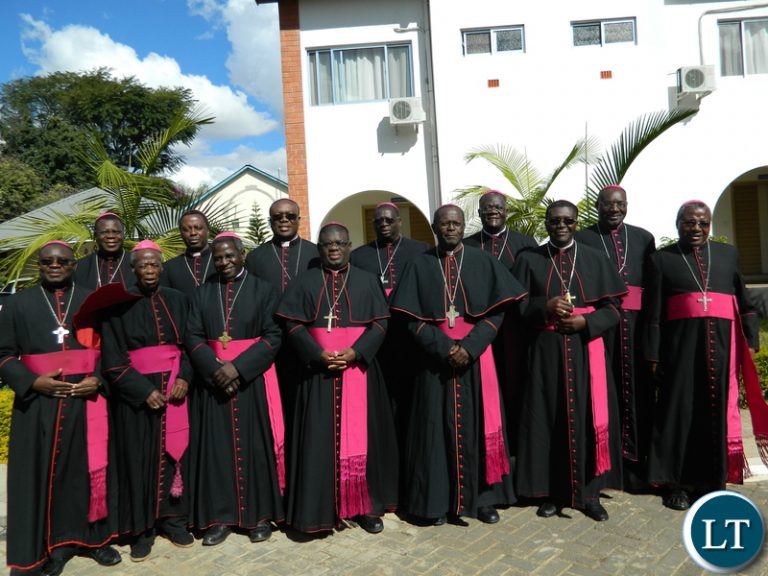
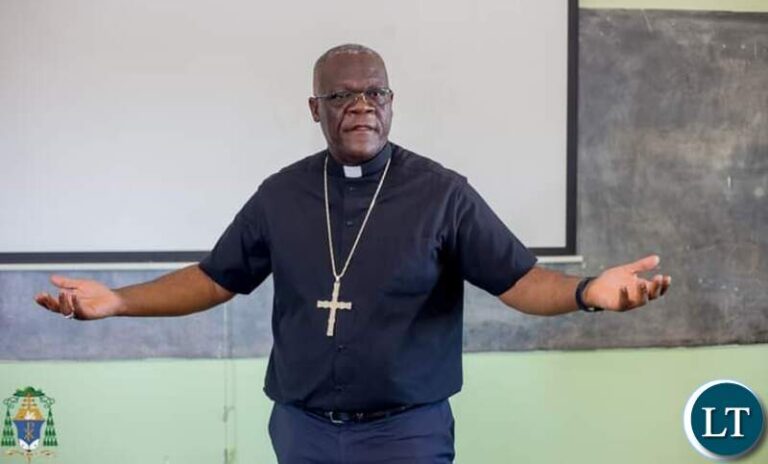
Archbishop of the Archdiocese of Lusaka, Dr Alick Banda, is currently being interviewed by the Drug Enforcement Commission in a development that has rapidly evolved into a defining political moment rather than a routine investigative appearance.

The Archbishop arrived at DEC premises accompanied by his legal team, including lawyers Jonas Zimba, Lungisani Zulu, and John Sangwa, all of whom were seen being granted access by police officers stationed at the entrance. Security around the premises was visibly tightened as the interview commenced.

Outside the offices, police restricted access to several political figures who had converged at the scene. Among those blocked were Socialist Party leader Dr Fred M’membe and Patriotic Front acting president Given Lubinda. Their exclusion, juxtaposed with the controlled entry of the Archbishop’s lawyers, heightened public attention and reinforced the sense that the proceedings carried broader political significance.

The mood around the DEC offices is sober but electric. While no public disorder was recorded, the atmosphere reflected a nation acutely aware that the moment may resonate far beyond the confines of a single investigation. For many Zambians watching closely, the Archbishop’s walk into DEC has taken on symbolic weight, interpreted by some as a “Long Walk to DEC” and by others as a potentially consequential “Wrong Walk to the Polls 2026 for the UPND Government.”

At the heart of the matter is a motor vehicle linked to Archbishop Banda, around which sharply competing narratives have emerged. Claims circulating in public discourse suggest that the vehicle was donated by the Zambia Revenue Authority or the government, allegations that have been strongly disputed.

A zambian Hopewell Chin’ono has publicly rejected those claims, stating that available documentation points to a private transaction rather than a state donation. According to Chin’ono, the vehicle was acquired through a Zambia Revenue Authority auction by a private individual, Mulopa Kaunda, acting in his personal capacity. He has stated that Kaunda later donated the vehicle to Archbishop Banda, who subsequently registered it in his own name.

Chin’ono has further indicated that a receipt of sale and a gate pass authorising the release of the vehicle after payment by Kaunda have been made public. The gate pass, issued by the Zambia Revenue Authority, is said to confirm that the vehicle was released following a completed auction process, contradicting assertions that it originated as a government or institutional gift.

Despite these explanations, the issue has expanded beyond the vehicle itself, becoming entangled in wider political and institutional tensions. Figures aligned with the ruling party have portrayed Archbishop Banda as sympathetic to former president Edgar Lungu. At the same time, voices within the Catholic Church have accused President Hakainde Hichilema and his administration of targeting or persecuting the Archbishop.

These accusations are closely linked to Archbishop Banda’s past criticism of the administration and his opposition to recently enacted constitutional changes. The changes include proposals affecting constituency delimitation, an increase in parliamentary seats by 113, and the removal of term limits for mayors.

As a result, what began as a question surrounding the ownership and disposal of a vehicle has shifted into a broader national moment touching on church-state relations, the exercise of law enforcement authority, and political tolerance. some citizens argue that facts have been eclipsed by partisan positioning, while defenders of the process insist that the law must apply without exception.

Yet for a significant section of the public, today’s developments are being assessed less through legal technicalities and more through their political consequences. With the 2026 general elections approaching, many Zambians are weighing how such moments shape trust in institutions, the political climate, and the perceived neutrality of the state.

As Archbishop Banda’s interview continues, the country watches closely. Whether this moment is remembered as a necessary step in upholding accountability or as a misjudged escalation with electoral consequences may ultimately be decided not at DEC, but at the ballot box.

The Lord’s warning: “One should NEVER attack a Priest, even when he’s in error.”

Edward Chisanga

Priests are human, hence prone to criticism

As a Catholic myself, and I think anyone else, I have questions, and even problems
with our own Priests. For they are human, and an integral part of the world. And, like
anyone else, they’ll be subjected to earthly challenges our Archbishop Alick Banda
faces today. The Bible says, “Blessed is the man who remains steadfast under trial,
for when he has stood the test he will receive the crown of life, which God has
promised to those who love him.”

I, and anyone else even wish I could pillory them. But I was blessed to come across
God’s writings about criticizing priests early in life. That’s how I came to a crashing
and unflinching halt. And, I invite you to do the same. For, if you don’t and think you
can simply and uncontrollably inflict undue pain on a priest, know that you’re
desecrating.

But, be warned: Never attack a priest

The Lord’s writing is clear. We must protect the sanctity of priesthood. We may wield
political and gun power over humble and harmless priests, as is the case in some
countries and now even here. But we’re reminded that “the role of the priest as a
proxy is evident in the sacrificial system outlined in the Pentateuch. The priest ats as
a representative, standing in the place of the people to perform the necessary rituals
that restore their relationship with God. This proxy service underscores the holiness
required to approach God and the need for an intermediary due to human
sinfulness.”

The Lord warns, “One should NEVER attack a priest, even when he’s in error, rather
one should pray and do penance that I’ll grant him My grace again. He alone fully
represents Me even when he doesn’t live after My example.”

It continues, “When a Priest fails, we should extend him a helping hand through
prayer and not through attacks. I myself will be his judge, no one but I. Whoever
voices judgment over a priest has voiced it over me; child, never let a Priest be
attached, take up his defence. Child, never judge your confessor, rather pray much
for him and offer every Thursday, through the hands of My blessed Mother, Holy
Communion. Never again accept an out of the way word about a Priest, and speak
not unkind word about them even if it were true. Every priest is my Vicar and My
Heart will be sickened and insulted because of it.”

Then He says, “If you hear a judgement against a priest pray a Hail Mary.”
God continues, “If you see a Priest who celebrates the Holy Mass unworthily then
say nothing about him, rather tell it to Me alone. I stand beside Him on the altar Oh
pray much for my priests, that they’ll love purity above all, that they’ll celebrate the
Holy Sacrifice of the Mass with pure hands and heart. Certainly, the Holy Sacrifice is
one and the same even when it’s celebrated by an unworthy priest but the graces
called down upon the people is not the same.”

He then says, “Mary, Queen of the Clergy, pray for them.”

Pray for Priests

The Lord says, “Keep them, I pray, Thee, dearest Lord, keep them, for they’re Thine
-Thy priests whose lives burn out before Thy consecrated shrine. Keep them, for
they’re in the world. Though from the world apart, when earthly pleasures tempt,
allure – Shelter them in Thy heart. Keep them, and comfort them in hours of
loneliness and pain, When all their life of sacrifice For souls seems but in vain. Keep
them and O remember Lord, They’ve no one but Thee. Yet they have only human
hearts. With human frailty. Keep them as spotless as the Host, that daily they caress
their every thought and word and deed.. Deign, dearest Lord, to bless.”

Minister says DEC summons targets individual, not the Catholic Church

Minister says DEC summons targets individual, not the Catholic Church

Home Affairs Minister Jack Mwiimbu has rejected claims that the government is targeting the Catholic Church, saying the summoning of the Archbishop of Lusaka by the Drug Enforcement Commission is a routine law-enforcement process directed at an individual and not at the church as an institution.

Briefing the media, Mwiimbu said there was no motive for the state to target the Catholic Church, stressing that he himself is a Catholic and a law-abiding citizen. He said suggestions that the government is hostile to the church are unfounded and do not reflect the actions or intentions of the state.

The minister said appearances before law-enforcement agencies by prominent public figures are not new in Zambia and should not be interpreted as persecution. He cited past examples of senior national leaders who had been called to account by law-enforcement bodies, including former presidents Kenneth Kaunda, Frederick Chiluba, Levy Mwanawasa, Rupiah Banda and the current Head of State, Hakainde Hichilema, who appeared before the police on several occasions before assuming office.

Mwiimbu said the fact that a prominent individual is summoned by a law-enforcement agency should not be treated as unusual or alarming, adding that such processes are part of the country’s accountability framework. He said this applied equally to church leaders, noting that the Archbishop of Lusaka is not the first senior church figure to appear before law-enforcement agencies, either in Zambia or elsewhere.

According to the minister, when individuals holding leadership positions in churches are called to account, they do so in their personal capacities and not on behalf of their institutions. He said accountability in such cases has nothing to do with targeting a church and should not be presented as such.

Mwiimbu said the government remains committed to upholding and respecting the rights of all individuals. He added that when any individual is suspected of having breached the law, they are required to account for their actions in accordance with legal procedures, regardless of their position or standing in society.

Addressing concerns surrounding the scheduled appearance of Archbishop Banda, the minister said the call-out by the Drug Enforcement Commission is a routine process applied to anyone accused of violating the law. He stressed that the summons does not imply guilt and should not be interpreted as a judgment on the Archbishop.

He said the purpose of the appearance is for the commission to hear the Archbishop’s side of the story so that the matter can be concluded. Mwiimbu said it was therefore unfair for anyone to suggest that the government is targeting the Catholic Church, when the issue concerns an individual responding to allegations.

The minister also referred to international examples where senior Catholic clergy have faced legal processes, including cases involving bishops and cardinals outside Zambia. He said such actions do not amount to churches targeting themselves but reflect the principle that individuals are answerable in their personal capacities.

Mwiimbu further assured the nation that the government has no intention of interfering with a prayer meeting called in support of the Archbishop. He said the church would freely exercise its right to pray and that no one would interfere with religious activities.

He said the police would only provide the necessary security arrangements to ensure public order and national safety, stressing that maintaining peace and stability remains the responsibility of the state. Mwiimbu thanked members of the public for their orderly conduct during the festive period and said the security situation in the country remained stable.

The minister also said the government is open to dialogue with the church on issues of national interest. He said the President had received a proposal for dialogue from the church and looked forward to engagement, in line with the government’s position that dialogue remains the appropriate way to address national concerns.

Responding to questions from journalists, Mwiimbu reflected on past incidents when President Hichilema was summoned by the police while in opposition. He said previous administrations had insisted that the President could not appear before law-enforcement agencies accompanied by supporters, citing legal and regulatory provisions.

He recalled instances where opposition supporters were dispersed when they accompanied the President to police appearances, including the use of tear gas. Mwiimbu said the law had been clear on the issue of escorts and gatherings around police call-outs, and that these principles continued to guide the conduct of law-enforcement agencies.

He said the government’s position remains that accountability processes should proceed in an orderly manner, without creating situations that could compromise public safety. Mwiimbu said the police would act within the law and provide security as required, while ensuring that individual rights are respected.

The minister said he briefed the nation to clarify the government’s position, calm public anxiety and address what he described as misplaced fears that the state was acting against the Catholic Church. He said the government remains committed to maintaining peace, protecting constitutional rights and engaging stakeholders through dialogue.


Zambia Must Prosper challenges DEC process in Archbishop Banda inquiry

Zambia Must Prosper leader Kelvin Fube Bwalya has raised legal, constitutional, and ecclesiastical objections to the Drug Enforcement Commission’s decision to summon Archbishop of Lusaka Alick Banda, arguing that the move reflects a fundamental misunderstanding of both criminal law and church governance.

Speaking during a public address delivered while on holiday, Kelvin Fube Bwalya, acting in his capacity as leader of Zambia Must Prosper, described the summons as a matter of national concern requiring clarity rather than conjecture. He confirmed that the Archbishop had been summoned by the DEC in connection with alleged money laundering and questioned the legal basis upon which the inquiry had been framed.

Kelvin Fube Bwalya anchored his remarks in the broader framework of constitutional democracy, stating that Zambia’s governance system is premised on the rule of law, good governance, and moral justice. He argued that leadership in a democratic society should be exercised through service and discernment, not through actions that may be perceived as intimidation or public embarrassment.

Addressing the structure of law enforcement in Zambia, Zambia Must Prosper stated that institutions such as the DEC, the Zambia Police Service, and the Anti-Corruption Commission operate under statutory arrangements that place them within executive oversight. According to Kelvin Fube Bwalya, this framework makes it implausible for an action of such public significance to occur without awareness at the highest levels of government.

The Zambia Must Prosper leader then turned to the governance structure of the Catholic Church, outlining that archbishops are appointed by the Vatican and report through established ecclesiastical and diplomatic channels. He argued that summoning an Archbishop carries implications beyond the individual cleric and touches on institutional relationships that require careful handling.

Central to the objection raised by Zambia Must Prosper was the issue of church donations. Kelvin Fube Bwalya explained that churches receive financial and material support from congregants and benefactors under strict principles of confidentiality. He noted that Catholic clergy are bound by moral and ethical obligations not to disclose donor identities, likening this responsibility to the professional confidentiality observed by lawyers and medical practitioners.

He argued that the summons places Archbishop Banda in a position where responding fully to questions about donations could require breaching church doctrine. According to Zambia Must Prosper, the exercise of the right to silence under such circumstances should not be construed as obstruction or admission of wrongdoing but rather as adherence to established ethical obligations.

Kelvin Fube Bwalya also challenged the legal framing of the alleged offence, stating that money laundering cannot exist in isolation and must be anchored to a predicate offence. He questioned whether the DEC had identified any underlying criminal activity attributed to the Archbishop that would generate proceeds capable of being laundered. He asked whether there was any allegation that Archbishop Banda had personally engaged in theft, fraud, drug trafficking, or other illicit conduct.

To illustrate the normalcy of church donations, Zambia Must Prosper referenced historical practices in which political leaders across administrations have made contributions to churches of various denominations. Kelvin Fube Bwalya questioned whether such donations, long accepted as part of religious life, could retrospectively be criminalised without destabilising church-state relations.

Concerns were also raised about the public nature of the summons. Zambia Must Prosper argued that matters involving senior religious figures should be handled with discretion to avoid unnecessary public tension. Kelvin Fube Bwalya noted that the Catholic Church represents a significant portion of Zambia’s population and that actions taken against its leadership inevitably resonate beyond legal procedure.

The statement further referenced past instances where Archbishop Banda and other senior clerics have intervened in politically sensitive situations, including peace-building efforts and engagement with detained political figures. Zambia Must Prosper presented these actions as part of the Church’s longstanding role in national reconciliation.

Kelvin Fube Bwalya cautioned that law enforcement actions framed as procedural may be perceived differently when directed at moral or religious leaders, particularly in a politically charged environment. He warned that such perceptions could contribute to instability if not managed with restraint and clarity.

Zambia Must Prosper concluded its address by affirming its support for Archbishop Banda and reiterating its commitment to constitutional order, church principles, and moral ethics. Kelvin Fube Bwalya stated that the organisation would not accept what it described as harassment or intimidation of religious leadership and confirmed that the address represented its formal position on the matter

Collecting taxes in yuan is great, but what happens next?

7

COLLECTING TAXES IN YUAN IS GREAT. BUT THEN WHAT?

By Brian Matambo | Lusaka, Zambia

So, I was reading social media posts by former Republican Vice President Dr. Nevers Mumba, as well as Dickson Jere, the former press aide to late President Rupiah Banda. Both are in praise of the now widely reported development that Zambia will accept tax payments from Chinese companies in yuan.

With all due respect, I do not see what there is to get excited about. And the reasons are very simple, yet fundamental.

The excitement assumes that the form in which tax is paid is the issue. It is not. The real issue is how much tax is collected and whether it bears any meaningful relationship to the value being extracted from the ground.

Copper prices today are higher than they were in 2021. Then, a metric tonne traded between roughly US$7,900 and US$11,000. Today it is around US$12,600. If higher copper prices were translating into national benefit, the signs would be obvious. The currency would be firmer. Fiscal pressure would be easing. The cost of living would be responding. None of this is happening.

In 2021, the Kwacha traded between about K16.72 and K21.43 to the dollar. Today it is around K22.06. Copper has climbed. The Kwacha has not. That divergence tells you everything you need to know. Zambia is not capturing the upside of its own resource.

This is because Zambia does not own the mines in any meaningful sense. What the country earns from copper comes largely through taxes and royalties, not through profits. The bulk of the value created by higher prices accrues to foreign owners and offshore balance sheets. Zambia receives a narrow stream while the river flows elsewhere.

Against that reality, the debate about whether taxes are paid in dollars or yuan is a distraction. The currency of collection does not change the structure of extraction. It does not increase ownership. It does not expand profit capture. It merely alters the route through which a limited amount of value passes.

Yes, accepting taxes in yuan may reduce conversion costs. Yes, it may ease pressure on dollar reserves. Yes, it may marginally lower the cost of servicing Chinese debt. These are administrative efficiencies. They are not economic breakthroughs.

A country does not become prosperous by optimising how it collects a small share of someone else’s wealth. It becomes prosperous by owning the asset that generates the wealth in the first place.

The focus, therefore, should not be on the novelty of collecting taxes in Chinese currency. It should be on whether the taxes themselves are adequate and whether Zambia’s stake in its mining sector reflects the scale and importance of the resource. On that score, there is little cause for celebration.

Until Zambia owns larger stakes in its mines, copper price increases will continue to feel abstract. The numbers will look impressive on charts, but daily life will remain unchanged. The resource will be booming, yet the country will not.

That is the discussion we should be having. Everything else is surface noise.

Vice President assures Lundazi flood victims of continued support

Vice President assures Lundazi flood victims of continued support

Vice President Dr. W.K. Mutale-Nalumango has assured flood-affected communities in Lundazi District that she will return to the area in February, reaffirming government commitment to sustained support following recent flooding that displaced several families.

Dr. Mutale-Nalumango made the pledge after touring flood-impacted areas, including Mphamba Bridge, before proceeding to Vigodo Ground, where she addressed displaced residents and observed ongoing emergency response efforts.

During the visit, the Vice President described the evacuation of residents as a moment of responsibility and shared humanity, noting that ordinary citizens who depend on national resources must be protected when disasters strike.

She said emergency teams prioritised evacuating families from high-risk zones and relocating them to safer locations identified by the Disaster Management and Mitigation Unit (DMMU), whose personnel she commended for working on the ground under difficult conditions.

The Vice President said leadership during natural disasters requires decisive action guided by compassion, adding that the response in Lundazi reflects the governance approach of President Hakainde Hichilema, which places dignity, safety, and the well-being of citizens at the centre of public service.

The visit follows earlier reports of flooding in Lundazi, where heavy and sustained rainfall caused water levels to rise, threatening homes, infrastructure, and access routes. Authorities moved in to stabilise the situation through evacuation, temporary shelter, and monitoring of affected areas.

Significantly, the flood response in Lundazi has seen cooperation across political lines. Lundazi Member of Parliament Brenda Nyirenda, an opposition lawmaker, has also been actively involved in response efforts, setting aside political considerations to focus on the humanitarian needs of affected residents.

Ms. Nyirenda toured the water treatment plant in the district to assess its condition and operational capacity amid flooding concerns, highlighting the importance of safeguarding water supply and public health during emergencies.

Local officials said the MP’s engagement formed part of broader efforts to ensure that essential services remain functional despite the impact of floods, particularly in communities where infrastructure is vulnerable.

The Vice President acknowledged the role of local leadership and Members of Parliament in responding to the crisis, noting that effective disaster management depends on cooperation between central government, local authorities, and community representatives.

Dr. Mutale-Nalumango said her planned return to Lundazi in February would allow government to review progress made, assess remaining challenges, and consider longer-term measures to reduce flood risk in the district.

She urged residents in flood-prone areas to continue cooperating with authorities and to heed safety advisories, emphasising that early evacuation remains one of the most effective ways to prevent loss of life.

The Vice President said government would continue working with the DMMU, local councils, and elected leaders to monitor conditions and provide support to displaced families as recovery efforts continue.

When the Drums Rolled Toward the Altar

1
When the Drums Rolled Toward the Altar

By Lusungo Mukape

The battle did not open with sirens or boots on the ground. It began with language.

From a studio in Lusaka, UPND Media Director Mark Simuuwe advanced the first volley, urging “respect for due process” while carefully drawing a line between the Catholic Church and one of its most senior shepherds. It sounded procedural, measured, almost conciliatory. But in wars of conscience, language is never neutral. It is artillery.

Simuuwe insisted that relations between the State and the Catholic Church remain cordial, even as he framed Archbishop Alick Banda as an individual subject to investigation like any other citizen. The Drug Enforcement Commission, he said, was merely doing its constitutional duty. Due process must run its course. The Church, he argued, should not be dragged into “individual clergy matters.”

That framing was the strike.Because Archbishop Alick Banda is not just another man. He is  an institution.

To reduce him to an isolated actor is to flatten history, vocation, and moral authority into a police docket. It is to pretend that the mitre carries no weight, that the altar is just another podium, that the voice formed by centuries of pastoral witness can be neatly separated from the institution that ordained it.

Simuuwe quoted the Archbishop’s own words, “a wrong is a wrong no matter who is involved,” and turned them back on him like captured weapons. He argued that alleged personal omissions by clergy must not implicate the Church. Courts will decide. Evidence will speak. Convictions will follow where appropriate. No innocent person, he said, sits in prison without judicial determination.

This was not dialogue. It was containment. The Church understood immediately. That is why the Zambia Conference of Catholic Bishops did not respond with platitudes or pastoral vagueness. Their Statement of Solidarity was a counter-offensive, calm but unmistakable. It named what was unfolding: the targeting of a prophetic voice, the weaponisation of state machinery, the shrinking of civic and moral space.

These were not casual accusations. The Church chooses words the way generals choose terrain. Someone, urgently, needs to sit Mark Simuuwe and the UPND down and explain a basic truth of Zambian history. The Church is not an NGO. It is not an opposition party. It is not a pressure group auditioning for relevance. It is a foundational pillar of this nation. Long before party slogans and campaign jingles, the Church educated the poor, healed the sick, buried the dead, reconciled the broken, and spoke when silence was fashionable. To argue otherwise is to declare war on memory. And memory always wins.

And this is where the battle lines widened. This did not remain a Catholic affair. Pentecostals stepped forward. Others followed. This was no denominational skirmish. It was a civic mobilisation. When one church is pressured for speaking about the cost of living, governance, justice, and human dignity, every pulpit feels the tremor. Seventh-day Adventists included. Silence would have meant surrender.

Clergy are not called to comfort. They are called to burden. They absorb blows so society does not fracture. Yes, they are citizens. But they are also sentinels. When sentinels are targeted, the gate is already under attack.

Simuuwe’s remarks introduced a dangerous confusion into the field. Moral critique was recast as misbehaviour. Preaching about economic hardship was treated as political agitation. The implied demand was clear: a church that baptises silence and sanctifies suffering. That is not Christianity. That is convenience theology.

Worse still was the rhetorical escalation. Metaphors of Lucifer, fallen glory, and satanic imagery were hurled at a serving archbishop. That was not analysis. It was provocation. Awe bane. Tulekwatako umuchinshi. Words wound before actions do.

The bishops were right to condemn name-calling, intimidation, and persecution as injuries not just to the Body of Christ, but to national unity itself. Their message was unambiguous: the Church’s voice must remain free to speak truth to power, to comfort the afflicted, and to guide Zambia toward peace, unity, and justice. Dialogue and mutual respect are the lawful currency of a democracy. Anything else is a march into darkness, however bright the microphones.

Archbishop Alick Banda does not need political defence. Institutions do not beg for relevance. They endure.

And that is why this moment matters. Not because of one man, but because of what happens to a nation that forgets the difference between noise and conscience.

The line has been drawn. Many more are standing on it than some imagine. This is not theatre. It is a defining moment.

Mumbi says washing PF dirty linen in public is childish

Mumbi says washing PF dirty linen in public is childish

Patriotic Front (PF) member Mumbi Phiri has criticised the growing trend of public exchanges among party members, describing the practice of airing internal disputes in public as childish and damaging to the opposition party’s credibility.

Mumbi said the PF is weakening itself by allowing internal disagreements to spill into the public domain, arguing that such conduct undermines party cohesion and erodes public confidence in its leadership.

She said internal differences are inevitable in any political organisation but insisted that mature leadership requires disputes to be handled through established party structures rather than through the media or social platforms.

According to Mumbi, the continued public airing of disagreements has created the impression of a divided party unable to manage its internal affairs. She said this perception weakens the PF’s ability to present itself as a credible alternative to the ruling party.

Mumbi warned that public quarrels among party members provide ammunition to political opponents and distract from substantive engagement on national issues. She argued that PF leaders should focus on rebuilding unity and discipline rather than engaging in public confrontations.

She said party members must remember that political disagreements should strengthen debate internally, not fracture the organisation publicly. According to Mumbi, discipline and respect for party processes are essential if the PF is to regain public trust.

Mumbi also urged party leaders to exercise restraint in their public statements, warning that careless remarks often escalate tensions unnecessarily. She said responsible leadership requires measured communication and adherence to internal mechanisms for resolving disputes.

She added that the PF’s supporters expect maturity and leadership from those entrusted with representing the party, not public quarrels that diminish its standing.

Mumbi said unity does not mean the absence of differing views but the ability to manage differences constructively and privately. She argued that a party that cannot resolve its internal disputes risks losing relevance in the political landscape.

She urged PF members to reflect on the long-term impact of public infighting, saying rebuilding credibility requires discipline, cohesion, and respect for internal structures.

Simuuwe defends due process, says case involves individual, not Church

Simuuwe defends due process, says case involves individual, not Church

United Party for National Development (UPND) Media Director Mark Simuuwe has defended the government’s position regarding investigations involving Archbishop Alick Banda, arguing that the matter concerns an individual and not the Catholic Church as an institution, and should be allowed to proceed strictly within the confines of the law.

Simuuwe said public debate surrounding the matter has blurred an important legal distinction between institutional responsibility and personal accountability, stressing that law enforcement agencies are constitutionally obligated to investigate matters brought before them, regardless of the individual involved.

He explained that the investigation relates to a vehicle whose ownership, according to official government records and the White Book, is registered in the name of Alick Banda as an individual, not in the name of the Catholic Church or any of its institutional structures. Simuuwe argued that this distinction is central to understanding why the matter is being treated as a personal legal issue rather than an institutional confrontation.

According to Simuuwe, allowing the law to take its course should not be interpreted as hostility toward the Church or its leadership. He maintained that Zambia remains a Christian nation with deep respect for religious institutions and that the current administration harbours no animosity toward the Catholic Church or the broader Christian community.

Simuuwe said due process exists precisely to protect individuals, including clergy, from arbitrary judgment. He argued that if Archbishop Banda has committed no wrongdoing, the legal process will exonerate him, after which the matter should naturally come to a close.

He cautioned against framing routine investigative procedures as persecution, warning that such interpretations risk undermining public confidence in state institutions and the rule of law.

Simuuwe also stressed that the UPND government does not equate criticism or investigation of an individual clergy member with an attack on Christianity. He said Zambia’s Christian identity is anchored in values of truth, justice, and fairness, which are reinforced, not weakened, when lawful processes are respected.

He further noted that the law makes no exemption for public figures, regardless of their moral standing or social influence, and that equality before the law remains a cornerstone of democratic governance.

Simuuwe said government has consistently upheld freedom of religion and freedom of expression, adding that churches remain free to speak on social, economic, and governance matters without interference.

He argued that portraying the investigation as an assault on Christianity risks internationalising a domestic legal matter unnecessarily, when the facts point to a straightforward question of ownership and legal responsibility.

Simuuwe said once the courts or relevant investigative bodies conclude the matter, the country should move forward without lingering suspicion or division.

He urged citizens to exercise patience, restraint, and confidence in legal institutions, stressing that national unity is best preserved when disputes are resolved through established legal channels rather than public confrontation.

UPND says Archbishop Banda does not represent Catholic Church

UPND says Archbishop Banda does not represent Catholic Church

The ruling United Party for National Development (UPND) has stated that Archbishop Alick Banda does not speak on behalf of the Catholic Church as an institution, arguing that his recent remarks and the controversy surrounding his summons to the Drug Enforcement Commission (DEC) should not be interpreted as an attack on the church.

In a statement responding to public debate, UPND officials said the Archbishop was expressing personal views and should not be conflated with the official position of the Catholic Church. The party stressed that Zambia remains a country that respects freedom of religion and the autonomy of religious institutions.

UPND representatives said concerns raised following the Archbishop’s summons had been mischaracterised, warning against what they described as attempts to portray the situation as a confrontation between the state and the Catholic Church.

According to the party, Archbishop Banda was invited by the DEC in his individual capacity, and the process should not be politicised or framed as institutional persecution. UPND said law enforcement agencies have a mandate to summon individuals when necessary and that such processes should be allowed to proceed without political escalation.

The party further stated that religious institutions should not be dragged into political disputes, arguing that doing so risks polarising society and undermining social cohesion. UPND officials said Zambia’s democracy depends on maintaining clear boundaries between personal opinions, political discourse, and institutional representation.

UPND also emphasised that the Catholic Church is made up of many leaders and structures, and that no single cleric speaks for the entire institution unless formally mandated. The party urged the public to distinguish between individual commentary and official church positions.

Addressing concerns about intimidation, UPND said the presence of law enforcement officers should not automatically be interpreted as harassment or suppression of free speech. The party reiterated its commitment to constitutional freedoms, including freedom of expression and freedom of religion.

UPND officials also cautioned opposition political parties and activists against using the situation to mobilise political support, arguing that doing so risks inflaming tensions unnecessarily.

They said the government has no interest in undermining the church or restricting civic space, adding that Zambia has a long tradition of cooperation between the state and religious institutions.

The party urged citizens to remain calm and allow legal processes to unfold, stressing that respect for institutions is essential for national stability.

UPND concluded by calling for responsible public discourse, warning that sensational framing of the issue could damage trust between institutions and the public.

Many young people idle and vulnerable to social vices-Chief Mapanza of Choma

1

Chief Mapanza of Choma District has called on the Government to establish a skills training centre in Mapanza Chiefdom to improve opportunities for out of school youths.

The Chief said the absence of training institutions has left many young people idle and vulnerable to social vices.

“Some of our children are indulging in alcohol and drug abuse because they have no skills to keep them productive,” he said.

He explained that the chiefdom has identified Dundwa Agricultural Camp as a suitable site for the proposed centre.

The facility previously operated as an agricultural training centre but has remained neglected for over 26 years.

“This place once empowered many people with agricultural skills, but it has been abandoned for a long time, we want it revived to serve our youths again.” He said.

Chief Mapanza further appealed for increased development in the chiefdom, which he said has a population of about 140,000 people.
He noted that the area has no mini hospital and continues to face poor road infrastructure.

“Our people walk long distances to access health services, and bad roads are affecting development,” he said.

The Chief, however, expressed optimism that the enactment of Act Number 13 of 2025 will accelerate development in the area.

“This law gives us hope that more resources will be brought closer to the people,” he said.

And Southern Province Permanent Secretary, Namani Monze, said the government is committed to revamping Dundwa Agricultural Camp into a sustainable chiefdom enterprise.

“The facility will promote skills training while integrating agricultural and livestock activities,” Dr Monze said.

Dr Monze said the initiative forms part of the government’s broader agenda to develop all chiefdoms across the country.

“No chiefdom will be left behind in development,” he said.

He added that Act Number 13 of 2025 will enable the government to channel more resources directly to communities.

“The law will help us send resources to areas that need them most,” Dr Monze said.

Meanwhile, Choma Mayor, Japan Simoloka said the local authority will support the development initiatives of the chiefdom.

“We are currently working on five bridges to enhance connectivity and open up the area for development,” Mr Simoloka said.

Veep assures Lumezi flood victims of government support

0

Vice President Mutale Nalumango has visited flood victims in Lumezi who were displaced days ago, and currently being sheltered at Kazembe Primary School.

In her address to the over 70 families, the Vice President assured them of the Government’s continued support, while long-term solutions are being sought.

“You are already receiving support through the Disaster Management and Mitigation Unit (DMMU) in terms of food supply. More support will be rendered in this regard,” the Vice President said.

She also said tents will be supplied to the victims.

Ms Nalumango further called on citizens in flood-prone areas to relocate to higher grounds.

“For areas that are prone to disasters, our call is that you move. You might maintain those areas for other activities, but not for settlement, as it is risky,” she noted.

Furthermore, the Vice President expressed the government’s sadness over the loss of a life in the course of the disaster.

“I have been sent by President Hakainde Hichilema to see what is obtained on the ground. The President is also sorry for the life that was lost during this time,” she said.

And Chief Kazembe has appreciated the government for the timely assistance rendered to the flood victims.

The traditional leader said a total of 25 villages have been affected.

He further called on the government to help the affected families with inputs, as they had also lost their crop in the disaster.

“My appeal is that you provide these people with seed and fertiliser, so that they can cultivate and recover their loss,” he said.

He noted that there was still time to plant again.

The sentiments were also shared by the victims, as they recounted their predicament.

In an interview, Misozi Thole, one of the victims, shared that she lost everything in the house.

She explained that her house was submerged in the night, losing foodstuff and household goods, among other valuables.

Another victim thanked the Vice President for visiting and interacting with the affected people.

“We are comforted by this visit, knowing that our leaders care about us,” Webster Phiri said.

Power Dynamos FC joins Africa’s elite Association

1

Power Dynamos Football Club has become the first Zambian Club to be admitted into the African Club Association (ACA), an association that brings together some of Africa’s most prestigious and successful football clubs.

Power Dynamos Football Club President Bennie Simukoko says the inclusion of the Zambian Premier League defending Champions club in ACA places the Zambian giants among an elite group of clubs that have committed to shaping the future of the game on the continent.

In a statement, Simukoko believes that the association will promote unity and prove that African clubs are stronger when they work together by sharing experiences and advocating for the growth and professionalisation of the sport.

Simukoko added that the club’s membership in the ACA is expected to enhance its continental profile and provide opportunities for greater engagement with leading clubs across Africa.

The clubs that have so far joined the ACA include African Stars of Namibia; Al Hilal Sports Club of Sudan, AS Maniema Union and Saint Éloi Lupopo of the Democratic Republic of Congo, Atlético Petróleos de Luanda of Angola, Azam Sport Club and Young Africans of Tanzania.

Others include Gaborone United of Botswana, South African powerhouses Kaizer Chiefs and Mamelodi Sundowns and Wydad Athletic Club of Morocco among others.

Meanwhile, Women Super League and the Men’s National League will resume action on Saturday, 10th, January, 2026 after the leagues went on recess.

The Zambia Premier League (ZPL) says Women’s National League and the MTN Super League are set to kick off a week later, on Saturday, 17th of January, 2026.

ZPL however, says ZESCO United and Power Dynamos will return to competitive action earlier than other MTN Super League teams due to their CAF commitments.

The two clubs will play their Week 15 fixtures on Saturday, the 10th of January, followed by Week 16 matches on Saturday, the 17th of January, 2026.

The Zambian Premier League has since urged all clubs to ensure they complete their preparations ahead of their respective resumption dates as the league gears up for an exciting continuation of the season.

Archbishop Alick Banda is not just another man; he is an institution.

10

ARCHBISHOP ALICK BANDA IS NOT JUST ANOTHER MAN. HE IS AN INSTITUTION.

 by Brian Matambo | 3rd January 2026

There are moments in a nation’s life when clarity is demanded, not diplomacy. This moment that Zambia finds herself in is one of them.

To suggest that Archbishop Alick Banda is an “ordinary man” is not merely an error of judgment. It is a failure to understand history, vocation, and the moral architecture of Zambia’s democracy. The archbishop is not a freelance commentator. He is a custodian of conscience. He does not speak for himself. He speaks from an altar built by sacrifice, prayer, and centuries of moral witness.

That is precisely what the Zambia Conference of Catholic Bishops made unequivocally clear in its Statement of Solidarity. The statement is not emotional theatre or spiritual poetry. It is institutional doctrine meeting democratic responsibility head-on. It affirms that Archbishop Banda’s summons is viewed as an attempt to suppress a prophetic voice and weaponise state machinery against pastoral oversight. Those are not casual words. They are carefully chosen because the Church understands power. It has buried empires that thought themselves eternal.

Could someone please sit Mark Simuwe, and the UPND, down and educate them on the following. The Church in Zambia is not an NGO. It is not an opposition party. It is not a pressure group auditioning for relevance. It is a foundational pillar of this Christian nation and this unitary republic. Long before slogans, long before party colours, the Church educated, healed, buried, reconciled, and spoke when silence was fashionable. To pretend otherwise is to argue with the past, AND THE PAST ALWAYS WINS.

Let it also be said, plainly and without apology: while faithful Catholics have vowed to stand with their Shepherd, they do not stand alone. We Pentecostals stand with Archbishop Alick Banda too. This is not a denominational quarrel. It is a matter of civic duty. When one Church is threatened for speaking about the cost of living, governance, justice, and human dignity, every pulpit should feel the tremor, that of the seventh day Adventist church included.

Pastors, bishops, and archbishops are called to a life of self-sacrifice. Their calling is not comfort. It is burden. They are expected to absorb blows so that society does not fracture. To reduce such a calling to “just another citizen who can be arrested like any other” is to deliberately miss the point. Yes, they are citizens. But they are also sentinels. And when sentinels are targeted, the gate is already under attack.

The comments attributed to Mark Simuwe spread dangerous confusion. To label moral critique as “misbehaviour”, to suggest that preaching about economic hardship turns clergy into politicians, is to demand a Church that baptises silence and sanctifies suffering. That is not Christianity. That would be a theology convenience.

Now, what I personally find disturbing is how they justify verbal assaults under the guise of metaphor. Invoking Lucifer, fallen glory, and satanic imagery to describe a serving archbishop is not intellectual debate. Awe bane! Tulekwatako umuchinshi! That is sheer provocation masquerading as analysis. No wonder in the ZCCB press statement the Church is right to condemn name-calling, intimidation, and persecution as wounds to the Body of Christ and as threats to national unity.

The ZCCB statement is clear and I quote, “the Church’s voice must remain free TO SPEAK TRUTH TO POWER, to comfort the afflicted, and to guide Zambia toward peace, unity, and justice”. Dialogue and MUTUAL RESPECT, not intimidation, are the lawful currency of a democracy. Anything else is a drift towards darkness, however well-lit the podium may appear.

Archbishop Alick Banda does not need political defence. Institutions do not beg for relevance. They endure. And that is why this moment matters. Not because of one man, but because of what happens to a nation that forgets the difference between noise and conscience.

On this matter, the line has been drawn. And many more are standing on it than some imagine. To be honest, this is a defining moment, for every Zambian. I hope you the reader knows this. I submit.