Friday, June 12, 2026
21.6 C
Lusaka
Home Blog Page 196

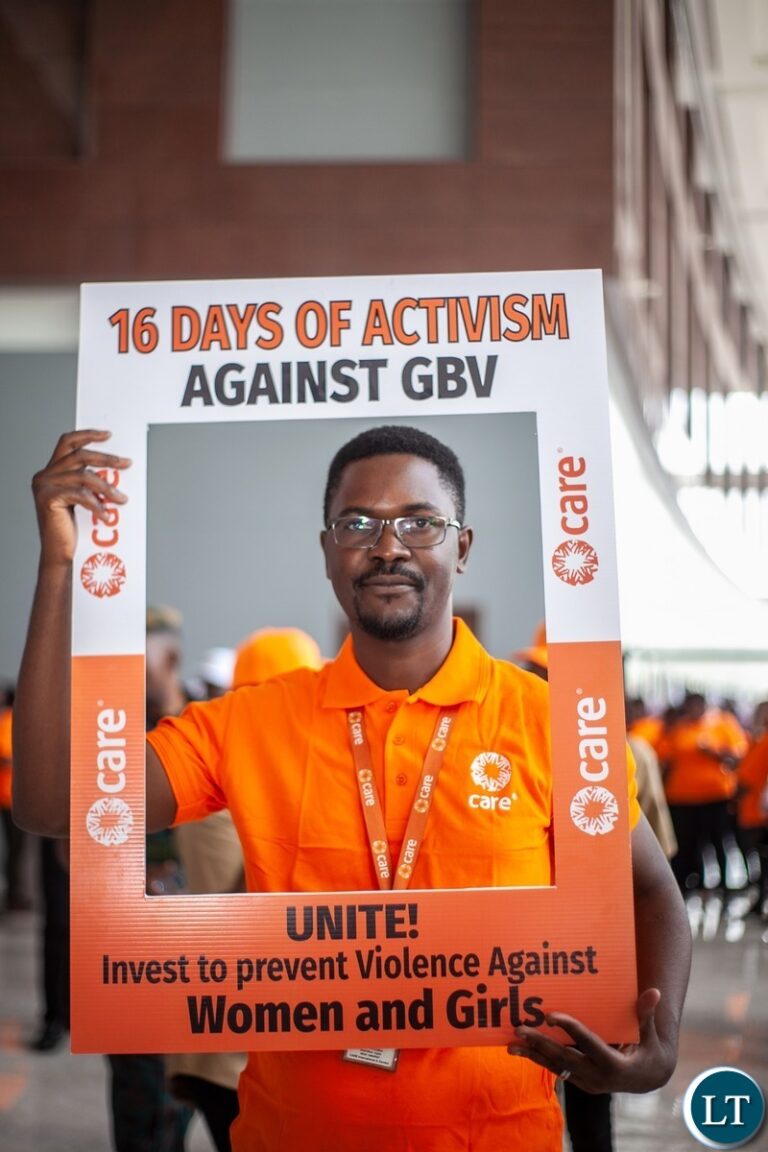
Eastern Province Records Over 2,000 GBV Cases

0

Eastern Province recorded over 2,000 cases of Gender Based Violence (GBV) in the three quarters of 2025.

Speaking during a five – day training workshop for Media, Communicators, and Public Relations professionals on GBV Reporting and Advocacy in Katete District, Eastern Province Community Service Directorate (CSD) Coordinator, Akapelwa Nakaundu said the statistics are from January to September.

Ms. Nakaundu explained that the 2,018 cases of GBV include sexual, physical and indecent assault cases.

She said that out of these cases, 340 were defilement cases.

“103 cases were recorded in the first quarter, and in the second quarter, 126 cases were picked while 114 cases were recorded in the third quarter,” Ms  Nakaundu noted.

Ms Nakaundu says 27 cases were recorded under indecent assault in the same months.

And Zambia News and Information Staffer in Eastern Province Jubiel Zulu facilitated on the Principles of Ethical GBV Reporting to the team.

Ms Zulu said GBV remains one of the most urgent human rights, public health and social development issue which require concerted efforts to reduce address.

She reminded the communication experts of their role in GBV advocacy saying ethical reporting on GBV matters safeguards the survivors and restores their dignity.

Ms Zulu highlighted key principles in GBV reportinf, including doing no harm, obtaining informed consent, ensureing confidentiality, and using survivor-centered language.

“Let’s ensure to raise awareness, promote policy reforms and protect the survivors through balanced and ethical Reporting,” she emphasised.

The 5 days workshop under the Spotlight 2.0 Initiative has drawn participation from about 30 communication experts, camped in Katete.

Govt. to re-launch IVAG programme

1

Ministry of Youth, Sport and Arts is finalising plans to relaunch the Internship, Volunteer, Apprenticeship, and Graduate (IVAG) programme aimed at equipping young people with practical skills required for the job market.

Speaking in an interview with the media, Ministry of Youth Sport and Art Principal Public Relations Officer Nchimunya Ng’andu says the programme, which was first launched in 2022, is being restructured, following challenges experienced in previous phases, particularly in the payment of stipends to participating youths.

Mr Ng’andu has noted that the government has drawn lessons from countries such as Nigeria, where the private sector has played a key role in successfully implementing similar initiatives.

“We are continuing to engage the private sector so that as they come on board, we see how best we can work together,” he said.

He explained that the programme is designed to provide young people with at least one year of work experience across government institutions, private companies, and non-governmental organisations (NGOs), which greatly enhances their employability.

Mr Ng’andu added that some beneficiaries from previous phases were absorbed into employment after demonstrating exceptional performance during their placement period.

He acknowledged that although the programme had been well intended, challenges arose when some cooperating partners withdrew before fulfilling their obligations, leaving the government to source resources to pay outstanding stipends.

He disclosed that that all the 2000 beneficiaries were eventually paid and that the government is now addressing all gaps to avoid similar challenges when the programme is re-launched.

He further revealed that the exact date for the relaunch has not yet been set, as consultations are still ongoing.

Lusaka Province gets 10,000 litres of pesticides for combating armyworms

1

 Government has distributed 10,000 litres of Karate pesticides to all the six districts in Lusaka Province to combat an outbreak of fall armyworms.

Lusaka Province Principal Public Relations Officer, Logic Lukwanda, confirmed that all the districts have since received the pesticides procured by the Ministry of Agriculture.

Mr Lukwanda told the media that the intervention follows reports of fall armyworms detected across the province in the second week of December, 2025.

He noted that the infestation levels however remain low, attributing it to consistent rainfall in most areas.

Mr Lukwanda said the government’s timely response demonstrates its commitment to protecting the maize crop and ensuring enhanced national food security.

Meanwhile, Mr Lukwanda disclosed that 99.5 percent of farmers who are on the Farmer Input Support Programme (FISP) in Lusaka Province have redeemed their inputs.

He explained that out of 59,188 registered FISP beneficiaries for the 2025/2026 farming season, 58,932 farmers had redeemed their inputs as of January 5, 2026.

The delay by the 256 remaining farmers to redeem their inputs is due to technical challenges, which the government is working to resolve.

Government Warns Opposition Against Undermining Justice

0

Government has expressed concern over statements and conduct from some opposition leaders seeking to interfere with the operations of law enforcement agencies, stressing that such actions undermine justice and national stability.

Speaking during a joint Government Media Engagement in Choma, Chief Government Spokesperson Cornelius Mweetwa emphasised that the arm of the law  was  non-discriminatory and applies equally to all citizens, regardless of political affiliation, religious belief, or social status.

“Government upholds the rule of law and expects all citizens to respect it. No one is above the law, the law knows no Bishop, no Pastor, no priest or leader of an opposition political party, the constitution describes every one as any ‘ person’, who contravenes the law will be charged as the law provides, ” Mr Mweetwa said.

He warned that individuals who abrogate the law should not expect protection or special treatment, underscoring government’s commitment to maintaining order and stability across the country.

Mr Mweetwa also highlighted the importance of dialogue, describing it as a key principle promoted by President Hakainde Hichilema to resolve differences and strengthen mutual understanding across communities.

“The President encourages dialogue as a foundation for peaceful coexistence and constructive engagement among citizens,” he said.

In addition, Mr Mweetwa commended farmers who supplied maize to the Food Reserve Agency, noting their patience amid delayed payments.

“We value our farmers as central to achieving the country’s 10 million metric ton maize production target. Their dedication ensures national food security, and increases exports,” he said.

He added that government is simultaneously distributing resources to other critical sectors, including energy, which has seen an increase in daily power supply to 10 hours to households and businesses.

Mr Mweetwa emphasised that such balancing of national resources demonstrates government’s commitment to equitable development, social stability, and the welfare of all citizens.

He further highlighted the significance of the upcoming Presidential Public Engagement, scheduled for Wednesday, January 7, 2026, at Choma’s Sports Club, as an opportunity for direct interaction between the President and the public.

“The engagement provides a platform for the President to reinforce messages of unity, peace, and national cohesion,” Mr Mweetwa said.

And Southern Province Minister Credo Nanjuwa assured that preparations for the event have been heightened, with all logistical and security arrangements in place.

“The province is ready to heed the President’s call for peace and unity. We have already begun engagements with the clergy and business community to share the President’s vision and encourage widespread participation,” Mr Nanjuwa said.

The Provincial Minister has also extended an invitation to all who are able from across the country to also attend the Mega Presidential rally.

Nsumbu hospital nears completion

0

The construction of Nsumbu Hospital in Nsama district in Northern Province has reached 98 percent completion.

Northern Province Health Director, Ernest Mutale, who confirmed the development in an interview with the media in Kasama, said the hospital is expected to be commissioned this year.

Professor Mutale has revealed that all necessary equipment has already been installed and tested at the health facility.

He said the hospital will be fully equipped with modern equipment in all departments, including the theatre, and laboratories which have been fitted with the latest digital machines.

Prof. Mutale said the new hospital will help improve access to health services for the people of Nsumbu.

He explained that currently, the local people still travel long distances to as far as Kasama General Hospital for specialised services.

Prof. Mutale has since expressed gratitude to the government through the Lake Tanganyika Development Project for spearheading the construction of the health facility, noting that the hospital will provide vital services closer to the community.

The construction of Nsumbu hospital is funded by the Lake Tanganyika Development Project.

Three Children Die in Suspected Food Poisoning Incident in Lusaka

0

Police in Lusaka have opened an inquiry after three children from the same family died in a suspected case of food poisoning in Kabanana Compound.

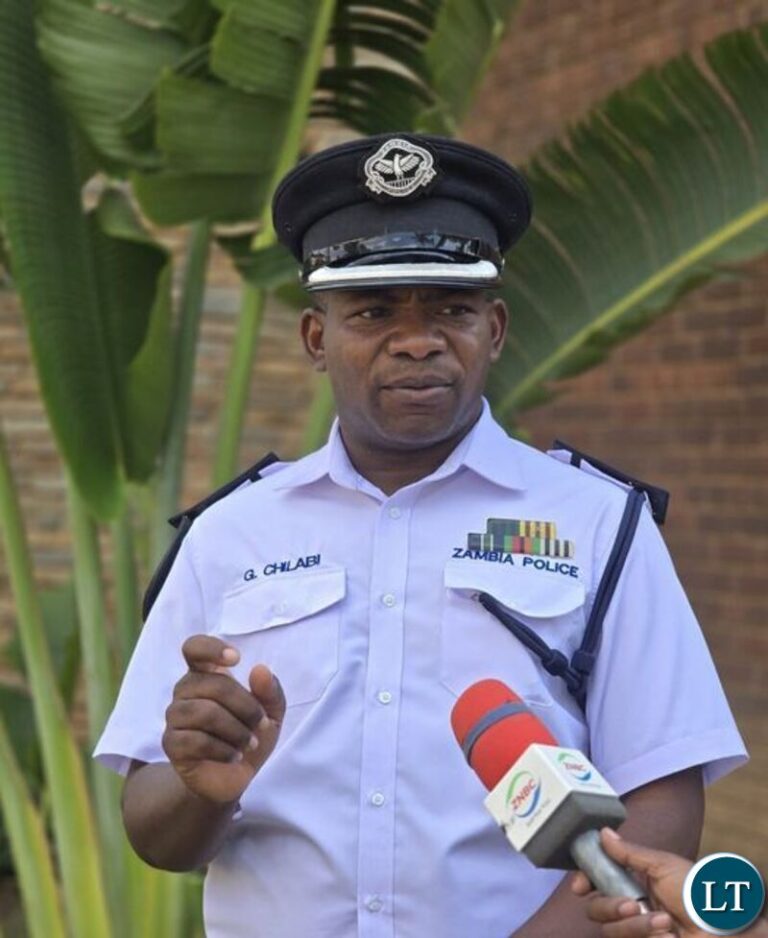
According to a statement issued by Police Public Relations Officer Godfrey Chilabi, a report was received on January 5, 2026, at approximately 15:00 hours indicating the fatalities resulted from consuming contaminated food prepared at home.

Preliminary police investigations state that on January 3, 2026, around 20:00 hours, six family members shared a meal of nshima, pumpkin leaves (chibwabwa), soya pieces, and sour milk. Around midnight, all six began exhibiting symptoms including stomach pains, diarrhoea, and vomiting.

The victims were rushed to Chipata First Level One Hospital on January 4, 2026. One child, one-year-old Getrude Sibongile Mutombeni, died there. The remaining five were referred to Levy Mwanawasa Teaching Hospital, where a second child, six-year-old Royd Mutombeni, died at around 18:00 hours the same day.

A third child, eight-year-old Bongani Mutombeni, passed away at the hospital on January 5, 2026, around 04:00 hours.

The parents of the children received treatment and have been discharged from the hospital in stable condition.

The bodies of the deceased children are currently at Levy Mwanawasa Teaching Hospital and the University Teaching Hospital, awaiting postmortem examinations to determine the exact cause of death.

Police have opened an inquiry file, and investigations are ongoing.

Mambwe District Begins GEWEL Education Grant Payments

0

Mambwe District in Eastern Province has started paying education grants to eligible girls under the Girls’ Education and Women’s Empowerment and Livelihood (GEWEL) Phase Two Keeping Girls in School (KGS) project.

Mambwe District Education Board Secretary (DEBS) Rodgers Champemba says a total of 1,536 vulnerable girls from Social Cash Transfer (SCT) households have been enlisted on the project.

Mr. Champemba said the girls will receive K800 each, culminating to a total of K1,228,800.

He added that the funds that the girls were receiving are from the phase three payments of education grants under 2025.

 He said the programme was being supported by the government, in conjunction with the World Bank.

Mr. Champemba said the benefitting girls have been categorised in 27 reachable zones across the District.

Lundazi Floods Trigger Diarrhoea Outbreak

0

The flooding situation in Lundazi district has led to an increase in diarrhoea cases.

The district has recorded over 100 cases of non-bloody diarrhoea in the past 7 days.

Lundazi District Health Services Director, Simon Mwale stated that following the water contamination owing to flooded wells and pit latrines, diarrhoea cases have been on the rise.

Dr Mwale disclosed that a total of 111 diarrhoea cases have been recorded, including 17 affecting children aged between 0 and 4 years.

This came to light during a stakeholders meeting on the flood disaster situation.

“One case of bloody diarrhoea has been recorded too,” Dr Mwale said.

Meanwhile, all health facilities in the district have received chlorine for distribution to households in their catchment areas.

” We have been distributing liquid chlorine to all households and granular chlorine is being used by the facilities for improved sanitation and also for treating water in shallow wells,” he stated.

“17 cases of skin conditions have also been recorded in the last 7 days,” he said.

Meanwhile, 65 percent of works have been done on the Mphamba bridge.

The Road Development Agency (RDA) and the Zambia National Service (ZNS) are jointly working on the bridge to bridge.

Chavuma DC Emphasizes Professionalism in Government Departments

0

 Chavuma District Commissioner Geoffrey Kasonda has emphasized the need for professionalism, discipline, and hard work among heads of government departments as they perform their duties in the district in 2026.

In a statement made available to the media in Chavuma, Mr Kasonda stressed that public service demands seriousness, honesty and responsibility as it directly impacts the community’s wellbeing.

He acknowledged the efforts made but has since warned against poor attitude, lack of commitment, and complacency urging officers to adopt a results-driven and service-focused culture.

“We must renew our commitment to duty, maintaining professionalism and discipline. Our work affects the people of Chavuma and we must deliver quality services,” Mr Kasonda said.

He thanked the officers for their unity and cooperation over the past four years, commending them for their professionalism and teamwork for smooth operations.

Mr Kasonda called for continued mutual respect, discipline and open communication to drive development and improve livelihoods.

The District Commissioner further emphasized the importance of teamwork, supporting each other and keeping communication open to deliver results for

MET predicts widespread rainfall

0

The Zambia Meteorological Department (ZMD) says most parts of the country have more than 80 percent chance of receiving over 50 millimeters of rainfall from January 6-12, 2026.

This was contained in the latest Weekly Weather Bulletin issued by ZMD, to the media in Lusaka.

The Department has further announced that Southern and Western provinces have less than 35 percent chance of receiving more than 50mm of rainfall during the forecast period.

Meanwhile, ZMD has forecast isolated rain, characterised by occasional thunder from January 6 to 8, 2026 in Muchinga, Copperbelt, Eastern, Luapula and Northern provinces, including the eastern parts of Central, Lusaka and Northern parts of Northwestern provinces.

According to ZMD the anticipated rain and occasional thunder will occur in the mornings for the said provinces.

“Mornings will be mainly cloudy with isolated rain and occasional thunder.” The bulletin says.

“Minimum temperatures are expected to average between 10°C and 21°C. Afternoons are forecast to be mostly cloudy with rain and thunderstorms. With maximum temperature ranging between 21°C and 32°C. Nights will be mainly cloudy with isolated rain and thunderstorms.” The Department has revealed.

And the Department has announced that under the same forecast period, Southern and Western provinces including the Western parts of Central, Lusaka and the Southern parts of Northwestern provinces are expected to experience mornings characterized by partly cloudy tending to be cloudy in some areas with a chance of isolated rain and occasional thunder.

The Department has further revealed that from January 9 to 12, 2026 Copperbelt, Central, Lusaka, Luapula, Muchinga, Northern, Northwestern, Southern and Western provinces are expected to experience mainly cloudy mornings with outbreaks of rain and occasional thunder, while nights are expected to be mainly cloudy with isolated rain and occasional thunder.

And ZMD has since issued an advisory urging farmers to prepare fields for planting other crops and weeding.

The advisory has further implored farmers to regularly inspect fields for pests such as fall armyworms, cutworms and aphids.

“Farmers are advised to prepare fields for other crops, carry out planting and weeding activities and conduct regular field scouting to detect pests such as fall armyworms, cutworms and aphids.” The Department states.

The Department has also cautioned farmers to carefully manage the application of fertilizer to minimize leaching due to the expected rains.

“Fertiliser application should be carefully managed to minimise leaching due to the expected rains.”

In a bid to prevent crop water logging in high rainfall zones, ZMD has advised farmers to create field drainage channels to water logging.

“In high-rainfall zones, farmers should maintain field drainage channels to prevent crop water logging.”

ZMD has advised the public to avoid taking shelter under trees and to refrain from parking vehicles or leaving valuable property beneath trees due to anticipated storm activity.

Sunday Chanda urges formal church–state engagement to protect unity

Sunday Chanda urges formal church–state engagement to protect unity

Member of Parliament for Kanchibiya Constituency, has proposed the creation of a formal presidential platform to manage relations between the state and faith institutions, warning that Zambia risks unnecessary public tension when engagement between government and church leaders remains reactive and crisis-driven.

Speaking in a recorded address and later issuing a written media statement, Sunday Chanda, Member of Parliament for Kanchibiya Constituency, said Zambia’s identity as a Christian nation had historically rested on a functional balance between lawful authority and moral conscience, rather than competition between the two.

He described the state and the church as distinct institutions with complementary roles. In his remarks, Chanda said governance and moral guidance should reinforce one another in the pursuit of peace, stability and national cohesion.

“The state governs, the church guides,” he said. “The two institutions are not competitors. They are partners in building a peaceful, stable and morally grounded nation.”

Chanda argued that while the church must remain free to offer moral guidance and constructive critique, the state must equally be respected as the legitimate authority mandated to govern. He said disagreements between the two should be resolved through dialogue rather than hostility, warning that confrontational approaches often escalate tensions instead of resolving them.

He said current patterns of engagement between government and faith leadership were too often shaped by moments of crisis, creating an environment in which misunderstandings harden into public disputes. In his view, this approach weakens trust and exposes the country to avoidable divisions.

To address this, Chanda proposed the establishment of a Presidential Faith and Social Cohesion Roundtable, to be convened on a quarterly basis. He said the forum would institutionalise dialogue and provide a consistent platform for engagement on moral, social and national issues.

Under the proposal, the roundtable would bring together the Zambia Conference of Catholic Bishops, the Council of Churches in Zambia, the Evangelical Fellowship of Zambia, other faith-based organisations, and key social ministries of government.

Chanda said such a structure would shift engagement from confrontation to consultation, allowing differences of perspective to be addressed early and constructively. He said the absence of a standing forum had allowed isolated disputes to dominate public discourse, placing unnecessary strain on national unity.

In his remarks, he warned that Zambia does not benefit from a polarised moral space, arguing that open confrontation between public institutions and faith leadership ultimately erodes public trust.

“Zambia needs neither a silent church nor an intolerant state,” he said. “Zambia needs partnership and not polarization.”

He said the proposed roundtable would help anchor dialogue in mutual respect and shared responsibility, ensuring that authority listens to conscience while conscience speaks without fear. He added that national interest should take precedence over institutional rivalry.

Chanda framed the proposal as a reaffirmation of Zambia’s historical experience, noting that from periods of democratic transition to moments of national tension, the church had acted as a custodian of conscience while the state maintained order. He said preserving this balance required deliberate effort rather than ad hoc engagement.

He called on stakeholders across government and faith communities to recommit themselves to structured dialogue and collaborative social action, saying the country’s stability depended on maintaining harmony between moral leadership and lawful authority.

Chanda delivered the remarks under his capacity as Member of Parliament for Kanchibiya Constituency, stating that his proposal was aimed at strengthening unity and preventing avoidable conflict in the public sphere.

MEDIA STATEMENT
For Immediate Release

ON STRENGTHENING STATE–CHURCH CO-EXISTENCE FOR NATIONAL UNITY

Kanchibiya, 6th January 2026-

Zambia’s identity as a Christian Nation is not merely constitutional language; it is the moral foundation upon which our national unity, peace, and democratic stability have been built.

From our earliest democratic transitions to moments of national tension, the Church has stood as a custodian of conscience, while the State has stood as the custodian of order. These two institutions have historically worked not in competition, but in complementarity, each strengthening the other for the common good.

It is therefore important that, as a nation, we deliberately guard and strengthen this co-existence.

The Church must be free to offer moral guidance and constructive critique without fear or intimidation. Equally, the State must be respected as the legitimate authority mandated to govern, protect, and develop the Republic. Where differences in perspective arise, they must be handled through dialogue, not hostility; through engagement, not escalation.

Our current engagements between Government and faith leadership are often reactive, crisis-driven, and episodic. This creates an environment where misunderstandings can harden into unnecessary public confrontations.

In this regard, I respectfully propose the establishment of a Presidential Faith and Social Cohesion Roundtable, meeting on a quarterly basis, composed of:

  1. The Zambia Conference of Catholic Bishops (ZCCB),

  2. The Council of Churches in Zambia (CCZ),

  3. The Evangelical Fellowship of Zambia (EFZ),

  4. Other Faith-based organizations, and

  5. Key social ministries of Government.

Such a structured forum would institutionalize dialogue, transform engagement from confrontation to consultation, and provide a consistent platform for moral, social, and national cohesion discourse.

Zambia does not benefit from a polarized moral space. When public institutions and faith leadership drift into open confrontation, the greatest casualty is public trust.

I therefore call upon all stakeholders to recommit themselves to mutual respect, structured dialogue, and collaborative social action. Our people are best served when law walks with conscience, and authority listens to truth.

Zambia needs neither a silent Church nor an intolerant State.
Zambia needs partnership, not polarization.

May we continue to choose unity over division, dialogue over discord, and national interest over institutional rivalry.

Hon. Sunday Chanda, MP
Kanchibiya Constituency

My Stand Point on DEC

7

By Peter Wapa

From where I stand, I paid close attention to the public statements issued by the Drug Enforcement Commission on the matter involving the Archbishop and the Toyota Hilux motor vehicle. There was a clear contrast between the two voices that spoke for the institution. The statement by the Commission’s spokesperson, Mr Allan Tamba, was measured, professional, and restrained. The statement by the Director General, however, crossed a line. It was not merely careless. It was malicious.

The Director General publicly demanded that the Archbishop explain how a government vehicle ended up in his name. That framing was deliberate, and deeply misleading. The Director General is fully aware that the vehicle in question was disposed of through a Zambia Revenue Authority auction. He is also aware that the Archbishop did not acquire the vehicle from the auction itself, but from the individual who lawfully purchased it at that auction. To suggest otherwise is not an oversight. It is a distortion.

The question that therefore arises is simple and unavoidable. What exactly is the suspected criminal wrongdoing on the part of the Archbishop?

If the vehicle was sold below market value, that is a matter for the auctioneers and ZRA management at the time of disposal, not the eventual third-party buyer. If proper disposal procedures were not followed, that again falls squarely on ZRA management. If the full auction price was not paid, then liability rests with the original auction purchaser, not with the Archbishop who later acquired the vehicle in good faith. In every possible scenario, the Archbishop is several steps removed from any conceivable offence.

Yet the Director General’s statement was crafted to create a different public impression. It implied that a government asset mysteriously vanished from official records and somehow appeared in the Archbishop’s possession. This narrative collapses under the weight of available facts. The auction was public. The disposal documents exist. The gate pass authorising final release of the vehicle is in the public domain. The Director General knows this. By omitting these facts when addressing the nation, he chose bias over balance and insinuation over truth.

The handling of the so-called “Call Out” deepens this concern. If the Commission merely sought clarification, why issue a Call Out at all, fully aware that such a document involving a prominent religious figure would almost certainly find its way into the public space? More troubling still was the Director General’s suggestion that the Call Out may have been leaked by the Archbishop to solicit sympathy. There is no evidence to support that claim. None. It is equally plausible, if not more so, that the leak originated from within the Commission itself, calculated to scandalise and embarrass.

Ordinarily, a Call Out is issued to a suspect. In this case, there is not even the remotest indication of wrongdoing by the Archbishop to justify treating him as one. If clarification was genuinely the objective, DEC officers could have discreetly interviewed the Archbishop at his office. That would have sufficed. The choice of a Call Out was not procedural necessity. It was a signal.

Even a cursory examination of the vehicle itself exposes the weakness of the insinuations. The registration number, ALF 7734, places first registration around 2010 or early 2011. Auction records show the vehicle was disposed of in 2020, after roughly a decade of service. Standard accounting practice depreciates motor vehicles at about 20 to 25 percent on a straight-line basis, meaning full depreciation within five years. By 2015, this vehicle should have been fully written off in ZRA’s books. The fact that it was still in service years later suggests revaluation and extended amortisation, not hidden value. By the time it was auctioned, it was effectively a worn-out asset, long past its prime.

I agree with the Director General on one point only: no one is above the law. Not even an Archbishop. But the law must never be weaponised to harass citizens who are plainly removed from any wrongdoing. In this instance, the Archbishop’s reputation has been publicly bruised by insinuation rather than evidence, by spectacle rather than substance.

The Director General owes the Zambian people an explanation, not about the Archbishop, but about his own judgment. Why was a Call Out deemed necessary? Why were known facts omitted? Why was suspicion elevated above fairness?

At a broader level, this episode raises an uncomfortable but necessary question for the appointing authority. Is this the calibre of conduct we expect from the heads of our law enforcement agencies? If institutions tasked with enforcing the law begin to blur the line between investigation and intimidation, then it is not only individual reputations that suffer. Public trust itself becomes the casualty.

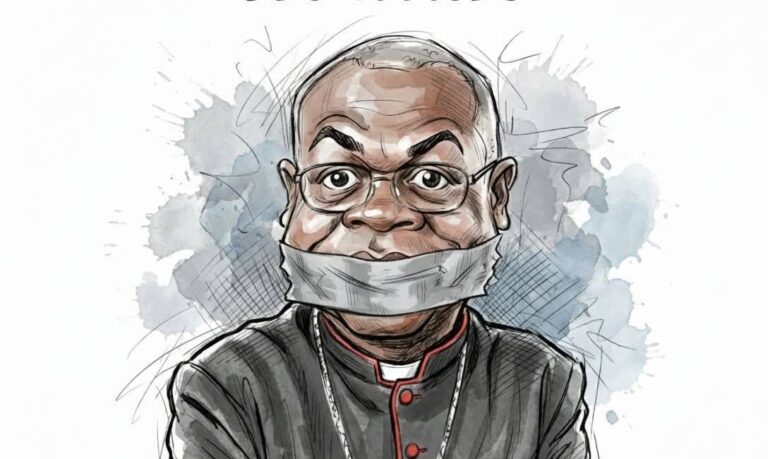
A Silent Archbishop – Guilty?, not Guilty?

11
Silent Bishop

The silence of Archbishop Alick Banda has become louder than any press conference. In a political season already strained by mistrust, institutional fatigue, and sharpening rhetoric ahead of the August 2026 polls, that silence now sits at the centre of a national conversation about power, restraint, law enforcement, and the fragile boundary between investigation and intimidation.

What unfolded around the Archbishop was never merely about a motor vehicle or a procedural appearance before the Drug Enforcement Commission. It became symbolic, almost instantly. A stress test of how authority is exercised, how institutions communicate, and how quickly legal processes can be pulled into partisan narratives in an election cycle.

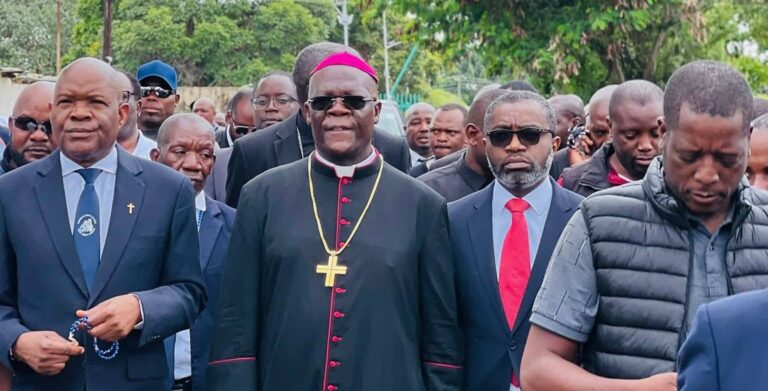
The Archbishop did not issue statements. He did not trade accusations. He did not address the nation. Yet it would be inaccurate to suggest that he stood alone or unaccompanied. Hundreds of Catholics gathered outside in prayer and solidarity, defying police warnings not out of political mobilisation, but out of identity and faith. That distinction matters. The Archbishop himself did not call them. He did not direct them. Their presence was organic, emotional, and rooted in collective memory rather than instruction. His silence, therefore, was not absence. It was restraint.

That restraint deserves qualification. Silence here was neither evasion nor arrogance. It was legal strategy, institutional discipline, and moral positioning. Under Zambian law, every citizen, cleric or otherwise, has the right to remain silent during questioning. In high-profile matters, silence is often advised to avoid self-incrimination, protect third parties, and preserve the integrity of process. Within church tradition, silence also guards confidentiality, particularly where donors and benefactors are involved. This was not defiance. It was principle.

Yet facts were quickly overwhelmed by noise.

One of the most damaging distortions was the claim that the vehicle in question was donated by the Zambia Revenue Authority or the government. That claim is false. It is not supported by available documentation, and its repetition has poisoned public understanding.

The facts, as they stand, are straightforward. The Toyota Hilux was auctioned by the Zambia Revenue Authority. It was purchased by a private Zambian citizen, Mulopa Kaunda. After the auction process, ZRA issued a receipt of sale and a gate pass authorising the release of the vehicle upon payment. That confirms a completed auction transaction, not a government donation. Mulopa Kaunda is said to have later donated the vehicle to the Archbishop, who then registered it in his own name. Whatever questions arise, they do not arise from a government or ZRA gift. They arise from an individual donation.

This distinction is not cosmetic. It is central. Whether the auction was conducted procedurally, whether the price reflected market value, and whether disposal rules were followed are internal matters for the Zambia Revenue Authority. They are questions of institutional compliance, not prima facie criminal conduct by a recipient who was not the auction buyer.

Yet the matter was politicised with speed and ferocity.

Those aligned with the ruling party framed the episode as evidence of wrongdoing by a cleric allegedly sympathetic to former President Edgar Lungu. Figures within the Church and sections of civil society interpreted it as retaliation for Archbishop Banda’s past criticism of the administration, including his opposition to recently passed constitutional changes touching on constituency delimitation, the proposed increase of parliamentary seats by 113, and the removal of term limits for mayors. In this crossfire, facts became optional and motive became everything.

The escalation did not occur in a vacuum. Tensions between Church and State had already been simmering. They deepened when President Hakainde Hichilema donated cattle and other items to the Catholic Church, which the Archbishop declined. His reasoning was explicit and cautious: he did not want a future president to accuse him of receiving goods that may later be questioned for legality. That refusal, intended to protect institutional integrity, was read by some as political hostility. Memory lingered.

Into this context stepped the Drug Enforcement Commission.

Through its Anti–Money Laundering Investigations Unit, the DEC issued a formal warning and caution to Archbishop Banda, citing alleged unlawful possession of the vehicle under Section 319(a) of the Penal Code. The public statement emphasised that when given an opportunity to explain how he came into possession of the vehicle, the Archbishop chose to remain silent. Legally accurate, yes. But institutionally explosive.

Law enforcement works best in quiet competence. Its legitimacy rests on process, not performance. When investigative agencies move from inquiry to public narration before charges are laid, they risk shifting perception from neutrality to pre-judgment. The moment suspicion is aired publicly without resolution, the matter ceases to be technical and becomes political.

This is why the silence of the Archbishop proved stabilising while the speech of the state inflamed tension.

A widely circulated civic commentary by Mwewa, “The Voice from Chifwema,” captured this moment with clarity. He framed the episode not as a church fight or a political fight, but as a civic conversation about institutions, rights, and national direction. He reminded the public that silence is a constitutional right, that prayer processions are part of Catholic identity, and that people were reacting less to a vehicle case than to history, memory, and perceived institutional disrespect.

He also highlighted why senior lawyers rushed to associate themselves with the case. This is no longer just an inquiry. It is a constitutional moment. It tests due process. It probes church–state relations. It sets precedent for how power is exercised against moral institutions in an election cycle.

As August 2026 approaches, symbolism will matter as much as legality. Governments rarely lose legitimacy through illegality alone. They lose it through accumulated moments where power appears performative, defensive, or indifferent to restraint. A bishop summoned publicly is not read as an ordinary citizen questioned. It is read as a moral authority challenged. That perception cannot be legislated away.

There was a better path. Quiet summons. Clear procedure. No public insinuation beyond evidence. No press briefing until facts demanded it. If wrongdoing exists, it will survive scrutiny. If it does not, restraint would have spared the nation unnecessary division.

The lesson of the Silent Bishop is not about clerical privilege. It is about institutional wisdom. Silence can be strength. Process can be protection. And restraint, in a season of suspicion, is not weakness. It is leadership.

As Zambia edges toward August 2026, the defining question for government is not whether it can enforce the law. It is whether it can do so without performing power, politicising process, or eroding trust. How this moment is remembered will depend not on who spoke loudest, but on who exercised the greatest discipline.

Deliver us from evil ….

0
Deliver us from evil

The phrase “deliver us from evil” carries weight precisely because it is invoked at moments when restraint feels fragile and power appears tempted by excess. It is a plea not only against wrongdoing, but against the gradual erosion of conscience that often precedes it. In periods of heightened political tension, that plea takes on renewed relevance.

Public life tests character most severely when pressure mounts. Institutions are stretched, loyalties are tested, and the line between authority and overreach can blur. At such moments, evil rarely announces itself dramatically. More often, it arrives quietly, justified as necessity, defended as procedure, or excused as temporary. It advances not through sudden collapse, but through small concessions made in the name of order, control, or expedience.

The danger lies in normalisation. What once felt unacceptable becomes routine. Actions once questioned are repeated with confidence. Language hardens, empathy thins, and the space for dissent narrows. Evil, in this sense, is not merely criminal conduct. It is the corrosion of restraint, the silencing of doubt, and the comfort found in power unchecked by accountability.

Faith traditions have long warned against this drift. The call to be delivered from evil is not passive. It demands vigilance, self-examination, and humility, especially from those entrusted with authority. Power without reflection invites abuse. Power without restraint erodes legitimacy. Power without accountability ultimately consumes itself.

In times of political strain, fear becomes a powerful tool. Fear of disorder, fear of instability, fear of losing control. When fear dominates decision-making, it can justify actions that would otherwise be rejected. The challenge for institutions is to act firmly without becoming cruel, decisively without becoming unjust, and lawfully without becoming oppressive.

Public confidence depends not only on outcomes, but on process. Citizens judge institutions not just by what they do, but by how they do it. Transparency, proportionality, and respect for rights are not luxuries reserved for calm periods. They are most essential when tensions are high. It is in difficult moments that principles are tested, and it is there that moral failure carries the highest cost.

The invocation of “deliver us from evil” is therefore a reminder of limits. It reminds leaders that authority is borrowed, not owned. It reminds institutions that legitimacy rests on trust, not fear. And it reminds society that silence in the face of excess is not neutrality, but complicity.

Moral appeals do not replace law, nor should they. But law divorced from conscience becomes mechanical, and conscience divorced from law becomes chaotic. The balance between the two sustains democratic life. When either is ignored, the result is instability disguised as order.

For citizens, the call is equally demanding. It requires engagement without hatred, criticism without dehumanisation, and resistance without violence. Evil thrives where polarisation hardens hearts and reduces complex human beings to enemies. A society that abandons empathy in favour of triumph may win arguments, but it loses itself.

Deliverance from evil, then, is not a single event. It is a continuous effort to choose restraint over excess, dialogue over domination, and principle over convenience. It is a discipline that must be practiced daily by those who govern and those who are governed.

History shows that societies rarely collapse overnight. They unravel when moral fatigue sets in, when standards slip, and when power learns it can act without consequence. The plea to be delivered from evil is a warning against that fatigue. It is a call to pause, to reflect, and to remember that authority without conscience is not strength, but danger.

In uncertain times, restraint becomes a form of courage. Choosing not to abuse power, not to intimidate, not to silence, requires strength. Deliverance from evil begins there, not in slogans or sermons, but in decisions made when no one is watching and restraint would be easiest to abandon.

ECZ warns of cadres in Chawama and Kasama to destabilise campaigns

ECZ warns of cadres in Chawama and Kasama to destabilise campaigns

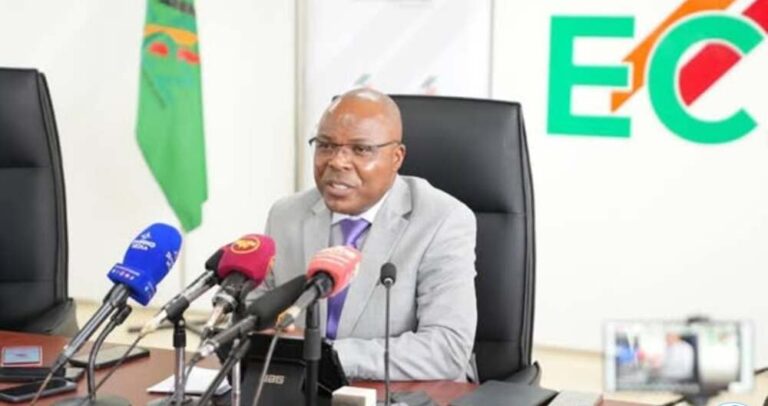
The Electoral Commission of Zambia has warned that some political parties are planning to deploy cadres in Chawama and Kasama with the intention of disrupting campaign activities, raising concerns about electoral integrity and public safety ahead of intensified political engagement.

The Commission said intelligence reports indicate coordinated efforts to interfere with campaign programmes through intimidation, provocation, and the disruption of rival party events. The areas identified have previously experienced heightened political tension, prompting the electoral body to increase vigilance.

ECZ officials stated that the use of cadres to destabilise campaigns undermines the democratic process and violates the Electoral Code of Conduct. The Commission emphasised that political competition must be conducted through lawful and peaceful means, without threats or coercion directed at candidates, supporters, or the general public.

The warning comes as political parties prepare to ramp up campaign activities, with rallies, door-to-door outreach, and public meetings expected to increase in frequency. ECZ noted that such periods often attract heightened risk where partisan groups seek to assert dominance through force rather than persuasion.

The Commission said it has engaged security agencies to monitor identified hotspots and respond swiftly to any incidents that threaten public order. Officials stressed that enforcement will not target lawful campaigning, but will focus on preventing violence, intimidation, and unlawful assembly.

Political parties were reminded of their responsibility to control their supporters and ensure compliance with electoral regulations. ECZ warned that failure to do so could result in sanctions, including suspension of campaign activities in affected areas.

Community leaders in Chawama and Kasama have been urged to promote dialogue and restraint, with ECZ emphasising that peaceful participation by citizens is essential to credible elections. The Commission said voters should be allowed to engage freely with candidates without fear of harassment.

The warning also highlighted broader concerns about the role of cadres in past elections, where their involvement has been linked to clashes, destruction of property, and voter intimidation. ECZ reiterated that such practices have no place in a democratic process.

As preparations continue, the Commission said it remains committed to working with all stakeholders to ensure a secure environment for campaigning. It urged political parties to focus on policy messages rather than confrontation, and appealed to supporters to reject calls for violence.

ECZ said further warnings or enforcement actions will be issued where necessary, and stressed that maintaining peace during campaigns is a shared responsibility among political actors, security agencies, and the public.