Tuesday, June 9, 2026
13.4 C
Lusaka
Home Blog Page 197

Floods Displace Families in Lundazi as MP Nyirenda Engages DMMU, Government Statement Expected

Severe flooding in Lundazi District has displaced several families and caused damage to houses, bridges, and crop fields following days of heavy rainfall, local authorities and the area member of Parliament have confirmed.

Lundazi Member of Parliament Brenda Nyirenda on Tuesday visited the Disaster Management and Mitigation Unit offices in Lusaka to formally report the situation and appeal for urgent intervention. She said the floods had left a number of households homeless and disrupted access to clean water after a water purification plant in the district was submerged.

Speaking after the meeting, Nyirenda said officials at the Disaster Management and Mitigation Unit had assured her that a government statement would be issued later once assessments were consolidated at national level. She added that she was travelling to Lundazi to personally assess the damage and engage affected communities.

Nyirenda said the flooding had affected residential areas and key infrastructure, including crossing points, raising concerns about mobility, access to basic services, and the risk of waterborne diseases during the rainy season. She noted that the loss of shelter had left families exposed and in need of immediate assistance.

According to the MP, preliminary engagements with disaster officials focused on establishing the number of affected households as a basis for coordinated relief. She said once figures are confirmed, emergency support such as food supplies and basic household items would be organised, while longer-term interventions would be considered based on detailed assessments.

Lundazi District Commissioner Majory Banda described the situation as severe, confirming that some houses had been washed away and crop fields damaged by floodwaters. In a telephone interview, Banda said the district had been experiencing sustained heavy rainfall since last Thursday, leading to rising water levels in low-lying areas.

She urged residents affected by the floods to report their situations to her office to enable accurate mapping of impacted zones and prioritisation of response measures. Banda said the information would assist district authorities in identifying the most affected areas as on-the-ground assessments continue.

The district commissioner said more details would be provided as assessments progress and the full extent of the damage becomes clearer. She indicated that teams were still evaluating the impact on infrastructure, farmland, and residential areas across the district.

Flooding during the peak rainy season has previously affected parts of Eastern Province, often damaging rural road networks, bridges, and agricultural land, with communities in flood-prone zones particularly vulnerable to displacement and crop losses.

Nyirenda said engagement with disaster authorities had been encouraging and appealed for patience from affected residents as verification and response processes continue. She said coordination between district officials, disaster management structures, and the Office of the Vice President was ongoing.

A government statement on the Lundazi floods is expected to be issued later once national-level briefings and field reports are concluded.
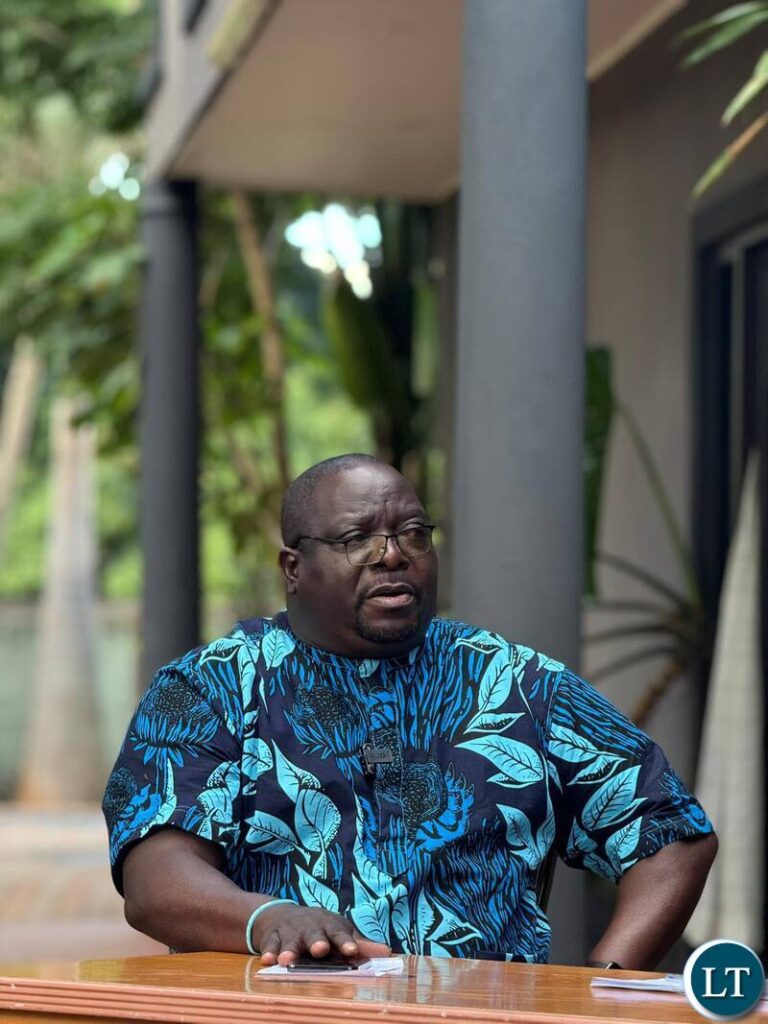

Kambwili and the Uncontrolled Tongue: How Words Destroyed Power and Credibility

3

Kambwili and the Uncontrolled Tongue: How Words Destroyed Power and Credibility

By Dr Mwelwa

There is a point in politics where speech ceases to be expression and becomes self-sabotage. Chishimba Kambwili crossed that point long ago. His political journey is now a textbook case of how an undisciplined mouth can undo a movement, poison alliances, and collapse public trust.

During the final years of the Patriotic Front in power, Kambwili’s language grew increasingly reckless. He branded colleagues corrupt in public, insulted senior leaders, and turned internal disagreements into theatre. Instead of defending policy with clarity and restraint, he personalised politics and normalised verbal aggression. PF did not fall because of one man alone—but his mouth poured petrol on an already burning house.

His attacks spared no one. He disparaged Edgar Lungu, the leader under whom he rose, with bitterness that read as personal grievance rather than ideological difference. He mocked Hakainde Hichilema with derision in place of policy critique. Worse still, his rhetoric drifted into language that offended communities, deepening divisions and alienating voters who might otherwise have listened.

Psychologically, the pattern fits verbal impulsivity and disinhibition speech released without cognitive filtering. Politically, it produced chaos. Every insult narrowed PF’s coalition. Every outburst reinforced an image of indiscipline and arrogance. Elections are not won by shouting; they are won by persuasion. Kambwili mistook volume for strength and aggression for authenticity.

Leadership requires restraint. The wise know that words create realities. When a politician repeatedly insults allies, rivals, and communities, he trains the public to see him not as a statesman but as a liability. Over time, even legitimate criticisms are discounted—not because they lack truth, but because the messenger has exhausted credibility.

Today, Kambwili’s renewed outbursts against figures like Brian Mundubile follow the same script: accusations shouted, evidence absent, predictions of arrests replacing respect for institutions. Politics becomes performance, anger replaces ideas, and the public interest is sidelined.

History is unforgiving to leaders who cannot govern their tongues. PF’s fall offers a hard lesson: power can be lost not only through bad policy, but through bad speech. A mouth far from wisdom does not merely damage reputations—it damages movements. And it must be said plainly: Zambians are suffering today in part because reckless rhetoric helped fracture PF, hand over power, and leave the country paying the price of a politics undone by words.

Makebi Zulu Urges Opposition Unity Ahead of 2026 General Election

Makebi Zulu Urges Opposition Unity Ahead of 2026 General Election

Opposition Patriotic Front Presidential Candidate Makebi Zulu has called on presidential candidates within the Patriotic Front and across the wider opposition to unite and work together in the interest of the Zambian people, citing growing public demand for cohesion ahead of the August 2026 general election.

In a public address issued on December 30, Makebi Zulu said the call for unity was being driven by citizens, religious institutions, civil society organisations, and party structures, all of whom he said were seeking hope, truth, and a united national direction. He stated that responsibility now rests with opposition leaders to respond by choosing unity over division and service over personal ambition.

Makebi Zulu said the opposition had reached a critical moment that required collective purpose, warning that continued fragmentation could undermine efforts to build a credible political alternative. He said there was readiness to unite within the Patriotic Front while also working with other opposition parties to reflect the will and aspirations of Zambians.

He urged opposition leaders to come together as one political family and one people, arguing that unity was essential to delivering political freedom and restoring public confidence in leadership. He cautioned against actions that could weaken collective resolve, including inducements or manipulation designed to divide opposition forces.

The appeal extended to all presidential hopefuls, calling on them to speak with one voice, agree on a common leadership path, and pursue a shared political course anchored in national service rather than self-interest. Makebi Zulu said loyalty must remain with the people of Zambia, not with interests seeking to exploit political divisions.

He described the 2026 general election as a defining moment for the country, saying it would determine Zambia’s direction and test the credibility of its leadership. He said the opposition could not afford to miss the opportunity, stressing that unity was essential to restoring public faith, renewing national hope, and presenting a coherent alternative to voters.

The address concluded with an appeal for collective responsibility, urging opposition leaders to stand together as one voice in pursuit of a just and united Zambia.

Full Statement  Below

Fellow citizens, season’s greetings to all of you. The cry of the Zambian people is clear. The church, the civil society, the general membership of the Patriotic Front, the structures of the Patriotic Front, and the citizens at large.

Our citizens long for hope, for truth, and for a united Zambia. That hope begins with us, the opposition, in choosing unity over division and service over self-interest. We are ready to unite, both within our party and with fellow opposition parties, to build a strong, credible alternative that reflects the will and aspirations of our citizens.

The time has come for us to stand together as one opposition family and as one people, to deliver the much-needed freedom that the Zambians long for. Let us come together with clean hands and pure intentions, guided not only by personal ambition or external influence, but by our shared duty to serve.

The time has come for us to stand together as one opposition, one family, and one people. We must resist any temptations to divide us or compromise our integrity through government-sponsored manipulation or indeed inducements. Our loyalty is to the people of Zambia, not to those who fear their awakening.

Fellow citizens, so that we build each other for us to ensure that freedom is delivered to Zambians, my call to the opposition, to different candidates, is that let us come together, speak one language, choose one leader, and run this course. This is not a course for self-interest, it is a course to serve the Zambian people.

In my language we say, njala imodzi sipa inda (one finger can’t crush lice), and for Zambians to get the freedom that there is so much need right now, we say, let us come together. This is a call for unity so that we can serve the interests of the Zambians and give them the freedom that they so much deserve.

In August 2026, we are going to have an election, an election that is going to determine the course of this country. We cannot afford to miss it now. We cannot afford to miss it, not even later, because the cry of the people is that we must come together and serve them.

For this cause, we can restore faith in leadership, renew hope across our nation, and stand as one voice for a just and united Zambia.

May God bless Zambia and have a pleasant day.

When Obedience Becomes Complicity

3
When Obedience Becomes Complicity
By Brian Matambo | Sandton, South Africa

On Monday evening, I received a call from my friend based in the United States. He is Zambian, deeply patriotic, and increasingly concerned about the state of our nation. What began as a casual check-in quickly turned into an uncomfortable but necessary conversation, one that forced both of us to confront difficult truths about law, citizenship, courage, and silence.
The heart of our discussion revolved around a deceptively simple question: what does it truly mean to be a good citizen?
For many, the answer seems obvious. Obey the law. Respect institutions. Trust the courts. Wait patiently for processes to conclude. Yet history warns us against such simplicity. Apartheid was legal. Colonial rule was legal. Slavery was legal. Each of these systems was defended by men who insisted they were merely respecting the law of the day.
Laws, we agreed, are not inherently moral. They are tools. They can protect the people or suppress them. Democracy does not always collapse through tanks on the streets or soldiers at the radio station. More often, it erodes quietly through injunctions, selective enforcement, procedural delays, and the gradual exhaustion of resistance.
In Zambia today, legality is frequently invoked as a shield against criticism. Court cases are cited. Injunctions are issued. Procedures are followed, at least on paper. But the lived experience of citizens tells a more troubling story. Laws appear flexible for those aligned with power and rigid for those who challenge it. Opposition figures are detained, restricted, or neutralised, while others operate with remarkable freedom.
This is where our conversation grew tense. At what point does obedience to the law stop being civic responsibility and become complicity?
If laws are used to discipline citizens rather than serve them, can compliance still be called virtue? Or does it become participation in injustice?
We spoke about recent examples that refuse to fade from the national memory. Edgar Chagwa Lungu, stripped of political eligibility through legal manoeuvres rather than democratic contest. Munir Zulu in prison even after his sentence came to an end. Raphael Nakacinda detained. Each case justified by procedure, each defended as lawful. Yet taken together, they reveal a pattern that cannot be dismissed as coincidence.
What troubled us even more was not only what had happened, but what had not happened. The silence. The absence of mass resistance. The millions who complain privately but remain invisible when courage is required. Patriotism, it seems, has become something we speak about rather than practise.
My friend challenged me, and in doing so challenged many of us who speak, write, and analyse from relative safety. Must resistance always lead to arrest? Is imprisonment the only proof of patriotism? Or have we redefined patriotism so narrowly that it now excludes strategic restraint, intellectual resistance, and long-term organising?
There is no easy answer. Not everyone can march. Not everyone can be arrested. Resistance takes many forms. Writing, speaking, organising, funding, shielding others. But resistance that carries no risk at all eventually becomes theatre. It comforts the speaker more than it challenges power.
As we spoke, the conversation returned repeatedly to the cost of leadership. Two weeks earlier, Makebi Zulu had been inavolved in a serious road traffic accident. He survived a near-fatal incident. Days later, he issued a calm, measured public statement on Bill 7. No insults. No theatrics. Just clarity. In moments like that, leadership reveals itself not through noise, but through steadiness under pressure.
Beneath our disagreement lay a deeper fear. Time. Elections are approaching. Campaigns cannot be built overnight. Court battles consume months. Confusion paralyses structures. While opposition factions argue over legality and procedure, power consolidates quietly elsewhere.
There comes a moment in every nation when citizens must decide whether they still believe change is possible, or whether they have slowly accepted management in place of democracy. That moment does not arrive with sirens or speeches. It arrives through private conversations like ours. Between friends. Between doubt and conviction. Between fear and resolve.
We did not end the call in agreement. But perhaps that was never the goal. Democracy is not sustained by comfort. It is sustained by tension. By citizens willing to wrestle honestly with the moral cost of obedience and the personal cost of resistance.
History is rarely kind to those who say, “I was just following the law.” It is far kinder to those who asked harder questions while there was still time.
In the end, the law will always demand compliance. Conscience demands more.

Government Sets January 10 Deadline for Clearing All Outstanding Farmer Payments

8
Government Sets January 10 Deadline for Clearing All Outstanding Farmer Payments

Government has confirmed that all outstanding payments owed to farmers who supplied maize to the Food Reserve Agency will be fully settled by January 10, 2026, following delays that affected disbursements to producers across the country.

In a statement issued on December 30, the Ministry of Finance and National Planning said payments to affected farmers are already underway and will continue in phases until the final settlement date. The ministry acknowledged that the delay in settling the payments was regrettable and assured farmers that mechanisms are in place to ensure full clearance within the stated timeframe.

According to the statement, farmers who supplied maize to the Food Reserve Agency are currently receiving payments on a rolling basis. The payments are being made in tranches as funds become available, allowing continued disbursement ahead of the January 10 deadline.

Government explained that the Food Reserve Agency is receiving funding from financing institutions in addition to proceeds generated from ongoing maize sales. These resources are being channelled toward settling the outstanding obligations to farmers who delivered maize under the agency’s procurement programme.

The ministry stated that this financing arrangement is intended to maintain a steady flow of payments while preparations are finalised for the complete clearance of all outstanding balances. Farmers are therefore expected to continue receiving payments during this interim period rather than waiting for a single lump-sum settlement.

Finance and National Planning Minister Situmbeko Musokotwane said government recognises the importance of timely payments to farmers, particularly during the farming season when access to capital directly affects household welfare and agricultural preparedness.

He noted that payments to maize suppliers play a direct role in supporting farming households, sustaining livelihoods, and enabling preparations for ongoing and upcoming agricultural activities. The minister said government remains fully committed to ensuring that every farmer who supplied maize to the Food Reserve Agency is paid in full.

The statement further indicated that the administration considers farmer payments a priority because of their contribution to national food security and broader economic stability. Government acknowledged the patience shown by farmers during the delay and expressed appreciation for their continued participation in national food supply efforts.

Dr Musokotwane said he joined President Hakainde Hichilema in thanking farmers for their perseverance and for continuing to support the country’s food reserve system despite the payment challenges.

The ministry did not specify the total value of outstanding payments but reiterated that all balances owed to farmers who supplied maize will be cleared by January 10. It also confirmed that additional updates will be issued as the payment process progresses.

The Food Reserve Agency serves as the country’s strategic grain buyer and manager, purchasing maize from farmers for national reserves and market stabilisation. Payments to suppliers are typically linked to financing arrangements and proceeds from grain sales.

Government said it remains focused on completing the payment process within the announced timeline and maintaining communication with farmers as funds continue to be released in stages.

Kudos to Lt. Gen. Solochi; public officers must emulate him!

1

If at all there’s someone who’s strictly adhering to the vision of President Hichilema while at the same time helping implement it, it’s non other than the Zambia National Service (ZNS) commander Lt. Gen. Solochi.

A perfect example of his headline catching exploits is his “fire brigade approach” to issues…..nay emergencies! This is the reason why he’s currently trending on social media with some people showering him with enormous accolades and praises while others are suggesting that let’s give people flowers when they are still alive.

Lt. Gen. Solochi definitely deserves additional epaulettes in his shoulders! When news of torrential rains washing away a bridge on Kankumba stream in Rufunsa district cutting off Eastern province from the rest of the country hit the airwaves, the ZNS commander didn’t have to wait for full English breakfast, put on his crispy clean uniform and decorate his chest with all those glittering medals before proceeding to his office and wait for a report to land on his desk. He simply tore himself away from the comfort of his bedroom during the witch hour and jumped into his gumboots and rushed to the scene. In no time, a work party and machinery were mobilized on site and got to work like red ants!

This is not the only action that has earned Gen. Solochi utmost admiration and respect. When hunger seemed to be stalking the nation due to a severe drought, the ZNS top brass did not disappoint as usual. He whipped his charges into action and they were soon rolling out affordable mealie meal for our people – ka ZNS! And when some unscrupulous people saw an opportunity to mint gold by smuggling mealie meal to Congo DR, he moved in and sealed off the border!

What do we make of all this?

We expect our public officers – Cabinet Ministers, Permanent Secretaries and, of course, other heads of military and security wings to emulate Lt. Gen. Solochi. Can we please abandon this culture of always confining ourselves to our cozy offices, enjoying tea and cookies as we wait for reports to somehow land on our mahogany desks even when a crisis is brewing up somewhere – junkies wrecking havoc in our communities, the youth getting hooked up on drugs or farmers complaining about late payments. A battle is better won, not from a deluxe office or luxurious boardroom but in the field.

Mulekutika?

Prince Bill M. Kaping’a
National Coordinator
HH Mpaka 2031 People’s Alliance

AFCON 2025: A Festival of Heritage and Unity in Zambia

0

Ambassadors’ View: Magnate & Kabwe Warriors FC on What AFCON Means for Africa

As AFCON 2025 begins, the whole continent is immersed in football fever – a time when culture, unity, and the spirit of the game come together in a true celebration of African identity. For Zambia, the tournament is a chance to shine on the continental stage and share its football heritage with millions. Two 1xBet ambassadors – Magnate and Kabwe Warriors FC – shared their unique perspectives on AFCON, its legends, and the future of African
football.

Kabwe Warriors FC: “It Invokes the True African Heritage”

1. What does the Africa Cup of Nations personally mean to you?​

“It’s one of the biggest football tournaments in the world. Personally, the tournament means
a lot to me as it invokes the true African heritage.”

2. Which African football legend was your idol and why?​

“Kalusha Bwalya. I enjoyed watching his style of play growing up, especially during the 1994
and 1996 AFCONs where Zambia finished second and third, respectively.”

3. Which match are you looking forward to the most?​

“Zambia vs Morocco. As a Zambian, I want to see us going toe-to-toe with the best on the
continent.”

4. What is your prediction for Zambia’s performance?​

“They’ll sneak into the Round of 16.”

5. Who do you consider the main dark horse?​

“Sudan. They might cause a few upsets. They’ve improved tremendously under coach Kwesi
Appiah, especially shown in the World Cup qualifiers.”

6. Do you already see a potential winner?​

“The AFCON tournament has become so competitive – there are no clear favorites
anymore.”

7. What changes in African football do you consider the most significant?​

“The expansion from 16 to 24 teams and the increase in sponsorship and prize money. The
winner of AFCON 2025 will receive 7 million USD, with a maximum total of 11.6 million USD
possible. This is a big leap forward for the continent.”

Magnate: “AFCON Unites Africa”

1. What does AFCON personally mean to you?​

“It means culture, heritage, and love for the game. Most importantly, it unites Africa.”

2. Which African football legend was your idol and why?​

“Mohamed Aboutrika. Even though he never played in Europe’s biggest clubs, he proved
you could be great while playing in Africa.”

3. Which match are you looking forward to the most?​

“Cameroon vs Gabon. Both missed World Cup qualification, so they’ll be eager to show their
talent on the African stage.”

4. What’s your prediction for your national team?​

“We won’t do very well; our team is bad for now!”

5. Who is the tournament’s main dark horse?​

“DR Congo.”

6. Do you see a potential winner at this stage?​

“It’s tough to call – there’s so much unknown talent. Usually, the favorites don’t win.”

7. What changes in African football do you find most significant?​

“Players are now proud and hopeful they can succeed globally. We have more scouts,improved stadiums, sponsors like 1xBet, and Africa exports talent worldwide. We’ve shared our culture and now cooperate with the international market.”

AFCON 2025: Inspiring Africa’s Next Chapter

For Zambians and fans everywhere, AFCON embodies the spirit of Africa – rich in culture,ambition, and togetherness. As official sponsor, 1xBet is proud to support this celebration of talent and heritage.

AFCON 2025 showcases the dreams, resilience, and unity of African football. In Zambia and across the continent, the tournament brings together legends, rising stars, and fans in a unique festival of sport. Through the voices of ambassadors like Magnate and Kabwe Warriors FC, the event’s cultural significance and potential for positive change are clear.With new records to be set and new heroes to emerge, AFCON 2025 promises to be a defining moment for African sport and for Zambia’s passionate football community.

Munali MP hands over CDF projects

0

Munali Constituency Member of Parliament, Mike Mposha has handed over several completed Education and health infrastructure projects under the 2024 Constituency Development Fund (CDF).

Speaking during the handover ceremony in Lusaka today, Mr Mposha says the developments will significantly improve service delivery and livelihoods in the constituency.

The media reports Mr Mposha said the projects, implemented across Chakunkula, Chainda and Kalikiliki wards, reflect the government’s commitment to delivering tangible development at community level.

“This is a very exciting day for the people of Munali Constituency because we are handing over projects that are practical, impactful and directly address the needs of our communities,” he said.

Mr Mposha explained that education remains a priority sector, as improved learning infrastructure is essential to national development.

“At Chainda Open School in Chainda Ward, we have completed the construction of an ablution block with showers at a cost of K1, 582, 880. This facility will greatly improve sanitation and hygiene for our learners,” he said.

Mr Mposha added that the project was implemented by Kapeshi Works and Traders Limited and included the construction of the substructure, superstructure, roofing and finishing works.

He said in Chakunkula Ward, a 1×3 classroom block has been constructed at Kapwelyomba Primary School at a cost of K1.6 million to ease classroom congestion caused by increased enrolment following the reintroduction of free education.

“With free education, enrolment has increased, and it became necessary for us to prioritise classroom infrastructure so that our children can learn in a conducive environment,” he said.

Mr Mposha noted that similar classroom blocks have been completed at Chelston Secondary School and Chainama Special School, while a double-story classroom block at Kaunda Square Secondary School is more than 50 percent complete.

He also said in the health sector, the government had completed previously stalled clinic projects after allocating additional CDF resources.

“When we took over in 2021, some health facility projects had stalled due to lack of funds. We made a deliberate decision to ensure these projects were completed,” he said.

He disclosed that the Mutendere East clinic was completed at a cost of K697, 000, with additional funds allocated for a boundary wall and paving works to enhance security and improve the facility’s environment.

Mr Mposha also announced the completion of a health Centre in Glipis Compound, implemented in phases at a total cost exceeding K1 million, which is expected to benefit more than 50,000 residents.

“This clinic will bring health services closer to the people. Residents will no longer have to travel long distances to access medical care,” he said.

Mr Mposha urged the community to safeguard the infrastructure as facilities belong to the people and it is our collective responsibility to protect them so that they serve generations to come.

Government reaffirms Zambia’s Christian nation declaration

4

Central Province Permanent Secretary, Milner Mwanakampwe says Government will always uphold the declaration of Zambia as a Christian nation in appreciation of the peace, unity and political stability the country has enjoyed over the years.

Dr Mwanakampwe said the declaration of Zambia as a Christian nation has helped to hold the nation together and makes citizens to deeply reflect on the importance of upholding Christian values.

Dr Mwanakampwe was speaking during the commemoration of the declaration of Zambia as a Christian nation and end of Year thanksGiving Service at Kabwe Chapel.

“If this country was not declared a Christian nation, we would have seen pandemonium. We need to thank God for this declaration. It takes the hand of God to be where we are and to hold this country together,” he said.

Dr Mwanakampwe said the government will continue working closely with the church in promoting national unity and on governance-related matters.

“The declaration doesn’t make everyone a Christian but highlights and reaffirms our collective resolve as people to follow and abide by the dictates of the Christian faith,” Dr Mwanakampwe said.

He also urged the nation to uphold peace before, during and after the 2026 general elections.

“The peaceful transitions the country has always experienced since independence is a clear indication of the hand of God upon Zambia,” he said.

Delivering his homily, Bishop Moses Banda of the Evangelical Church in Zambia said there is need to enshrine the declaration of Zambia as a Christian nation in the Constitution.

“Since 1991, God has called all of us to shine. We must live in unity. Zambia’s strength lies in unity in diversity. Unity in action brings the leaders together,” he said.

Bishop Banda called for patriotism and a change of mindset among young people.

“It is sad that highly learned young people are just drinking beer. To them, life is drugs and alcohol. We need to be a Zambia that is admired by other nations,” Bishop Banda said.

He said the declaration of Zambia as a Christian nation should reflect in people’s hearts and provision of necessary support towards advancing the gospel of Christ to the entire nation.

Bishop Banda emphasised that the church should maintain its place in national governance by having its voice heard on matters of national interest.

He also appealed to the clergy in the province to be above board by presenting themselves as ambassadors of the high calling through their attitudes and values.

“Zambia will rise above poverty and other challenges if we all play our roles. 34 years after the declaration of Zambia as a Christian nation, we need principled and value based leadership which should be guided by high moral standards. Our conduct must reflect the sacred covenant with God. We should not normalise poverty,” he said.

The prayers were centered on forgiveness and reconciliation in families and the nation, unlocking the country’s wealth, continued rains and bumper harvest, among others.

This year’s commemoration was held under the theme: “Zambia, a Christian Nation: Arising in Unity and Thanks Giving

Judgment day set for Chisamba security guard

1

The Chisamba Magistrate Court has set January 12, 2026 as judgment day in a case in which a 32-year-old man of Chisamba district is accused of breaking into a storeroom and stealing foodstuffs valued at K1, 370.

The charge falls under Section 303 of Zambia’s Penal Code.

Given Phiri, a security guard of Mupamapamo area, is also facing an additional charge of giving false information to a public officer, contrary to section 125 of the Penal Code.

The accused, identified by his employer as Given Phiri, was contracted by Sinohydro Corporation to enhance security at the company.

Phiri earlier entered a not guilty plea on both charges when he appeared before Magistrate Litungi Litungi.

Particulars of the offence are that on October 8, 2025, Phiri broke and entered a storeroom at Sinohydro Corporation, with the intent to commit a felony, and stole two and a half porches of potatoes, 20 kilogram bag of flour, 10 kilograms of rice, and three sachets of Chinese washing soap, all valued at K1,370.

In count two, the accused is alleged to have provided a false name to an officer, namely, Emmanuel Zulu, on October 9 this year, a name he knew to be false.

The state closed its case after five prosecution witnesses gave their testimonies during the trial.

When the matter came up for ruling, a prima facie case was established against Phiri, and he was placed on his defence.

In mitigation, Phiri told the court that on the material day, he saw dogs dragging porches of potatoes, a 20 kg bag of flour, and three sachets of Chinese soap at the storeroom.

He explained that after securing the dogs, he informed an electrician and a chef of what he had observed but he was subsequently taken to Chisamba Check Point Police Post upon discovering a pool stick improvised with a hook in his guard room.

“After securing the dogs, I called an electrician, Mukela Musaka, to show him the items. And I also called a chef, Dyna Tembo, to check if there was any burglary,” Phiri said.

Magistrate Litungi adjourned the matter to January 12, 2026, for judgment and the accused has remained in detention.

Government reiterates commitment to environmental protection

1

Eastern Province Permanent Secretary, Paul Thole, says government is committed to ensuring sustainable landscape management and equitable sharing of benefits from carbon markets under the Eastern Province Jurisdictional Sustainable Landscape Programme (EPJSLP).

Mr Thole says the EPJSLP is strategically positioned to generate an estimated 28.9 million tonnes of carbon credits, which will be sold to the World Bank and other international buyers.

In a speech read on his behalf by Deputy Permanent Secretary, Lewis Mwape, during a stakeholders’ engagement meeting on fuel wood consumption held in Chipata, Mr Thole said the  revenue generated from the sale of carbon credits will be shared in line with the approved benefit-sharing framework, with 15 percent allocated to government and programme operations.

He explained that 30 percent will go to the private carbon project developers while 55 percent will directly go to communities across the 56 chiefdoms in Eastern Province.

“The revenue from carbon credit sales will be distributed as follows: 15 percent to government and programme operations, 30 percent to private carbon project developers, and 55 percent to communities across the 56 chiefdoms in Eastern Province,” he said.

Mr Thole revealed that the engagement was aimed at strengthening dialogue and collaboration among stakeholders to promote sustainable fuel wood consumption and reduce emissions from agriculture, forestry and other land use (AFOLU).

“This engagement is intended to enhance dialogue and cooperation among all stakeholders in promoting sustainable fuel wood use while reducing AFOLU related emissions,” he said.

He further said all recommendations arising from the engagement must remain practical, realistic, and within the operational mandate of the EPJSLP to ensure effective and sustainable implementation.

The US$43 million World Bank funded project seeks to reduce deforestation, promote sustainable land use, and cut greenhouse gas emissions across the province.

And traditional leaders in Eastern Province have called on key stakeholders to collaborate closely with traditional authorities and the government to ensure the successful implementation of the EPJSLP.

EPJSLP Programme Coordinator, Noel Muchimba, said the programme aims to generate payments to the programme entity for measured, reported, and verified emission reductions with proceeds distributed in accordance with an agreed benefit sharing plan.

Mr Muchimba said the programme’s major components are expected outcomes, highlighting benefits such as environmental conservation, improved livelihoods, and sustainable natural resource management.

The traditional leadership has welcomed the initiative and expressed commitment to collaborative efforts aimed at reducing deforestation in the province.

And in a vote of thanks on behalf of the traditional leaders, Chieftainess Kawaza of Katete and Sinda districts commended the government for consistently chiefs in development programmes.

The traditional ruler noted that chiefs remain key stakeholders in both national and local development initiatives.

The University of Zambia (UNZA), the Ministry of Energy, Community Markets for Conservation (COMACO), and several private sector organisations made presentations during the meeting.

The meeting was also attended by several traditional leaders namely chieftainess Kawaza, chief Sandwe, chief Chikomeni, chief Zumwanda, chief Kazembe, chief Jumbe, and chief Nyalungwe, and representatives from various government departments.

The EPJSLP is being implemented by the Ministry of Green Economy and Environment, with support from the World Bank, to address key drivers of deforestation such as the use of fuel wood and agricultural expansion.

The programme aims to generate carbon payments for approximately 28.9 million tonnes of verified emission reductions by 2030, contributing to environmental protection while improving community livelihoods.

Central Province DPS urges couples to look after parents

0

Central Province Deputy Permanent Secretary, Godfrey Chitambala, has advised married couples not to neglect their parents in old age if they are to enjoy God’s blessings.

Mr Chitambala said it is the responsibility of married couples to support parents from both families in times of need.

He was speaking during the wedding ceremony of Kaoma Kamfwa and Dongo Mbeba in Kabwe yesterday.

Mr Chitambala said parents play a vital role in the lives of their children and should be adequately supported as they grow older.

“As you continue to grow in your marriage, you need to realise that you both have parents who, at some point, will grow old and will need support from both of you,” he said.

Mr Chitambala emphasised that parents should not be left to suffer in old age, especially by children who have the capacity to help them.

“It is important to remember that you are here today because someone took care of you,” he added.

He also advised the couple to build their marriage according to God’s guidance on the roles of a husband and wife.

“Any marriage that does not communicate does not flourish. I urge you to remain true to your promise of mutual care, respect, and protection, and to raise a family together,” Mr Chitambala said.

He further urged the families of the newly wedded couple to support their union by providing the necessary guidance and support.

Mr Chitambala noted that marriage comes with many challenges, adding that it is the responsibility of both families to help the couple grow in holy matrimony.

He has since cautioned the couple against relying on outsiders to resolve their differences, encouraging them to instead embrace communication, tolerance, and mutual respect.

Family representative for the Mbeba family, Fletcher Mbeba, advised the couple to remain prayerful and to love each other in both good and difficult times.

Meanwhile, family representative for the Kaoma family, Freddie Kabole, emphasised the importance of effective communication in marriage.

Creditor abducts debtor’s wife in Chadiza

1

Police in Eastern province are looking for a woman of Chadiza district who has been abducted by two people, one of whom is said to be owed money by the victim’s husband.

The incident is reported to have occurred after Elias Sakala, 38, failed to pay back a K700 he owes the lender and one of the suspects, Clement Soko, of Kapinde village.

Eastern Province Police Commanding Officer, Robertson Mweemba said the abduction occurred yesterday, December 28, at around 10:00 hours at Sanzu Water Affairs area in Chadiza and was reported by the victim’s husband.

“It was reported that Edina Phiri, 37, was abducted by two people. But the reporter only managed to identify one, as Clement Soko of Kapinde village, Chipata district,” he said.

The abductors were using a motor bike whose registration number is not yet known.

“Brief facts of the matter are that in October, 2025, on an unknown date, the reporter borrowed K700 from Clement Soko. The money was meant to boost his sugar business as he buys sugar from Malawi for resale here in Zambia. The money was to be paid back in a week’s time, but due to some challenges, he was unable to pay back the money,” Mr Mweemba explained.

He added that on December 28, he left home around 05:00 hrs and went to the field, leaving his wife and children at home.

However, around 10:00hrs whilst he was at the field, he received a phone call from one of the suspects, Clement Soko, asking him where he was.

The victim responded that he was at the field.

“The caller then said he had followed him at his house and that he was waiting for him. That’s how the reporter left what he was doing and started going back home and on his way back he met his son, crying that his mother had been taken away by people he does not know,” he stated.

Mr Mweemba explained that upon hearing that, the reporter got confused and tried to call Clement Soko who at first did not pick the phone but later answered and demanded for K1,000 in order for him to release the woman.

“He tried to reason and pleaded with him but to no avail,” Mr Mweemba said.

The suspect switched off the phone after the above conversation.

After confirming the information, the victim’s husband waited at home for a while, hoping the wife would return, but she did not.

“He then decided to report the matter to Chadiza Police Station around 18:00hrs,” he said.

The reporter further indicated that his wife’s phone was equally off.

A manhunt has since been instituted to bring to book the abductors.

Ng’ona says PF disputes go beyond individuals

Ng’ona says PF disputes go beyond individuals

Patriotic Front faction secretary general Morgan Ng’ona has admitted that the internal crisis gripping the former ruling party has moved beyond individual personalities, saying the PF now faces a deeper problem that it must confront honestly.

Ng’ona made the remarks in an interview published on Monday, December 29, 2025, in which he acknowledged that the party’s prolonged leadership disputes have spread well beyond himself and Robert Chabinga, the figure at the centre of one of the competing PF factions.

“PF wrangles have now continued beyond me and Chabinga. We are a problem,” Ng’ona said, in what appeared to be one of the most candid admissions yet from within the divided party.

His comments come amid ongoing court battles and competing claims over PF leadership, a dispute that has left the party fractured and uncertain of its direction. Ng’ona’s faction is aligned with Chabinga, whose claim to the PF presidency has been challenged internally and is currently subject to legal proceedings.

Ng’ona said the crisis has widened to the point where even PF acting president Given Lubinda has become a target of hostility from within the party. He said Lubinda is now being insulted by individuals he previously removed from party positions, including being referred to as “a white man” by those he dropped, language Ng’ona cited as evidence of how toxic the internal environment has become.

The remarks underline the extent to which the PF’s disputes have shifted from structured disagreement to personal and factional confrontation. Ng’ona suggested that the party’s inability to resolve leadership questions has created space for bitterness, name-calling, and erosion of internal discipline.

The current standoff traces back to earlier turmoil involving former PF member Miles Sampa, who at one stage took control of party structures before later publicly conceding that his takeover had been unlawful. That episode deepened divisions within the PF and triggered a series of legal and organisational battles that remain unresolved.

Following Sampa’s exit, Chabinga emerged as a central figure in a rival PF faction. Critics of the Chabinga camp argue that his ascension did not follow the party’s constitutional process, alleging that no properly sanctioned PF convention endorsed his leadership. Those claims form part of the disputes now before the courts.

Opposing PF factions and critics have also accused Ng’ona’s grouping of being a state-sponsored faction shielded from accountability. They allege that the continued recognition of Chabinga’s leadership, despite legal and constitutional questions, reflects political protection rather than internal party legitimacy. These claims remain contested and have not been determined by the courts.

Concerns have also been raised by critics about the pace at which the judiciary has handled PF-related cases. Some opposition figures describe the delays as selective and politically convenient, though no judicial ruling confirming such allegations has been issued.

Ng’ona did not directly respond to accusations of state backing or judicial interference in the interview. Instead, he focused on the consequences of the prolonged infighting, saying the PF’s internal disorder has damaged its credibility, confused supporters, and weakened its capacity to function as a coherent opposition force.

By conceding that “we are a problem,” Ng’ona appeared to acknowledge that the crisis is no longer sustainable. His remarks suggested that attempts to pin blame on individual actors have obscured the need for broader institutional reckoning within the party.

The admission also reflects growing recognition within PF ranks that unresolved leadership disputes are taking a toll on the party’s public standing. With parallel structures, rival claims, and court cases dragging on, the PF remains locked in a cycle of instability that continues to shape Zambia’s opposition politics.

Ng’ona’s comments add to a series of public statements from PF figures signalling frustration with the party’s trajectory. Whether his acknowledgement marks a turning point or simply underscores the depth of the crisis remains an open question as legal battles and internal divisions persist.

Credit/Source: Daily Revelation (Dec 29–30, 2025)

Mundubile Says Foreign Praise Masks Domestic Strain

16

Patriotic Front presidential aspirant Brian Mundubile has questioned recent international praise awarded to President Hakainde Hichilema, arguing that global accolades fail to reflect the day-to-day realities faced by Zambians grappling with economic pressure ahead of the 2026 general elections.

Mundubile made the remarks in a statement issued this week, responding to foreign recognition that placed President Hichilema among highly rated global leaders. He said such rankings present a partial picture that emphasises external perception while overlooking persistent domestic challenges affecting households and businesses.

“London may crown our President today and glorify him; Lusaka counts the kwacha it no longer has, the food it doesn’t have,” Mundubile said, contending that international approval should not be mistaken for domestic performance.

He said leadership should be judged primarily on whether policies translate into tangible improvements in people’s lives. According to Mundubile, many Zambians continue to face high food prices, delays in payments to farmers, shortages of essential medicines in public health facilities, and prolonged power outages that disrupt livelihoods.

Mundubile said international praise often focuses on macro-economic reforms and fiscal indicators, which may not immediately reflect conditions at household level. He argued that while reform narratives may resonate abroad, voters at home evaluate leadership through access to food, healthcare, energy, and income security.

He cited unpaid farmers as a recurring concern, saying delayed payments undermine agricultural productivity and household incomes, particularly in rural communities where farming is the main source of livelihood. Mundubile said farmers’ cash-flow constraints ripple through local economies, affecting input suppliers, transporters, and small traders.

On healthcare, Mundubile said shortages of medicines in public hospitals and clinics remain a serious issue. He said families are often forced to purchase drugs privately or forego treatment altogether, adding to financial strain. According to him, these challenges contradict narratives of progress that dominate international commentary.

Mundubile also pointed to persistent load-shedding, saying power instability continues to disrupt businesses, schools, and essential services. He said small and medium enterprises bear the brunt of electricity cuts through lost productivity and higher operating costs, which ultimately feed into prices paid by consumers.

He argued that external accolades risk dampening critical domestic debate by projecting an image of success that may not align with lived experience. Mundubile said democratic accountability requires open discussion of shortcomings alongside any acknowledged gains.

The PF aspirant said voters should resist being swayed by international applause and instead focus on measurable outcomes within their communities. He said leadership credibility is built through consistent service delivery rather than recognition from foreign publications or institutions.

Mundubile said opposition parties have a responsibility to interrogate official narratives and present alternative policy choices that address cost-of-living pressures, agricultural sustainability, healthcare delivery, and energy reliability. He said political competition should centre on substance and results.

He added that economic reform should be assessed not only by growth figures but by whether ordinary citizens experience relief. According to Mundubile, progress must be visible in stable food prices, timely payments to producers, stocked hospitals, and reliable electricity.

Mundubile said his engagement with voters would continue to emphasise accountability grounded in local realities. He said Zambians should decide the country’s direction based on whether leadership has delivered practical improvements that can be felt in homes, markets, farms, and workplaces.

He said international recognition may elevate Zambia’s profile abroad, but insisted that the decisive test of leadership remains unresolved issues at home, including farmer arrears, drug availability in public hospitals, and the reliability of electricity supply.