Monday, June 15, 2026
13.9 C
Lusaka
Home Blog Page 267

Chama town council recovers CDF loans from clients

0

Chama Town Council has successfully recovered K 1 ,593 ,899.89 from individuals, companies, groups and cooperatives that benefited from the Constituency Development Fund (CDF) loans between 2022 and 2024 from Chama North and Chama South constituencies.

This is contained in a statement issued to Zambia News and Information Services, by the Local Authority’s Public Relations Officer, Michael Chisanga in Chama District.

Mr Chisanga said this notable achievement follows a comprehensive sensitisation and monitoring program conducted recently by Chama Town Council officers, where the beneficiaries were educated on the importance of paying back the loans.

The Local Authority’s Public Relations Officer, stated that the CDF is a revolving fund, meaning that repaid loans will be re-allocated to support other beneficiaries.

Mr Chisanga has, however, advised the beneficiaries to request a change in their business ventures by submitting a formal request to the council should they encounter difficulties in generating profits from their initial proposals.

Caterpillar harvesting affects voter registration in Kanchibiya District

 Kanchibiya District Voter Education Committee (DVEC) Coordinator, Chrispin Chishimba says the on-going voter registration exercise is progressing well in Kanchibiya District.

Mr Chishimba, however, said that caterpillar collection season is forcing Voter Education Facilitators (VEFs) to follow people into remote camps where the caterpillar collection is being done.

Speaking in an interview , Mr Chishimba said VEFs across the district are reporting similar challenges regarding the caterpillar collection season.

Mr Chishimba said many residents have left their villages to collect caterpillars in the bush.

He said VEFs are following them to the caterpillar camps to conduct exercise.

He disclosed that Assistant Registration Officers (AROs), who are issuing the voters’ cards stay only at fixed polling stations even when the turnout is a bit low.

He recommended that ECZ should allow registration teams to move nearer to caterpillar camps within the same polling districts.

Mr Chishimba said amongst other challenges Voter Education Facilitators (VEFs) are faced with are long distances and high transport costs.

“High transport costs occur owing to exploitation from some members of the community who think the VEFs have a lot of money,” he said.

Mr Chishimba also suggested providing bicycles to VEFs in future exercise.

Meanwhile, Voter Education Facilitator VEF, Joseph Mwansa also expressed the same concerns.

He said the vast distances within the district prove to be the biggest challenge faced.

“We appeal to the commission to provide bicycles in rural districts for future activities,” he said.

Mr Mwansa also said the caterpillar collection by residents has proved to be a huge challenge, forcing him to work even at night when members of the community return from the forests.

He has, however, expressed optimism that despite the challenges, the team are on schedule to meet their targets.

Civil Service Commission donates to Cancer Diseases Hospital at UTH

1

Civil Service Commission Chairperson, Choolwe Beyani, has encouraged all civil service employees to ensure that they undergo cancer screening, counselling and support the affected.

Dr Beyani says the Commission believes that a healthy civil service is a productive civil service, thereby, making a healthier and more productive Zambia.

Speaking in a speech read on his behalf by a member of the Commission, Wendy Mulenga, during the handover ceremony of assorted donated items to the Cancer Diseases Hospital, Dr Beyani stated that the donation marks a culmination of the Commission’s activities for cancer awareness month and reaffirmed the commitment to compassion, awareness and community support.

He noted that the Commission has donated the assorted items to the hospital as a way of showing love, hoping it eases pressure on both the caregivers and the patients.

“You may wish to note that throughout the month of October, members of the commission and staff have been wearing pink ribbons, a gesture that was also extended to our clients that visited the commission as a symbol of collective awareness and support,” he added.

Dr Beyani further thanked the hospital staff for working tirelessly to provide hope and healing to cancer patients and their families as they undergo treatment and recovery.

And speaking when receiving the donation, Cancer Diseases Hospital Acting Superintendent, Aaron Shibemba thanked the Commission for the donation, saying it will go a long way in helping both the staff and the patients at the hospital.

Dr Shibemba announced that the hospital will soon stop sending patients to India to receive radiotherapy treatment as the radio therapy center at the hospital will be operational in a few months’ time.

He revealed that the hospital has so far sent about 500 patients to India to receive radiotherapy treatment because the center has been undergoing rehabilitation.

Dr Shibemba further noted with concern that the hospital is overwhelmed as it caters for patients from all parts of the country and only has 250 bed spaces which are not enough.

Govt, partners launch Deepening Democracy Project

0

Government has in partnership with the Electoral Commission of Zambia (ECZ), United Nations Development Programme (UNDP) and other partners, launched the Deepening Democracy Project.

The Project which will run from 2025 to 2027 aims to entrench the principals of democratic governance, promote structural transformation and reinforce institutional capacity in order to foster transparency, accountability and inclusivity in Zambia.

The media reports that speaking during the launch ECZ Chairperson, Mwangala Zaloumis, stressed that through the partnership, the Commission seeks to deliver inclusive, credible and efficient elections in 2026.

She added that the Commission seeks to achieve this through strengthened electoral integrity, independence and enhanced technical as well as logistical capacities.

“The Project presents an opportunity for the Commission to be supported in areas such as communication, gender and inclusivity, voter education, conflict prevention and early warning,” she explained.

The ECZ Chairperson has noted that the Commission has been a beneficiary of the United Nation’s electoral assistance since 2006, further expressing gratitude for the incremental support over the years.

And Ministry of Justice Permanent Secretary, Isabel Lembathe, has expressed happiness with the project’s deliberate focus to empower women, the youth and persons with disabilities, among other marginalised groups.

She has indicated that the project aligns with government’s 8th National Development Plan which recognises transparency, accountability and citizens’ participation as vital pillars for sustainable national development.

“By investing in institutional capacity, electoral technology and civic education, we are collectively reinforcing Zambia’s standing as a beacon of democracy in the region,” the Permanent Secretary stated.

Ms Lembathe has since assured of government’s commitment to ensuring the legal and policy environment in the country continues to uphold transparency, accountability and respect for human rights.

And UNDP Resident Representative, James Wakiaga, stated that the project would contribute to electoral integrity by enhancing the efficiency and effectiveness of the Electoral Commission of Zambia (ECZ).

He explained that this would be achieved through targeted, on-demand capacity building, improved electoral logistics systems, digital innovation, and the strategic use of data and technology, including artificial intelligence, to promote transparency and voter engagement.

“We will also support training for judges, magistrates, police officers, and conflict management committees, to reinforce professionalism, electoral justice, and respect for human rights throughout the electoral process,” Dr Wakiaga said.

At the same meeting, United Nations Resident Coordinator, Beatrice Mutali reaffirmed the U. N’s support to Zambia’s democratic governance agenda.

She has also urged Zambians to ensure they register as voters, further calling on stakeholders to support the ECZ’s voter registration campaign.

Mbula Warns Zambia Risks Tanzania-Style Unrest Over Governance

Mbula Warns Zambia Risks Tanzania-Style Unrest Over Governance

Former Secretary to the Cabinet Dr Leslie Mbula has cautioned that Zambia could face growing unrest if leaders continue to ignore citizens’ voices and mishandle key governance and constitutional matters.

In an interview with Phoenix News, Dr Mbula reflected on recent post-election demonstrations in Tanzania, where opposition supporters have protested over alleged political favouritism, intimidation, and curbs on free speech. He said the developments there provide an important lesson for Zambia as the country heads toward the 2026 general elections.

“When citizens’ voices are ignored, frustration grows,” Dr Mbula said. “If leadership treats dialogue as confrontation, revolt becomes inevitable.”

He said Zambia must preserve its reputation for stability by embracing open consultation and dialogue on sensitive national issues such as the constitutional-amendment process. He urged government to listen more closely to citizens and avoid decisions that appear rushed or one-sided.

“A Constitution belongs to the people, not to any government,” he said. “When you rush amendments without genuine engagement, you alienate the very citizens whose rights you claim to protect.”

Observers note that Zambia’s current constitutional review has drawn public debate and concern from several civic organisations. Some groups have described the process as politically driven, while others say it lacks adequate consultation. These debates, coupled with wider concerns about civic space and economic hardship, have created a tense atmosphere that analysts warn could mirror frustrations seen elsewhere in the region.

Dr Mbula said the country’s long-standing peace depends on dialogue, tolerance, and respect for differing opinions. He added that government should view public criticism as part of democratic engagement, not as hostility.

“People rarely revolt overnight,” he said. “It starts with ignored grievances, unresponsive governance, and laws imposed from above rather than through participation.”

He also encouraged leaders to recognise the role of independent media and civil-society organisations as partners in sustaining democracy, noting that open debate strengthens institutions and prevents mistrust.

While avoiding direct comparison, analysts say that recent political tensions in Tanzania, where protesters have challenged post-election outcomes and the treatment of opposition voices, illustrate the importance of maintaining inclusive dialogue and free expression across the region. Both countries, they say, have shared traditions of stability that can only endure through accountable governance.

As Zambia approaches the 2026 elections, Dr Mbula emphasised that the country’s leaders must prioritise national unity and fairness over political advantage. He warned that ignoring early signs of discontent could risk undoing decades of peace.

“Our democracy was built on consultation, not coercion,” he said. “If we abandon that principle, we will lose the stability we take for granted.”

Dr Mbula’s remarks come as civic and faith-based organisations continue to call for transparency in the constitutional process and greater protection of citizens’ rights to speak and assemble. His comments echo a broader appeal for dialogue as the cornerstone of Zambia’s democracy.

— Phoenix News | 31 October 2025

High Court orders “Fimba Upoke” to pay damages to Findlay for defamation

High Court orders “Fimba Upoke” to pay damages to Findlay for defamation

The Lusaka High Court has ordered social-media personality Frank Zimba, the creator of the Facebook page “Fimba Upoke Dig,” to pay businessman Harry Findlay damages for defamation after accusing him of drug trafficking and political manipulation linked to former president Edgar Chagwa Lungu.

In a default judgment delivered by Justice Gaudentia Salasini, the court ruled in Findlay’s favour after Zimba failed to enter appearance or file a defence. The order compels Zimba to issue a public apology, delete all defamatory material from his platforms, and formally declare the statements false. Justice Salasini also granted an injunction restraining Zimba or any of his agents from publishing similar allegations in future.

The court further entered interlocutory judgment for libel and slander, with damages, interest and costs to be assessed later. This means that while the exact financial figure will be determined by the court’s deputy registrar at a later date, liability has already been confirmed.

The case stems from a 28 July 2025 video titled “We are dealing with Mafias and a syndicate that want to paint HH black,” in which Zimba alleged that Findlay and the late President Lungu operated an international drug-trafficking network and were part of a conspiracy to destabilise the 2026 general elections. Zimba further claimed that Findlay used diplomatic channels and the presidential jet to move narcotics abroad and that the Lungu family’s burial decisions were intended to conceal the true circumstances of the former head of state’s death.

Findlay told the court that the statements were false, malicious, and defamatory, arguing that they exposed him to public ridicule and caused severe damage to his business reputation. He said the video circulated widely online and had led some associates to question his integrity. According to his affidavit, repeated demands for a retraction or apology went unanswered, leaving him no choice but to seek redress through the courts.

Because Zimba did not respond to the claim, the court entered judgment in default—an automatic ruling when a defendant ignores or fails to contest a validly served lawsuit. In practice, such a ruling carries the same legal weight as a full trial verdict. The matter now proceeds to assessment of damages, where the court will fix the amount payable, including interest and legal costs.

Legal observers say the judgment is another signal from the judiciary that defamation on social media has tangible legal consequences. Under Zambian law, defamation that injures a person’s reputation can attract not only damages but also injunctions and enforcement through property seizure or garnishee orders. Once the High Court finalises the assessment, Zimba will be legally obliged to pay, and if he fails to do so voluntarily, Findlay may pursue enforcement through the Sheriff’s office potentially involving the seizure of bank accounts or attachable assets.

The decision also reignites national debate on responsible digital speech and the limits of online activism. Zambia’s Constitution guarantees freedom of expression, but courts have consistently held that such freedom does not extend to falsehoods that injure reputations or threaten public order. The Fimba Upoke ruling illustrates how unverified political commentary, when defamatory, can result in serious financial and legal exposure.

For Findlay, the outcome restores what he described as “hard-earned dignity” after months of public speculation. He said through his lawyers that the judgment vindicates his name and demonstrates that the courts remain a refuge for those wronged by online smear campaigns.

For Zimba, the ruling marks the start of a costly reckoning. Unless overturned on appeal, the judgment is binding and enforceable, and the order to apologise and retract remains in force. Legal experts emphasise that default judgments are rarely set aside unless the defendant shows exceptional reasons, such as improper service or procedural error.

In effect, the High Court’s decision concludes that Zimba’s allegations were false and defamatory, while setting the stage for a financial penalty once the registrar completes the assessment phase. To ordinary readers, this means the court has already found Zimba liable; what remains is simply to determine how much he must pay. Should he fail to meet that obligation, enforcement measures including seizure of property or bank-account garnishment can follow.

The ruling sends a clear message that freedom of expression in Zambia must walk hand-in-hand with responsibility and respect for truth.

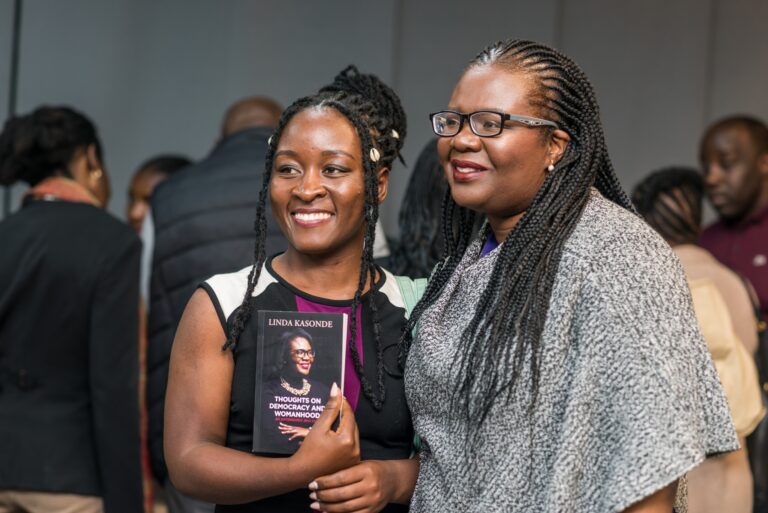
Linda Kasonde Says PF Was More Tolerant Than UPND

Linda Kasonde Says PF Was More Tolerant Than UPND

Former Law Association of Zambia (LAZ) president Linda Kasonde has raised concerns over the nation’s democratic trajectory, stating that the previous Patriotic Front (PF) government permitted a greater degree of political tolerance than the current United Party for National Development (UPND) administration.

In a comprehensive statement, Kasonde grounded her assessment in her experience as a civic advocate and a citizen observing successive governments. She acknowledged that every administration faces scrutiny but pointed to a growing perception that the space for opposing views has constricted since 2021.

“Under the PF era, even during periods of friction, civic groups and political actors could voice dissent more openly,” Kasonde stated. “Currently, there is a sense that disagreement is being perceived as hostility rather than a legitimate part of the national discourse.”

Kasonde cautioned that limitations on public assemblies, arrests connected to political speech, and stricter media oversight threaten to undermine democratic gains achieved over decades. She urged authorities to view criticism as an essential democratic mechanism, not a disruption.

“The freedoms of expression and association are constitutional imperatives, not mere suggestions; they form the bedrock of our democracy,” she emphasized. “A government’s legitimacy is fortified by engaging with all voices, including those that are uncomfortable.”

Her comments coincide with calls from several civil society and faith-based organizations for the reinforced protection of fundamental rights. The Seventh-day Adventist Church recently encouraged public participation in the constitutional review process, framing civic engagement as both a right and a civic obligation.

Political analysts note that Kasonde’s perspective carries weight due to her consistent record of criticizing intolerance. Having been a vocal critic of the PF’s governance, her current remarks signal a broader, non-partisan concern about a potential decline into a system where rights are contingent on political allegiance.

She concluded that the nation’s leadership must reaffirm the principles of openness and dialogue that have historically united Zambia. “We must not replace tolerance with triumphalism,” Kasonde said. “The same freedoms that enabled political change must be safeguarded for those who dissent today.”

Government officials have not issued a formal response, though sources within the Ministry of Information maintain that Zambia continues to uphold constitutional liberties under the rule of law.

School Feeding Programme receives more praise

0

The School Feeding Programme being implemented by the government in schools has continued seeing more learners attend class, with improved academic performance.

A ZANIS crew visited Kaunda Square Secondary School in Lusaka’s Munali Constituency where the initiative is benefiting over 1,000 pupils.

School Deputy Head teacher, Mashaukwa Matale, has thanked government for the implementation of the programme at the school.

Ms Matale, added that the initiative is worth appreciating as it will benefit children from vulnerable families to highly focus on their respective academic performances, thus boosting the education sector in the country.

“The initiative by the government to distribute free food to schools is a commendable job which just needs consistency henceforth.

“The move is helping boost the academic performances of all vulnerable learners as they are no longer learning on empty stomachs and this is also improving their concentration levels in class, tests and examinations,” she added.

Ms Matale disclosed that government has distributed 74 bags of yellow maize and 54 bags of white beans to the school, while some bags of rice are on transit.

Meanwhile, Kaunda Square Secondary School, Parent-Teacher Association (PTA) Chairperson, Reverend Peter Kombe, stated that the school feeding programme is an equaliser in education.

He further called on all stakeholders not to politicise the initiative as it is beneficial to the learners and the country at large.

Rev Kombe revealed that the school has already put up a slab in order to erect a suitable kitchen for all learners to have their meals from.

Dumisani Mulolo, a form 1 pupil at Kaunda Square Secondary School, expressed gratitude to the government for the initiative and urged that more of such programmes be implemented in the future as it will serve a good purpose for generations to come.

Government Releases K3 Billion to Clear Farmer FRA Payments

Government Releases K3 Billion to Clear Farmer FRA Payments

The Food Reserve Agency has begun disbursing K3 billion to clear grain-supply arrears for the 2025 marketing season, with verified farmers expected to receive payments by early next week. Announcing the move in Lusaka on Thursday, FRA executive director Chola Kafwabulula said the release followed direct Treasury funding aimed at boosting rural liquidity and farmer confidence.

He explained that the funds cover maize, soya and paddy rice deliveries to FRA depots nationwide. “Verification teams have completed checks in all provinces, and payments are being made through the banking system to ensure transparency,” he said. Agriculture Minister Reuben Mtolo Phiri described the disbursement as evidence of the government’s commitment to timely market support ahead of the planting season.

Economists say the cash injection will stimulate rural spending while contributing to price stability in the grain market. Farm unions welcomed the move but urged the state to accelerate warehouse receipting and value-addition schemes to absorb future surpluses.

At the same time, the Zambia Statistics Agency reported October’s annual inflation eased to 11.9 percent from 12.3 percent in September. Statistician-General Mulenga Musepa cited slower food and transport price growth and a more stable kwacha. The agency expects continued moderation if energy and import costs remain steady.

Finance Minister Situmbeko Musokotwane told reporters that recent World Bank and IMF engagements reflected confidence in Zambia’s reform agenda under the Eighth National Development Plan. He said multilateral support would strengthen social protection and infrastructure financing. Mining output also showed positive momentum: First Quantum Minerals confirmed third-quarter production rose on higher ore grades and equipment optimisation, supporting foreign exchange earnings.

In energy and infrastructure, Kafue-Zambezi solar and irrigation programme is set to expand nationwide, bringing off-grid power and water to rural communities. An African Development Bank facility is injecting US$1 million into the Bauleni water project through Lusaka Water and Sanitation Company, benefiting 20,000 residents.

These combined moves are consolidating macroeconomic stability after years of volatility. However, they be warned that sustained impact depends on energy reliability and continued agricultural support to prevent supply-driven inflation.

The Treasury says further payments to farmers will be linked to verification progress and cash flow plans for quarter one of 2026. Market analysts expect the inflation trajectory to stay downward as grain payments and new harvest supplies improve availability.

Boycotts, Protests Mount Over Contentious Bill 7 Process

Boycotts, Protests Mount Over Contentious Bill 7 Process

Historian Dr Sishuwa Sishuwa has accused President Hakainde Hichilema of ignoring national sentiment by forcing constitutional changes ahead of the 2026 general elections despite mounting opposition from civil society, traditional leaders and political parties.
 Dr Sishuwa said the Head of State had “misread the national mood” by reviving clauses of Bill 7 through a technical committee dominated by loyalists. He argued that the President’s insistence on pushing the review under executive control defied a 2019 Constitutional Court ruling which declared any such amendment illegal unless people-driven.

The historian maintained that Zambia’s democratic credibility was at risk, warning that consultations compressed into a tight political calendar had alienated citizens who should have been the architects of their own governance charter. He said ignoring boycotts by major stakeholders and dismissing criticism as political hostility only deepened public distrust.

His statement was echoed by the Forum for Democracy and Development (FDD), which praised chiefs and NGOs that refused to participate in the current process. FDD spokesperson Anthony Chibuye told reporters the committee’s composition “reeks of political convenience,” accusing the UPND of manipulating institutions to entrench itself. The Democratic Progressive Party (DPP) and the All People’s Congress (APC) joined the condemnation. DPP president Antonio Mwanza said the review was “a cover for political survival,” while APC leader Nason Msoni called it “a theatre of deception.”

In response, Justice Minister Princess Kasune said government had been overwhelmed by submissions from citizens and stakeholders and that the volume of responses proved the process was inclusive. She insisted that technical experts were merely facilitating what the people wanted recorded. The Minister dismissed boycott narratives as partisan theatre, saying the committee would continue receiving proposals until the end of November.

Meanwhile, civic organisations and the Law Association of Zambia renewed calls for the process to slow down, arguing that legitimacy required consensus, not speed. The Catholic Church and several NGOs urged suspension until after 2026 so that citizens could engage free from electoral tension.

Dr Sishuwa warned that continued defiance could lead to widespread rejection similar to Bill 10 in 2020. He appealed to President Hichilema to “listen to the heartbeat of the nation” and rebuild trust by convening an independent, post-election review.

As debate widened, State House maintained that reforms sought to clean inconsistencies and modernise governance. Opposition parties said the UPND was repeating the mistakes it once condemned. Analysts note that how the administration handles the review may determine public confidence heading into 2026.

Chinsali residents call for sensitization ahead of CA sittings

0

Stakeholders in Chinsali district have called for intensified sensitisation of the public ahead of the Muchinga Province constitution amendment sittings.

Basic Teachers Union of Zambia (BETUZ) Deputy Director Maclan Sichone, says it is important that more publicity on the constitution amendment process is intensified before the sittings next week.

Speaking through an interview in Chinsali, Mr Sichone charged that the general public needs to be equipped with enough information for them to make reasonable submissions during the engagement with the Technical Committee.

He stated that the constitution amendment sittings are very important as they give a platform to different stakeholders to make their submissions on the proposed provisions included in the constitution amendment.

“I wish to urge the organisers of these sittings to reach out to the masses in all parts of the province especially in remote areas in order for them to have an idea of what this constitution amendment is,” he added.

Mr Sichone further mentioned that the district is ready to engage with the Technical Committee in a bid to understand and make submissions that will make a more people-driven and responsive constitution.

And Former Mayor of Chinsali Thomas Mutale urged the media in Chinsali and Muchinga at large to publicise the constitution amendment sittings using various digital platforms, stressing that more publicity will guarantee a transparent and interactive engagement.

Mr Mutale observed that through massive sensitisation and publicity, the general public will be able to know the proposed amendments of which they will be able to make informed decisions and submissions.

“As Chinsali, we have received this invitation with both hands and we hope that fruitful submissions and consultations will be made,” he added.

Mr Mutale also appealed to Chinsali residents to take keen interest in participating in the constitution amendment sittings, stating that the constitution is meant for the people and therefore, the need for their participation.

Meanwhile, Chinsali Acting District Commissioner Brenda Silwembe said preparations towards the sittings are moving steadily.

Ms Silwembe stated that announcements of the event is being conducted through the Zambia News and Information Services (ZANIS) public address system to ensure that a multi-section of people participate in the sittings.

She further highlighted that the constitution amendment sittings are important as they shape the development of the country.

The Technical Committee on the amendment of the constitution will commence its sittings in Chinsali from November 3rd to 6th 2025.

TEVETA updating curricula for training institutions

0

The Technical Education, Vocational and Entrepreneurship Training Authority (TEVETA) is modernising curricula for training institutions to ensure that skills development aligns with industry needs and supports Zambia’s industrial and national development goals.

TEVETA Director for Development and Research, Phyllis Kasonkomona says curriculum reforms are aimed at aligning training with industry needs.

The media reports that Ms Kasonkomona disclosed this in Kafue district at a media workshop held at the Kafue Gorge Regional Training Centre, during a presentation on Curriculum Development in TEVET: Enhancing skills for Industry and national development.

She said the authority is committed to producing graduates equipped with practical competencies that meet labour market expectations.

Ms Kasonkomona explained that the authority has further adopted internationally recognised curriculum models, the Develop A Curriculum (DACUM) and Systematic Curriculum as well as Instructional Development (SCID) frameworks to ensure that training programmes offered by institutions are responsive to the ever-changing demands of the industry.

“Our goal is to ensure that TEVETA curricula remain relevant, adaptable, and aligned to real labour market needs.

“We remain committed to building a skilled, competent, and innovative workforce that drives Zambia’s industrialisation and national development,” she said.

She said TEVETA’s Development and Research Division continues to lead in setting occupational standards, developing and reviewing national curricula, designing learning materials, and promoting increased access to quality technical and vocational education.

The Director disclosed that as of April 2025, the Authority had developed and reviewed 460 national curricula at different qualification levels, including diplomas, advanced certificates, and trade qualifications.

And, Ms Kasonkomona stressed that the reviewed curriculum cover key areas such as agriculture, aviation, engineering, hospitality, and information technology among others.

She further highlighted that TEVETA is transitioning to Competency-Based Education and Training (CBET) an approach that accesses that capability of students as well as lecturers to demonstrate practical skills in real work environments rather than relying solely on theoretical examinations.

“CBET focuses on what learners can do in actual work situations, not just what they know,” she stated.

Ms Kasonkomona revealed that CBET is in line with TEVETA’s

2025 – 2027 Strategic Plan to shift and strengthen collaboration between training institutions and industry players.

She cited that programmes such as plumbing and pipe fitting which are supported by GIZ and Solar Energy supported by Commundo have already transitioned to CBET.

However, Ms Kasonkomona pointed out challenges such as limited funding, inadequate training equipment, over-enrolment, and a shortage of specialised instructors, which hinder effective curriculum implementation in training institutions.

To address these gaps, she recommended increased investment in workshops and learning materials, enhanced instructor training, formal linkages with industry, and regular curriculum reviews informed by research and labour market data.

She further announced that TEVETA will host a National TEVET Conference in 2027 to bring together educators, policymakers, and industry leaders to review progress and shape the future of skills development in Zambia.

President Hakainde opens MSMEs Indaba

0

President Hakainde Hichilema has reiterated the government’s commitment to fostering a supportive business environment for Micro, Small, and Medium Enterprises (MSMEs) in Zambia. 

Speaking when he officiated at the National MSMEs and Cooperatives Indaba in Lusaka today, President Hichilema said the MSMEs are the engine of every economy making them a very important sector.

The Head of State highlighted key initiatives by the government, including inflation reduction, increased access to financing, exchange rate stabilisation, and restoring the rule of law in order to create an enabling trading environment.

He called on the MSMEs to continue improving and investing in their businesses and commending them for improving their packaging to make their products more attractive and marketable.

The media reports that President Hichilema further advised the MSMEs and cooperatives to be more open minded and learn and seek support from others in order to broaden their understanding in their line of businesses.

He also highlighted the importance of the market for MSMEs saying there is a need to utilize the huge African market which is readily available as the consumer demand is very high due to the high population in the continent.

“Understand that you have a huge market in front of you and you may not be able to satisfy it. Africa is rising, disposable income gets to improve, thereby effective demand will improve. And the youthful population makes it more advantageous in terms of its needs,” he explained.

Emphasising on the role that the government is playing in supporting the MSMEs and Cooperative sector, the President revealed that the government is streamlining business procedures in order to make it easy for businesses to register and operate.

He cited decentralisation of issuing licenses and working on reducing the multiplicity of licenses hence reducing the cost of license renewal on business owners as some of the interventions by the government to make the business sector favorable.

President Hichilema further disclosed that the government has driven a policy of positive discrimination of buying Zambian products produced by the MSMEs thereby providing a readily available market.

The head of state called on the MSMEs to checklist and highlight their areas of concern and what support they need from the government thereby making it easier for the government to support them.

In addressing the electricity situation in the country, President Hichilema further emphasized that the government is working tirelessly to improve the electricity sector in the country and assured that it is concerned with the welfare of the people.

He further expressed confidence that with the interventions by the government such as the solar plants, the electricity situation in the country will stabilize in a few years.

And speaking at the same Indaba, Minister of Small, Medium and Enterprises Development, Elias Mubanga highlighted the importance of the MSMEs and Cooperatives in the country saying they continue to significantly contribute to wealth and job creation for the country.

Mr Mubanga thanked the stakeholders for their contribution and support towards the indaba and called for more collaboration between the private sector and government in order to enhance capacity, compatibility and competitiveness.

Meanwhile, the African Continental Free Trade Area Secretariat representative, Abibata Mahama reaffirmed the organization’s commitment to support the private sector in Zambia by creating a single room space continental market that reduces fragmentation and opens new commercial opportunities across borders.

Ms Mahama urged the MSMEs to continue improving the standard of their products in order to penetrate the international market.

The theme for the second National MSMEs and Cooperatives Indaba was, “Building resilient and competitive MSMEs and Cooperatives for the Africa Continental Free Trade Area.”

CDF projects commissioned in Lukulu

0

Government has commissioned three Constituency Development Funds (CDF) projects in Lukulu East Constituency of Western Province worth over K2 million.

The projects include the construction of two 1×3 classroom blocks and one health post, that will improve access to quality education and health services in rural communities.

 Speaking during the commissioning, Lukulu East Member of Parliament said the projects are part of the government’s continued commitment to promote rural development and deliver equitable services across the country.

“These projects demonstrate President Hakainde Hichilema’s dedication to uplifting the lives of people in rural areas through the CDF. Here in Lukulu East, we have been systematically constructing classroom blocks to improve the quality of education.

These interventions are critical in expanding access to education and addressing the shortage of learning spaces that came about following the introduction of the free education policy,” he said.

He explained that Lukulu East is a vast constituency with 17 wards, where many schools were previously located far from settlements, making access to education difficult for learners.

He further disclosed that the constituency has so far built 36 classroom blocks within four years, an achievement he described as unprecedented in the area’s history.

The MP added that apart from schools, the constituency has also benefited from the construction of health facilities, which have helped improve access to healthcare in remote communities.

Meanwhile, Lukulu District Commissioner commended the government for ensuring the effective utilisation of CDF resources and for supporting projects that are directly improving the lives of citizens.

“We are grateful to the government for ensuring that all projects are well covered. The large turnout of people here today is evidence of the community’s appreciation for the development taking place,” he said.

And Munalula Munalula from the community expressed gratitude to the Government for bringing a health post closer to their community,

“We used to walk four hours from Silonga to Mbanga to access health services. We are very grateful to the government for constructing a health post here,” he said.

Technical Committee receives submissions in Kaputa

0

Kaputa Residents have made both oral and written submissions in the ongoing constitutional amendment process.

Chilekwa Mpundu, who is Choma Ward Development Committee (WDC) Chairperson who represented other WDCs submitted the need for delimitation.

He said this will ensure the elimination of large constituencies.

The media reports that Mr Mpundu says that the vastness of constituencies is a challenge in the delivery of development to remote areas.

“It is difficult for Members of Parliament to reach every corner of the constituency because of the vastness; in some areas MPs are seen not visiting their constituencies,” said Mr. Mpundu.

He argued that some wards need to be delimited because ward councillors find it hard to deliver development to their people.

Mr Mpundu said this when he made his submissions virtually to the Technical Committee on the Constitution Amendment process.

Another resident, Knowledge Suse, also called for the delimitation of Kaputa constituency which he said is too vast.

He explained that if Kaputa District had two constituencies, the district would be receiving about K80 million CDF which would accelerate development.

Mr Suse who spoke on his behalf, proposed that by elections must be done away with, arguing that if a candidate dies or resigns, the political party from which the candidate came, should choose a successor.

“The political parties have many candidates that can take up that position if someone dies or resigns, instead of having unnecessary by elections,” said Mr. Suse.

Mr Suse further proposed that the number of nominated Members of Parliament should be increased.