Choma District AIDS Task Force (DATF) chairperson, Partner Siabutuba, says the removal of maize and fuel subsidies have negatively affected people living with HIV and AIDS in the area.
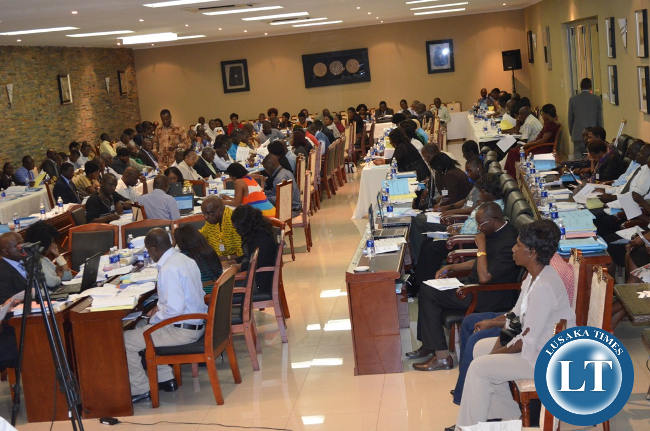
Addressing people during the national Voluntary Counselling and Testing (VCT) commemorations held at Shampande Basic School under the theme, “Reaching everyone ,everywhere with annual counselling and testing service”, Mr Siabutuba said the increase in the transport fees has been greatly felt by the people living with the deadly pandemic.
He urged government to with immediate effect increase the number of Ant-Retroviral Therapy centres to cushion the high cost of transport that has gone up as a result of the removal of the subsidies.
Mr Siabutuba explained that people in rural areas were the most affected as they cannot afford to pay the new transport fares due to high levels of poverty.
The DATF Chairperson further appealed to government to quickly address the situation so that lives of people who come from long distances and cannot afford to find transport money to go to town to access drugs are not lost.
“We really request government to look into this issue because people will not manage to wait for the money realized from the removal of subsidies to be ready to be used in building hospitals, schools and road constructions,” he said.
And speaking at the same occasion Choma District Commissioner, Golden Nyambe, said the PF government believes in serving the poor, hence the reason it removed the subsidies in order to channel the money to programmes that will benefit the majority on the grass root in the long run.
Mr Nyambe said government will soon build health centres countrywide to reduce the long distances people are covering to access medication and has since opened medical stores in Choma, thereby making it easy for all clinics in the district to access the drugs at their door steps.
Mr Nyambe also called on all stakeholders in the district to extensively mobilize the communities to take a critical step of going for VCT.
Meanwhile Choma District Community Medical Officer, Rhoda M’kandawire, said her office has increased the provision of VCT services by integrating with other health services such as male circumcision clinic, maternal care and sexual reproductive health services.
Dr M’kandawire said this in a speech read on her behalf by Senior Clinical Officer, Austin Muchanga.
“Other services are chest clinic, general out-patient department and in-patient department, care and family planning,” she said.
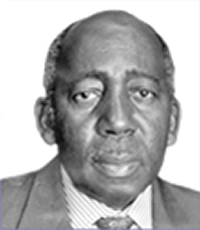
President Sata is deeply saddened at the passing of former Bank of Zambia (BoZ) Governor Mr. Dominic Mulaisho.
The former Bank of Zambia Governor, 79 died at his Roma home in Lusaka on Sunday evening.His son, Kizito Mulaisho confirmed the death in Lusaka yesterday and said funeral was being held in Roma Township.
The late Mr Mulaisho is survived by a wife, seven children and three grandchildren.He was Bank of Zambia Governor from 1992 to 1995, he also served as Dr Kenneth David Kaunda’s economic advisor,World Bank consultant and permanent secretary in the Ministry of Mines among others.
Mr Mulaisho is the author of the novels, “The Tongue of the Dumb” and “The Smoke that Thunders.”
In his message of condolences to the Mulaisho family, President Sata described the late Mr. Mulaisho, as a devoted patriot and intellectual who rendered a selfless service to the country.
“It is with profound grief that I offer my deepest condolences to the Mulaisho family on the loss of this dedicated and steadfast compatriot,” President Sata said.
The President said the late Mr. Mulaisho was a gifted thinker who showed brilliance in many national responsibilities he executed.
“Our departed colleague and brother gallantly served this country during his distinguished career. Therefore, his illustrious services will be deeply missed by all of us. We beseech the Almighty God to grant the bereaved family comfort and strength as they face this tragic loss”
The First Ladies’ Summit, dubbed ‘Investing in women: Strengthening Africa’ has opened in Dar es Salaa, Tanzania, with a call from Tanzanian President, Jakaya Kikwete, on African countries to invest in women to enhance development.
The Summit, which is co-sponsored by the Bush Institute and ExxonMobil, is also being attended by United States First Lady, Michelle Obama, Former United States First Lady, Laura Bush, and Former British Prime Minister’s Wife, Cherie Blair.
Zambia’s First Lady, Christine Kaseba, who arrived in Tanzania this morning, also attended the official opening of the conference.
Other First Ladies from African countries who attended the Summit include Ethiopia’s Roman Tesfaye, Mozambique’s Maria Guebuza, Sierra Leone’s Sia Nyama Karoma and Uganda’s Janet Museveni, South Africa’s Nomumelelo Zuma and host First Lady, Salma Kikwete.
President Kikwete noted that investing in women and ensuring that they are empowered economically benefits the country as a whole.
“The theme of this summit has come at a right time. Women are the backbone of the family, so investing in women is not optional but a matter of priority,” he said.
He noted that women play critical roles in the development of the country as they look after children, ensuring that children are healthy and educated, hence the need for the women to be empowered.
President Kikwete noted that despite the important contribution that women make, they are the most affected by poverty as they do not control the wealth they create, adding that women still have problems in accessing health care.
“Investing in women will also help them access quality health care, education and access to credit. Once they are empowered, countries will be assured of food security, increased productivity and improved health resulting in the development of the country,” he noted.
Mr Kikwete noted that in Africa women work more than men and commended women for the multiple roles they play in wealth creation.
And Tanzanian First Lady, Salma Kitwete, said the theme ‘Investing in women strengthening Africa’ was relevant to the needs of African communities as it was considering three themes which are significant to the wellbeing of the African women.
Mrs Kikwete said the themes are education, entrepreneurship and innovation and health, adding that the summit will provide an opportunity to exchange experiences and share best practices.
She said the summit will also provide an opportunity for the First Ladies to visit some model sites, among them Ocean Road Cancer Institute CCBRT Hospital and Mabinti Centre to help showcase Tanzanians efforts towards transformation of its communities.
And speaking during the same function United States former First Lady, Laura Bush, said advancing women’s economic empowerment, health and education is imperative to development.
Mrs Bush said the inclusion of women in all areas of society increases stability and prosperity of countries as investment in women results in better outcomes for entire families, communities and nations.
And in a conversation between the Former United States First lady and United States First Lady Michelle Obama moderated by Cokie Roberts, Mrs Obama called on First Ladies to speak up on important issues that affect their countries to help address the challenges being faced in their countries.
Mrs Obama said women are endowed with power, passion and are unique and can help bring a difference in their countries.
She also appealed to parents to invest in education equally among boys and girls.
“I came from a family where my parents did not have much money, but they invested in my brothers and my education equally. That is why I am where I am today,” she said.
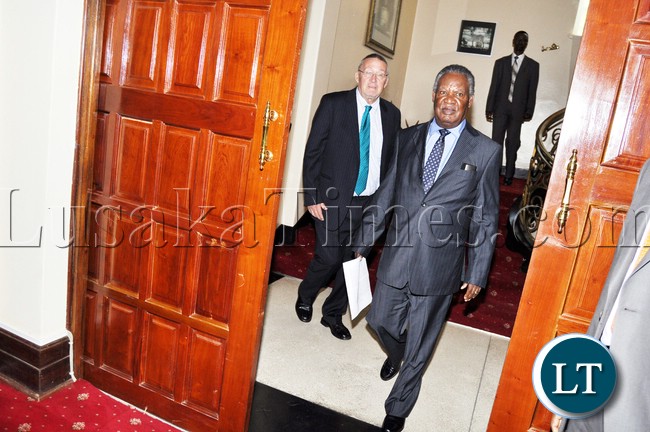
File:President Sata with Vice-President Dr Guy Scott
President Michael Sata has urged MMD president Pastor Nevers Mumba to halt his ill-advised and misplaced attacks on the country’s judiciary.
The President said Pastor Mumba must realise that by launching irrational verbal attacks on the judiciary, he is petitioning his own competence as a leader.
“His recent reckless and bankrupt view tells it all,” he said.
[pullquote]
“I would also like to advise him that as somebody who aspires to lead this country, he must learn to respect the judiciary.”
[/pullquote]
President Sata described Pastor Mumba’s attacks on the judiciary and the Supreme Court in particular as unfortunate but not surprising.
“Pastor Mumba has distinguished himself as an inconsistent clergyman who is comfortable supporting wrong things as long as it rewards him the possibility of personal sustenance,” President Sata said.
“Regrettable as it might be, Pastor Mumba appears to be a mouth for hire. How can a clergyman denounce the judiciary for standing up against corruption? His complaint that the opposition and the MMD are being targeted by the judiciary is ridiculous.”
The Head of State said the embattled MMD leader must concentrate on resolving the internal problems facing the former ruling party rather than attacking the judiciary.
“Problems can’t be solved by blaming others. Lies and noise cannot mitigate on his incompetence. Let Pastor Mumba look at himself and be honest for a change,” the President said.
“I would also like to advise him that as somebody who aspires to lead this country, he must learn to respect the judiciary.”
Issued by George Chellah
Special Assistant to the President Press and Public Relations
AN attempt by a man to effect a citizen’s arrest on a taxi driver who attempted to run away after hitting a pedestrian ended tragically as the man was killed by the same taxi
The incident happened on Saturday around 09.00hrs in Chifubu when Anthony Malimba, 25, a transport officer with Equator Import and Exports, died as he tried to wrestle the car keys from the taxi driver but the skidding car threw him into a drainage and landed on top of him.
After hitting the pedestrian, the driver fled in his taxi but alert residents pursued him into a centre road that led him to a dead end when he came up against a broken down vehicle in the middle of the road with his pursuers were closing in.
An eye witness, Cletus Chanda who is a consultant at Equator Import said Mr Malimba was rushed to Ndola Central Hospital (NCH) where he was pronounced dead on arrival.
The funeral is being held at the deceased’s father’s house in Masala Township while the condition of the pedestrian who was hit was not immediately known as attention was drawn to the tragic death of Mr Malimba.
Mr Chanda said the matter was reported to Kansenshi police who also confirmed that it was not the first time the same taxi driver had knocked down a pedestrian.
For his troubles, the taxi driver only identified as Mumba, also sustained serious head injuries from the accident and was currently admitted to the casualty ward at the NCH.
When contacted for a comment, Copperbelt Police Commissioner Mary Tembo said her office had not yet received a report on the matter.
Police have warned members of the public to desist from engaging in ‘jungle law’ by instituting mob justice on other civilians suspected to be thieves or practicing witchcraft.
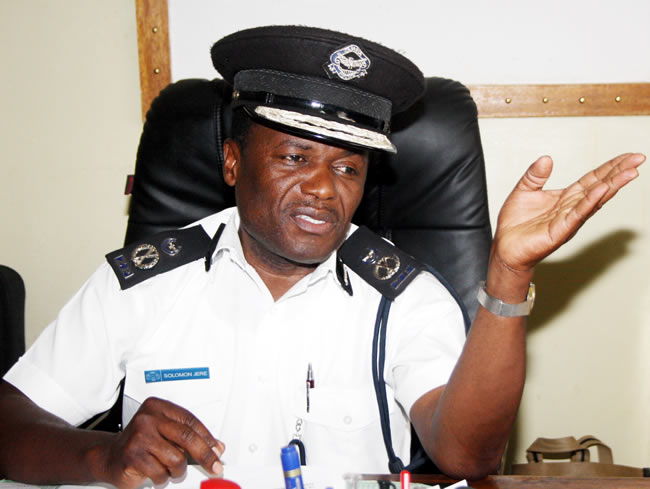
Dr Jere cited cases where a Lusaka resident from John Laing Township was burnt to death on suspicion of stealing.
A mob burnt to death the man after he in the company of others, were found allegedly stealing from a retail shop.
In Chilubi, villagers took the law into their own hands after apprehending a 70-year old man who they tied to a tree on suspicion that he was practicing witchcraft.
Dr Jere said the Police would not allow members of the public to continue instituting mob-justice on innocent victims.
“People should learn to respect the law and as Police we will not sit idle and watch while innocent lives are being lost on suspicion of practicing witchcraft or stealing. Are the same people, witchdoctors to start taking the law into their own hands? We need to engage in intense sensitisation on these matters,” he said.
He said people meddling with the law would face justice, as it was illegal to punish others without proof.
“Any suspect is innocent until proven guilty, so it is wrong for people to continue punishing others,” he said.
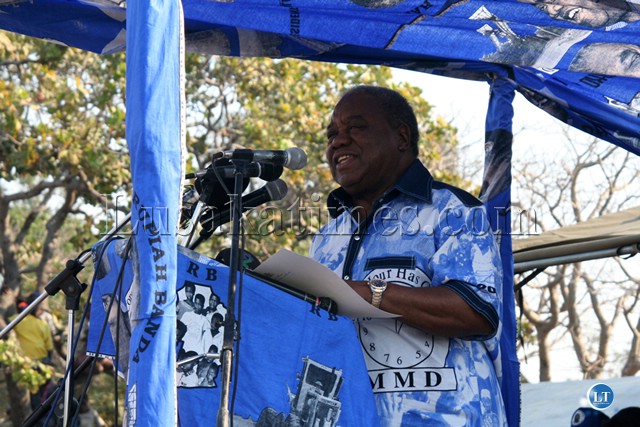
File: Former President Rupiah Banda addressing a public rally
The opposition Zambia Direct Democracy Movement (ZDDM) has announced its plans to launch a Rupiah Bwezani Banda Come Back Campaign ahead of the 2016 general elections.
In a statement released to Qfm, ZDDM president Edwin Sakala says his party will start by first collecting signatures across the country from people interested in his the former head of state’s come back.
Mr. Sakala notes that after his party has collected the required number of signatures of about a million, it be then that the ZDDM will approach Mr. Banda to make a decision based on what the people have decided on his political come back.
Mr. Sakala further notes that his party will also negotiate with other opposition political parties to come together and form a political party, United Opposition Front (UOF) for the sake of protecting Zambia from the assault the ruling Patriotic Front (PF) is doing since its formation of government.
Mr. Sakala has explained that the reason his party has preferred to choose Mr. Banda for the United Opposition Front, it is because his party understands that it will be easy for him to sell to the people of Zambia as they already know him from the influence he had as the head of state.
The ZDDM president has affirmed that his party’s plans to launch a Rupiah Bwezani Banda Come Back Campaign and for the UOF is in view of the alleged a mess the PF administration has put the country in and that unless something is done the country is allegedly going to fall into irreparable doom.
Tennant Chilumba says he is looking forward to his debut Kitwe derby after Sunday’s first win at the helm of Power Dynamos.
Power Dynamos beat Lime Hotspurs 1-0 on Sunday at Arthur Davies Stadium to hand Chilumba his first win in two games after losing 2-1 away on his debut at Konkola Mine Police a week ago.
This Wednesday, Chilumba faces his toughest assignment so early and barely a three weeks in charge since taking over from Beston Chambeshi who was fired last month when he takes Power across the Ndola-Kitwe Dual Carriageway into the heart of Wusakile to face Nkana.
“We will have a good game against Nkana on Wednesday,” Chilumba said.
“The most important thing is that I understand the pressure here and I will wither it.”
Power’s win lifts the to 8th place on 19 points, 11 points behind leaders Zesco United and 10 behind second placed Nkana after 13 rounds of games played.
Roan United 0-Green Buffaloes 1(Percy Bilyoti 28″)
Power Dynamos 1(Emmanuel Chimpinde 52″)-Lime Hotspurs 0
03/07/2013
Kalulushi Modern Stars-Napsa Stars
Kabwe Warriors-Nkwazi
Green Buffaloes-Forest Rangers
Nchanga Rangers-Konkola Blades
Konkola Mine Police-Roan United
Zanaco- Zesco United
Lime Hotspurs- Red Arrows
Nkana- Power Dynamos
2013 TOP SCORERS
31/06/2013
Winston Kalengo (Zesco) 8
Festus Mbewe (Nkana) 8
Stewart Chikandiwa (Nkwazi)7
Bonwell Mwape (Nchanga) 7
Chief government spokesperson Kennedy Sakeni has refuted as lies media reports suggesting that the Patriotic Front (PF) government is running a parallel intelligence structure in the Office of the President Special Division headed by former intelligence chief Xavier Chungu.
Mr. Sakeni, who is also Information and Broadcasting Minister, says such media reports are only being spread by people who are enemies of the PF government.
Mr. Sakeni has affirmed that it is not possible for the PF government to run such institutions of such nature as the intelligence service outside government wings as the media reports are suggesting.
He has explained that there are capable and qualified men and women in the country’s security agencies to handle all matters pertaining to the intelligence of the country and that there can not be a need that would require President Michael Sata to create a parallel intelligence structure in his office.
The Chief government spokesperson was speaking in an interview with Qfm.
Struggling Super Division side Konkola Blades have backed under-fire coach Enos Silwimba as the team endures a six match winless drought.
Silwimba’s Blades have collected only two points in their last six matches and last won on May 5 after beating Forest Rangers 2-0 in the week seven match.
In interview, club secretary Patrick Musonda said Blades have confidence in Silwimba.
Musonda denied reports suggesting that Blades are searching for a new coach.
He, however, admitted that the Silwimba led-bench needs to improve the team’s performance.
“At the moment we are not yet looking for a new coach, we believe the current coach can deliver,” Musonda said.
He added:”We have no choice but to have confidence in the current technical bench, they just have to improve on their performance so that they can start getting good results.”
Blades have 16 points in 13 games.
Meanwhile, ex-Power Dynamos coach Beston Chambeshi was last week linked to the coaching job at Konkola Stadium.
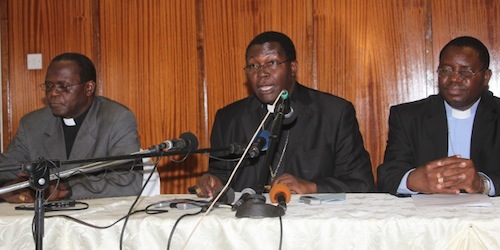
The Oasis Forum has called on government to grant the Technical Committee on Drafting the Zambian Constitution the extended period they have asked to complete drafting the document.
Oasis Forum Spokesperson, Cleophas, Lungu said this is essential in ensuring that the committee comes up with a document that is people driven.
Fr Lungu said while the Forum acknowledges the challenges associated with extending the process beyond the stipulated period, the key objective should not depend solely on adherence to meeting the set deadline.
He said national focus should be directed towards ensuring that the end product, which is the 2013 Republican Constitution, fully reflects the interests of the people of Zambia.
Fr Lungu urged all committed Zambians to continue monitoring the constitution making process in order to ensure that the country, this time around, produces a Constitution that would truly “stand the test of time!”
This is contained in a statement made available to ZANIS in Lusaka today.
The Technical Committee drafting the Zambian Constitution has applied for a one month extension to the period they were given to complete drafting the new constitution.
The initial dateline the committee was given elapsed yesterday, on June 30, 2013.
Meanwhile, Fr Lungu disclosed that the Forum has finally completed the preparation of the Private Members’ Bill on protecting the constitution making process in the country.
Fr Lungu said the Forum will sponsor and is ready to present the Bill to Parliament, adding that it also intends to widely publicise the Bill to the people of Zambia.
The Oasis Forum comprises the Council of Churches in Zambia (CCZ), Law Association of Zambia (LAZ), Non-Governmental Coordinating Council (NGOCC) and the Zambia Episcopal Conference (ZEC).
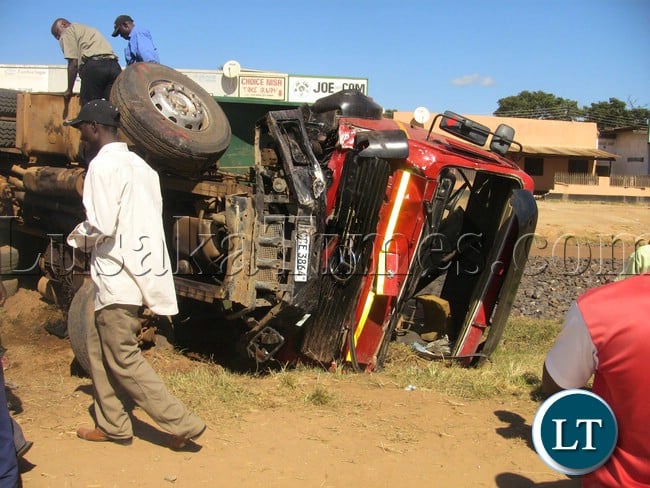
File:Three people died in a fatal road accident that occurred within the town center of Mkushi
His Royal Highness, senior Chief Nsokolo of the Mambwe people in Mbala in Northern Province has appealed to the Government through the Road Transport and Safety Agency (RTSA) to enforce a law compelling public transporters to travel during the day instead of in the night to avert more deaths arising from road accidents which have claimed more than 100 lives since last year.
In reference to the recent accident which occurred in Chisamba, 15 kilometers from Lusaka involving a tanker and a CV-bus which was travelling from Mpulungu to Lusaka last week and claimed more than four lives, his Royal Highness attributed the tragedy to the fatigue by bus drivers that are forced to move all night without resting.
He noted that most bus operators sought to make money from their crew travelling in the night and later continue during the day.Chief Nsokolo said there is need for Government and RTSA to initiate a deliberate policy in which all public transport will be compelled to travel from early morning and reach their destinations before dusk to allow them to rest for the next day’s trip to various destinations and save lives.
“These accidents can be avoided if the Government changed the law compelling all buses and other public transporters to move from as early as 06.00hrs to 18.00 hrs as this will help reduce road accidents.
Issued by:
Jeff. S. Kapembwa
Senior Chief Nsokolo’s Spokesperson
File:Delegates at Southern Province Constitution Convention in Livingstone
The Oasis Forum has finalized drafting the Private Member’s Bill that is meant to protect the current constitutional making process and the contents of the country’s new constitution.
Oasis Forum spokesperson Cleophas Lungu disclosed to Qfm in an interview that the finalized draft of the Private Member’s Bill was last week Wednesday given to Lubansenshi independent Member of Parliament, Patrick Mucheleka who will soon introduce the Bill to Parliament.
Fr. Lungu who is also Zambia Episcopal Conference Secretary General further noted that the contents of the Private Member’s Bill will also be availed to the public through a press briefing at a later appropriate date.
Fr. Lungu has maintained that the Private Member’s Bill will not contradict the Constitution Bill that government is expected to introduce for the country’s new constitution.
[QFM]
How the Supreme Court judgement was fundamentally flawed
It should not calm any nerves to realize that an analysis of the majority ruling in Attorney General v Mutuna, Kajimanga and Musonda should begin by looking at a single sentence taken from its last paragraph. Acting Chief Justice Lombe Chibesakunda, stated in the last paragraphs of her over 120-paged opinion that:
“Before we end, we want to state that although we agree that the President in exercising the powers vested in him under Article 98 has unfettered discretion under the said Article, we nonetheless believe that it would be advisable, considering circumstances of this matter, for the tribunal not to proceed.”
This sentence as much is it is conceived with controversy is also pregnant with a lot of meaning. But the questions still remain. Was this sentence put into the judgment as an afterthought? Did the majority of the four judges have a disagreement such that to appease someone in their midst, they had to insert these words? What exactly did they mean when they held that it would be advisable for the tribunal to not proceed?
This sentence of all the other issues in the judgment provides perhaps the greatest insight into what was really at stake when the Supreme Court took up this issue. I wish to argue that the judgment of the Supreme Court is fundamentally flawed and the basis upon which they held to discharge the stay of proceedings was faulty to say the least.
Chain of events
President Michael Sata used his powers under Article 98 of the Constitution to suspend three judges.
He consequently, constituted a judicial tribunal to make enquiries into their misconduct.
The president alleged that he had credible information that the three had misconducted themselves in their discharge of judicial duties.
After the president had written them, they sought leave from the High Court and a stay of proceedings to restrain the President from going ahead with the tribunal while they contested his powers to suspend them and constitute a tribunal.
Questions raised 1. At issue was whether the President in his use of Article 98 powers contravened Article 91 of the Constitution, which envisages the Judicial Complaints Authority as the appropriate body to hear grievances about judicial misconduct.
As such, they argued that the president’s powers in Article 98 must be exercised in conformity with Article 91 so that the President must at least consult with the Chief Justice and with the Judicial Complaints Authority before he could execute his powers in Article 98. 2. Additionally, Justice Mutuna and others contended that by appointing a tribunal to make enquiries into a matter that was before court, the President had usurped the powers of the Supreme Court of Zambia.
There are many elements to the issues raised by the judges but for brevity and clarity we should leave them at that.
High court Ruling
In the High Court, Justice Fulgence Chisanga, granted leave to the suspended judges and held that prima facie they had arguable grounds upon which a stay of proceedings against the tribunal could be granted. The State through both the Attorney General, Mumba Malila SC and the Solicitor General Musa Mwenye instead went to Justice Chisanga and asked her to discharge the stay of proceedings. She refused and instead ordered trial of substantive issues that the suspended judges had raised.
The Supreme court judges misinterpretation
It was at this point that the Attorney General appealed to the Supreme Court. The court was asked 9 questions among many other elements. The principal issues being that High Court Justice Chisanga should have discharged the the stay of proceedings. They also argued that the president did have the power according to Article 98 of the constitution to suspend the judges and institute the tribunal. In view of the two principal articles of the constitution the Supreme Court was invited to rule on whether by exercising Article 98 powers, the President should have considered judicial independence as articulated in Article 91 of the Constitution.
The Supreme Court’s judgment is quite surprising to say the least. Perhaps the most astounding of all they held, was ruling that the President was legally right in using his constitutional powers to suspend the judges, but at the same time, they provided “advise” that the tribunal should not go ahead.
Surprisingly though, this ruling and the reasons the Supreme Court has advanced for stating that Article 98 powers could be exercised without recourse to Article 91 and in fact without any further recourse to the Judicial Complaints Authority deserves some analysis.
The Rule of Interpretation
The Supreme Court judges confused matters when they held that the appropriate method of constitutional interpretation in this matter should be “literal rule of interpretation.” To buttress this position, the court relied on the Miyanda, Chiluba and the Mwanawasa cases. The literal rule of interpretation according to Justice Chibesakunda is that the ordinary meaning and ordinary grammatical meaning should be assigned to constitutional texts.
I am of the view that the rule of interpretation was not at issue in this matter. The issue was not whether the meaning of Article 98 was ambiguous or not. What was at issue was comparative constitutional law. The question should have been whether Article 98 and Article 91 could be interpreted harmoniously or not. Coming to any conclusion was not going to be dependent on “natural or even grammatical” meaning of any text. And in fact, I am of the opinion that the “purposive interpretation method” would be more helpful though in resolving the interplay of Article 98 and Article 91. The purposive interpretation looks at the wider context of law and seeks to interpret constitutional texts in ways that give effect to wider concepts and fundamentals of the law. I must return to this latter.
Duality of Article 98 and Article 91 – an offensive blunder
The other questionable thought pattern employed by Justice Chibesakunda and the majority concerns their “dualization” of Article 98 and Article 91. This is fundamentally offensive at constitutional law. In this duality, Justice Chibesakunda and her majority envision Article 98 and Article 91 as existing in different planes and in fact in different universes, as it were, and as such, they do not in any way see how the exercise of the President’s powers in Article 98 could in fact impact on the exercise of Article 91 powers. Chibesakunda ACJ chose to ignore any interaction of these articles and strictly created a dichotomy that problematically, divorces these articles even though these two articles have impact upon the common subject matter.
It is in this vein, that Chibesakunda sees the Judicial Code of Conduct (which is a product of statute) not as a broad product of constitutionalism, but rather simply as a product of one isolated constitutional article, Article 91, of the Constitution that cannot impact on any other articles. This is problematic. The Judicial Code of Conduct is a constitutional tool that can be used by both the Executive and the Judiciary to deal with judicial misconduct. But to conceptualize it simply as a product of one universe inhabited by Article 91 and not be a subject of Article 98 of the constitution is to create a constitutional dichotomy that by itself betrays the very tenets of constitutionalism.
Dualism and Literal Interpretation
Indeed, a literal interpretation of the Judicial Code of Conduct to the extent that it is interpreted only as a child of Article 91 and not Article 98 is inconsistent. For example, it is in the preamble to the Constitution of Zambia where Zambia is declared as a “Christian Nation”. And yet while this is the case within the preamble, the Supreme Court has “purposively” interpreted this provision and robbed it of any justiciable value. This is what they held in the case of Roy Clarke v Attorney General. That being the case, how come this time when it comes to the Judicial Code of Conduct the same court is now interpreting the preamble in a “literal” sense?
The “Guard of the Guards” doctrine invented by Chibesakunda
The next problem and perhaps the most controversial of them all, is the doctrine that Chibesakunda seemed to have invented. The idea that the constitution has put up the President to be the “guard of the guards.” Under this doctrine, while Article 91 provides for such avenues as the implementation of the Judicial Code of Conduct, the other avenue by which judges can be kept in check, according to Chibesakunda, is by the President using his “discretionary” powers under Article 98. According to the court:
“It must be an equally democratic tenet to enshrine in the Constitution the limited checks on the Judiciary by the Head of State through the establishment of tribunals where the President receives credible information.”
This thinking is problematic to the extent that it erodes and offends the doctrine of the separation of powers. Zambia being a common law country is founded on several constitutional principles. I should say that while a written constitution is the supreme law of Zambia, the constitution itself predicates from unwritten principles and values that should underline any subsequent interpretation of the constitutional text. As such, the courts of law are called to give effect both to the text and to the spirit of the text of the Zambian constitution.
The Separation of Powers
FILE: President Michael Sata with Malawian High Court Judge Lovemore Chikopa (second l), Justice Naboth Mwanza (r) rand Justice Thomas Ndhlovu (far l) after a swearing-in at State House.
One of those principles undergirding the spirit of our written constitution is the wellspring of separation of powers. In simple terms, this principle basically states that the Judiciary is not subordinated to the Executive. As such, the president in all his powers is not head of the judiciary and cannot possibly be its “guardian”. That being the case, the best way to approach constitutional text that seem to give more power to the president over the judiciary, is to interpret such texts in ways that does not offend the principle of separation of powers. It is on this point that the Supreme Court erred.
In this regard then, the Zambian Supreme Court, having been faced with a dilemma between Article 98 and Article 91 powers; they should have interpreted these articles in ways that conform with the principle of separation of powers. This being the case, it should be repugnant for Justice Chibesakunda to claim that the President as Head of State should have powers to suspend judges based on “information he receives as Head of State.” According to Chibesakunda:
“…the legislators intended to lay down procedures of making it possible for the President as Head of State to deal with that exclusive class of adjudicators without recourse to the Judicial Complaints Authority”.
Protecting the president’s close business and political associates is not upholding democracy
Further, Justice Chibesakunda sees the presidential exercise of Article 98 powers to be in the common good of our democracy. But as stated by the suspended judges in their affidavits, one of the reasons why President Sata instituted the tribunal is not because of any meaningful democratic ideals but rather it was connected to a ruling from Mr. Justice Mutuna that went against the President’s political collaborators. As such, the idea that it is in the interest of democracy that a president should suspend judges is at least, prima facie, questionable in view of the reasons why President Sata constituted the tribunal. It cannot be democratic, that which is done to only protect the president’s close business and political associates.
Closely connected to the above paragraph, the Supreme Court seems to imply that since Article 98 powers are exercised only in an executive capacity, this cannot offend the separation of powers. This is a lame reason. According to Justice Chibesakunda, the president’s invocation of Article 98 powers only deals with investigation of a judge and not a prosecution of a judge. This so-called investigation doctrine is even more belligerent. Couldn’t the honorable court have looked at the impact that such investigations could have on the independence and impartiality of the judges? Should judges loose their independence simply because the tribunals set up under Article 98 are just investigatory in nature and not prosecutorial in nature?
It gets worse
Perhaps more bizarrely, Justice Chibesakunda further held that, “since the tribunal process is investigative in nature, Judicial Review cannot be used to curtail these investigative processes”. It does not get any more problematic than this. I should strongly disagree here with the Supreme Court. The tribunal cannot be said to only be “investigative in nature”. A few sentences down the line, Justice Chibesakunda contradicts this “investigative character” of the tribunal by stating: “the President must act on the advice of the tribunal, without discretion.”
This being the case, it means that the “investigative” doctrine that Chibesakunda seem to be inventing is untenable. It cannot be investigative that which will make categorical recommendations about the fate of a suspended high court judge. This is not how investigations work. The fact that the Judge Chikopo (intentionally misspelled here) tribunal will in fact, make recommendations binding on President Michael Sata should move the tribunal from being an investigative body to being a judicial body and if that is the case, then judicial review that seeks to question the very basis of such powers should at least be considered by the courts of law.
This idea from the judgment of the honorable judges of the Supreme Court is a contradiction to say the least. Or as we used to call it in Chiwempala: this is “double tobela.”
Again, what the Supreme Court of Zambia says in the following paragraph is so irresistibly ironic:
We also hold the view that His Excellency was not exercising quasi judicial powers. We hold the view that conferment of wider discretionary power vested in His Excellency are indicative of the absence of His Excellency acting judiciously, see the case of R vs Governor of Brixton.
While indeed the Court might claim that the President is not acting in a quasi-judicial capacity when he sets up the tribunal, the fact that the tribunal’s recommendations should be carried out by the president without discretion should lead to the conclusion that this exercise of Article 98 powers is in fact quasi-judicial. Indeed, had the tribunal been only an investigative agency and not a judicial one. Indeed had the tribunal only investigated the facts of the cases without proffering any binding recommendations, the President could have gotten away with this doctrine. But unfortunately it is not so. As such, if this goes unchallenged, the president will act to fire the judges on the basis of the recommendations from the tribunal. As I have stated above: this should bind the president to act judicially.
Should information a president receives be the basis upon which he can unilaterally fire judges?
The next problem with the Supreme Court ruling is couched in very interesting language. According to Justice Chibesakunda:
In order to guard jealously the sanctity of our Constitution, we cannot give Constitutional provisions a meaning that may impeach the explicit, implicit and clear language used.
But what the learned lady misses in so saying is that the constitution does not only contain the powers of the President, it also contains the powers of the judiciary. Constitutionalism is not only a commitment to presidential or executive powers; it is also a commitment to judicial powers. It falls upon the judges to ensure a balance of these powers if a conflict is noted. Prima facie, the suspended judges noted a clear conflict of powers in Article 98 and Article 91, it was for the court to address this issue rather than only give credence to the immutable power of a President.
Political Realities and Awareness
In spite of being a lady of tremendous political insight and experience, Justice Chibesakunda seems to have conveniently left out the political realities in her interpretation of presidential powers. No judge of the Supreme Court should take himself or herself as living in a legal cave, unaffected by current political realities. These judges are human and do know the impact of political patronages going on in our democracy. As such, it is quite disturbing for Justice Chibesakunda to confer reasonability on presidential action simply because the president should have had “credible information” when deciding to suspend Judges Mutuna, Musonda, and Kajimanga.
According to Justice Chibesakunda it is from the authoritative position of “His Excellency” where she and her colleagues infer the idea that he reasoned “reasonably.” I can’t just figure out how Chibesakunda is reasoning here. She is saying that the President cannot possibly act irrationally or unreasonably simply because he is the authoritative president of our republic and head of our State. In my opinion, no opinion of the Supreme Court can get weirder than this. As such, the Courts continued to state,
“it would be illogical and unreasonable to hold that he did not receive credible information as President for him to act as he did.” This sentence does not make sense to me.
So is the Supreme Court becoming a judge of what is credible information or not? Should intelligence information that a president receives be the basis upon which he can unilaterally fire judges?
Is President Sata the Overall Authority on “Everything”?
And then the Supreme Court comes up with something just unusual. The Court stated that the President is “the overall authority on everything”. What exactly does this statement mean? In Zambia, the President holds executive authority, but this cannot be conceptualized as being the “overall authority on everything”. Which “everything” did the Supreme Court mean here?
And then they justify this overall authority over everything doctrine by claiming that the President’s sources are “exclusive to the public domain and must be impeccable”.
Reading this, one would wonder whether this is a judicial opinion, or it is some praise prose intended to catch the attention of a tumultuous suitor.
The fact that the president has impeccable sources exclusive to the public domain does not immune the president from acting judicially or quasi-judicially in instituting tribunals which themselves have judicial effects.
In fact, human experience has taught us very eloquently that even the most intrusive of executive powers can get its intelligence wrong. Intelligence information that the president has at his disposal is insufficient on its own to form the basis for judicial or even quasi-judicial functions. It is never contemplated in our constitutional make-up that the executive privilege of the President should be so used as to intimidate and suspend judges on the basis of “credible impeccable information” at the disposal of only one man. The judges need reminding that Zambia is not a dictatorship; it is a democracy. And using the words of Mambilima DCJ, “The president is not above the law.”
This being the case, perhaps what nailed it for the Supreme Court was its last paragraph of the substantive opinion.
“Although we agree that the President in exercising the powers vested in him under Article 98 has unfettered discretion under the said Article, we nonetheless believe that it would be advisable” said the judges, “considering the circumstances of this matter, for the tribunal not to proceed.”
With these words ended one of Zambia’s most controversial Supreme Court opinions. Without elaborating on those “circumstances of this matter,” it is up to ordinary Zambians to infer why the Supreme Court felt it was not advisable to proceed with the tribunal in spite of holding, with a forked tongue, that President Sata exercised his powers correctly.
In my humble opinion, the Supreme Court so advised because, they really did not have any reason to hold otherwise. Their reasoning was flawed.
By Elias Munshya wa Munshya
Disclaimer:(c) 2013. This article is not intended to provide legal advice. Only members of the Zambian Bar can provide specific legal advise on questions raised in this article.
THE Electoral Commission of Zambia (ECZ) has pledged not to succumb to any political pressure in any elections in the country.
ECZ Chairperson Irene Mambilima said the commission would not succumb to any amount of pressure that would be brought on to the commission by political party leaders in holding free and fair elections.
Ms Mambilima who was accompanied by ECZ Director Priscilla Isaac said the commission would continue remaining independent in ensuring that it conducts f a free, fair and credible election in the country.
The chairperson was speaking when she was answering to concerns of the youths during the youth conference against electoral malpractice and violence held at Luangwa Lodge in Chipata on Saturday.
She said the aspiration of Zambians to have a free and fair election would not be met if the commission was exert to pressure from the political party leaders.
“The commission would continue with its work of remaining impartial during any elections and it will not exert to pressure from political party leaders during elections,” she said.
Ms Mambilima said the commission would continue with goodwill towards collective task of delivering free, fair and credible elections in the country.
She said the commission was continue engaging political parties in any election to ensure that they understood the commission.
Ms Mambilima also cautioned participating political parties not to engage into vote buying.
Speaking at the same meeting Eastern Province Local Government Officer Macloud Nyirenda and Chipata Town Clerk Ekan Chingangu said the conference was aimed at averting violence and other firms of electoral malpractices in the forthcoming Chipata Central parliamentary by-election.
And Youths from various political parties pledged not to engage into political violence ahead of the parliamentary by-election.
The meeting was attended by various youths from political parties and church leaders who were found in Chipata Central constituency.
The meeting was also attended by ECZ Senior Public Relations Officer Sylvia Bwalya and Chipata Central parliamentary by-election returning officer Michael Ngulube.