By Charles Mwewa(Author:Zambia – Struggles of My People)
Rafeeah Mulla, a Grade Nine pupil at International School of Lusaka,in a Zambia Daily Mail newspaper clip of Saturday, November 5th, 2011 titled, “Zambia, 50 Years from Now,” laments:
Zambia`s current population is thirteen million. I estimate that fifty years from now it may double to twenty-six million; putting enormous strain on our meagre resources, such as food, clothing, hospitals,
infrastructure and so on. To keep up with our increasing population,Zambia needs to have a much larger economic growth rate than it has had in the last fifty years, especially if it wants to enjoy a better
living standard in 2061 which I know we can achieve, if we are really determined.
The astute student goes on and prescribes the parameters necessary to enable Zambia emerge as a strong nation in terms of its economy and democracy: “For us to advance, we need a safe and peaceful country.” Mulla then praises the efforts the country has made in developing democratic institutions and cultural edifices which collectively will and has continued to define Zambia as a free and accommodating nation.
On September 25th, 2011, UN Secretary-General Ban Ki Moon hailed Zambia for setting “an example for the rest of Africa and the wider world about how power can be transferred peacefully.” In fact,Zambia has been transferring power smoothly and peacefully since its creation in 1964. The UN Chief was on record for having chided other African nations to emulate Zambia in allowing democracy to flourish. [pullquote]despite Zambia being placed as one of the favourable recipients of donor aid in poverty reduction programmes,there was nothing tangible to show for it in terms of bettering the lives of the majority poor[/pullquote]
However, as it is often mused, democracy has been a feature of the African social mosaic even in pre-colonial days. The yardstick for measuring democracy in Africa has always been the Westernised concept
of freedom and democratization, which have often been the holding of “free and fair” elections and the nudge for freedoms and other fundamental human rights to be deeply entrenched into the political fabric of the nation. That, truly, is commendable and even attractive at best. But what has been overlooked is the fact that democracy or good governance has not been African predominant problem.
Social and economic indicators in so-called war-torn African states and the peaceful nations are not any different. It will be imprudent to farce that Nigeria, for example which has had a good share of coups
since its independence, lags Zambia in terms of economic development.The 54 states of Africa all have had one aspect of political or military struggle or the other. They all are, to a larger extent,products of a colonial past, a past imbued with tribal disruptions and political insipidity. That said, it cannot be construed as a blame-balm for Africa`s future problems.
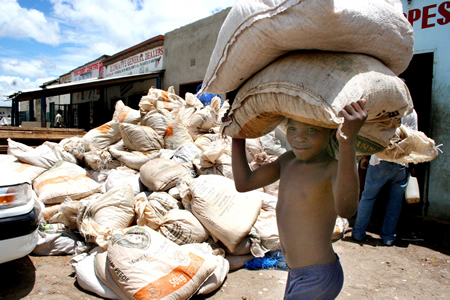
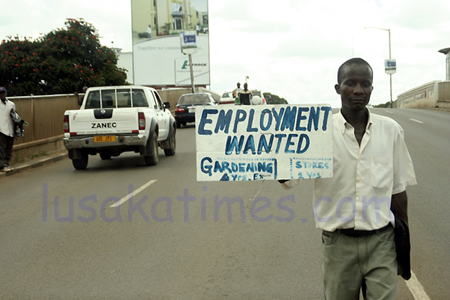
The past, notwithstanding, Africa`s biggest problem is poverty, and this has nothing to do with what happened in the colonial or post-colonial eras. Those eras, of course, contributed, but cannot be used as an ante for harangue. In fact, unfortunate events like colonialism should now equip Africa to deal with future problems effectively. Credit must be given to African leaders for trying to run their governments under very difficult circumstances, but more can and must be done. There can never be any excuse for poverty – it dehumanises the soul and pulverises a people`s best intentions.
The current government in Zambia, in the run-up to the September 20th,2011 elections recognised poverty as “Zambia`s biggest problem.” Dr. Guy Scott, now Vice-president of the Republic of Zambia, is on
record as having said that, “ordinary Zambians had been left out of the current growth in the country.” In Zambia, despite the enormous economic spurts boosted by increased copper production, the conditions
of the common person have not changed.[pullquote]Poverty is inimical to a people`s future well-being; it is a
nation`s enemy number one, and as such it must be combatted and defeated at all costs. Corruption, abuse of resources and neglect of industries which have been cited as causes of poverty in Zambia, are,in fact, the symptoms of poverty, and not the causes of it[/pullquote]
This is a norm, so it seems,regardless of which government is in power. Of course, there are those who think, erroneously, that under Kenneth Kaunda Zambia performed very well in economic terms. But this is only a case of short-sightedness, as Kaunda himself was defeated in the elections in 1991 because the people, and the International Financial Institutions,then, observed that the only remedy to the precarious Zambian economic facia was the Structural Adjustment Programmes (SAPs). SAPs had become anathema, a case of throwing the baby with the water.
In the wake of the Euro Crisis in 2011-2012, such theorising has been taken by events. SAPs regime is no longer seen as a panacea to Africa`s, and indeed Europe`s, decaying economic conditions. The two late Zambian presidents, Frederick Chiluba and Levy Mwanawasa, introduced economic liberalism in Zambia. Under this economic framework, the socialistic regime of Kaunda was replaced by one of free-market competition. Those who depended on hand-outs became the real victims of the new economic structure. Kaunda was no longer there to dish out cooking oil, mealie meal and so on.
Under the Rupiah Banda`s regime, people still recognised poverty as the biggest problem. Civil Society for Poverty Reduction (CSPR) challenged former president Banda to make poverty a priority in the Post of Thursday, March 31st, 2011. And Marylyn Celli, a governance advocate, was bemused that despite Zambia being placed as one of the favourable recipients of donor aid in poverty reduction programmes,there was nothing tangible to show for it in terms of bettering the lives of the majority poor.
Indeed, each year, Zambia and many other African countries, receive aid from donor governments and the
co-operating partners. But poverty, for which majority of these funds is acquired, never seem to rescind; the people are not better than before aid was acquired.
The University of Zambia (UNZA) student body have been challenging governments to explain their plans for ending poverty in Zambia. Kelvin Chitala, one of the UNZA Student Union leaders once said that, “Zambians were in need of a government that would champion poverty eradication countrywide.” This,unfortunately, has been a song for many years since Zambia attained to its political independence.
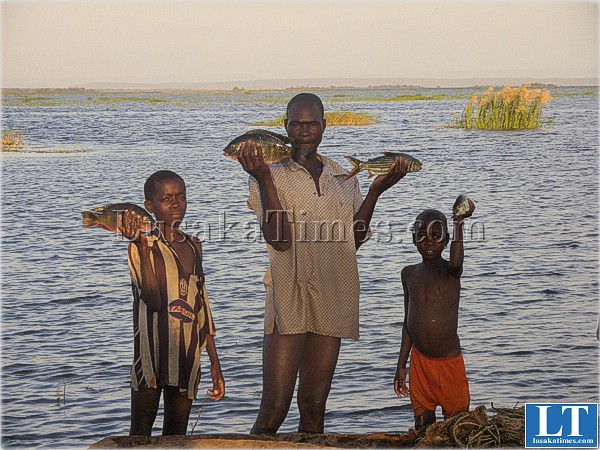
Zambia has a problem of poverty. According to Marcos Rodrigues, Cuban Foreign Deputy Minister, “Africa has enough talent to solve the continent`s problems.” And what President Michael Sata calls the “fruits of independence” can only be prosperity, which has eluded the Zambian people for over 40 years. Indeed, like former Bank of Zambia Governor, Dr. Caleb Fundanga, said, “Disparities between the rich and the poor will exist,” however, this should not deter the Zambian governments from fighting this scourge.
Of course, corruption is a sister problem to poverty, but poverty supersedes corruption. In many cases, it is poverty which breeds corruption. Curbing poverty is the first step towards eradicating corruption.
African institutions have not been strengthened enough to attain to a system of imbedded checks and balances, like the West have. And the war that must be fought and won should be poverty, even before fighting other national scourges. Poverty is inimical to a people`s future well-being; it is a
nation`s enemy number one, and as such it must be combatted and defeated at all costs. Corruption, abuse of resources and neglect of industries which have been cited as causes of poverty in Zambia, are,in fact, the symptoms of poverty, and not the causes of it.
The cancer that is eating up Zambia is poverty. It must be fought with all the might that government possesses. President Michael Sata and his government must ensure that their fight is the fight against
poverty. The dignity of the people of Zambia depends on it. The future of Zambia relies on it. And the sanity of a people is in pursuance to it. Poverty is Zambia`s enemy number one, and it must be conquered at
all cost!