Sunday, June 14, 2026
13.1 C
Lusaka
Home Blog Page 6

Mundubile, Makebi Hounded Out; Police Making HH Unpopular, Says Sumaili

You can imagine the police coming to the hotel, surrounding the hotel. Some were carrying guns, terrorising everybody.

Former Minister of National Guidance and Religious Affairs Reverend Godfridah Sumaili has delivered a scathing account of what she says unfolded in Chipata after the burial of Paramount Chief Mpezeni IV, accusing police of turning a solemn period of mourning into a security operation that traumatised mourners, alarmed foreign visitors and left opposition leaders feeling hunted.

Speaking in a recorded interview, Reverend Sumaili said she personally witnessed events that shook her to the core, moments she described as painful, shocking and unlike anything she had previously experienced in Zambia.

“What I have seen today is very painful. It is traumatising. I have never experienced such a thing,” she said.

According to Reverend Sumaili, Tonse Alliance presidential candidate Brian Mundubile, his running mate Makebi Zulu and members of their entourage had travelled to Eastern Province to join thousands of mourners paying their final respects to the late Ngoni monarch. They came to grieve. What they got, she alleged, was something else entirely.

“They came to mourn and to put to rest King Mpezeni. To treat them like that is very unfortunate,” she said.

Reverend Sumaili alleged that police officers surrounded the hotel where the opposition leaders were staying, creating fear among guests, mourners and visitors who had made the journey from across Zambia and neighbouring countries to attend the funeral. The image she painted was one of guns, tension and a hotel turned into something resembling a siege.

“You can imagine the police coming to the hotel, surrounding the hotel. Some were carrying guns, terrorising everybody,” she said.

The former minister went further, alleging that officers moved through the hotel room by room, ordering occupants to pack up and get out.

“They came room to room. They said, ‘You have to leave. You have to leave.’ They pushed them out and escorted them out,” she claimed.

What made the situation feel even more jarring, she said, was the timing. The incident unfolded while foreign visitors, traditional leaders and delegations from neighbouring countries were still in Chipata, still present for the mourning proceedings that follow a burial of this significance.

“Imagine people who have come from different countries and then you behave in such a way,” Reverend Sumaili said.

She questioned why any police action could not simply have waited until the mourning period had run its course, arguing that even if the opposition leaders had done something wrong, there was a time and a place to deal with it and this was neither.

“If there is something they have done wrong, report it and wait until the mourning period passes. What they have done is very shameful,” she said.

During the same programme, the host alleged that the operation was led by Deputy Inspector General of Police Fred Hamaamba. According to the host, police officers surrounded and barricaded the Protea Hotel before removing Brian Mundubile, Makebi Zulu and members of their entourage from the premises. The host further alleged that five members of the opposition leaders’ security team had been detained earlier, before the larger operation got underway.

According to the account presented during the broadcast, police officers stated that members of the Mundubile entourage were being sought by law enforcement authorities in Lusaka, a claim cited as part of the justification for the operation at the hotel.

The host also alleged that police communications captured during the incident included calls for “long buttons” to be brought against a journalist who was livestreaming events as they unfolded. That allegation was not independently verified during the broadcast.

The programme heard further claims that the operation took place in full view of foreign delegations attending the funeral, including representatives linked to the Zulu Royal House in South Africa as well as visitors from Malawi and Mozambique. The host alleged that some members of those delegations were staying at the same hotel and watched as police officers moved through the premises searching for Makebi Zulu and his team.

The allegations have not been independently verified.

Reverend Sumaili warned that incidents of this nature carry a political cost, that scenes like these risk damaging the public image of government and generating sympathy for the very people being targeted.

“The people of Zambia are watching. The people of Zambia are hearing the cries of our leaders,” she said.

Without directly accusing President Hakainde Hichilema of authorising the operation, she made the point clearly: when state institutions behave in a certain way, it is the government that wears the consequences. Actions taken in the name of authority do not exist in a political vacuum.

Her concern was echoed by a caller from Mongu, who drew a pointed comparison with an incident involving then opposition leader Hakainde Hichilema during the Kuomboka ceremony in Western Province. The caller argued that authorities under former President Edgar Lungu chose not to move against Hichilema in the middle of that traditional ceremony, not out of weakness, but out of respect for the Litunga, the proceedings and the thousands of people gathered for a culturally sacred event. Enforcement, the caller said, was deliberately held back until after the occasion had concluded.

The caller questioned why the same restraint was allegedly not shown during the mourning period for Paramount Chief Mpezeni IV, arguing that a royal funeral attended by traditional leaders, international visitors and foreign dignitaries deserved no less consideration.

“If there is something wrong that has been done, report it and wait until the mourning period is over,” the caller said.

Several other participants in the programme raised similar concerns, expressing worry about what image was being projected to regional visitors and arguing that the funeral of Paramount Chief Mpezeni IV should have remained a moment of mourning — not one overshadowed by political confrontation.

Throughout the discussion, Reverend Sumaili repeatedly appealed for prayers, calm and national unity, speaking with visible emotion about opposition leaders she said had been forced to leave Chipata under deeply troubling circumstances.

“We are only one Zambia. If we mess up this country, we will have nowhere to go. We do not want to see our country destroyed,” she said.

At the time of the broadcast, no official police response to any of the allegations aired by Reverend Sumaili, the programme host or callers had been presented during the programme.

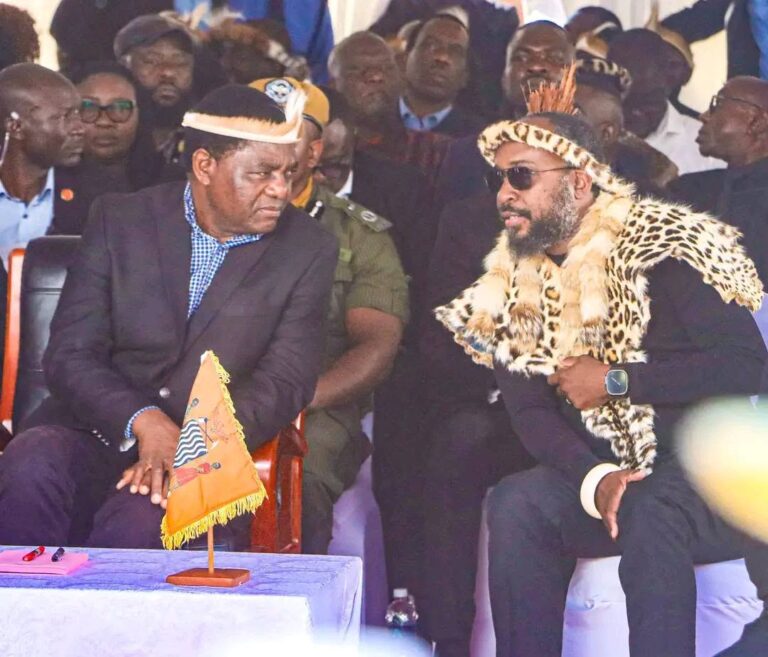
The events occurred during mourning activities following the burial of Paramount Chief Mpezeni IV a ceremony that had drawn government officials, opposition politicians, traditional leaders and international delegations from across Southern Africa to the heart of Eastern Province.
Government begins public auction of Chitambo assets

Government has commenced a public auction of assorted assets in Chitambo District, including motor vehicles, motorcycles, office furniture and medical equipment.

District Commissioner (DC) Majory Mwape noted that the disposal of the assets is aimed at promoting transparency, accountability and prudent management of public resources.

Speaking during the official launch of the exercise, Ms Mwape said the auction is being conducted in accordance with Government regulations on the disposal of obsolete, unserviceable and surplus government property.

She explained that the exercise will enable the government to recover value from assets that were no longer in use in the district, while creating an opportunity for members of the public to acquire various items through a fair and competitive process.

Ms Mwape urged interested bidders to familiarise themselves with the auction guidelines and adhere to all procedures to ensure a smooth and transparent exercise.

She emphasised that the disposal of obsolete assets was an important component of public asset management as it helped institutions create space for the acquisition of newer and more efficient equipment needed for service delivery.

The Chitambo DC further reaffirmed the Government’s commitment to strengthening accountability in the management of public resources and ensuring that all disposal processes were conducted in an open and transparent manner.

The public auction exercise is part of an ongoing programme being implemented across districts in Central Province aimed at disposing of obsolete, unserviceable and surplus Government assets in accordance with established public asset management regulations.

Elective hopefuls risk dismissal for missing deadline.

Central Province Permanent Secretary Milner Mwanakampwe has warned that public service workers who sought adoption for elective positions but failed to resign by the stipulated May 15 deadline risk dismissal from the civil service.

Dr Mwanakampwe says government issued clear guidelines requiring civil servants with political ambitions to resign before participating in partisan politics.

Speaking to journalists in Kabwe, he disclosed that only two District Commissioners in the province formally resigned before the deadline in compliance with the directive.

The Permanent Secretary identified the former District Commissioners for Serenje and Chitambo districts as the only public officers who officially declared their intentions to participate in partisan politics.

“Apart from the two, there is no other civil servant who declared to my office that they wanted to be adopted by political parties because they intended to contest as Members of Parliament. However, should we discover that there are others, whether from the ruling party or the opposition, they will be ejected from the public service,” he said.

Dr Mwanakampwe emphasized that there will be no exceptions in enforcing the directive.

Secretary to the Cabinet Patrick Kangwa had earlier directed civil servants intending to contest in the August 13 General Elections to resign by May 15, 2026.

Meanwhile, Dr Mwanakampwe has urged political parties and the media to avoid sensationalising incidents of political violence, saying reports should be factual and verified.

He noted that some reports of political violence have been exaggerated, creating unnecessary tension ahead of the elections.

The Permanent Secretary called on all political parties to adhere to the Electoral Code of Conduct and promote peaceful campaigns.

He further urged the police to handle cases of political violence professionally and impartially, stressing that the law must be applied equally regardless of political affiliation.

Hichilema hails Mphezeni as a patriot who championed unity

President Hakainde Hichilema has described the late Inkosi Ya Makosi Ngwenyama Mpezeni IV as a great son of Zambia and a traditional leader who served the nation with distinction and wisdom for over 40 years.

The President said the late Ngwenyama served Zambia, not just the Ngoni people or Eastern Province.

He said the late chief carried the authority of a king but possessed the heart of a servant.

“Today we give farewell to a great son of Zambia, our traditional leader, our paramount chief Nkosi Ya Makosi Ngwenyama. He served the Ngoni people with distinction and wisdom for over 40 years. He served with six presidents before me,” President Hichilema said.

“Nkosi Ya Makosi was a true patriot who championed unity in our country. He worked with and served this country not just for the Ngoni people or Eastern Province but the country at large,” he said.

President Hichilema said the late traditional leader attended traditional ceremonies across the country without fail and respected all chiefs regardless of status.

“He did not look at the status of a chiefs, he looked at the status of the people. He understood that there are different traditional leaders that the country has been endowed with. He understood that other chiefs’ matters,” he said.

The President noted that Ngwenyama Mphezeni greatly promoted the Ncwala Ceremony, turning it into the major cultural event it is today.

“We shared this understanding: God created us not to be lazy but to work hard. Ngwenyama produced food for his family and encouraged Ngoni communities to produce food for themselves through hard work and dedication,” President Hichilema said.

He added that the late king advocated for agriculture, food security, and improving people’s quality of life.

He also partnered with government to advance education, especially after the reintroduction of free education.

Meanwhile, Paramount Chief Mphezeni of the Ngoni people of Eastern Province has been put to rest with hundreds of mourners from walks of life turning to witness his burial at the resting place near his Ependukeni palace.

President Hakainde Hichilema attended his burial alongside other government dignitaries and Ngoni chiefs from Malawi, Tanzania, Eswatini and South Africa.

Police investigate human skeleton found in Chilubi

Police in Chilubi District in Northern Province have opened investigations following the discovery of a human skeleton in Laki Village in Chief Chiwanangala’s chiedom in Northern Province.

Northern Province Police Commanding Officer Simunji Mulonda confirmed that skeletal remains were discovered by Botta Ngosa 62 in his groundnuts fields.

 Mr Mulonda revealed that Ngosa reported the matter to Matipa Police Post who recorded the report on Saturday, June 6, 2026.

He disclosed that preliminary investigations revealed that the body was in an advanced state of decomposition.

The Police Commanding Officer added that the deceased was later identified as Chewe Lunkonto, aged 45, of Bulilo village through clothing recognition by a close relative.

Mr Mulonda further revealed that it was established that the deceased had been missing since May 19, 2026, although no missing person’s report had been filed with the police.

He explained that the remains have since been buried at a local cemetery, with the grave marked for possible future exhumation should need arise.

Mr Mulonda said an inquiry file has since been opened, and investigations are ongoing to establish the circumstances surrounding the death.

The Division Commanding Officer has urged members of the public to promptly report missing persons and any suspicious occurrences to the nearest police station.

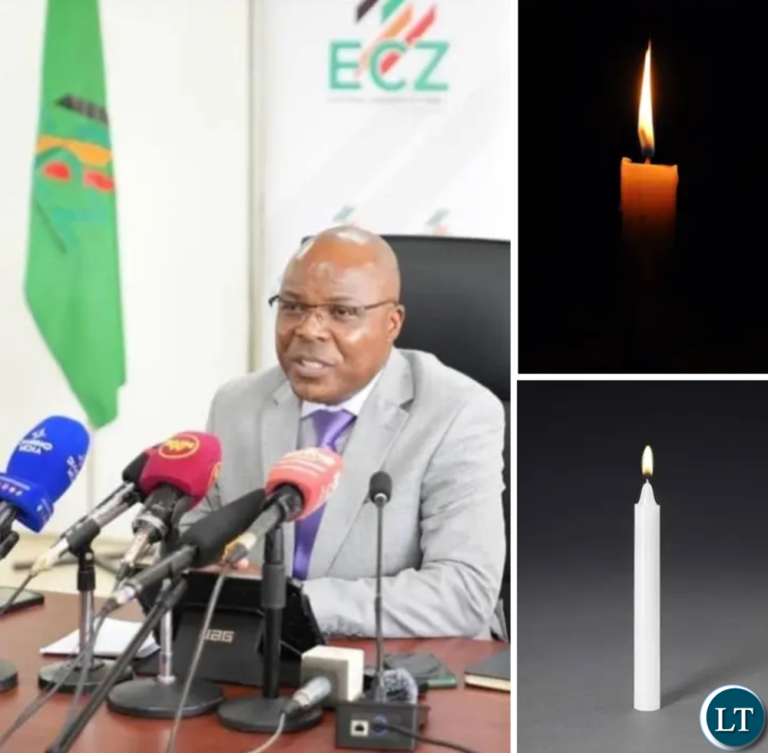
Independent candidates decry symbol withdrawal by ECZ

Independent candidates in Kasempa District have expressed concerns with the decision by the Electoral Commission of Zambia’s (ECZ) to withdraw the candle symbol after nominations saying the move has disrupted their campaigns and resulted in financial losses.

The affected candidates disclosed that they had already printed campaign materials, produced campaign songs and informed voters about their symbols before being directed to select alternative symbols.

This was in an interview with Zambia News and Information Services ZANIS in Kasempa today.

Mpungu Ward independent candidate Parcent Chabinga described the decision as unfair and said candidates should have been informed before nominations.

“We were supposed to be communicated to before doing our nominations and now after doing our nominations we are being told to come and change the symbol. We are not happy,” Mr Chabinga said.

He added the change had rendered campaign materials obsolete and created confusion among voters who had already been mobilised using the candle symbol.

Similarly, Kamusongolwa Ward candidate Ngalwile Mika said the symbol had initially been assigned by ECZ, making the sudden change difficult for candidates and voters alike.

“We have been going through the fields telling people about the same symbol. Now it will be a challenge for us to get back into the community and start telling people about changing the symbol,” she said.

Meanwhile, Blessing Susu Masumba’s representative said the decision had caused frustration among candidates who had already invested significant resources into their campaigns.

“The materials we have printed, the songs we have paid for and the campaigns we have conducted have all been affected. We are very much disappointed because we were guided and given the candle as a symbol during nominations,” Mr Susu added.

The candidates have appealed to ECZ to consider the challenges the decision has created and provide guidance on how affected candidates can effectively communicate the changes to voters.


Kalabo Health Director gets 9 months for corruption

The Economic and Financial Crimes Court sitting in Kalabo District has sentenced Kalabo District Health Director, Neto Mbwayu, to nine months imprisonment for one count of corruption-related offence.

Dr Mbwayu, 42, of Winela area in Kalabo District, was charged by the Anti-Corruption Commission in October 2025 with two counts of willful failure to comply with procurement guidelines and one count of making payment from public revenue for services not adequately rendered, contrary to the Anti-Corruption Act No. 3 of 2012.

Particulars of the offences are that between 1st January 2021 and 31st December 2022, while serving as District Health Director at Kalabo District Health Office, Dr Mbwayu approved a payment of K39,000 for the purchase of two HP Pavilion laptops, an amount above his K30,000 approval threshold and without a written request from the user department.

He also authorized a K4,000 payment for upholstery of a motor vehicle seat, a service which was not adequately rendered.

In mitigation, Dr Mbwayu who was represented by a lawyer, appealed to the court to exercise leniency as he was a father saying his wife had just delivered a baby three weeks ago adding that his services as a Doctor will be missed by the community of Kalabo.

When delivering judgement in the matter, Principal Resident Magistrate, Preston Chiluba convicted Dr Mbwayu on one count of willful failure to comply with procurement guidelines and sentenced him to nine (9) months’ imprisonment with effect from 8th June, 2026.

Meanwhile, Dr Mbwayu was acquitted on one count of willful failure to comply with procurement guidelines and one (1) count of making payment from public revenue for services not adequately rendered, contrary to the Anti-Corruption Act No. 3 of 2012.

Dr Mbwayu was arrested and released on bond in October 2025 pending court proceedings.

Government releases K48 Million for ZAMPOST retirees terminal benefits

Government has released K48 million to settle outstanding retirement benefits owed to former employees of the Zambia Postal Services Corporation.

ZAMPOST Postmaster General,  Lydia Simakando has commended the Government for the release of Forty-Eight Million Kwacha to facilitate payment of terminal benefits.

Ms Simakando notes that this is a significant milestone that restores dignity and hope to former employees who have patiently waited for their benefits.

The Postmaster noted that the intervention demonstrates the Government’s commitment to improving the welfare of Zambians and addressing long standing obligations affecting retired workers.

“The payment is in line with the vision of President Hakainde Hichilema, which is to strengthen governance, restore dignity to citizens and improve livelihoods, “she said

Mrs Simakando commended the Ministry of Finance and National Planning for prioritising the release and the Ministry of Technology and Science for their support in facilitating the process.

She added that the payment forms part of the third phase of efforts to settle outstanding retirement obligations.

“Disbursements will be made on a first-retired, first-paid basis to ensure fairness, transparency and accountability throughout the process,” she explained.

The Postmaster thanked retirees for their years of service and patience as efforts to resolve the obligations and reaffirmed its commitment to work closely with Government and stakeholders to ensure smooth and transparent disbursement.

“ZAMPOST will continue to provide updates as the payment process progresses and additional disbursements are made,” Mrs Simakando said.

This was contained in a statement issued to ZANIS by ZAMPOST Public Relations Officer, Ruth Mwanza.

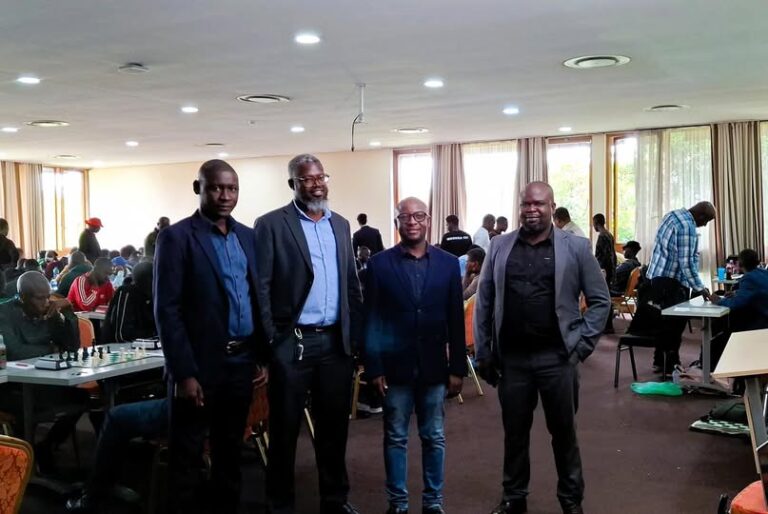
Chief Mukuni International Chess Championship launched

The Chess Federation of Zambia (CFZ) has entered into a long term partnership with Mobile City, a collaboration aimed at strengthening the growth and sustainability of chess in the country.


Speaking during a press briefing in Lusaka, Chess Federation of Zambia President, Leslie Chikusa, announced the launch of the inaugural Chief Mukuni International Chess Championship, which will be held in Livingstone from July 4 to 6, 2026.


Chikusa said the tournament, named in honour of His Royal Highness Chief Mukuni, marks the first major project under the new partnership.


The Chess Federation of Zambia President said the championship will help promote sports tourism by attracting players from approximately eight countries.


Chikusa emphasised the importance of partnerships between sports federations, traditional leaders and the corporate sector in fostering peace, unity and fair competition.


“A relationship with a corporate entity and a relationship with a chief guarantees peace, tranquility and an atmosphere that encourages fair competition, love and unity,” he said.


Meanwhile, Mobile City Marketing Manager, Musambo Minamu, said the company’s decision to sponsor chess was motivated by the values the sport promotes among young people.


He reaffirmed its commitment to supporting the development of chess in Zambia, citing the sport’s discipline, intellectual appeal and potential to nurture future


“This partnership came straight from our hearts as Mobile City’s board and management and looked at the sport and saw that it is disciplined, organised and attracts intellectual minds,” he said.


He urged the Ministry of Education and the Chess Federation of Zambia to strengthen chess programmes in schools and revive chess clubs to encourage greater participation among learners.

Government committed to support water and sanitation sector

Vice President Mutale Nalumango has reiterated governments commitment to supporting the water and sanitation sector as a key enabler of national development.

Mrs Nalumango notes that this commitment is reflected in the government’s continued investment in water and sanitation infrastructure across the country.

She explained that Zambia has zero-rated tax on water treatment chemicals, which has reduced costs for utilities and ensured more affordable access to safe drinking water.

“We are reviewing legislation such as the water supply and sanitation act, so as to strengthen governance and the regulatory frameworks aimed at improving efficiency as well as ensuring equitable service delivery,” she added.

Mrs Nalumango was speaking today during the official opening of the 14th Zambia Water Forum Exhibition (ZAWAFE), held under the theme: “From Commitment to Action: Accelerating Integrated Resilience Solutions for Vision 2030 and the Sustainable Development Goals (SDGs)” in Lusaka.

She highlighted that the government is equally providing support for commercial water utilities to expand coverage and improve service quality, as well as promoting Public-Private Partnerships to mobilise resources and accelerate innovation.

Mrs Nalumango however stressed that despite efforts made, Zambia continues to face challenges caused by climate variability, droughts, floods, rapid urbanisation and rising demand for water and sanitation services.

“In response, my office through the Disaster Management and Mitigation Unit has worked closely with cooperating partners and has supported service providers to rehabilitate damaged water supply and sanitation infrastructure,” she added.

She implored the gathering to commit to embracing emerging technologies and scientific research, strengthening partnerships as well as mobilising resources for integrated and climate resilient infrastructure.

Mrs Nalumango also said the theme is both timely and urgent as it challenges government and stakeholders to move beyond pledges and declarations towards focusing on implementing concrete, measurable solutions that strengthen resilience in communities, ecosystems and institutions.

Speaking at the same event, ZAWAFE Organising Committee Chairperson, Imasiku Nyambe said ZAWAFE provides a platform to share experiences on water challenges and try to provide solutions.

Prof Nyambe also seized the moment to caution the gathering on the impending El Nino.

“We are likely to experience the El Nino. Starting October, 2026 to January 2027, which will pose a risk to agriculture and energy. Let us not sell all our maize. Let us wait for the rains,” added Prof Nyambe.

And Finish Ambassador to Zambia, Saana Halinen, called for urgent structured and cooperative governance regarding transboundary water bodies so as to provide for peaceful, equitable and sustainable transboundary water cooperation.

Ms Halinen pointed out that Finland aims to elevate the implementation of international law and support a transparent, inclusive and science based preparatory process.

Speaking at the same event, German Head of Development Cooperation in Zambia, Andreas Pletziger, observed that there are increased challenges threatening water security like climate change and pollution, as well as damaged ecosystems due to unsustainable practices and thus putting water security in danger.

Mr Pletziger reiterated Germans commitment to working with government and stakeholders in achieving progress in Zambia’s water sector and in realising Vision 20230.

Meanwhile, UNICEF Country representative, Saja Farook Abdullah, in a speech read on her behalf by UNICEF Deputy Country Representative, Tinkhani Msonda, stated that water, sanitation and hygiene (WASH) are foundations to human capital development.

He noted that when WASH systems fail, the consequences are immediate and far reaching, affecting every aspect of a child’s life, adding that WASH remains the most critical driver of child mortality.

Judgment day set for ZAF Flight Sergeant’s incest case

The trial of a Zambia Air Force (ZAF) Flight Sergeant, who is accused of incest has concluded in court, with a final testimony from a forensic expert in the Forensic Department at the Ministry of Home Affairs.

Forensic Analyst, Innocent Makasa, 50, told the court that DNA results confirmed the accused could not be excluded as the father of the victim, but he was excluded as the biological father of the child.

Mr Makasa explained that while DNA can establish biological relationships, it cannot determine whether carnal knowledge occurred, as not all intercourse results in pregnancy.

The 41-year-old ZAF Flight Sergeant Officer is charged with defiling and impregnating his 14-year-old biological daughter between August 1st and 31st, 2024, to which he pleaded not guilty.

During the trial, the accused had applied for a DNA test to establish whether he is the father of the baby boy born to the victim in May 2025.

Magistrate Kawama Mwamfuli has since set July 8, 2026 as the date of judgment.

Media urged to strengthen collaboration with COMDEV

The Ministry of Community Development and Social Services has called for strengthened collaboration with the media in fostering positive media coverage on social protection programmes.

Ministry of Community Development and Social Services Principal Planner, Mpande Mutandwa, says once government and media organizations join forces in the publicising social protection Programmes, it will boost outreach.

Mr Mutandwa has observed that collaborative efforts aimed at increasing public awareness on critical social services are key in ensuring that life-changing assistance reaches vulnerable populations.

He this when he addressed journalists from Muchinga and Northern Provinces during a media engagement workshop in Mpika District.

Mr Mutandwa stated that the Ministry’s collaboration with the media, is a major push to bridging the information gap surrounding social welfare.

He disclosed that the Ministry recently launched a strategic initiative to deepen collaboration with the media and digital content creators to support diverse media action.

“The Ministry wants to ensure that it generates content related to social protection with specific focus on the recently launched National Social Protection Policy, this is why you see us gather here today to empower journalists with knowledge,” he said.

Mr Mutandwa indicated that the collaboration will help to transform traditional reporting and online platforms into active conduits for social change.

He said the ministry is equipping journalists and digital influencers with accurate and accessible data on vital social services which is helping the public to appreciate social protection programmes.

“Social media influencers and content creators have become key partners in communicating developmental issues and reaching out to communities that traditional communication channels may not always access,” Mr Mutandwa noted.

He explained that the Ministry is actively encouraging journalists to amplify key messages surrounding social protection, community development and child rights.

Mr Mutandwa said media collaboration does more than just broadcast information as it establishes essential feedback loop that allows authorities to identify emerging community needs and combat misinformation in real-time

And Kasama Radio Reporter, Esther Banda observed that regular media engagement in the implementation of social protection Programmes fosters transparency and facilitates a vital two-way dialogue where citizens can report grievances, provide policy feedback, and monitor delivery.

Ms Banda noted that the five day media engagement will give enough insight on how social protection Programmes are being implemented.

“We commend the Ministry of Community Development and Social services for this initiative, it will help increase awareness in communities,” she said.

She commended the ministry for the initiative of engaging media practitioners from both public and private media institutions, as this will enhance information flow.

ECZ Suspends Mazabuka Central Campaigns Following Violence Concerns

The Electoral Commission of Zambia (ECZ) has suspended all campaign activities in Mazabuka Central Constituency following incidents linked to election campaigns, citing concerns over public order and the safety of participants.

The suspension, which takes immediate effect and remains in force until further notice, was announced after the commission assessed developments in the constituency in consultation with security and electoral stakeholders.

ECZ Chief Electoral Officer Brown Kasaro said the commission’s decision was intended to safeguard the electoral process and maintain a peaceful environment ahead of the August 13 general election.

In a statement, the commission condemned incidents of political violence reported in Mazabuka Central as well as separate disturbances in Kabwe Central and Chawama. ECZ said all political players have a responsibility to conduct campaigns peacefully and within the provisions of the Electoral Code of Conduct.

The developments in Mazabuka Central follow an incident involving independent parliamentary candidate Gary Nkombo, whose campaign activities have drawn national attention in recent days.

According to Zambia Police, officers responded to a public order situation after Mr Nkombo allegedly conducted campaign activities at a location not allocated to him under the ECZ campaign timetable. Police said tear smoke was deployed to disperse crowds and restore order, maintaining that the action was not directed at any individual candidate.

Mr Nkombo has disputed the police account and criticised the manner in which the incident was handled. He has maintained that all candidates should be allowed to campaign freely and fairly within the confines of the law.

The matter has attracted reactions from several political figures.

National Democratic Congress president Saboi Imboela commented on the developments, while Leadership Movement presidential candidate Dr Richard Silumbe expressed concern about the treatment of opposition political activities. Former Member of Parliament Larry Mwiitwa also called for clarity regarding the circumstances surrounding the incident.

Responding to concerns over political violence, State House Chief Communications Specialist Clayson Hamasaka said President Hakainde Hichilema does not condone violence and supports the enforcement of the law against anyone found responsible for unlawful conduct, regardless of political affiliation.

The ECZ said it will continue engaging security agencies and other stakeholders before determining when campaign activities can resume in the constituency.

Mazabuka Central remains one of the closely watched parliamentary contests in the run-up to the general election, with the commission indicating that normal campaign activities will only resume once conditions are deemed conducive for peaceful participation by all stakeholders.

Use Hichilema’s Own Tribalism to Defeat Him

A Mirror Demographic Approach
By Dr. Field C. Ruwe

Defeating Hichilema Is Defeating Tribalism

Caveat. This article is NOT about fanning the flames of tribal politics; rather, it seeks to demonstrate an effective and peaceful approach for defeating President Hakainde Hichilema in August.

It employs the “shift of conflict axis” theory to turn Hichilema’s own tribalist strategy against him. It shows that by leveraging Hichilema’s “Us vs Them” ethnic demographics, a coalition of the opposition can formulate its own demographic strategy, potentially resulting in his defeat.

Historical Background: The “NEVER AGAIN” Conviction

As a researcher and historian, I record painful and uncomfortable truths. On Thursday, August 13, 2026, election day, the majority of 2.6 million highly motivated voters from the Tonga tribe, along with their affiliates, will stand in long lines to cast their votes for Hichilema.

For many, their decision will not stem from his performance, but rather from a steadfast belief in a “NEVER AGAIN” conviction. Human nature indicates that those who experience significant liberation will instinctively seek to protect it by any means necessary.

Tonga Liberation Day

August 24, 2021 felt like “Tonga Liberation Day.” Tongas describe the day as surreal, with those in villages dancing and shedding tears, and those in towns partying after the results were announced. Hichilema’s inauguration represented a significant milestone and a symbol of liberation from years of political marginalization and vilification endured under six successive administrations.

Human evolutionary biology has endowed us with a robust taste for liberation to safeguard our survival. It is this innate drive that has propelled Hichilema into tribal politics. Once he realized he was the one who had delivered liberation to the Tongas, his evolutionary switch flipped into a “Never Again” mode. It was on the conviction of the “Never Again” solemn pledge that Hichilema took the oath of office, to avert the dreadful Tonga experience instigated by the Choma Declaration of 1973.

The Choma Declaration

Tonga elders recount how, during the struggle for independence, the word “Bamunyama” (bloodsuckers) was weaponized by Kaunda and his UNIP followers to politically isolate and demonize Harry Mwaanga Nkumbula’s ANC, which was predominantly Tonga, causing deep-seated colonial trauma in many who, on June 27, 1973 shed tears.

For the Tongas and their affiliates, June 27, 1973, is a day that lives in infamy. It is a day that many remember as “Doomday.” On this fateful day, a dark cloud descended upon Southern Province when Kaunda (UNIP) and Nkumbula (ANC) signed the Choma Declaration, creating a one-party state under Kaunda. With the stroke of a pen, Kaunda effectively destroyed the ANC.

That Hichilema and his contemporaries grew up hating Kaunda is rooted in such lived stories. Growing up, they saw for themselves how the Southern Province was economically and politically sidelined by the Kaunda regime, a consequence of the ANC’s legacy of opposition.

Eternal Power: Hichilema’s Imingalato (Dribbling)

It is the fear of a recurrence that Hichilema has indicated he desires to be Zambia’s inaugural life president. During a rally in Kalomo on May 22, 2025, he informed his supporters that he was “permanently seated on the throne of the presidency.” With this perspective, he has adeptly utilized the Bantu Botatwe to advance his political goals and personal ambitions.

This is evident in the ethnic appointments made within his cabinet, the Justice Department, the police force, the army, and the civil service; a strategy that Cornelius Mweetwa intimates as the initial phase of imingalato (dribbling).

On December 27, 2025, Mweetwa, who serves as the Minister of Information and Media and the Chief Government Spokesman, announced that the UPND was prepared to initiate a new phase of “imingalato.” Mweetwa deliberately employed the term “imingalato,” which translates to dribbling in the Bemba language. His intention was to convey to the Bembas that it was the Tongas’ turn to navigate their way through Zambian politics. In doing so, Mweetwa depicted tribalism as an “Us versus Them” antagonistic sentiment.

The second phase of “imingalato” entailed altering the Constitution under the guise of “addressing lacunae” (legal gaps), which led Parliament to approve Amendment Bill 7 of 2025. This legislation brought about extensive modifications to Zambia’s electoral system in preparation for the 2026 General Elections. Through such dribbling (imingalato), Hichilema has effectively locked in the Bantu Botatwe bloc votes.

With merely two months left before the elections, Hichilema is set to contest, fully aware of his solid support from his ethnic geopolitical base in the Southern and Central provinces, which are part of the Bantu Botatwe. He understands that the majority of around 2.6 million Tongas; 440,000 Lambas; 310,000 Lenjes; 215,000 Ilas; 75,000 Solis; 69,000 Totelas; 58,000 Salas; and 17,000 Fwes (Mafwe), totaling 3,709,000, are prepared to endorse him for a second term.

Shift the Conflict Axis: Flipping the “Us vs Them” Dynamic

The preceding ethnic demographic statistics render it nearly impossible for any single party to defeat Hichilema. Political strategists assert that the potent strategy to defeat a widely supported tribalist incumbent is the mirroring of the “Us vs Them” dynamic, which involves using his tribalism against him demographically and presenting it as an assault on Zambia’s democratic principles.

Considering that Hichilema’s tribalism is impacting elections more than policy, to the extent that some members of his tribe are discontented, the opposition should redirect his “Us vs Them” dynamic back at him and hold him personally accountable. This strategy avoids the broad characterization of all Tongas and their supporters as tribalists.

In this case, the opposition’s focus must extend beyond economic stagnation, corruption, unemployment, load shedding, and fuel prices to incorporating tribal demographics as a major factor influencing electoral outcomes in this year’s election. This means that, like Bantu Botatwe, the opposition must equally secure co-ethnic census data with the Bemba tribe’s geopolitical regions in the Northern and Luapula Provinces, which are home to 4,000,000 people.

And like Bantu Botatwe, the opposition must create its own affiliates from tribes that have voted with the Bembas in past elections: 2,200,00 Nyanja-Chewas; 1,000,000 Nsengas; 700,000 Ngonis; 840,000 Tumbukas; 456, 000 Mambwes; 169,000 Namwangas, and other associates who, when added to the Bemba population, result in a cumulative total of more than 9,365,000.

The combined total of the Bemba and their affiliates positions the opposition at more than 5 million votes ahead of the Tongas and their affiliates. When considering the populations of the Copperbelt, which stands at 2,575,539, and Lusaka, with 3,079,964 residents, the Bemba-led opposition is in a favorable position.

Nevertheless, it requires a coalition of parties and individuals who can leverage demographic strengths to enhance voter turnout in the strongholds of the Bemba and their affiliates.

Strategic Execution

Build a Trans-Ethnic Coaltion: It is asserted by political scientists that forming a coalition of the opposition, as the Tonse Alliance has done, is a proven strategy to defeat an incumbent because it unifies diverse groups to maximize political pressure.

Role of Alliance Leader: A coalition leader defeats Hichilema by uniting diverse ethnic factions. He must shift the national narrative from its identity to shared economic issues and secure the electoral process against manipulation.

In defeating Hichilema, the leader of the alliance must demonstrate how Hichilema’s “Us versus Them,” embodies political and ethnic vengeance, and portray him as a president who is promoting discord and laying the foundation for potential future conflicts. He must describe to voters how Hichilema’s tribalism has become the bane of Zambia.

The leader must courageously tell voters that Hichilema has systematically favored individuals from the southern, central, western, and northwestern regions of Zambia for strategic government roles. In the end, he must charge Hichilema with nepotism, tribalism, and regionalism, employed as a calculated exploitation of tribal identity to garner votes and create regional divisions on a civil war scale.

Inner Circle and Foot Soldiers: The coalition’s inner circle and members must reach populations across the country. They must tie the resurgence of tribalism to economic frustrations and must demonstrate how, as a result, poverty remains widespread, with 60% of Zambians living below the poverty line. They must build tailored messaging targeting young voters in both rural and urban areas.

Onus Task: The months of June and July should be used to illustrate how, over the past five years, Hichilema’s tribalism has served as a significant predictor of emotional polarization, institutional distrust, and a decline in democratic values.

The coalition must convince voters that Hichilema is jeopardizing the nation by dismantling the historical principle of “One Zambia, One Nation,” and infringing upon constitutional safeguards by breaching legal standards to retain authority. In this context, “One Zambia, One Nation” ought to be a unifying slogan at all public events.

The Battle of Leadership Is the Failure of the Coalition: The monetary benefits associated with the presidency render the formation of a successful coalition in Zambia both mentally and politically arduous.

At present, we are observing the total disintegration of the opposition, which is a result of severe personal conflicts, ideological divergences, and leadership disputes.

Some opposition leaders are already acting like micro-autocrats within their respective parties, believing that no one else is fit to lead the coalition except themselves. Again, NO SINGLE PARTY WILL OVERCOME HICHILEMA. Failure to unite essentially grants him victory on a silver platter, and Zambia faces a grim future.

Author is a Doctor of Education and a scholar-practitioner, affiliated with Northeastern University, Boston, Massachusetts, USA.

EDITOR’S NOTE:
The views, opinions, claims and conclusions expressed in this article are solely those of the author and do not necessarily reflect the editorial position, policies or views of Lusaka Times, its editors, management, contributors or affiliates. The article is published as a contribution to public discourse and political commentary. Responsibility for the accuracy of the opinions and interpretations contained herein rests entirely with the author


Chilufya upbeat ahead of 4 Nations Final

0

Copper Queens star Prisca Chilufya is upbeat as Zambia face Zimbabwe in the final of the friendly Four Nations Tournament on Tuesday evening at Levy Mwanawasa Stadium in Ndola.

Zambia and Zimbabwe will meet in the 18h00 final after the third-place match between Lesotho and Kenya at 15h00.

The Copper Queens are using the Four Nations Tournament to prepare for the 2026 Women’s Africa Cup of Nations, which will serve as qualifying for the 2027 FIFA Women’s World Cup.

In a pre-match comment, Chilufya said winning the tournament would be a good send-off for the Copper Queens ahead of WAFCON.

“I feel like everybody knows what’s ahead because we have played Zimbabwe countless times. We know each other inside out,” she said.

“It’s going to be a good game. The girls are all on board, we’re on the same page, and we know what’s at stake. We’re at home in front of our fans. We know what to do and we’ll make sure we don’t give the Zimbabwean team any hope,” Chilufya added.

Zambia reached the final after beating Kenya 4-1 on penalties following a 1-1 draw last Saturday in Ndola. Chilufya scored Zambia’s goal.

She’s already looking ahead to WAFCON as Zambia chase World Cup qualification: “We’ve already made a name for ourselves at WAFCON. We’ve been qualifying consistently. So the next thing is to bring the trophy home, because we have a lot of senior players who will probably be playing their last WAFCON.”