Thursday, June 11, 2026
12.6 C
Lusaka
Home Blog Page 89

Kitwe Schools golf tourney saluted

1

In a bid to promote golf at the lower level, Nkana Golf Club has expanded the Primary Schools Golf Championship it started with two schools just three years ago.

This week has seen six schools competing for honours on the prestigious Nkana Golf Course.

Scores of youngsters from Lechwe, Mopani Trust, St. John’s Convent, Green View, Blueberry and Cradle to Crayon turned up for the expanded End of Term Schools Golf Championship at Nkana Golf Club in Kitwe.‎

‎This is part of the junior golf programme by Nkana Golf Club with support from IRH managed Mopani Copper Mines and the Zambia Golf Union.

‎Sylvia Kaunda, the Nkana Golf Club Events Marketing and Public Relations Coordinator, is pleased with the growth of the school’s championship.

‎”Nkana Golf Club is very passionate about junior golf,” Kaunda told journalists in Kitwe.

‎”This tournament is our baby here at Nkana Golf Club,” she said.

‎Lechwe emerged champions with newcomers Cradle to Crayon making a big statement by finishing second.

‎Nkana golfer David Michelo Mensah, who watched the children, saluted the just concluded End of Terms Schools Golf Tournament at Nkana Golf Club in Kitwe.

Mensah says golf helps to instil discipline in children.

He thanked schools for driving this school’s junior golf championship.

Sangwa blocked by registration delay as election clock ticks

LUSAKA, April 1 — Movement for National Renewal leader John Sangwa says delays in registering his political party are constraining preparations for Zambia’s August 13 general election, placing pressure on participation timelines for new entrants.

The application for party registration was lodged on March 23, 2026, but remains pending, with the process requiring clearance linked to the Office of the Inspector General of Police before completion. The delay comes as political parties intensify mobilisation ahead of a fixed election calendar.

Sangwa said the issue extends beyond administrative procedure and carries direct political implications. Without formal registration, a political organisation cannot fully operate within the electoral framework, affecting its ability to organise structures, select candidates and engage voters at scale.

He stated that the current situation limits mobilisation and national visibility at a stage where established parties are already advancing campaign activities. The timing places newer political movements at a structural disadvantage as the election date approaches.

The electoral calendar sets August 13, 2026 as polling day, leaving a narrowing window for parties yet to complete registration to build operational capacity. Delays at this stage compress preparation timelines, affecting outreach, resource mobilisation and internal coordination.

Sangwa said participation in elections depends on more than casting a vote. It requires that political actors are able to organise, campaign and present alternatives within a framework that is consistent and predictable. He added that the absence of registration interrupts that process.

The matter draws attention to the administrative pathways governing political party registration, where compliance requirements include documentation checks and security-related clearances. These processes are designed to ensure regulatory standards are met, though they also introduce procedural stages where timelines can extend.

Sangwa framed the delay as a constitutional concern tied to political participation. He said administrative systems should facilitate, not restrict, the ability of citizens and political actors to take part in elections through organised platforms.

The issue emerges within a broader electoral environment where institutional processes are under scrutiny. Government officials have pointed to the role of information management in safeguarding election credibility, with Information and Media Minister Cornelius Mweetwa calling on the media to prioritise accurate reporting and counter misinformation ahead of the polls.

That position reflects awareness that election credibility is shaped not only by procedures but also by public confidence in how those procedures are applied. Administrative consistency and transparency remain central to maintaining that confidence.

There is no indication within the available material that the delay in registration is deliberate. No formal explanation from authorities is cited regarding the status of the application or the timeframe for completion of the required clearances.

The absence of resolution has allowed the issue to acquire political weight, particularly as the election timeline advances. Questions around equal participation arise when procedural delays intersect with fixed electoral milestones.

Sangwa said the inability to fully operate as a registered political party affects core functions, including candidate selection processes, fundraising and the establishment of national structures. These elements form the operational backbone of electoral participation and require sufficient lead time to execute.

The situation also highlights the balance between regulation and access within electoral systems. While compliance measures are necessary to maintain order and legitimacy, their implementation must align with timelines that enable fair participation across all political actors.

Attention is expected to remain on how quickly the registration process is concluded and whether similar concerns emerge from other prospective political parties. The handling of such applications carries implications for perceptions of fairness within the electoral framework.

With the election date fixed, the pace of administrative processes becomes a determining factor in how evenly political actors can prepare. Institutional consistency, transparency and timeliness will shape confidence in the system as the country moves closer to polling day.

Communities urged to report GBV cases

0

Western Province Principal Gender Officer, Bruce Hamusokwe, says the Gender Division remains committed to fighting Gender-Based Violence (GBV) in the province.

Mr Hamusokwe disclosed that the government has formulated policies aimed at reducing GBV cases, emphasising the need for intensified sensitisation among community members if meaningful progress is to be achieved.

The media reports that Mr Hamusokwe said this in Sioma district after interacting with health personnel at Sioma Mini Mission Hospital.

Meanwhile, Inonge Mubafu, a GBV focal point person at Sioma Mini Mission Hospital, expressed concern that most cases are not reported to the police due to fear of perpetrators being arrested.

Ms Mubafu noted that it has contributed to the rising number of GBV cases in the district.

She has since implored residents to report all GBV cases in order to help curb the vice.

And another health official, George Linema, said that the Ministry of Health is facing challenges in capturing accurate GBV statistics due to underreporting of cases.

Mr Linema stressed the need for the community to work closely with the police so that justice can prevail.

Unknown man found dead at Gino farms, Chipata

1

Police in Chipata district in eastern Province have discovered body of a man believed to be above 40 years.

The unknown man is believed to have been murdered between 30th and 31st March 2026, and his body was discovered at Gino Farms, St. Monica’s area.

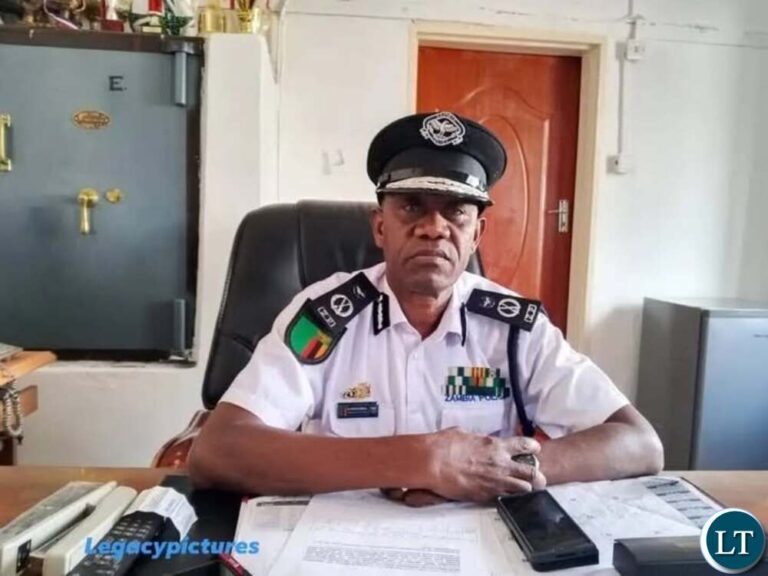
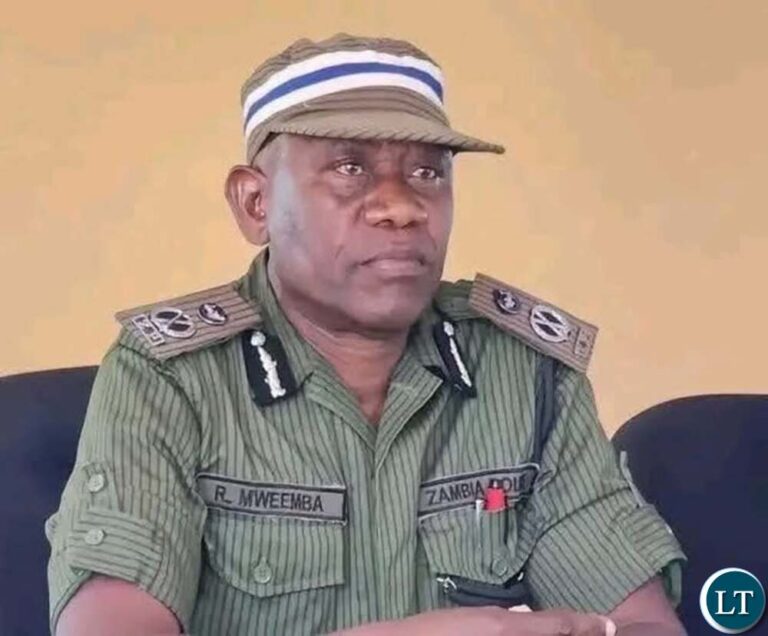
Eastern Province Police Commanding Officer Robertson Mweemba confirmed that the body was found with cuts and blood from the nose and mouth.

“Upon inspection of the body, it was discovered bleeding from the nose and mouth, and had cuts on the left side of the upper lip, and the right side of the face was swollen indicating that the deceased might have been hit with an object,” Mr Mweemba explained.

The police Chief told Zambia the media that a waist belt believed to be from his trousers loops was cut, showing some excessive of force.

“So, we also found the belt tied around his neck, he wore a white t-shirt, white trousers, white and pink snickers which had mud all over them, indicating forms of struggle,” he mentioned.

The body of the deceased was first recognised by some school going children who were using a foot path within the Gino farm around 06:00 hours of March 31, 2026.

The boys then reported to St. Monica’s Police Post

Mr Mweemba said the body of the deceased has since been deposited at Chipata Central Hospital Mortuary awaiting possible identification and postmortem examinations.

He said that foul play was suspected and the police has since instituted investigations into the matter.

Essential medicines exceed eighty percent in Muchinga facilities

2

The Ministry of Health in Muchinga Province says it has continued to record a significant milestone in healthcare service delivery, with essential drug availability in health facilities exceeding 80 percent.

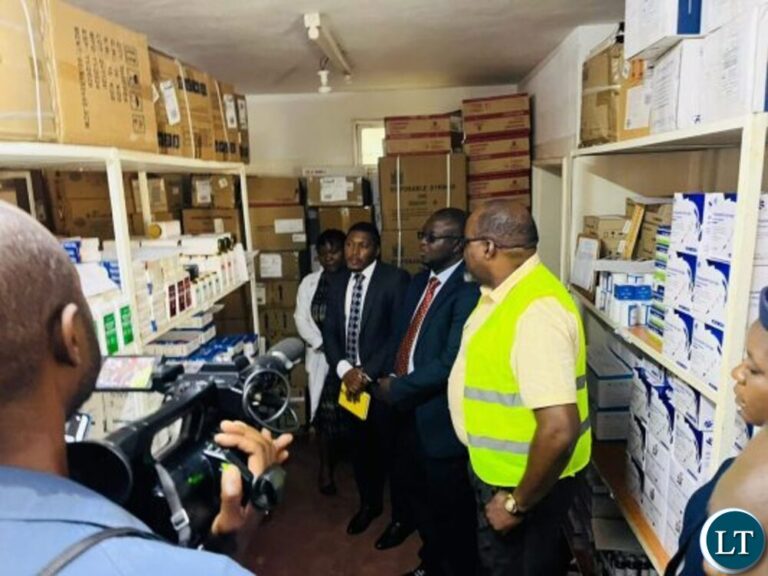
Muchinga Province Minister, Njavwa Simutowe, confirmed the positive stock levels following an on-site inspection of the provincial and district bulk drug stores at Chinsali District Hospital, alongside Provincial Health Director, David Silweya.

Mr Simutowe said the inspection aims to verify the sustainability of the drug supply chain, which is a key priority for the United Party for National Development (UPND) government.

During the visit, Mr Simutowe inspected inventory levels for local hospitals and health centres, expressing satisfaction with the current stock levels and the state of preparedness in the province.

“I am delighted to report to the people of Muchinga and the nation at large that our drug stock levels have now surpassed the 80 percent benchmark,” said Mr Simutowe.

The Minister said this was a clear demonstration that the government was serious about ensuring that quality healthcare is accessible to all Zambians.

Reassuring the public on supply sustainability, Muchinga Provincial Health Director, David Silweya, confirmed that necessary measures are in place to ensure a consistent and adequate supply of essential medicines to meet local demand.

Dr Silweya added that other measures to ensure safety and reduce on drug theft were also in place through the installation of surveillance cameras among other.

The PHD added that the stock stays of drugs at the Bulk Drug Stores was the same with that of all health facilities in the districts across the province.

He said the drug availability levels in the province stands at over 80 percent.

Dr Silweya said the visit to the facility by the Minister, was encouraging as it will keep in ensuring that drug stick levels at all facilities was the same as the case is currently.

“We have enough drugs in all our facilities in the province, and it’s all thanks to the government,” he stated.

Dr Silweya noted that the inspection by the provincial Minister also highlighted that the province holds stock levels sufficient for over three months, showcasing remarkable progress in the health sector.

Ensuring a reliable, uninterrupted supply of essential drugs at all health facilities has remained a top agenda for the ruling government since 2021, with significant strides made in transforming the pharmaceutical supply chain.

South Korea donates ICT Equipment

0

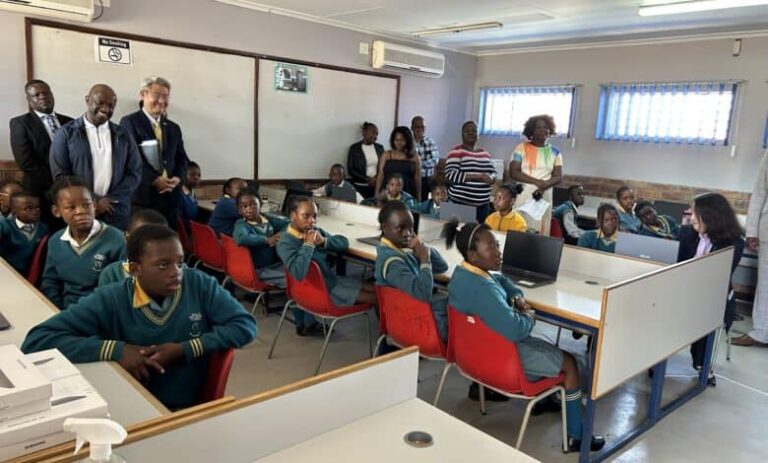
The government of South Korea has donated an assortment of Information and Communication Technology (ICT) equipment to the Ministry of Technology and Science.

The media reports that the donation includes 60 desktops, 25 printers and 27 laptops among others.

In receiving the donation, Ministry of Technology and Science Permanent Secretary Brilliant Habeenzu said the donation has come at an opportune time when the government is placing emphasis on equipping young people with digital skills.

Dr Habeenzu said the donation will enhance digital learning skills for students in Technical Education, Vocational and Entrepreneurship Training Authority (TEVETA) institutions.

He expressed optimism that the donation of ICT equipment to TEVETS learning institutions is going to improve access to computers for students and lecturers.

Dr Habeenzu stressed that the equipping of learning institutions with ICT equipment is cardinal as it lays the foundation for addressing the digital divide in the country.

The Permanent Secretary said that the investment made by South Korea through the donation of ICT equipment is an investment in young people.

Dr Habeenzu assured the government of South Korea of Zambia’s readiness to deepen bilateral cooperation in the field of science and technology.

And speaking earlier, Korean Ambassador to Zambia Jae Kyung Park said the donation of ICT equipment reflects the strong and growing participation between Zambia and South Korea.

Mr Park cited the field of science and technology as some of the areas the two countries have enjoyed cordial cooperation.

“The provision of digital equipment. This contribution reflects the strong and growing partnership between Korea and Zambia, particularly in the field of science, technology, innovation, and skills development.”

He commended the Ministry of Technology and Science for its commitment in driving digital development in the country.

Mr Park said it is grafting that the Zambian government has taken a strong stance in ensuring that young people are equipped with digital skills.

He stated that Zambia has potential to advance in digital transformation and innovation.

“The country has potential to advance in digital transformation, innovation, and responsible use of emerging technologies like AI, the Artificial Intelligence,”

Mr Park expressed confidence that the donated items will help students develop skills that are directly relevant to modern workplaces and an evolving economy.

President Hichilema calls for review of sanitation facilities in higher learning institutions

President Hakainde Hichilema this afternoon held an emergency meeting with key government Ministries and the University of Zambia (UNZA) management to address sanitation challenges affecting public higher learning institutions.

During the meeting, President Hichilema directed the Ministries of Education, Health, Infrastructure, and Water Development and Sanitation to conduct an immediate review of sanitation facilities at the University of Zambia and in all public universities including colleges.

The cited Ministries have been tasked to quickly present actionable solutions to address sanitation challenges.

The President further directed the Ministries to collaborate with the Zambia National Service (ZNS) in order to expedite the interventions.

Meanwhile, President Hichilema has also directed the Ministry of Education and the University of Zambia management to resolve the long-standing issues affecting lecturers and other academic staff.

The Head of State has reaffirmed the critical importance of ensuring a safe and supportive learning environment for both students and academic staff.

President Hichilema has reiterated the importance of education as an investment, equaliser and inheritance deserving of every citizen.

He stressed that sanitation is not a secondary matter but that it is central to health, well-being, and basic human dignity.

President Hichilema stated that his administration remains committed to listening and addressing citizens’ concerns.

This is contained in a Press release issued by State House Chief Communications Specialist Clayson Hamasaka.

Argentina thump Chipolopolo

15

Leicester City striker Patson Daka was benched as Chipolopolo were thrashed 5-0 by FIFA World Cup champions Argentina in a friendly match away in Buenos Aires early on Wednesday morning.

‎Zambia coach George Lwandamina preferred Albert Kangwanda over Daka.

‎Daka was introduced in the 60th minute for Kingston Mutandwa at the time Zambia was down by 3-0.

‎As expected, Argentina dominated both halves to maintain their status.

‎Playing at the iconic La Bombonera, Argentina took a 2-0 lead into the half time break.

‎Argentina star Nicolás Otamendi said his team showed improvement after struggling in recent matches.

‎”It was a long road, with many joys and some sorrows because that’s football. I leave with the feeling of having given everything for the National Team, always ready to defend this jersey, “Otamendi said in a postmatch comment.

‎”There is no greater satisfaction than wearing the national team jersey. Very happy for this farewell at home.”

‎”The World Cup is still to come, and we’re going to compete and defend the title. As Leo once said, people should believe because we have what it takes,” he said.

‎”To have a chance with the national team, you have to do the same as at your club; you have to perform because the train passes by and you don’t have time.”

‎By news time, Lwandamina was yet to comment on the loss to Argentina.

Tonse reacts while IBA moves against Banda broadcast

Tonse Alliance Presidential Spokesperson George Chisanga says recent claims of a self-declared presidency within the United Party for National Development (UPND) raise legal and governance concerns, warning authorities to apply the law consistently as tensions build ahead of internal party processes.

Chisanga addressed the media early Wednesday following reports that an individual identified as Patrick Tembo Banda had declared himself UPND president, citing expired mandates within party structures and calling for internal elections at lower levels before a national convention.

The reaction followed a circulating political statement in which Patrick Tembo Banda announced that he had assumed interim leadership of the party, placing the expiry of mandates for office bearers on February 14, 2026, and outlining a plan to organise elections at lower structural levels within days as a precursor to a general assembly.

Banda, in his recorded statement, framed his action as a response to what he described as a lapse in administrative authority, positioning himself as an interim figure to oversee internal restructuring. He stated that elections at lower levels would form the basis for rebuilding party structures before any broader national process is undertaken.

Chisanga said the development comes at a time when the governing party has indicated intentions to convene a convention in line with constitutional requirements, a move he linked to pressure from internal party members demanding compliance.

He framed the situation as a test of how institutions respond to disputes within political organisations, stressing that decisions taken now would carry consequences beyond the immediate controversy. He called on government and state institutions to apply the law with attention to both intended and unintended outcomes.

At the same time, the Independent Broadcasting Authority (IBA) issued directives to Millennium Radio following its broadcast of Banda’s declaration, describing the content as false and misleading and requiring the station to strengthen editorial controls. The Authority ordered a review of sourcing processes and demanded a compliance report, warning that breaches of broadcasting standards could attract regulatory action, including possible licence cancellation.

The directive followed the station’s airing of a video in which Banda claimed control of the UPND leadership. The Authority stated that such content had the potential to affect public peace and order, placing the broadcast within the scope of regulatory intervention.

The development places the dispute on two fronts, with political reactions unfolding alongside regulatory enforcement that directly addresses how the claim was disseminated.

Chisanga also addressed reports that police had visited Millennium Radio following the broadcast, questioning the basis of the action and stating that the station had merely provided a platform for a political statement before issuing an apology.

He said the visit raises concerns about press freedom, noting that the constitution guarantees the right of media institutions to operate without undue interference. He called for clarity on the role of law enforcement in matters involving media coverage of political developments.

The spokesperson referenced ongoing legal disputes surrounding the Patriotic Front (PF), noting that leadership wrangles within the former ruling party have been before the courts for several years. He said judicial outcomes in those cases have influenced how leadership disputes are perceived and managed.

Chisanga cited a previous court decision involving PF leadership, stating that questions had been raised about how a convention was recognised despite internal contestation. He said such rulings have implications for how similar disputes are interpreted across the political landscape.

Turning to the current situation, he said the declaration by Banda reflects broader concerns about adherence to party constitutions and the rule of law. He said claims that mandates within UPND structures had expired would require a structured and lawful response from the party.

He added that the individual at the centre of the dispute had called for elections in lower party organs, a move he said implies that those structures also require renewal before a national convention can be held. According to Chisanga, this sequence would need to be followed strictly if the party is to demonstrate compliance with its own rules.

Chisanga said expectations are that UPND, as the governing party, should demonstrate adherence to legal standards and avoid actions that could be interpreted as punitive against dissenting members. He urged the party to handle the matter with restraint and within established legal frameworks.

He further linked the incident to wider political tensions, stating that disputes affecting opposition parties and other political organisations have been handled in ways that, in his view, have contributed to fragmentation within those groups.

He cited ongoing developments involving other parties, including internal disagreements and challenges to party conventions, and said institutions responsible for overseeing compliance must act strictly within the law.

Chisanga also referred to a letter circulating on social media concerning another political party, stating that authorities should assess such matters based on statutory requirements rather than external influence.

He said regulatory bodies must rely on established legal provisions when determining compliance, warning against actions that could undermine confidence in institutional processes.

The Tonse spokesperson said the current developments provide an opportunity for the governing party to demonstrate adherence to constitutional principles, particularly in handling internal disputes and respecting rights of members.

He added that political parties play a central role in governance and must operate within clear legal frameworks to maintain public trust, especially ahead of the 2026 general elections.

Chisanga said the unfolding situation would be closely watched, with expectations that all actors involved will adhere to legal standards in resolving the dispute.


Seychelles Names Zambian Judge to Lead CCCL Explosion Probe

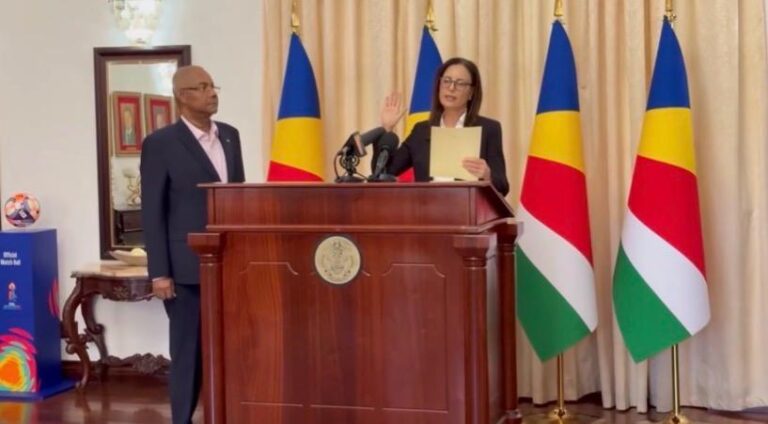
VICTORIA, Mahé — Seychelles President Dr. Patrick Herminie on Tuesday swore in a Commission of Inquiry into the 7 December 2023 Civil Construction Company Limited explosion, appointing Zambian Court of Appeal Judge Nicola Ann Sharpe-Phiri to chair proceedings in a move positioned around independence and accountability.

The ceremony at State House on 31 March 2026 formally launches an investigation into the explosion at the CCCL explosives storage facility in the Providence Industrial Estate on Mahé, an incident that caused widespread destruction and left key questions unresolved for more than two years.

Justice Sharpe-Phiri will lead the Commission alongside Guy Roucou and Dora Zatte, who serve as members. The composition places an external judicial figure at the centre of the inquiry, with authorities signalling that the process will operate free from interference or favour.

The appointment carries weight within both Seychelles and regional legal circles. Justice Sharpe-Phiri has served as a Judge of the Court of Appeal of Zambia since April 2021. Before that, she held office as a High Court Judge from 2011 to 2021, where she led the Family and Children’s Division.

Her professional profile includes fellowship of the Chartered Institute of Arbitrators (CIArb) in both London and Zambia, alongside extensive experience as a commercial arbitrator. She holds a Bachelor of Laws from the University of Zambia and a Master’s degree in Human Rights, Conflict and Justice from SOAS University of London, bringing more than 30 years of legal practice to the role.

Justice Sharpe-Phiri is already embedded within Seychelles’ judicial framework. She was sworn in as a Non-Residential Justice of Appeal in December 2024, following a recommendation by the Constitutional Appointments Authority. Her familiarity with the Seychellois legal system, combined with her status as a foreign national, places her at the centre of an inquiry requiring credibility and institutional distance.

She is not the only Zambian jurist serving within the Seychelles judiciary. Justice Dominic Luther Yeta Sichinga, SC, was sworn in alongside her in December 2024 as a Non-Residential Justice of Appeal. Their presence reflects judicial ties between the two Commonwealth countries and signals continued collaboration at appellate level.

The Commission is tasked with examining the explosion that struck in the early hours of 7 December 2023, when four containers of explosives detonated at the CCCL facility. The blast was felt across Mahé and prompted then-President Wavel Ramkalawan to declare a state of emergency.

The scale of the damage placed the incident among the most severe industrial disasters in Seychelles’ modern history. Data from the Seychelles Health Care Agency recorded 178 casualties. The impact extended to the business sector, where 642 businesses sustained damage, and to residential areas, where approximately 1,400 residents were affected.

Among housing structures, 43 homes were severely damaged, 118 sustained moderate damage, and 269 required minor repairs. The destruction disrupted both economic activity and community stability across affected areas.

Authorities had raised concerns for nearly a decade about the storage of explosives at the CCCL site. Despite those warnings, the precise cause of the explosion was not publicly established, leaving a gap in official findings and accountability.

In the aftermath, government introduced relief measures to support affected residents and businesses. Even with those interventions, pressure persisted for a transparent accounting of what happened. Nearly a year after the explosion, residents and business owners staged protests, citing the absence of consequences for CCCL and the lack of public disclosure of a police inquiry report submitted to the Attorney General’s Office.

The establishment of the Commission directly addresses those concerns. By appointing an internationally recognised judge from outside Seychelles to lead proceedings, the administration has structured the inquiry to remove any perception of local influence tied to political or commercial interests.

President Herminie, who assumed office on 26 October 2025 following a run-off election, campaigned on commitments centred on justice, transparency and equality. The Commission forms part of that agenda, linking the inquiry process to broader institutional reforms promised during the election period.

For families and businesses still dealing with the consequences of the explosion, the Commission represents a shift from relief to formal accountability. The inquiry is expected to establish the full sequence of events, examine regulatory oversight, and determine responsibility tied to the storage and handling of explosives at the CCCL facility.

Authorities have indicated that the terms of reference and timeline for the Commission will be published in the coming days, setting the framework for hearings, evidence gathering and reporting.

The inquiry places a Zambian appellate judge at the centre of a national investigation into a major industrial disaster, with proceedings expected to address long-standing questions surrounding safety, oversight and accountability.

Zambia finish 2nd at Botswana tourney

4

The domestic Chipolopolo squad finished runners up at the Mukuru 4 Nations tournament in Botswana on Tuesday evening.

‎Zambia missed out on winning the tournament after losing 1-0 to Zimbabwe in the final at Obed Itani Chilume Stadium in Francistown.

‎The Oswald Mutapa led team conceded the goal some seconds away from 90 minutes after a lapse in the backline.

‎Zambia reached the final after beating Malawi 9-8 on penalties after a goalless stalemate.

‎Mutapa was impressed with the character shown by the young Zambian team in Botswana.

‎He said some players demonstrated that they can represent Zambia at the bigger stage.

‎”It was a tough game. For me it is the character and the mentality the boys showed. Yes, we have lost but we are happy with the way the boys performed,” Mutapa said.

‎”The way the boys performed and the character showed that we really have a team for the future,” he said.

‎Mutapa said Zambia was building a team for the future.

‎”We are trying to build a team, mainly for the Olympics. We will work on mistakes made at this tournament.”

‎”For us it is a vision of 2030.  Going forward it is a vision of 2030. We will keep this team so that we are able to pick players to represent the nation in future,” Mutapa said.

‎Mutapa used the tournament to give exposure to emerging talent that include Eliya Mandanji, Derrick Bulaya, captain Abraham Siankombo, Elliot Kampukesa, Patrick Chooma, Headson Paina, Jonathan Kalimina, Jackson Phiri and Kafunti Saisada.

‎Others are Dominic Kanda, Humphrey Bwembya, Francis Banda, Derrick Bulaya, Luka Mainza, Christo Chitambala, Kelvin Chipelu, Ronald Chileshe, Yoram Chanda, Joseph Mulenga, William Kamwanga, Luka Mutoshi, Patson Kwataine, Golden Mashata, Elliot Kampukesa, Rickson Ng’ambi, Abel Salim Nyirongo and Ian Sindaye.

ERB Raises Fuel Prices for April as Global Costs Surge

LUSAKA — Zambia’s fuel prices will rise from midnight after the Energy Regulation Board adjusted pump rates for April 2026, citing sharp increases in global oil prices and a weaker kwacha.

The adjustment follows a monthly review by the Energy Regulation Board, which recorded steep movements on the international market alongside exchange rate pressure. Petrol now moves to K27.15 per litre from K26.61, while diesel records the largest jump among major fuels, rising to K29.78 per litre from K23.25.

The Board anchors the change to global price shifts. Petrol on the international market climbed to US$114.51 per barrel from US$70.32, while diesel rose to US$162.61 per barrel from US$84.74. Kerosene and Jet A-1 recorded the steepest increase, reaching US$169.92 per barrel from US$83.95, a surge that feeds directly into domestic pricing.

The exchange rate added pressure during the same review window. The kwacha weakened slightly from K19.18 to K19.30 per US dollar, tightening import costs for fuel procurement. That movement compounds the global price rise, feeding into the final pump adjustments.

Government has moved to cushion the impact through fiscal measures. Authorities have suspended excise duty and applied zero-rated Value Added Tax on petrol and diesel for a three-month window from April to June 2026. The intervention aims to steady supply and reduce the immediate burden on consumers, even as underlying costs continue to rise.

Despite the intervention, the domestic adjustments remain pronounced across key products. Diesel posts an increase of K6.53 per litre, representing a 28.09 percent rise, while kerosene climbs by K11.19 per litre, translating to a 53.13 percent increase. Jet A-1 records the sharpest upward movement at K12.35 per litre, a 55.16 percent rise.

Petrol, while increasing, shows a comparatively smaller shift of K0.54 per litre, equivalent to a 2.03 percent change. The variation reflects differences in international pricing patterns across petroleum products during the review period.

The Board maintains that the price movements reflect external cost drivers rather than domestic policy shifts alone. International oil market volatility remains the dominant factor, with geopolitical tensions in the Middle East pushing prices upward during the review cycle.

Fuel pricing in Zambia remains linked to import parity, meaning global price movements transmit quickly into local pump prices. The structure leaves limited room for shielding consumers when global markets move sharply, placing pressure on fiscal tools such as tax adjustments.

The government’s temporary tax suspension signals an effort to stabilise both supply and affordability in the short term. The measure also aims to avoid supply disruptions that can arise when import costs outpace local pricing structures.

Transport operators, industry players and households are expected to feel the effect of the diesel adjustment most directly. Diesel remains the backbone of Zambia’s logistics and production systems, meaning shifts at the pump tend to cascade into broader cost structures across sectors.

Kerosene and Jet A-1 increases carry implications for aviation and low-income household energy use, where kerosene remains a fallback fuel in some areas. The magnitude of the increases points to sustained pressure across both transport and energy consumption patterns.

The Energy Regulation Board states that the revised prices will remain in force until the next review cycle. The adjustment takes effect at midnight on 31 March 2026, marking the start of the April pricing window.

Court of Appeal Allows DPP to Appeal Honey Bee Case

0

The Court of Appeal has upheld a decision permitting the Director of Public Prosecutions (DPP) to file an appeal out of time in the high-profile Honey Bee Pharmacy case involving former Health Minister Chitalu Chilufya and others.

The ruling relates to the 2021 acquittal of Dr Chilufya and eight co-accused in a matter involving the supply of 22,500 health centre kits valued at US$17 million.

Court of Appeal Deputy President Chalwe Mchenga dismissed a challenge against the High Court’s earlier decision, which had granted DPP Gilbert Phiri leave to appeal out of time.

Justice Mchenga ruled that the High Court’s decision was interlocutory in nature and therefore not subject to challenge, describing the application before the appellate court as incompetent.

The case stems from a September 30, 2025 ruling by the Economic and Financial Crimes Division of the High Court, which ordered the reopening of the Honey Bee matter.

In his submissions, Mr Phiri argued that the 2021 acquittal was irregular, stating that it was entered before pleas were taken on all counts and without the consent of the prosecution.

Following that decision, Honey Bee Pharmacy Limited and other parties sought to challenge the High Court’s ruling in the Court of Appeal, prompting the latest judgment.

The development paves the way for the matter to be revisited in court as legal proceedings in the long-running case continue.

Soldier Detained After Fatal Road Accident in Chipata

4
A soldier from Gonda Barracks in Chipata has been detained by police following a road traffic accident that claimed the life of a 50-year-old woman and left a cyclist seriously injured.

Eastern Province Police Commanding Officer Robertson Mweemba confirmed that the accident occurred around 10:00 hours along Airport Road near Munga Primary School.

The incident involved a Toyota Ipsum, registration number ALE 7497, driven by Wilson Lungu, 54, a Warrant Officer Class One based at Gonda Barracks.

Mr Mweemba said the accident happened after the driver allegedly lost control of the vehicle due to excessive speed.

“The driver went to the extreme right where he hit the cyclist and later swerved back to the left side where he hit the pedestrian who was standing off the road,” he said.

The deceased has been identified as Felistus Nyamanga, 50, of Gashi Compound. She sustained severe head injuries and suspected internal injuries and was pronounced dead upon arrival at Chipata Central Hospital.

Her body has since been deposited in the hospital mortuary awaiting a post-mortem examination.

Meanwhile, the injured cyclist, identified as Daniel Banda, 23, of Mnoro Village, sustained a fractured left leg, cuts to the forehead and multiple body injuries.

He is currently admitted to Chipata Central Hospital, where he is receiving treatment.

Mr Mweemba added that the driver is in police custody as investigations into the accident continue.

Government Zero-Rates VAT on Fuel Imports Amid Supply Crisis

Government has approved the zero-rating of Value Added Tax (VAT) on fuel imports and the suspension of excise duty on petrol and diesel for a period of three months, as part of urgent measures to stabilise the economy.

Chief Government Spokesperson Cornelius Mweetwa announced the decision in a statement, following a special Cabinet meeting convened by President Hakainde Hichilema at State House.

Mr Mweetwa said the measures, which take effect at midnight, are aimed at cushioning citizens and businesses from rising fuel costs driven by global market pressures.

He explained that Cabinet had also declared the current fuel supply situation in the country an emergency, citing disruptions in global oil supply chains.

According to Mr Mweetwa, the developments have largely been triggered by the ongoing tensions in the Middle East, which have led to increased international fuel prices and mounting pressure on domestic pump prices.

“Without these interventions, pump prices for April 2026 would have risen significantly, worsening the cost of living,” he said.

He added that the temporary tax relief measures are part of short-term interventions designed to protect households, businesses, and key productive sectors from the impact of escalating fuel costs.

Government has since urged the public to remain calm, assuring citizens that authorities are closely monitoring the situation and stand ready to implement further measures if necessary to safeguard the economy.